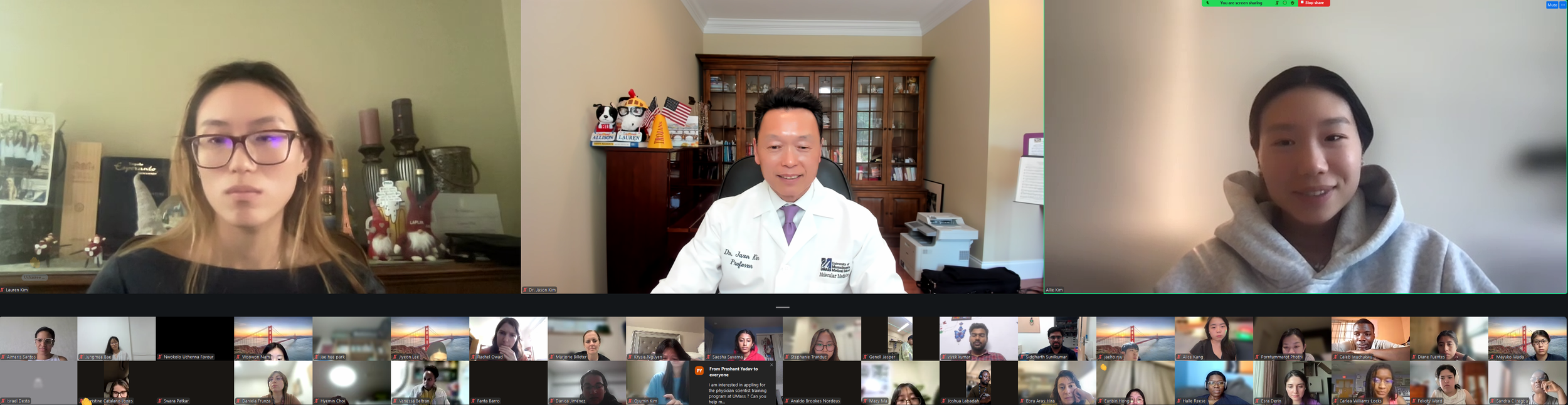
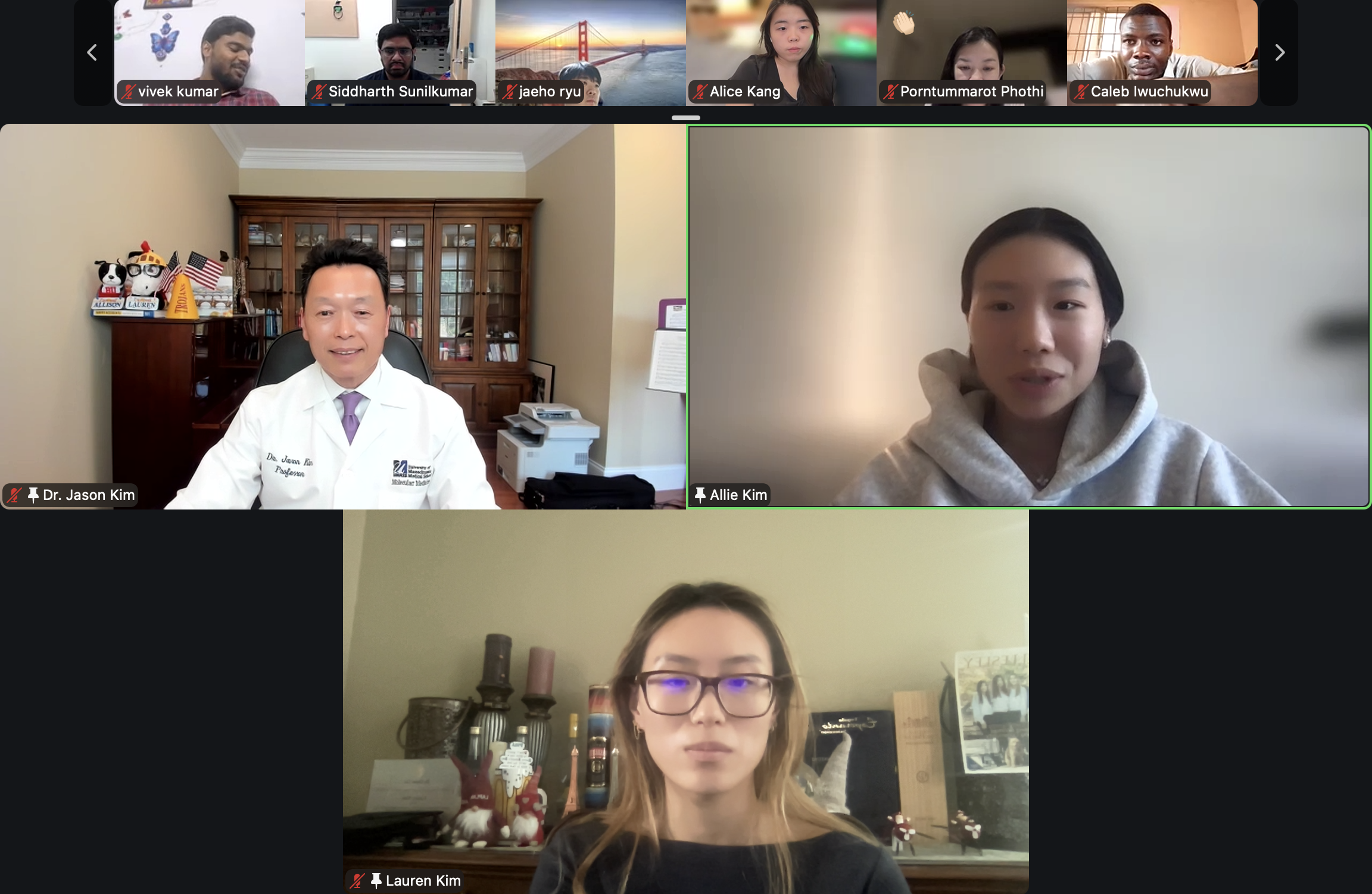
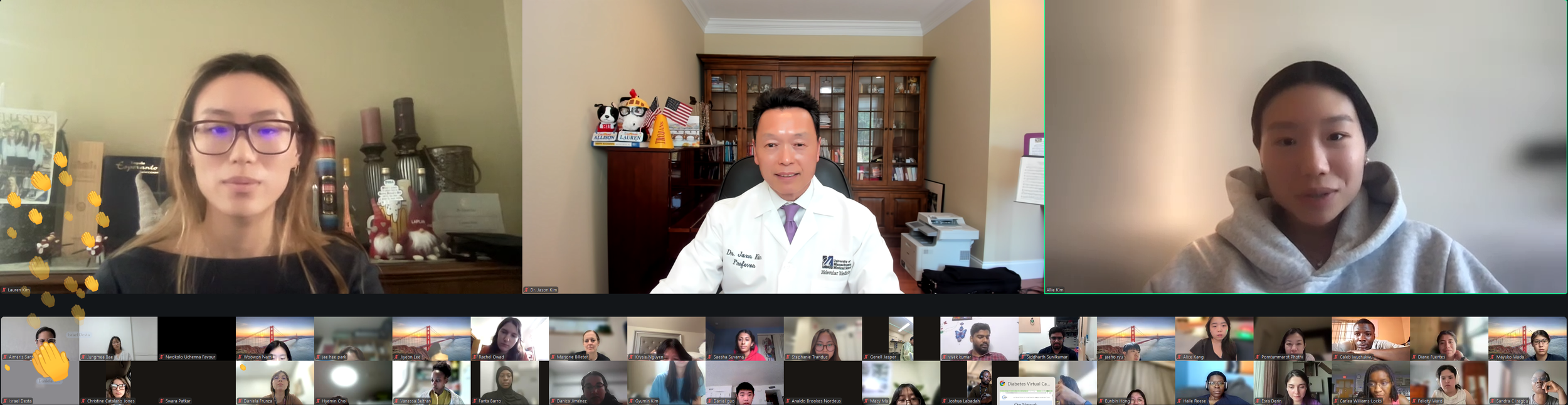
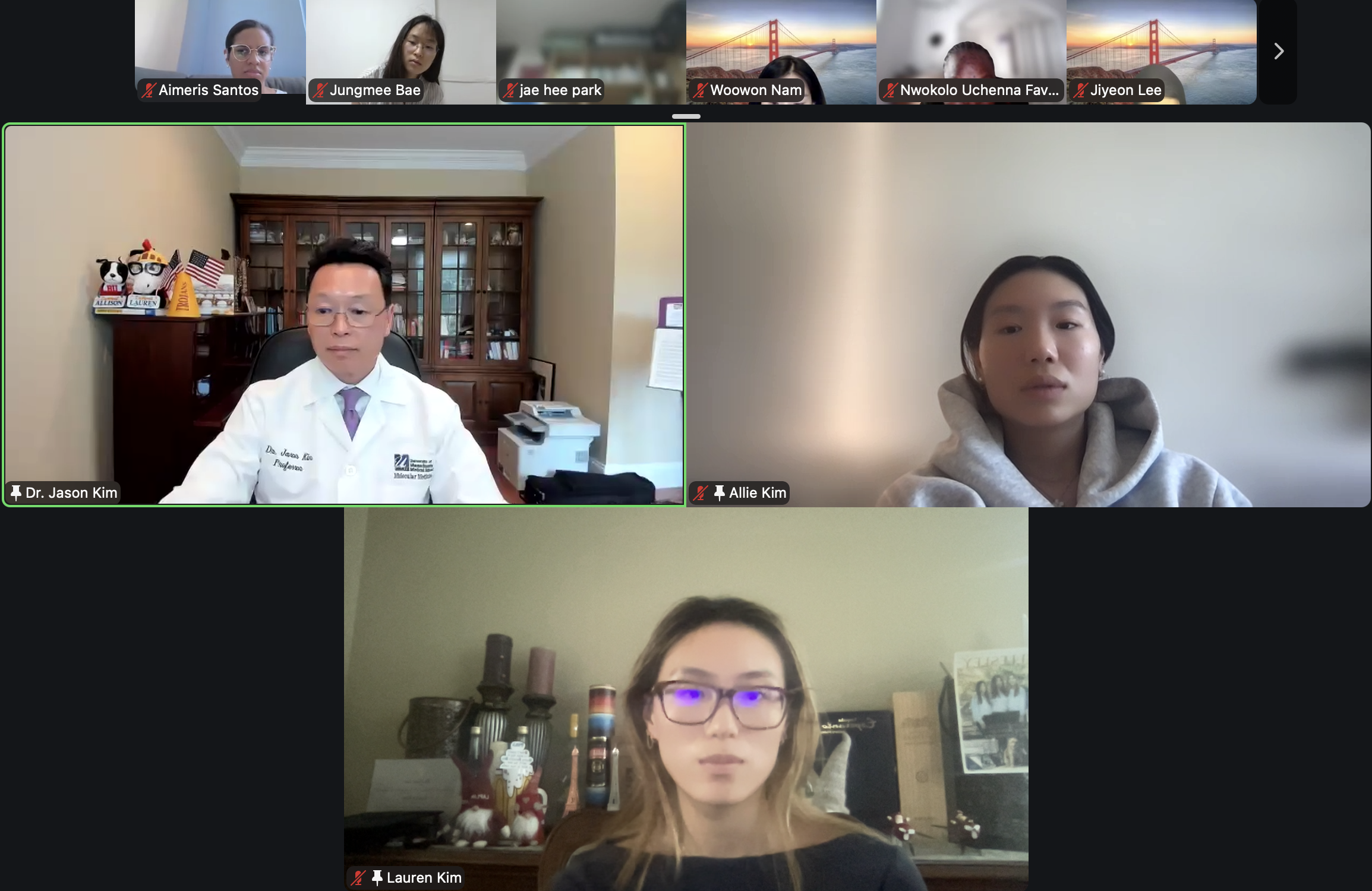
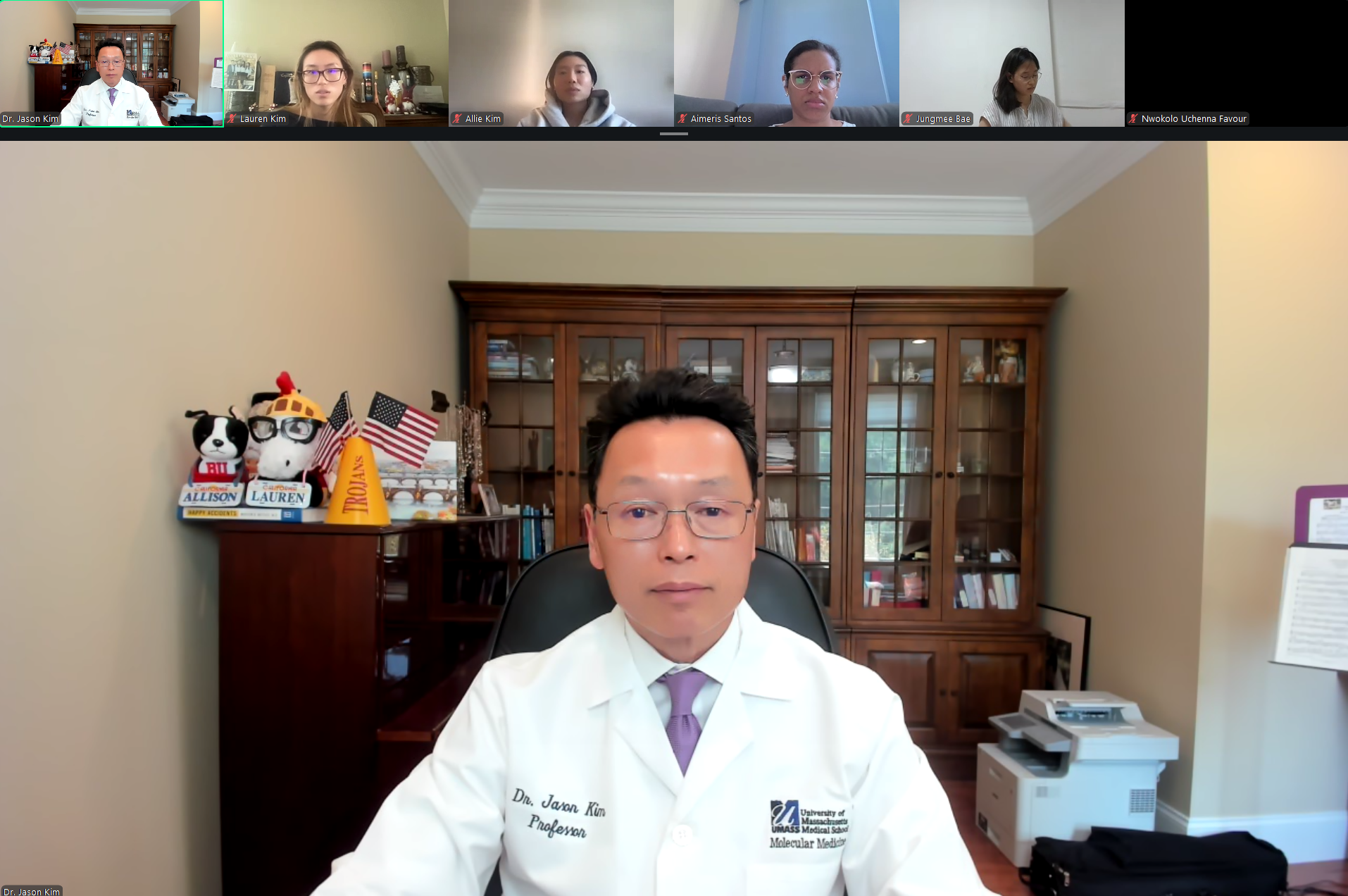
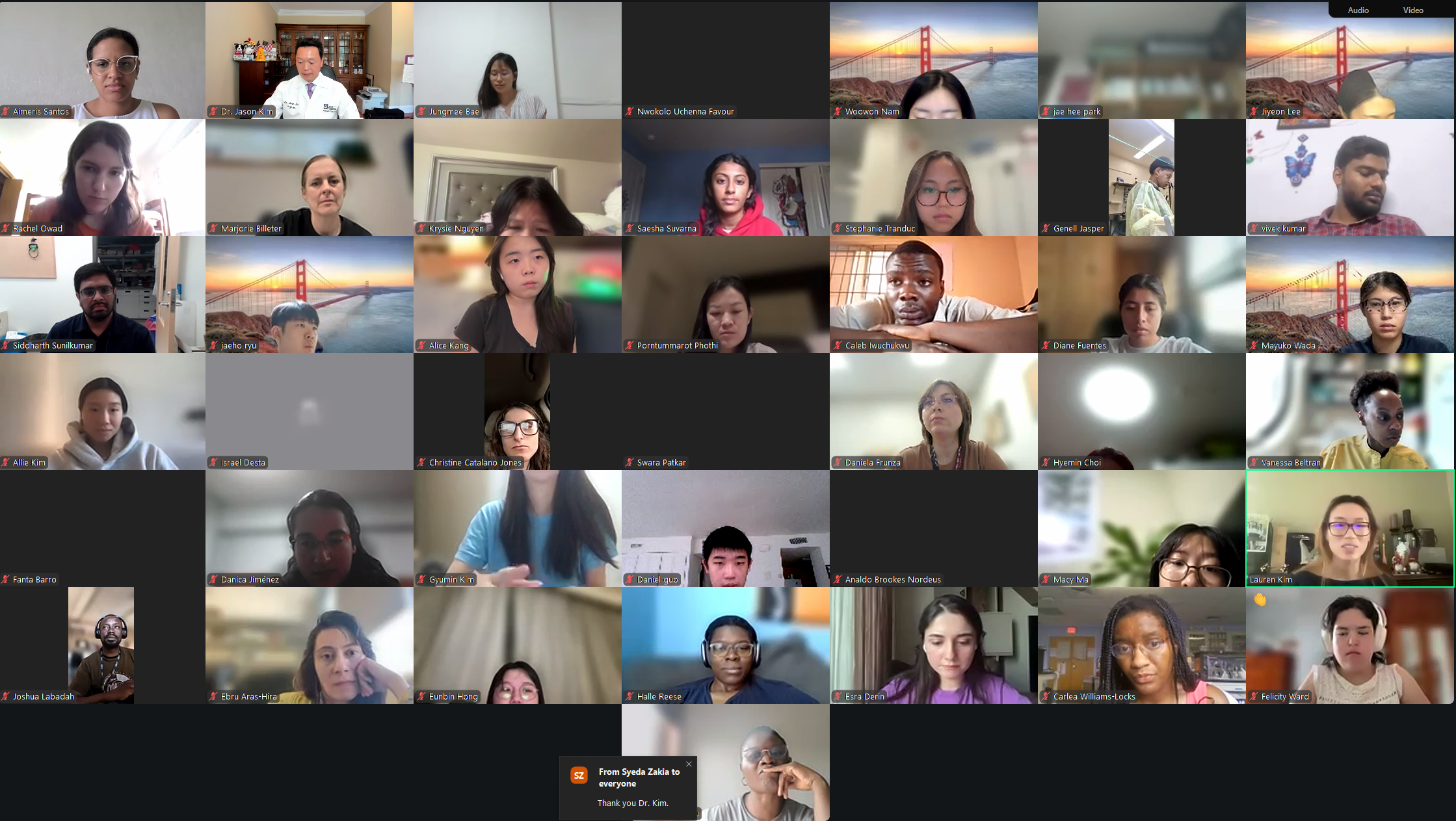
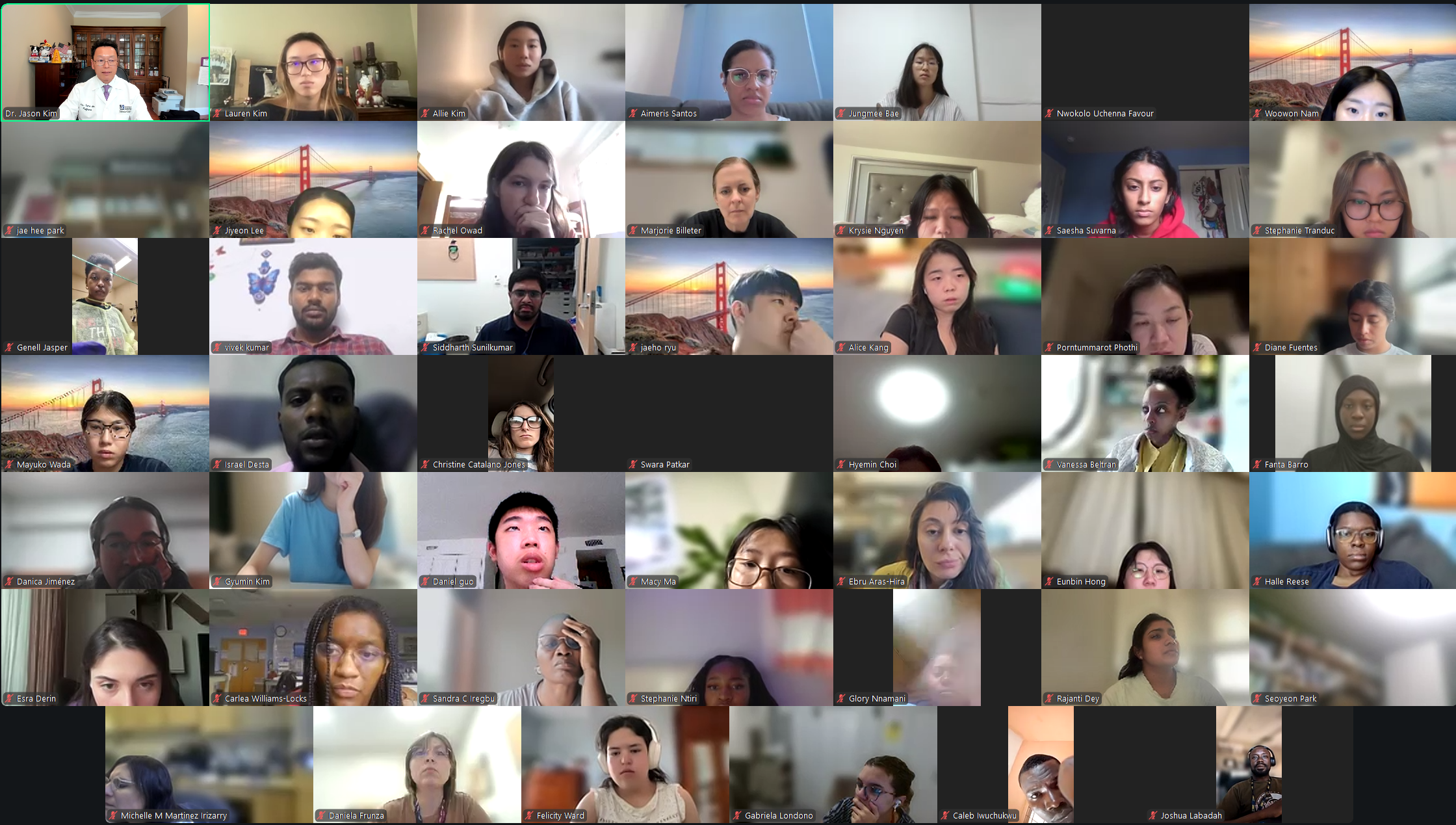
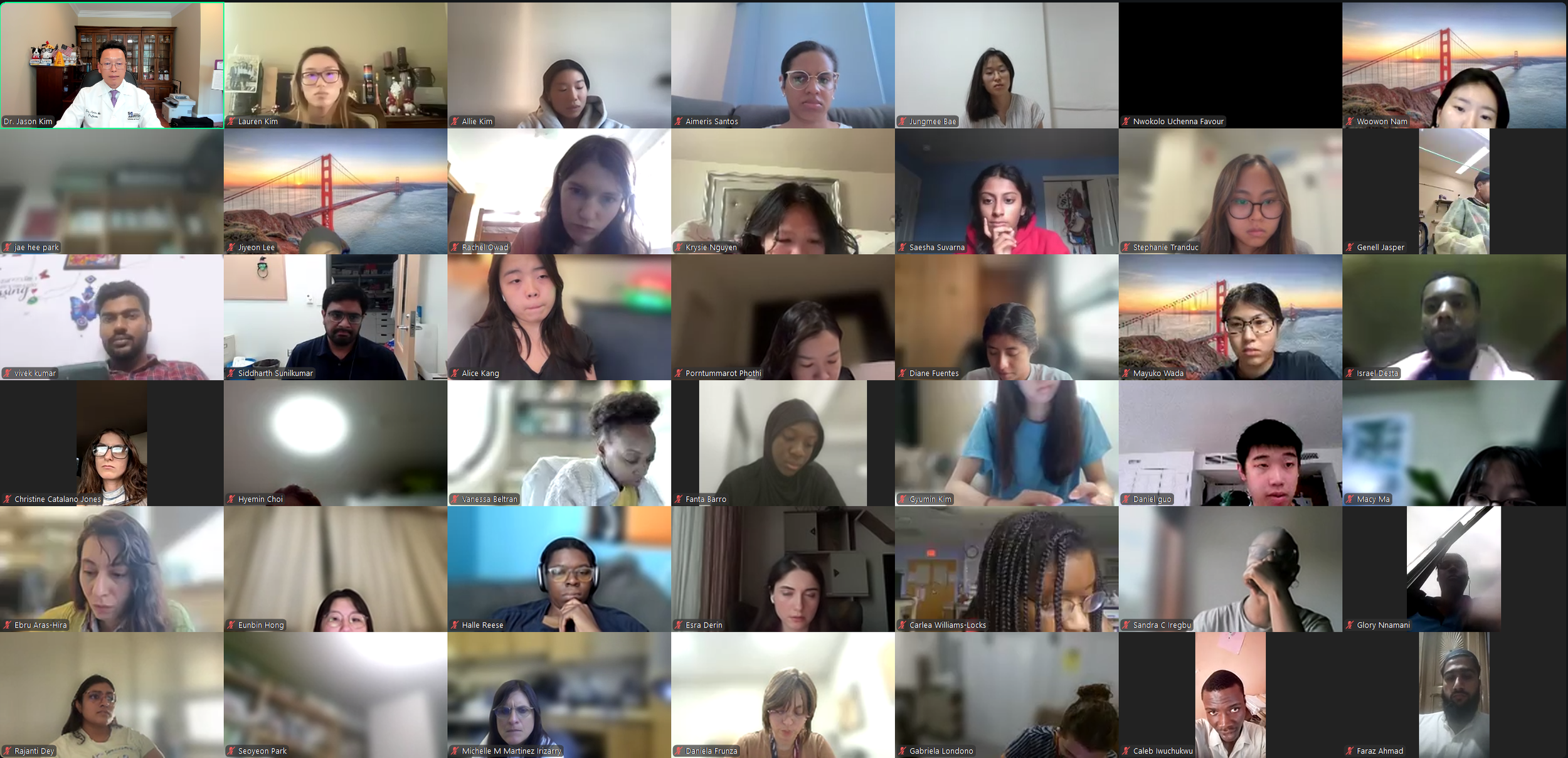
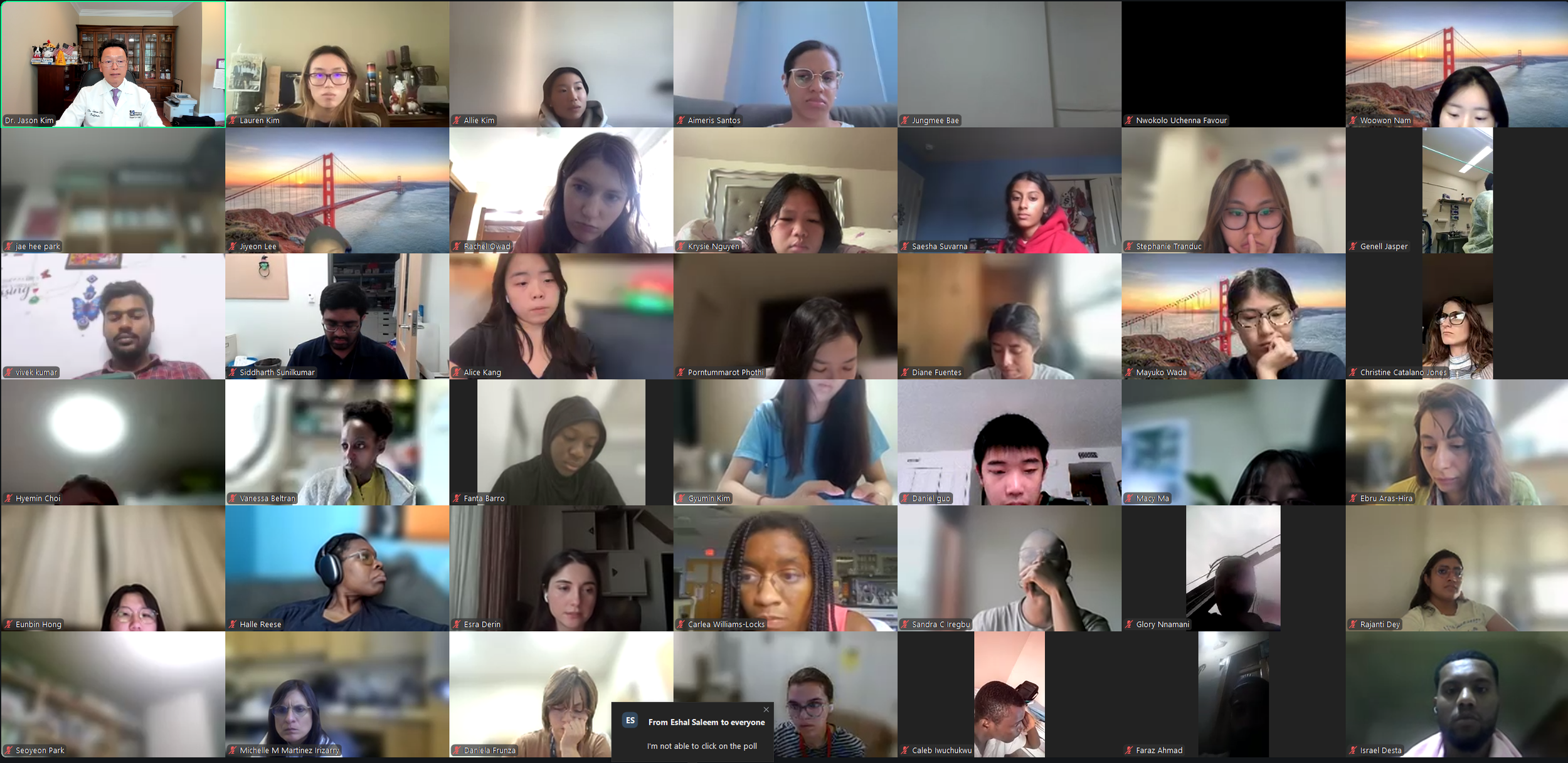
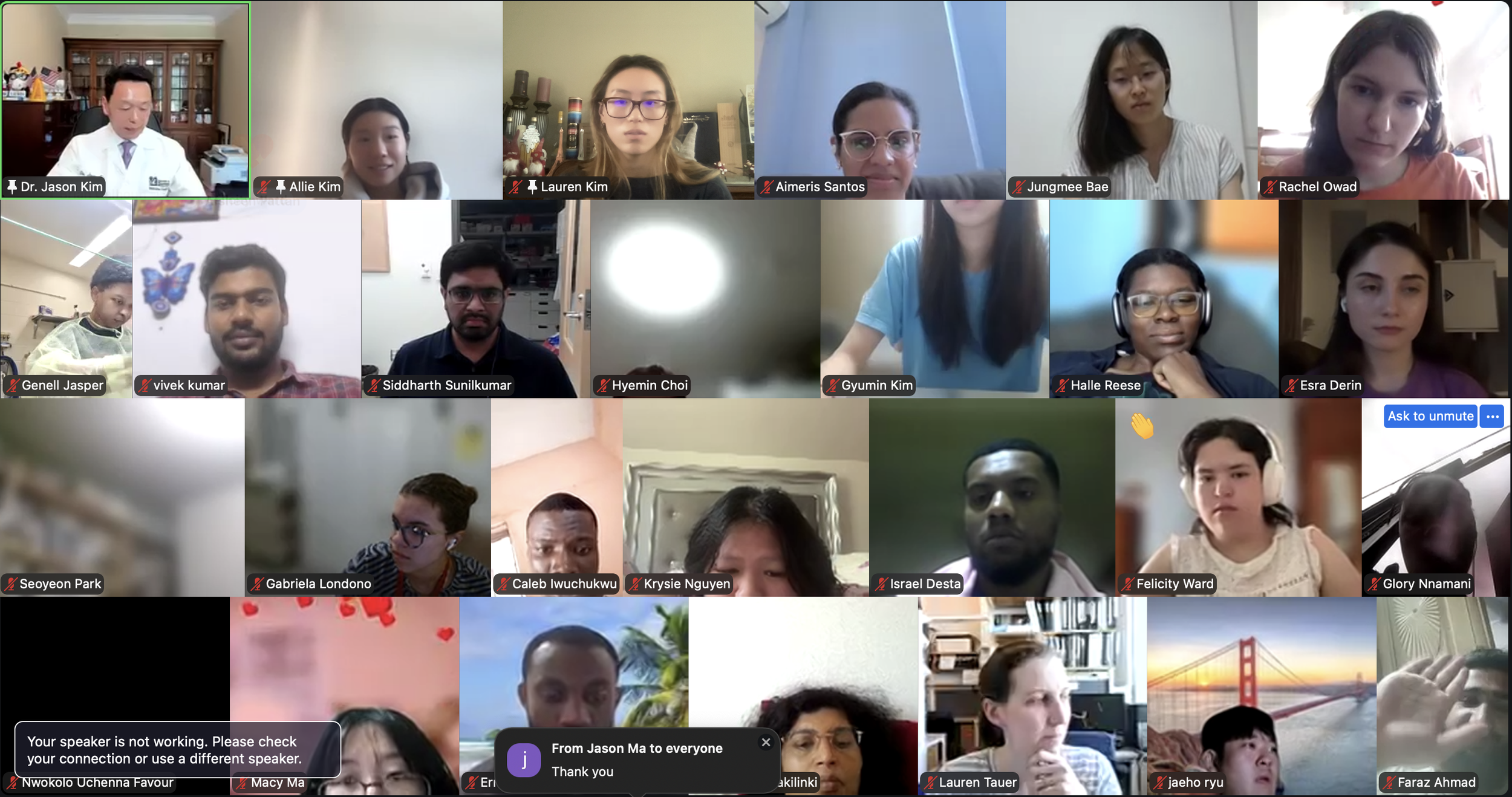
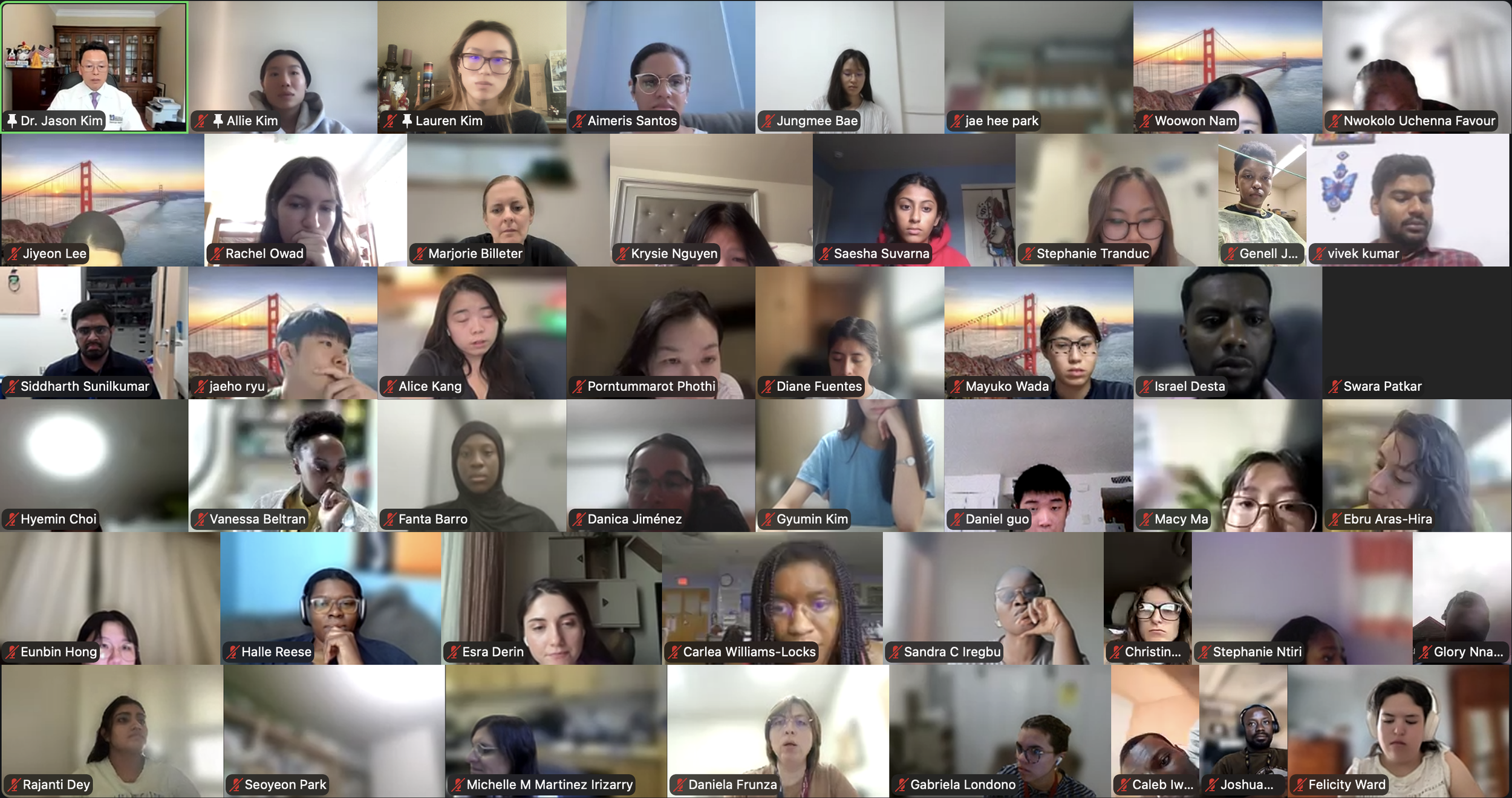
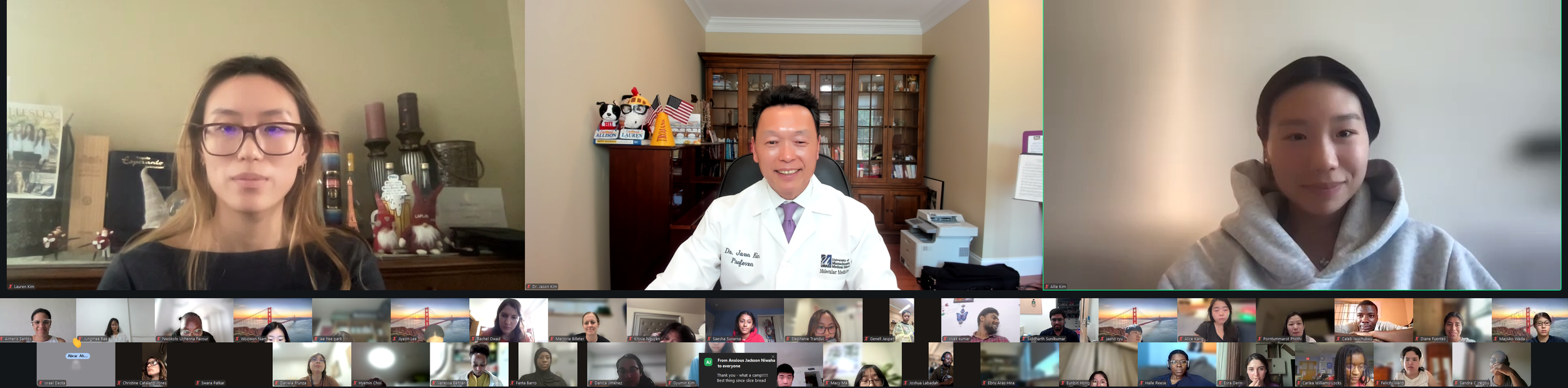
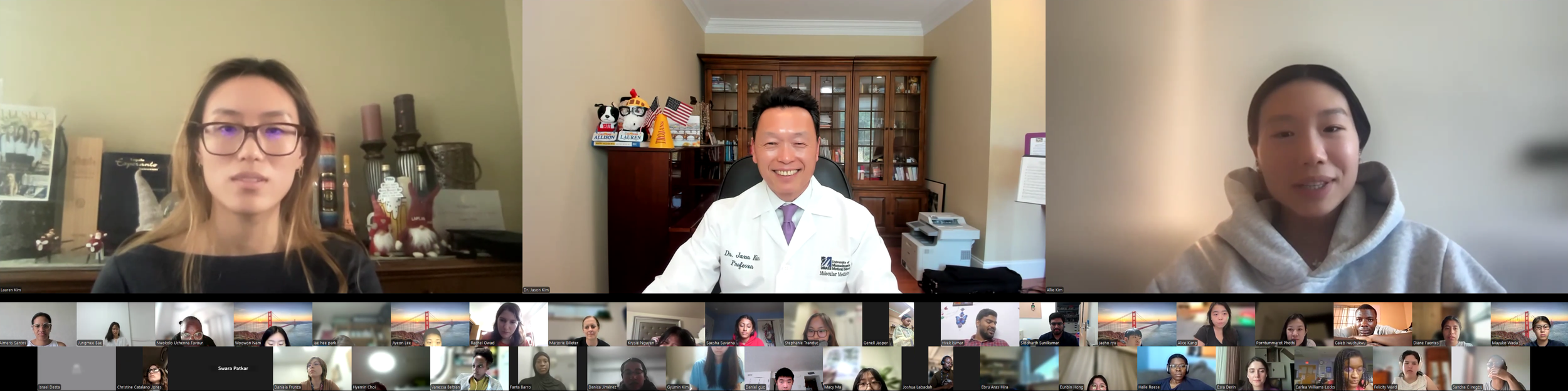
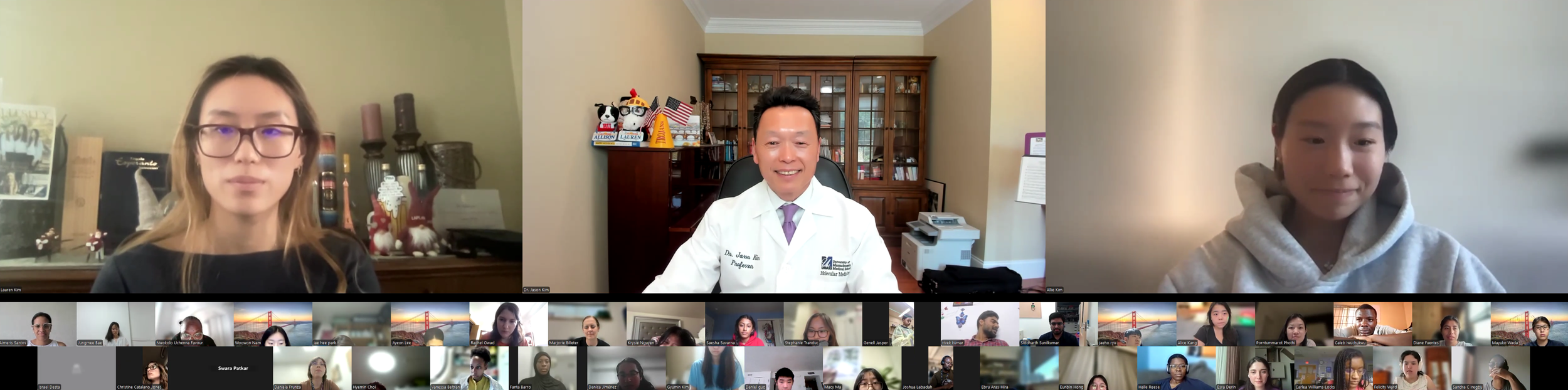
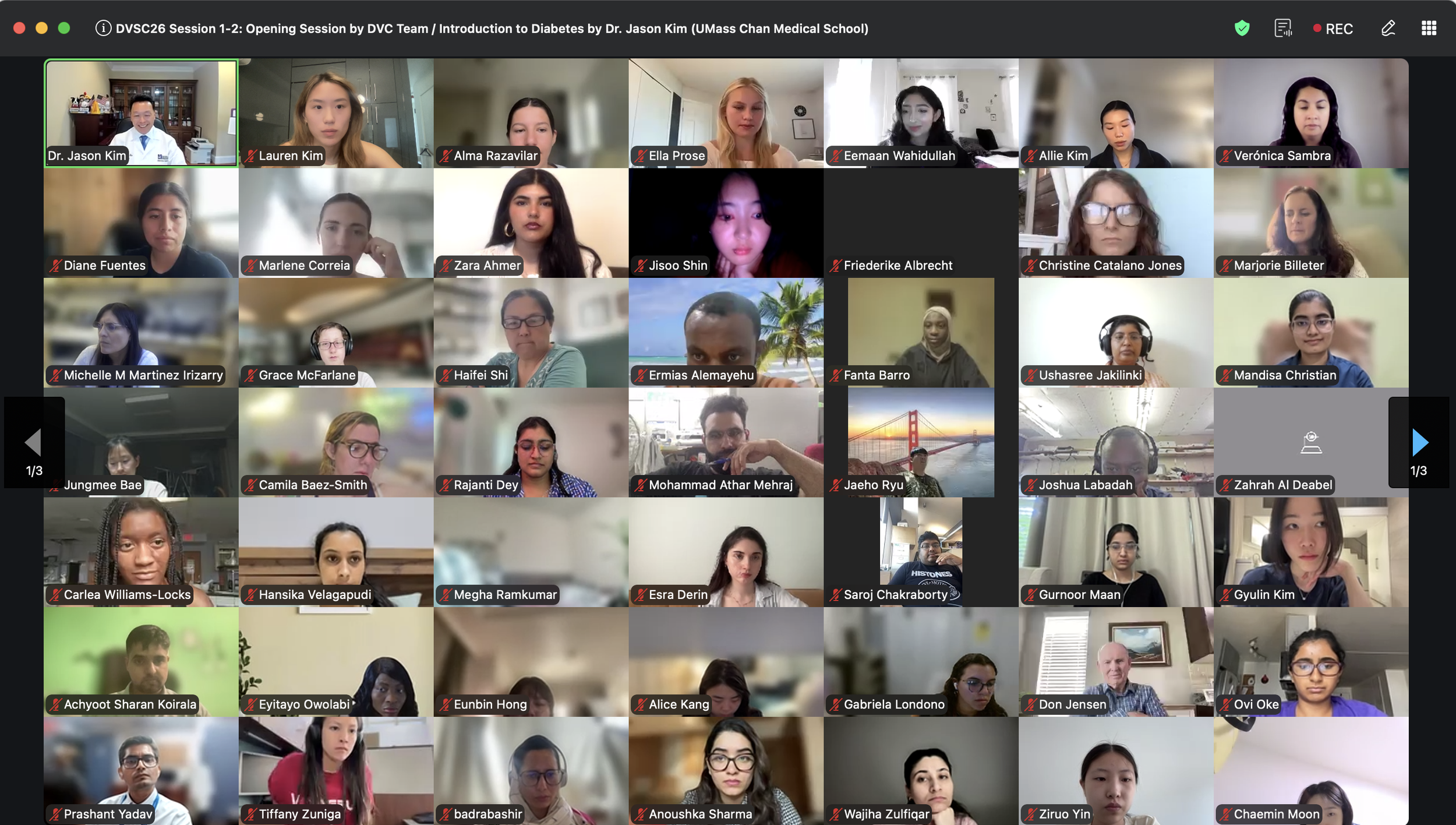
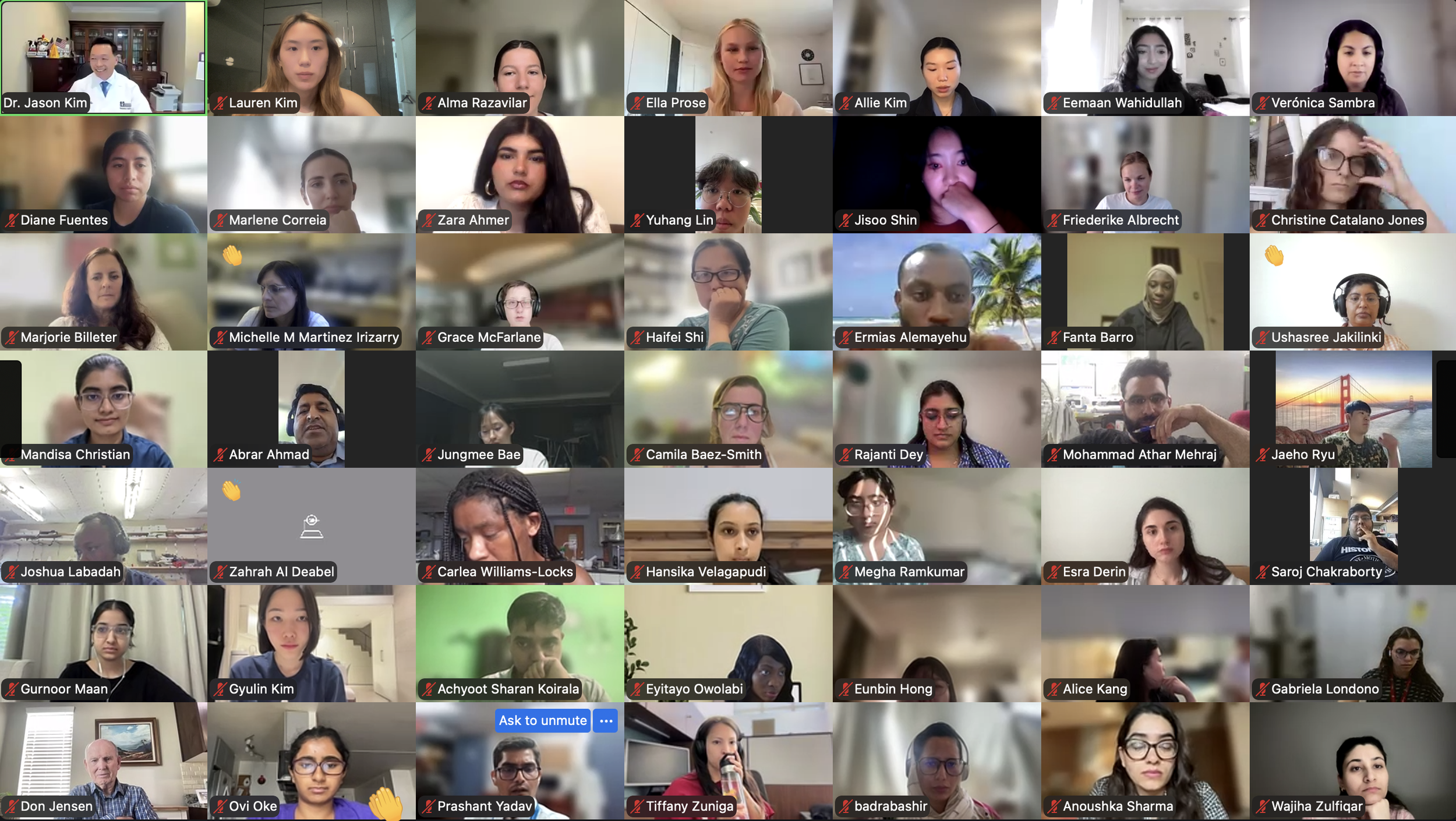
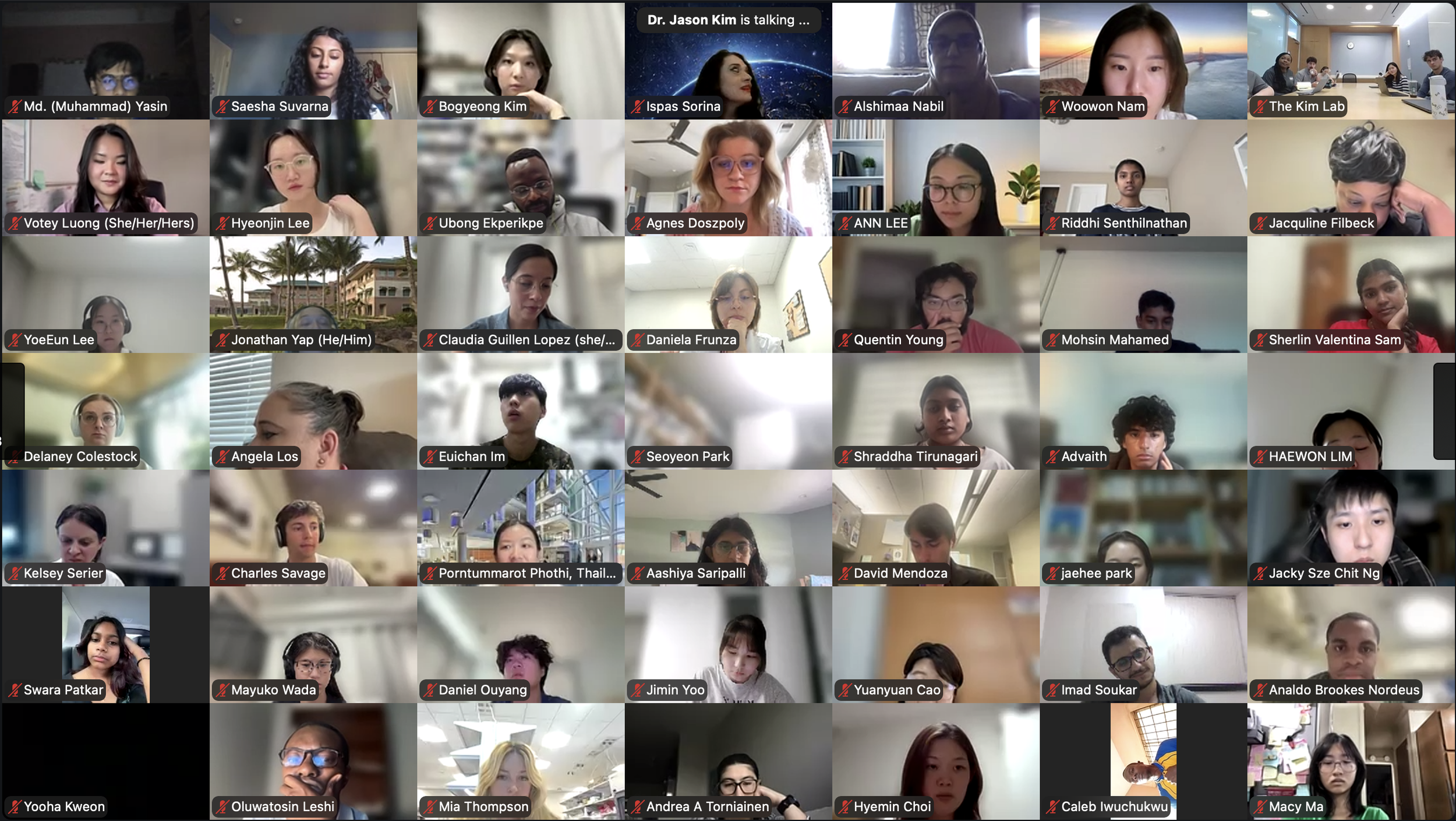
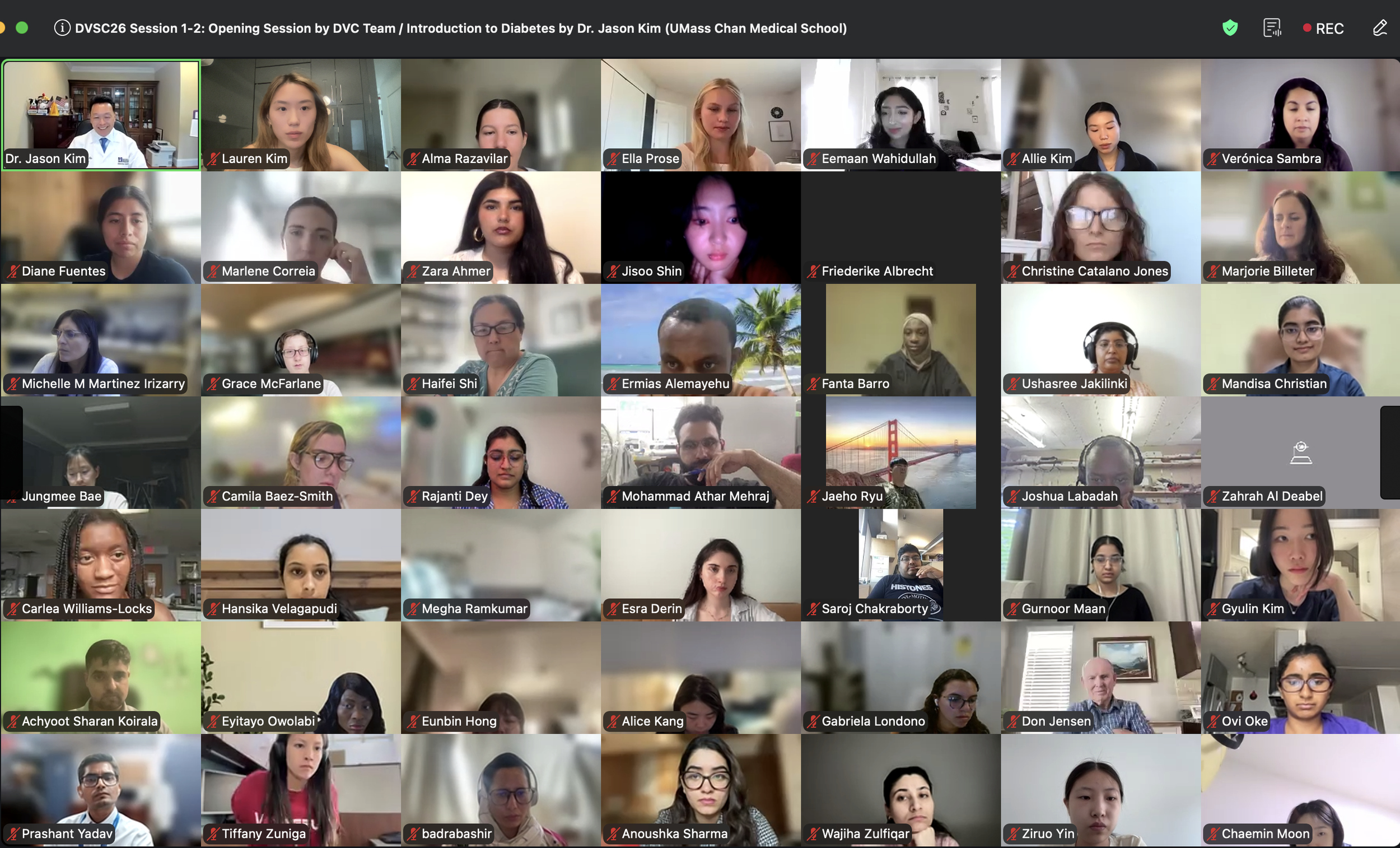
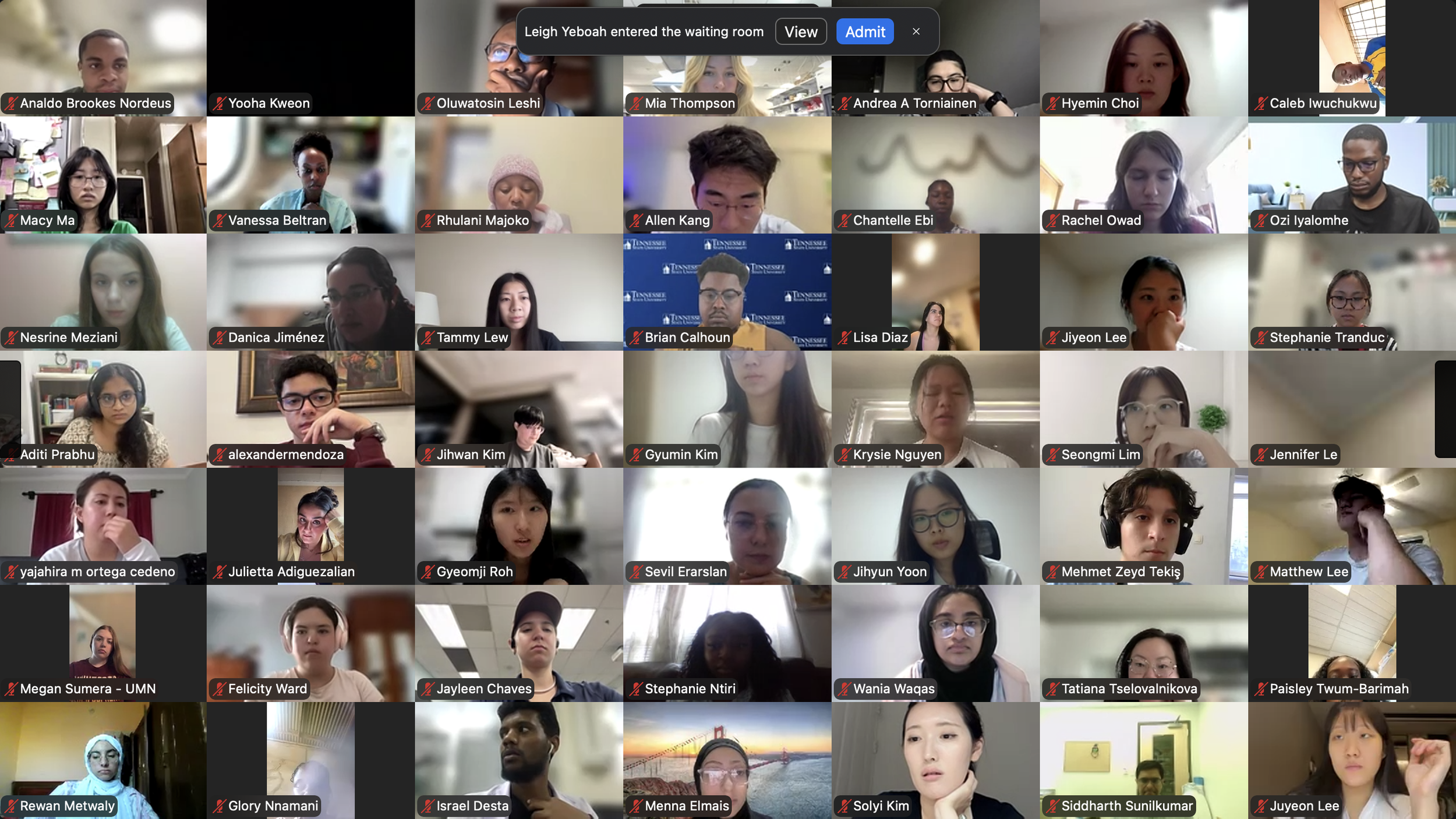
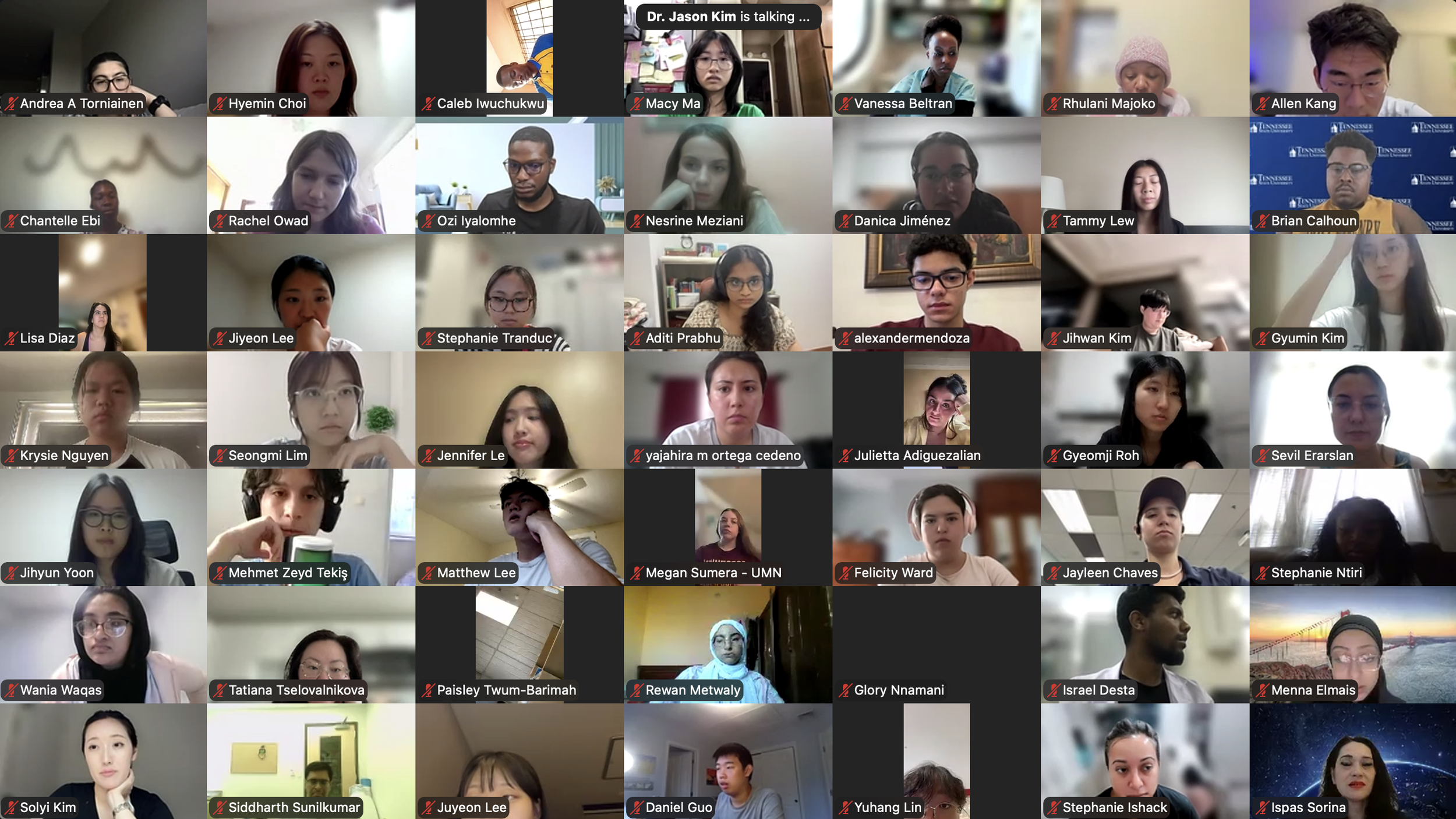
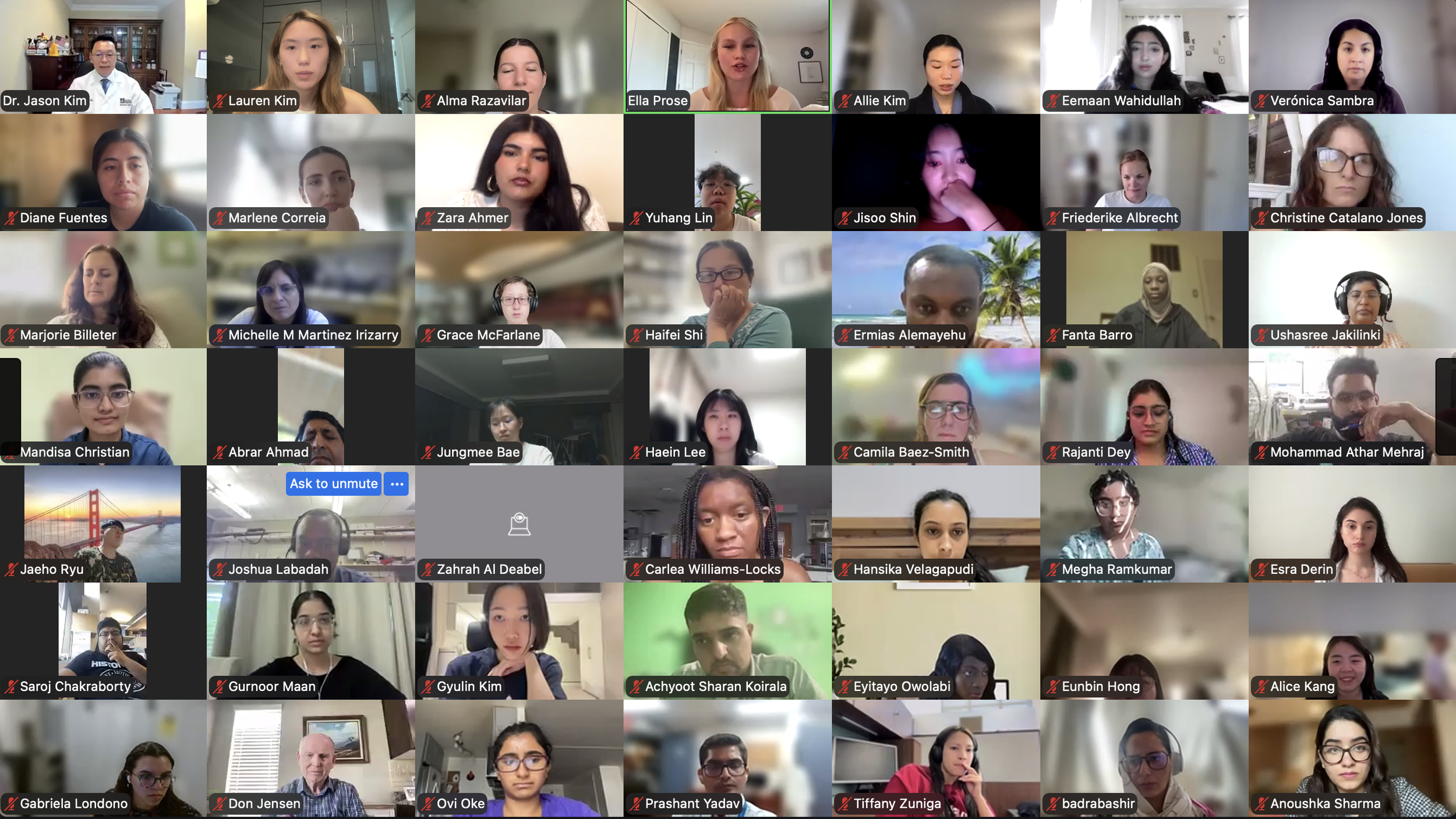
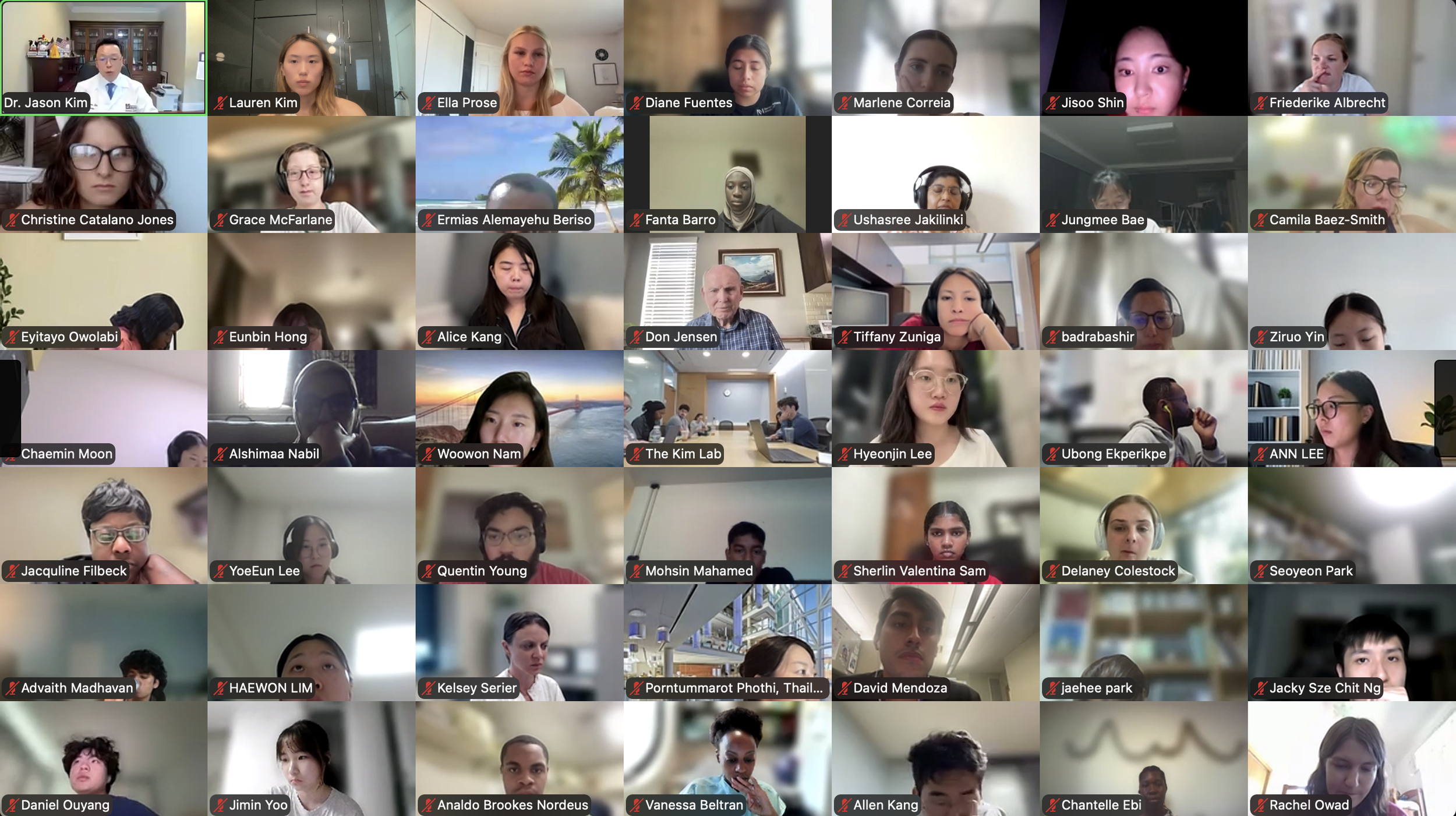
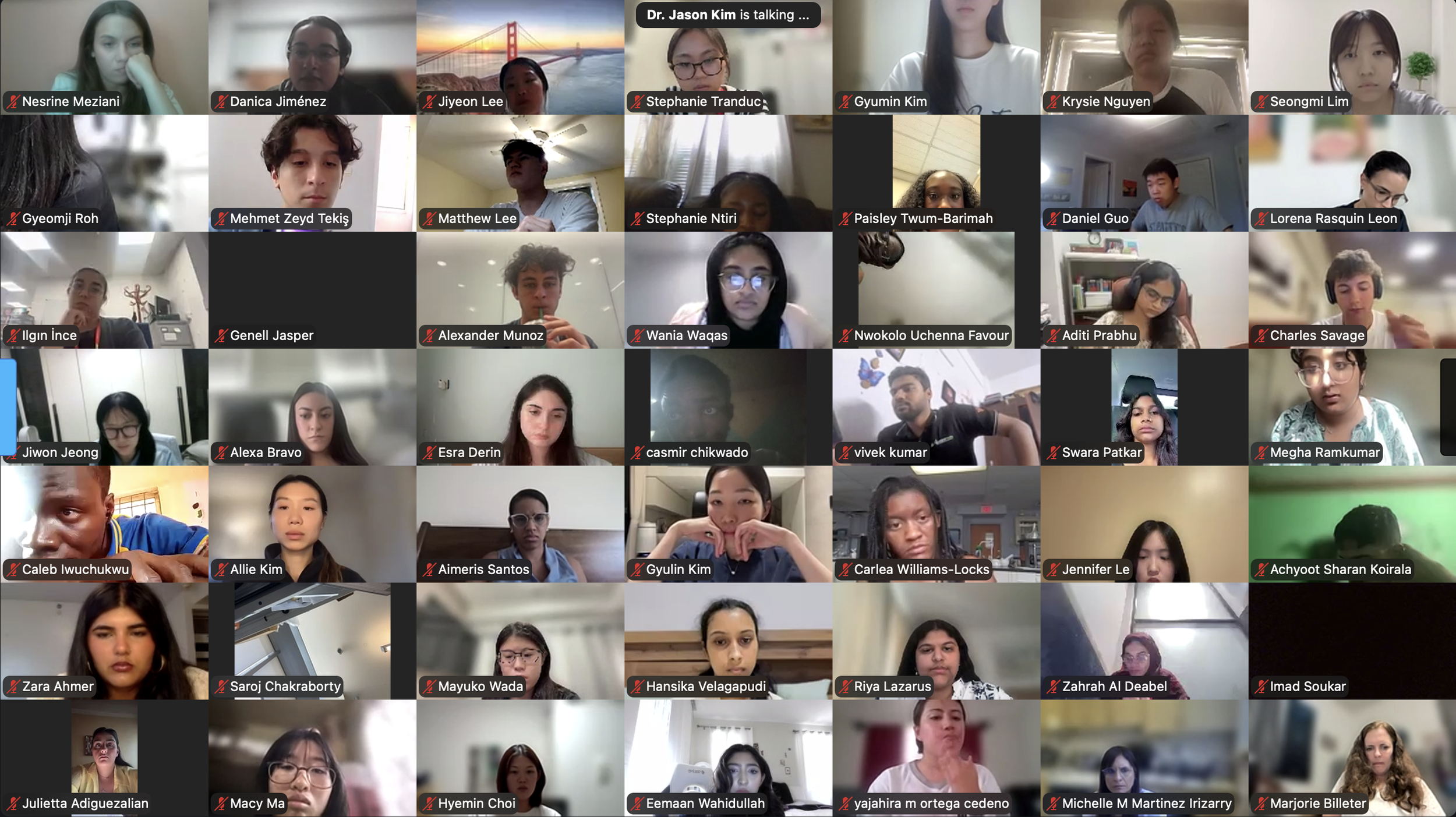
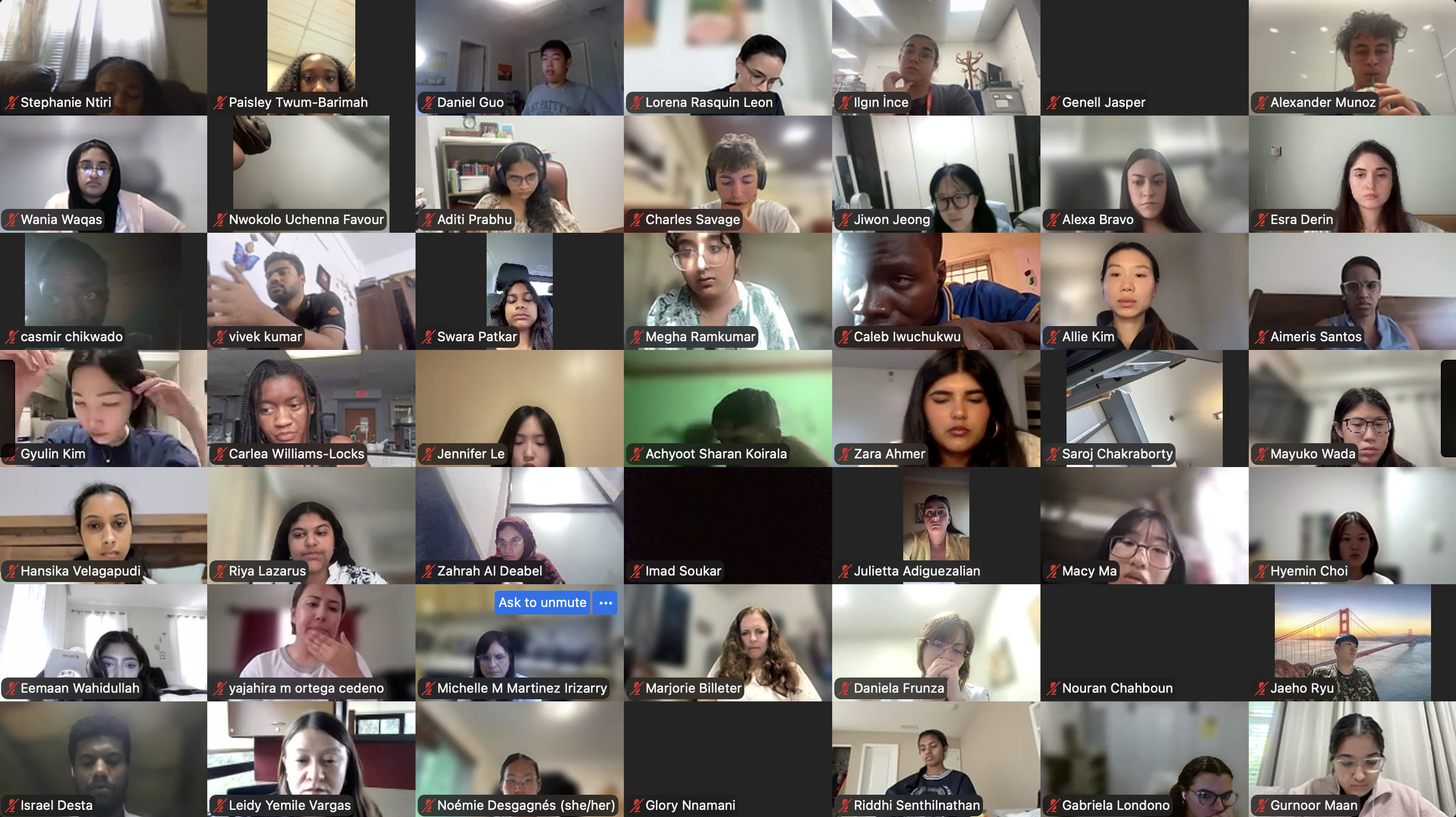
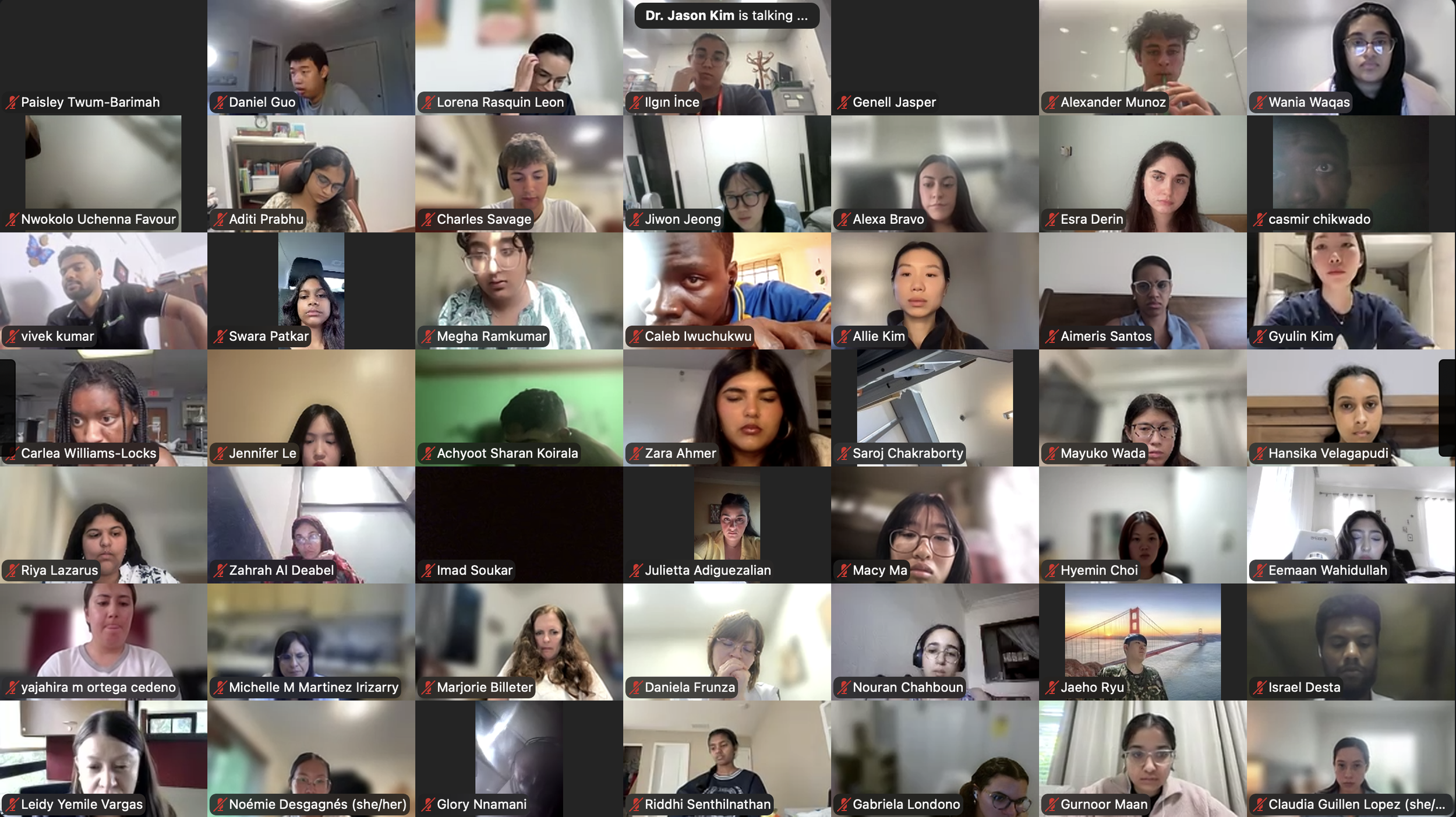
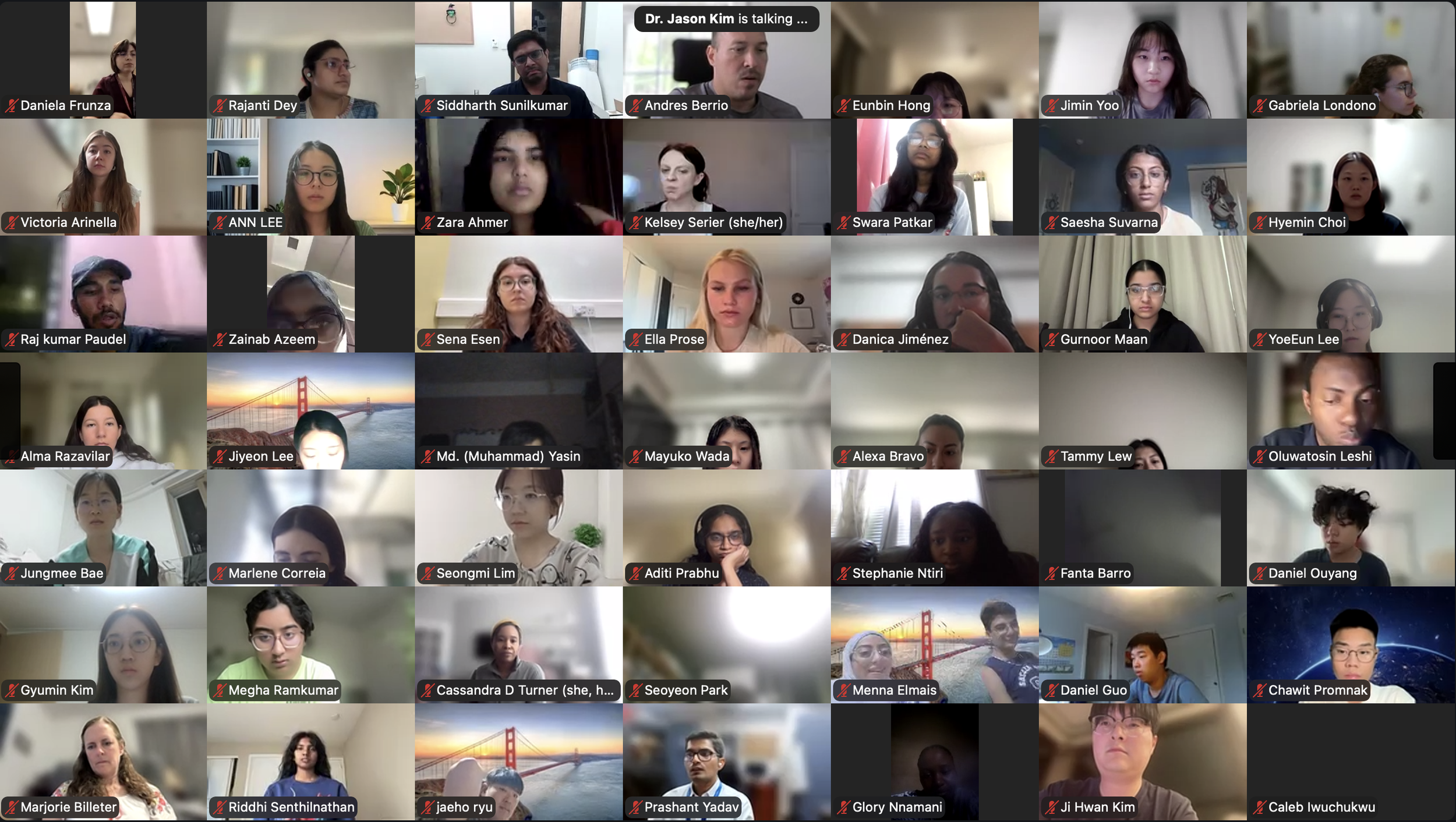
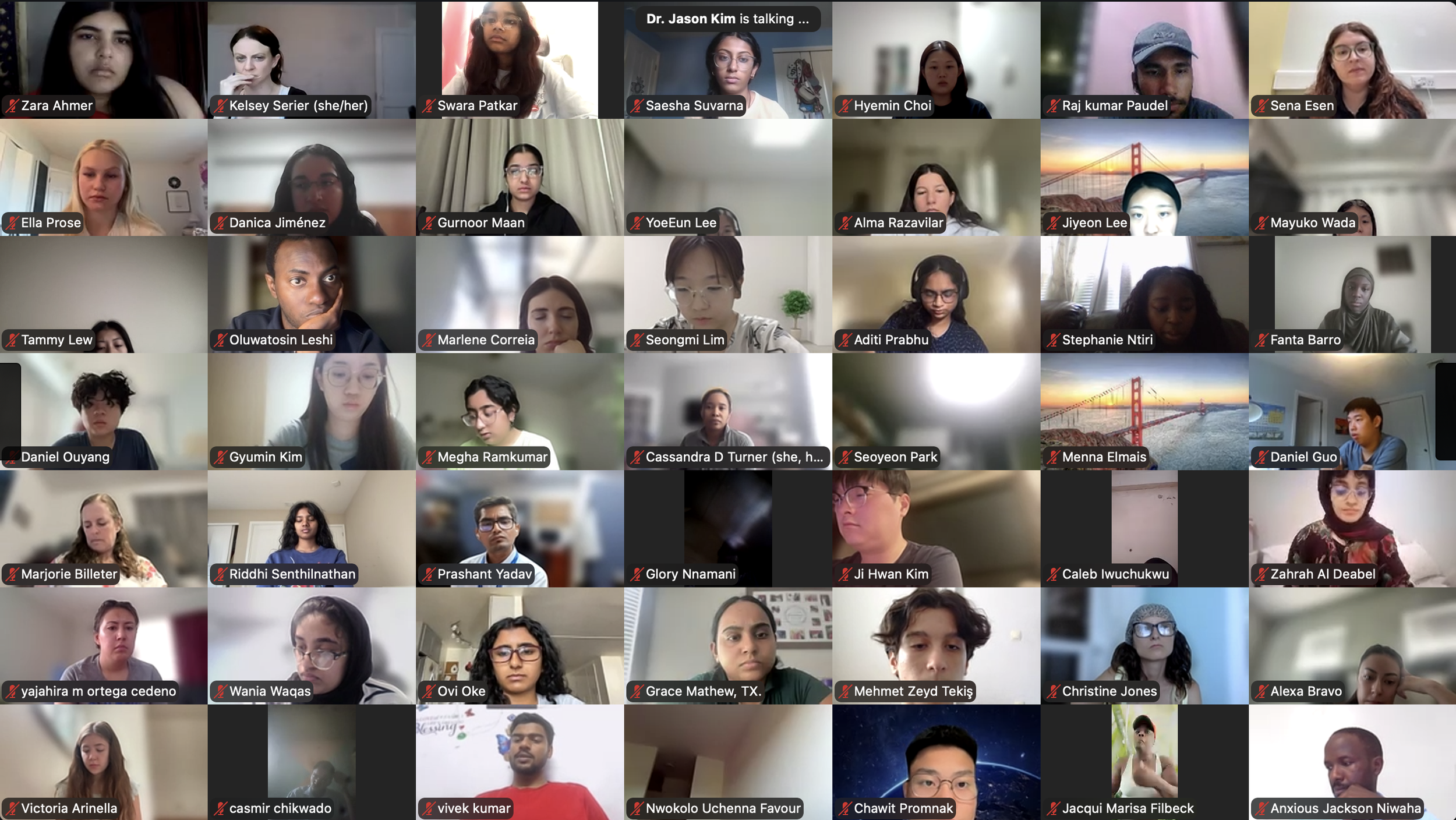
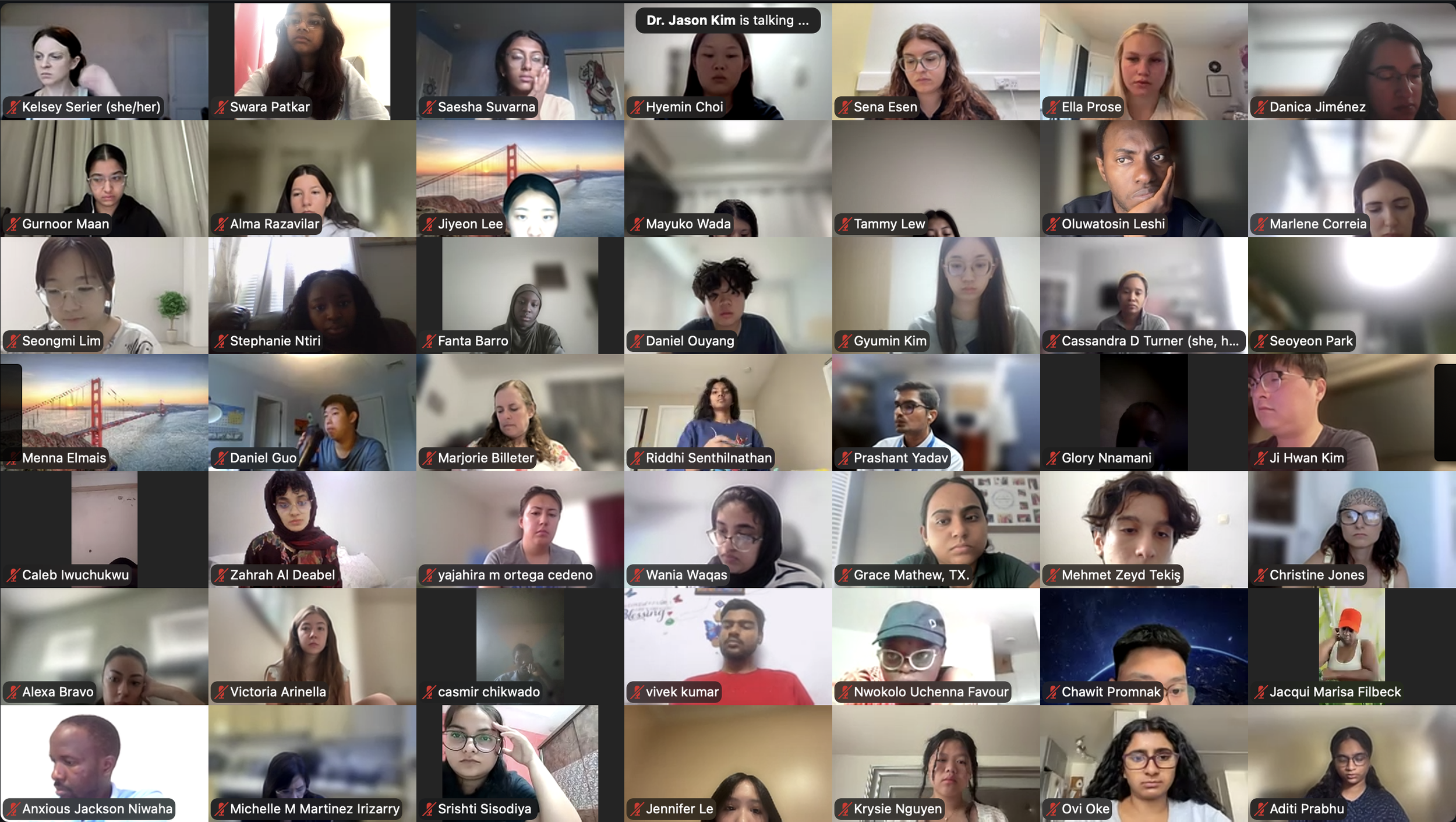
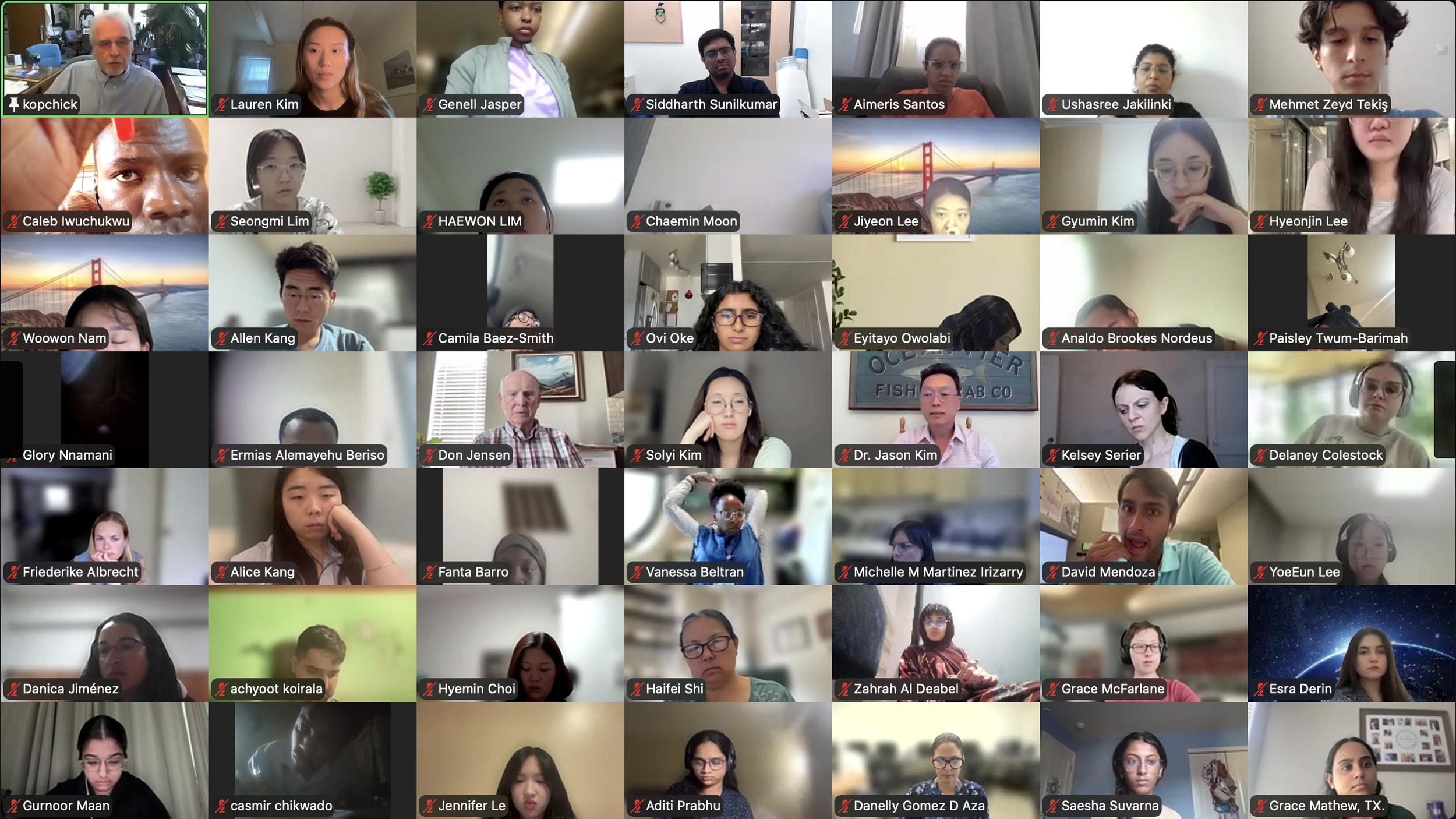
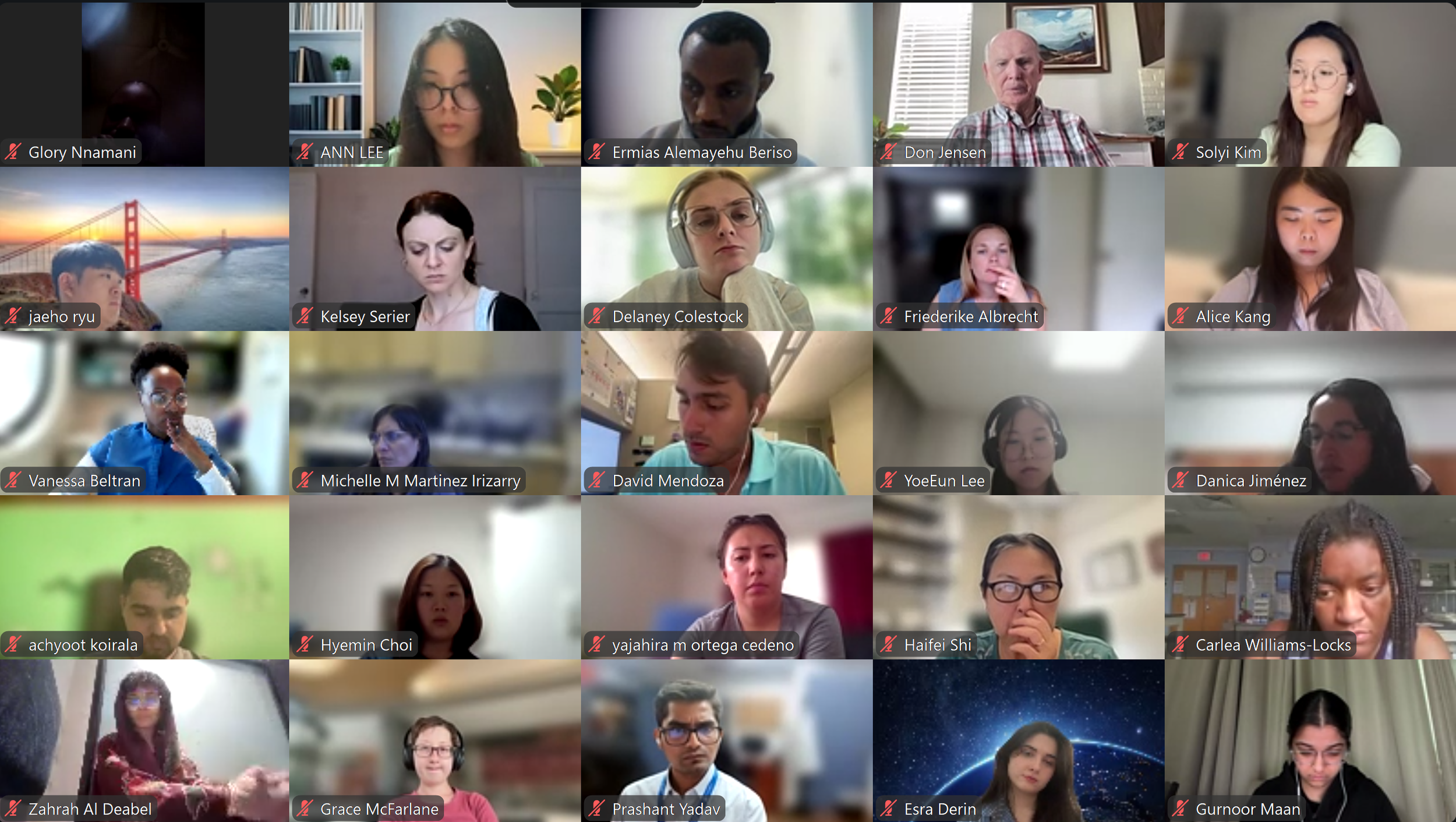
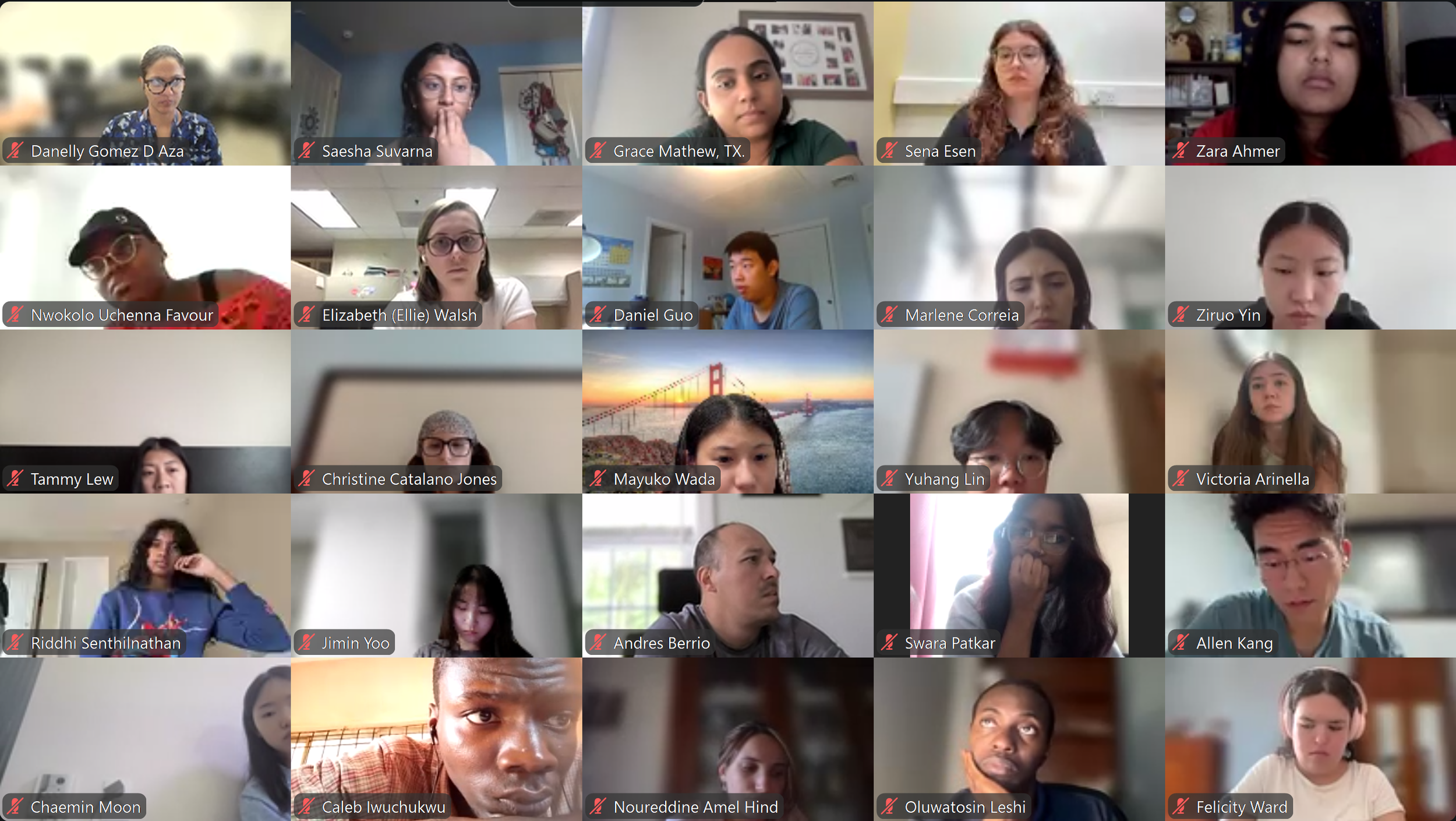
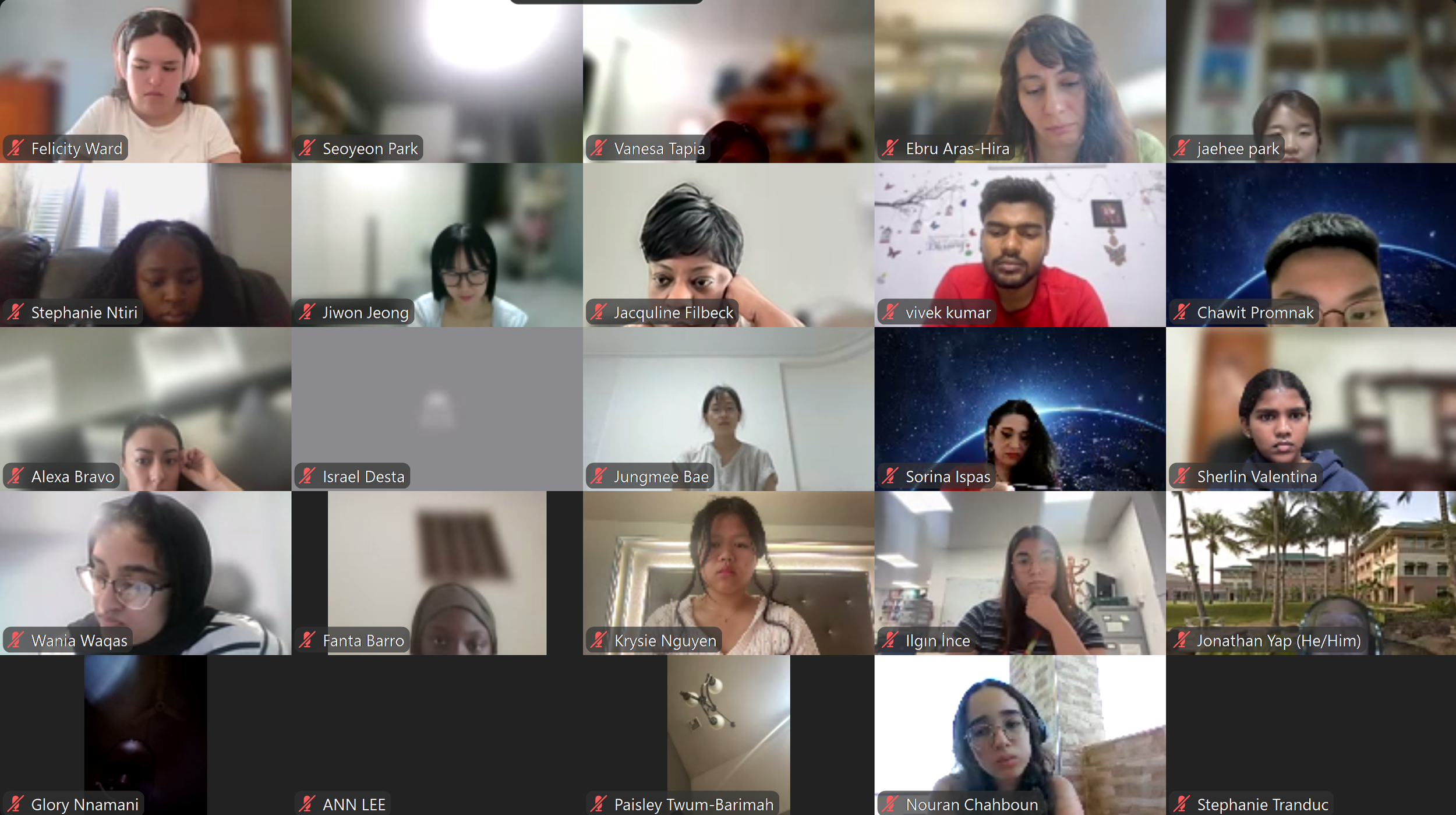
The Diabetes Virtual Summer Camp 2026 (DVSC26) has 518 registered participants, representing over 250 institutions from 55 countries.
Our DVSC26 participants come from Algeria, Bangladesh, Barbados, Cameroon, Canada, Chile, China, Colombia, Dominican Republic, Egypt, Ethiopia, Finland, Germany, Ghana, Greece, Honduras, Hong Kong, Hungary, India, Indonesia, Iraq, Italy, Japan, Jordan, Kazakhstan, Kenya, Kuwait, Lebanon, Lesotho, Malawi, Mexico, Morocco, Nepal, Nigeria, Pakistan, Palestinian Territories, Philippines, Portugal, Qatar, Romania, Saudi Arabia, Serbia, Singapore, South Korea, Spain, Sudan, Sweden, Thailand, Turkey, Uganda, United Arab Emirates, United Kingdom, Zambia, Zimbabwe, and the United States of America.
The 250 participants from the United States represent 36 states: Alaska (1), Alabama (3), Arizona (4), California (22), Colorado (2), Connecticut (1), Florida (5), Georgia (8), Hawaii (5), Illinois (7), Indiana (12), Kentucky (2), Louisiana (5), Maryland (9), Massachusetts (59), Michigan (6), Minnesota (9), Missouri (3), Montana (1), Nevada (2), New Jersey (10), New Mexico (3), New York (19), North Carolina (9), Ohio (7), Oregon (2), Pennsylvania (5), Puerto Rico (1), Rhode Island (1), South Carolina (1), Tennessee (1), Texas (14), Utah (2), Virginia (5), Washington (2), and Wisconsin (2).
The DVSC26 welcomes 189 underrepresented minorities in medicine and science as our participants represent diverse demographics in gender (383 women & 131 men), age (14~86 years of age with 69% at 18~35 years of age), and ethnicity (90 African American or Black, 2 American Indian or Alaska Native, 47 Hispanic, Latinx or Spanish origin, 1 Native Hawaiian or Pacific Islander, 49 Middle Eastern or North African, 241 Asian or Asian American, and 65 White).
The DVSC26 participants also represent a diverse status: 84 high school students, 77 college students, 37 post-undergraduates (B.S. or B.A.), 74 graduate students (Master or Doctoral), 49 medical students, 10 nursing students, 1 physician assistant program student, 38 pharmacy students, 4 nutritionists or dieticians, 14 medical residents (M.D.), 12 clinical fellows (M.D.), 36 postdoctoral researchers (Ph.D. or M.D.), 18 early-career clinicians or research scientists, 23 physicians (M.D. in academic or private), 8 scientists (M.D. or M.D./Ph.D. in academic or industry), 29 faculty (professors), and 4 other health professionals.
Many of our participants have type 1 or type 2 diabetes, or live with families with diabetes. All of our participants share a common goal of advancing knowledge in diabetes and pursuing a career in medicine, research, and other healthcare fields.
Follow us on Facebook (facebook.com/diabetesvirtualcamp), Instagram (instagram.com/diabetesvirtualcamp/), and LinkedIn (linkedin.com/company/diabetesvirtualcamp/).
August 3, 2026
Session 1. Opening Session by DVC Team (Lauren Kim, Allison Kim, and Dr. Jason Kim) and Program Interns (Alma Razavilar, Ella Prose, and Eemaan Wahidullah)
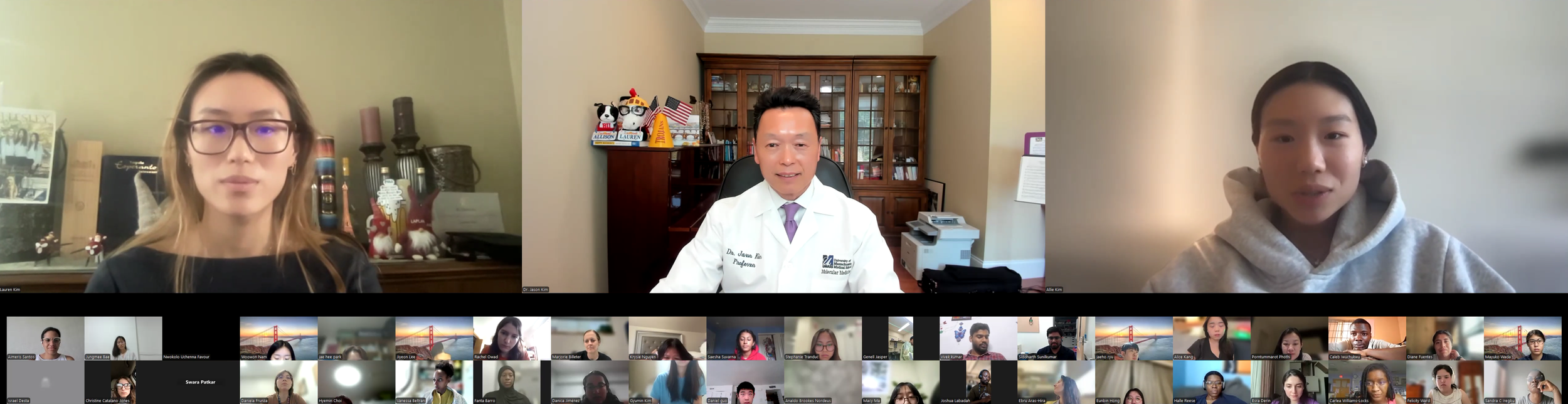
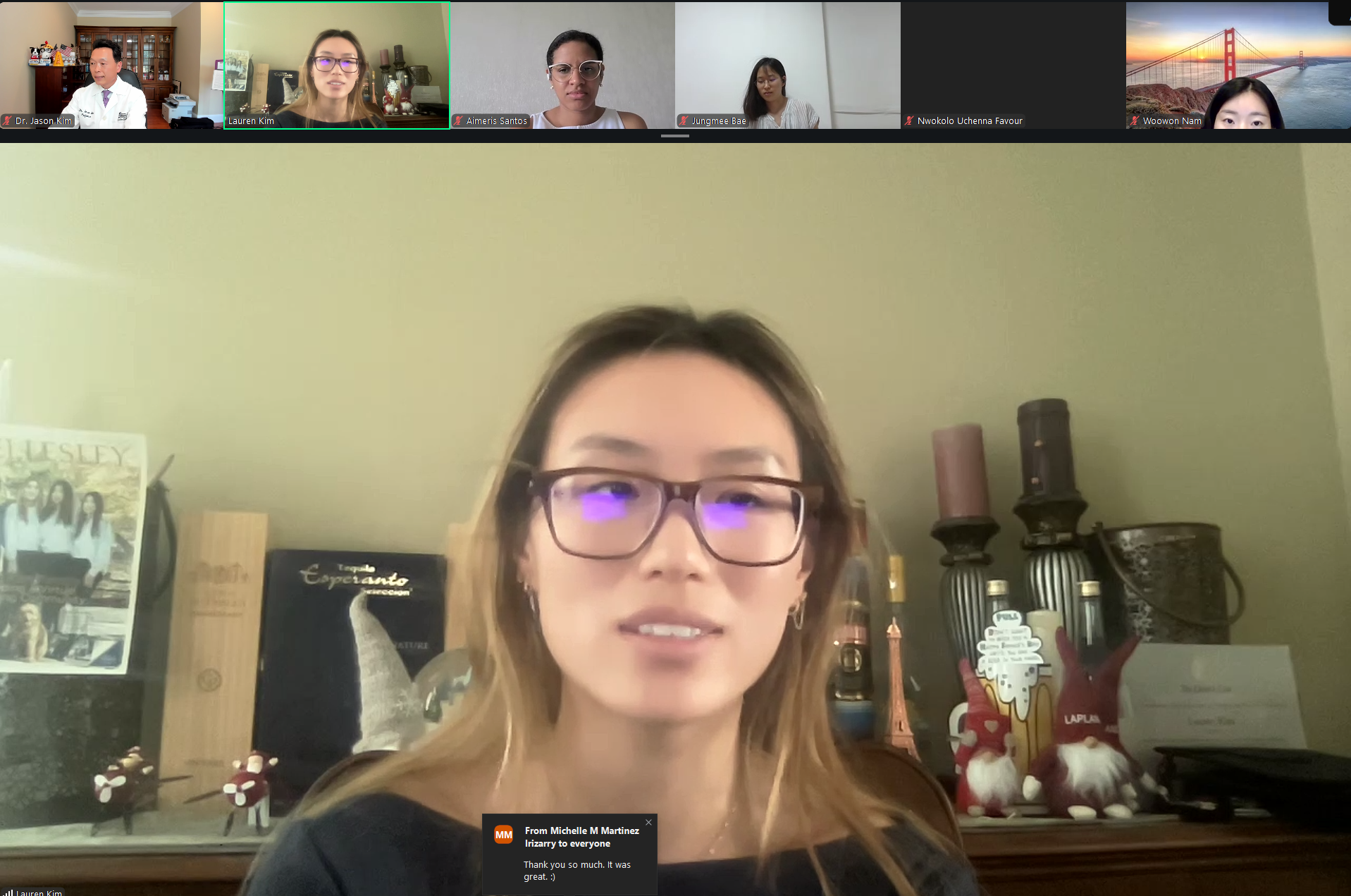
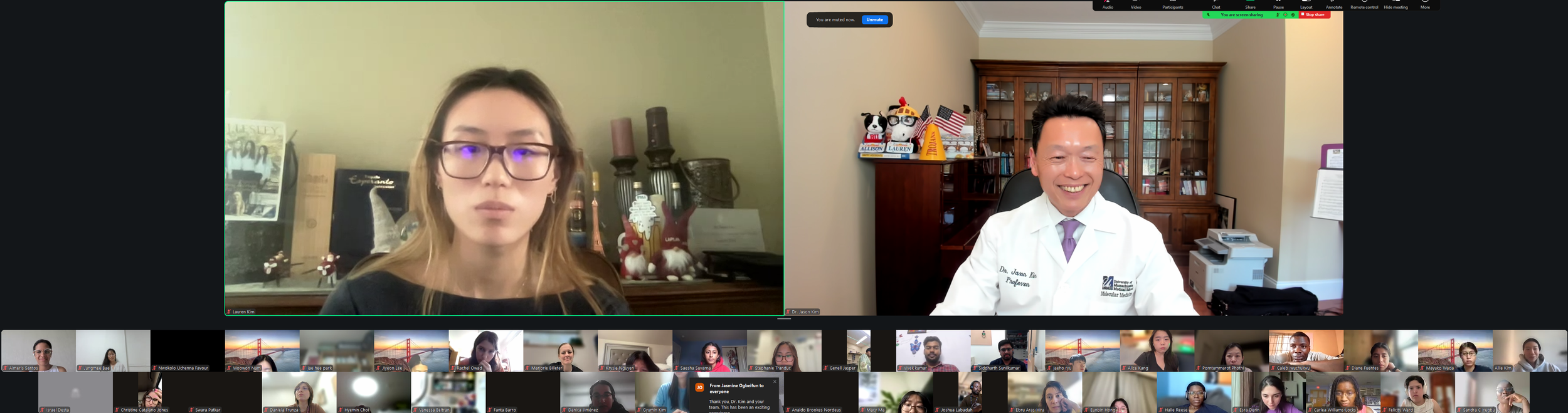
We had an exciting kick-off to Diabetes Virtual Summer Camp 2026 with today’s Opening Session. Lauren Kim (Founder, Program Director, and Webmaster) welcomed participants from around the world and shared the story of how our program began in 2020. Allison Kim (Associate Director and Director of Outreach) welcomed participants and discussed the goals of the program and the objectives of the virtual sessions led by leading Experts in the field. Dr. Jason Kim (Advisor) welcomed participants and discussed the program session format and Zoom policies. Our virtual educational program began in the summer of 2020, at the height of the COVID-19 pandemic, when our world was shut down, and when our effort was to use the virtual platform to gather like-minded individuals to share our passion for science, medicine, and research. Since then, our program, now the 9th program of the Diabetes Virtual Camp, has garnered new and far-reaching purposes. While scientific and medical conferences serve vital objectives in disseminating discoveries, brainstorming with peers, and networking for collaborations, these conferences can be prohibitive to people in many ways, with costly registration fees, expensive travel costs, and even an intimidating environment, none of which applies to our program. Thanks to the American Diabetes Association, the Diabetes Virtual Camp comes to you, in the comfort of your home or work, no matter where you are, near and far, without any fees, restrictions, or prejudice, as we have gathered today. While COVID-19 took away so many lives and affected other people’s livelihoods, it also changed our society, perhaps some for the better, as we learned that virtual learning has no limits, no boundaries, and no discrimination. When it comes to human health and diseases, understanding and sharing the right information is an important step towards saving lives. That’s why we are here, and that’s the goal of our program. For the next 2 weeks, we will have 13 sessions led by world-renowned clinicians and scientists who will share exciting discoveries from their impactful research, promising therapeutic approaches from their state-of-the-art clinics, passionate stories about their lifelong care for patients, and inspiring stories of their journey to success. Through them, our audience will not only learn about science and medicine, but they will be inspired to make the most of their opportunities, continue their own journey towards impactful biomedical research and confident clinical care, and save lives. We are thrilled to meet the participants joining our virtual program from all around the world to better understand diabetes and inspire our next generation of physicians and scientists.
-
![Session 1: Opening Session & Introduction to Diabetes by Lauren, Allison, and Dr. Jason Kim (University of Massachusetts Medical School)]()
August 3, 2026 (Session 1 - Part 1)
Session 1. Opening Session by DVC Team - Lauren Kim (Founder, Program Director, and Webmaster, University of Southern California, B.S. in Human Biology, 24’), Allison Kim (Associate Director and Director of Outreach, Boston University, B.A. in Biology, 23’), and Dr. Jason Kim (Professor of Molecular Medicine and Professor of Medicine, Division of Endocrinology, Metabolism, and Diabetes, Director of Metabolic Disease Research Center, MD/PhD Admissions Committee, University of Massachusetts Chan Medical School) and DVC Interns - Alma Razavilar (Senior Program Intern, University of California Berkeley), Ella Prose (Program Intern, University of Wisconsin-Madison), and Eemaan Wahidullah (Program Intern, University of California Santa Barbara)
The Diabetes Virtual Summer Camp 2026 celebrates its 6-year anniversary and 9th program with today’s Session 1 - Opening Session where Lauren Kim and Allison Kim welcomed 518 registered participants, representing over 250 institutions from 55 countries and shared the goals and objectives for the program. We are thrilled to meet the participants joining our virtual program from all around the world to better understand diabetes, inspiring our next generation of physicians and scientists.
-
![]()
August 3, 2026 (Session 1 - Part 2)
Session 1. Opening Session by DVC Team - Lauren Kim (Founder, Program Director, and Webmaster, University of Southern California, B.S. in Human Biology, 24’), Allison Kim (Associate Director and Director of Outreach, Boston University, B.A. in Biology, 23’), and Dr. Jason Kim (Professor of Molecular Medicine and Professor of Medicine, Division of Endocrinology, Metabolism, and Diabetes, Director of Metabolic Disease Research Center, MD/PhD Admissions Committee, University of Massachusetts Chan Medical School) and DVC Interns - Alma Razavilar (Senior Program Intern, University of California Berkeley), Ella Prose (Program Intern, University of Wisconsin-Madison), and Eemaan Wahidullah (Program Intern, University of California Santa Barbara)
Lauren Kim welcomes our program participants and presents the history of Diabetes Virtual Camp, program goals, and objectives.
-
![]()
August 3, 2026 (Session 1 - Part 3)
Session 1. Opening Session by DVC Team - Lauren Kim (Founder, Program Director, and Webmaster, University of Southern California, B.S. in Human Biology, 24’), Allison Kim (Associate Director and Director of Outreach, Boston University, B.A. in Biology, 23’), and Dr. Jason Kim (Professor of Molecular Medicine and Professor of Medicine, Division of Endocrinology, Metabolism, and Diabetes, Director of Metabolic Disease Research Center, MD/PhD Admissions Committee, University of Massachusetts Chan Medical School) and DVC Interns - Alma Razavilar (Senior Program Intern, University of California Berkeley), Ella Prose (Program Intern, University of Wisconsin-Madison), and Eemaan Wahidullah (Program Intern, University of California Santa Barbara)
The Diabetes Virtual Summer Camp 2026 celebrates its 6-year anniversary and 9th program with today’s Session 1 - Opening Session where Lauren Kim and Allison Kim welcomed 518 registered participants, representing over 250 institutions from 55 countries and shared the goals and objectives for the program. We are thrilled to meet the participants joining our virtual program from all around the world to better understand diabetes, inspiring our next generation of physicians and scientists.
-
![]()
August 3, 2026 (Session 1 - Part 4)
Session 1. Opening Session by DVC Team - Lauren Kim (Founder, Program Director, and Webmaster, University of Southern California, B.S. in Human Biology, 24’), Allison Kim (Associate Director and Director of Outreach, Boston University, B.A. in Biology, 23’), and Dr. Jason Kim (Professor of Molecular Medicine and Professor of Medicine, Division of Endocrinology, Metabolism, and Diabetes, Director of Metabolic Disease Research Center, MD/PhD Admissions Committee, University of Massachusetts Chan Medical School) and DVC Interns - Alma Razavilar (Senior Program Intern, University of California Berkeley), Ella Prose (Program Intern, University of Wisconsin-Madison), and Eemaan Wahidullah (Program Intern, University of California Santa Barbara)
The Diabetes Virtual Summer Camp 2026 celebrates its 6-year anniversary and 9th program with today’s Session 1 - Opening Session where Lauren Kim and Allison Kim welcomed 518 registered participants, representing over 250 institutions from 55 countries and shared the goals and objectives for the program. We are thrilled to meet the participants joining our virtual program from all around the world to better understand diabetes, inspiring our next generation of physicians and scientists.
-
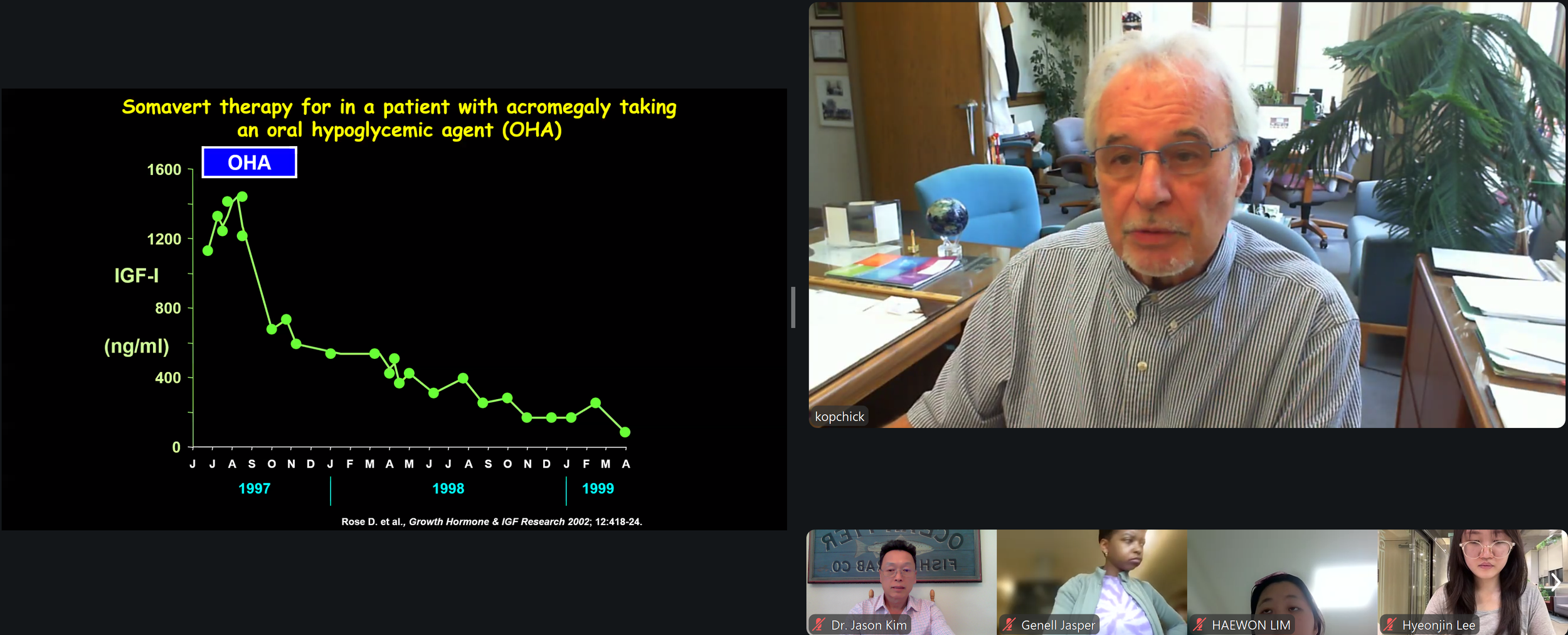
![]()
August 3, 2026 (Session 1 - Part 5)
Session 1. Opening Session by DVC Team - Lauren Kim (Founder, Program Director, and Webmaster, University of Southern California, B.S. in Human Biology, 24’), Allison Kim (Associate Director and Director of Outreach, Boston University, B.A. in Biology, 23’), and Dr. Jason Kim (Professor of Molecular Medicine and Professor of Medicine, Division of Endocrinology, Metabolism, and Diabetes, Director of Metabolic Disease Research Center, MD/PhD Admissions Committee, University of Massachusetts Chan Medical School) and DVC Interns - Alma Razavilar (Senior Program Intern, University of California Berkeley), Ella Prose (Program Intern, University of Wisconsin-Madison), and Eemaan Wahidullah (Program Intern, University of California Santa Barbara)
Allison Kim welcomes our program participants and presents the program formats and Our Network page.
-
![]()
August 3, 2026 (Session 1 - Part 6)
Session 1. Opening Session by DVC Team - Lauren Kim (Founder, Program Director, and Webmaster, University of Southern California, B.S. in Human Biology, 24’), Allison Kim (Associate Director and Director of Outreach, Boston University, B.A. in Biology, 23’), and Dr. Jason Kim (Professor of Molecular Medicine and Professor of Medicine, Division of Endocrinology, Metabolism, and Diabetes, Director of Metabolic Disease Research Center, MD/PhD Admissions Committee, University of Massachusetts Chan Medical School) and DVC Interns - Alma Razavilar (Senior Program Intern, University of California Berkeley), Ella Prose (Program Intern, University of Wisconsin-Madison), and Eemaan Wahidullah (Program Intern, University of California Santa Barbara)
The Diabetes Virtual Summer Camp 2026 celebrates its 6-year anniversary and 9th program with today’s Session 1 - Opening Session where Lauren Kim and Allison Kim welcomed 518 registered participants, representing over 250 institutions from 55 countries and shared the goals and objectives for the program. We are thrilled to meet the participants joining our virtual program from all around the world to better understand diabetes, inspiring our next generation of physicians and scientists.
-
![]()
August 3, 2026 (Session 1 - Part 7)
Session 1. Opening Session by DVC Team - Lauren Kim (Founder, Program Director, and Webmaster, University of Southern California, B.S. in Human Biology, 24’), Allison Kim (Associate Director and Director of Outreach, Boston University, B.A. in Biology, 23’), and Dr. Jason Kim (Professor of Molecular Medicine and Professor of Medicine, Division of Endocrinology, Metabolism, and Diabetes, Director of Metabolic Disease Research Center, MD/PhD Admissions Committee, University of Massachusetts Chan Medical School) and DVC Interns - Alma Razavilar (Senior Program Intern, University of California Berkeley), Ella Prose (Program Intern, University of Wisconsin-Madison), and Eemaan Wahidullah (Program Intern, University of California Santa Barbara)
The Diabetes Virtual Summer Camp 2026 celebrates its 6-year anniversary and 9th program with today’s Session 1 - Opening Session where Lauren Kim and Allison Kim welcomed 518 registered participants, representing over 250 institutions from 55 countries and shared the goals and objectives for the program. We are thrilled to meet the participants joining our virtual program from all around the world to better understand diabetes, inspiring our next generation of physicians and scientists.
-
![]()
August 3, 2026 (Session 1 - Part 8)
Session 1. Opening Session by DVC Team - Lauren Kim (Founder, Program Director, and Webmaster, University of Southern California, B.S. in Human Biology, 24’), Allison Kim (Associate Director and Director of Outreach, Boston University, B.A. in Biology, 23’), and Dr. Jason Kim (Professor of Molecular Medicine and Professor of Medicine, Division of Endocrinology, Metabolism, and Diabetes, Director of Metabolic Disease Research Center, MD/PhD Admissions Committee, University of Massachusetts Chan Medical School) and DVC Interns - Alma Razavilar (Senior Program Intern, University of California Berkeley), Ella Prose (Program Intern, University of Wisconsin-Madison), and Eemaan Wahidullah (Program Intern, University of California Santa Barbara)
Dr. Kim welcomes our program participants and presents the program and Zoom policies and Program Certificate.
-
![]()
August 3, 2026 (Session 1 - Part 9)
Session 1. Opening Session by DVC Team - Lauren Kim (Founder, Program Director, and Webmaster, University of Southern California, B.S. in Human Biology, 24’), Allison Kim (Associate Director and Director of Outreach, Boston University, B.A. in Biology, 23’), and Dr. Jason Kim (Professor of Molecular Medicine and Professor of Medicine, Division of Endocrinology, Metabolism, and Diabetes, Director of Metabolic Disease Research Center, MD/PhD Admissions Committee, University of Massachusetts Chan Medical School) and DVC Interns - Alma Razavilar (Senior Program Intern, University of California Berkeley), Ella Prose (Program Intern, University of Wisconsin-Madison), and Eemaan Wahidullah (Program Intern, University of California Santa Barbara)
The Diabetes Virtual Summer Camp 2026 celebrates its 6-year anniversary and 9th program with today’s Session 1 - Opening Session where Lauren Kim and Allison Kim welcomed 518 registered participants, representing over 250 institutions from 55 countries and shared the goals and objectives for the program. We are thrilled to meet the participants joining our virtual program from all around the world to better understand diabetes, inspiring our next generation of physicians and scientists.
-
![]()
August 3, 2026 (Session 1 - Part 10)
Session 1. Opening Session by DVC Team - Lauren Kim (Founder, Program Director, and Webmaster, University of Southern California, B.S. in Human Biology, 24’), Allison Kim (Associate Director and Director of Outreach, Boston University, B.A. in Biology, 23’), and Dr. Jason Kim (Professor of Molecular Medicine and Professor of Medicine, Division of Endocrinology, Metabolism, and Diabetes, Director of Metabolic Disease Research Center, MD/PhD Admissions Committee, University of Massachusetts Chan Medical School) and DVC Interns - Alma Razavilar (Senior Program Intern, University of California Berkeley), Ella Prose (Program Intern, University of Wisconsin-Madison), and Eemaan Wahidullah (Program Intern, University of California Santa Barbara)
The Diabetes Virtual Summer Camp 2026 celebrates its 6-year anniversary and 9th program with today’s Session 1 - Opening Session where Lauren Kim and Allison Kim welcomed 518 registered participants, representing over 250 institutions from 55 countries and shared the goals and objectives for the program. We are thrilled to meet the participants joining our virtual program from all around the world to better understand diabetes, inspiring our next generation of physicians and scientists.
-
![]()
August 3, 2026 (Session 1 - Part 11)
Session 1. Opening Session by DVC Team - Lauren Kim (Founder, Program Director, and Webmaster, University of Southern California, B.S. in Human Biology, 24’), Allison Kim (Associate Director and Director of Outreach, Boston University, B.A. in Biology, 23’), and Dr. Jason Kim (Professor of Molecular Medicine and Professor of Medicine, Division of Endocrinology, Metabolism, and Diabetes, Director of Metabolic Disease Research Center, MD/PhD Admissions Committee, University of Massachusetts Chan Medical School) and DVC Interns - Alma Razavilar (Senior Program Intern, University of California Berkeley), Ella Prose (Program Intern, University of Wisconsin-Madison), and Eemaan Wahidullah (Program Intern, University of California Santa Barbara)
Alma Razavilar welcomes our program participants.
-
![]()
August 3, 2026 (Session 1 - Part 12)
Session 1. Opening Session by DVC Team - Lauren Kim (Founder, Program Director, and Webmaster, University of Southern California, B.S. in Human Biology, 24’), Allison Kim (Associate Director and Director of Outreach, Boston University, B.A. in Biology, 23’), and Dr. Jason Kim (Professor of Molecular Medicine and Professor of Medicine, Division of Endocrinology, Metabolism, and Diabetes, Director of Metabolic Disease Research Center, MD/PhD Admissions Committee, University of Massachusetts Chan Medical School) and DVC Interns - Alma Razavilar (Senior Program Intern, University of California Berkeley), Ella Prose (Program Intern, University of Wisconsin-Madison), and Eemaan Wahidullah (Program Intern, University of California Santa Barbara)
The Diabetes Virtual Summer Camp 2026 celebrates its 6-year anniversary and 9th program with today’s Session 1 - Opening Session where Lauren Kim and Allison Kim welcomed 518 registered participants, representing over 250 institutions from 55 countries and shared the goals and objectives for the program. We are thrilled to meet the participants joining our virtual program from all around the world to better understand diabetes, inspiring our next generation of physicians and scientists.
-
![]()
August 3, 2026 (Session 1 - Part 13)
Session 1. Opening Session by DVC Team - Lauren Kim (Founder, Program Director, and Webmaster, University of Southern California, B.S. in Human Biology, 24’), Allison Kim (Associate Director and Director of Outreach, Boston University, B.A. in Biology, 23’), and Dr. Jason Kim (Professor of Molecular Medicine and Professor of Medicine, Division of Endocrinology, Metabolism, and Diabetes, Director of Metabolic Disease Research Center, MD/PhD Admissions Committee, University of Massachusetts Chan Medical School) and DVC Interns - Alma Razavilar (Senior Program Intern, University of California Berkeley), Ella Prose (Program Intern, University of Wisconsin-Madison), and Eemaan Wahidullah (Program Intern, University of California Santa Barbara)
The Diabetes Virtual Summer Camp 2026 celebrates its 6-year anniversary and 9th program with today’s Session 1 - Opening Session where Lauren Kim and Allison Kim welcomed 518 registered participants, representing over 250 institutions from 55 countries and shared the goals and objectives for the program. We are thrilled to meet the participants joining our virtual program from all around the world to better understand diabetes, inspiring our next generation of physicians and scientists.
-
![]()
August 3, 2026 (Session 1 - Part 14)
Session 1. Opening Session by DVC Team - Lauren Kim (Founder, Program Director, and Webmaster, University of Southern California, B.S. in Human Biology, 24’), Allison Kim (Associate Director and Director of Outreach, Boston University, B.A. in Biology, 23’), and Dr. Jason Kim (Professor of Molecular Medicine and Professor of Medicine, Division of Endocrinology, Metabolism, and Diabetes, Director of Metabolic Disease Research Center, MD/PhD Admissions Committee, University of Massachusetts Chan Medical School) and DVC Interns - Alma Razavilar (Senior Program Intern, University of California Berkeley), Ella Prose (Program Intern, University of Wisconsin-Madison), and Eemaan Wahidullah (Program Intern, University of California Santa Barbara)
Ella Prose welcomes our program participants.
-
![]()
August 3, 2026 (Session 1 - Part 15)
Session 1. Opening Session by DVC Team - Lauren Kim (Founder, Program Director, and Webmaster, University of Southern California, B.S. in Human Biology, 24’), Allison Kim (Associate Director and Director of Outreach, Boston University, B.A. in Biology, 23’), and Dr. Jason Kim (Professor of Molecular Medicine and Professor of Medicine, Division of Endocrinology, Metabolism, and Diabetes, Director of Metabolic Disease Research Center, MD/PhD Admissions Committee, University of Massachusetts Chan Medical School) and DVC Interns - Alma Razavilar (Senior Program Intern, University of California Berkeley), Ella Prose (Program Intern, University of Wisconsin-Madison), and Eemaan Wahidullah (Program Intern, University of California Santa Barbara)
The Diabetes Virtual Summer Camp 2026 celebrates its 6-year anniversary and 9th program with today’s Session 1 - Opening Session where Lauren Kim and Allison Kim welcomed 518 registered participants, representing over 250 institutions from 55 countries and shared the goals and objectives for the program. We are thrilled to meet the participants joining our virtual program from all around the world to better understand diabetes, inspiring our next generation of physicians and scientists.
-
![]()
August 3, 2026 (Session 1 - Part 16)
Session 1. Opening Session by DVC Team - Lauren Kim (Founder, Program Director, and Webmaster, University of Southern California, B.S. in Human Biology, 24’), Allison Kim (Associate Director and Director of Outreach, Boston University, B.A. in Biology, 23’), and Dr. Jason Kim (Professor of Molecular Medicine and Professor of Medicine, Division of Endocrinology, Metabolism, and Diabetes, Director of Metabolic Disease Research Center, MD/PhD Admissions Committee, University of Massachusetts Chan Medical School) and DVC Interns - Alma Razavilar (Senior Program Intern, University of California Berkeley), Ella Prose (Program Intern, University of Wisconsin-Madison), and Eemaan Wahidullah (Program Intern, University of California Santa Barbara)
Eemaan Wahidullah welcomes our program participants.
-
![]()
August 3, 2026 (Session 1 - Part 17)
Session 1. Opening Session by DVC Team - Lauren Kim (Founder, Program Director, and Webmaster, University of Southern California, B.S. in Human Biology, 24’), Allison Kim (Associate Director and Director of Outreach, Boston University, B.A. in Biology, 23’), and Dr. Jason Kim (Professor of Molecular Medicine and Professor of Medicine, Division of Endocrinology, Metabolism, and Diabetes, Director of Metabolic Disease Research Center, MD/PhD Admissions Committee, University of Massachusetts Chan Medical School) and DVC Interns - Alma Razavilar (Senior Program Intern, University of California Berkeley), Ella Prose (Program Intern, University of Wisconsin-Madison), and Eemaan Wahidullah (Program Intern, University of California Santa Barbara)
The Diabetes Virtual Summer Camp 2026 celebrates its 6-year anniversary and 9th program with today’s Session 1 - Opening Session where Lauren Kim and Allison Kim welcomed 518 registered participants, representing over 250 institutions from 55 countries and shared the goals and objectives for the program. We are thrilled to meet the participants joining our virtual program from all around the world to better understand diabetes, inspiring our next generation of physicians and scientists.
-
![]()
August 3, 2026 (Session 1 - Part 18)
Session 1. Opening Session by DVC Team - Lauren Kim (Founder, Program Director, and Webmaster, University of Southern California, B.S. in Human Biology, 24’), Allison Kim (Associate Director and Director of Outreach, Boston University, B.A. in Biology, 23’), and Dr. Jason Kim (Professor of Molecular Medicine and Professor of Medicine, Division of Endocrinology, Metabolism, and Diabetes, Director of Metabolic Disease Research Center, MD/PhD Admissions Committee, University of Massachusetts Chan Medical School) and DVC Interns - Alma Razavilar (Senior Program Intern, University of California Berkeley), Ella Prose (Program Intern, University of Wisconsin-Madison), and Eemaan Wahidullah (Program Intern, University of California Santa Barbara)
The Diabetes Virtual Summer Camp 2026 celebrates its 6-year anniversary and 9th program with today’s Session 1 - Opening Session where Lauren Kim and Allison Kim welcomed 518 registered participants, representing over 250 institutions from 55 countries and shared the goals and objectives for the program. We are thrilled to meet the participants joining our virtual program from all around the world to better understand diabetes, inspiring our next generation of physicians and scientists.
-
![]()
August 3, 2026 (Session 1 - Part 19)
Session 1. Opening Session by DVC Team - Lauren Kim (Founder, Program Director, and Webmaster, University of Southern California, B.S. in Human Biology, 24’), Allison Kim (Associate Director and Director of Outreach, Boston University, B.A. in Biology, 23’), and Dr. Jason Kim (Professor of Molecular Medicine and Professor of Medicine, Division of Endocrinology, Metabolism, and Diabetes, Director of Metabolic Disease Research Center, MD/PhD Admissions Committee, University of Massachusetts Chan Medical School) and DVC Interns - Alma Razavilar (Senior Program Intern, University of California Berkeley), Ella Prose (Program Intern, University of Wisconsin-Madison), and Eemaan Wahidullah (Program Intern, University of California Santa Barbara)
The Diabetes Virtual Summer Camp 2026 celebrates its 6-year anniversary and 9th program with today’s Session 1 - Opening Session where Lauren Kim and Allison Kim welcomed 518 registered participants, representing over 250 institutions from 55 countries and shared the goals and objectives for the program. We are thrilled to meet the participants joining our virtual program from all around the world to better understand diabetes, inspiring our next generation of physicians and scientists.


August 3, 2026
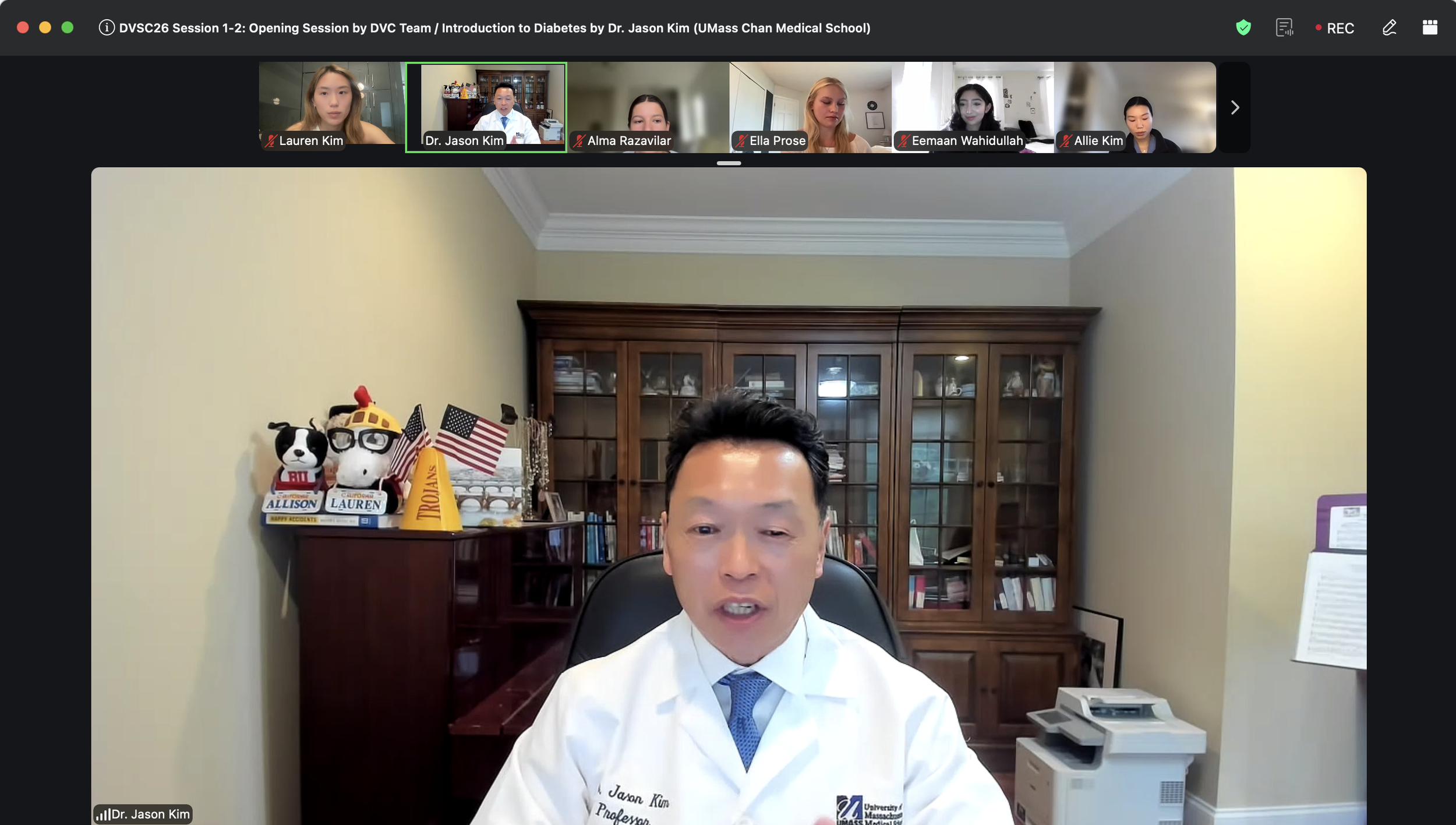
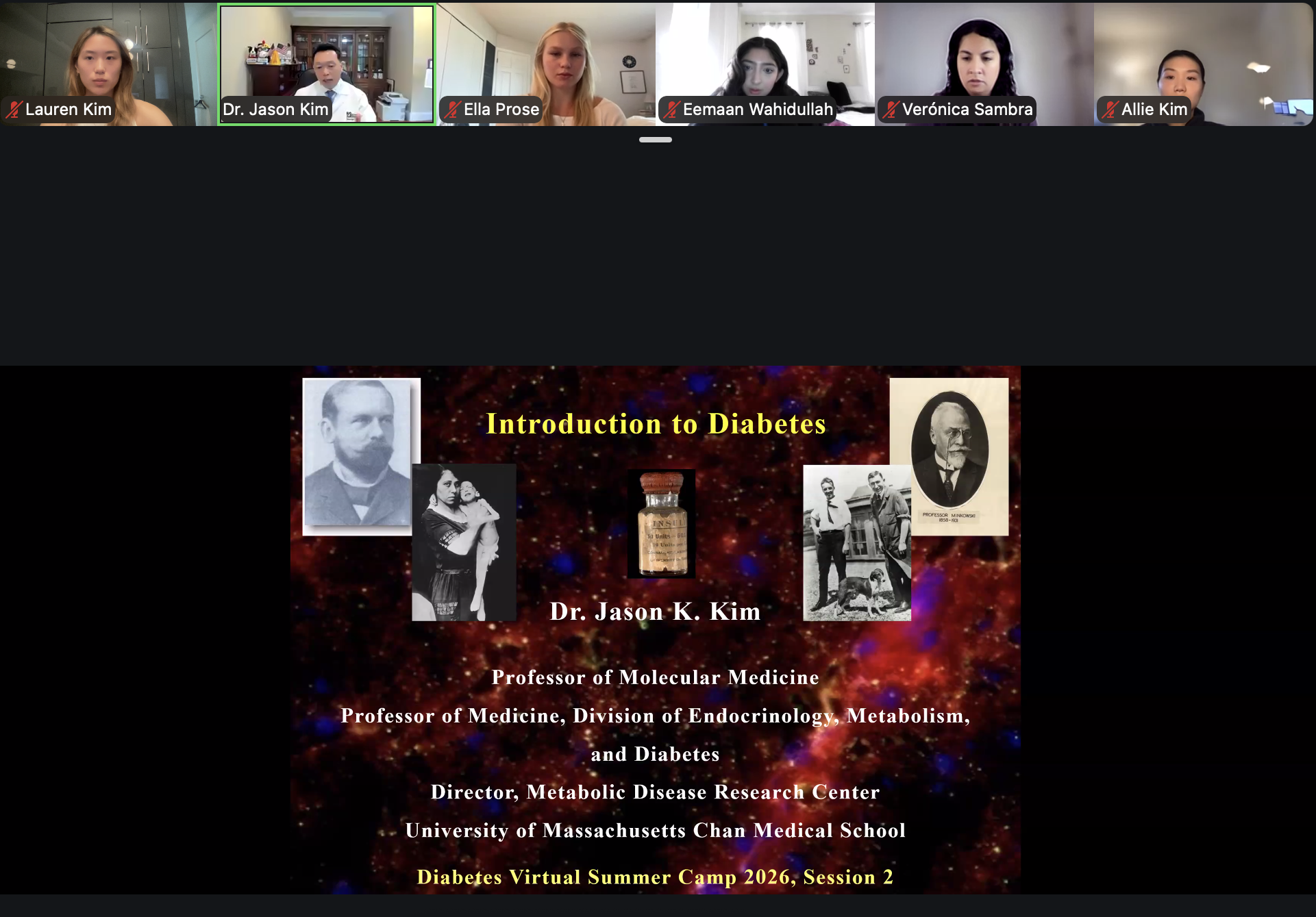
Session 2. Introduction to Diabetes by Dr. Jason Kim (University of Massachusetts Chan Medical School)
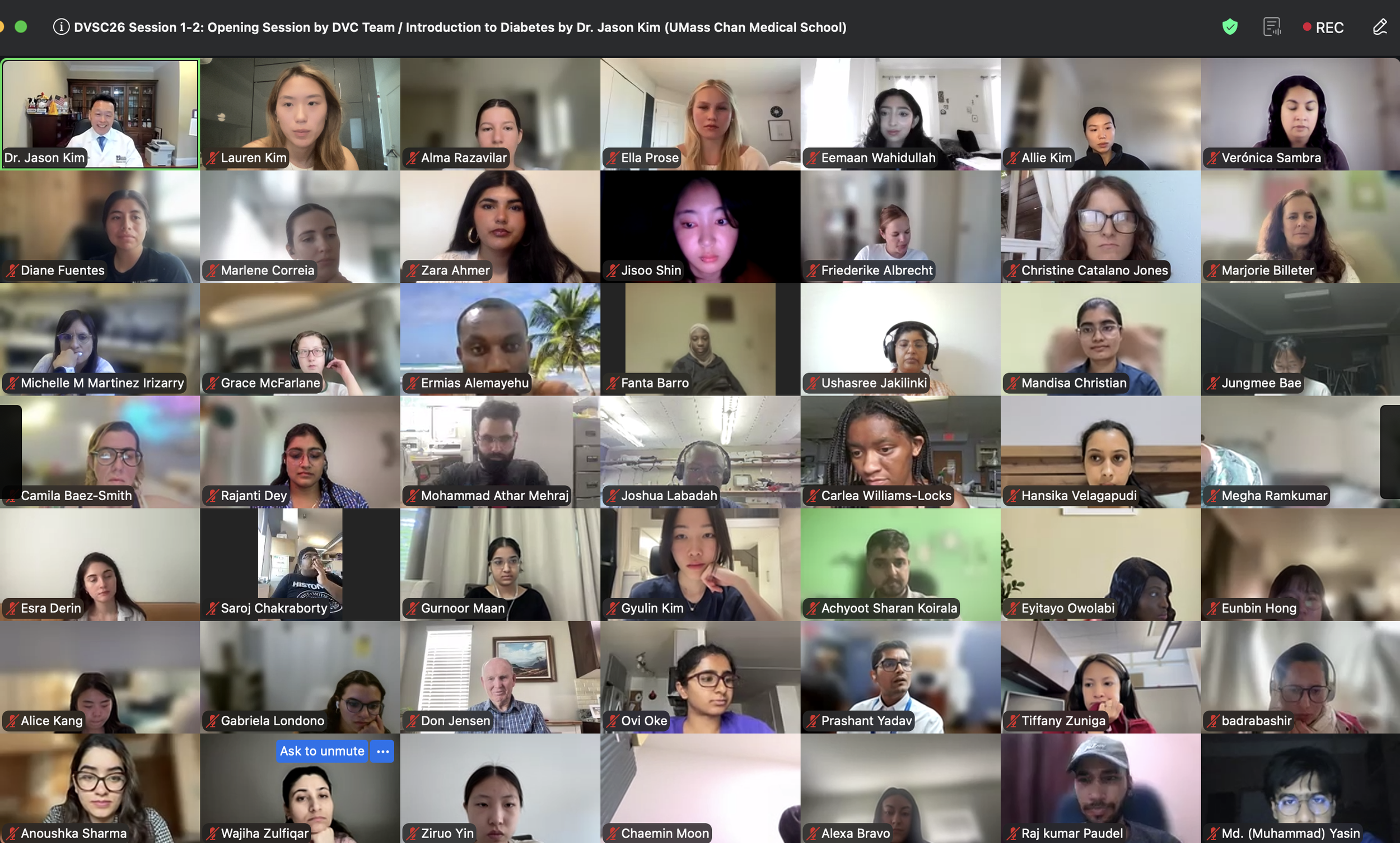
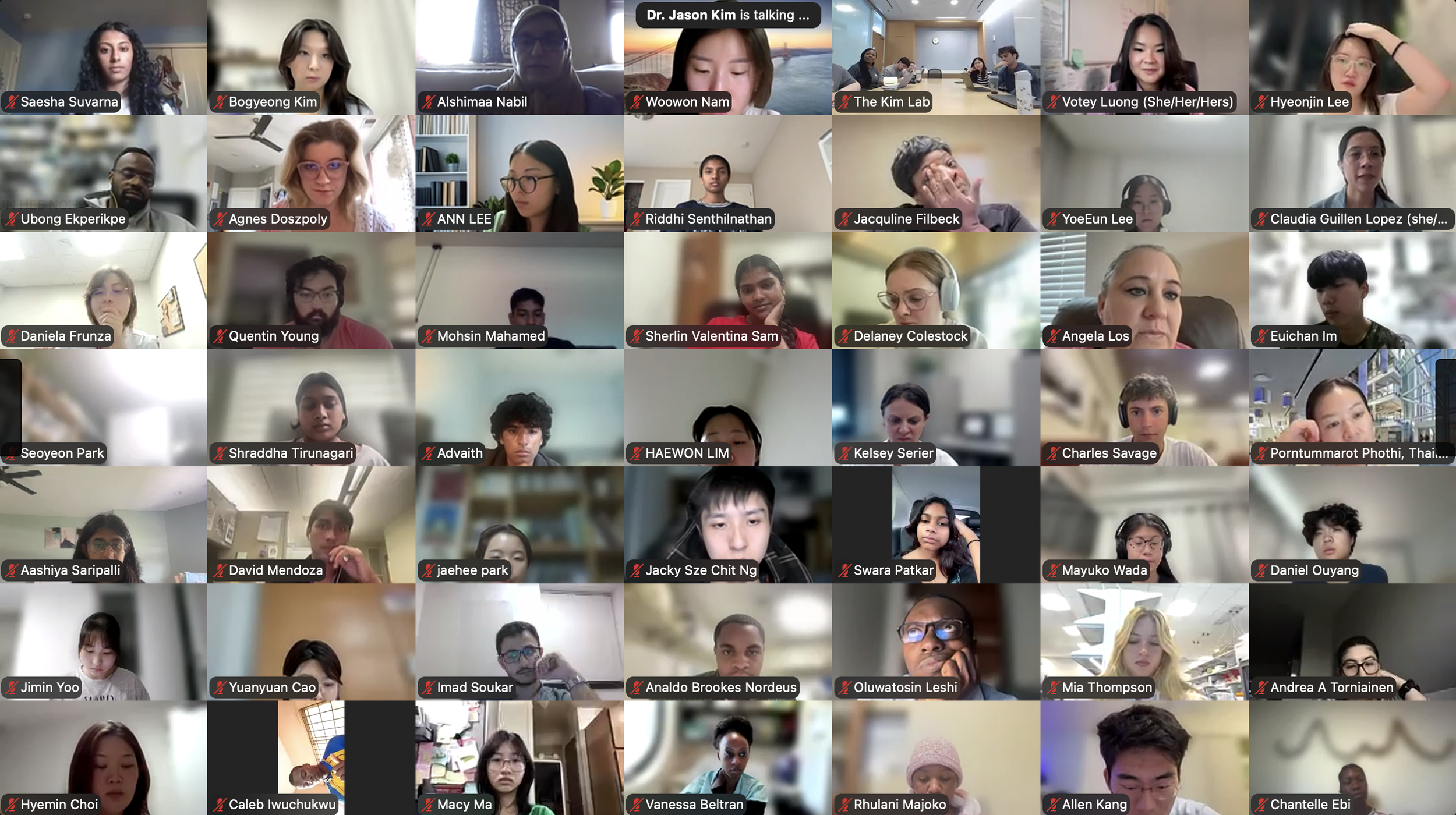
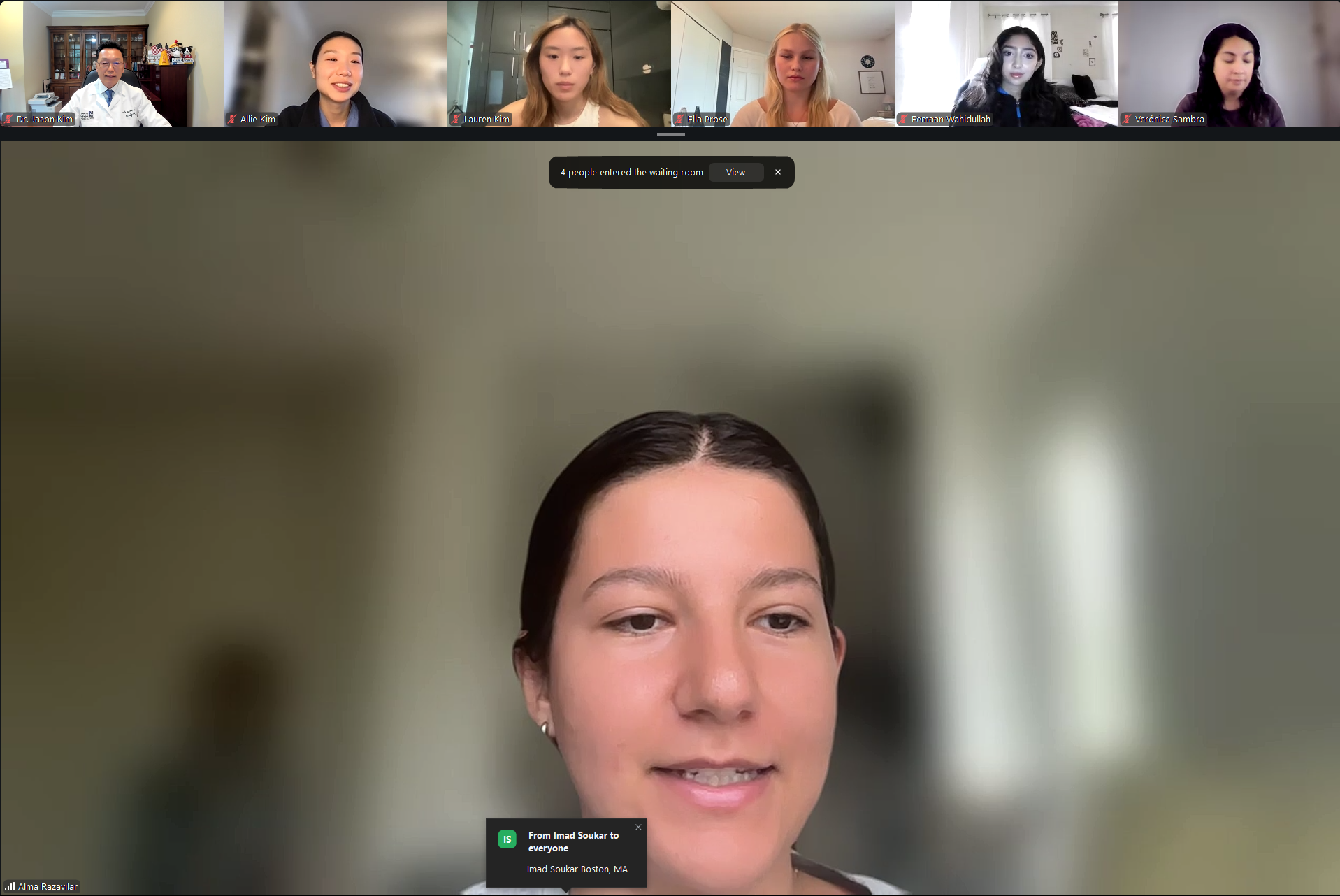
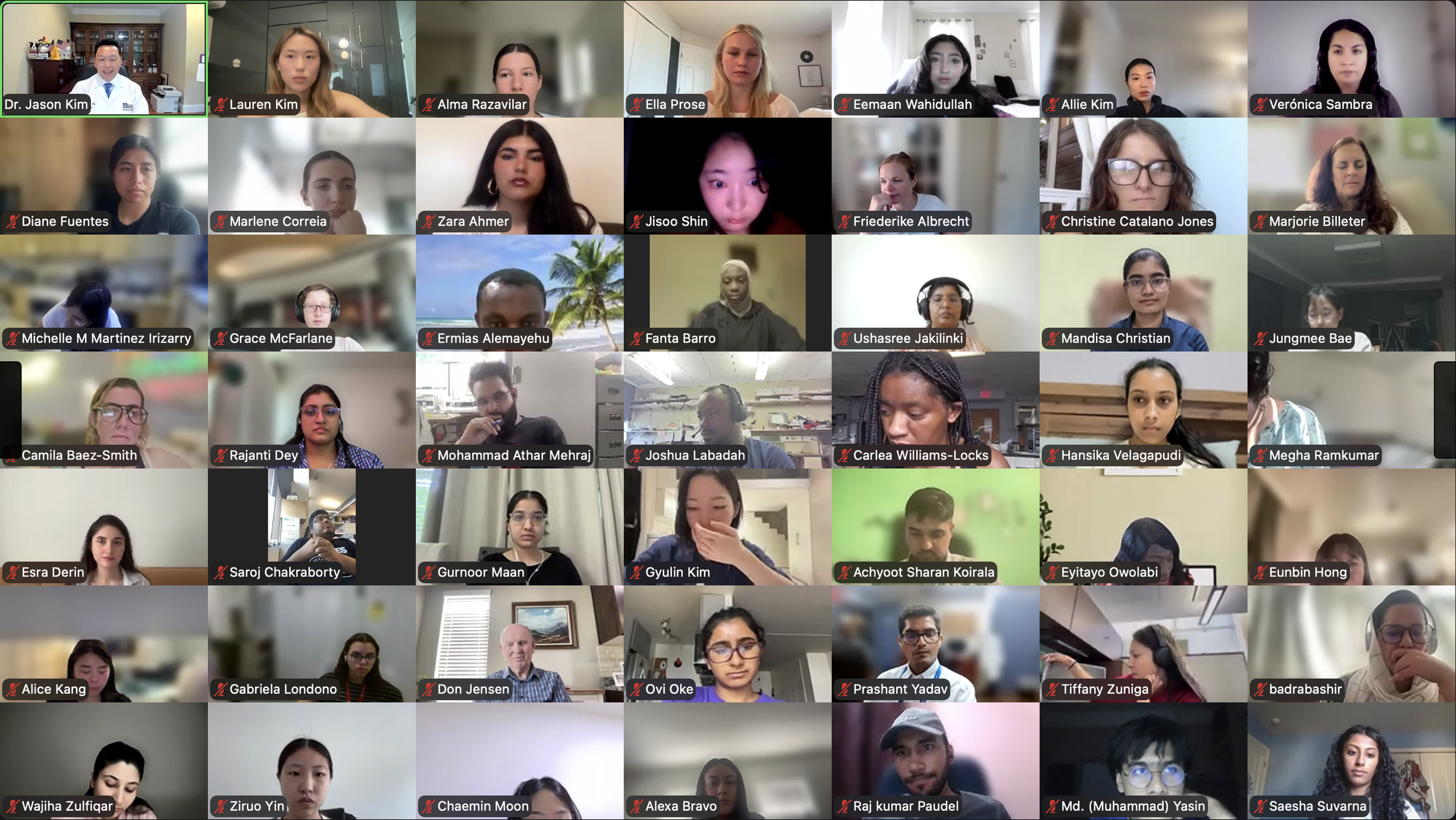
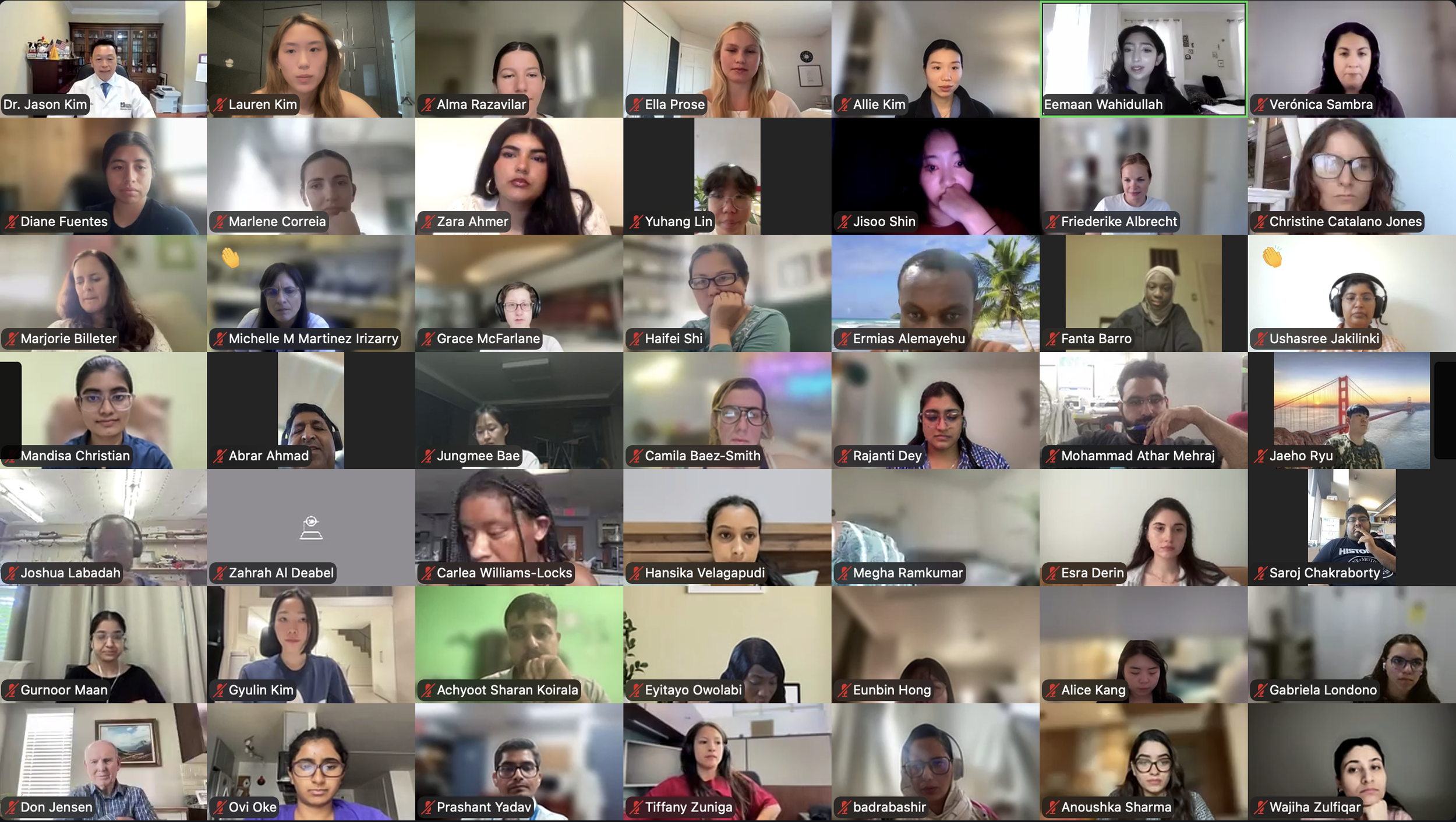
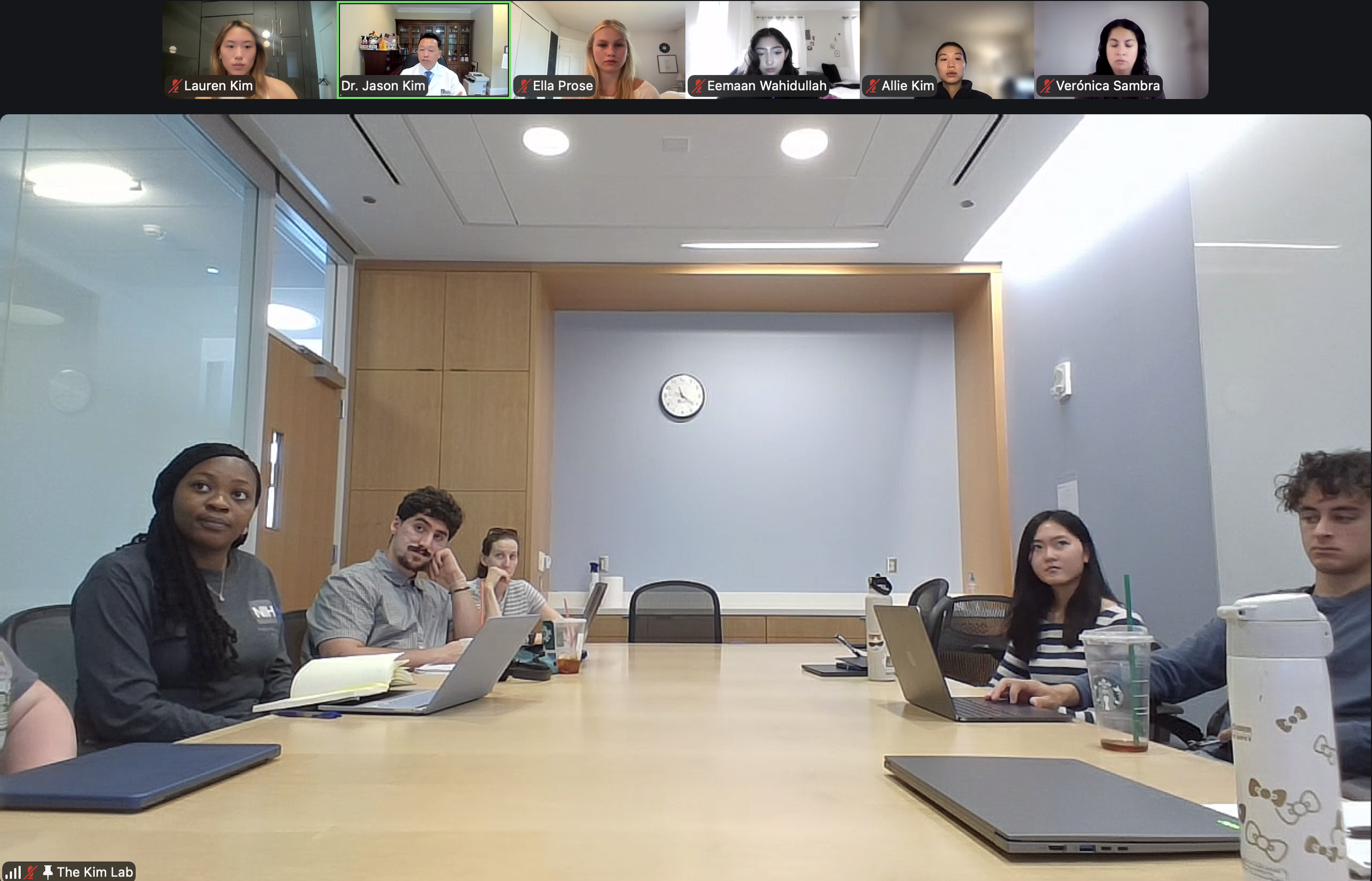
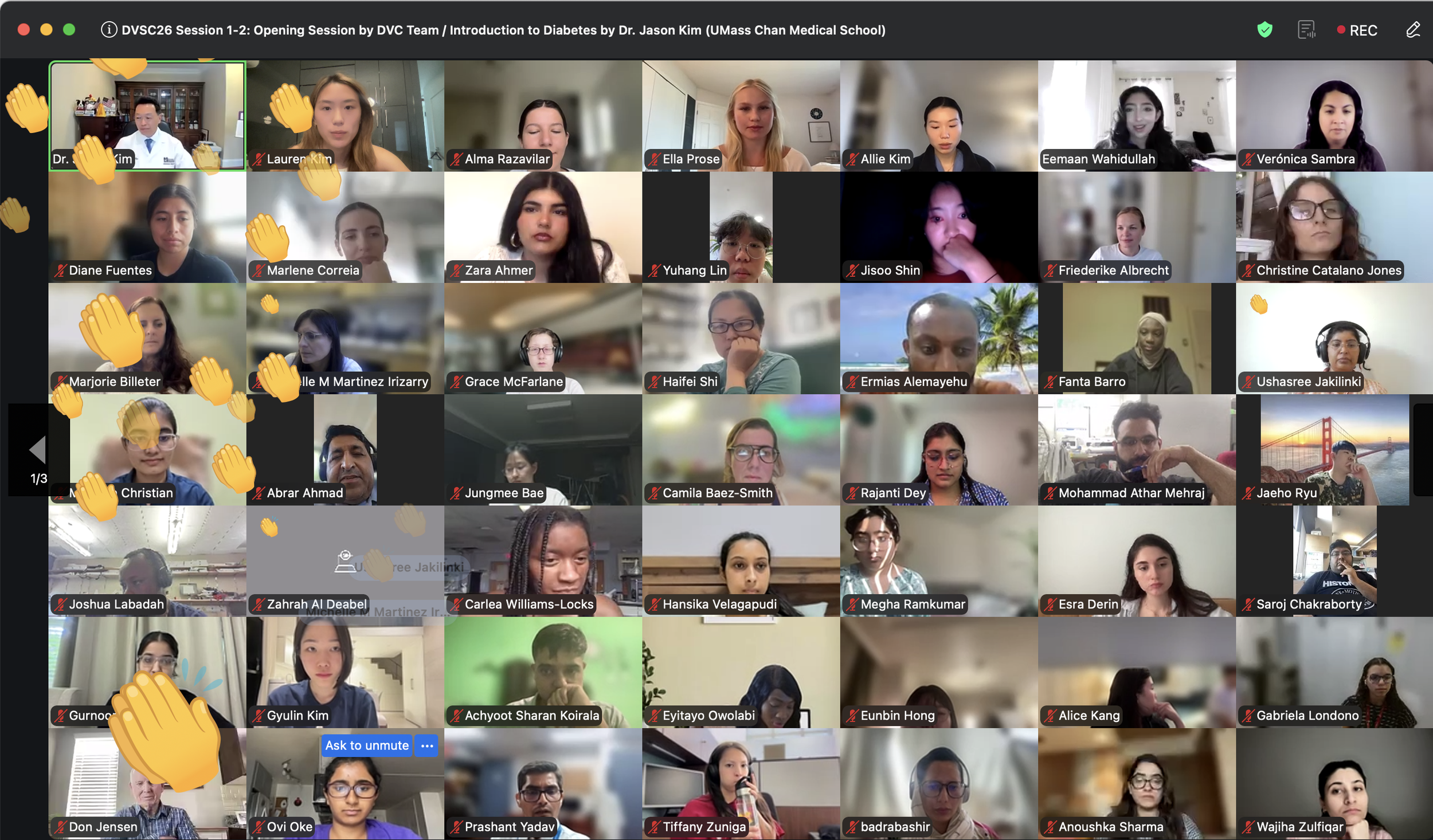
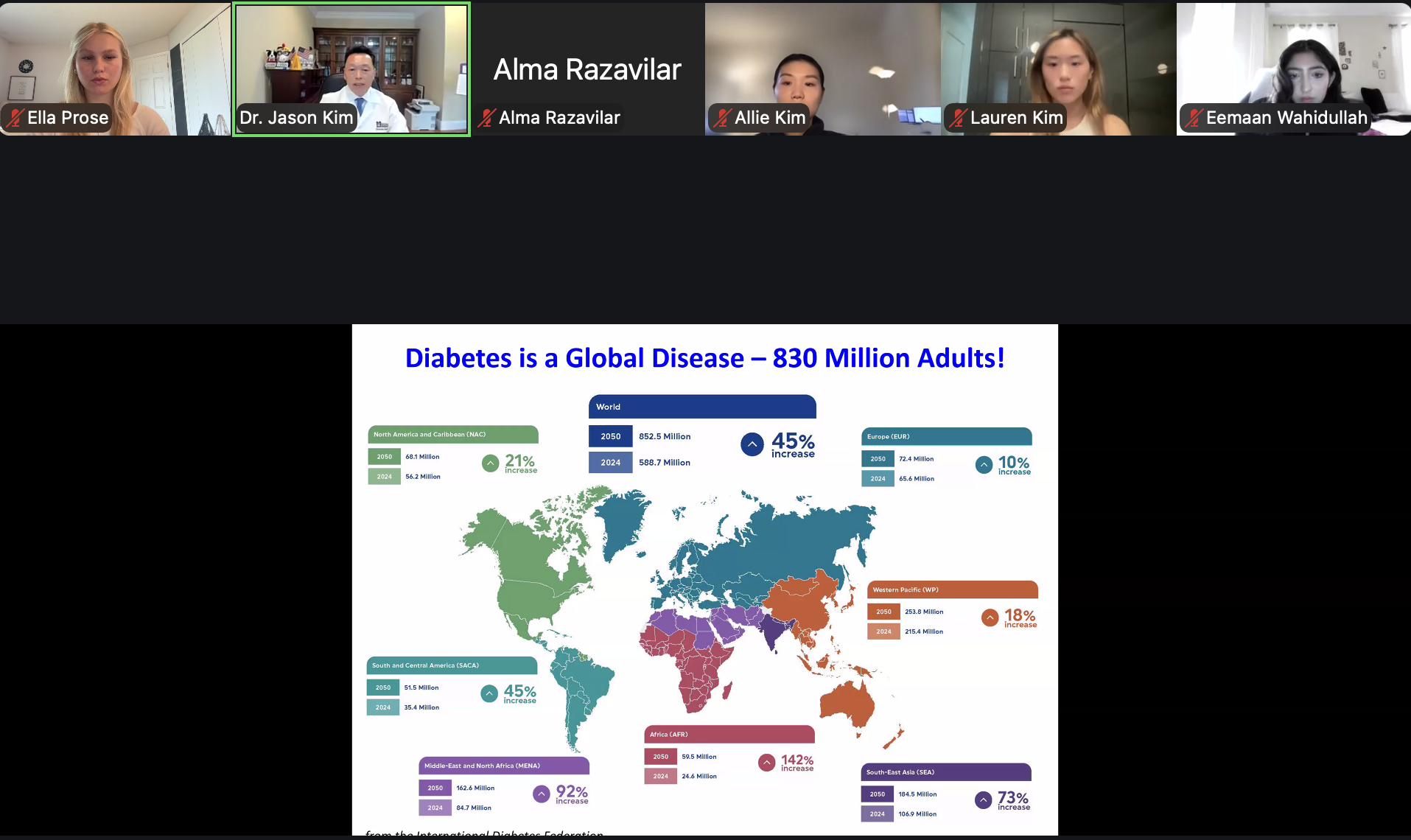
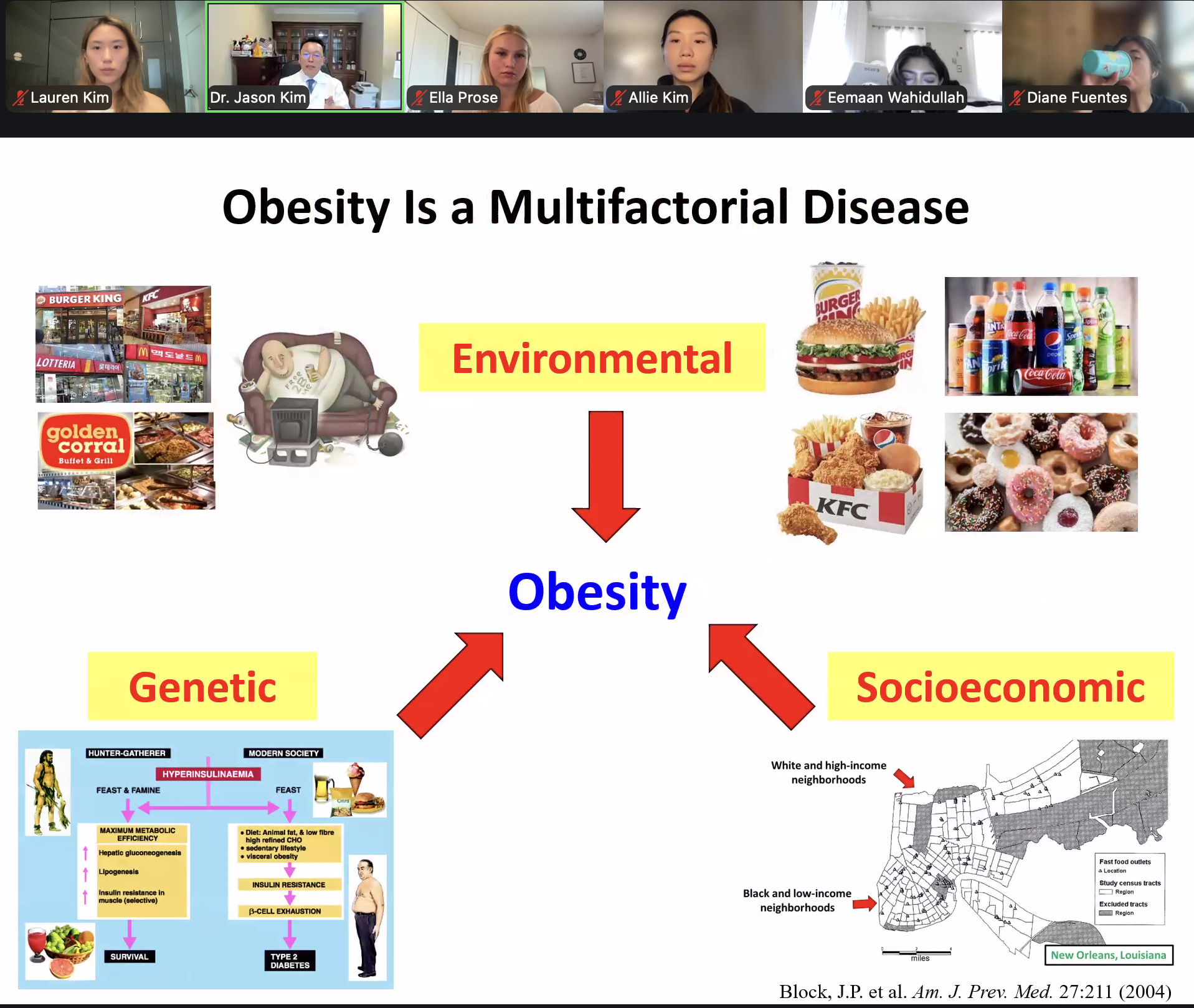
The Expert Session kicked off with “Introduction to Diabetes.” Dr. Jason Kim discussed the basics and pathogenesis of different types of diabetes and their diagnostic criteria, characteristics and etiologies of type 1 and type 2 diabetes, diabetic complications and comorbidities, the importance of glucose homeostasis and how insulin regulates glucose metabolism, insulin action in skeletal muscle and the liver, insulin secretion by pancreatic beta-cells, insulin resistance and pre-diabetes, and progressive events during the development of type 2 diabetes. Dr. Kim also discussed the endocrine role of the pancreas, insulin signaling, molecular pathogenesis of insulin resistance, the role of diets and exercise in preventing and managing diabetes, pharmacological management of diabetes, including the newest class of diabetes drugs, GLP-1 receptor agonists (e.g., semaglutide, exenatide, liraglutide), and our current research on the mechanisms by which tirzepatide regulates insulin sensitivity. Dr. Kim further discussed the role of obesity in type 2 diabetes, multi-factorial causes of obesity and why obesity rates continue to rise globally, different types of fat (white & brown fat), the paradox surrounding lipodystrophy and type 2 diabetes, molecular mechanisms of lipid-mediated insulin resistance, and the role of ectopic fat accumulation in insulin resistance. Dr. Kim ended the session with an insightful question posed by the late Dr. Denis McGarry, “What if Minkowski had been ageusic?”, opening doors to the important notion that while diabetes is manifested as altered carbohydrate metabolism, diabetes is causally associated with altered fat metabolism. The session ended with many insightful questions from our interns. We are thrilled to meet the interns joining our virtual program from all around the world to better understand diabetes, inspiring our next generation of physicians and scientists.
-
![Session 2: Opening Session & Introduction to Diabetes by Lauren, Allison, and Dr. Jason Kim (University of Massachusetts Medical School)]()
August 3, 2026 (Session 2 - Part 1)
Session 2: “Introduction to Diabetes” by Dr. Jason Kim (University of Massachusetts Chan Medical School)
The Expert Session kicked off with “Introduction to Diabetes.” Dr. Kim discussed the basics and pathogenesis of different types of diabetes and their diagnostic criteria, characteristics and etiologies of type 1 and type 2 diabetes, diabetic complications and comorbidities, the importance of glucose homeostasis and how insulin regulates glucose metabolism, insulin action in skeletal muscle and the liver, insulin secretion by pancreatic beta-cells, insulin resistance and pre-diabetes, and progressive events during the development of type 2 diabetes. Dr. Kim also discussed the endocrine role of the pancreas, insulin signaling, molecular pathogenesis of insulin resistance, the role of diets and exercise in preventing and managing diabetes, pharmacological management of diabetes, including the newest class of diabetes drugs, GLP-1 receptor agonists (e.g., semaglutide, exenatide, liraglutide), and our current research on the mechanisms by which tirzepatide regulates insulin sensitivity. Dr. Kim further discussed the role of obesity in type 2 diabetes, multi-factorial causes of obesity and why obesity rates continue to rise globally, different types of fat (white & brown fat), the paradox surrounding lipodystrophy and type 2 diabetes, molecular mechanisms of lipid-mediated insulin resistance, and the role of ectopic fat accumulation in insulin resistance. Dr. Kim ended the session with an insightful question posed by the late Dr. Denis McGarry, “What if Minkowski had been ageusic?”, opening doors to the important notion that while diabetes is manifested as altered carbohydrate metabolism, diabetes is causally associated with altered fat metabolism. The session ended with many insightful questions from our interns. We are thrilled to meet the interns joining our virtual program from all around the world to better understand diabetes, inspiring our next generation of physicians and scientists. -
![]()
August 3, 2026 (Session 2 - Part 2)
Session 2. “Introduction to Diabetes” by Dr. Jason Kim (University of Massachusetts Chan Medical School)
Dr. Kim discussed the basics and pathogenesis of different types of diabetes and their diagnostic criteria, characteristics and etiologies of type 1 and type 2 diabetes, diabetic complications and comorbidities, the importance of glucose homeostasis and how insulin regulates glucose metabolism, insulin action in skeletal muscle and the liver, insulin secretion by pancreatic beta-cells, insulin resistance and pre-diabetes, and progressive events during the development of type 2 diabetes. Dr. Kim also discussed the endocrine role of the pancreas, insulin signaling, molecular pathogenesis of insulin resistance, the role of diets and exercise in preventing and managing diabetes, pharmacological management of diabetes, including the newest class of diabetes drugs, GLP-1 receptor agonists (e.g., semaglutide, exenatide, liraglutide), and our current research on the mechanisms by which tirzepatide regulates insulin sensitivity. Dr. Kim further discussed the role of obesity in type 2 diabetes, multi-factorial causes of obesity and why obesity rates continue to rise globally, different types of fat (white & brown fat), the paradox surrounding lipodystrophy and type 2 diabetes, molecular mechanisms of lipid-mediated insulin resistance, and the role of ectopic fat accumulation in insulin resistance. Dr. Kim ended the session with an insightful question posed by the late Dr. Denis McGarry, “What if Minkowski had been ageusic?”, opening doors to the important notion that while diabetes is manifested as altered carbohydrate metabolism, diabetes is causally associated with altered fat metabolism. The session ended with many insightful questions from our interns. We are thrilled to meet the interns joining our virtual program from all around the world to better understand diabetes, inspiring our next generation of physicians and scientists. -
![]()
August 3, 2026 (Session 2 - Part 3)
Session 2. “Introduction to Diabetes” by Dr. Jason Kim (University of Massachusetts Chan Medical School).
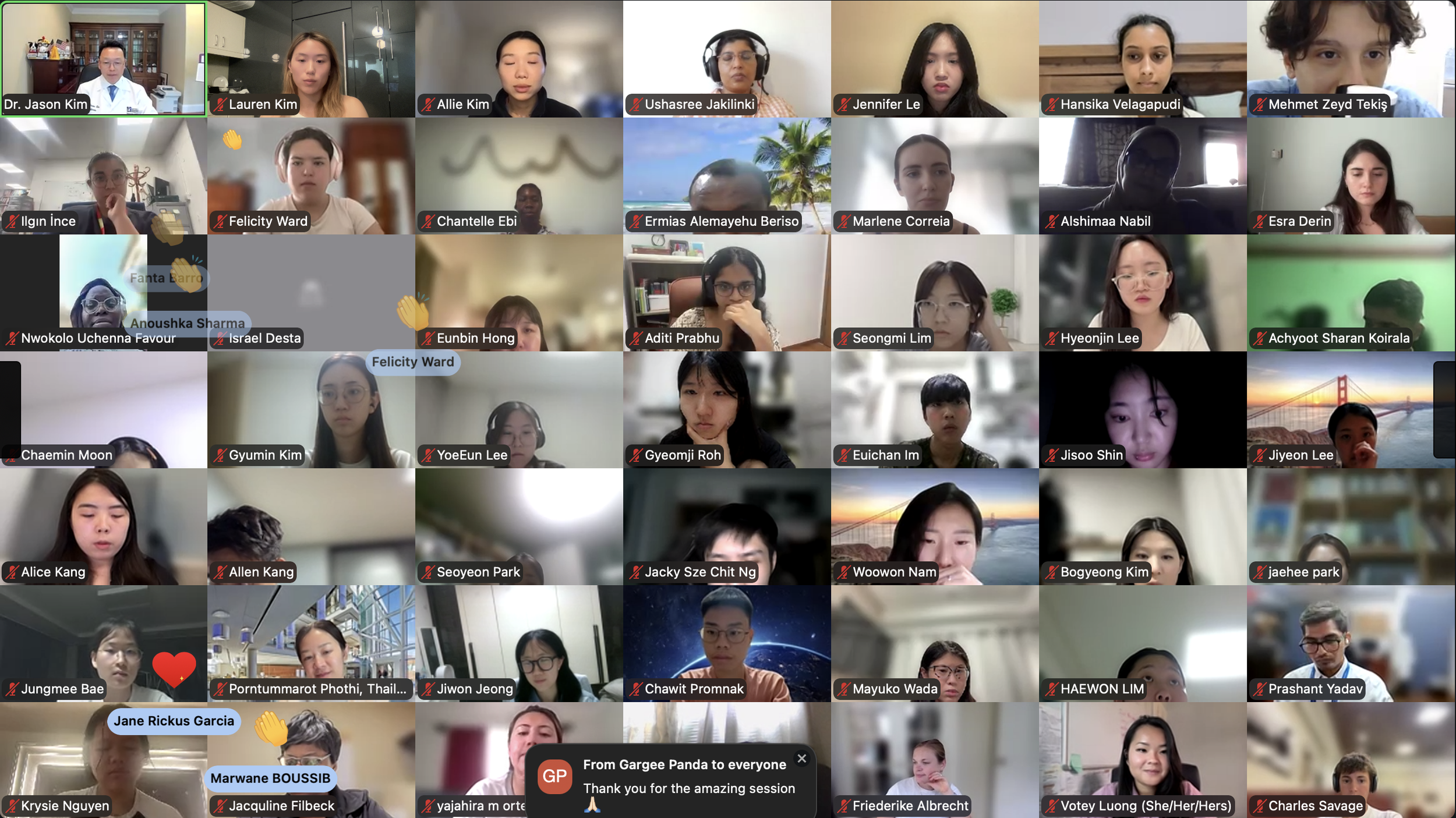
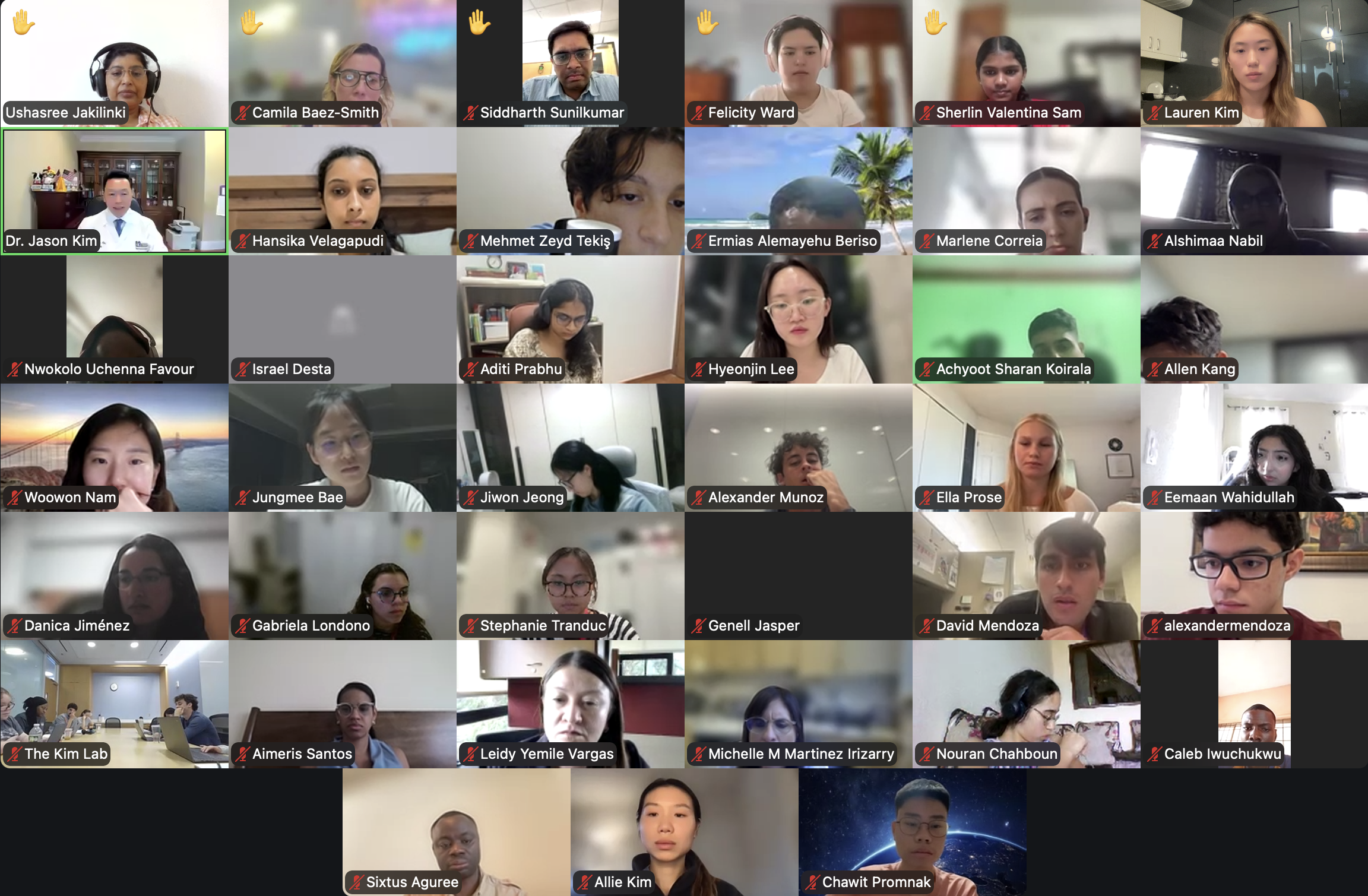
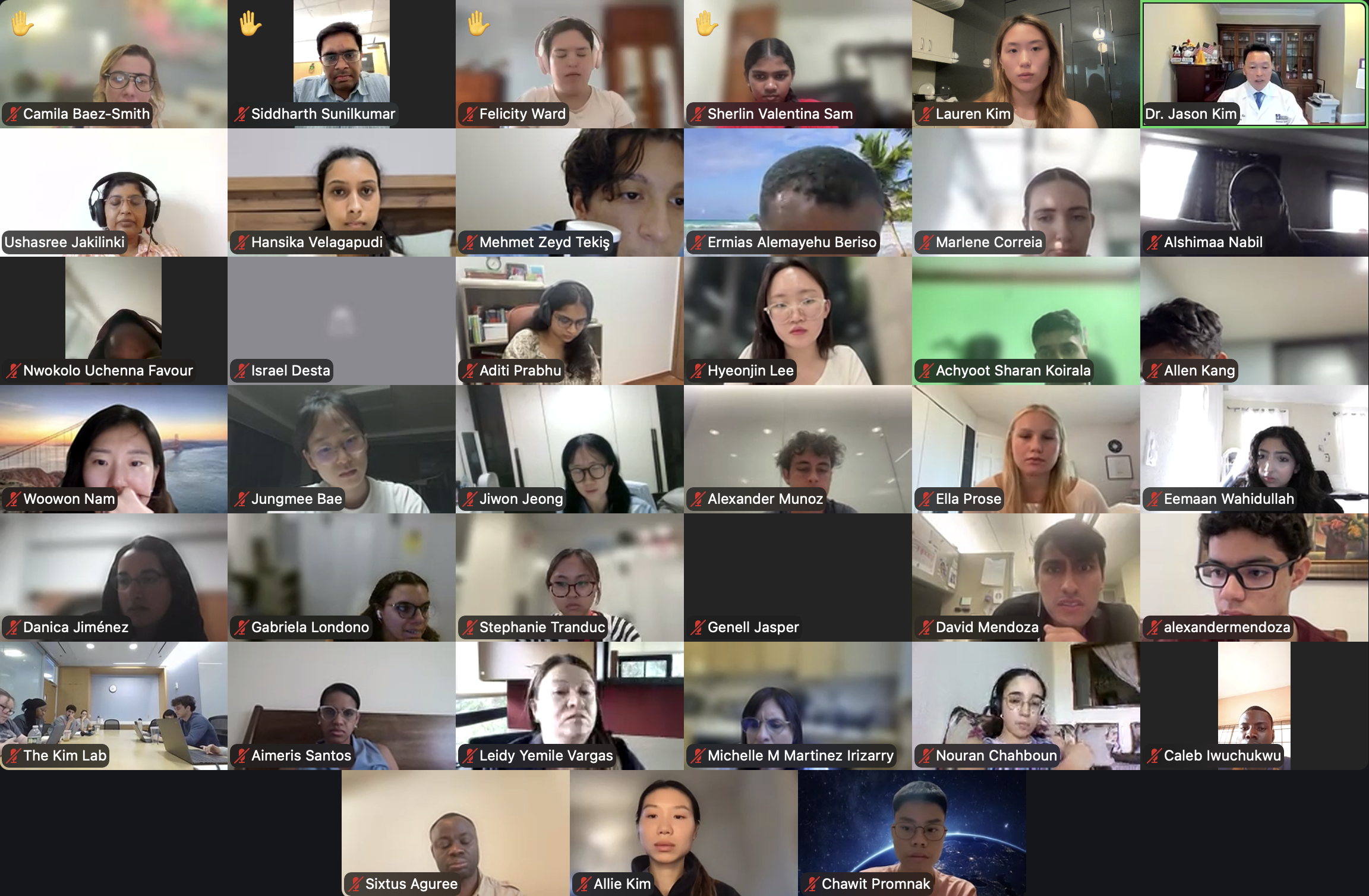
Dr. Kim welcomes our program interns from around the world.Our 518 registered DVSC26 participants represent 55 countries, including Algeria, Bangladesh, Barbados, Cameroon, Canada, Chile, China, Colombia, Dominican Republic, Egypt, Ethiopia, Finland, Germany, Ghana, Greece, Honduras, Hong Kong, Hungary, India, Indonesia, Iraq, Italy, Japan, Jordan, Kazakhstan, Kenya, Kuwait, Lebanon, Lesotho, Malawi, Mexico, Morocco, Nepal, Nigeria, Pakistan, Palestinian Territories, Philippines, Portugal, Qatar, Romania, Saudi Arabia, Serbia, Singapore, South Korea, Spain, Sudan, Sweden, Thailand, Turkey, Uganda, United Arab Emirates, United Kingdom, Zambia, Zimbabwe, and the United States of America.
-
![]()
August 3, 2026 (Session 2 - Part 4)
Session 2. “Introduction to Diabetes” by Dr. Jason Kim (Professor of Molecular Medicine, Professor of Medicine, Division of Endocrinology, Metabolism, and Diabetes, Director of Metabolic Disease Research Center, and MD/PhD Admissions Committee, University of Massachusetts Chan Medical School)
-
![]()
August 3, 2026 (Session 2 - Part 5)
Session 2. “Introduction to Diabetes” by Dr. Jason Kim (University of Massachusetts Chan Medical School).
Dr. Kim welcomes our program participants from around the world.Our 518 registered DVSC26 participants represent 55 countries, including Algeria, Bangladesh, Barbados, Cameroon, Canada, Chile, China, Colombia, Dominican Republic, Egypt, Ethiopia, Finland, Germany, Ghana, Greece, Honduras, Hong Kong, Hungary, India, Indonesia, Iraq, Italy, Japan, Jordan, Kazakhstan, Kenya, Kuwait, Lebanon, Lesotho, Malawi, Mexico, Morocco, Nepal, Nigeria, Pakistan, Palestinian Territories, Philippines, Portugal, Qatar, Romania, Saudi Arabia, Serbia, Singapore, South Korea, Spain, Sudan, Sweden, Thailand, Turkey, Uganda, United Arab Emirates, United Kingdom, Zambia, Zimbabwe, and the United States of America.
-
![]()
August 3, 2026 (Session 2 - Part 6)
Session 2. “Introduction to Diabetes” by Dr. Jason Kim (University of Massachusetts Chan Medical School)
Our DVSC26 participants learn about the basics of diabetes.Our 518 registered DVSC26 participants represent 55 countries, including Algeria, Bangladesh, Barbados, Cameroon, Canada, Chile, China, Colombia, Dominican Republic, Egypt, Ethiopia, Finland, Germany, Ghana, Greece, Honduras, Hong Kong, Hungary, India, Indonesia, Iraq, Italy, Japan, Jordan, Kazakhstan, Kenya, Kuwait, Lebanon, Lesotho, Malawi, Mexico, Morocco, Nepal, Nigeria, Pakistan, Palestinian Territories, Philippines, Portugal, Qatar, Romania, Saudi Arabia, Serbia, Singapore, South Korea, Spain, Sudan, Sweden, Thailand, Turkey, Uganda, United Arab Emirates, United Kingdom, Zambia, Zimbabwe, and the United States of America.
-
![]()
August 3, 2026 (Session 2 - Part 7)
Session 2. “Introduction to Diabetes” by Dr. Jason Kim (University of Massachusetts Chan Medical School)
Our DVSC26 participants learn about the basics of diabetes.Our 250 participants from the United States represent 36 states: Alaska (1), Alabama (3), Arizona (4), California (22), Colorado (2), Connecticut (1), Florida (5), Georgia (8), Hawaii (5), Illinois (7), Indiana (12), Kentucky (2), Louisiana (5), Maryland (9), Massachusetts (59), Michigan (6), Minnesota (9), Missouri (3), Montana (1), Nevada (2), New Jersey (10), New Mexico (3), New York (19), North Carolina (9), Ohio (7), Oregon (2), Pennsylvania (5), Puerto Rico (1), Rhode Island (1), South Carolina (1), Tennessee (1), Texas (14), Utah (2), Virginia (5), Washington (2), and Wisconsin (2).
-
![]()
August 3, 2026 (Session 2 - Part 8)
Session 2. “Introduction to Diabetes” by Dr. Jason Kim (University of Massachusetts Chan Medical School)
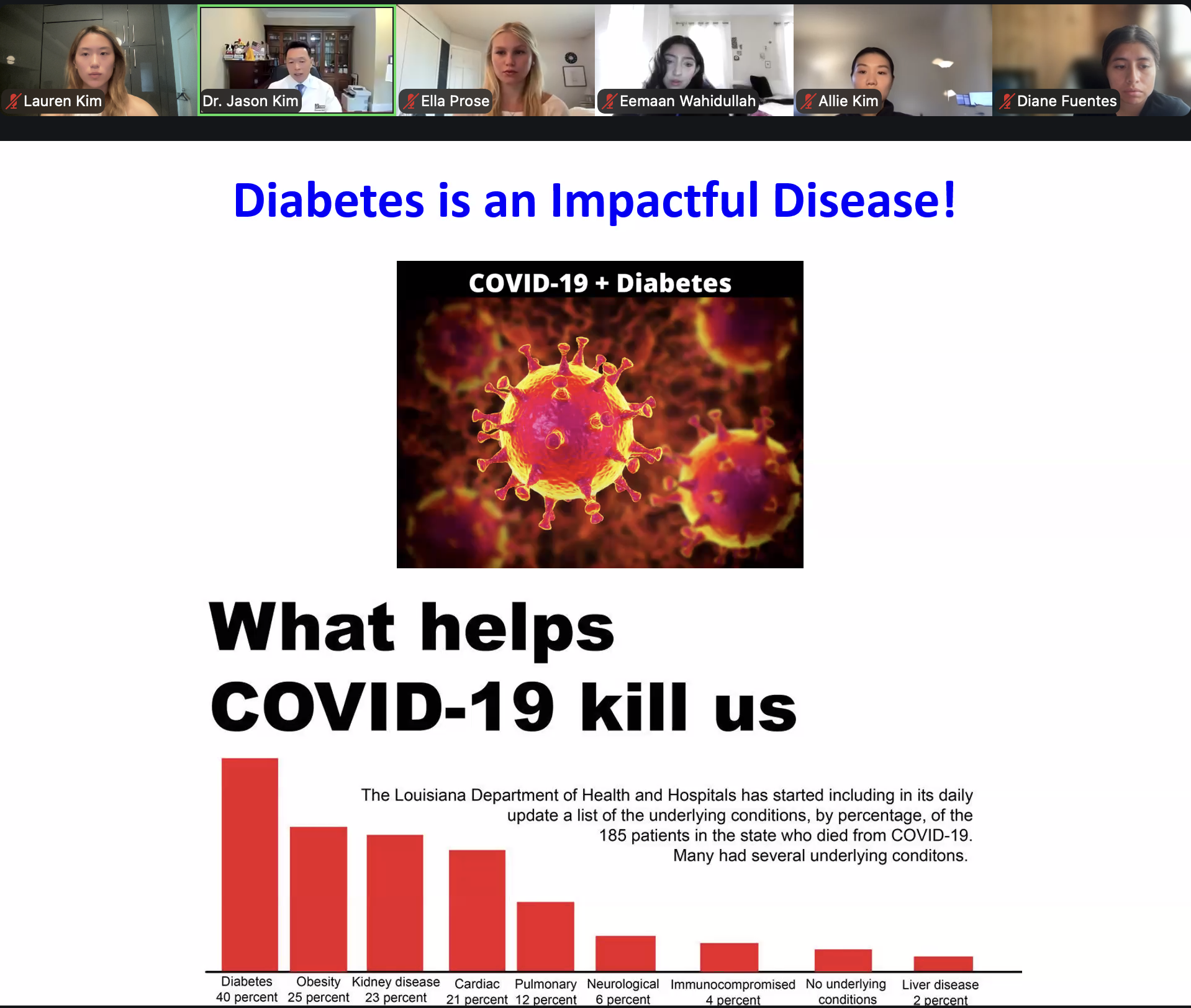
Our DVSC26 participants learn about the impact of diabetes. -
![]()
August 3, 2026 (Session 2 - Part 9)
Session 2. “Introduction to Diabetes” by Dr. Jason Kim (University of Massachusetts Chan Medical School)
Our DVSC26 participants learn about the basics of diabetes.Our 518 registered DVSC26 participants represent diverse demographics in gender (383 women & 131 men), age (14~86 years of age with 69% at 18~35 years of age), and ethnicity (90 African American or Black, 2 American Indian or Alaska Native, 47 Hispanic, Latinx or Spanish origin, 1 Native Hawaiian or Pacific Islander, 49 Middle Eastern or North African, 241 Asian or Asian American, and 65 White).
-
![]()
August 3, 2026 (Session 2 - Part 10)
Session 2. “Introduction to Diabetes” by Dr. Jason Kim (University of Massachusetts Chan Medical School)
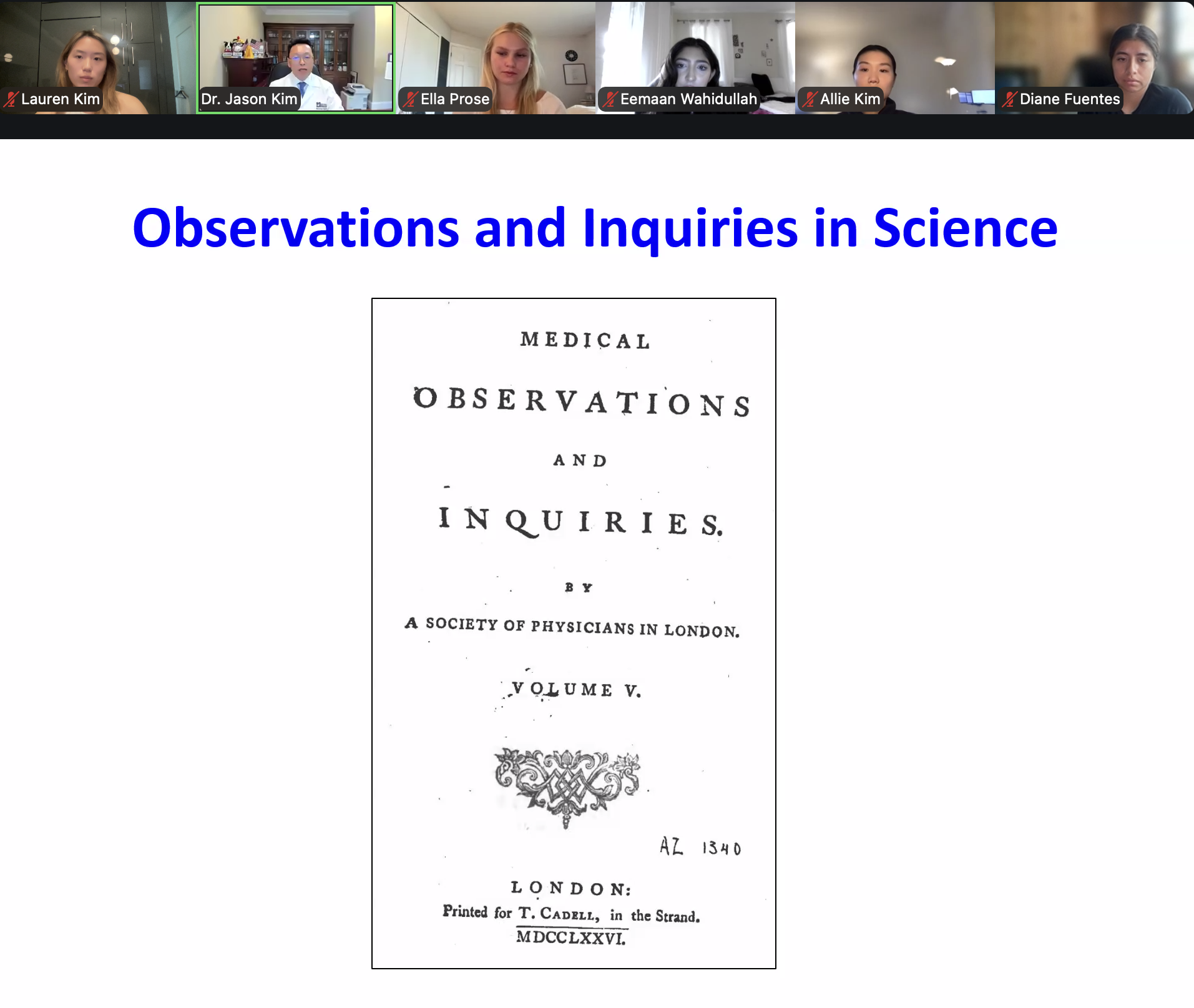
Our DVSC26 participants learn about the importance of observations and inquiries for researchers and clinicians. -
![]()
August 3, 2026 (Session 2 - Part 11)
Session 2. “Introduction to Diabetes” by Dr. Jason Kim (University of Massachusetts Chan Medical School)
Our DVSC26 participants learn about the basics of diabetes.Our 518 registered DVSC26 participants represent a diverse status: 84 high school students, 77 college students, 37 post-undergraduates (B.S. or B.A.), 74 graduate students (Master or Doctoral), 49 medical students, 10 nursing students, 1 physician assistant program student, 38 pharmacy students, 4 nutritionists or dieticians, 14 medical residents (M.D.), 12 clinical fellows (M.D.), 36 postdoctoral researchers (Ph.D. or M.D.), 18 early-career clinicians or research scientists, 23 physicians (M.D. in academic or private), 8 scientists (M.D. or M.D./Ph.D. in academic or industry), 29 faculty (professors), and 4 other health professionals.
-
![]()
August 3, 2026 (Session 2 - Part 12)
Session 2. “Introduction to Diabetes” by Dr. Jason Kim (University of Massachusetts Chan Medical School)
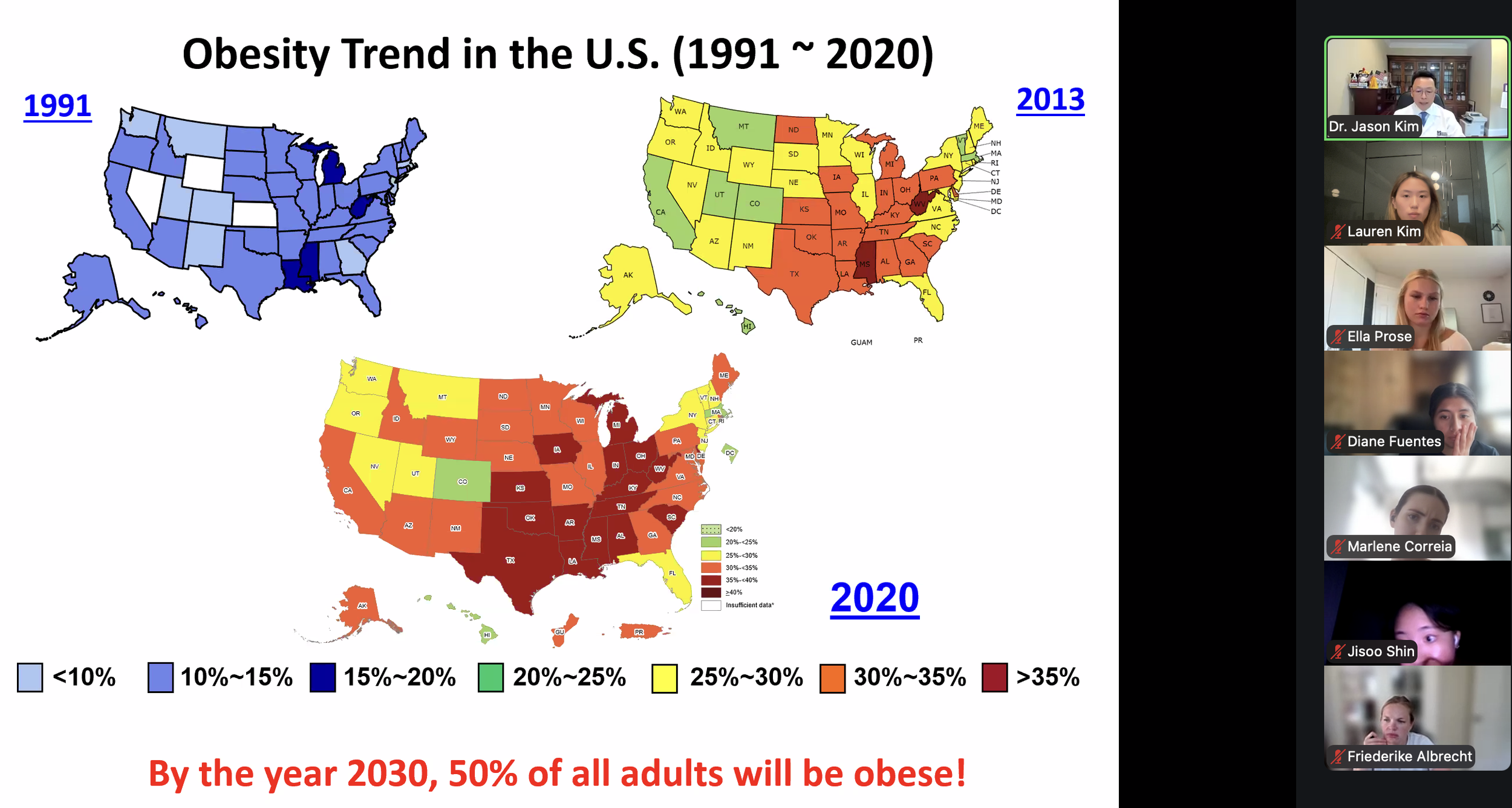
Our DVSC26 participants learn about the obesity trend as a major cause of the increasing prevalence of type 2 diabetes in the U.S. -
![]()
August 3, 2026 (Session 2 - Part 13)
Session 2. “Introduction to Diabetes” by Dr. Jason Kim (University of Massachusetts Chan Medical School)
Our DVSC26 participants learn about the basics of diabetes.Many of our participants have type 1 or type 2 diabetes, or live with families with diabetes. All of our participants share a common goal of advancing their knowledge in diabetes and pursuing a career in medicine, research, and other healthcare fields.
-
![]()
August 3, 2026 (Session 2 - Part 14)
Session 2. “Introduction to Diabetes” by Dr. Jason Kim (University of Massachusetts Chan Medical School)
Our DVSC26 participants learn about the basics of diabetes.Dr. Kim further discussed the role of obesity in type 2 diabetes, the multi-factorial causes of obesity and why obesity rates continue to rise globally, different types of fat (white & brown fat), the paradox surrounding lipodystrophy and type 2 diabetes, molecular mechanisms of lipid-mediated insulin resistance, and the role of ectopic fat accumulation in insulin resistance.
-
![]()
August 3, 2026 (Session 2 - Part 15)
Session 2. “Introduction to Diabetes” by Dr. Jason Kim (University of Massachusetts Chan Medical School)
Our DVSC26 participants learn about the basics of diabetes.Dr. Kim ended the session with an insightful question posed by the late Dr. Denis McGarry, “What if Minkowski had been ageusic?”, opening doors to the important notion that while diabetes is manifested as altered carbohydrate metabolism, diabetes is causally associated with altered fat metabolism.
-
![]()
August 3, 2026 (Session 2 - Part 16)
Session 1-2. Open Mic Forum by the DVC Team.
The DVC team invites our audience to ask questions and engage in a discussion at the interactive Open Mic Forum. -
![]()
August 3, 2026 (Session 2 - Part 17)
Session 1-2. Open Mic Forum by the DVC Team.
The DVC team invites our audience to ask questions and engage in a discussion at the interactive Open Mic Forum. -
![]()
August 3, 2026 (Session 2 - Part 18)
Session 1-2. Open Mic Forum by the DVC Team.
The DVC team invites our audience to ask questions and engage in a discussion at the interactive Open Mic Forum. -
![]()
August 3, 2026 (Session 2 - Part 19)
Session 1-2. Open Mic Forum by the DVC Team.
The DVC team invites our audience to ask questions and engage in a discussion at the interactive Open Mic Forum.
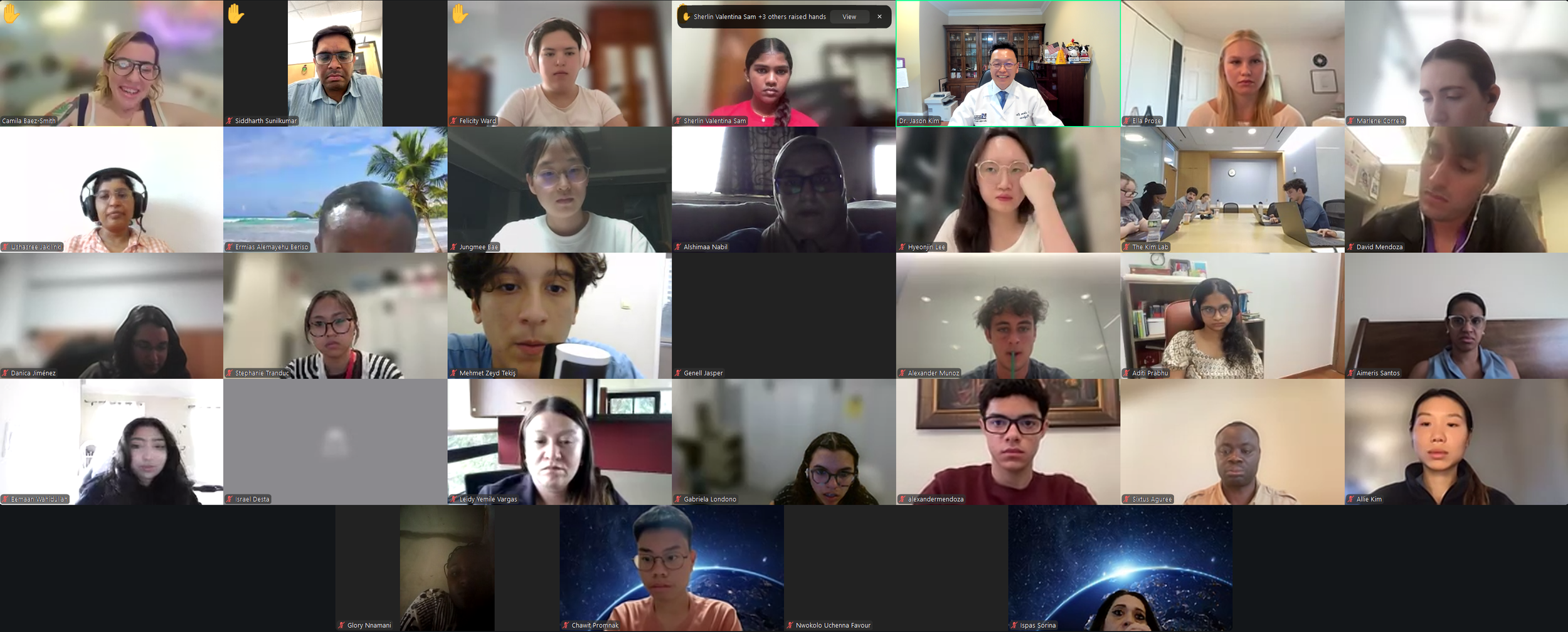
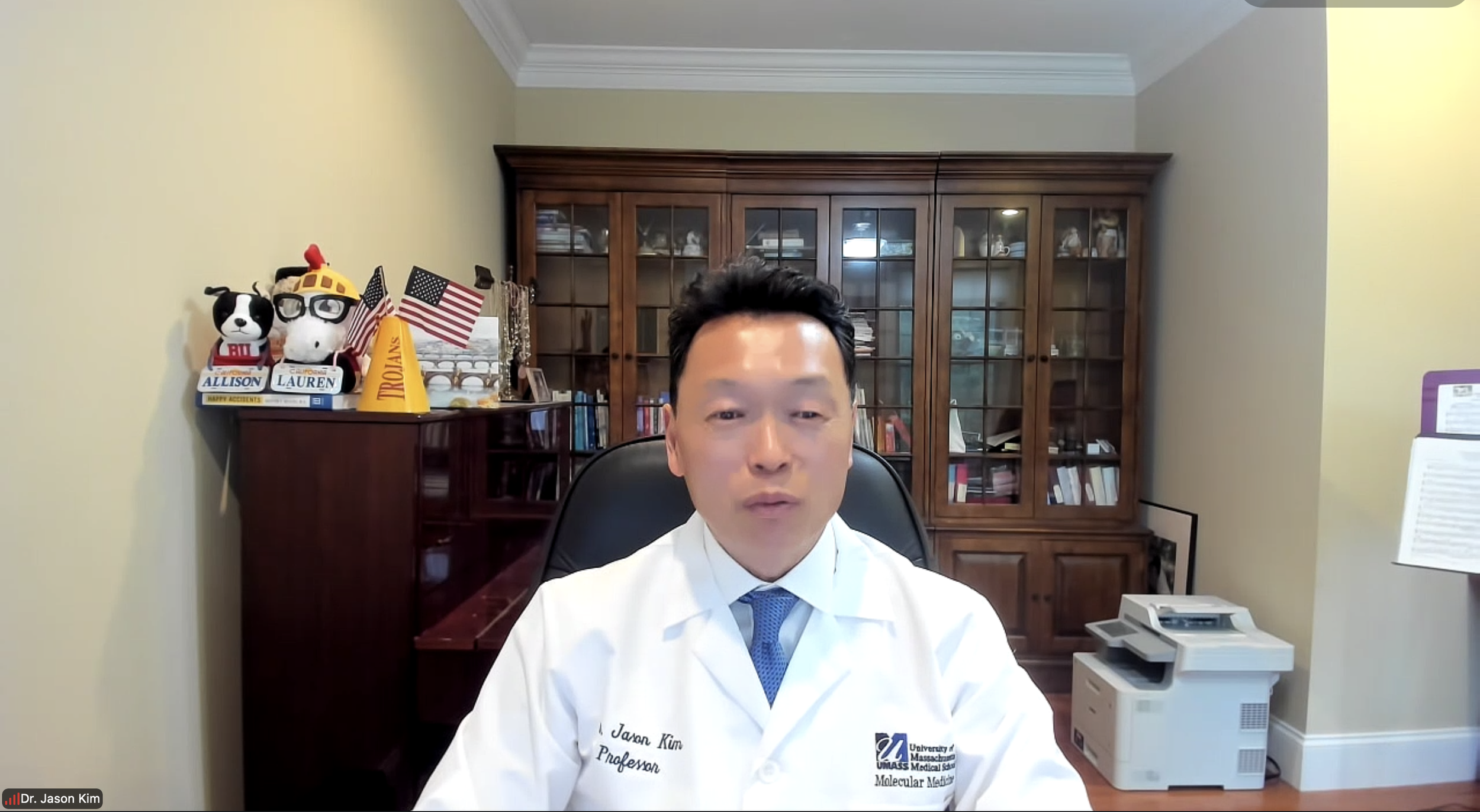
August 5, 2026
Pre-Session Q&A by Dr. Jason Kim (University of Massachusetts Chan Medical School)
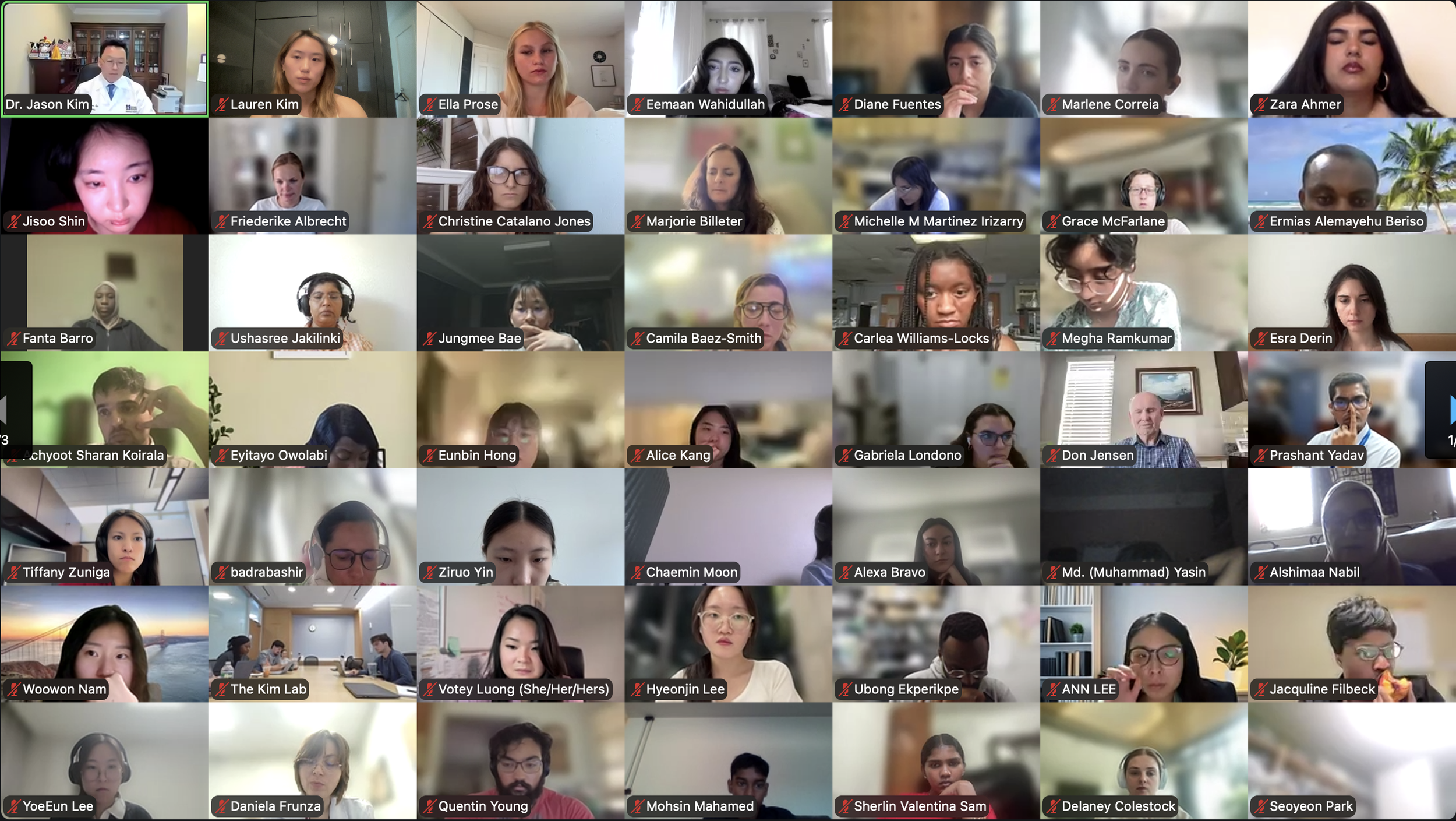
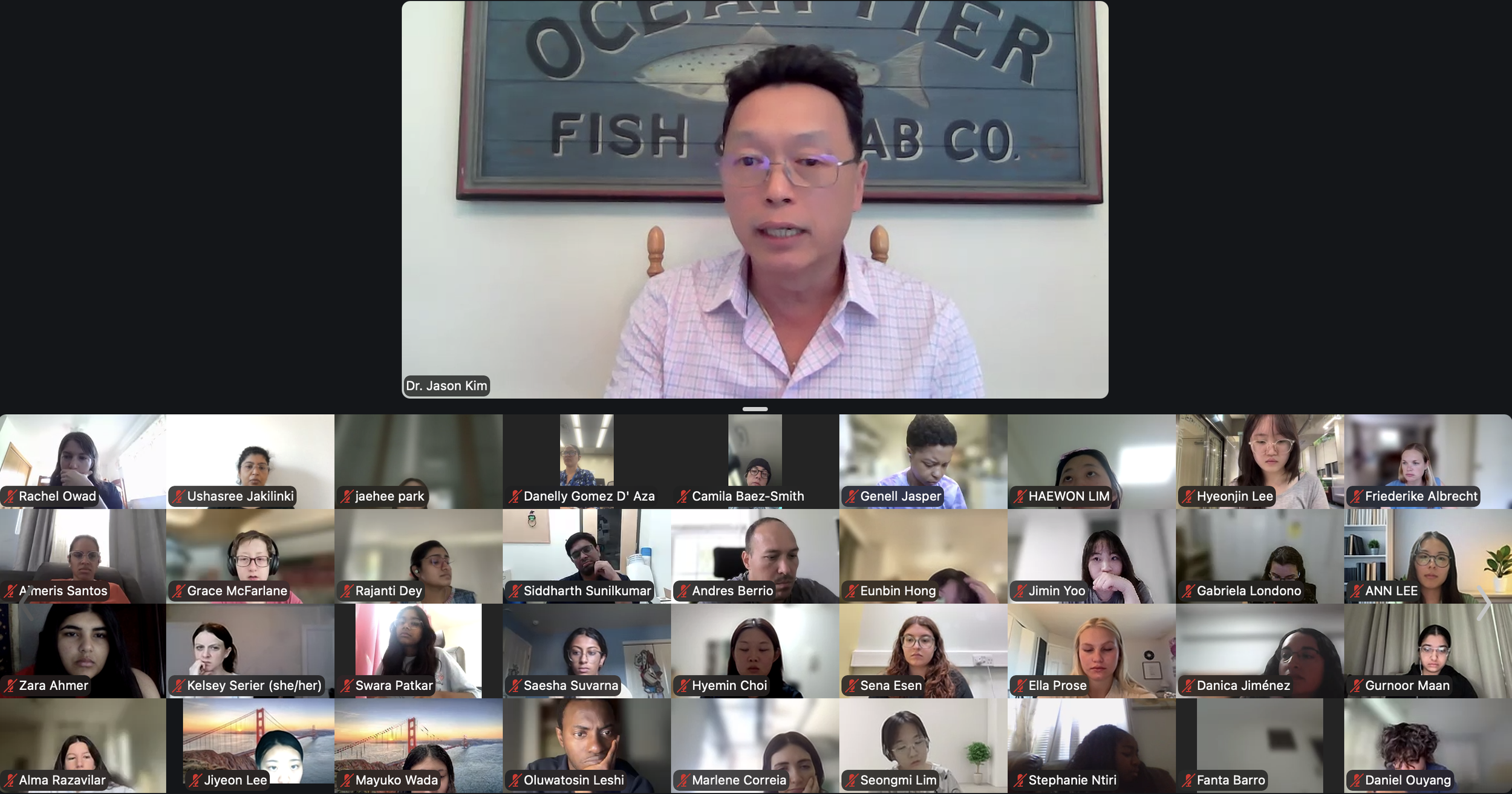
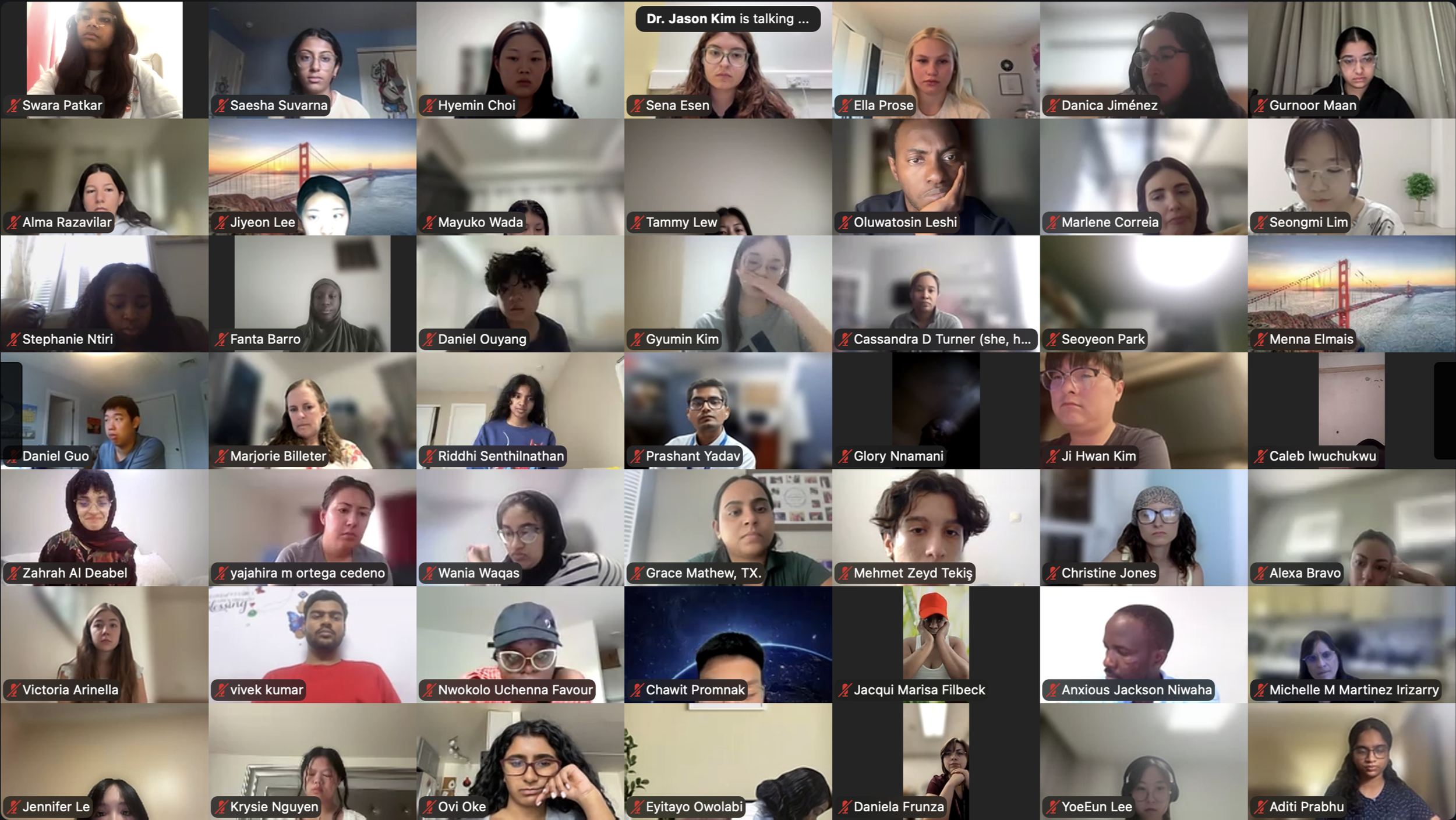
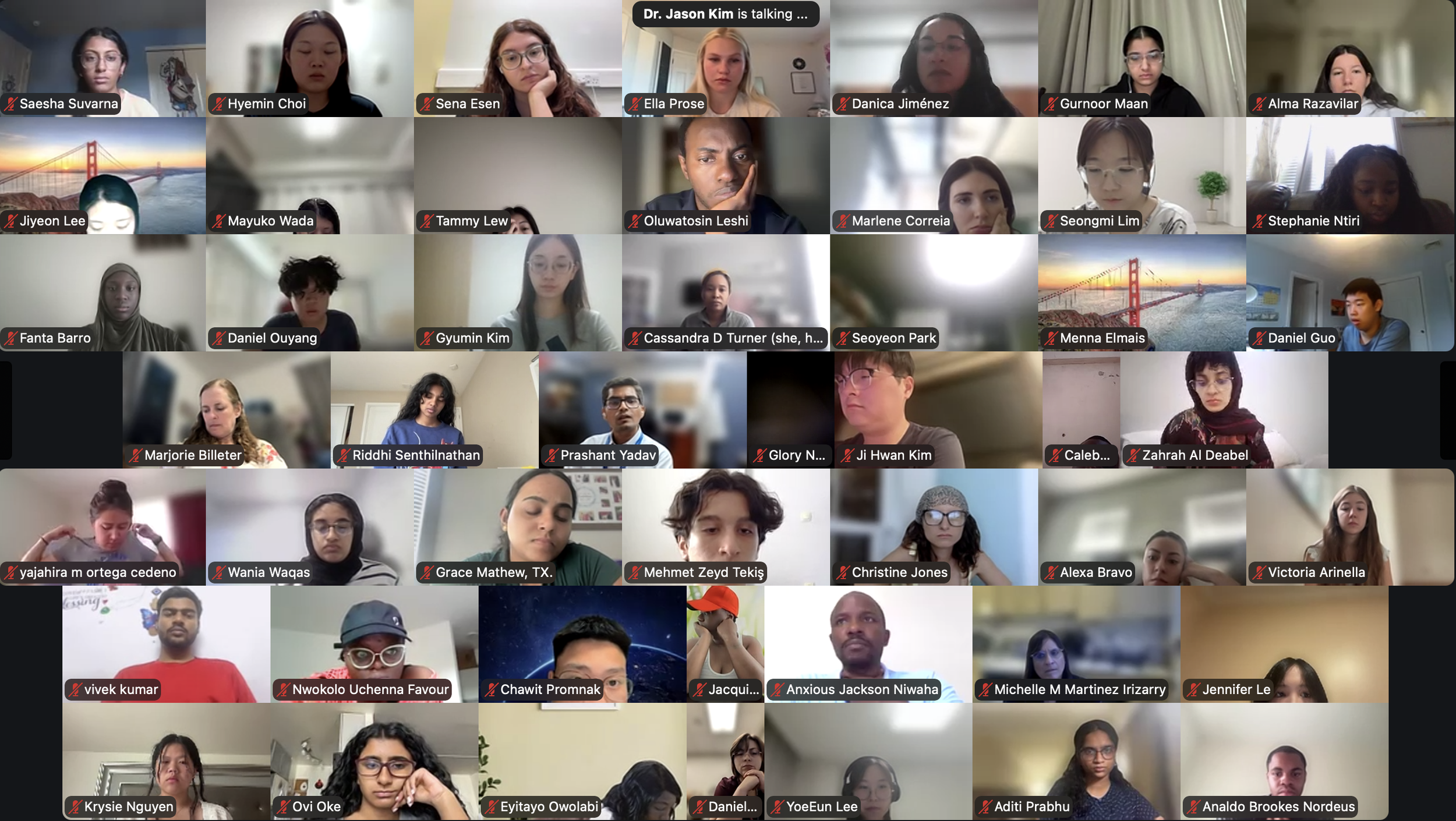
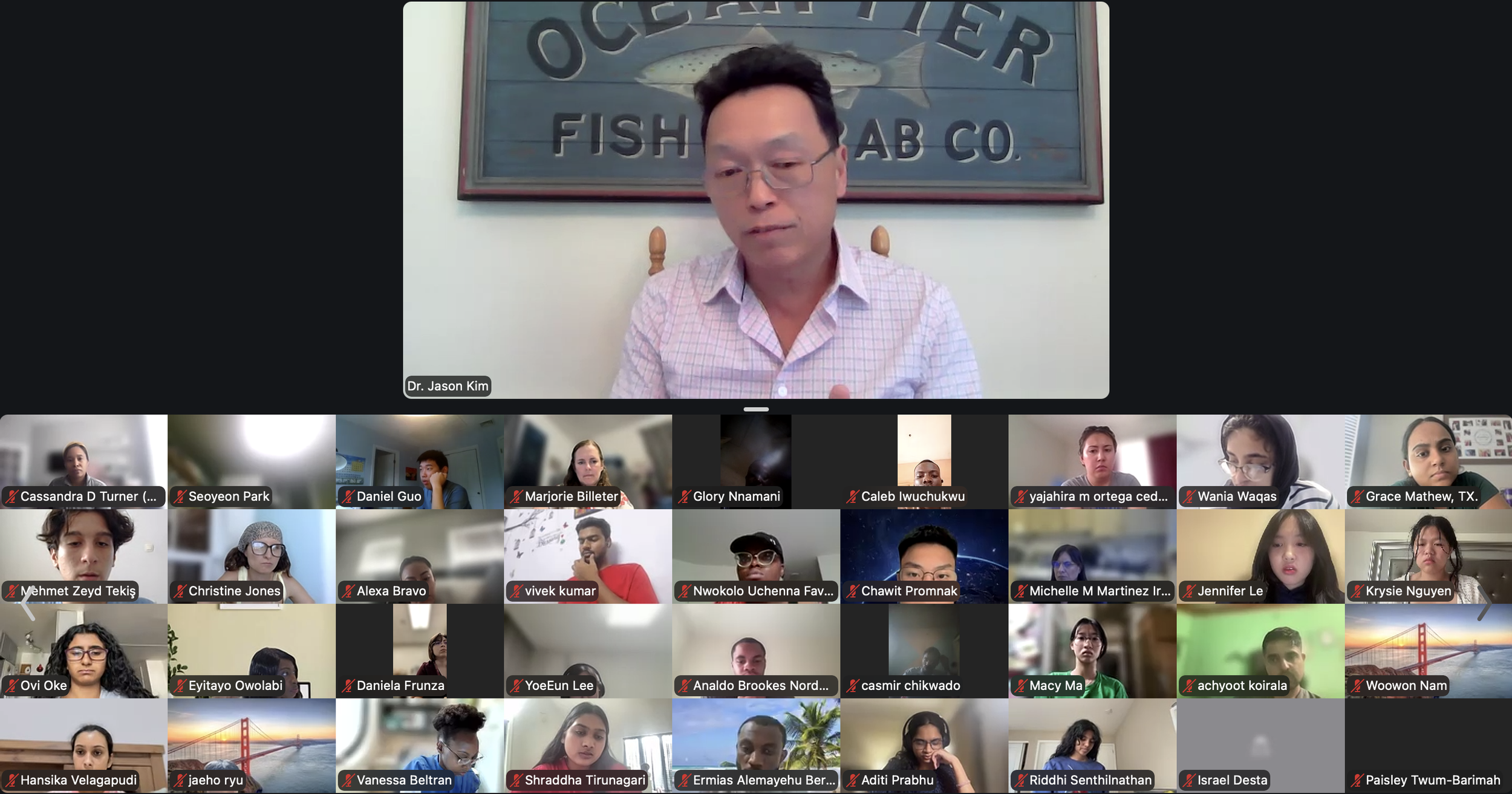
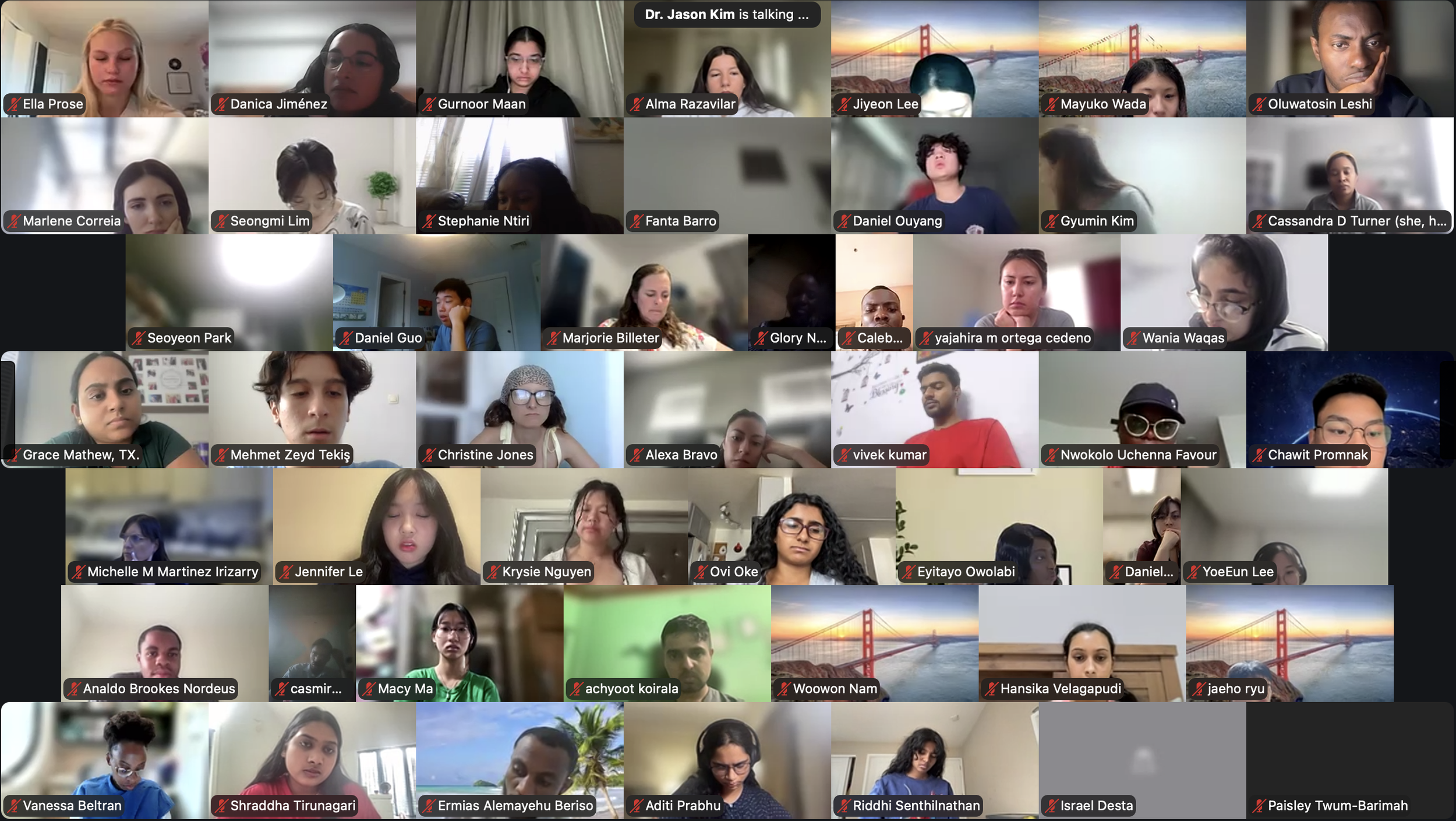
The DVSC26 continued today with a Pre-Session Q&A by Dr. Jason Kim of the University of Massachusetts Chan Medical School, who answered many outstanding questions from Session 2.
-
![Session 2: Opening Session & Introduction to Diabetes by Lauren, Allison, and Dr. Jason Kim (University of Massachusetts Medical School)]()
August 5, 2026 (Pre-Session Q&A - Part 1)
Dr. Jason Kim from the University of Massachusetts Chan Medical School answered many outstanding questions from Session 2.
-
![]()
August 5, 2026 (Pre-Session Q&A - Part 2)
Dr. Jason Kim from the University of Massachusetts Chan Medical School answered many outstanding questions from Session 2.
-
![]()
August 5, 2026 (Pre-Session Q&A - Part 3)
Dr. Jason Kim from the University of Massachusetts Chan Medical School answered many outstanding questions from Session 2.
-
![]()
August 5, 2026 (Pre-Session Q&A - Part 4)
Dr. Jason Kim from the University of Massachusetts Chan Medical School answered many outstanding questions from Session 2.
-
![]()
August 5, 2026 (Pre-Session Q&A - Part 5)
Dr. Jason Kim from the University of Massachusetts Chan Medical School answered many outstanding questions from Session 2.
-
![]()
August 5, 2026 (Pre-Session Q&A - Part 6)
Dr. Jason Kim from the University of Massachusetts Chan Medical School answered many outstanding questions from Session 2.
-
![]()
August 5, 2026 (Pre-Session Q&A - Part 7)
Dr. Jason Kim from the University of Massachusetts Chan Medical School answered many outstanding questions from Session 2.
-
![]()
August 5, 2026 (Pre-Session Q&A - Part 8)
Dr. Jason Kim from the University of Massachusetts Chan Medical School answered many outstanding questions from Session 2.
-
![]()
August 5, 2026 (Pre-Session Q&A - Part 9)
Dr. Jason Kim from the University of Massachusetts Chan Medical School answered many outstanding questions from Session 2.
-
![]()
August 5, 2026 (Pre-Session Q&A - Part 10)
Dr. Jason Kim from the University of Massachusetts Chan Medical School answered many outstanding questions from Session 2.
-
![]()
August 5, 2026 (Pre-Session Q&A - Part 11)
Dr. Jason Kim from the University of Massachusetts Chan Medical School answered many outstanding questions from Session 2.
-
![]()
August 5, 2026 (Pre-Session Q&A - Part 12)
Dr. Jason Kim from the University of Massachusetts Chan Medical School answered many outstanding questions from Session 2.
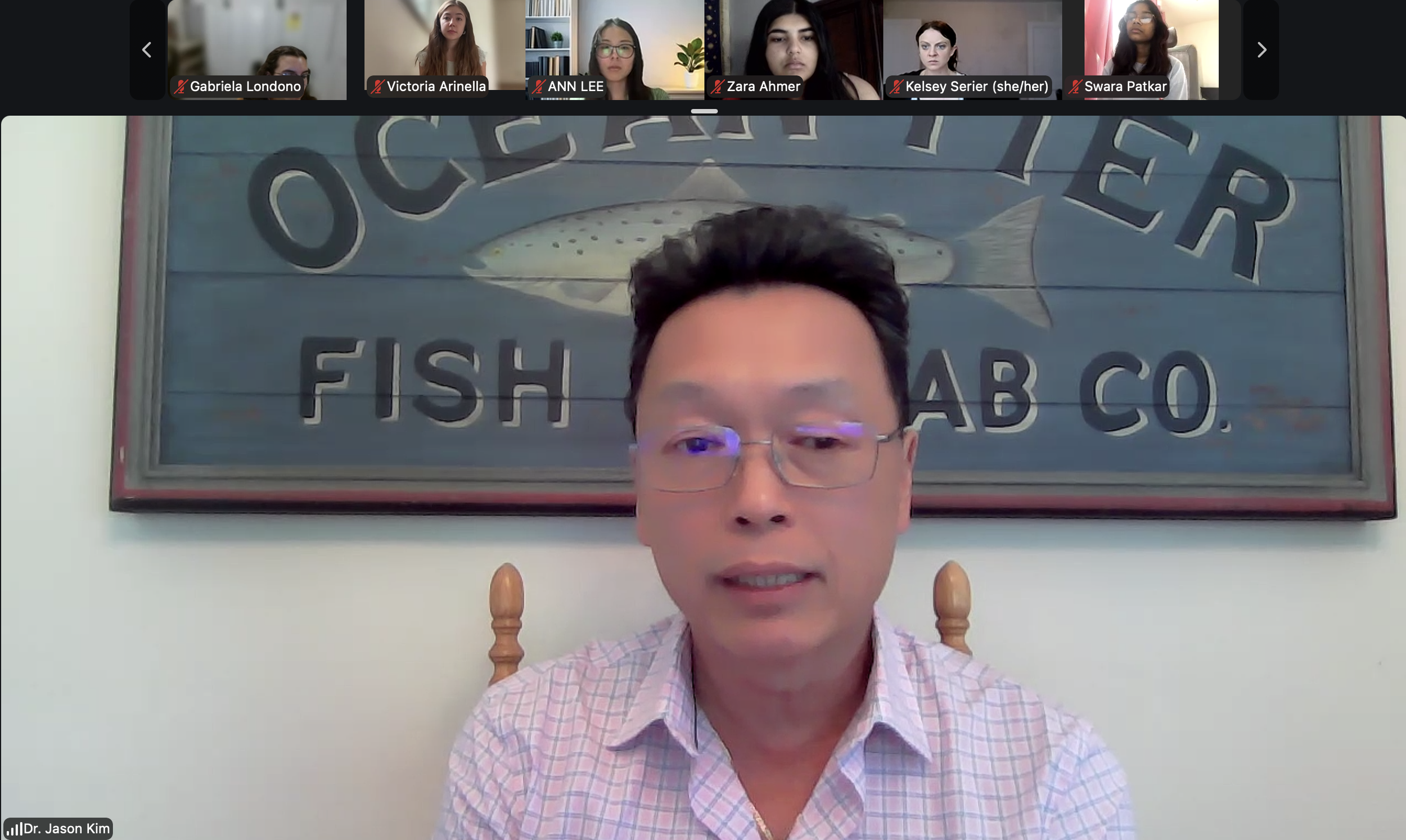
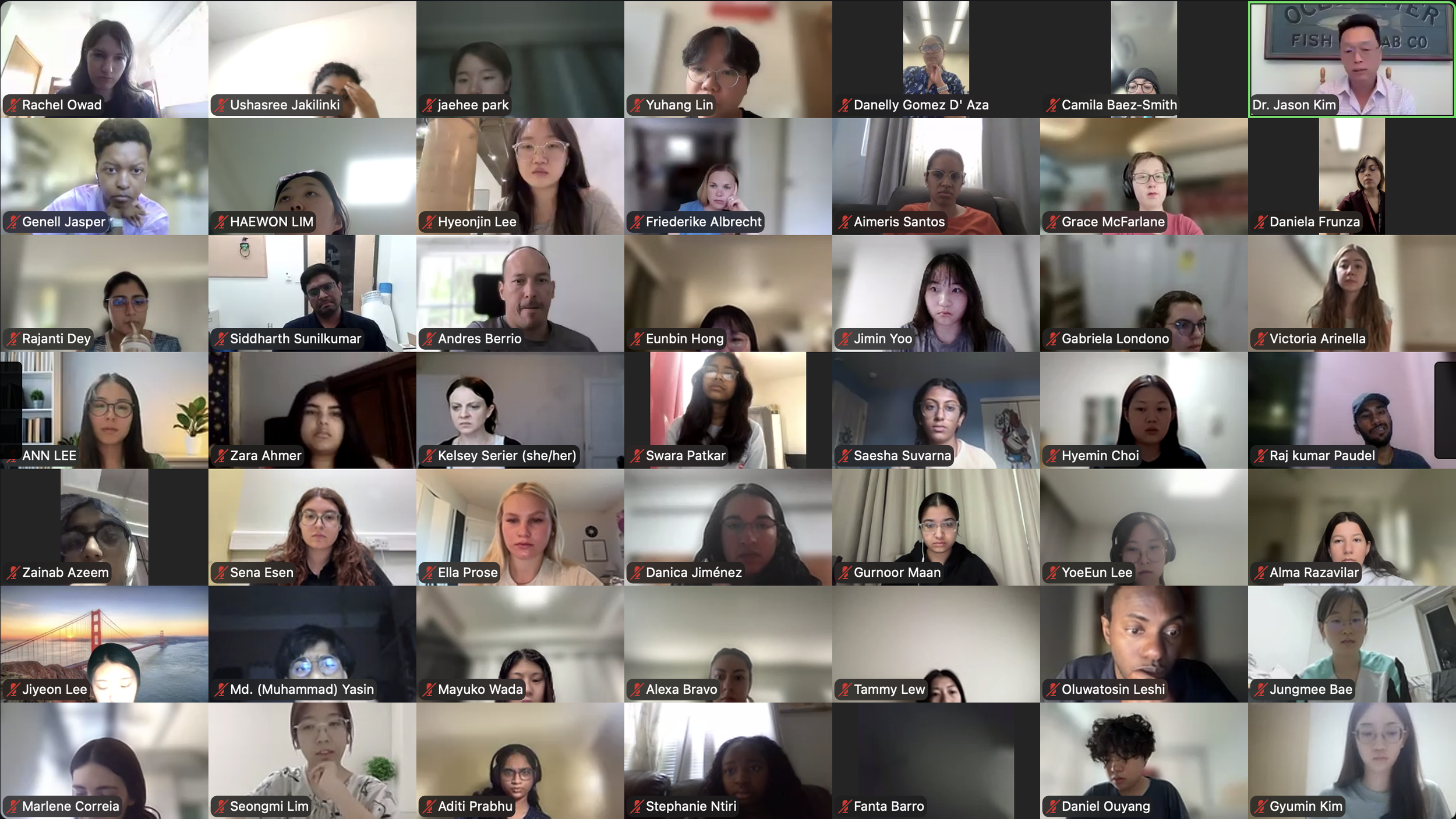
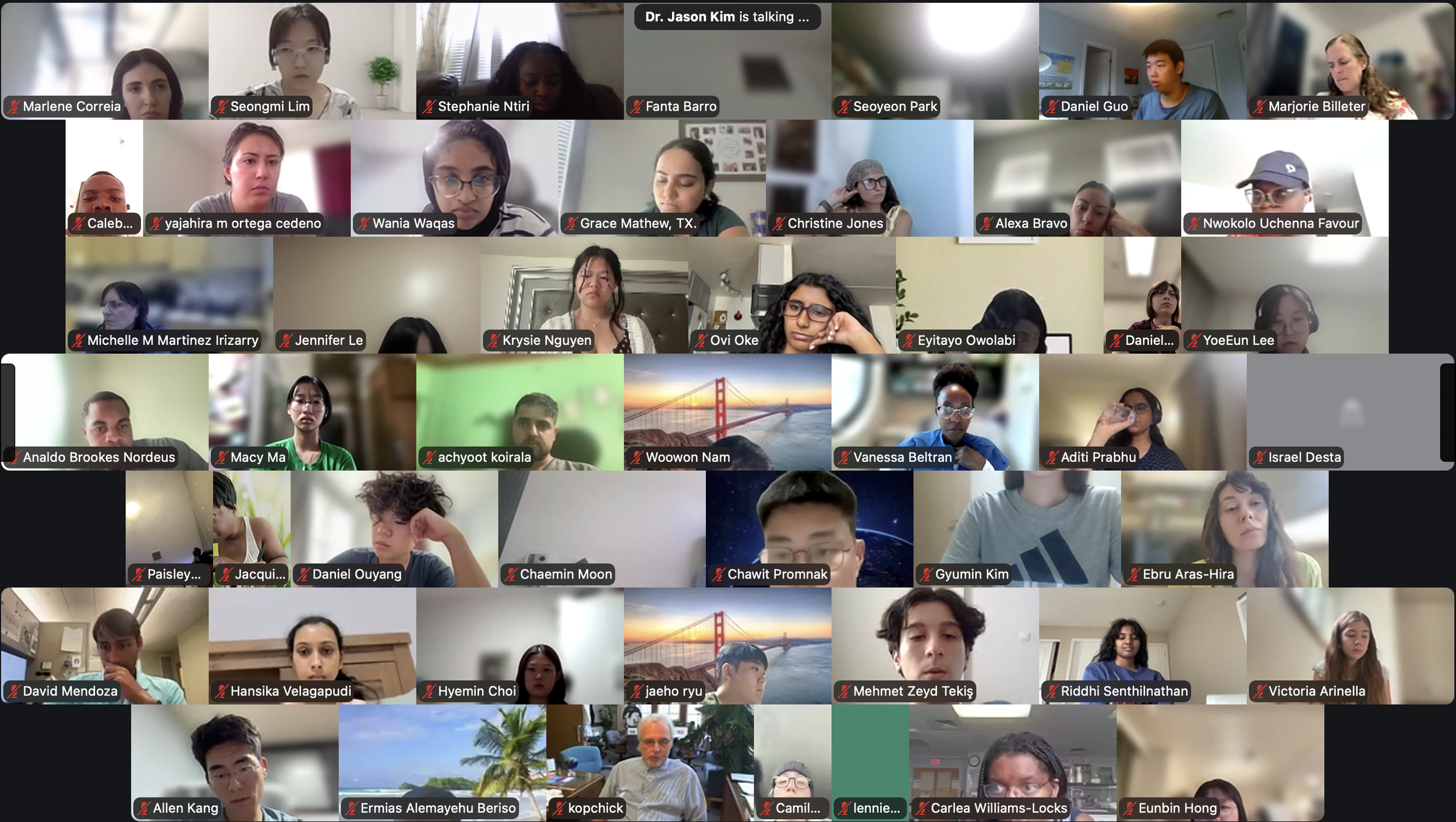
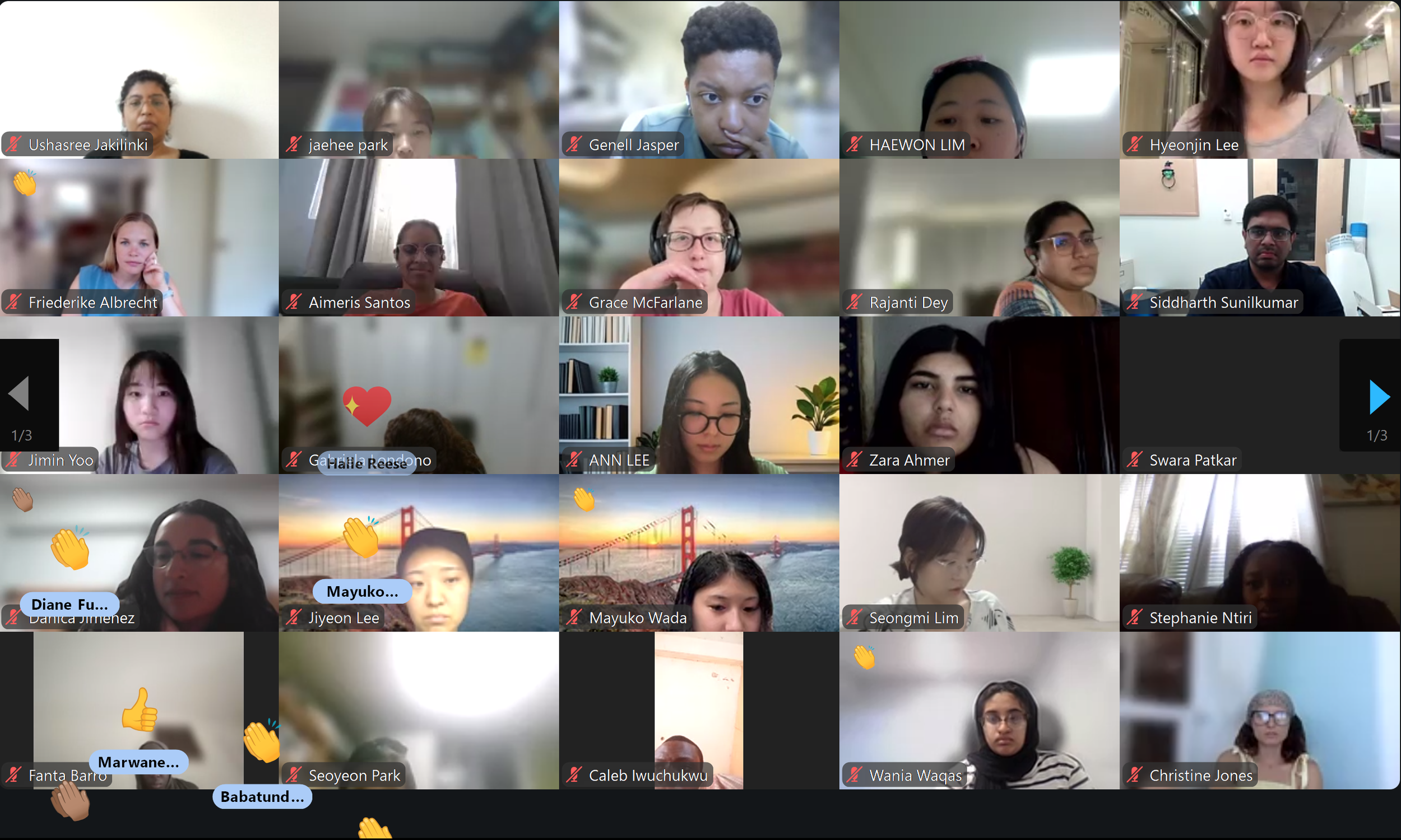
August 5, 2026
Session 3. Pharmacological Blockade of the Growth Hormone Receptor in Acromegaly & Cancer by Dr. John Kopchick (Ohio University Heritage College of Osteopathic Medicine)
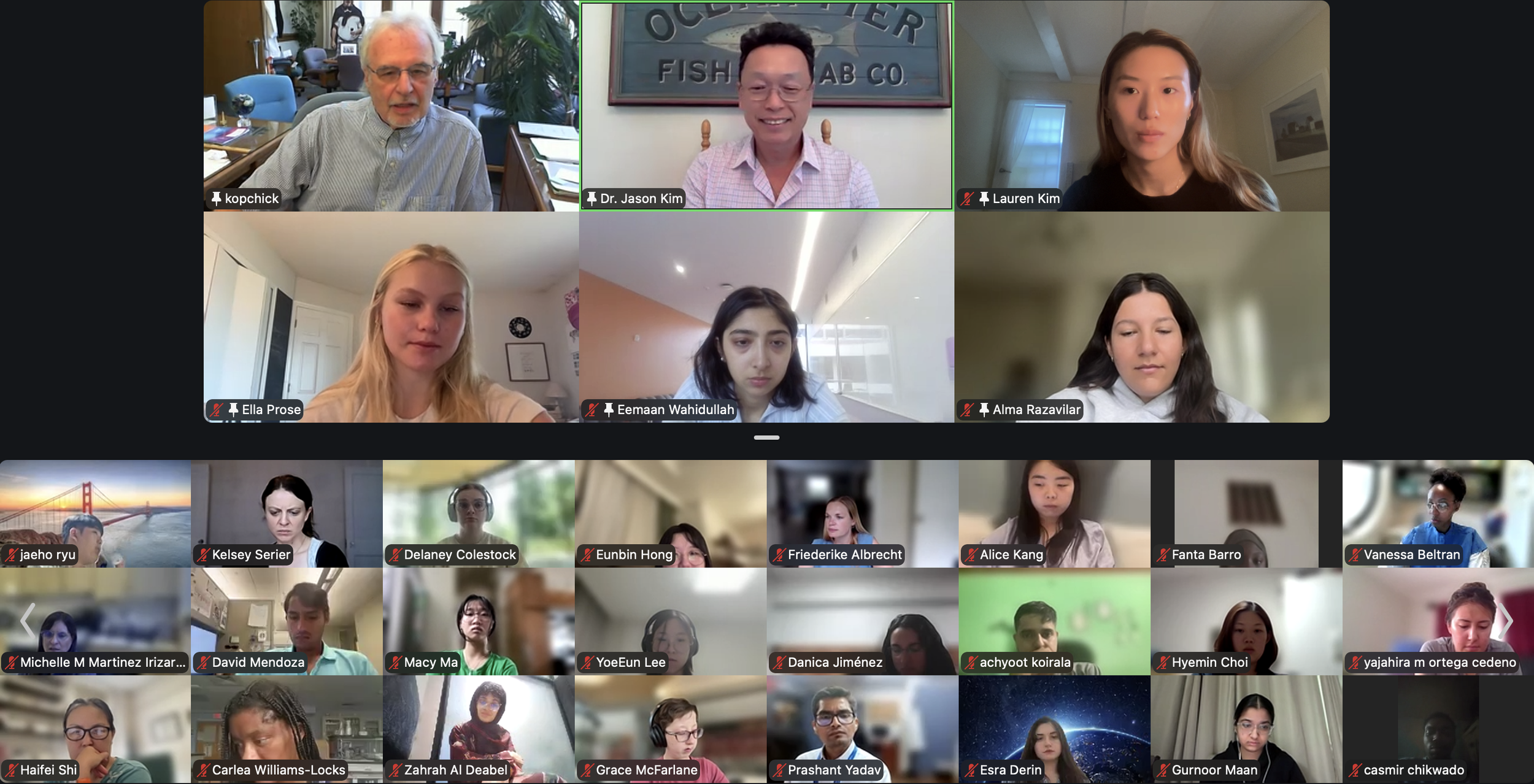
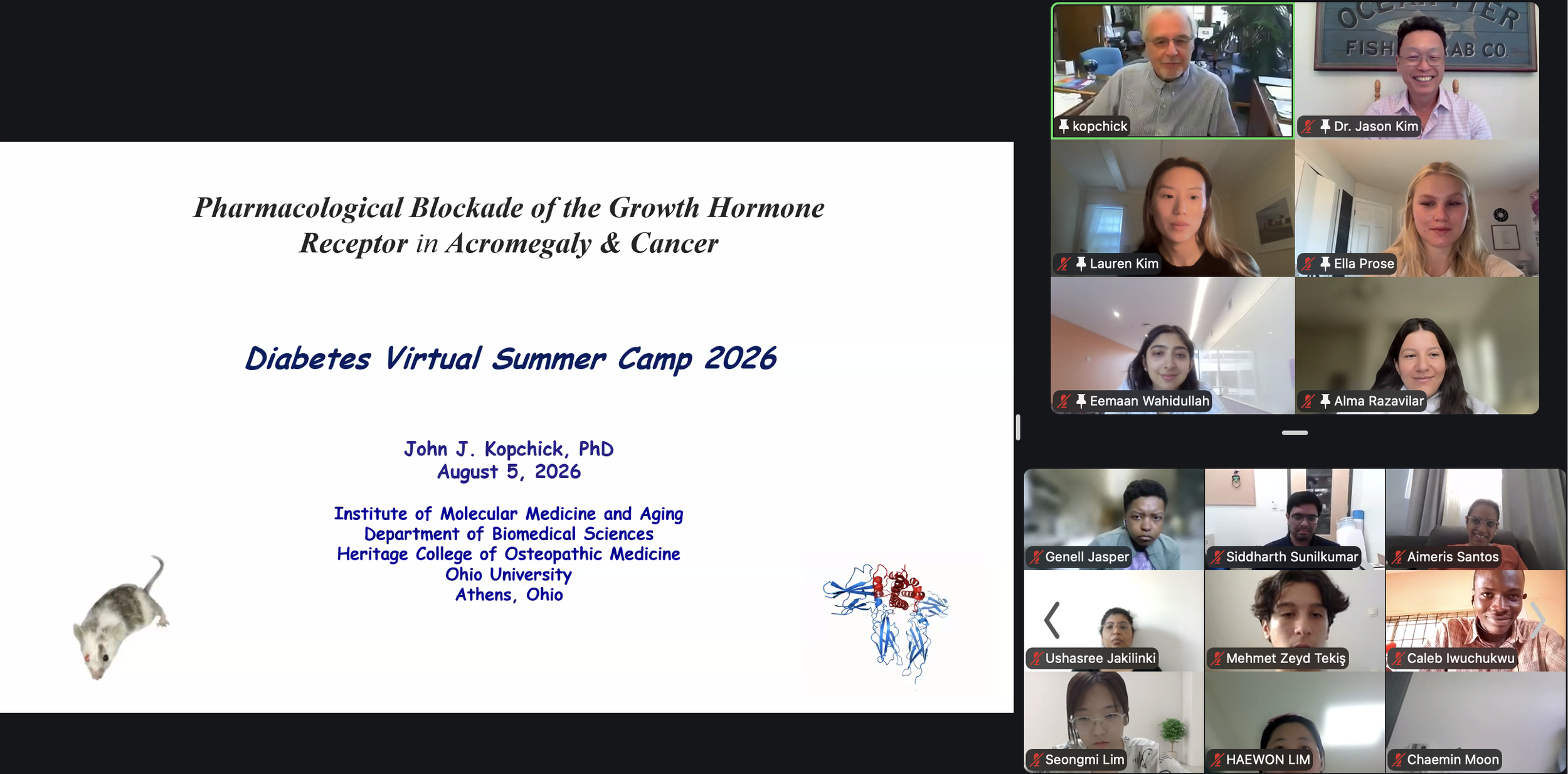
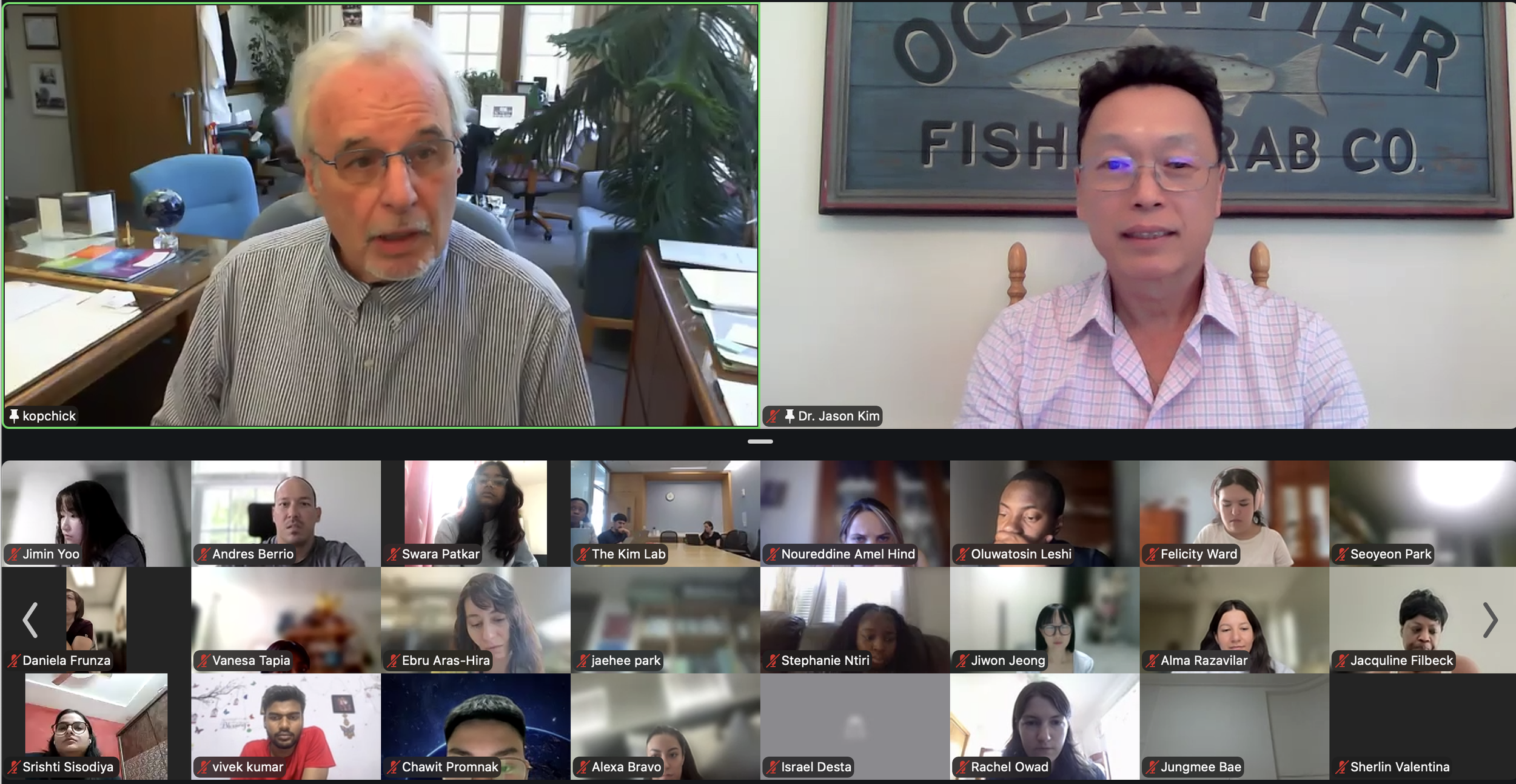
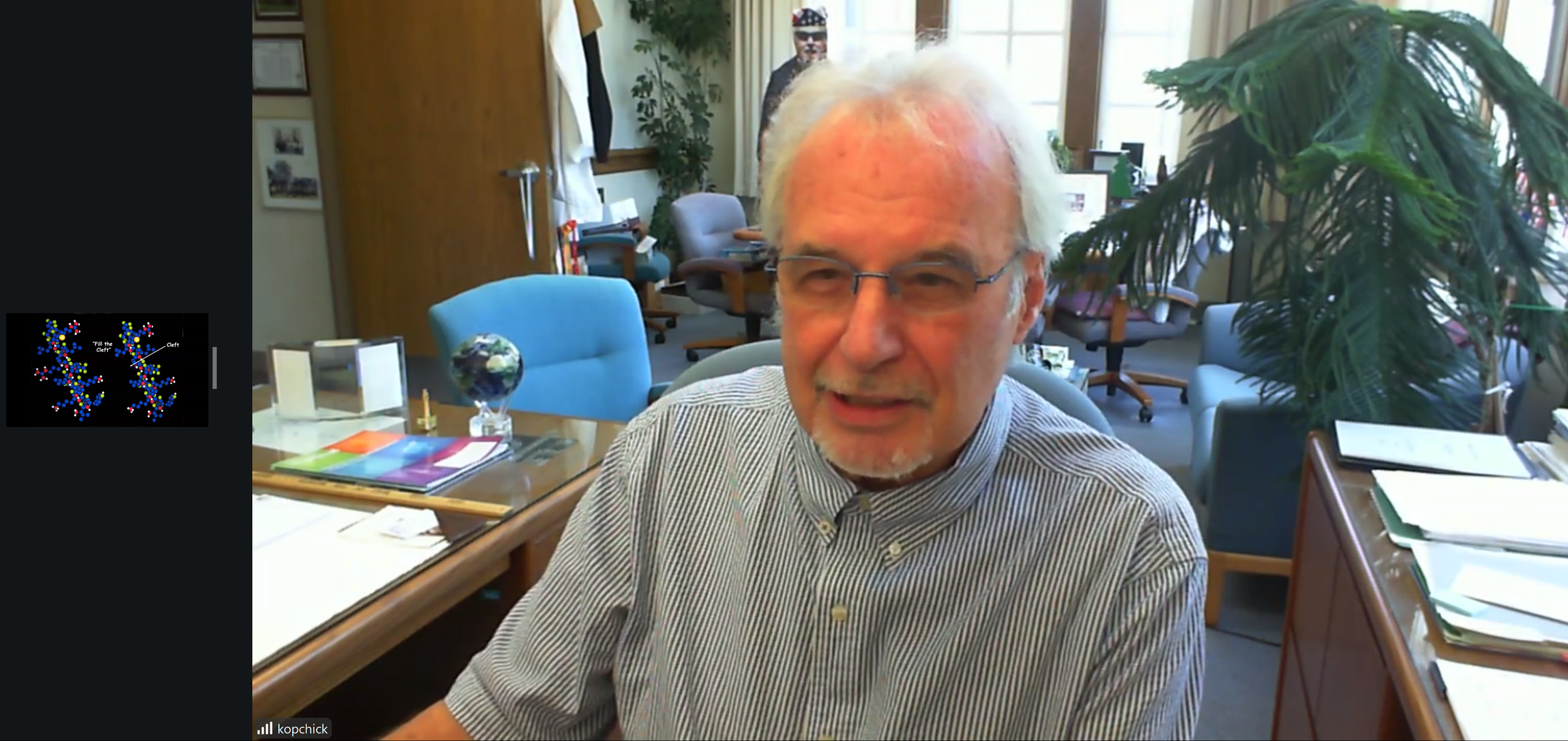
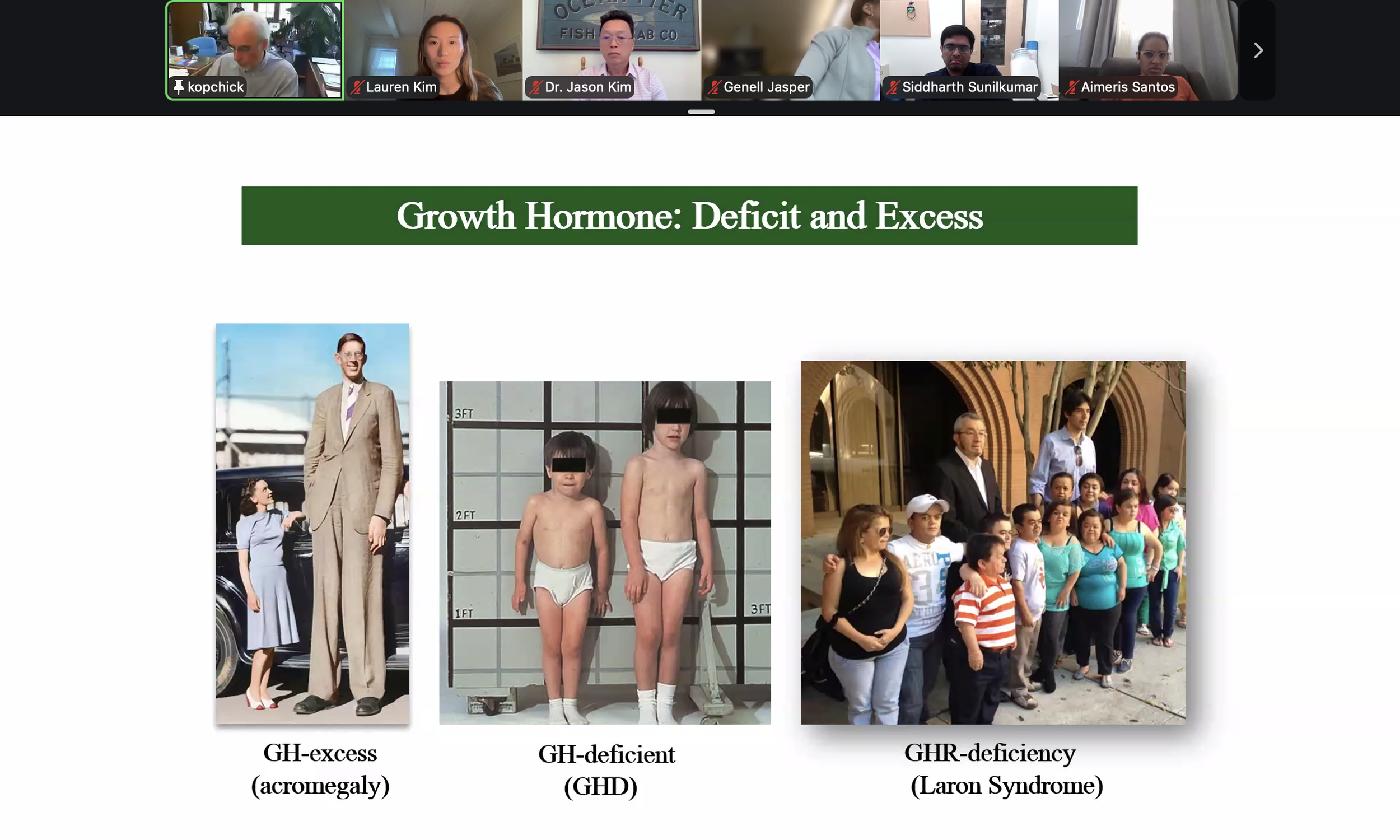
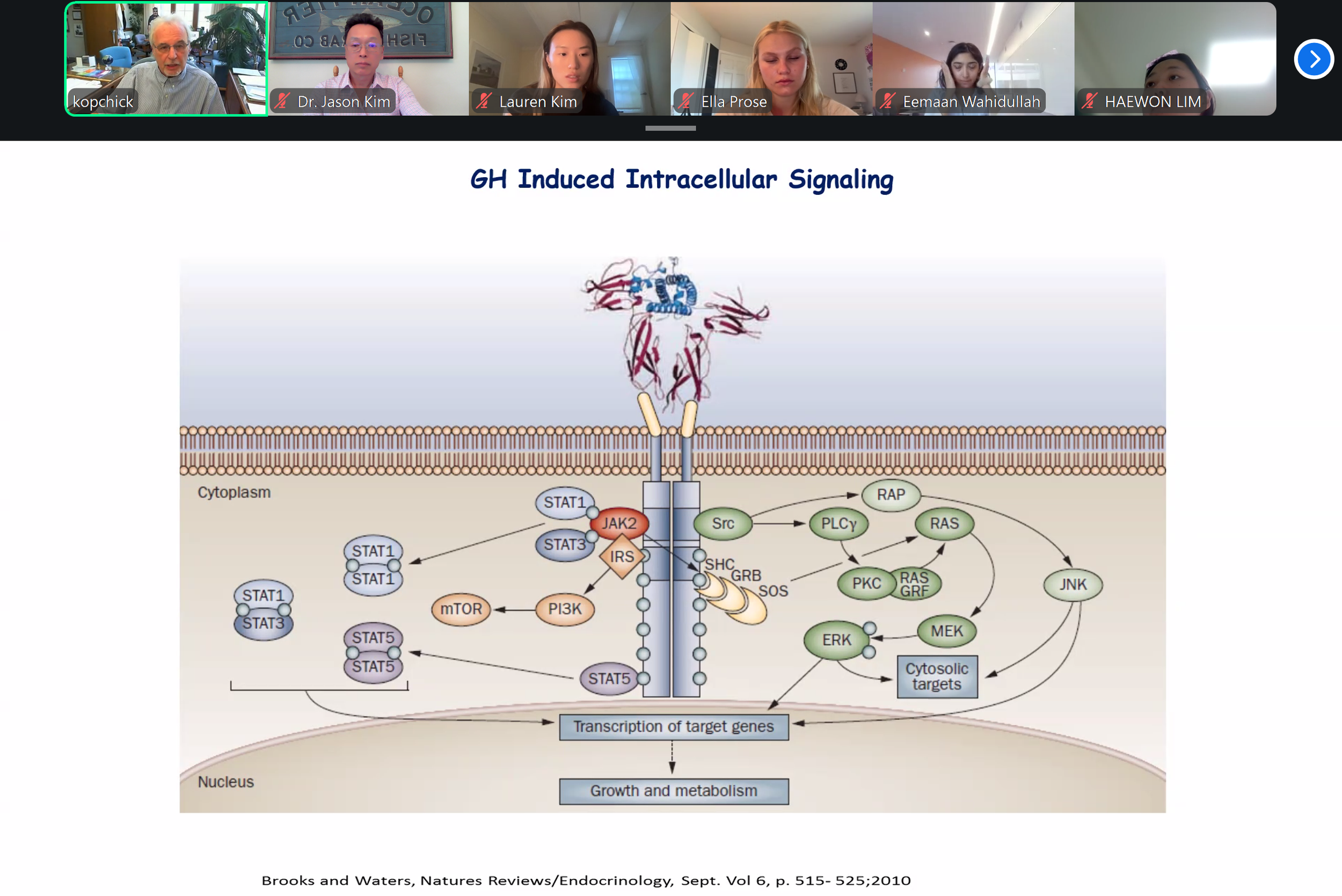
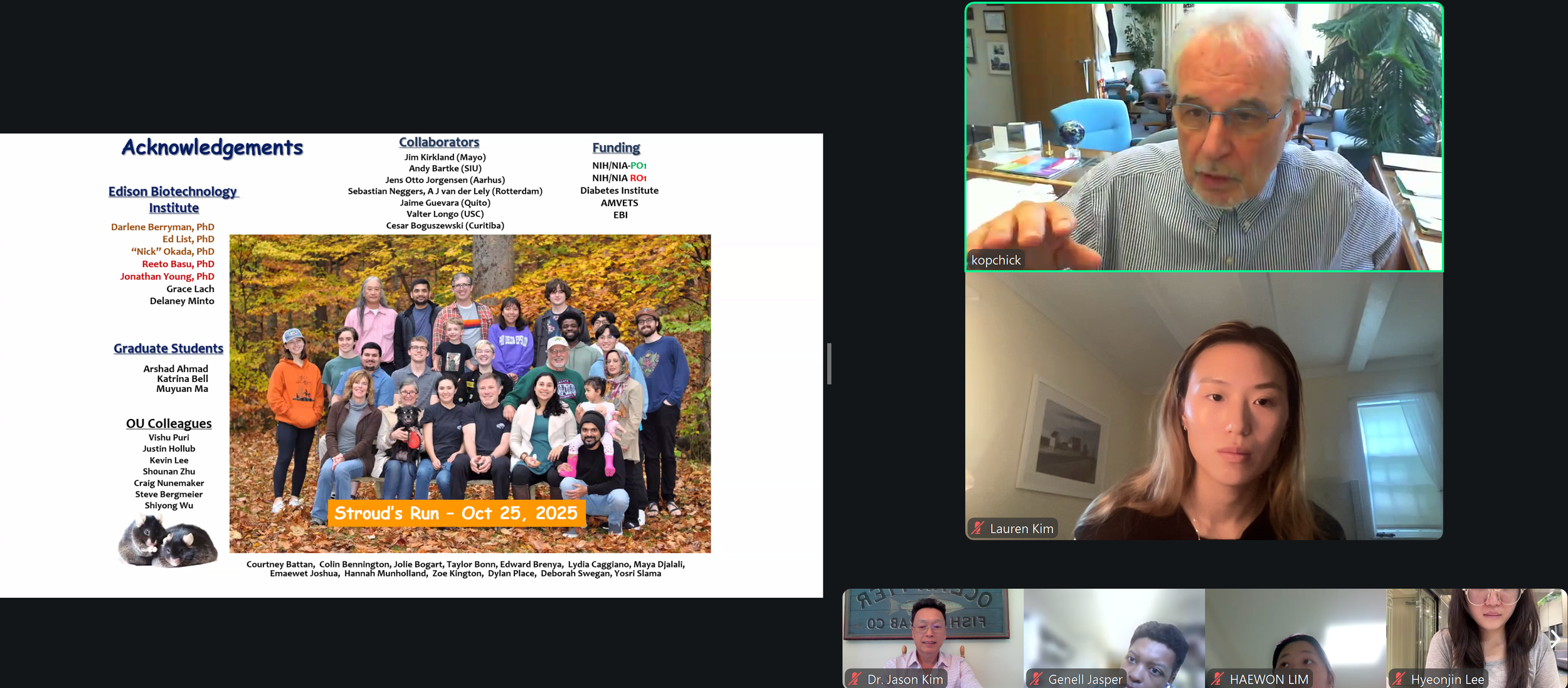
The Main Session of today’s DVSC26 featured 2 incredible Experts, Dr. John Kopchick from Ohio University and Dr. Gerald Shulman from Yale School of Medicine. Dr. Kopchick began with clinical implications of growth hormone deficit and excess and introduced the biology of growth hormone and its receptor. He highlighted the importance of the growth hormone binding site in developing growth hormone antagonists, and Pegvisomant has been used in treating acromegaly. Dr. Kopchick described a serendipitous observation on the glucose-lowering effect of Somavert (pegvisomant for injection) therapy in a patient with acromegaly. Based on his discovery, the U.S. Food and Drug Administration (FDA) approved Somavert for the treatment of acromegaly in 2003 as a new class of growth hormone receptor antagonists and the only medicine designed to specifically block the effects of excess growth hormone in acromegaly. As a result, Dr. Kopchick and his team’s discovery has led to saving people’s lives. Dr. Kopchick ended with a potential role of growth hormone in cancer biology and metastasis, and growth hormone antagonists may be used to potentially treat some forms of cancer.
-
![Session 2: Opening Session & Introduction to Diabetes by Lauren, Allison, and Dr. Jason Kim (University of Massachusetts Medical School)]()
August 5, 2026 (Session 3 - Part 1)
Session 3: “Pharmacological Blockade of the Growth Hormone Receptor in Acromegaly & Cancer” by Dr. John Kopchick (Ohio University Heritage College of Osteopathic Medicine)
Session 4: “When Fat Goes to the Wrong Places: Solving the Mystery of Insulin Resistance” by Dr. Gerald Shulman (Yale School of Medicine)The Main Session of today’s DVSC26 featured 2 incredible Experts, Dr. John Kopchick from Ohio University and Dr. Gerald Shulman from Yale School of Medicine.
-
![]()
August 5, 2026 (Session 3 - Part 2)
Session 3: “Pharmacological Blockade of the Growth Hormone Receptor in Acromegaly & Cancer” by Dr. John Kopchick (Ohio University Heritage College of Osteopathic Medicine)
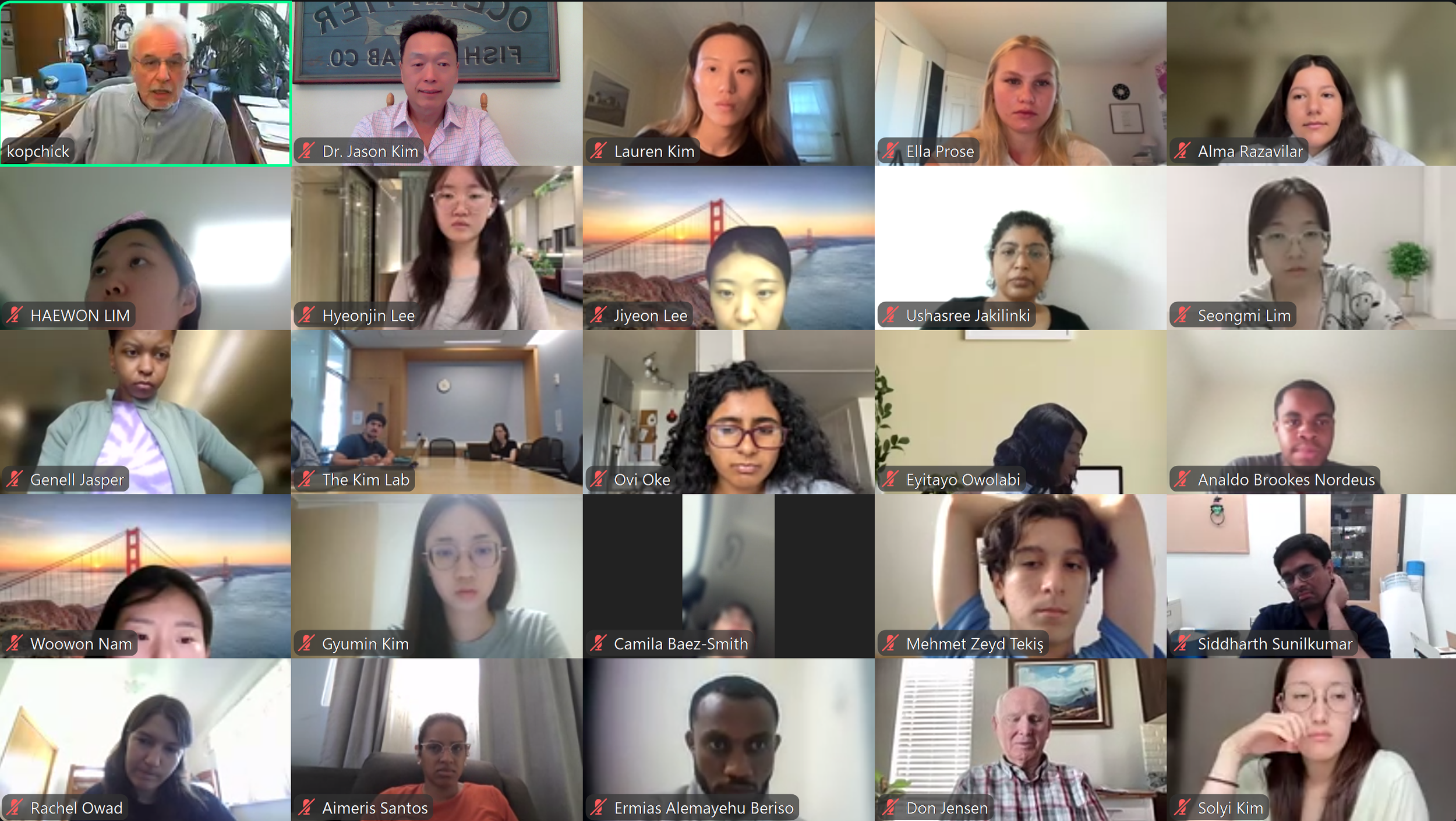
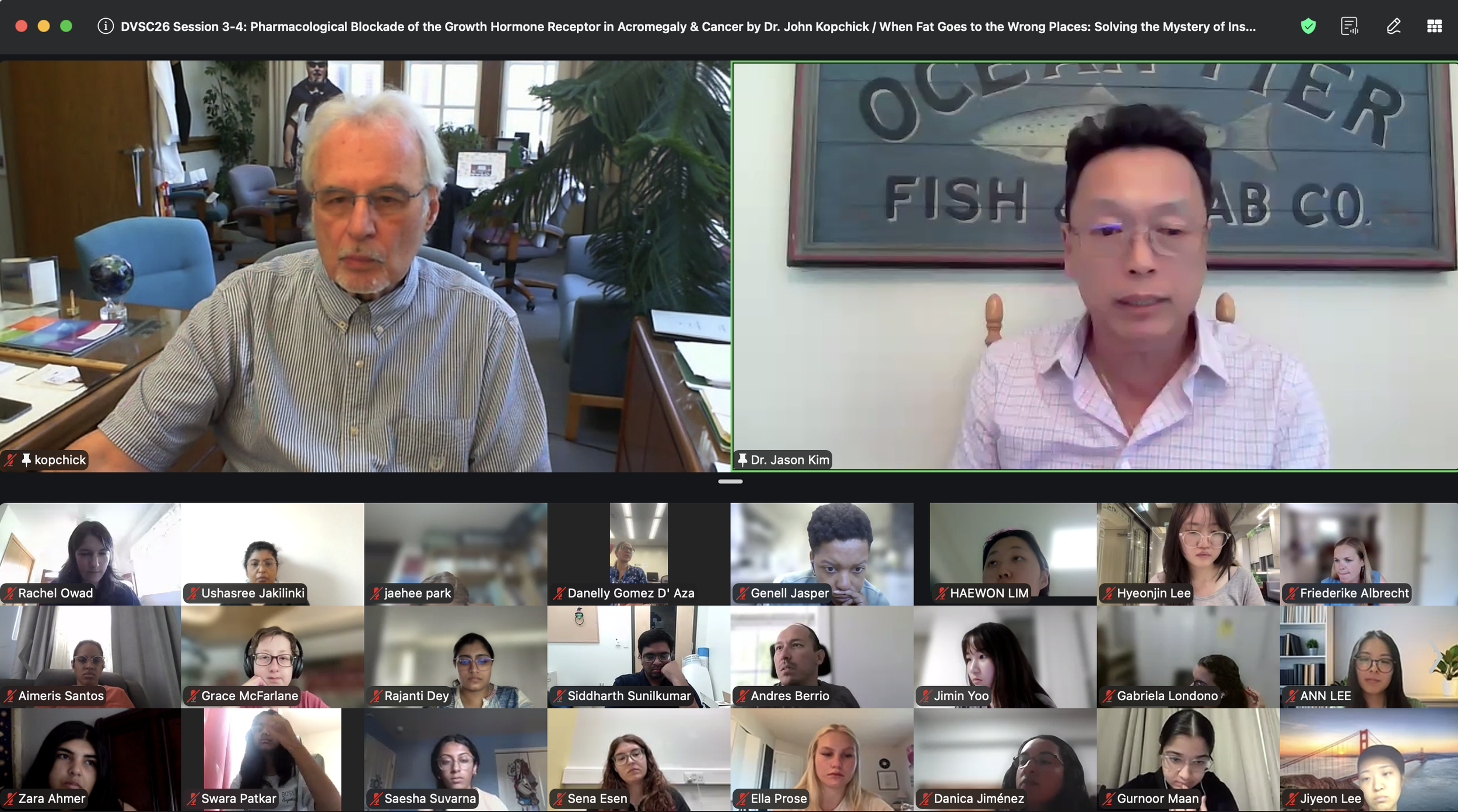
Dr. Kim introduces Dr. John Kopchick to our DVSC26 participants from all around the world.
-
![]()
August 5, 2026 (Session 3 - Part 3)
Session 3: “Pharmacological Blockade of the Growth Hormone Receptor in Acromegaly & Cancer” by Dr. John Kopchick (Ohio University Heritage College of Osteopathic Medicine)
Dr. Kim introduces Dr. John Kopchick to our DVSC26 participants from all around the world.
-
![]()
August 5, 2026 (Session 3 - Part 4)
Session 3: “Pharmacological Blockade of the Growth Hormone Receptor in Acromegaly & Cancer” by Dr. John Kopchick (Ohio University Heritage College of Osteopathic Medicine)
This session introduces a short history of growth hormone/growth hormone receptor (GHR) and its actions. The session discusses the discovery of a GHR antagonist and the clinical use of a GHR antagonist in acromegaly and cancer. The session further presents the longest-lived laboratory mouse and healthy aging.
-
![]()
August 5, 2026 (Session 3 - Part 5)
Session 3: “Pharmacological Blockade of the Growth Hormone Receptor in Acromegaly & Cancer” by Dr. John Kopchick (Ohio University Heritage College of Osteopathic Medicine)
Dr. Kopchick welcomes our program participants from around the world.
-
![]()
August 5, 2026 (Session 3 - Part 6)
Session 3: “Pharmacological Blockade of the Growth Hormone Receptor in Acromegaly & Cancer” by Dr. John Kopchick (Distinguished Professor and Goll-Ohio Eminent Scholar, Professor of Molecular Biology, Principal Investigator, Institute for Molecular Medicine and Aging, Heritage College of Osteopathic Medicine, Ohio University)
-
![]()
August 5, 2026 (Session 3 - Part 7)
Session 3: “Pharmacological Blockade of the Growth Hormone Receptor in Acromegaly & Cancer” by Dr. John Kopchick (Ohio University Heritage College of Osteopathic Medicine)
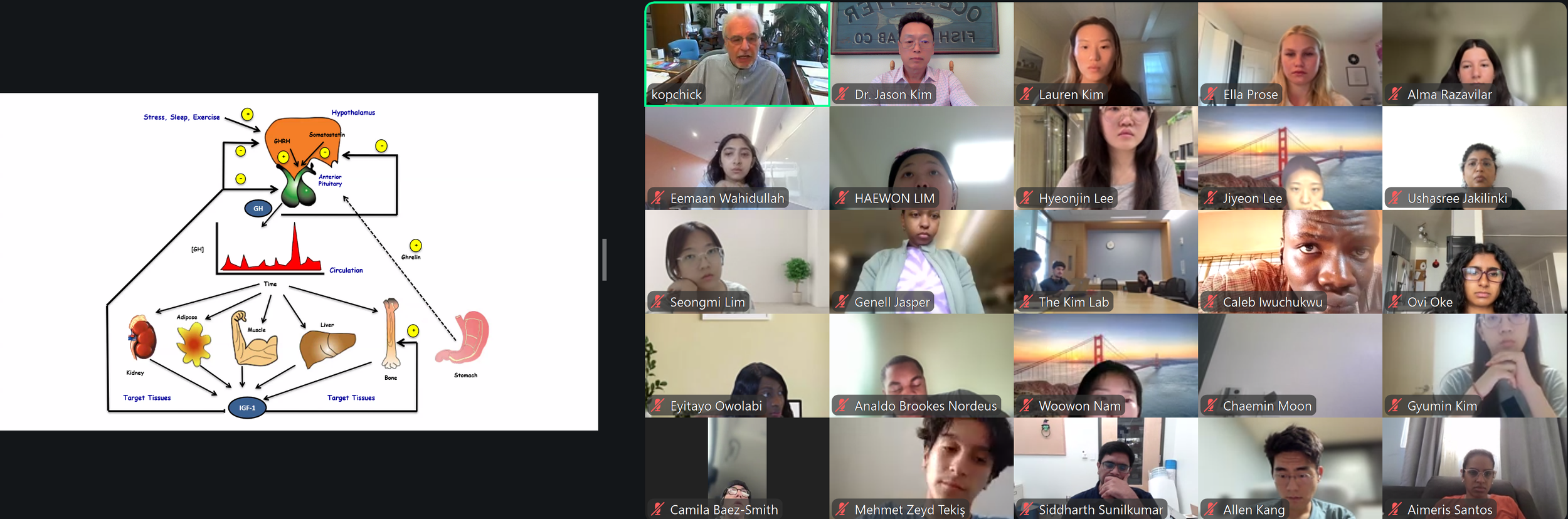
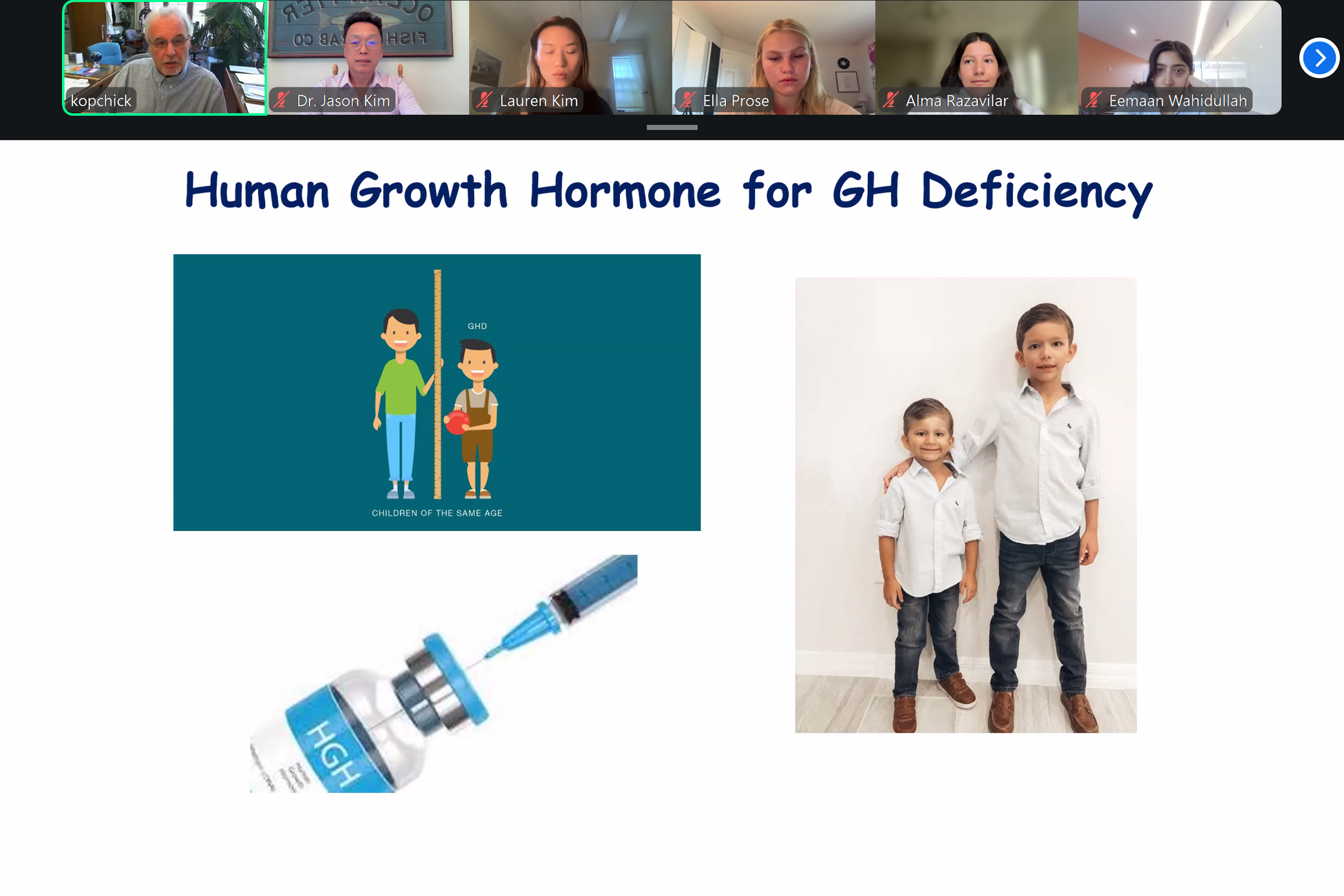
Dr. Kopchick began with clinical implications of growth hormone deficit and excess and introduced the biology of growth hormone and its receptor.
-
![]()
August 5, 2026 (Session 3 - Part 8)
Session 3: “Pharmacological Blockade of the Growth Hormone Receptor in Acromegaly & Cancer” by Dr. John Kopchick (Ohio University Heritage College of Osteopathic Medicine)
Dr. Kopchick began with clinical implications of growth hormone deficit and excess and introduced the biology of growth hormone and its receptor.
-
![]()
August 5, 2026 (Session 3 - Part 9)
Session 3: “Pharmacological Blockade of the Growth Hormone Receptor in Acromegaly & Cancer” by Dr. John Kopchick (Ohio University Heritage College of Osteopathic Medicine)
Dr. Kopchick began with clinical implications of growth hormone deficit and excess and introduced the biology of growth hormone and its receptor.
-
![]()
August 5, 2026 (Session 3 - Part 10)
Session 3: “Pharmacological Blockade of the Growth Hormone Receptor in Acromegaly & Cancer” by Dr. John Kopchick (Ohio University Heritage College of Osteopathic Medicine)
Dr. Kopchick began with clinical implications of growth hormone deficit and excess and introduced the biology of growth hormone and its receptor.
-
![]()
August 5, 2026 (Session 3 - Part 11)
Session 3: “Pharmacological Blockade of the Growth Hormone Receptor in Acromegaly & Cancer” by Dr. John Kopchick (Ohio University Heritage College of Osteopathic Medicine)
Dr. Kopchick began with clinical implications of growth hormone deficit and excess and introduced the biology of growth hormone and its receptor.
-
![]()
August 5, 2026 (Session 3 - Part 12)
Session 3: “Pharmacological Blockade of the Growth Hormone Receptor in Acromegaly & Cancer” by Dr. John Kopchick (Ohio University Heritage College of Osteopathic Medicine)
Dr. Kopchick began with clinical implications of growth hormone deficit and excess and introduced the biology of growth hormone and its receptor.
-
![]()
August 5, 2026 (Session 3 - Part 13)
Session 3: “Pharmacological Blockade of the Growth Hormone Receptor in Acromegaly & Cancer” by Dr. John Kopchick (Ohio University Heritage College of Osteopathic Medicine)
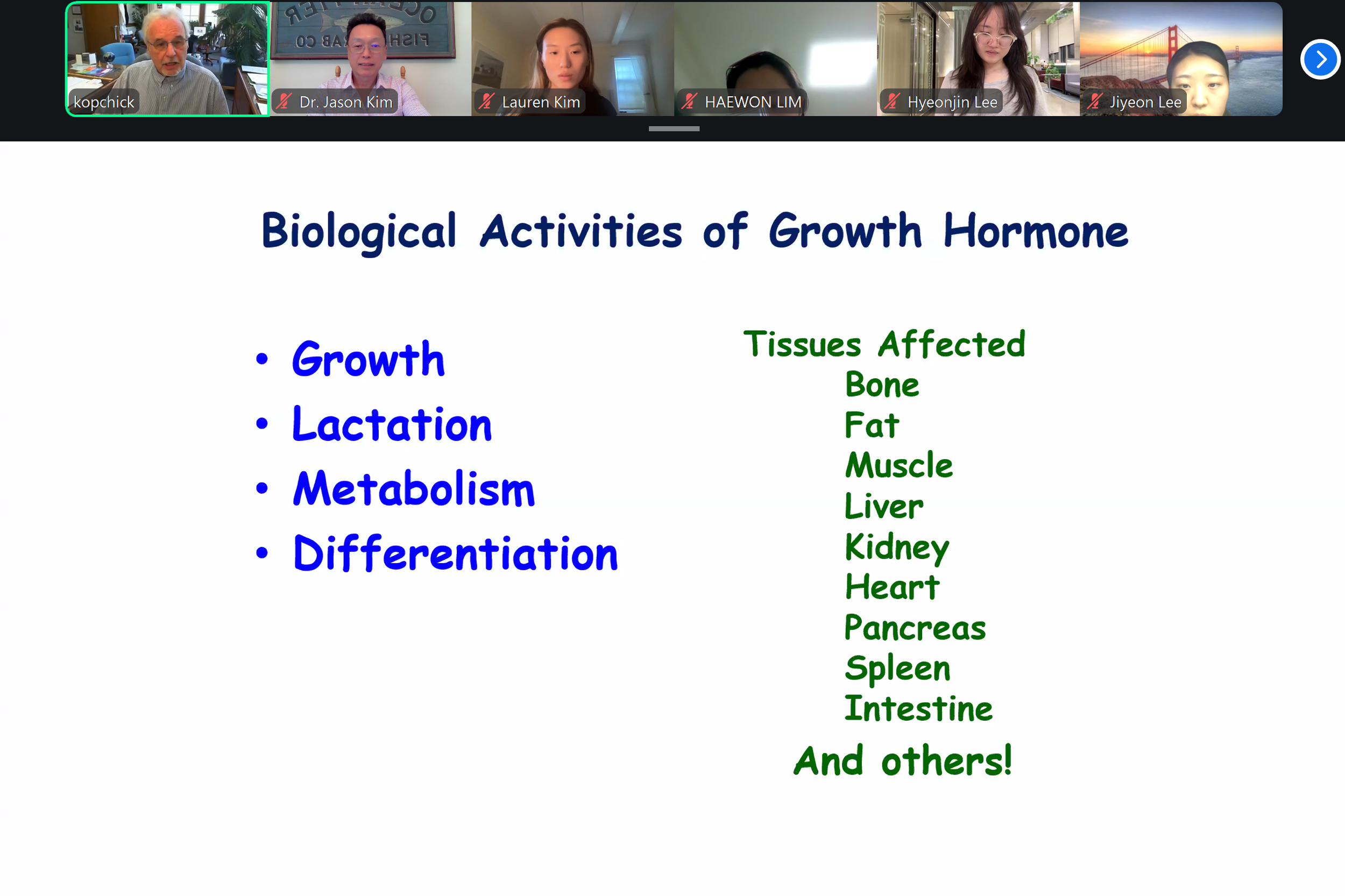
Dr. Kopchick discussed the diverse biological actions of growth hormone and feedback regulation of growth hormone release.
-
![]()
August 5, 2026 (Session 3 - Part 14)
Session 3: “Pharmacological Blockade of the Growth Hormone Receptor in Acromegaly & Cancer” by Dr. John Kopchick (Ohio University Heritage College of Osteopathic Medicine)
Dr. Kopchick discussed the diverse biological actions of growth hormone and feedback regulation of growth hormone release.
-
![]()
August 5, 2026 (Session 3 - Part 15)
Session 3: “Pharmacological Blockade of the Growth Hormone Receptor in Acromegaly & Cancer” by Dr. John Kopchick (Ohio University Heritage College of Osteopathic Medicine)
Dr. Kopchick discussed the diverse biological actions of growth hormone and feedback regulation of growth hormone release.
-
![]()
August 5, 2026 (Session 3 - Part 16)
Session 3: “Pharmacological Blockade of the Growth Hormone Receptor in Acromegaly & Cancer” by Dr. John Kopchick (Ohio University Heritage College of Osteopathic Medicine)
Dr. Kopchick began with clinical implications of growth hormone deficit and excess and introduced the biology of growth hormone and its receptor. He also discussed the diverse biological actions of growth hormone and feedback regulation of growth hormone release.
-
![]()
August 5, 2026 (Session 3 - Part 17)
Session 3: “Pharmacological Blockade of the Growth Hormone Receptor in Acromegaly & Cancer” by Dr. John Kopchick (Ohio University Heritage College of Osteopathic Medicine)
Dr. Kopchick began with clinical implications of growth hormone deficit and excess and introduced the biology of growth hormone and its receptor. He also discussed the diverse biological actions of growth hormone and feedback regulation of growth hormone release.
-
![]()
August 5, 2026 (Session 3 - Part 18)
Session 3: “Pharmacological Blockade of the Growth Hormone Receptor in Acromegaly & Cancer” by Dr. John Kopchick (Ohio University Heritage College of Osteopathic Medicine)
Dr. Kopchick began with clinical implications of growth hormone deficit and excess and introduced the biology of growth hormone and its receptor. He also discussed the diverse biological actions of growth hormone and feedback regulation of growth hormone release.
-
![]()
August 5, 2026 (Session 3 - Part 19)
Session 3: “Pharmacological Blockade of the Growth Hormone Receptor in Acromegaly & Cancer” by Dr. John Kopchick (Ohio University Heritage College of Osteopathic Medicine)
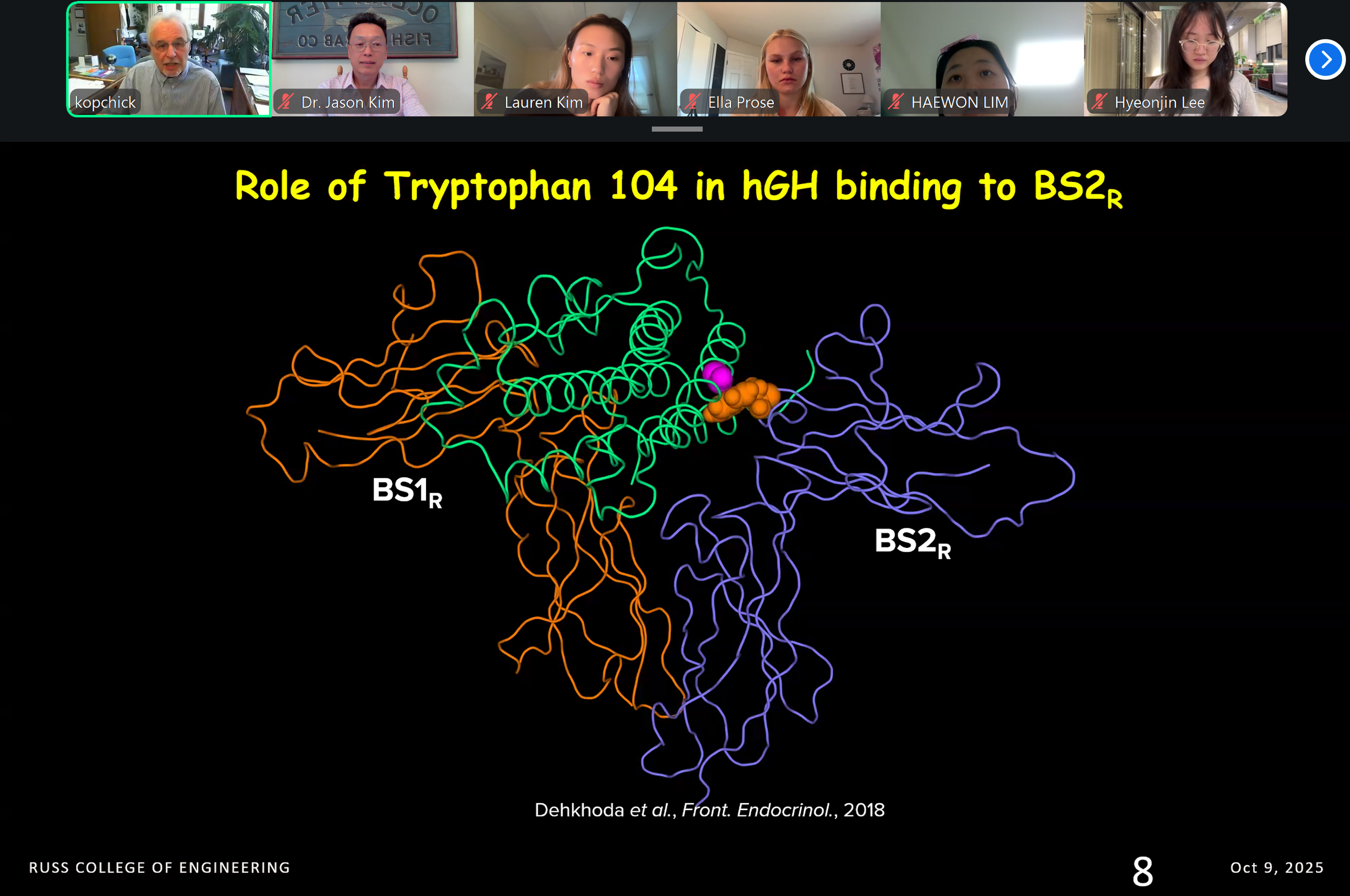
Dr. Kopchick highlighted the importance of the growth hormone binding site in developing growth hormone antagonists, and Pegvisomant has been used in treating acromegaly.
-
![]()
August 5, 2026 (Session 3 - Part 20)
Session 3: “Pharmacological Blockade of the Growth Hormone Receptor in Acromegaly & Cancer” by Dr. John Kopchick (Ohio University Heritage College of Osteopathic Medicine)
Dr. Kopchick highlighted the importance of the growth hormone binding site in developing growth hormone antagonists, and Pegvisomant has been used in treating acromegaly.
-
![]()
August 5, 2026 (Session 3 - Part 21)
Session 3: “Pharmacological Blockade of the Growth Hormone Receptor in Acromegaly & Cancer” by Dr. John Kopchick (Ohio University Heritage College of Osteopathic Medicine)
Dr. Kopchick highlighted the importance of the growth hormone binding site in developing growth hormone antagonists, and Pegvisomant has been used in treating acromegaly.
-
![]()
August 5, 2026 (Session 3 - Part 22)
Session 3: “Pharmacological Blockade of the Growth Hormone Receptor in Acromegaly & Cancer” by Dr. John Kopchick (Ohio University Heritage College of Osteopathic Medicine)
Dr. Kopchick highlighted the importance of the growth hormone binding site in developing growth hormone antagonists, and Pegvisomant has been used in treating acromegaly.
-
![]()
August 5, 2026 (Session 3 - Part 23)
Session 3: “Pharmacological Blockade of the Growth Hormone Receptor in Acromegaly & Cancer” by Dr. John Kopchick (Ohio University Heritage College of Osteopathic Medicine)
Dr. Kopchick highlighted the importance of the growth hormone binding site in developing growth hormone antagonists, and Pegvisomant has been used in treating acromegaly.
-
![]()
August 5, 2026 (Session 3 - Part 24)
Session 3: “Pharmacological Blockade of the Growth Hormone Receptor in Acromegaly & Cancer” by Dr. John Kopchick (Ohio University Heritage College of Osteopathic Medicine)
Dr. Kopchick highlighted the importance of the growth hormone binding site in developing growth hormone antagonists, and Pegvisomant has been used in treating acromegaly.
-
![]()
August 5, 2026 (Session 3 - Part 25)
Session 3: “Pharmacological Blockade of the Growth Hormone Receptor in Acromegaly & Cancer” by Dr. John Kopchick (Ohio University Heritage College of Osteopathic Medicine)
Dr. Kopchick highlighted the importance of the growth hormone binding site in developing growth hormone antagonists, and Pegvisomant has been used in treating acromegaly.
-
![]()
August 5, 2026 (Session 3 - Part 26)
Session 3: “Pharmacological Blockade of the Growth Hormone Receptor in Acromegaly & Cancer” by Dr. John Kopchick (Ohio University Heritage College of Osteopathic Medicine)
Dr. Kopchick highlighted the importance of the growth hormone binding site in developing growth hormone antagonists, and Pegvisomant has been used in treating acromegaly.
-
![]()
August 5, 2026 (Session 3 - Part 27)
Session 3: “Pharmacological Blockade of the Growth Hormone Receptor in Acromegaly & Cancer” by Dr. John Kopchick (Ohio University Heritage College of Osteopathic Medicine)
Dr. Kopchick highlighted the importance of the growth hormone binding site in developing growth hormone antagonists, and Pegvisomant has been used in treating acromegaly.
-
![]()
August 5, 2026 (Session 3 - Part 28)
Session 3: “Pharmacological Blockade of the Growth Hormone Receptor in Acromegaly & Cancer” by Dr. John Kopchick (Ohio University Heritage College of Osteopathic Medicine)
Based on Dr. Kopchick’s discovery, the U.S. Food and Drug Administration (FDA) approved Somavert for the treatment of acromegaly in 2003 as a new class of growth hormone receptor antagonists and the only medicine designed to specifically block the effects of excess growth hormone in acromegaly. As a result, Dr. Kopchick and his team’s discovery has led to saving people’s lives.
-
![]()
August 5, 2026 (Session 3 - Part 29)
Session 3: “Pharmacological Blockade of the Growth Hormone Receptor in Acromegaly & Cancer” by Dr. John Kopchick (Ohio University Heritage College of Osteopathic Medicine)
Based on Dr. Kopchick’s discovery, the U.S. Food and Drug Administration (FDA) approved Somavert for the treatment of acromegaly in 2003 as a new class of growth hormone receptor antagonists and the only medicine designed to specifically block the effects of excess growth hormone in acromegaly. As a result, Dr. Kopchick and his team’s discovery has led to saving people’s lives.
-
![]()
August 5, 2026 (Session 3 - Part 30)
Session 3: “Pharmacological Blockade of the Growth Hormone Receptor in Acromegaly & Cancer” by Dr. John Kopchick (Ohio University Heritage College of Osteopathic Medicine)
Based on Dr. Kopchick’s discovery, the U.S. Food and Drug Administration (FDA) approved Somavert for the treatment of acromegaly in 2003 as a new class of growth hormone receptor antagonists and the only medicine designed to specifically block the effects of excess growth hormone in acromegaly. As a result, Dr. Kopchick and his team’s discovery has led to saving people’s lives.
-
![]()
August 5, 2026 (Session 3 - Part 31)
Session 3: “Pharmacological Blockade of the Growth Hormone Receptor in Acromegaly & Cancer” by Dr. John Kopchick (Ohio University Heritage College of Osteopathic Medicine)
Dr. Kopchick described a serendipitous observation on the glucose-lowering effect of Somavert (pegvisomant for injection) therapy in a patient with acromegaly.
-
![]()
August 5, 2026 (Session 3 - Part 32)
Session 3: “Pharmacological Blockade of the Growth Hormone Receptor in Acromegaly & Cancer” by Dr. John Kopchick (Ohio University Heritage College of Osteopathic Medicine)
Dr. Kopchick described a serendipitous observation on the glucose-lowering effect of Somavert (pegvisomant for injection) therapy in a patient with acromegaly.
-
![]()
August 5, 2026 (Session 3 - Part 33)
Session 3: “Pharmacological Blockade of the Growth Hormone Receptor in Acromegaly & Cancer” by Dr. John Kopchick (Ohio University Heritage College of Osteopathic Medicine)
Dr. Kopchick described a serendipitous observation on the glucose-lowering effect of Somavert (pegvisomant for injection) therapy in a patient with acromegaly.
-
![]()
August 5, 2026 (Session 3 - Part 34)
Session 3: “Pharmacological Blockade of the Growth Hormone Receptor in Acromegaly & Cancer” by Dr. John Kopchick (Ohio University Heritage College of Osteopathic Medicine)
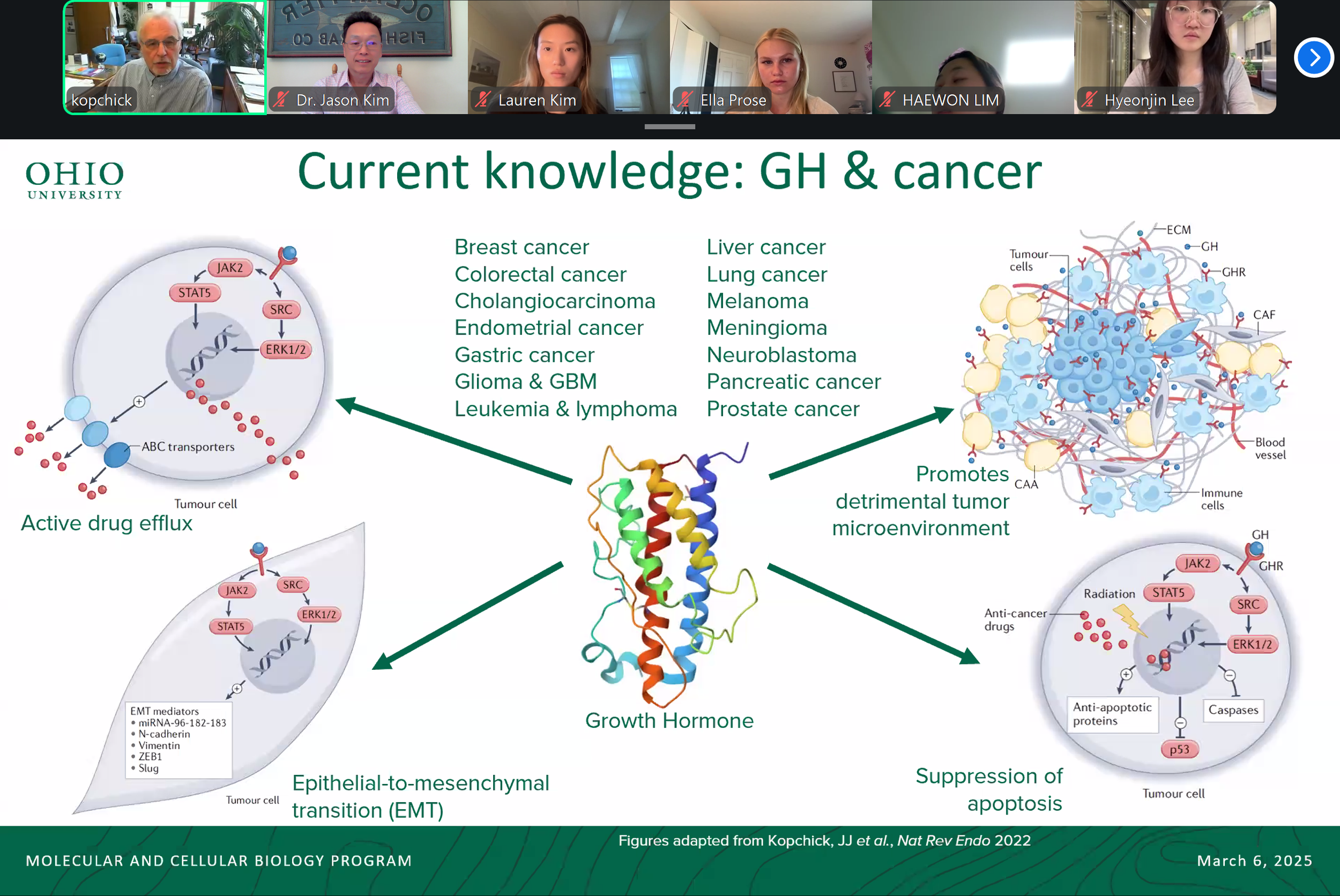
Dr. Kopchick ended with a potential role of growth hormone in cancer biology and metastasis, and growth hormone antagonists may be used to potentially treat some forms of cancer.
-
![]()
August 5, 2026 (Session 3 - Part 35)
Session 3: “Pharmacological Blockade of the Growth Hormone Receptor in Acromegaly & Cancer” by Dr. John Kopchick (Ohio University Heritage College of Osteopathic Medicine)
Dr. Kopchick ended with a potential role of growth hormone in cancer biology and metastasis, and growth hormone antagonists may be used to potentially treat some forms of cancer.
-
![]()
August 5, 2026 (Session 3 - Part 36)
Session 3: “Pharmacological Blockade of the Growth Hormone Receptor in Acromegaly & Cancer” by Dr. John Kopchick (Ohio University Heritage College of Osteopathic Medicine)
Dr. Kopchick ended with a potential role of growth hormone in cancer biology and metastasis, and growth hormone antagonists may be used to potentially treat some forms of cancer.
-
![]()
August 5, 2026 (Session 3 - Part 37)
Session 3: “Pharmacological Blockade of the Growth Hormone Receptor in Acromegaly & Cancer” by Dr. John Kopchick (Ohio University Heritage College of Osteopathic Medicine)
Dr. Kopchick began with clinical implications of growth hormone deficit and excess and introduced the biology of growth hormone and its receptor. He also discussed the diverse biological actions of growth hormone and feedback regulation of growth hormone release. He highlighted the importance of the growth hormone binding site in developing growth hormone antagonists, and Pegvisomant has been used in treating acromegaly. Dr. Kopchick described a serendipitous observation on the glucose-lowering effect of Somavert (pegvisomant for injection) therapy in a patient with acromegaly. Based on his discovery, the U.S. Food and Drug Administration (FDA) approved Somavert for the treatment of acromegaly in 2003 as a new class of growth hormone receptor antagonists and the only medicine designed to specifically block the effects of excess growth hormone in acromegaly. As a result, Dr. Kopchick and his team’s discovery has led to saving people’s lives. Dr. Kopchick ended with a potential role of growth hormone in cancer biology and metastasis, and growth hormone antagonists may be used to potentially treat some forms of cancer.
-
![]()
August 5, 2026 (Session 3 - Part 38)
Session 3: “Pharmacological Blockade of the Growth Hormone Receptor in Acromegaly & Cancer” by Dr. John Kopchick (Ohio University Heritage College of Osteopathic Medicine)
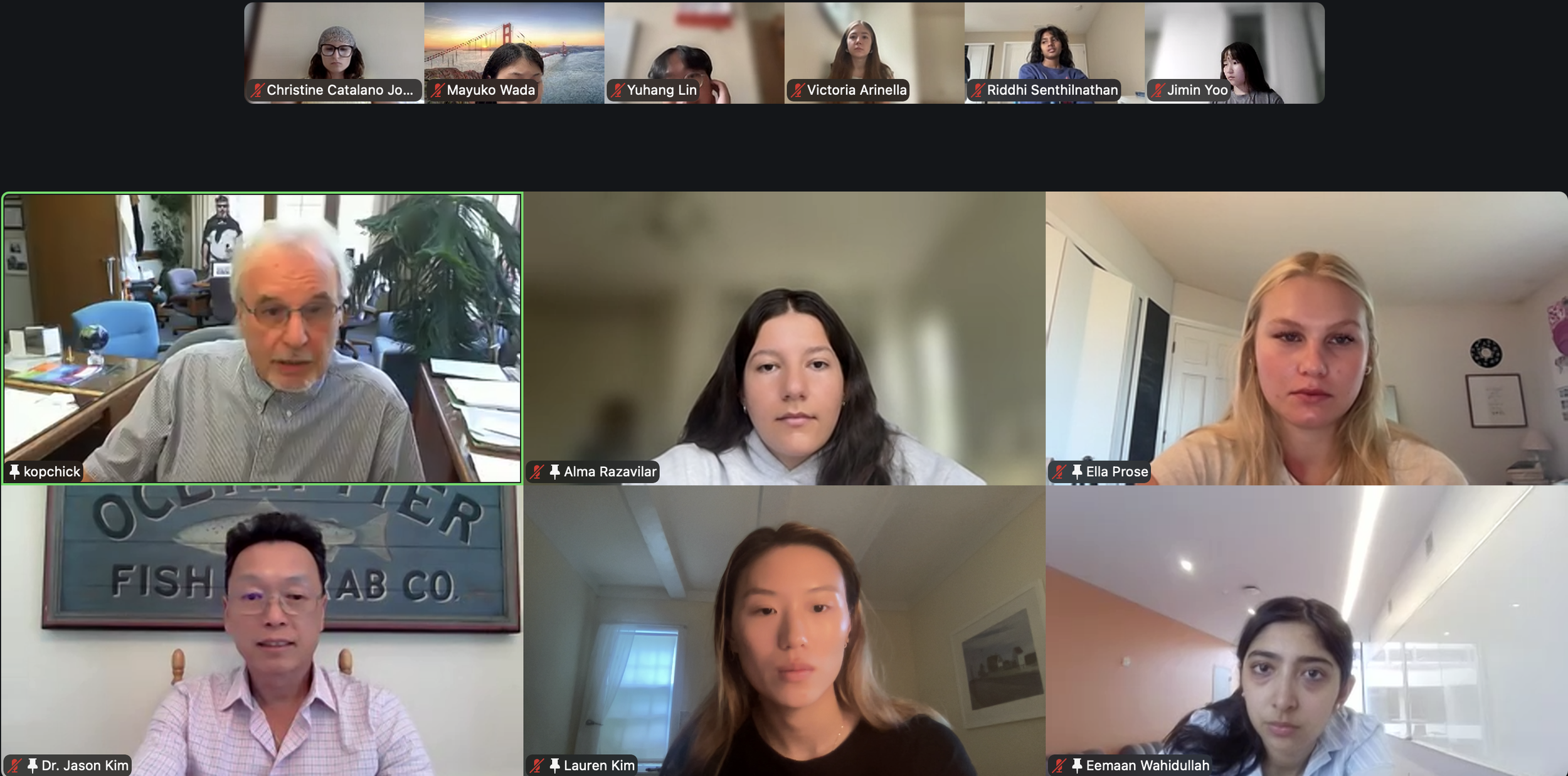
Lauren moderates the Q&A period with many outstanding questions from our DVSC26 participants.
-
![]()
August 5, 2026 (Session 3 - Part 39)
Session 3: “Pharmacological Blockade of the Growth Hormone Receptor in Acromegaly & Cancer” by Dr. John Kopchick (Ohio University Heritage College of Osteopathic Medicine)
During Q&A moderated by Lauren, Dr. Kopchick thoughtfully addresses outstanding questions from our DVSC26 participants.
-
![]()
August 5, 2026 (Session 3 - Part 40)
Session 3: “Pharmacological Blockade of the Growth Hormone Receptor in Acromegaly & Cancer” by Dr. John Kopchick (Ohio University Heritage College of Osteopathic Medicine)
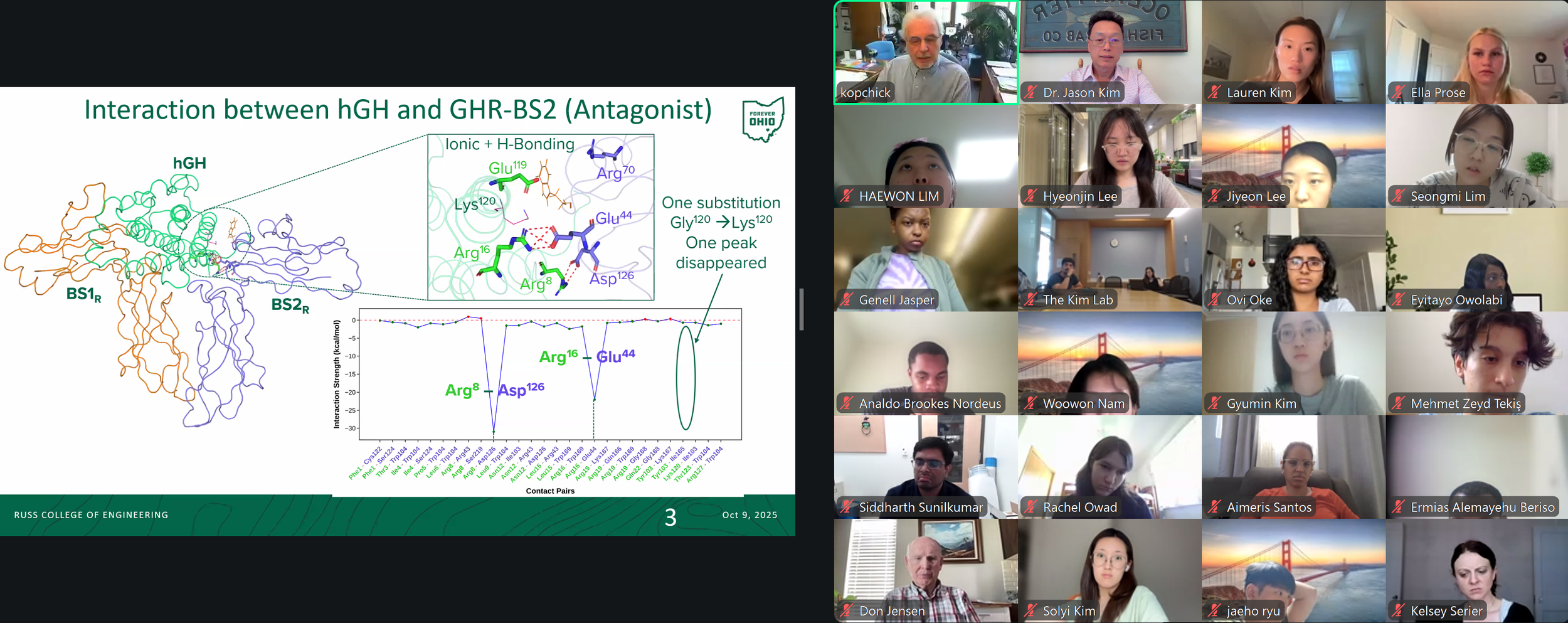
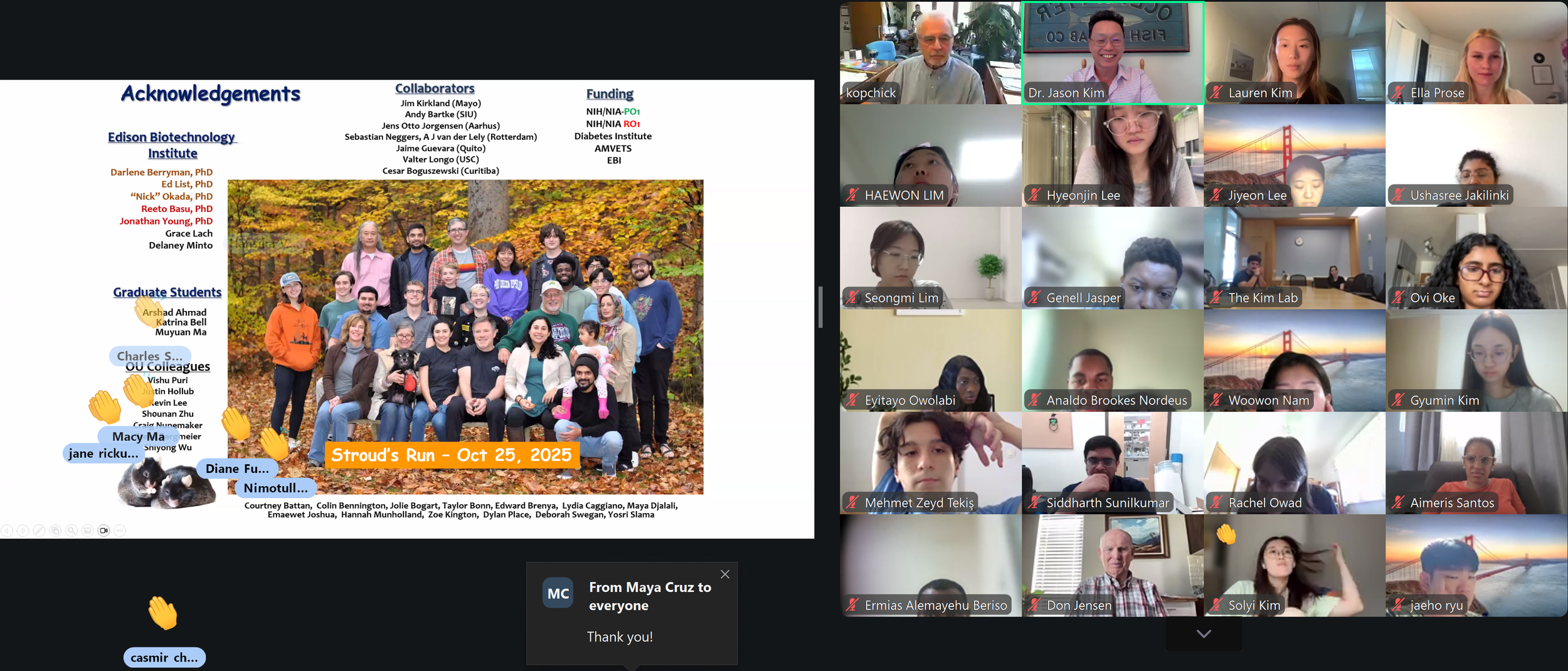
The DVC team thanks Dr. Kopchick for excellent and stimulating presentation.
-
![]()
August 5, 2026 (Session 3 - Part 41)
Session 3: “Pharmacological Blockade of the Growth Hormone Receptor in Acromegaly & Cancer” by Dr. John Kopchick (Ohio University Heritage College of Osteopathic Medicine)
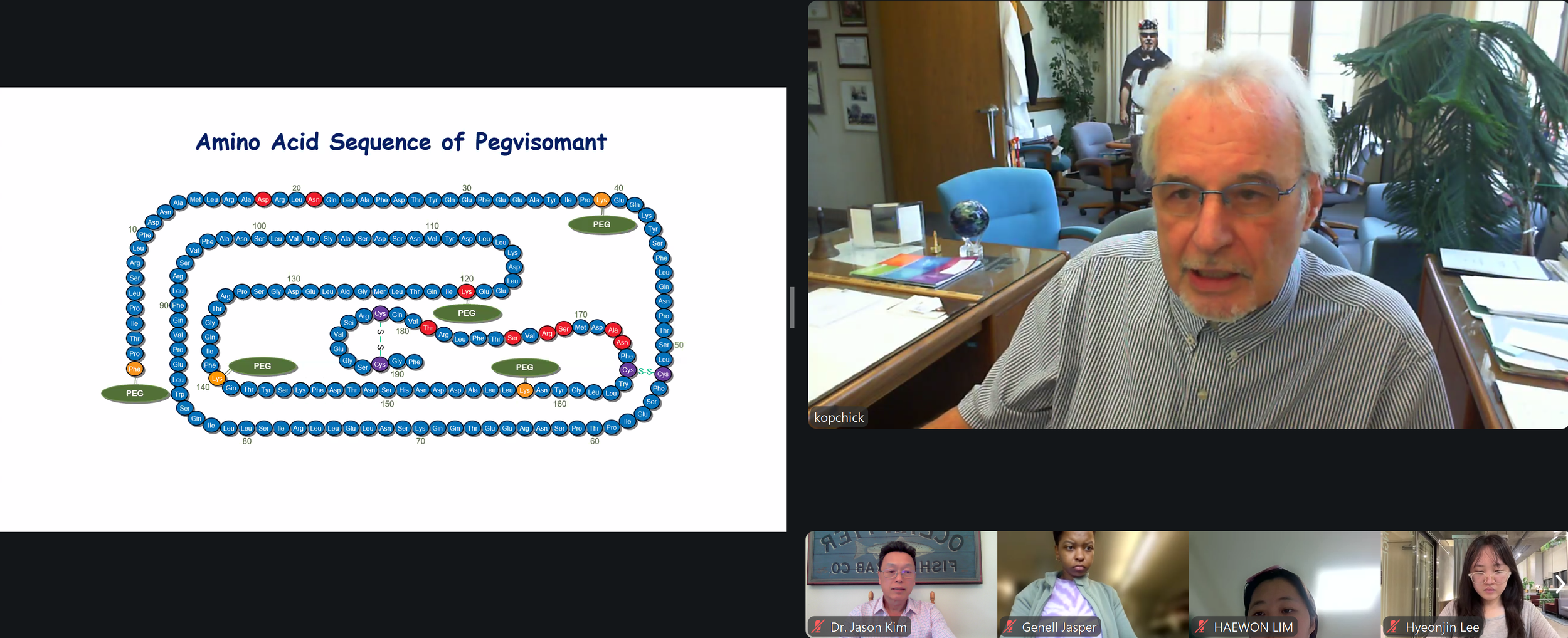
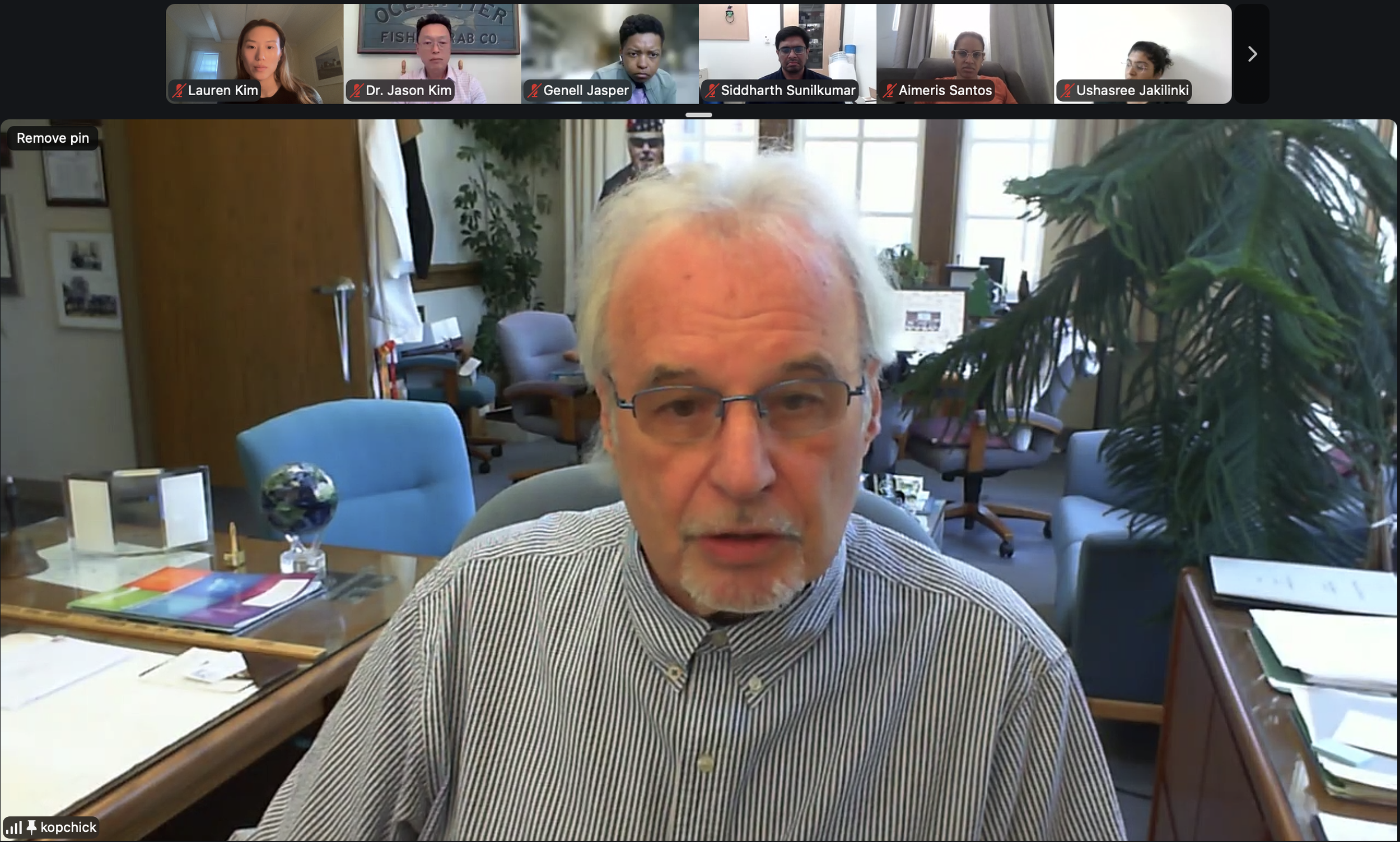
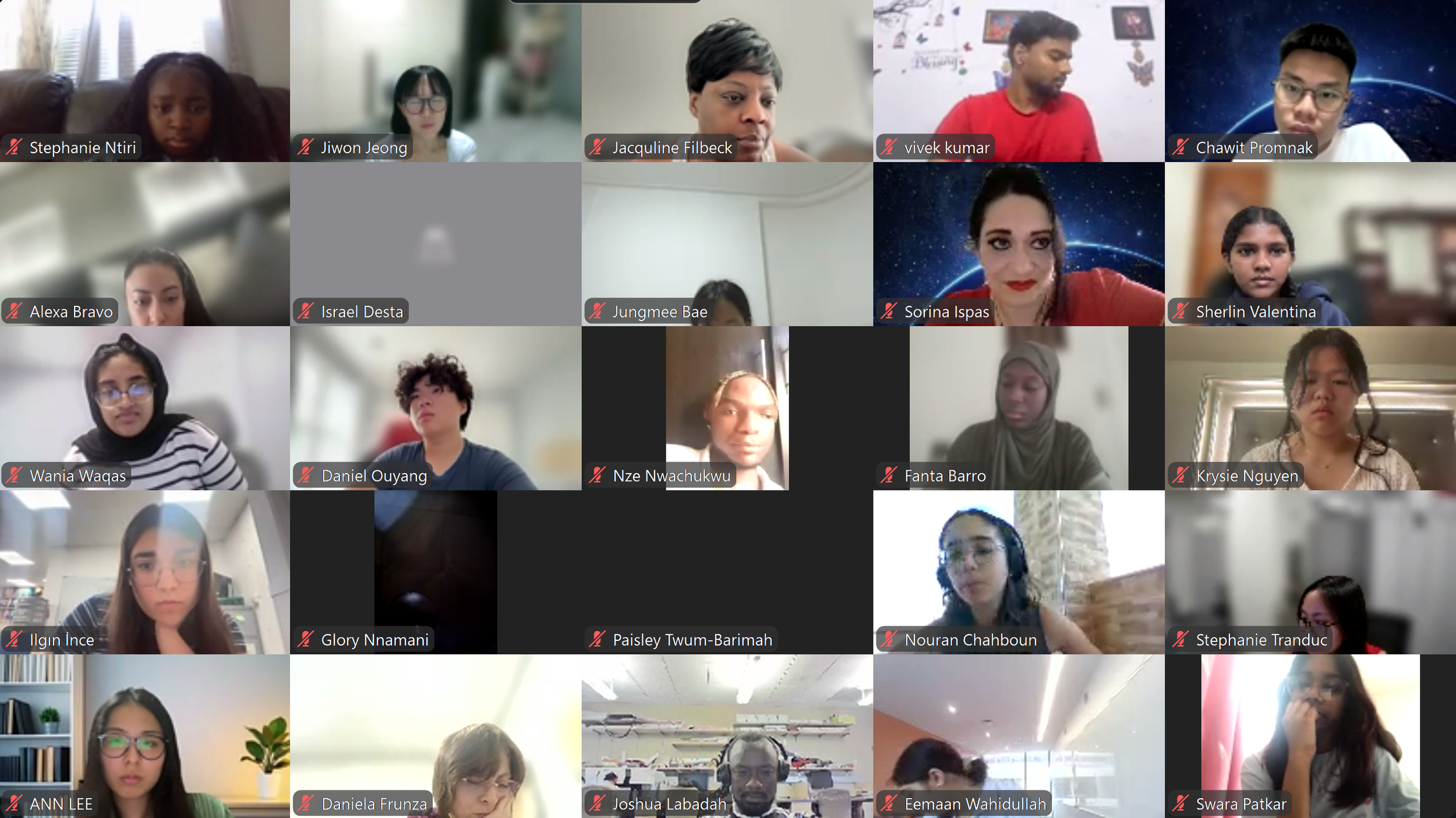
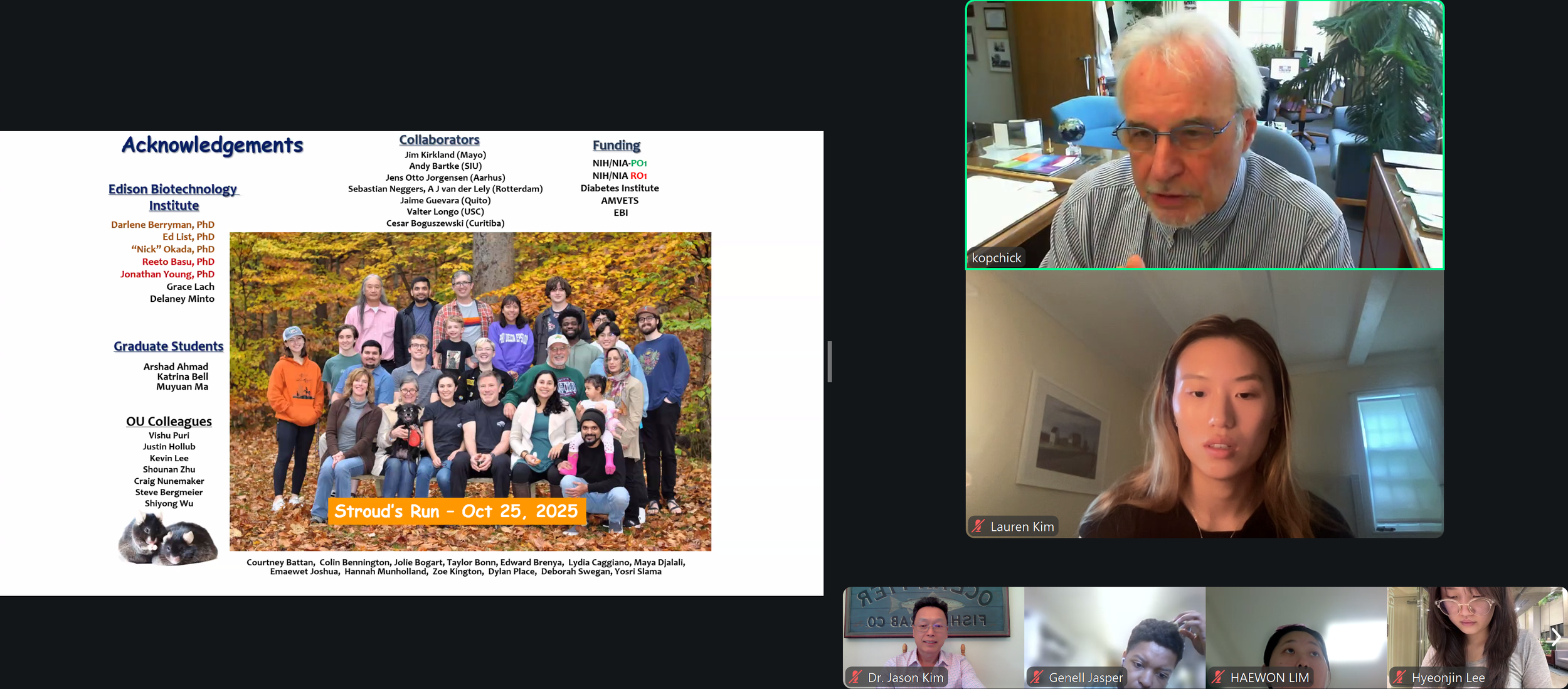
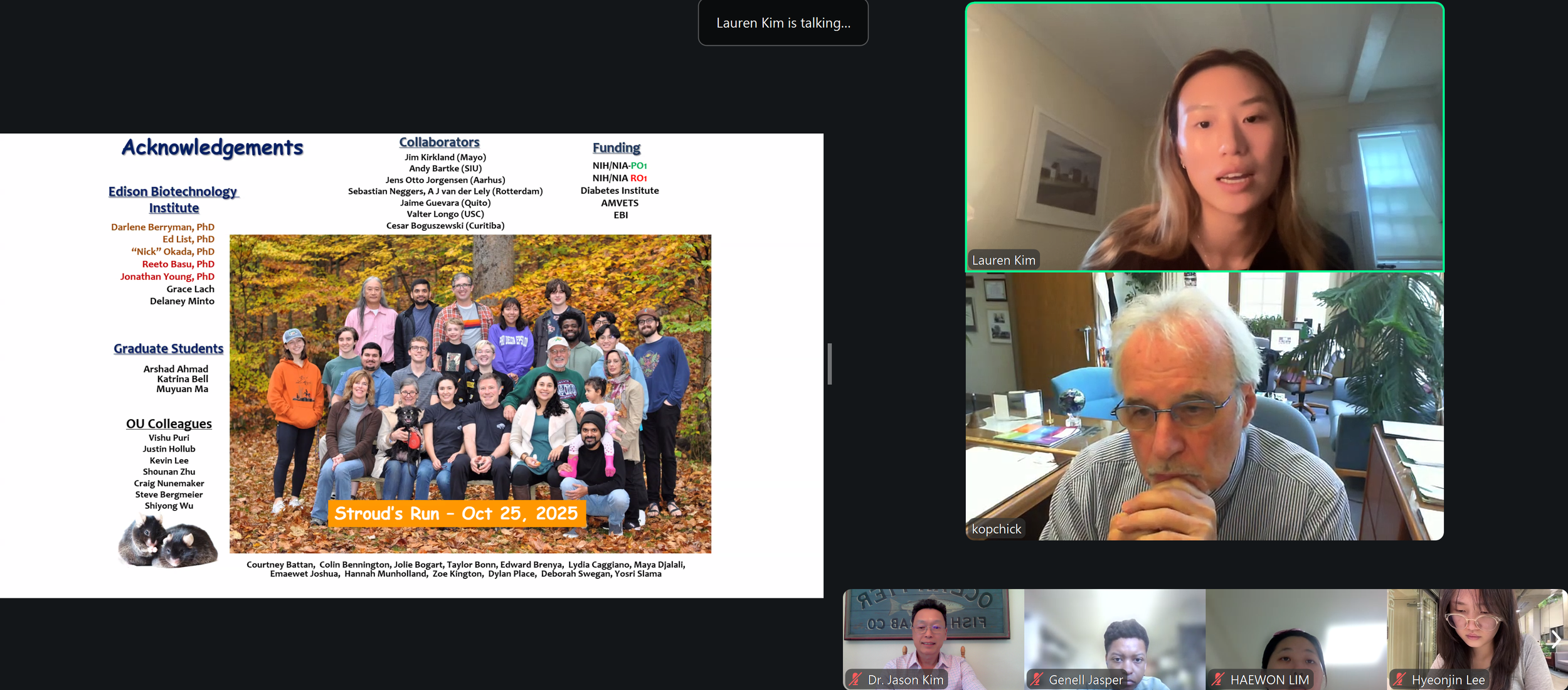
Thank you, Dr. Kopchick, for supporting Diabetes Virtual Camp!
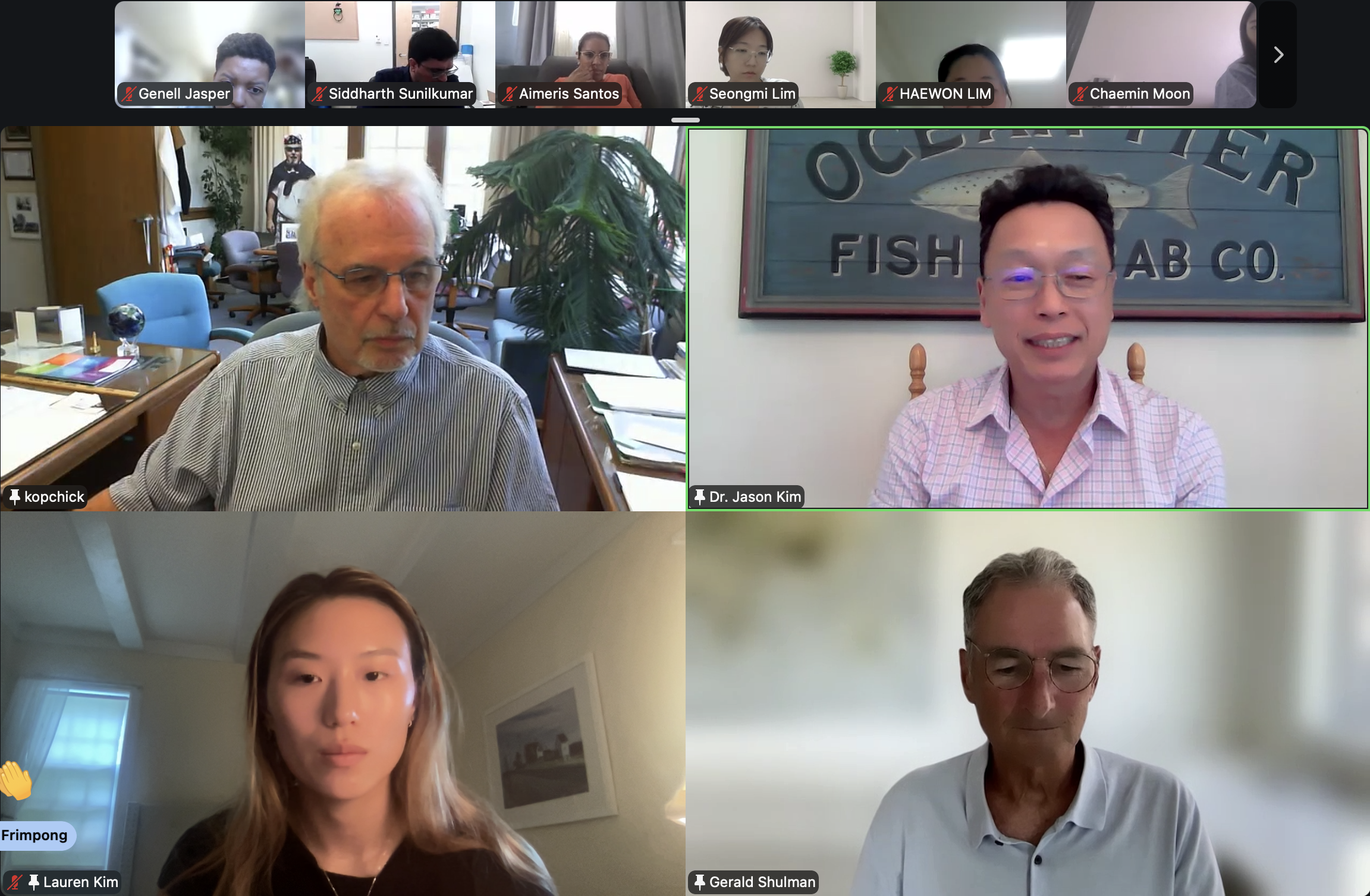
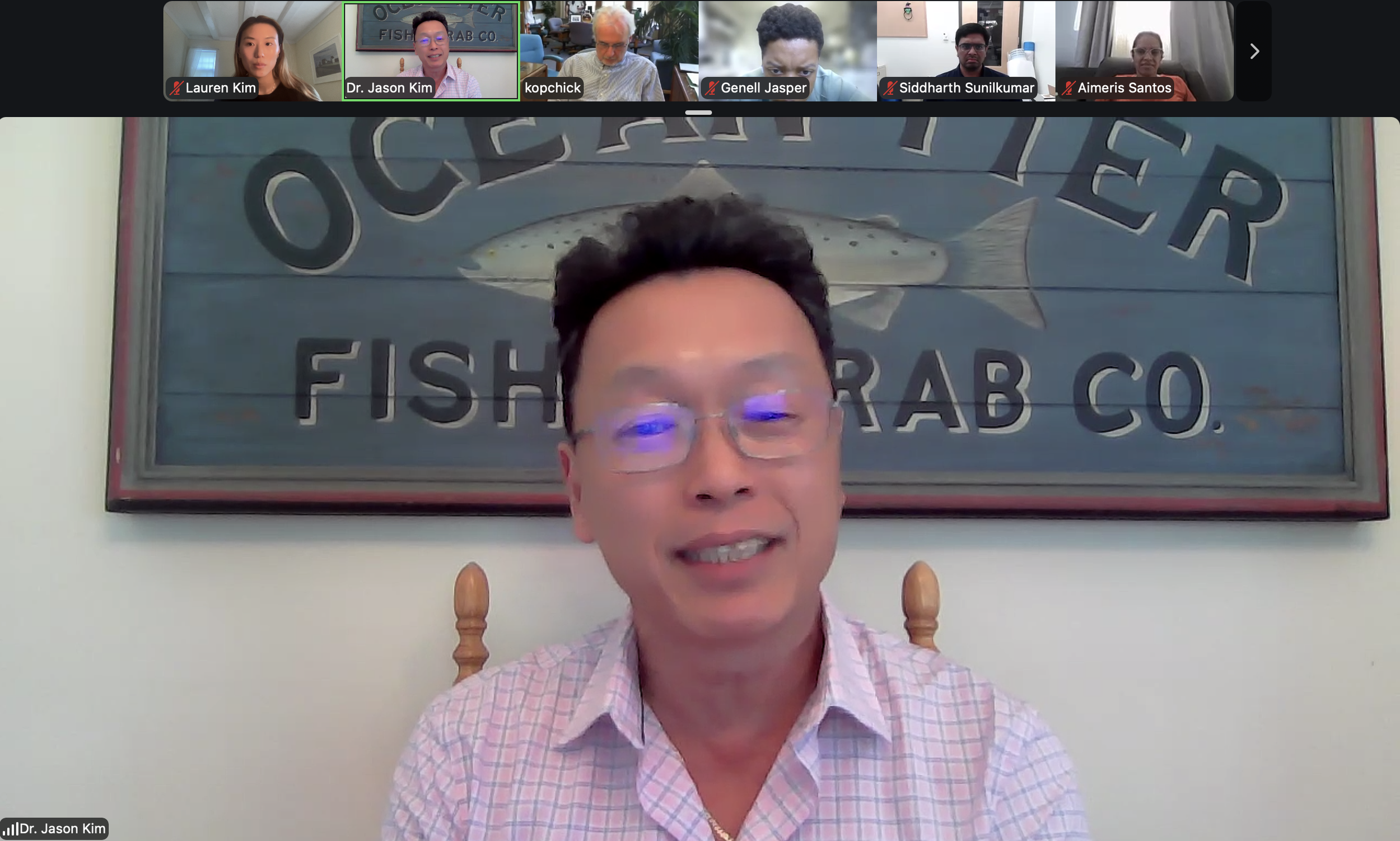
August 5, 2026
Session 4. When Fat Goes to the Wrong Places: Solving the Mystery of Insulin Resistance by Dr. Gerald Shulman (Yale School of Medicine)
The Main Session of today’s DVSC26 continued with Dr. Gerald Shulman from Yale School of Medicine. Dr. Shulman began by highlighting how 1 in 3 Americans will have type 2 diabetes by the year 2050, and how obesity and diabetes in parallel have dramatically increased in prevalence throughout the U.S. in recent decades. He further discussed the importance of insulin resistance as an early pathogenic event in type 2 diabetes and as a major risk factor for cardiometabolic disease in humans. Dr. Shulman described a paradox in the field in which people and animal models with little to no adipose tissue (i.e., lipodystrophy) develop insulin resistance due to ectopic accumulation of lipid and buildup of acyl-CoA in skeletal muscle and liver. These abnormalities can be corrected by fat transplantation or leptin replacement. Dr. Shulman then discussed insulin regulation of hepatic glucose metabolism and the molecular mechanism of lipid-mediated insulin resistance in the liver, highlighting the importance of insulin signaling and PKC-epsilon. Dr. Shulman ended with an insightful discussion on the evolutionary basis of insulin resistance and how insulin resistance may have evolved as a survival process with our body’s efforts to redistribute energy substrates in response to starvation.
-
![Session 2: Opening Session & Introduction to Diabetes by Lauren, Allison, and Dr. Jason Kim (University of Massachusetts Medical School)]()
August 5, 2026 (Session 4 - Part 1)
Session 4: “When Fat Goes to the Wrong Places: Solving the Mystery of Insulin Resistance” by Dr. Gerald Shulman (Yale School of Medicine)
Dr. Kim introduces Dr. Gerald Shulman to our DVSC26 participants from all around the world.
-
![]()
August 5, 2026 (Session 4 - Part 2)
Session 4: “When Fat Goes to the Wrong Places: Solving the Mystery of Insulin Resistance” by Dr. Gerald Shulman (Yale School of Medicine)
Dr. Kim introduces Dr. Gerald Shulman to our DVSC26 participants from all around the world.
-
![]()
August 5, 2026 (Session 4 - Part 3)
Session 4: “When Fat Goes to the Wrong Places: Solving the Mystery of Insulin Resistance” by Dr. Gerald Shulman (Yale School of Medicine)
Dr. Kim introduces Dr. Gerald Shulman to our DVSC26 participants from all around the world.
-
![]()
August 5, 2026 (Session 4 - Part 4)
Session 4: “When Fat Goes to the Wrong Places: Solving the Mystery of Insulin Resistance” by Dr. Gerald Shulman (Yale School of Medicine)
When fat accumulates in organs such as the liver and muscle instead of being stored safely in fat tissue, it can interfere with insulin action and lead to type 2 diabetes. This session explores the scientific discoveries that uncovered this mechanism and highlights exciting new therapies that work by helping cells burn excess fat, offering new hope for preventing and treating diabetes.
-
![]()
August 5, 2026 (Session 4 - Part 5)
Session 4: “When Fat Goes to the Wrong Places: Solving the Mystery of Insulin Resistance” by Dr. Gerald Shulman (Yale School of Medicine)
Dr. Shulman welcomes our program participants from around the world.
-
![]()
August 5, 2026 (Session 4 - Part 6)
Session 4: “When Fat Goes to the Wrong Places: Solving the Mystery of Insulin Resistance” by Dr. Gerald Shulman (Yale School of Medicine)
Dr. Shulman welcomes our program participants from around the world.
-
![]()
August 5, 2026 (Session 4 - Part 7)
Session 4: “When Fat Goes to the Wrong Places: Solving the Mystery of Insulin Resistance” by Dr. Gerald Shulman (George R. Cowgill Professor of Physiological Chemistry, Professor of Internal Medicine and Cellular & Molecular Physiology, Co-Director, Yale Diabetes Research Center, Investigator Emeritus of the Howard Hughes Medical Institute, Elected Member of the National Academy of Sciences, Yale School of Medicine)
-
![]()
August 5, 2026 (Session 4 - Part 8)
Session 4: “When Fat Goes to the Wrong Places: Solving the Mystery of Insulin Resistance” by Dr. Gerald Shulman (Yale School of Medicine)
Dr. Shulman began by highlighting how 1 in 3 Americans will have type 2 diabetes by the year 2050, and how obesity and diabetes in parallel have dramatically increased in prevalence throughout the U.S. in recent decades.
-
![]()
August 5, 2026 (Session 4 - Part 9)
Session 4: “When Fat Goes to the Wrong Places: Solving the Mystery of Insulin Resistance” by Dr. Gerald Shulman (Yale School of Medicine)
Dr. Shulman began by highlighting how 1 in 3 Americans will have type 2 diabetes by the year 2050, and how obesity and diabetes in parallel have dramatically increased in prevalence throughout the U.S. in recent decades.
-
![]()
August 5, 2026 (Session 4 - Part 10)
Session 4: “When Fat Goes to the Wrong Places: Solving the Mystery of Insulin Resistance” by Dr. Gerald Shulman (Yale School of Medicine)
Dr. Shulman began by highlighting how 1 in 3 Americans will have type 2 diabetes by the year 2050, and how obesity and diabetes in parallel have dramatically increased in prevalence throughout the U.S. in recent decades.
-
![]()
August 5, 2026 (Session 4 - Part 11)
Session 4: “When Fat Goes to the Wrong Places: Solving the Mystery of Insulin Resistance” by Dr. Gerald Shulman (Yale School of Medicine)
Dr. Shulman began by highlighting how 1 in 3 Americans will have type 2 diabetes by the year 2050, and how obesity and diabetes in parallel have dramatically increased in prevalence throughout the U.S. in recent decades.
-
![]()
August 5, 2026 (Session 4 - Part 12)
Session 4: “When Fat Goes to the Wrong Places: Solving the Mystery of Insulin Resistance” by Dr. Gerald Shulman (Yale School of Medicine)
Dr. Shulman began by highlighting how 1 in 3 Americans will have type 2 diabetes by the year 2050, and how obesity and diabetes in parallel have dramatically increased in prevalence throughout the U.S. in recent decades.
-
![]()
August 5, 2026 (Session 4 - Part 13)
Session 4: “When Fat Goes to the Wrong Places: Solving the Mystery of Insulin Resistance” by Dr. Gerald Shulman (Yale School of Medicine)
Dr. Shulman began by highlighting how 1 in 3 Americans will have type 2 diabetes by the year 2050, and how obesity and diabetes in parallel have dramatically increased in prevalence throughout the U.S. in recent decades.
-
![]()
August 5, 2026 (Session 4 - Part 14)
Session 4: “When Fat Goes to the Wrong Places: Solving the Mystery of Insulin Resistance” by Dr. Gerald Shulman (Yale School of Medicine)
Dr. Shulman began by highlighting how 1 in 3 Americans will have type 2 diabetes by the year 2050, and how obesity and diabetes in parallel have dramatically increased in prevalence throughout the U.S. in recent decades.
-
![]()
August 5, 2026 (Session 4 - Part 15)
Session 4: “When Fat Goes to the Wrong Places: Solving the Mystery of Insulin Resistance” by Dr. Gerald Shulman (Yale School of Medicine)
Dr. Shulman began by highlighting how 1 in 3 Americans will have type 2 diabetes by the year 2050, and how obesity and diabetes in parallel have dramatically increased in prevalence throughout the U.S. in recent decades.
-
![]()
August 5, 2026 (Session 4 - Part 16)
Session 4: “When Fat Goes to the Wrong Places: Solving the Mystery of Insulin Resistance” by Dr. Gerald Shulman (Yale School of Medicine)
Dr. Shulman further discussed the importance of insulin resistance as an early pathogenic event in type 2 diabetes and as a major risk factor for cardiometabolic disease in humans.
-
![]()
August 5, 2026 (Session 4 - Part 17)
Session 4: “When Fat Goes to the Wrong Places: Solving the Mystery of Insulin Resistance” by Dr. Gerald Shulman (Yale School of Medicine)
Dr. Shulman further discussed the importance of insulin resistance as an early pathogenic event in type 2 diabetes and as a major risk factor for cardiometabolic disease in humans.
-
![]()
August 5, 2026 (Session 4 - Part 18)
Session 4: “When Fat Goes to the Wrong Places: Solving the Mystery of Insulin Resistance” by Dr. Gerald Shulman (Yale School of Medicine)
Dr. Shulman further discussed the importance of insulin resistance as an early pathogenic event in type 2 diabetes and as a major risk factor for cardiometabolic disease in humans.
-
![]()
August 5, 2026 (Session 4 - Part 19)
Session 4: “When Fat Goes to the Wrong Places: Solving the Mystery of Insulin Resistance” by Dr. Gerald Shulman (Yale School of Medicine)
Dr. Shulman further discussed the importance of insulin resistance as an early pathogenic event in type 2 diabetes and as a major risk factor for cardiometabolic disease in humans.
-
![]()
August 5, 2026 (Session 4 - Part 20)
Session 4: “When Fat Goes to the Wrong Places: Solving the Mystery of Insulin Resistance” by Dr. Gerald Shulman (Yale School of Medicine)
Dr. Shulman further discussed the importance of insulin resistance as an early pathogenic event in type 2 diabetes and as a major risk factor for cardiometabolic disease in humans.
-
![]()
August 5, 2026 (Session 4 - Part 21)
Session 4: “When Fat Goes to the Wrong Places: Solving the Mystery of Insulin Resistance” by Dr. Gerald Shulman (Yale School of Medicine)
Dr. Shulman further discussed the importance of insulin resistance as an early pathogenic event in type 2 diabetes and as a major risk factor for cardiometabolic disease in humans.
-
![]()
August 5, 2026 (Session 4 - Part 22)
Session 4: “When Fat Goes to the Wrong Places: Solving the Mystery of Insulin Resistance” by Dr. Gerald Shulman (Yale School of Medicine)
Dr. Shulman described a paradox in the field in which people and animal models with little to no adipose tissue (i.e., lipodystrophy) develop insulin resistance due to ectopic accumulation of lipid and buildup of acyl-CoA in skeletal muscle and liver. These abnormalities can be corrected by fat transplantation or leptin replacement.
-
![]()
August 5, 2026 (Session 4 - Part 23)
Session 4: “When Fat Goes to the Wrong Places: Solving the Mystery of Insulin Resistance” by Dr. Gerald Shulman (Yale School of Medicine)
Dr. Shulman described a paradox in the field in which people and animal models with little to no adipose tissue (i.e., lipodystrophy) develop insulin resistance due to ectopic accumulation of lipid and buildup of acyl-CoA in skeletal muscle and liver. These abnormalities can be corrected by fat transplantation or leptin replacement.
-
![]()
August 5, 2026 (Session 4 - Part 24)
Session 4: “When Fat Goes to the Wrong Places: Solving the Mystery of Insulin Resistance” by Dr. Gerald Shulman (Yale School of Medicine)
Dr. Shulman described a paradox in the field in which people and animal models with little to no adipose tissue (i.e., lipodystrophy) develop insulin resistance due to ectopic accumulation of lipid and buildup of acyl-CoA in skeletal muscle and liver. These abnormalities can be corrected by fat transplantation or leptin replacement.
-
![]()
August 5, 2026 (Session 4 - Part 25)
Session 4: “When Fat Goes to the Wrong Places: Solving the Mystery of Insulin Resistance” by Dr. Gerald Shulman (Yale School of Medicine)
Dr. Shulman described a paradox in the field in which people and animal models with little to no adipose tissue (i.e., lipodystrophy) develop insulin resistance due to ectopic accumulation of lipid and buildup of acyl-CoA in skeletal muscle and liver. These abnormalities can be corrected by fat transplantation or leptin replacement.
-
![]()
August 5, 2026 (Session 4 - Part 26)
Session 4: “When Fat Goes to the Wrong Places: Solving the Mystery of Insulin Resistance” by Dr. Gerald Shulman (Yale School of Medicine)
Dr. Shulman described a paradox in the field in which people and animal models with little to no adipose tissue (i.e., lipodystrophy) develop insulin resistance due to ectopic accumulation of lipid and buildup of acyl-CoA in skeletal muscle and liver. These abnormalities can be corrected by fat transplantation or leptin replacement.
-
![]()
August 5, 2026 (Session 4 - Part 27)
Session 4: “When Fat Goes to the Wrong Places: Solving the Mystery of Insulin Resistance” by Dr. Gerald Shulman (Yale School of Medicine)
Dr. Shulman described a paradox in the field in which people and animal models with little to no adipose tissue (i.e., lipodystrophy) develop insulin resistance due to ectopic accumulation of lipid and buildup of acyl-CoA in skeletal muscle and liver. These abnormalities can be corrected by fat transplantation or leptin replacement.
-
![]()
August 5, 2026 (Session 4 - Part 28)
Session 4: “When Fat Goes to the Wrong Places: Solving the Mystery of Insulin Resistance” by Dr. Gerald Shulman (Yale School of Medicine)
Dr. Shulman described a paradox in the field in which people and animal models with little to no adipose tissue (i.e., lipodystrophy) develop insulin resistance due to ectopic accumulation of lipid and buildup of acyl-CoA in skeletal muscle and liver. These abnormalities can be corrected by fat transplantation or leptin replacement.
-
![]()
August 5, 2026 (Session 4 - Part 29)
Session 4: “When Fat Goes to the Wrong Places: Solving the Mystery of Insulin Resistance” by Dr. Gerald Shulman (Yale School of Medicine)
Dr. Shulman described a paradox in the field in which people and animal models with little to no adipose tissue (i.e., lipodystrophy) develop insulin resistance due to ectopic accumulation of lipid and buildup of acyl-CoA in skeletal muscle and liver. These abnormalities can be corrected by fat transplantation or leptin replacement.
-
![]()
August 5, 2026 (Session 4 - Part 30)
Session 4: “When Fat Goes to the Wrong Places: Solving the Mystery of Insulin Resistance” by Dr. Gerald Shulman (Yale School of Medicine)
Dr. Shulman described a paradox in the field in which people and animal models with little to no adipose tissue (i.e., lipodystrophy) develop insulin resistance due to ectopic accumulation of lipid and buildup of acyl-CoA in skeletal muscle and liver. These abnormalities can be corrected by fat transplantation or leptin replacement.
-
![]()
August 5, 2026 (Session 4 - Part 31)
Session 4: “When Fat Goes to the Wrong Places: Solving the Mystery of Insulin Resistance” by Dr. Gerald Shulman (Yale School of Medicine)
Dr. Shulman then discussed insulin regulation of hepatic glucose metabolism and the molecular mechanism of lipid-mediated insulin resistance in the liver, highlighting the importance of insulin signaling and PKC-epsilon.
-
![]()
August 5, 2026 (Session 4 - Part 32)
Session 4: “When Fat Goes to the Wrong Places: Solving the Mystery of Insulin Resistance” by Dr. Gerald Shulman (Yale School of Medicine)
Dr. Shulman then discussed insulin regulation of hepatic glucose metabolism and the molecular mechanism of lipid-mediated insulin resistance in the liver, highlighting the importance of insulin signaling and PKC-epsilon.
-
![]()
August 5, 2026 (Session 4 - Part 33)
Session 4: “When Fat Goes to the Wrong Places: Solving the Mystery of Insulin Resistance” by Dr. Gerald Shulman (Yale School of Medicine)
Dr. Shulman then discussed insulin regulation of hepatic glucose metabolism and the molecular mechanism of lipid-mediated insulin resistance in the liver, highlighting the importance of insulin signaling and PKC-epsilon.
-
![]()
August 5, 2026 (Session 4 - Part 34)
Session 4: “When Fat Goes to the Wrong Places: Solving the Mystery of Insulin Resistance” by Dr. Gerald Shulman (Yale School of Medicine)
Dr. Shulman then discussed insulin regulation of hepatic glucose metabolism and the molecular mechanism of lipid-mediated insulin resistance in the liver, highlighting the importance of insulin signaling and PKC-epsilon.
-
![]()
August 5, 2026 (Session 4 - Part 35)
Session 4: “When Fat Goes to the Wrong Places: Solving the Mystery of Insulin Resistance” by Dr. Gerald Shulman (Yale School of Medicine)
Dr. Shulman then discussed insulin regulation of hepatic glucose metabolism and the molecular mechanism of lipid-mediated insulin resistance in the liver, highlighting the importance of insulin signaling and PKC-epsilon.
-
![]()
August 5, 2026 (Session 4 - Part 36)
Session 4: “When Fat Goes to the Wrong Places: Solving the Mystery of Insulin Resistance” by Dr. Gerald Shulman (Yale School of Medicine)
Dr. Shulman then discussed insulin regulation of hepatic glucose metabolism and the molecular mechanism of lipid-mediated insulin resistance in the liver, highlighting the importance of insulin signaling and PKC-epsilon.
-
![]()
August 5, 2026 (Session 4 - Part 37)
Session 4: “When Fat Goes to the Wrong Places: Solving the Mystery of Insulin Resistance” by Dr. Gerald Shulman (Yale School of Medicine)
Dr. Shulman then discussed insulin regulation of hepatic glucose metabolism and the molecular mechanism of lipid-mediated insulin resistance in the liver, highlighting the importance of insulin signaling and PKC-epsilon.
-
![]()
August 5, 2026 (Session 4 - Part 38)
Session 4: “When Fat Goes to the Wrong Places: Solving the Mystery of Insulin Resistance” by Dr. Gerald Shulman (Yale School of Medicine)
Dr. Shulman then discussed insulin regulation of hepatic glucose metabolism and the molecular mechanism of lipid-mediated insulin resistance in the liver, highlighting the importance of insulin signaling and PKC-epsilon.
-
![]()
August 5, 2026 (Session 4 - Part 39)
Session 4: “When Fat Goes to the Wrong Places: Solving the Mystery of Insulin Resistance” by Dr. Gerald Shulman (Yale School of Medicine)
Dr. Shulman then discussed insulin regulation of hepatic glucose metabolism and the molecular mechanism of lipid-mediated insulin resistance in the liver, highlighting the importance of insulin signaling and PKC-epsilon.
-
![]()
August 5, 2026 (Session 4 - Part 40)
Session 4: “When Fat Goes to the Wrong Places: Solving the Mystery of Insulin Resistance” by Dr. Gerald Shulman (Yale School of Medicine)
Dr. Shulman then discussed insulin regulation of hepatic glucose metabolism and the molecular mechanism of lipid-mediated insulin resistance in the liver, highlighting the importance of insulin signaling and PKC-epsilon.
-
![]()
August 5, 2026 (Session 4 - Part 41)
Session 4: “When Fat Goes to the Wrong Places: Solving the Mystery of Insulin Resistance” by Dr. Gerald Shulman (Yale School of Medicine)
Dr. Shulman then discussed insulin regulation of hepatic glucose metabolism and the molecular mechanism of lipid-mediated insulin resistance in the liver, highlighting the importance of insulin signaling and PKC-epsilon.
-
![]()
August 5, 2026 (Session 4 - Part 42)
Session 4: “When Fat Goes to the Wrong Places: Solving the Mystery of Insulin Resistance” by Dr. Gerald Shulman (Yale School of Medicine)
Dr. Shulman then discussed insulin regulation of hepatic glucose metabolism and the molecular mechanism of lipid-mediated insulin resistance in the liver, highlighting the importance of insulin signaling and PKC-epsilon.
-
![]()
August 5, 2026 (Session 4 - Part 43)
Session 4: “When Fat Goes to the Wrong Places: Solving the Mystery of Insulin Resistance” by Dr. Gerald Shulman (Yale School of Medicine)
Dr. Shulman ended with an insightful discussion on the evolutionary basis of insulin resistance and how insulin resistance may have evolved as a survival process with our body’s efforts to redistribute energy substrates in response to starvation.
-
![]()
August 5, 2026 (Session 4 - Part 44)
Session 4: “When Fat Goes to the Wrong Places: Solving the Mystery of Insulin Resistance” by Dr. Gerald Shulman (Yale School of Medicine)
Dr. Shulman ended with an insightful discussion on the evolutionary basis of insulin resistance and how insulin resistance may have evolved as a survival process with our body’s efforts to redistribute energy substrates in response to starvation.
-
![]()
August 5, 2026 (Session 4 - Part 45)
Session 4: “When Fat Goes to the Wrong Places: Solving the Mystery of Insulin Resistance” by Dr. Gerald Shulman (Yale School of Medicine)
Dr. Shulman ended with an insightful discussion on the evolutionary basis of insulin resistance and how insulin resistance may have evolved as a survival process with our body’s efforts to redistribute energy substrates in response to starvation.
-
![]()
August 5, 2026 (Session 4 - Part 46)
Session 4: “When Fat Goes to the Wrong Places: Solving the Mystery of Insulin Resistance” by Dr. Gerald Shulman (Yale School of Medicine)
Dr. Shulman ended with an insightful discussion on the evolutionary basis of insulin resistance and how insulin resistance may have evolved as a survival process with our body’s efforts to redistribute energy substrates in response to starvation.
-
![]()
August 5, 2026 (Session 4 - Part 47)
Session 4: “When Fat Goes to the Wrong Places: Solving the Mystery of Insulin Resistance” by Dr. Gerald Shulman (Yale School of Medicine)
Dr. Shulman ended with an insightful discussion on the evolutionary basis of insulin resistance and how insulin resistance may have evolved as a survival process with our body’s efforts to redistribute energy substrates in response to starvation.
-
![]()
August 5, 2026 (Session 4 - Part 48)
Session 4: “When Fat Goes to the Wrong Places: Solving the Mystery of Insulin Resistance” by Dr. Gerald Shulman (Yale School of Medicine)
Dr. Shulman ended with an insightful discussion on the evolutionary basis of insulin resistance and how insulin resistance may have evolved as a survival process with our body’s efforts to redistribute energy substrates in response to starvation.
-
![]()
August 5, 2026 (Session 4 - Part 49)
Session 4: “When Fat Goes to the Wrong Places: Solving the Mystery of Insulin Resistance” by Dr. Gerald Shulman (Yale School of Medicine)
Dr. Shulman ended with an insightful discussion on the evolutionary basis of insulin resistance and how insulin resistance may have evolved as a survival process with our body’s efforts to redistribute energy substrates in response to starvation.
-
![]()
August 5, 2026 (Session 4 - Part 50)
Session 4: “When Fat Goes to the Wrong Places: Solving the Mystery of Insulin Resistance” by Dr. Gerald Shulman (Yale School of Medicine)
Dr. Shulman ended with an insightful discussion on the evolutionary basis of insulin resistance and how insulin resistance may have evolved as a survival process with our body’s efforts to redistribute energy substrates in response to starvation.
-
![]()
August 5, 2026 (Session 4 - Part 51)
Session 4: “When Fat Goes to the Wrong Places: Solving the Mystery of Insulin Resistance” by Dr. Gerald Shulman (Yale School of Medicine)
Dr. Shulman ended with an insightful discussion on the evolutionary basis of insulin resistance and how insulin resistance may have evolved as a survival process with our body’s efforts to redistribute energy substrates in response to starvation.
-
![]()
August 5, 2026 (Session 4 - Part 52)
Session 4: “When Fat Goes to the Wrong Places: Solving the Mystery of Insulin Resistance” by Dr. Gerald Shulman (Yale School of Medicine)
Dr. Shulman ended with an insightful discussion on the evolutionary basis of insulin resistance and how insulin resistance may have evolved as a survival process with our body’s efforts to redistribute energy substrates in response to starvation.
-
![]()
August 5, 2026 (Session 4 - Part 53)
Session 4: “When Fat Goes to the Wrong Places: Solving the Mystery of Insulin Resistance” by Dr. Gerald Shulman (Yale School of Medicine)
Dr. Shulman ended with an insightful discussion on the evolutionary basis of insulin resistance and how insulin resistance may have evolved as a survival process with our body’s efforts to redistribute energy substrates in response to starvation.
-
![]()
August 5, 2026 (Session 4 - Part 54)
Session 4: “When Fat Goes to the Wrong Places: Solving the Mystery of Insulin Resistance” by Dr. Gerald Shulman (Yale School of Medicine)
Lauren moderates the Q&A period with many outstanding questions from our DVSC26 participants.
-
![]()
August 5, 2026 (Session 4 - Part 55)
Session 4: “When Fat Goes to the Wrong Places: Solving the Mystery of Insulin Resistance” by Dr. Gerald Shulman (Yale School of Medicine)
During Q&A moderated by Lauren, Dr. Shulman thoughtfully addresses outstanding questions from our DVSC26 participants.
-
![]()
August 5, 2026 (Session 4 - Part 56)
Session 4: “When Fat Goes to the Wrong Places: Solving the Mystery of Insulin Resistance” by Dr. Gerald Shulman (Yale School of Medicine)
Lauren moderates the Q&A period with many outstanding questions from our DVSC26 participants.
-
![]()
August 5, 2026 (Session 4 - Part 57)
Session 4: “When Fat Goes to the Wrong Places: Solving the Mystery of Insulin Resistance” by Dr. Gerald Shulman (Yale School of Medicine)
During Q&A moderated by Lauren, Dr. Shulman thoughtfully addresses outstanding questions from our DVSC26 participants.
-
![]()
August 5, 2026 (Session 4 - Part 58)
Session 4: “When Fat Goes to the Wrong Places: Solving the Mystery of Insulin Resistance” by Dr. Gerald Shulman (Yale School of Medicine)
During Q&A moderated by Lauren, Dr. Shulman thoughtfully addresses outstanding questions from our DVSC26 participants.
-
![]()
August 5, 2026 (Session 4 - Part 59)
Session 4: “When Fat Goes to the Wrong Places: Solving the Mystery of Insulin Resistance” by Dr. Gerald Shulman (Yale School of Medicine)
Lauren moderates the Q&A period with many outstanding questions from our DVSC26 participants.
-
![]()
August 5, 2026 (Session 4 - Part 60)
Session 4: “When Fat Goes to the Wrong Places: Solving the Mystery of Insulin Resistance” by Dr. Gerald Shulman (Yale School of Medicine)
During Q&A moderated by Lauren, Dr. Shulman thoughtfully addresses outstanding questions from our DVSC26 participants.
-
![]()
August 5, 2026 (Session 4 - Part 61)
Session 4: “When Fat Goes to the Wrong Places: Solving the Mystery of Insulin Resistance” by Dr. Gerald Shulman (Yale School of Medicine)
Lauren moderates the Q&A period with many outstanding questions from our DVSC26 participants.
-
![]()
August 5, 2026 (Session 4 - Part 62)
Session 4: “When Fat Goes to the Wrong Places: Solving the Mystery of Insulin Resistance” by Dr. Gerald Shulman (Yale School of Medicine)
During Q&A moderated by Lauren, Dr. Shulman thoughtfully addresses outstanding questions from our DVSC26 participants.
-
![]()
August 5, 2026 (Session 4 - Part 63)
Session 4: “When Fat Goes to the Wrong Places: Solving the Mystery of Insulin Resistance” by Dr. Gerald Shulman (Yale School of Medicine)
Dr. Shulman wishes our DVSC26 participants all the best in their journeys.
-
![]()
August 5, 2026 (Session 4 - Part 64)
Session 4: “When Fat Goes to the Wrong Places: Solving the Mystery of Insulin Resistance” by Dr. Gerald Shulman (Yale School of Medicine)
Thank you, Dr. Shulman, for supporting Diabetes Virtual Camp!
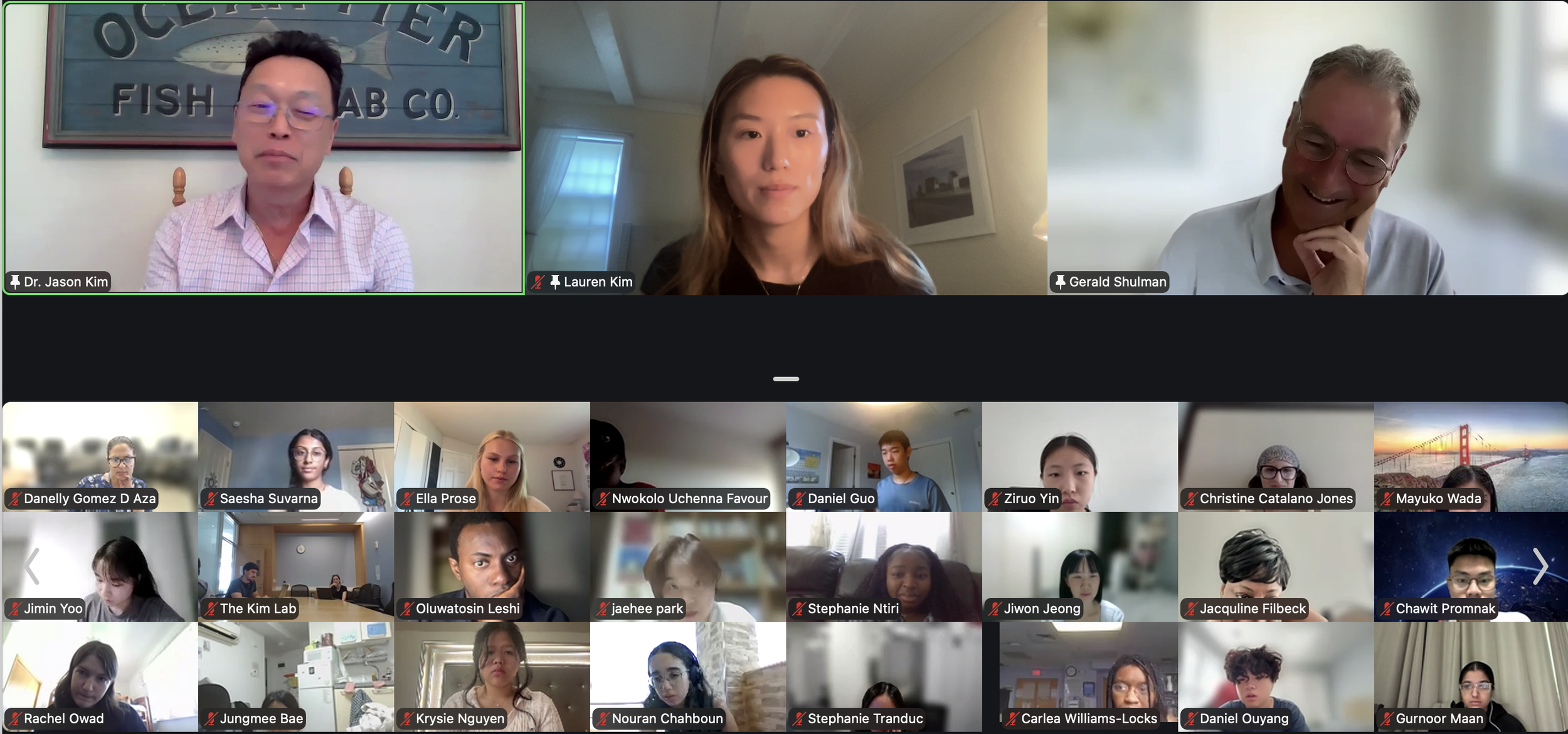
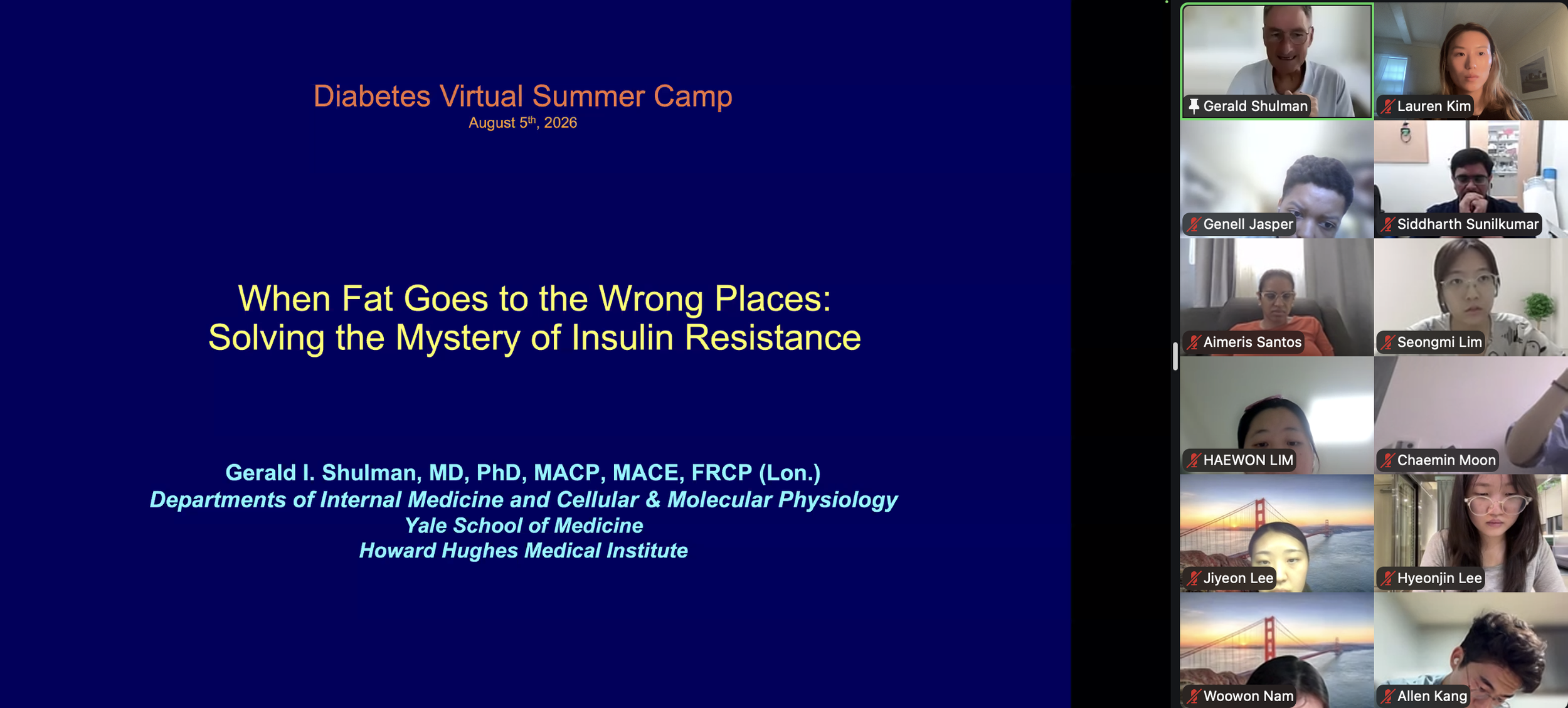
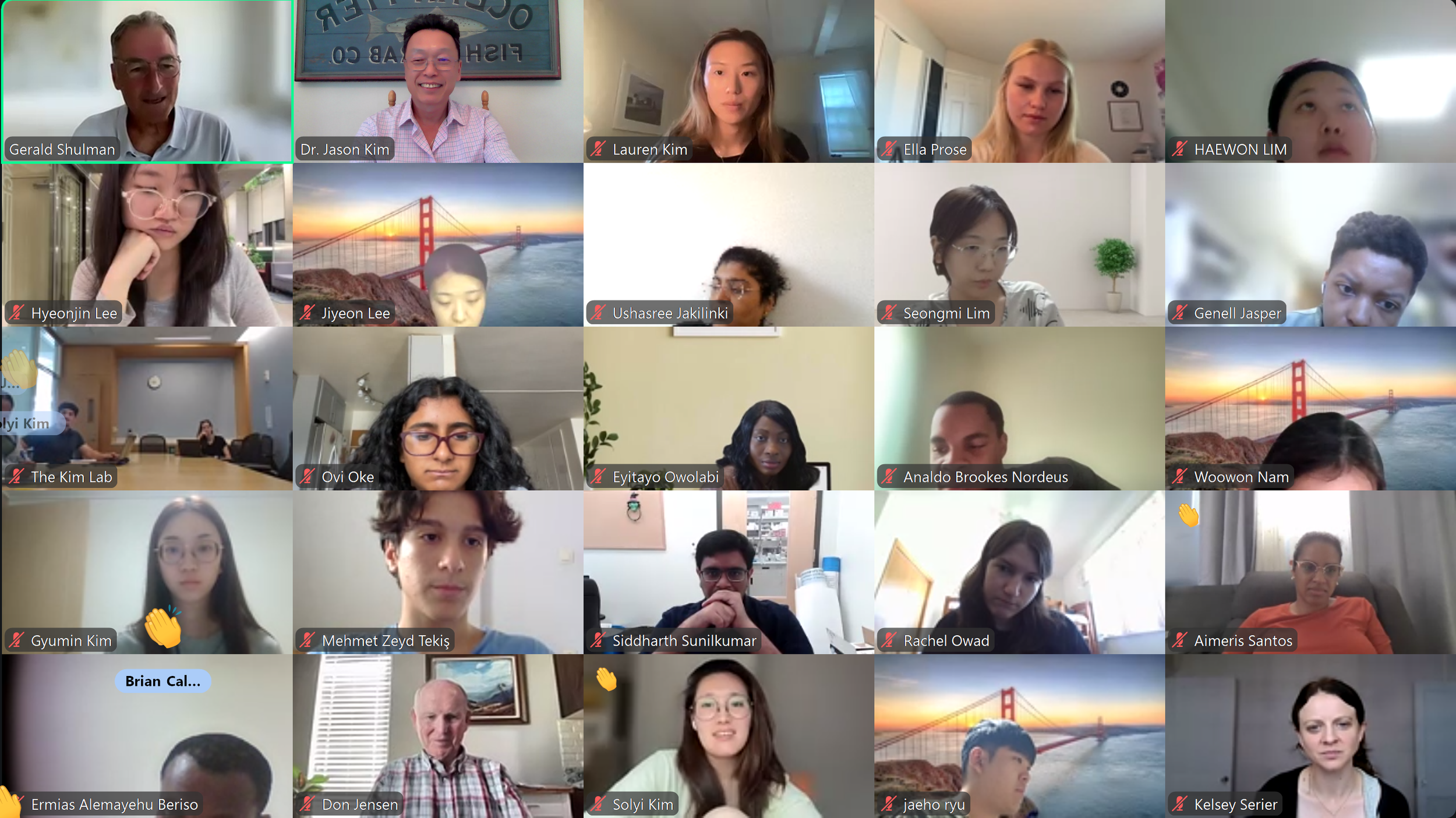
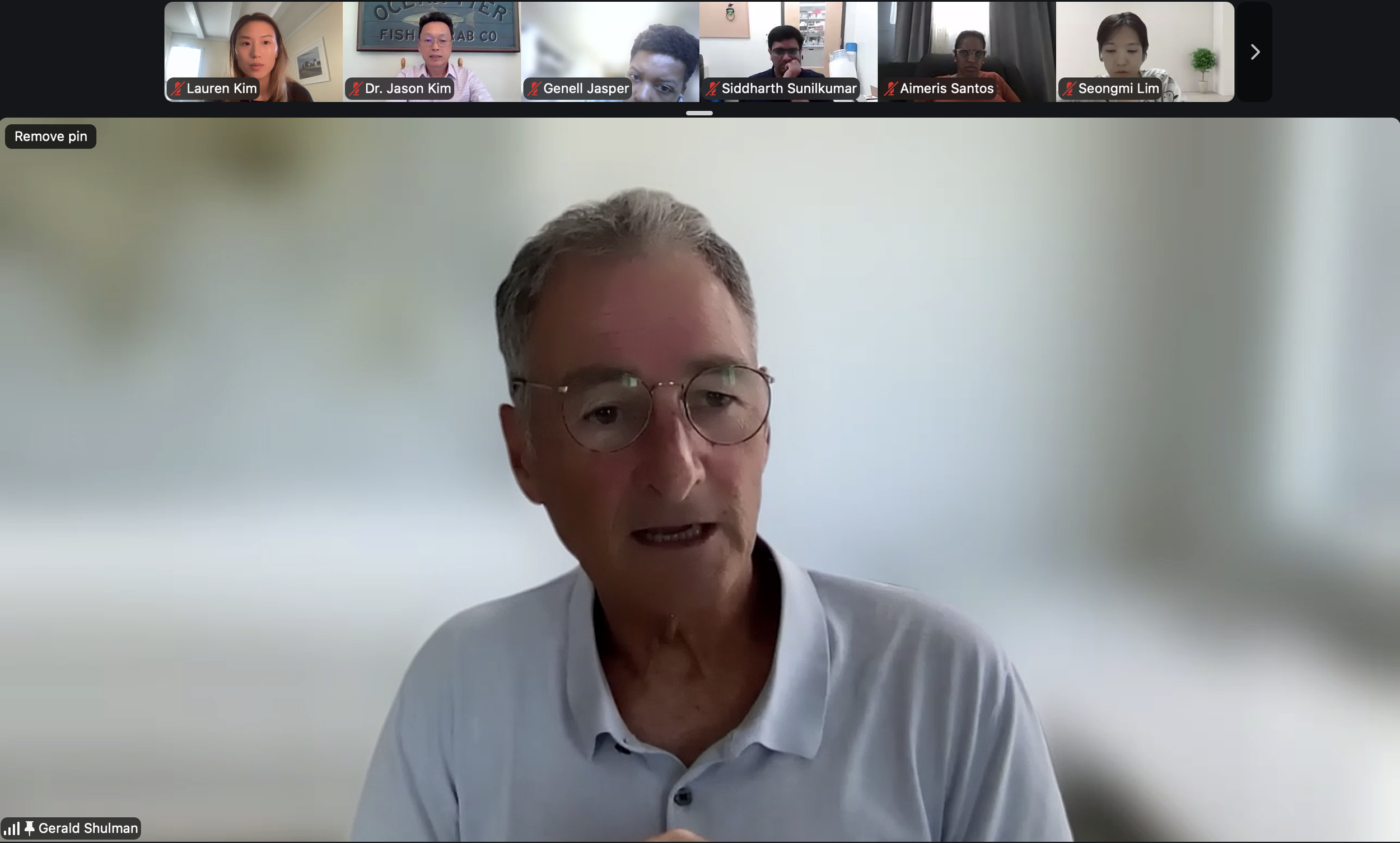
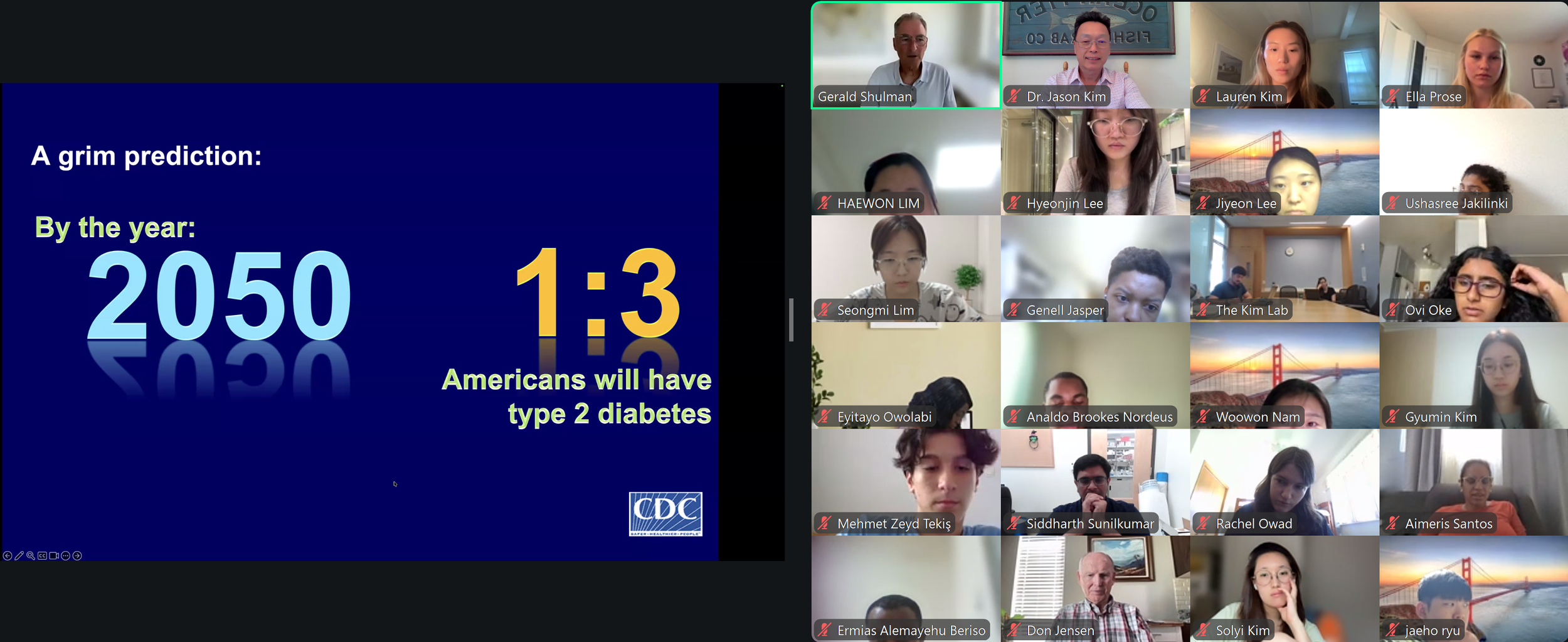
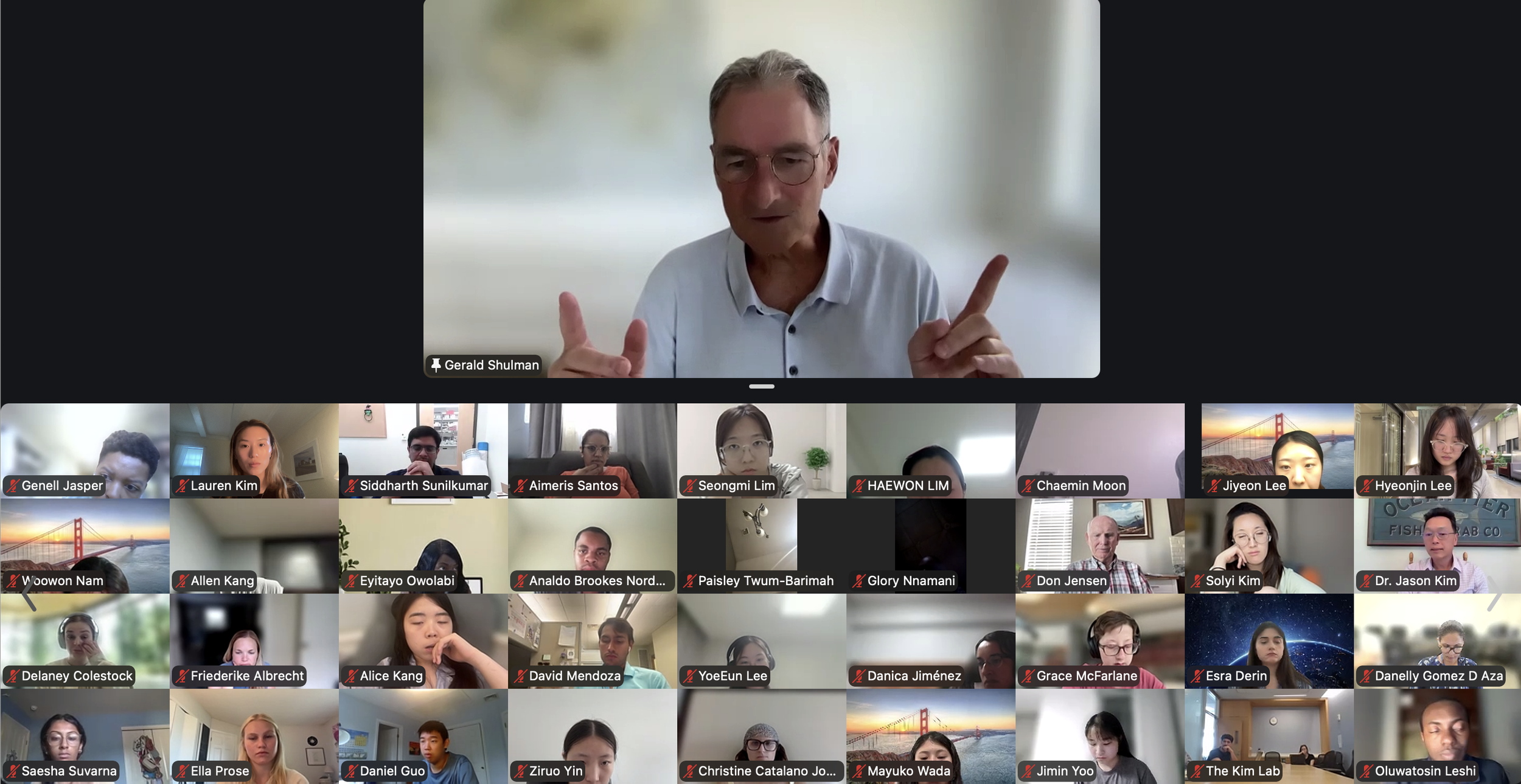
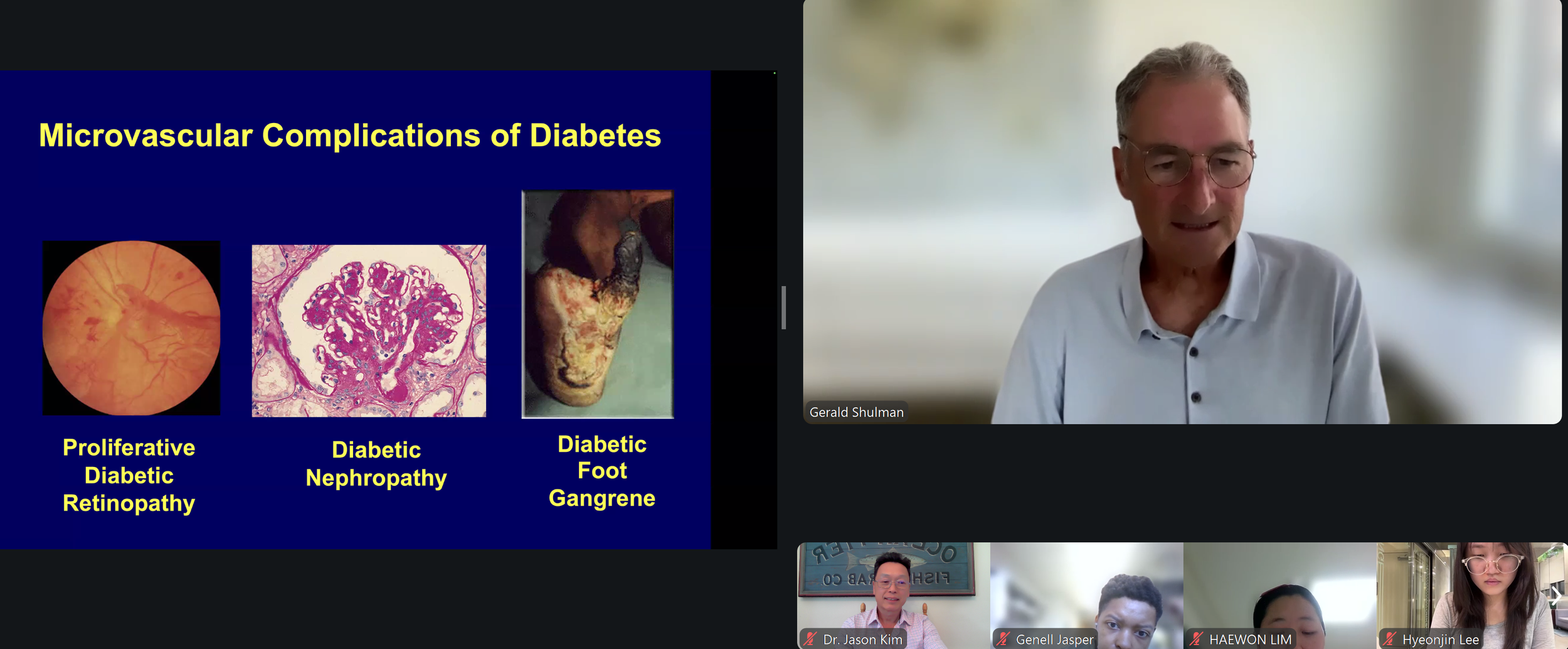
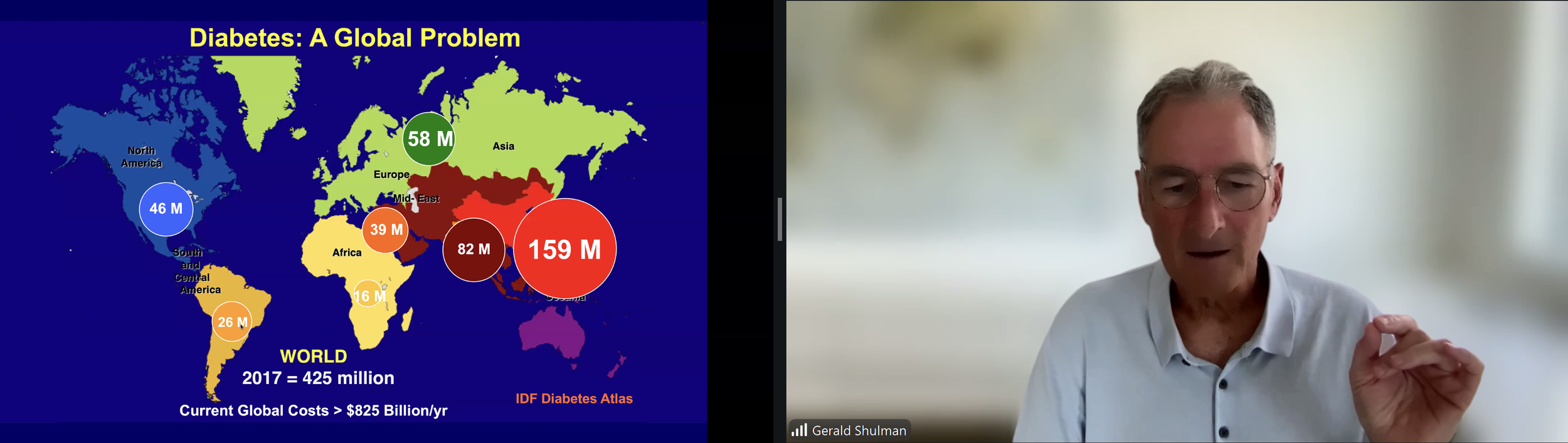
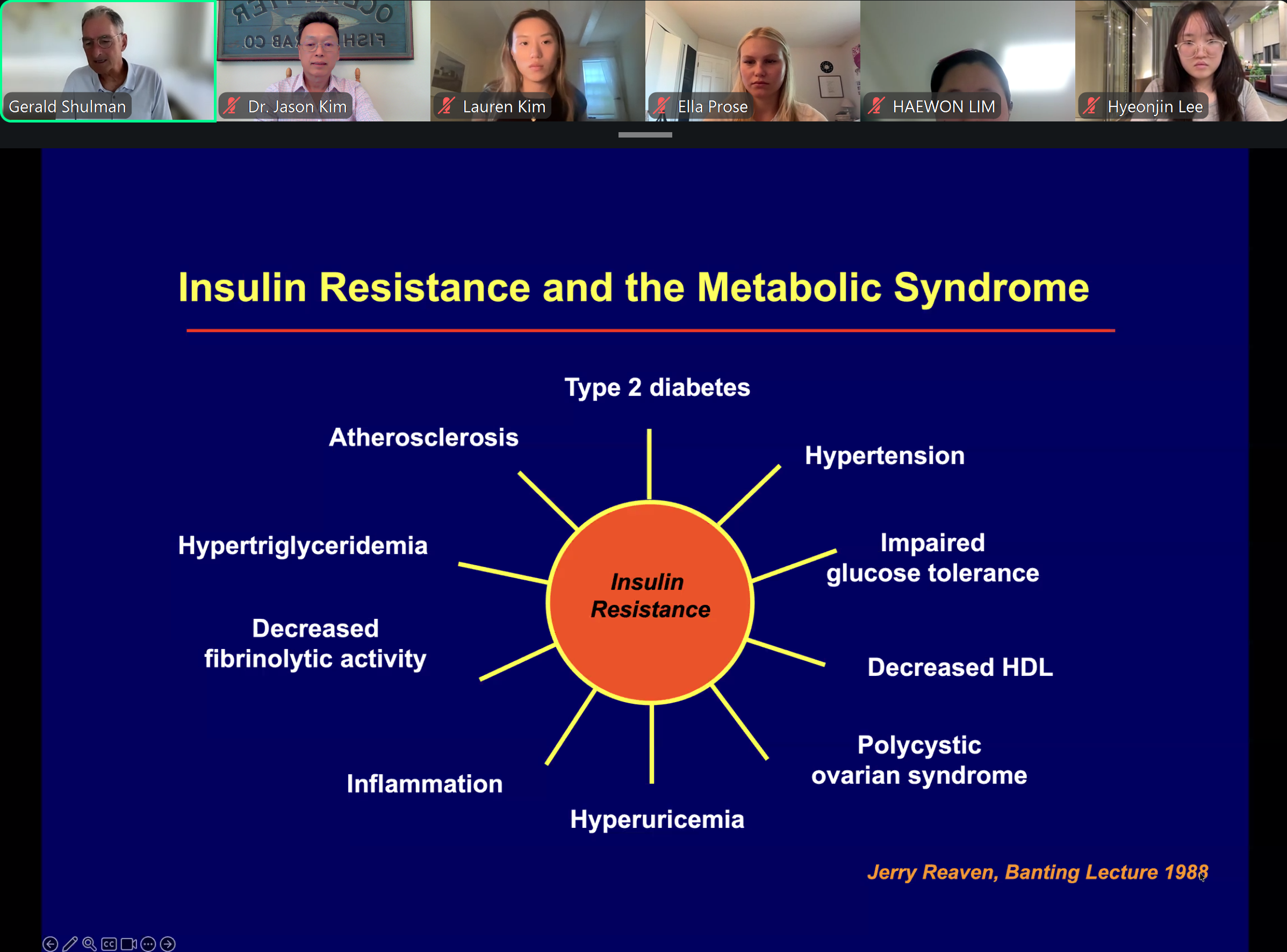
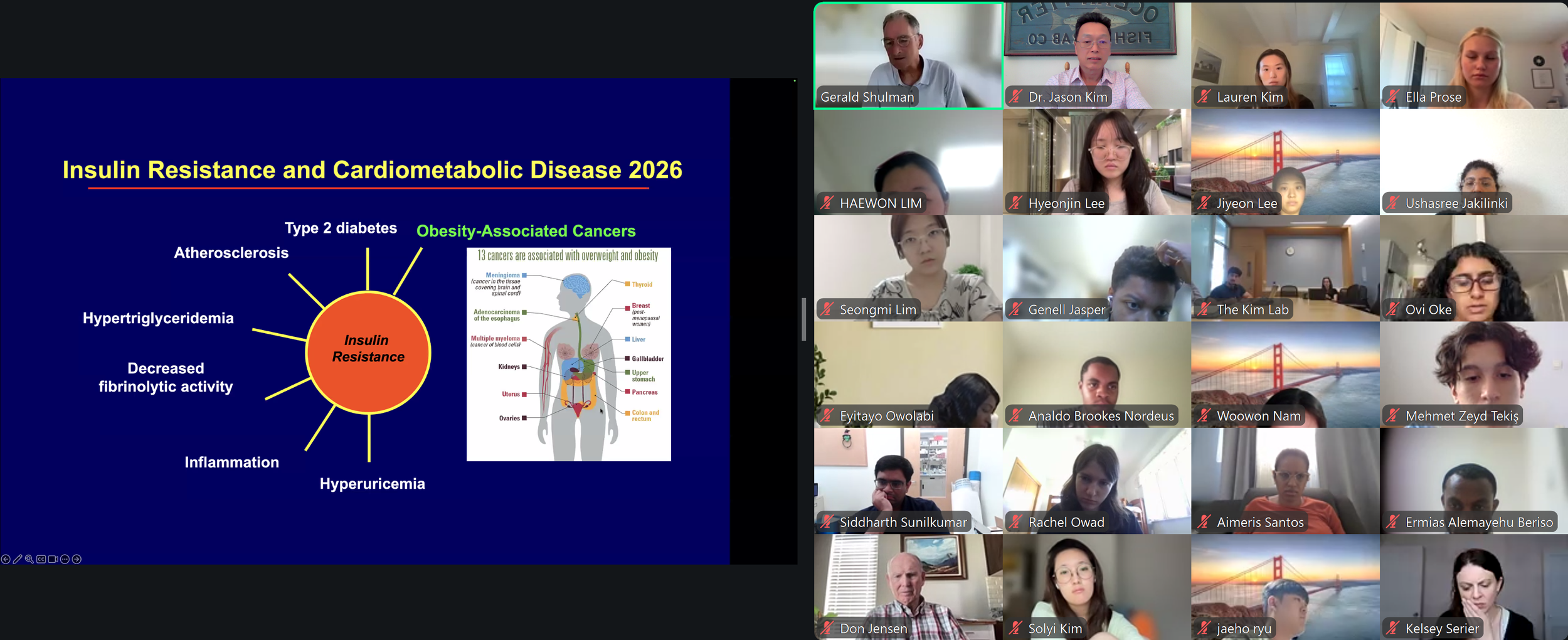
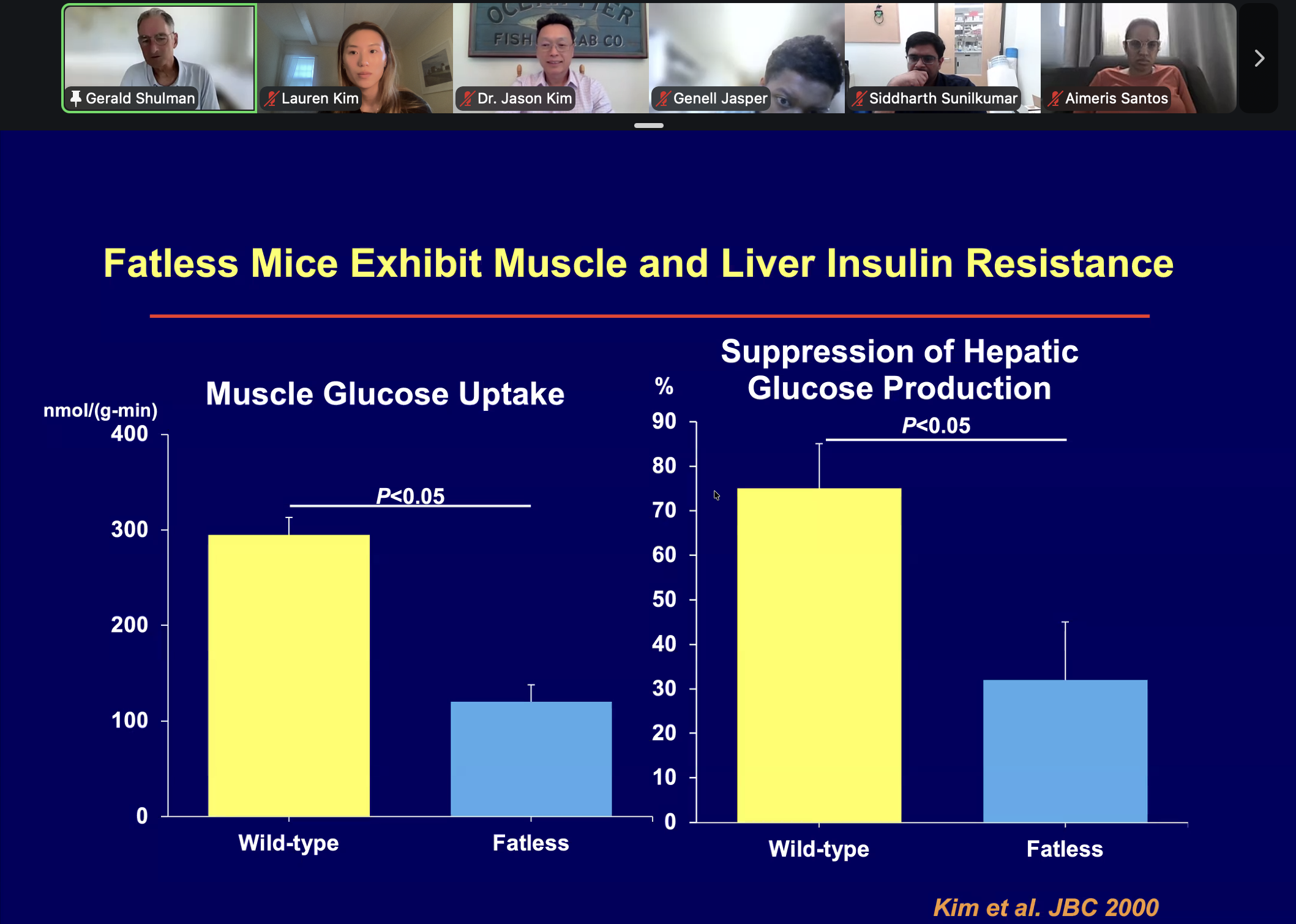
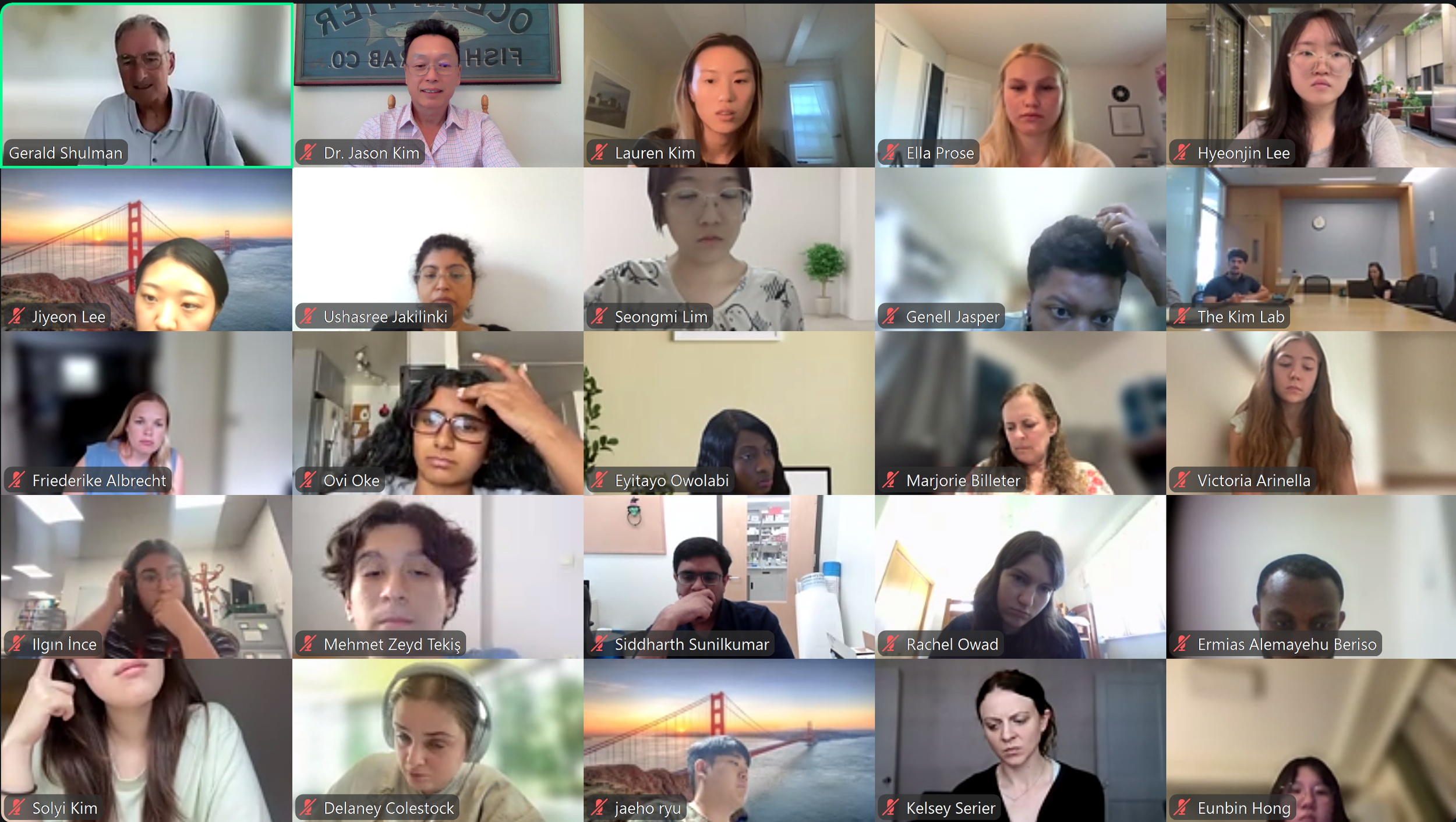
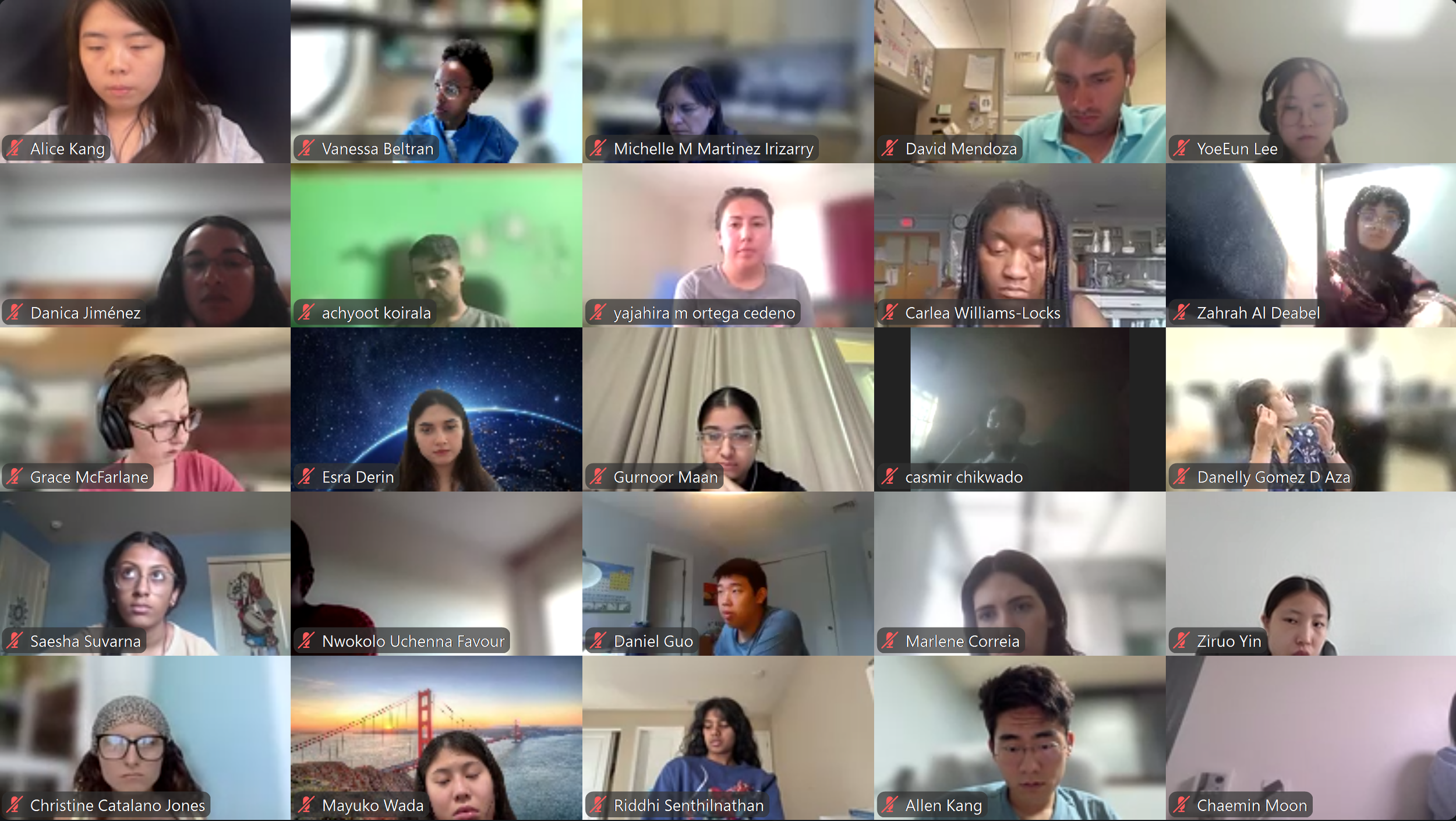
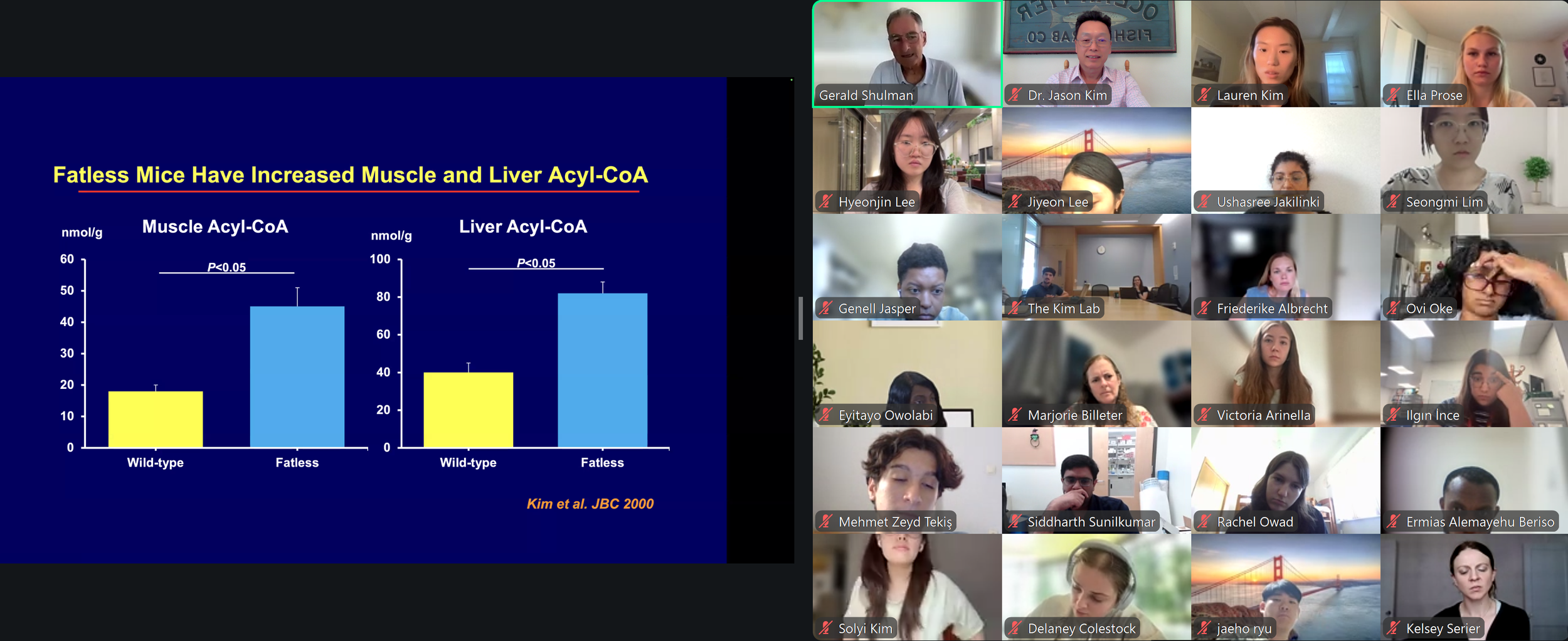
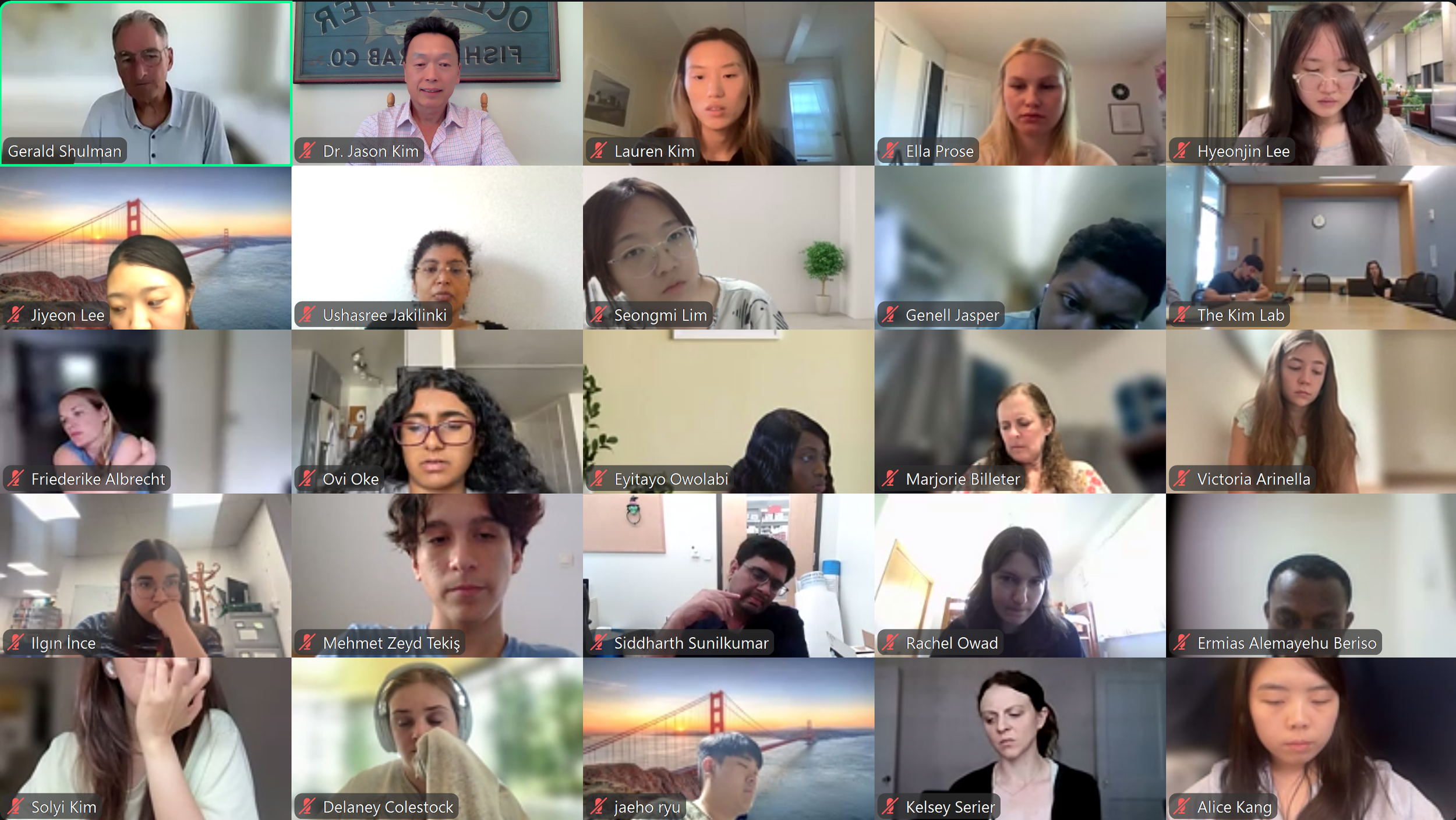
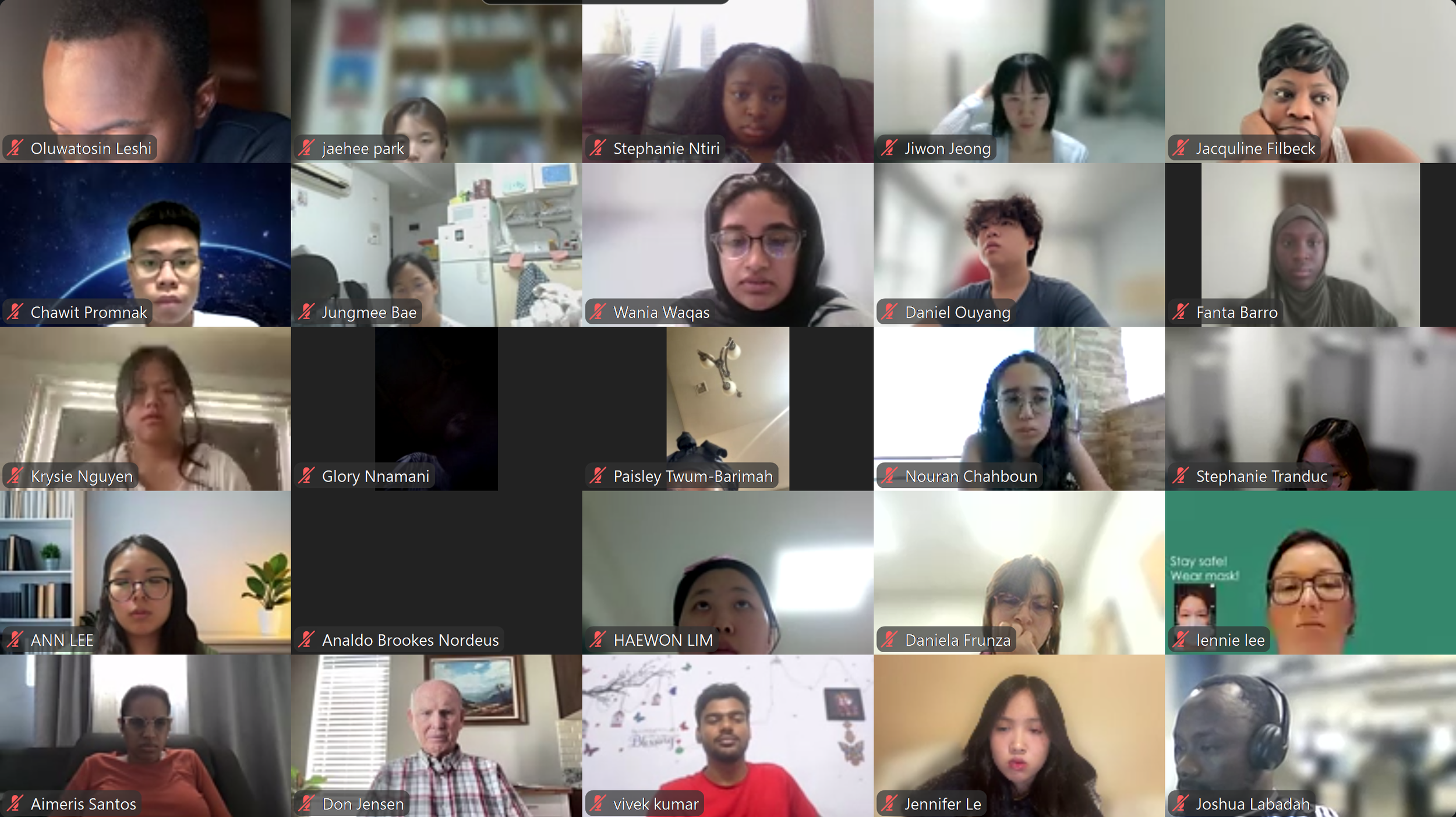
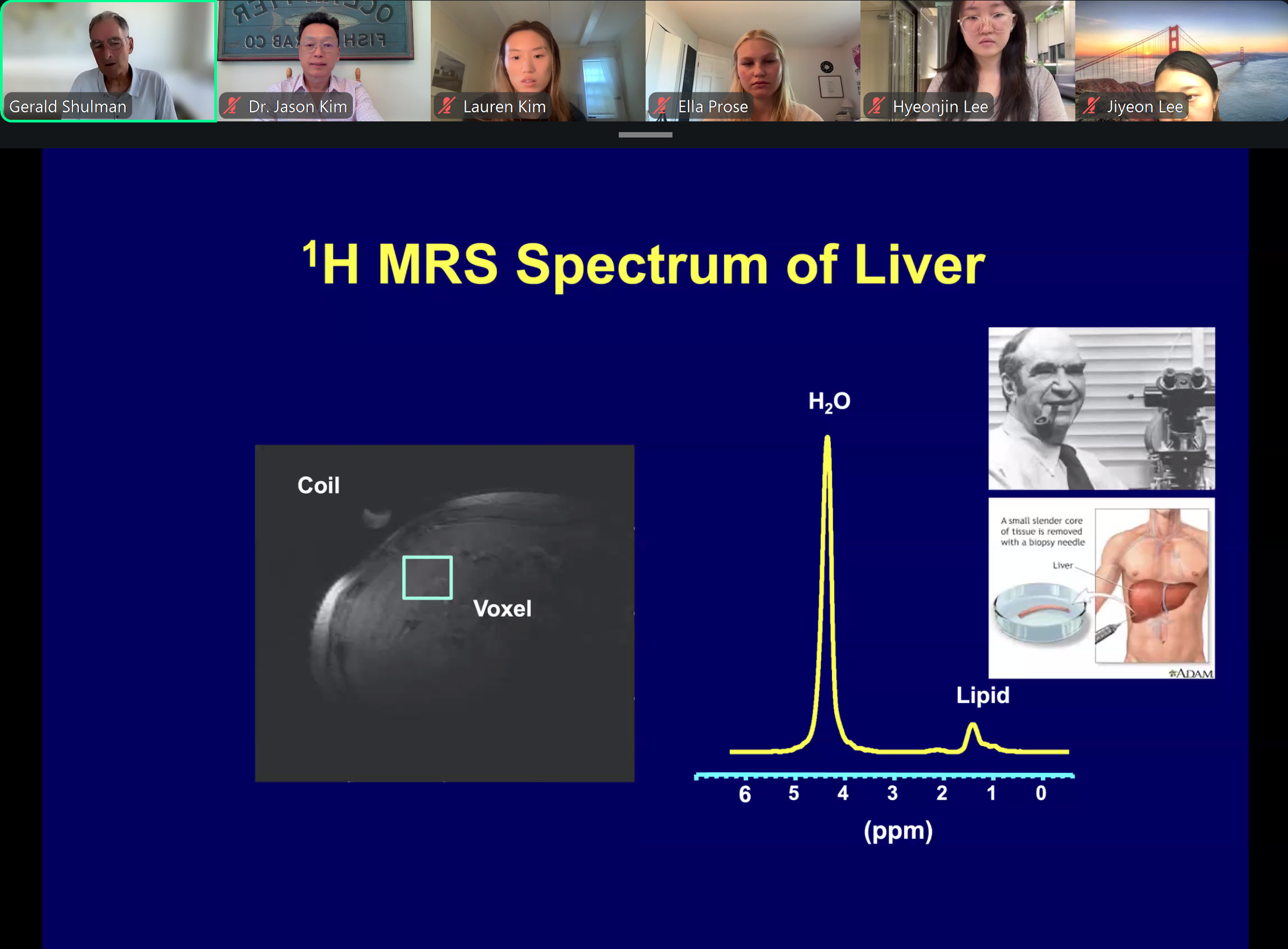
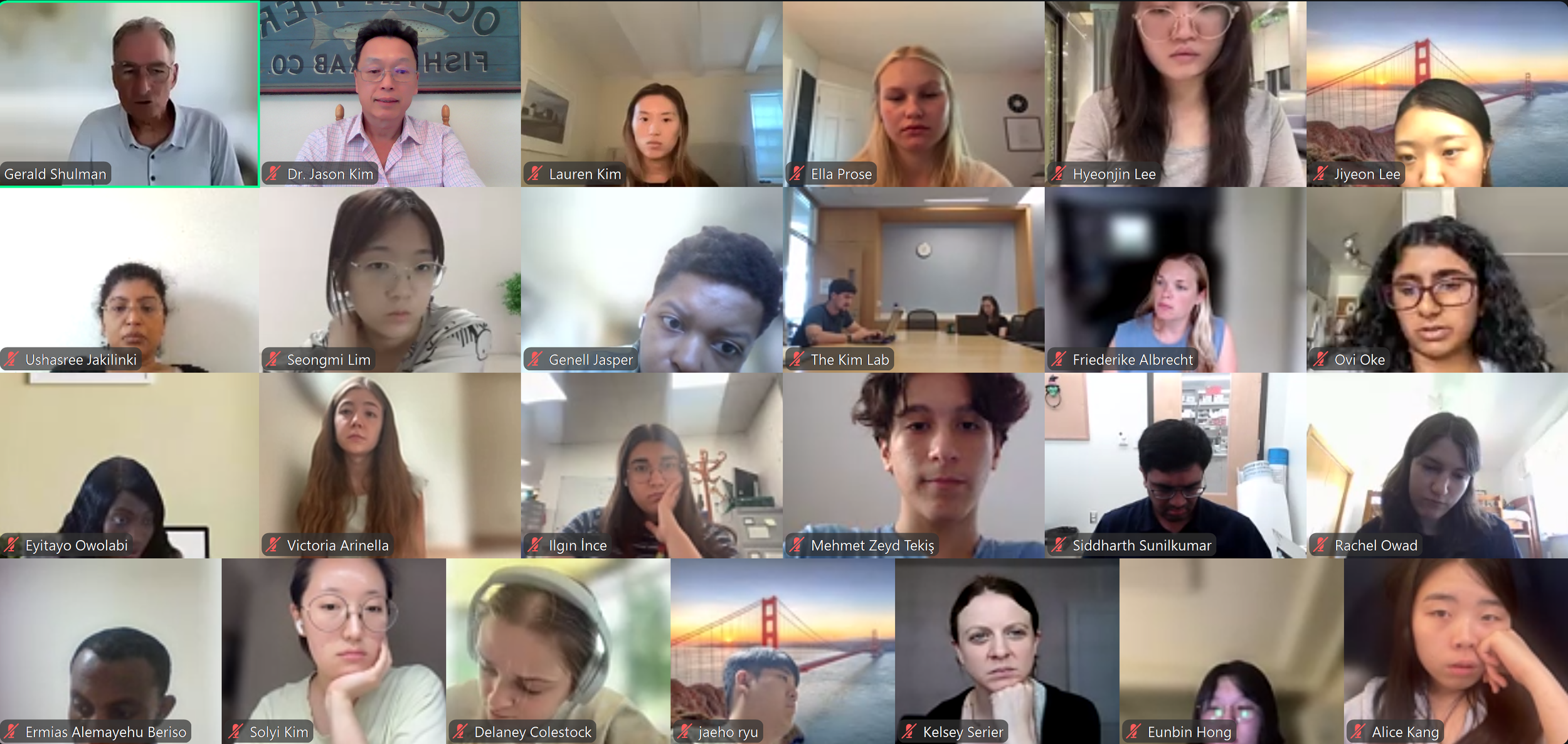
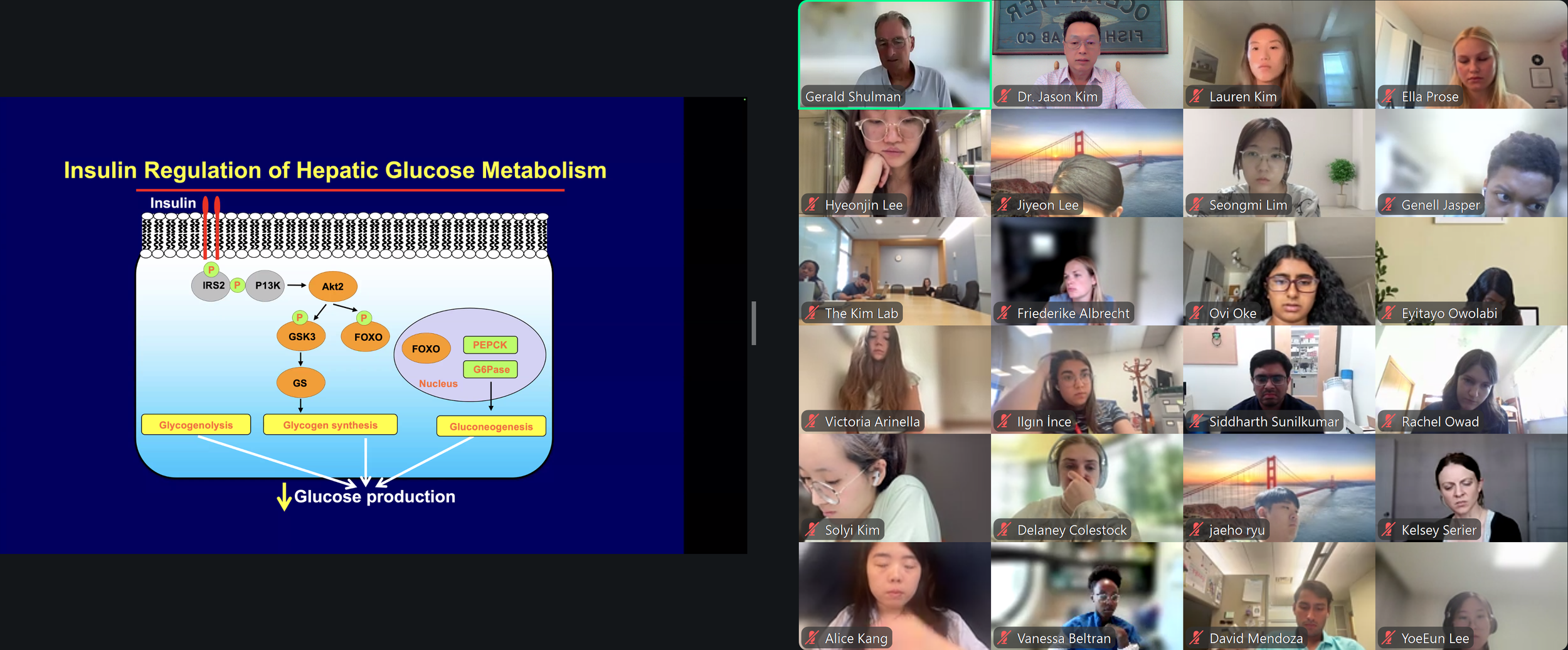
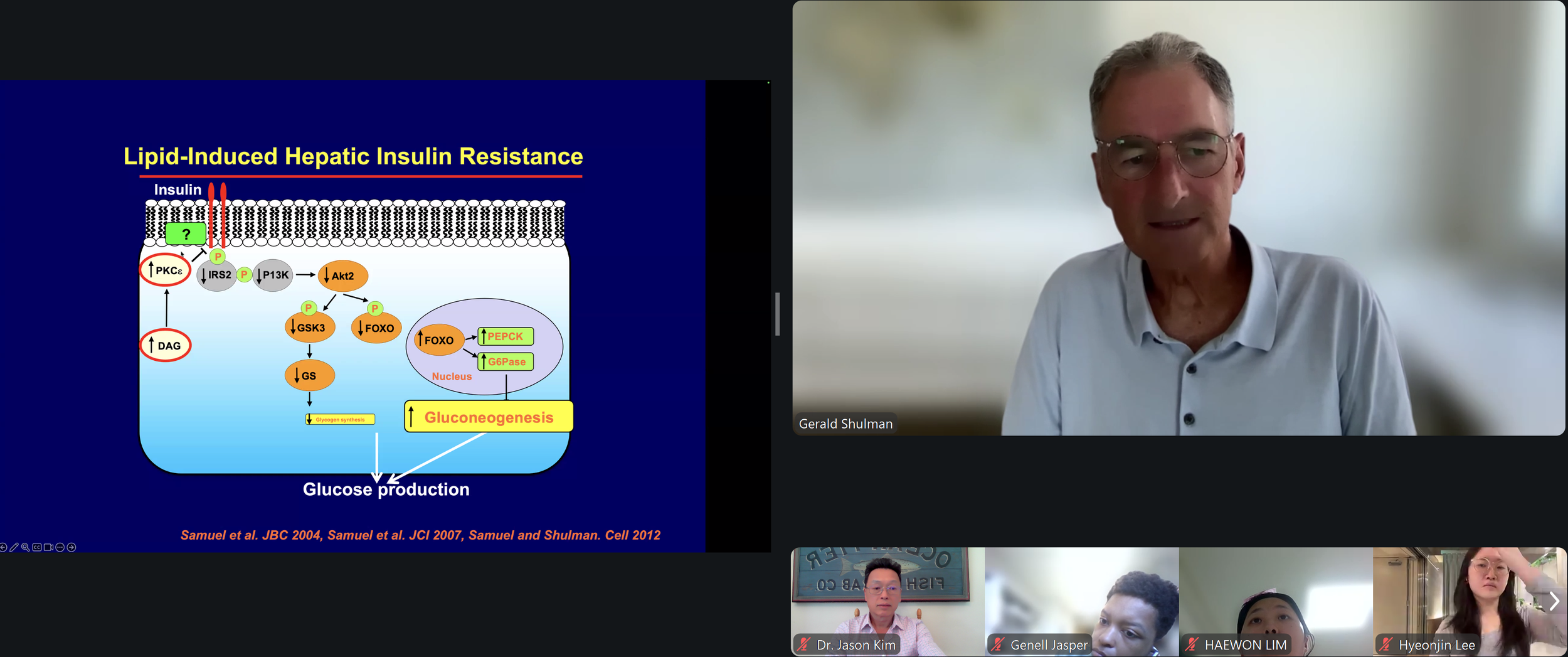
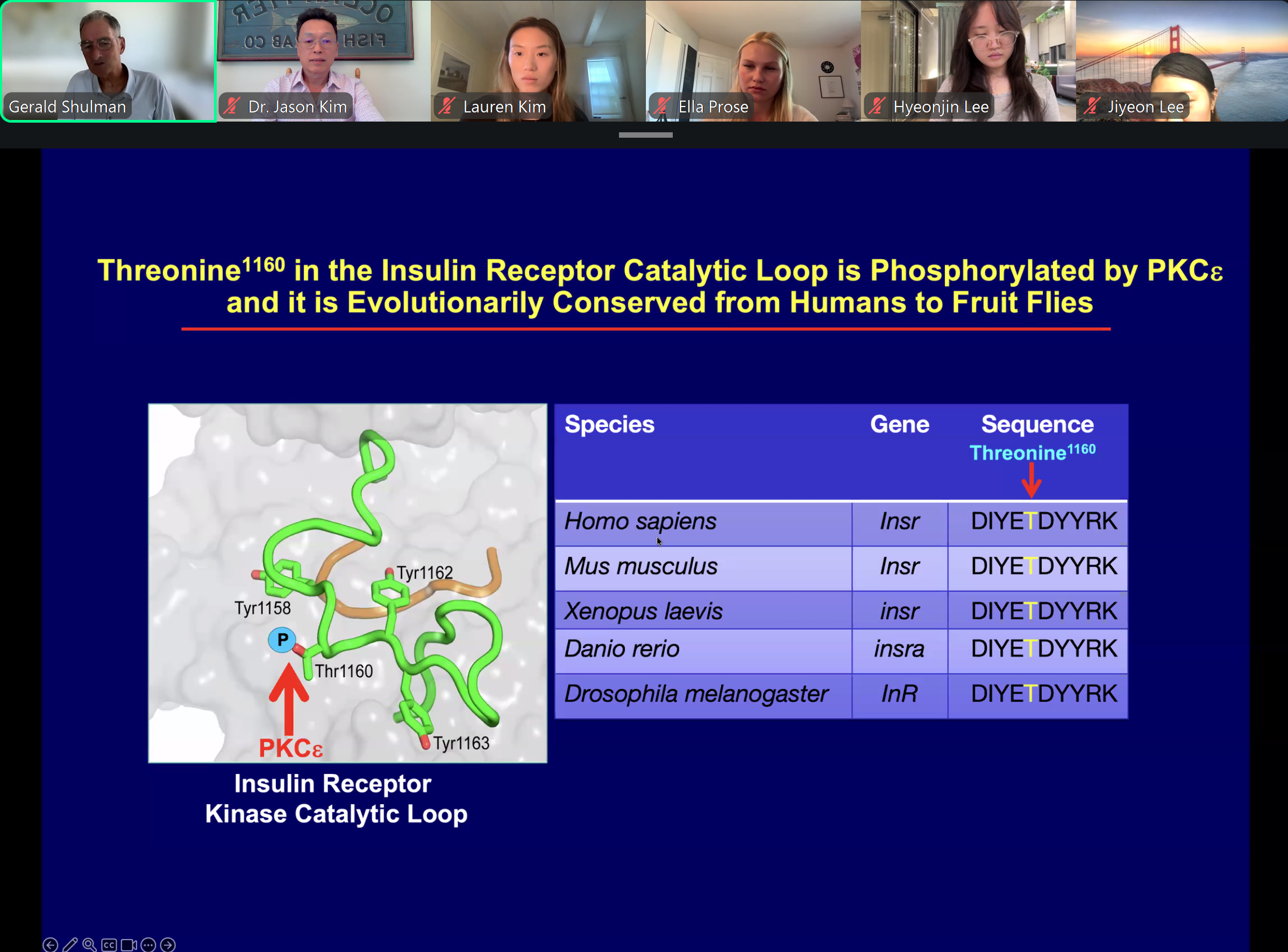
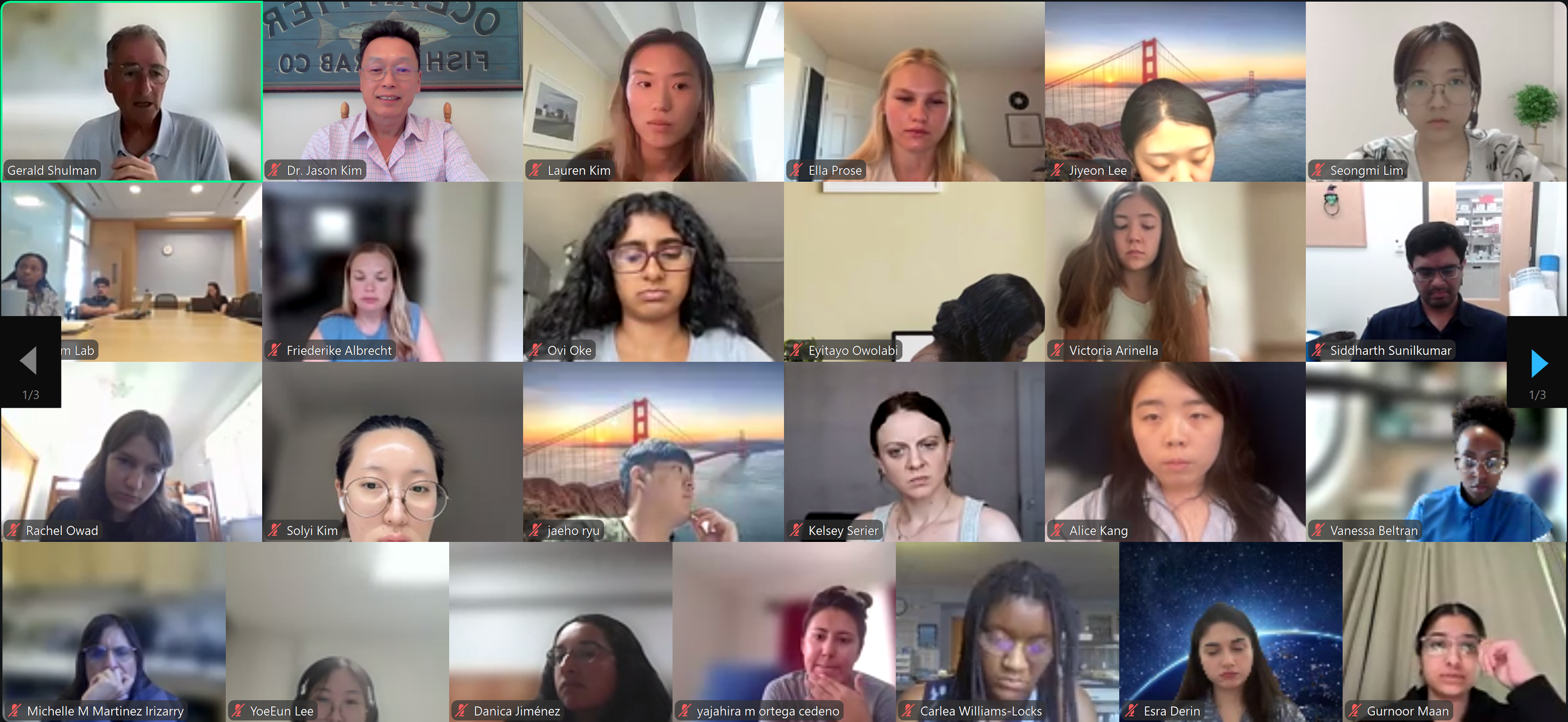
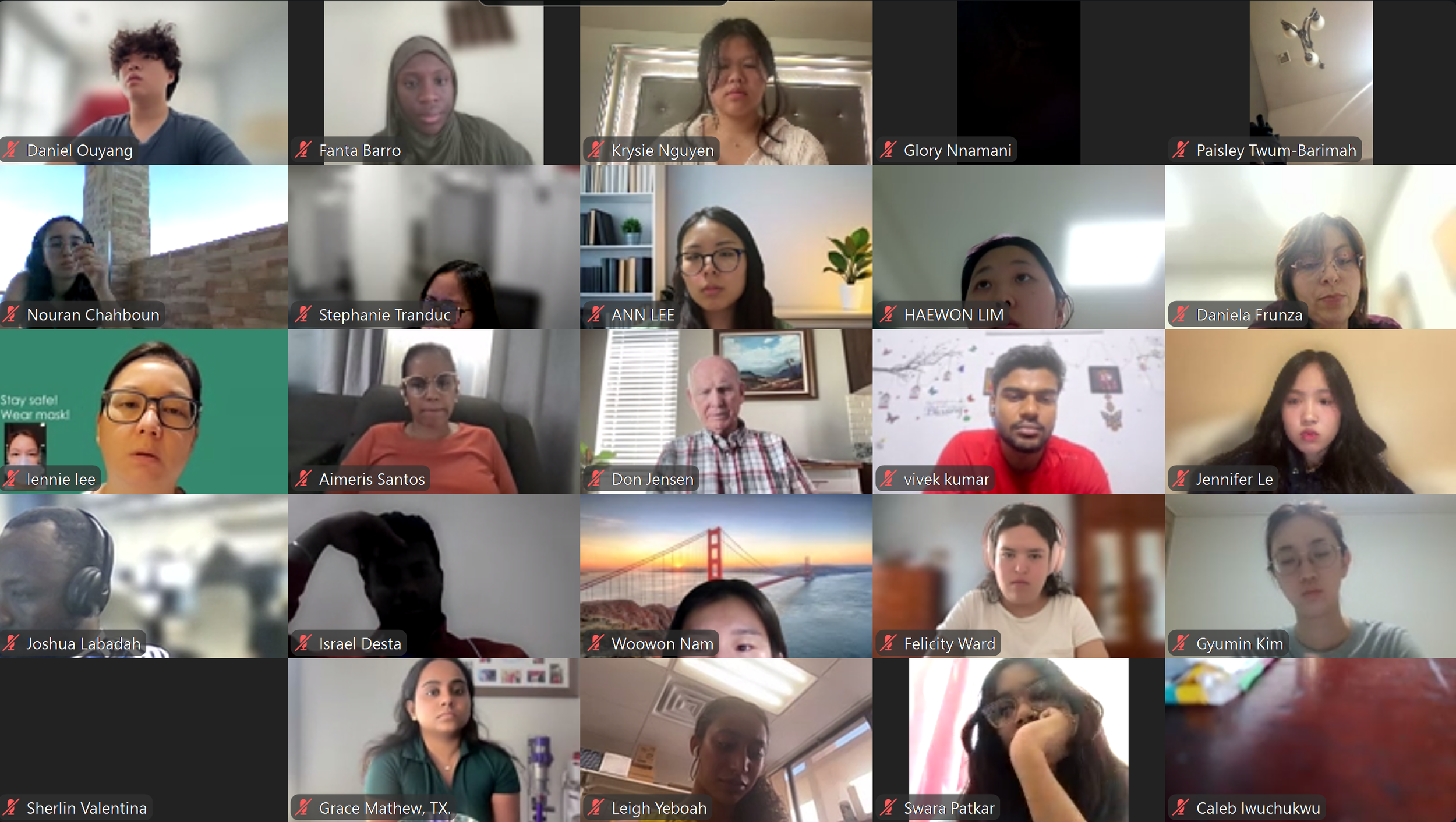
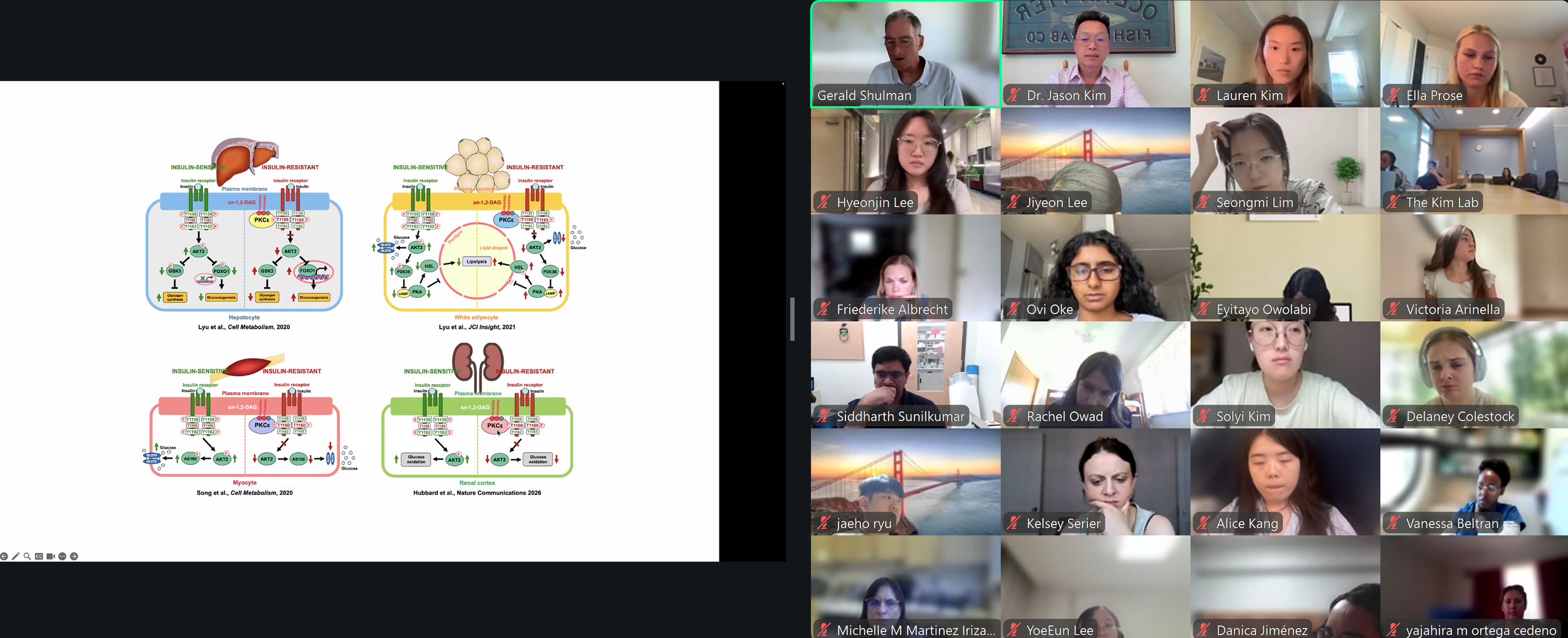
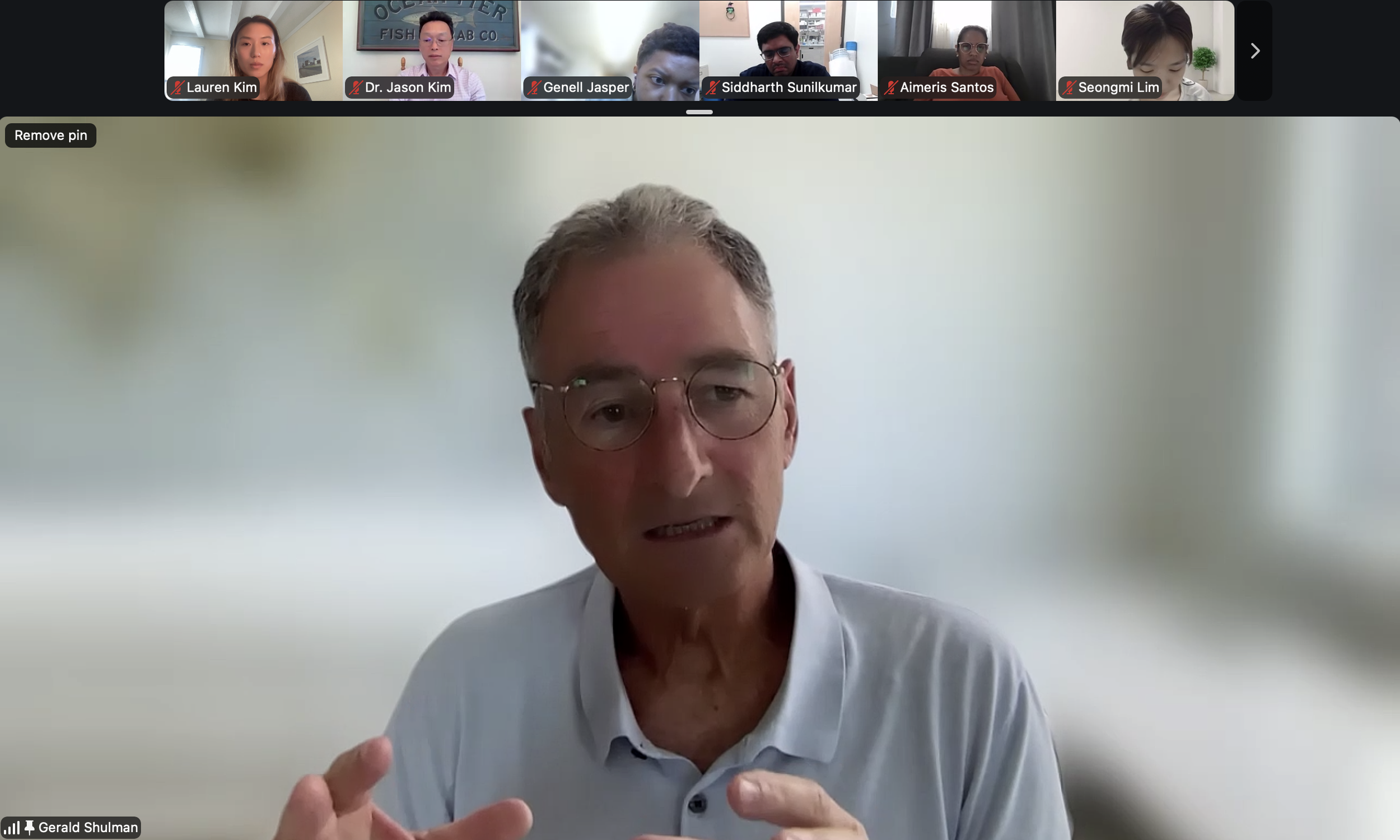
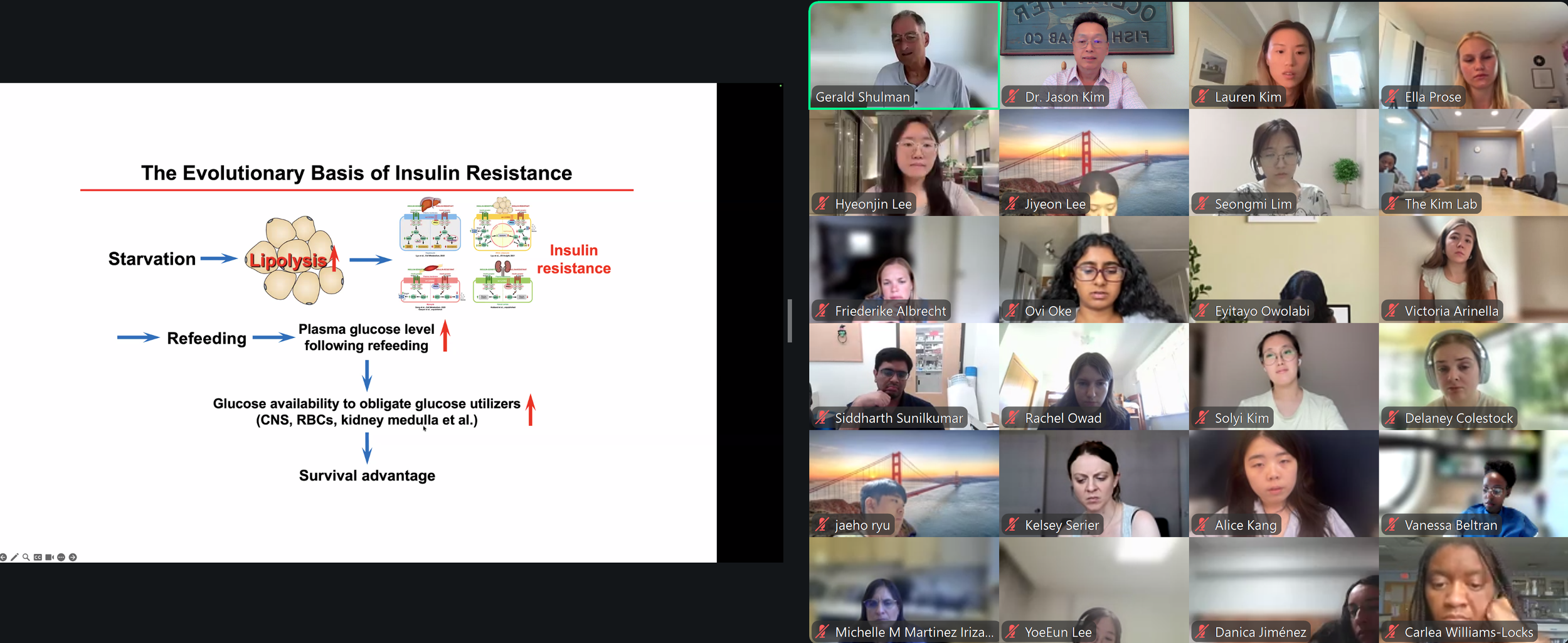
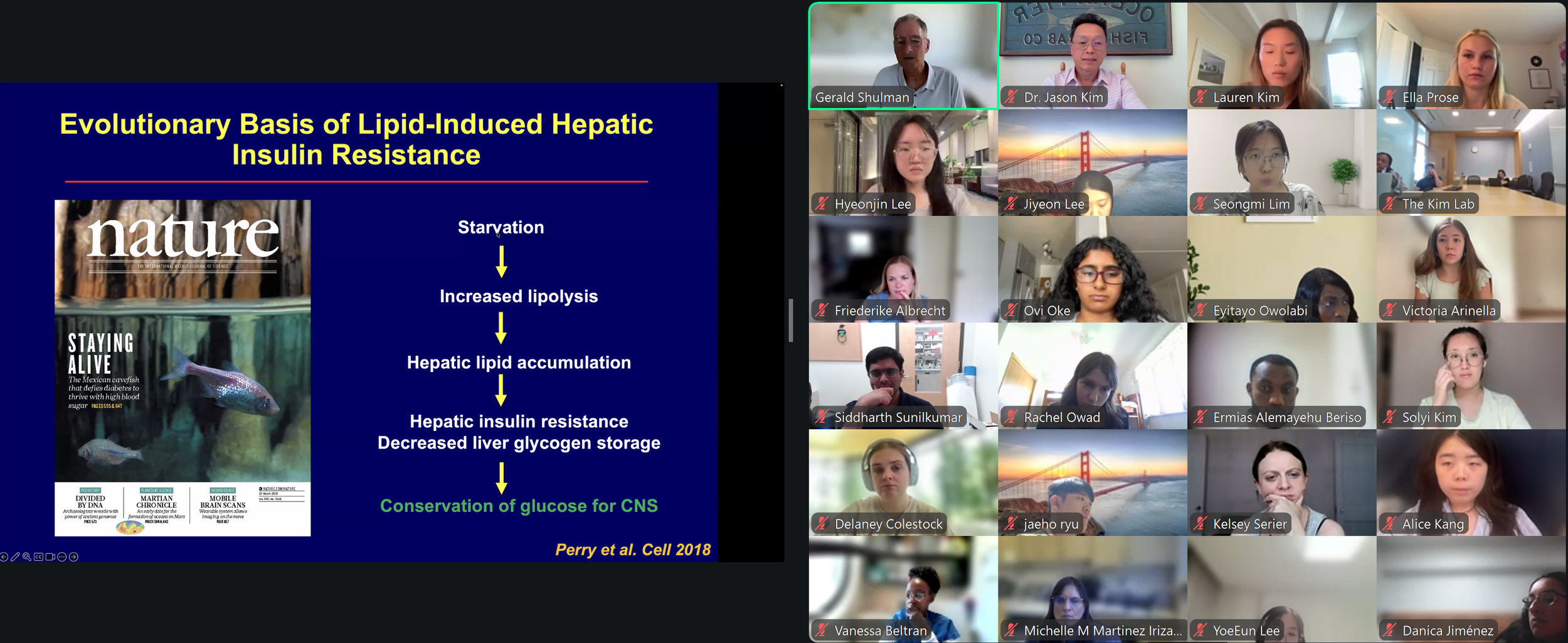
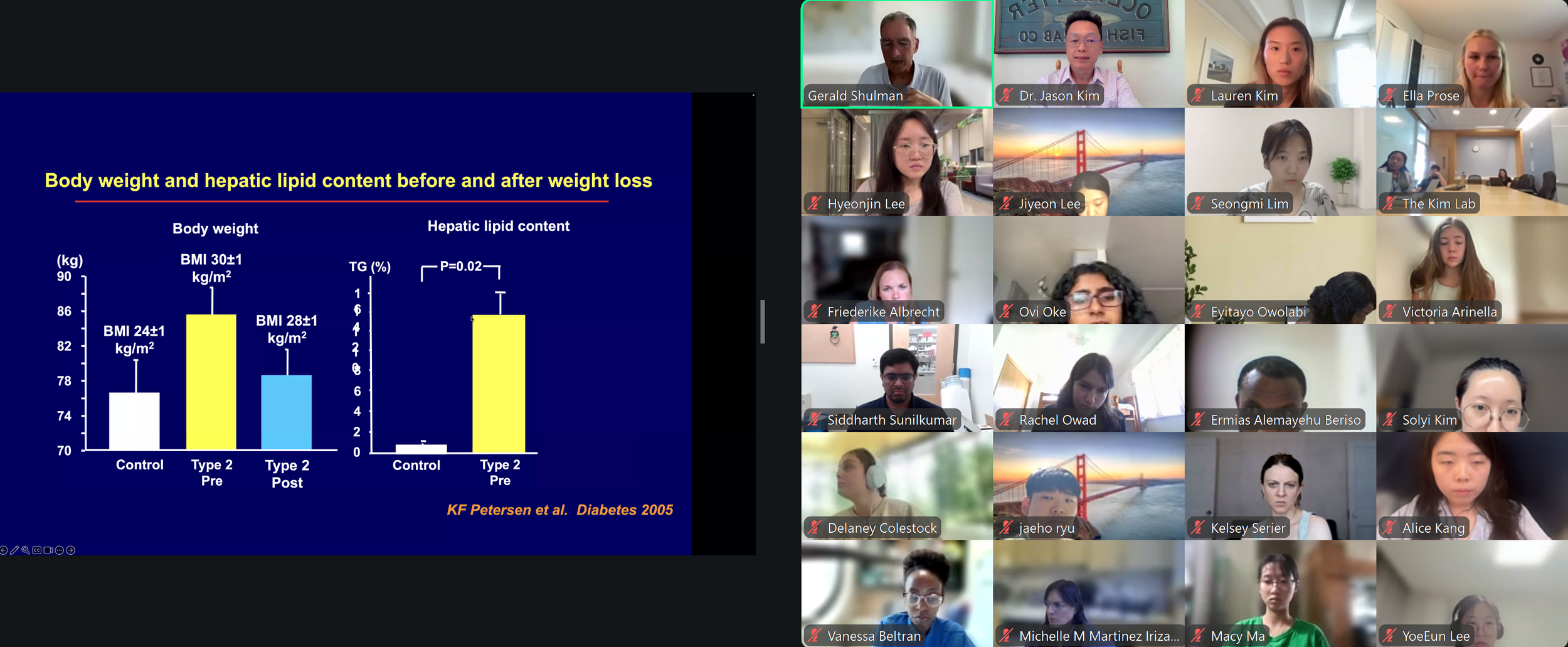
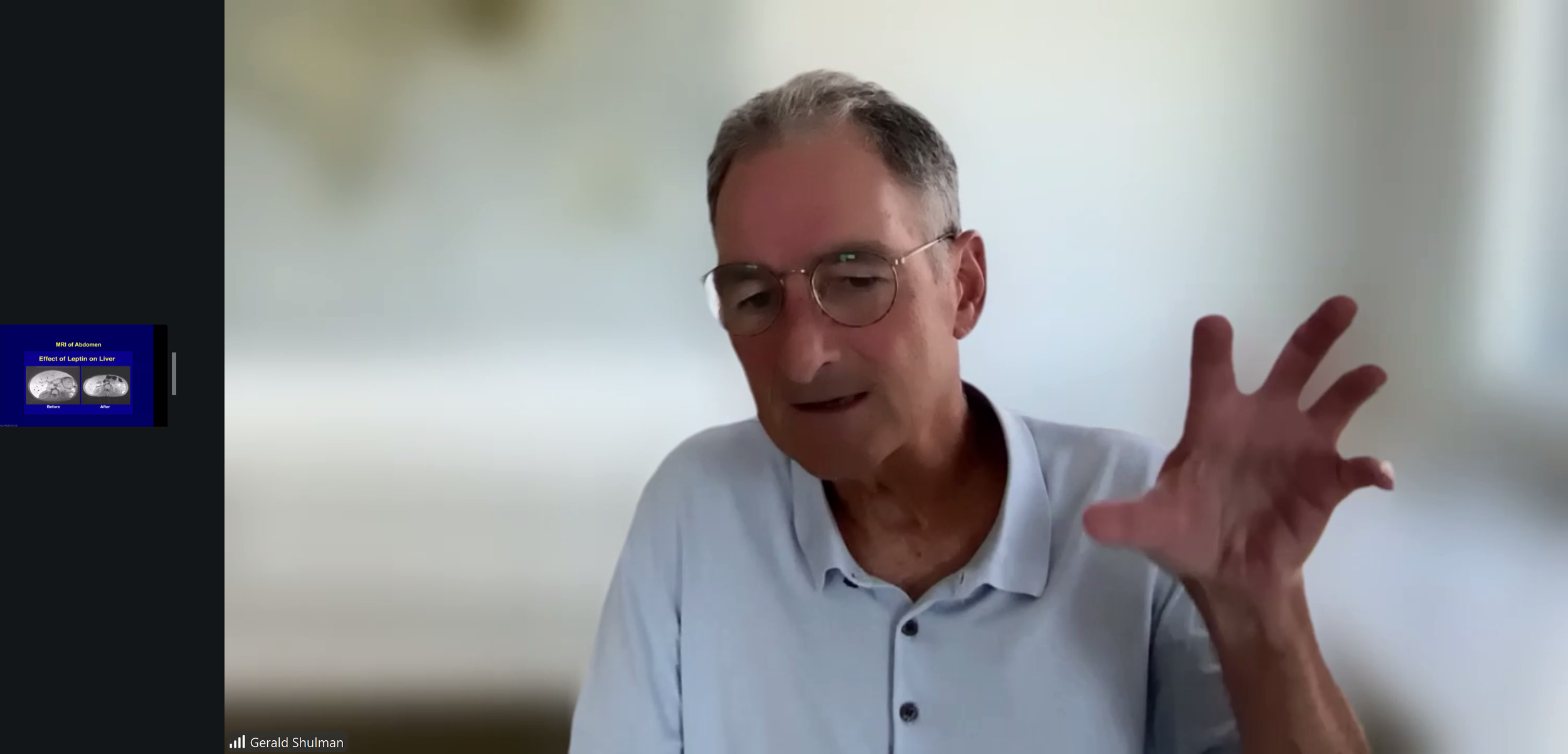
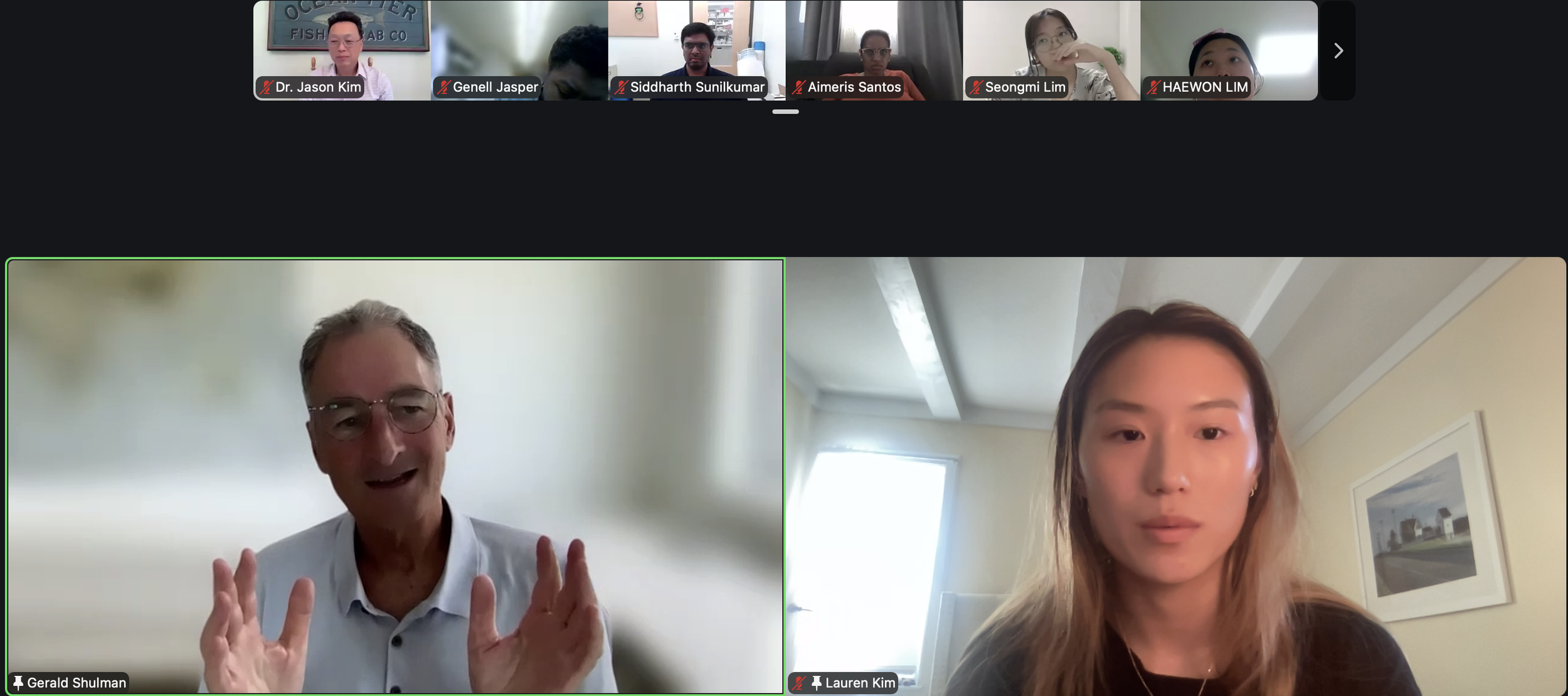
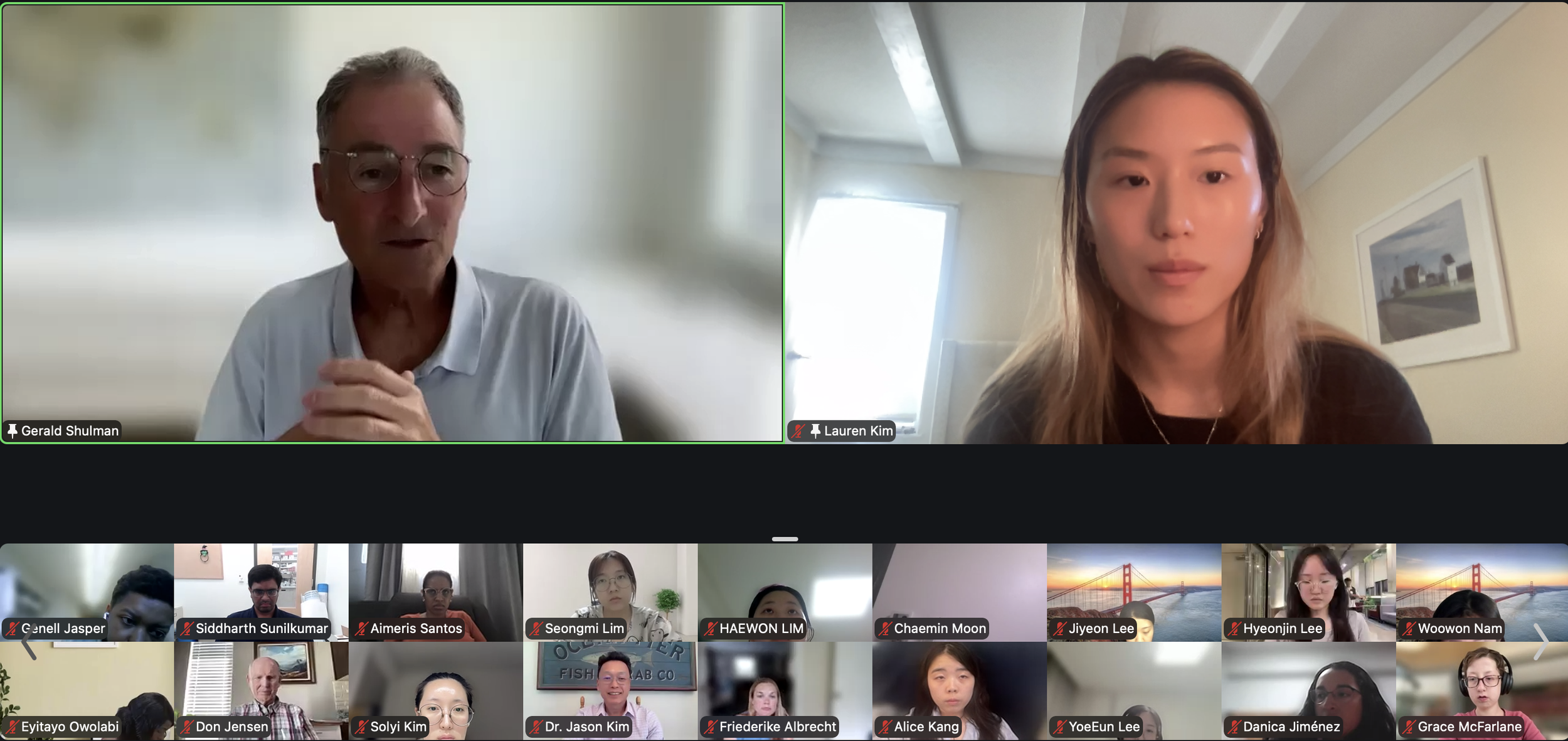
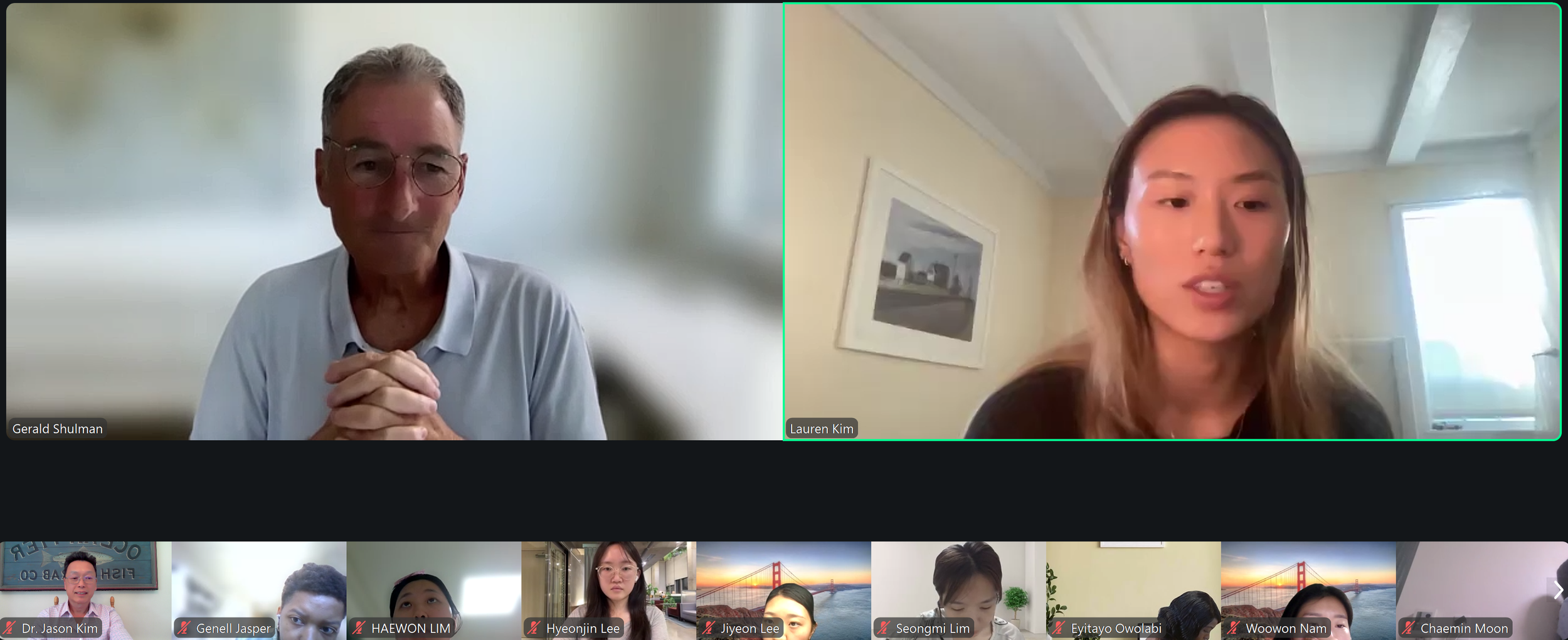
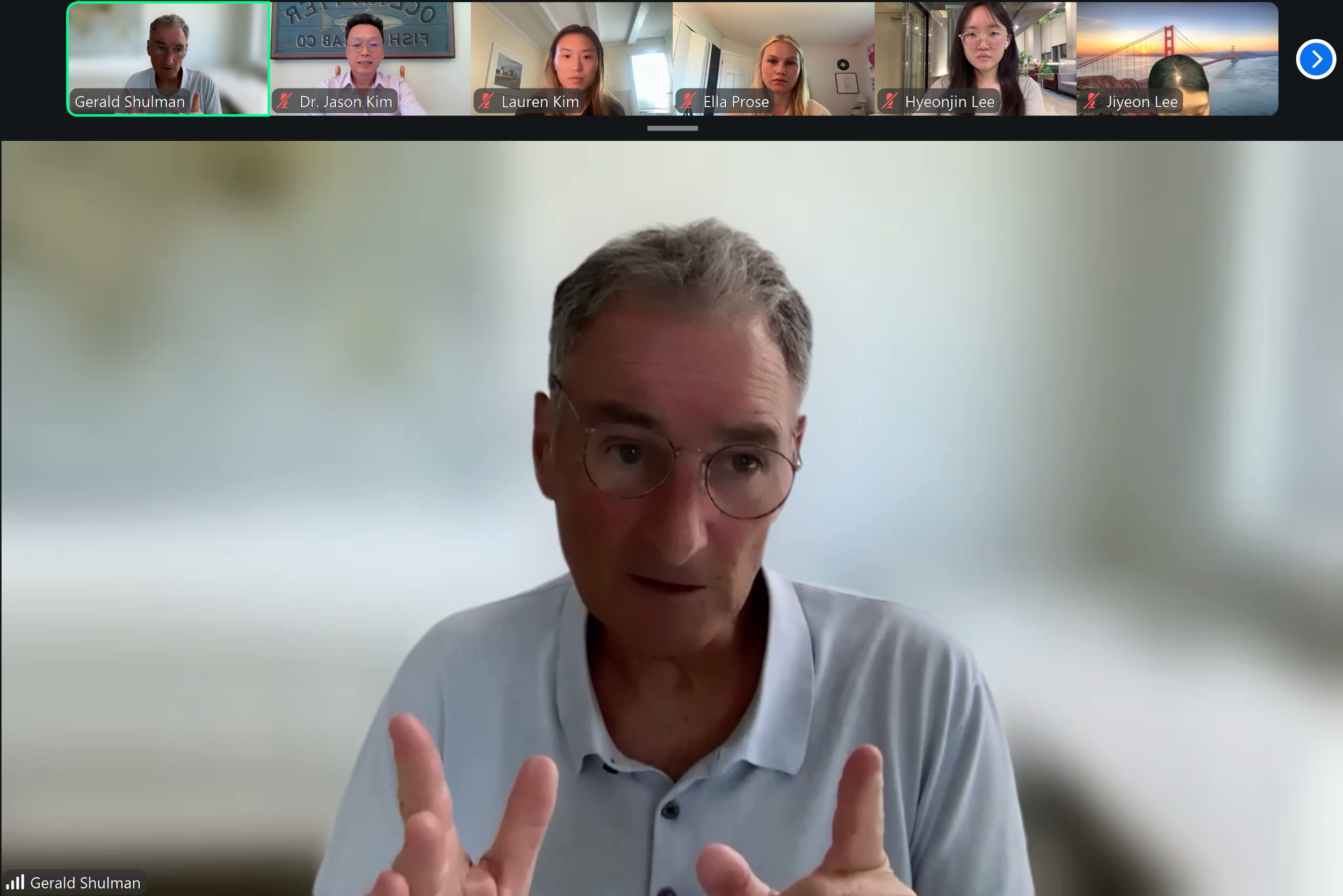
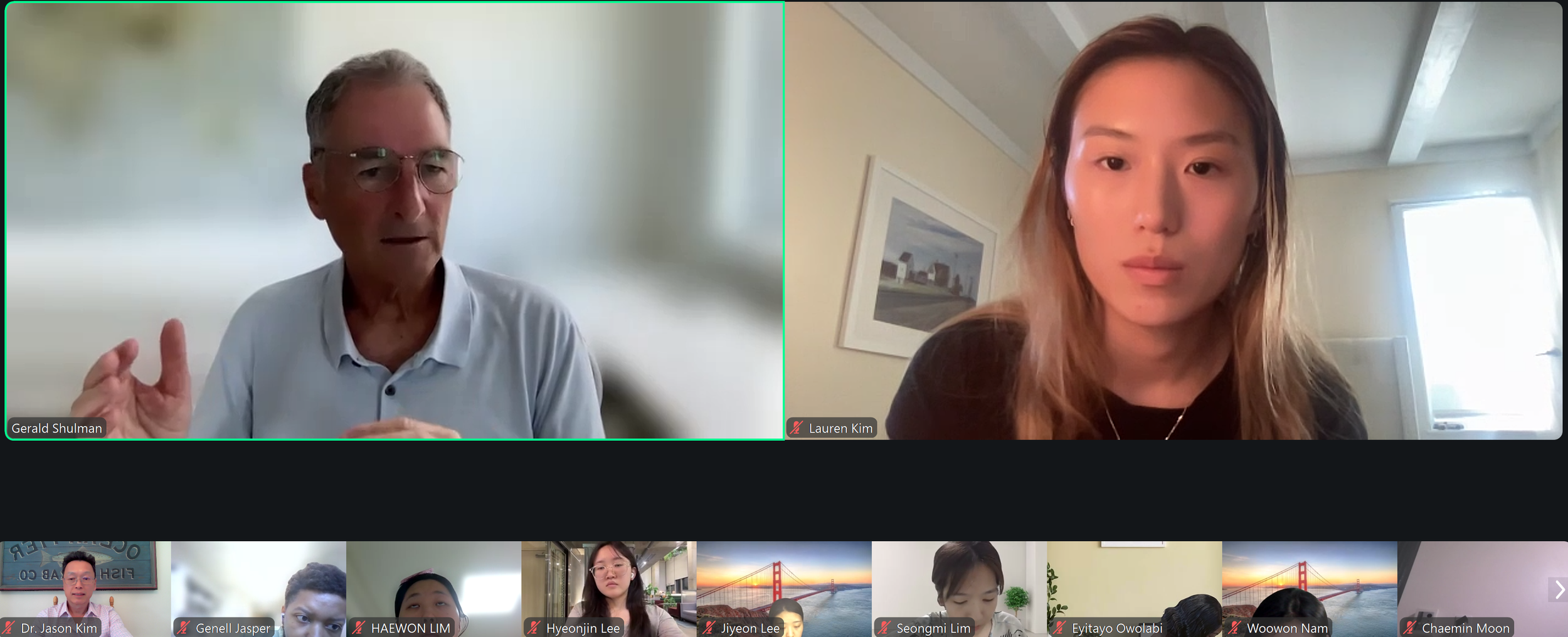
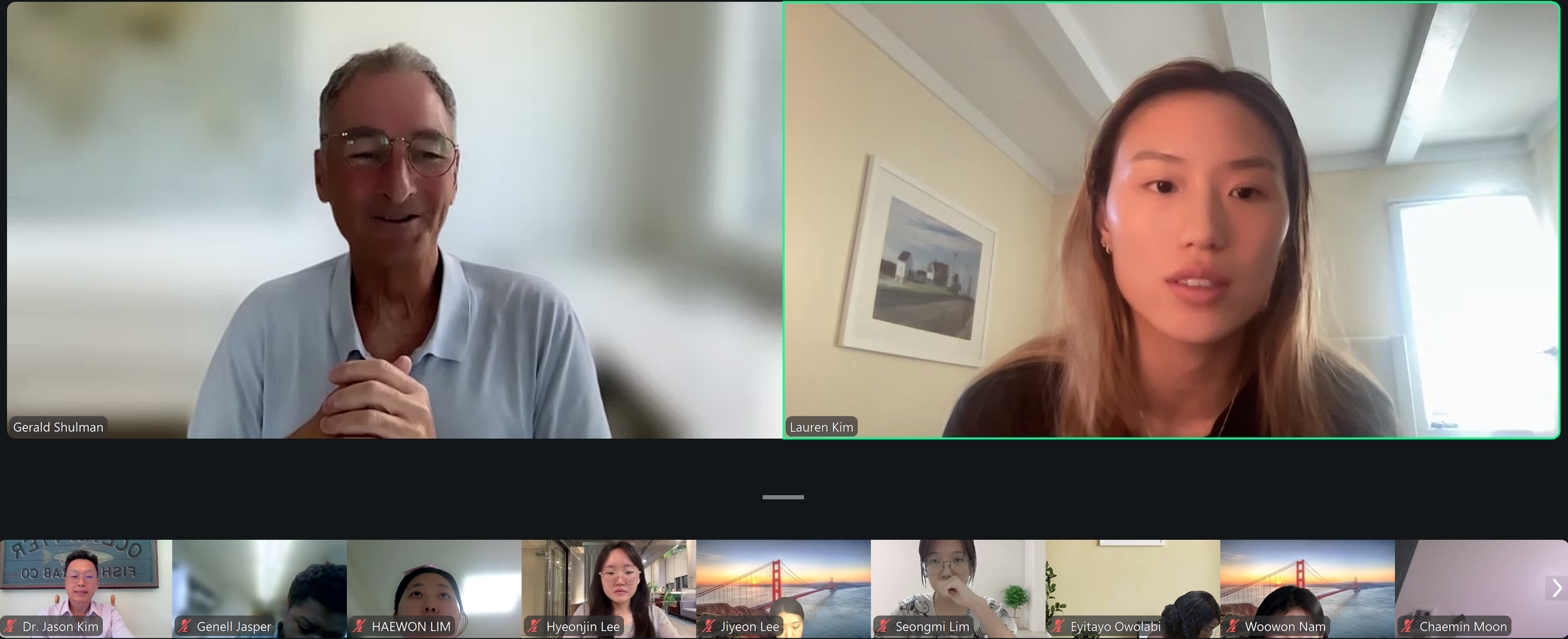
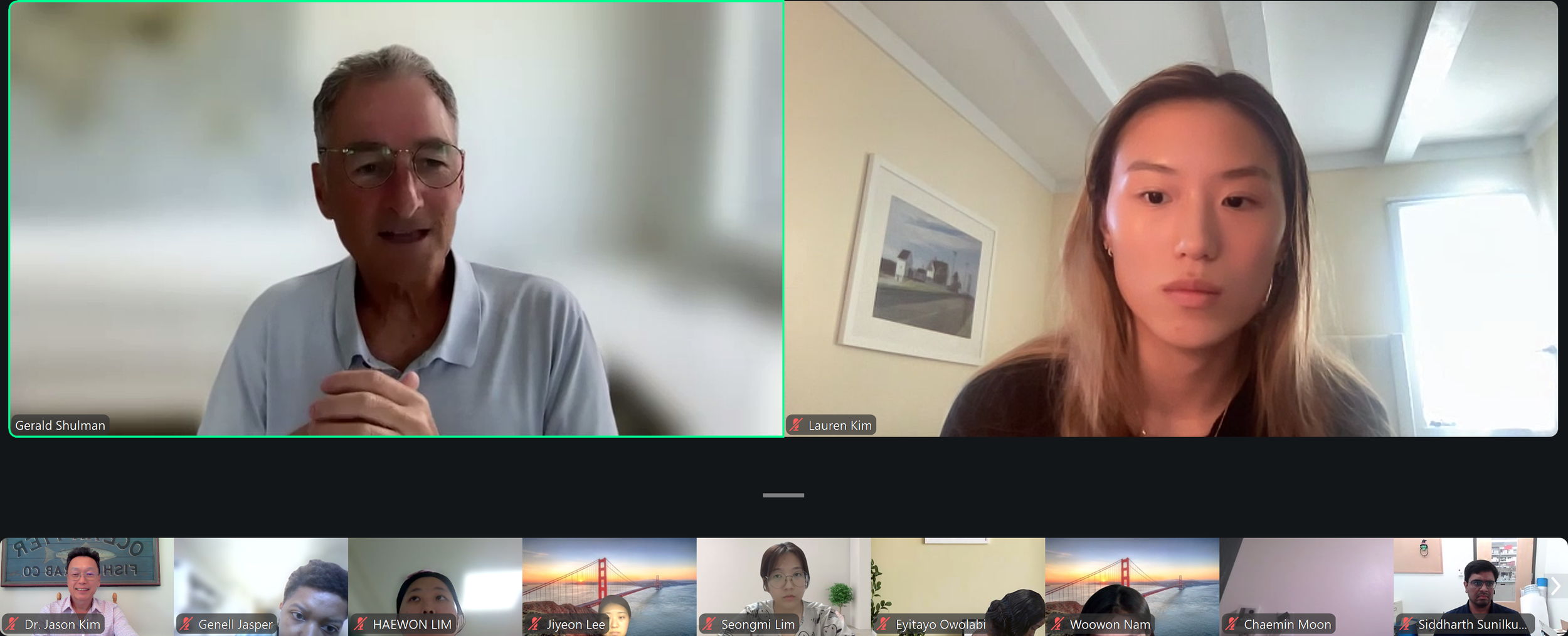
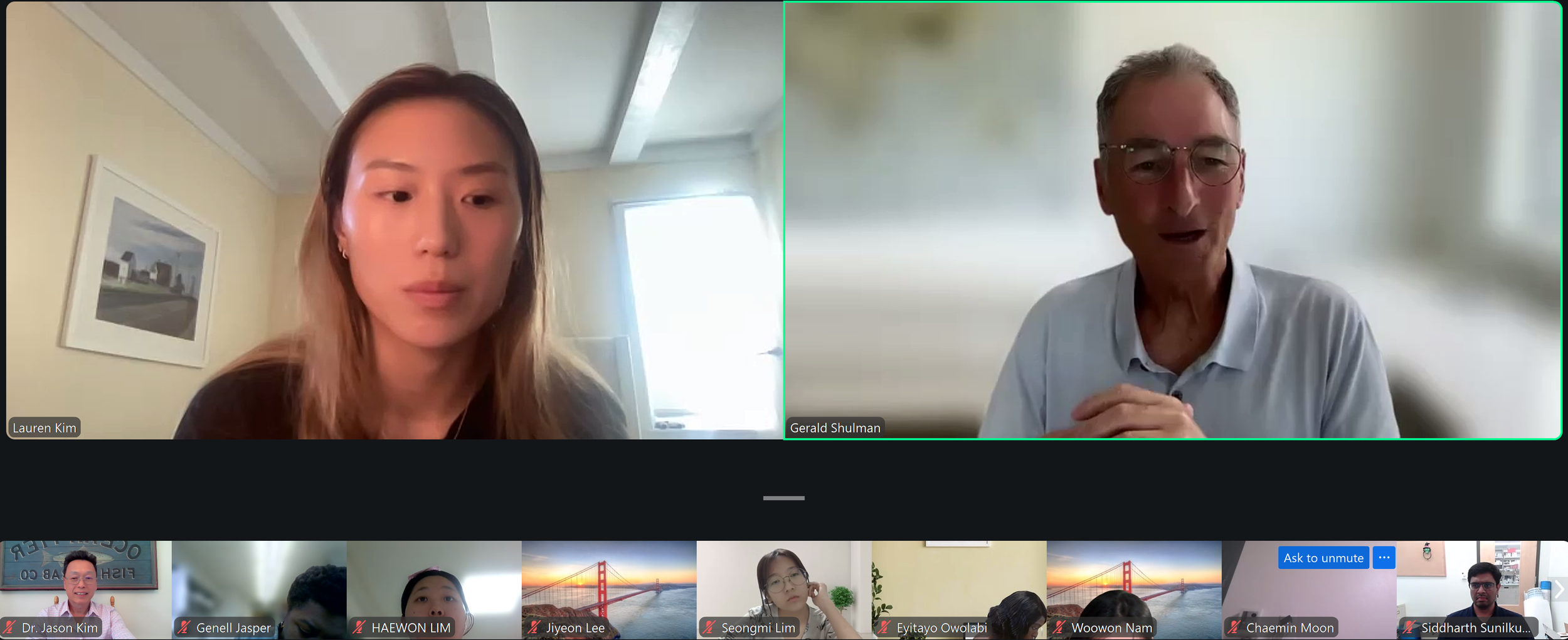
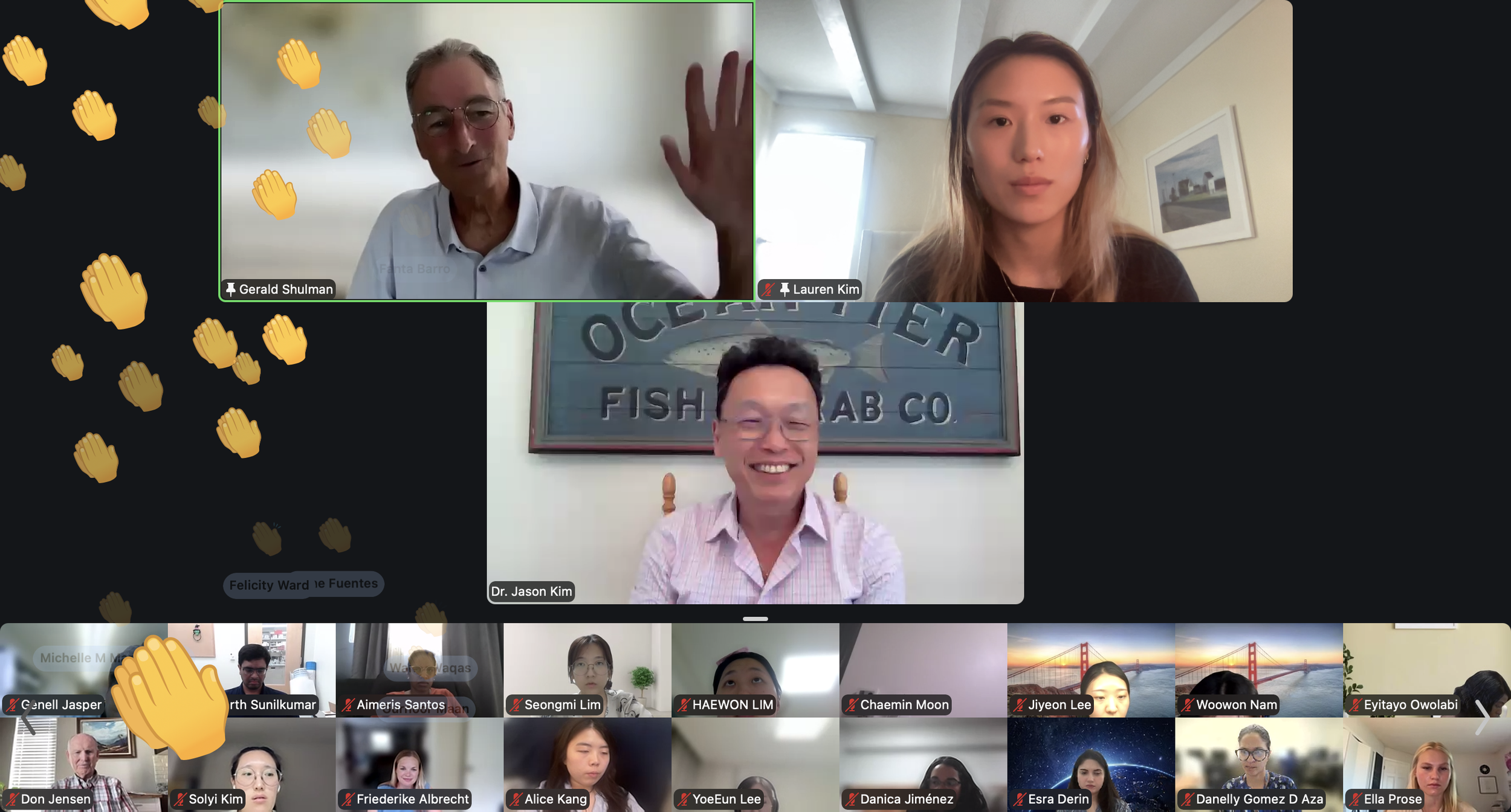
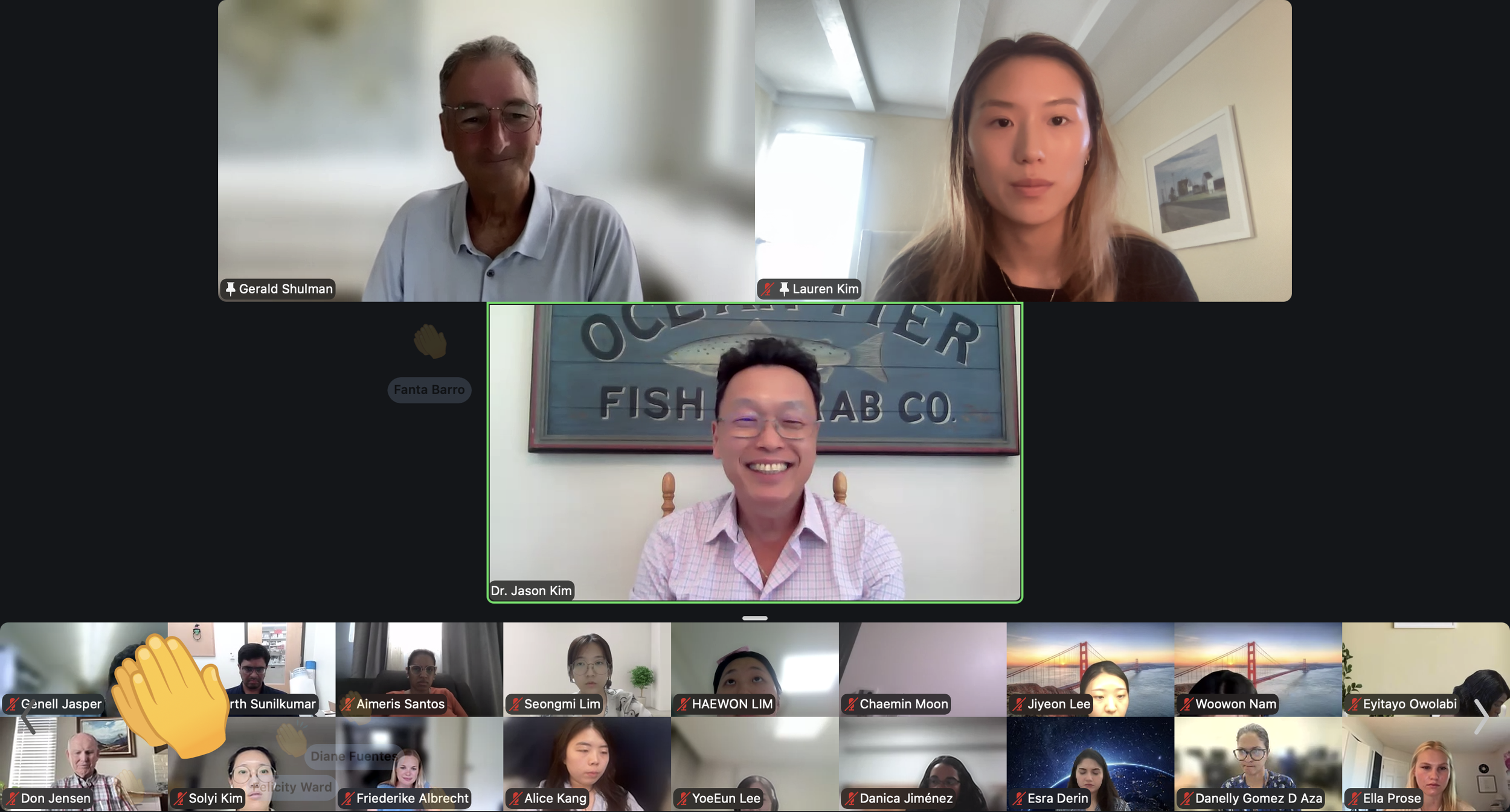
August 5, 2026
Open Mic Forum by Dr. Jason Kim (University of Massachusetts Chan Medical School)
Today’s DVSC26 program ends with an Open Mic Forum where our participants are invited to ask questions and engage in a lively discussion with video on and audio unmuted.
-
![Session 2: Opening Session & Introduction to Diabetes by Lauren, Allison, and Dr. Jason Kim (University of Massachusetts Medical School)]()
August 5, 2026 (Open Mic Forum - Part 1)
Session 3: “Pharmacological Blockade of the Growth Hormone Receptor in Acromegaly & Cancer” by Dr. John Kopchick (Ohio University Heritage College of Osteopathic Medicine)
Session 4: “When Fat Goes to the Wrong Places: Solving the Mystery of Insulin Resistance” by Dr. Gerald Shulman (Yale School of Medicine)The DVC team invites our audience to ask questions and engage in a lively discussion with video on and audio unmuted.
-
![]()
August 5, 2026 (Open Mic Forum - Part 2)
Session 3: “Pharmacological Blockade of the Growth Hormone Receptor in Acromegaly & Cancer” by Dr. John Kopchick (Ohio University Heritage College of Osteopathic Medicine)
Session 4: “When Fat Goes to the Wrong Places: Solving the Mystery of Insulin Resistance” by Dr. Gerald Shulman (Yale School of Medicine)During Open Mic Forum, Dr. Kim answers questions from the audience and engages in an interactive discussion with video on and audio unmuted.
-
![]()
August 5, 2026 (Open Mic Forum - Part 3)
Session 3: “Pharmacological Blockade of the Growth Hormone Receptor in Acromegaly & Cancer” by Dr. John Kopchick (Ohio University Heritage College of Osteopathic Medicine)
Session 4: “When Fat Goes to the Wrong Places: Solving the Mystery of Insulin Resistance” by Dr. Gerald Shulman (Yale School of Medicine)During Open Mic Forum, Dr. Kim answers questions from the audience and engages in an interactive discussion with video on and audio unmuted.
-
![]()
August 5, 2026 (Open Mic Forum - Part 4)
Session 3: “Pharmacological Blockade of the Growth Hormone Receptor in Acromegaly & Cancer” by Dr. John Kopchick (Ohio University Heritage College of Osteopathic Medicine)
Session 4: “When Fat Goes to the Wrong Places: Solving the Mystery of Insulin Resistance” by Dr. Gerald Shulman (Yale School of Medicine)Today’s DVSC26 program ends with the DVC team thanking the audience for their passion towards diabetes research and sharing the mission to find a cure for diabetes.
-
![]()
August 5, 2026 (Open Mic Forum - Part 5)
Session 3: “Pharmacological Blockade of the Growth Hormone Receptor in Acromegaly & Cancer” by Dr. John Kopchick (Ohio University Heritage College of Osteopathic Medicine)
Session 4: “When Fat Goes to the Wrong Places: Solving the Mystery of Insulin Resistance” by Dr. Gerald Shulman (Yale School of Medicine)Today’s DVSC26 program ends with the DVC team thanking the audience for their passion towards diabetes research and sharing the mission to find a cure for diabetes.
-
![]()
August 5, 2026 (Open Mic Forum - Part 6)
Session 3: “Pharmacological Blockade of the Growth Hormone Receptor in Acromegaly & Cancer” by Dr. John Kopchick (Ohio University Heritage College of Osteopathic Medicine)
Session 4: “When Fat Goes to the Wrong Places: Solving the Mystery of Insulin Resistance” by Dr. Gerald Shulman (Yale School of Medicine)Today’s DVSC26 program ends with the DVC team thanking the audience for their passion towards diabetes research and sharing the mission to find a cure for diabetes.
-
![]()
August 5, 2026 (Open Mic Forum - Part 7)
Session 3: “Pharmacological Blockade of the Growth Hormone Receptor in Acromegaly & Cancer” by Dr. John Kopchick (Ohio University Heritage College of Osteopathic Medicine)
Session 4: “When Fat Goes to the Wrong Places: Solving the Mystery of Insulin Resistance” by Dr. Gerald Shulman (Yale School of Medicine)Today’s DVSC26 program ends with the DVC team thanking the audience for their passion towards diabetes research and sharing the mission to find a cure for diabetes.
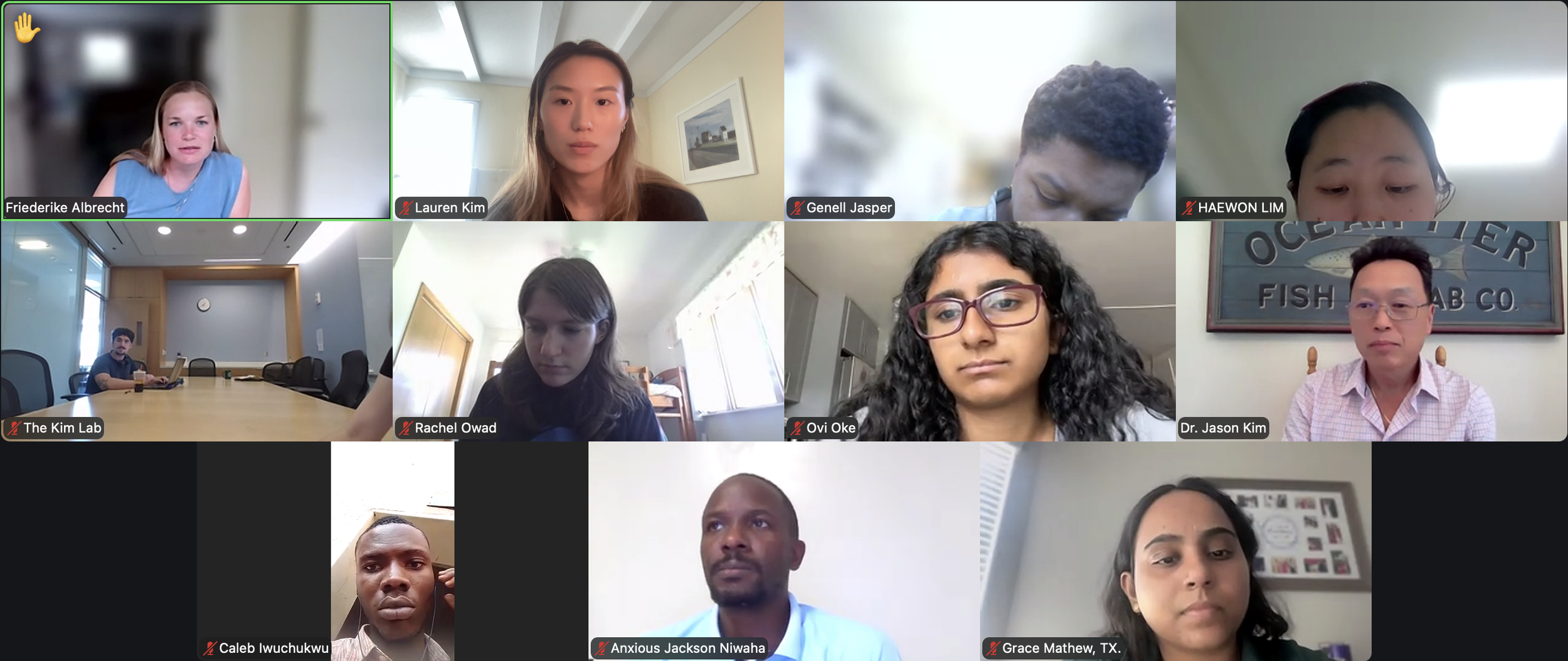
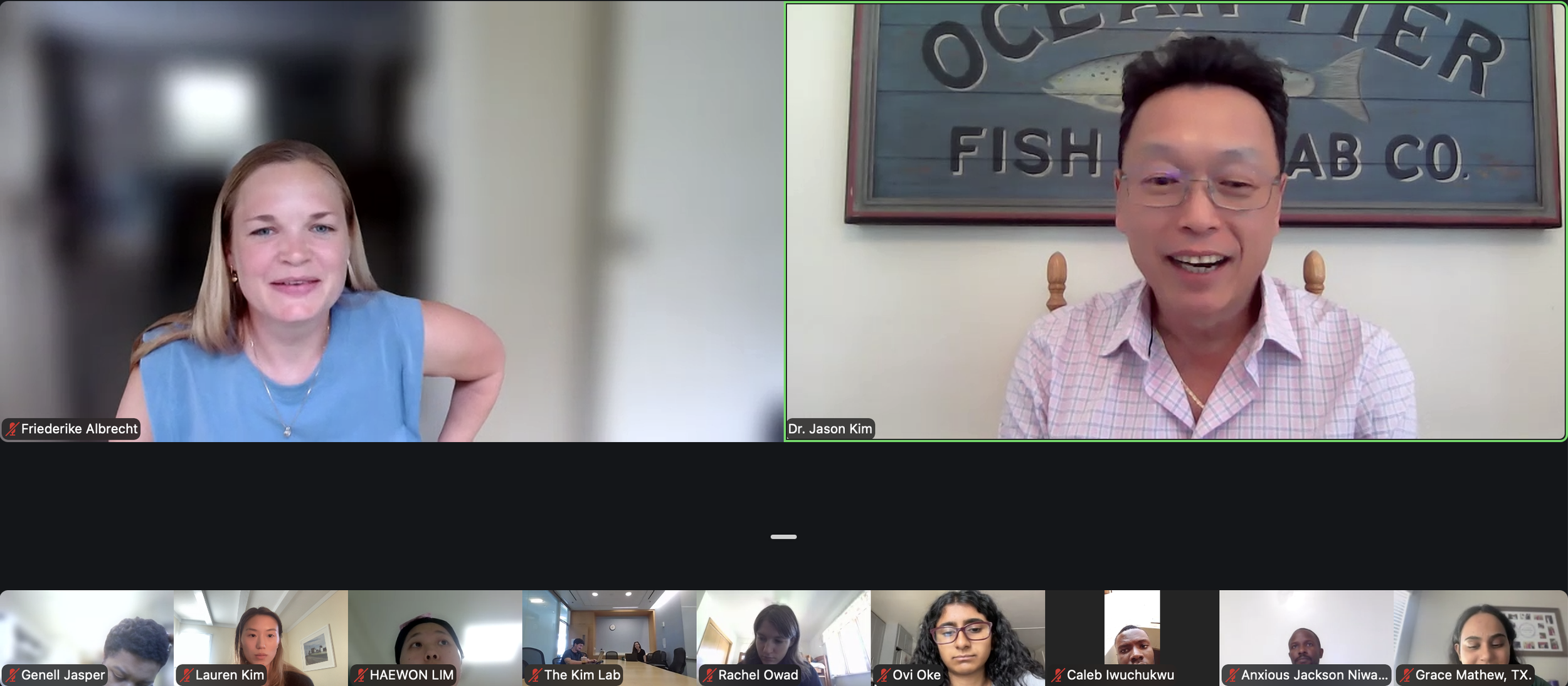
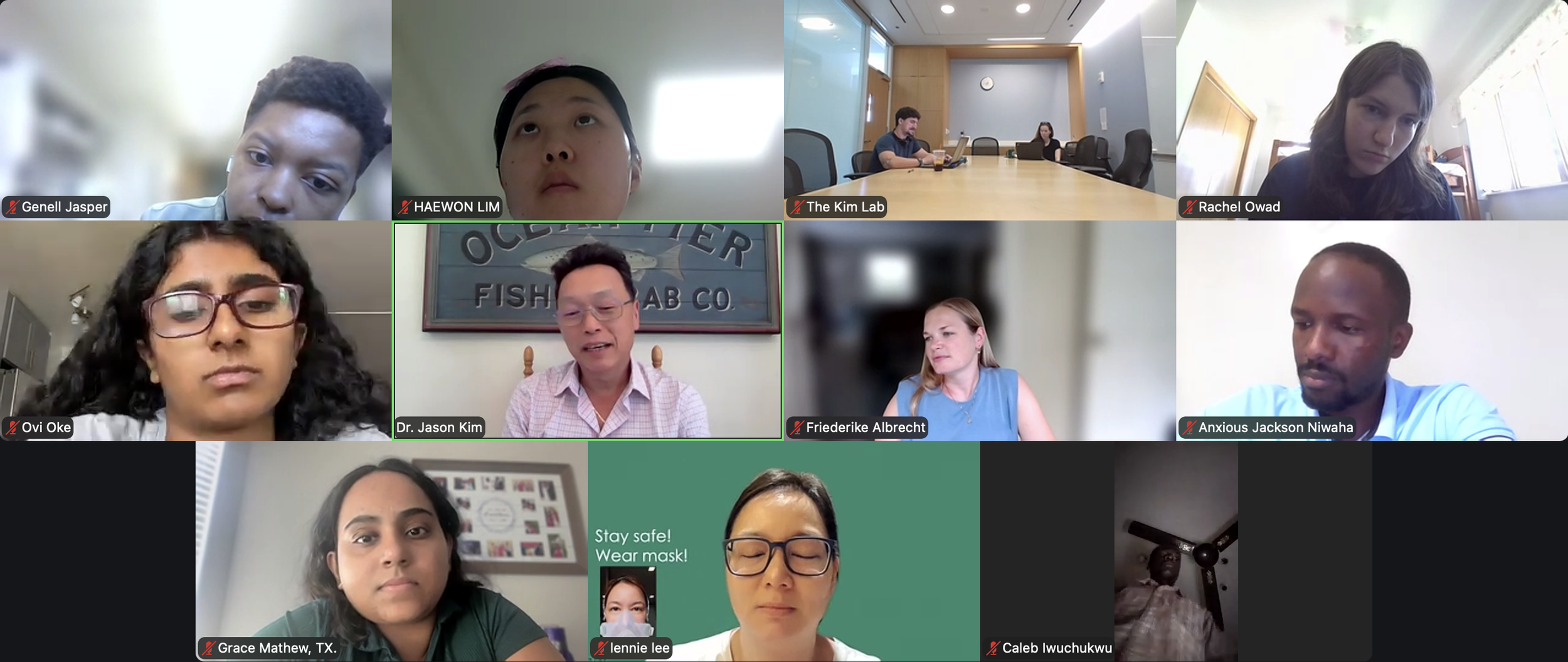
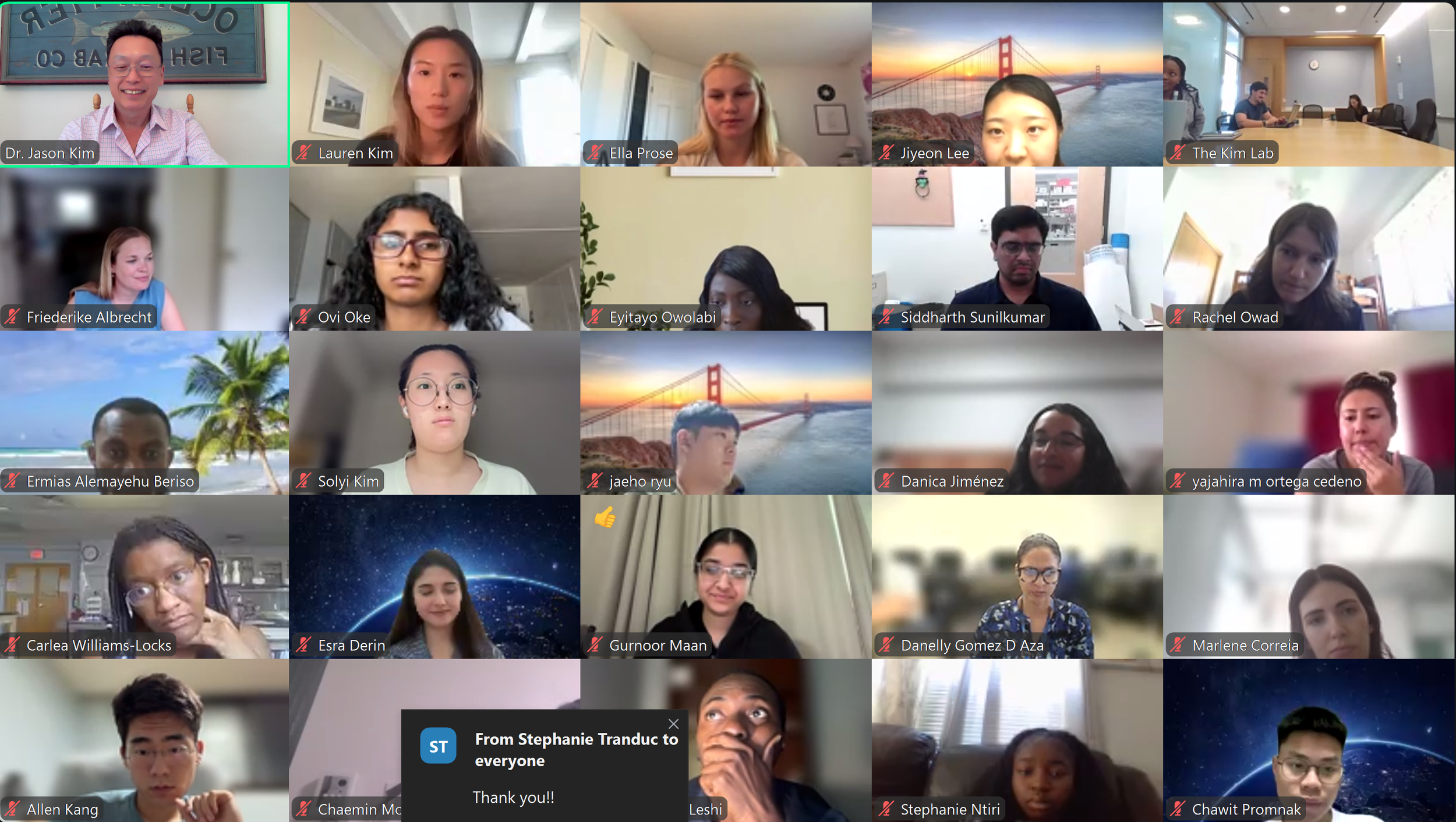
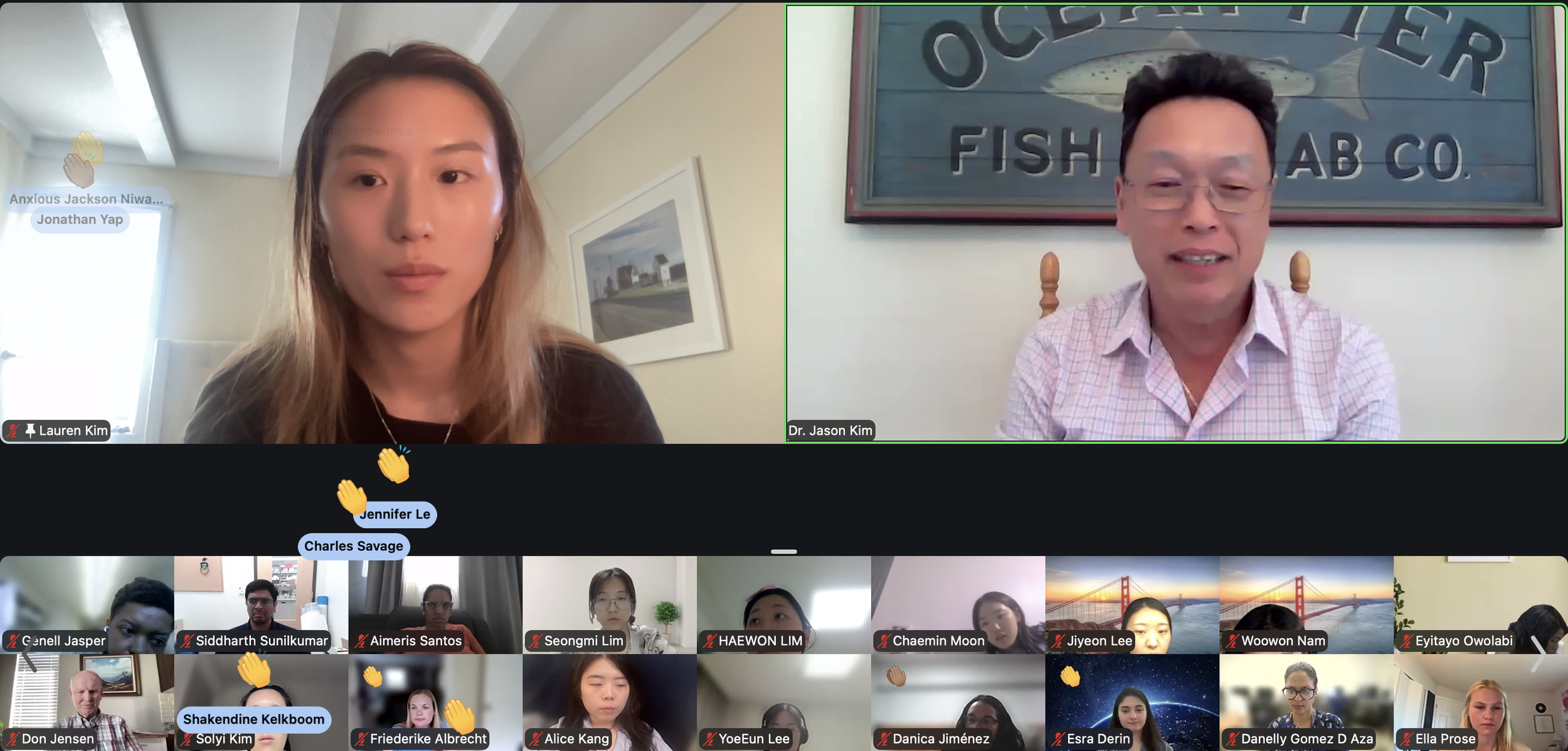
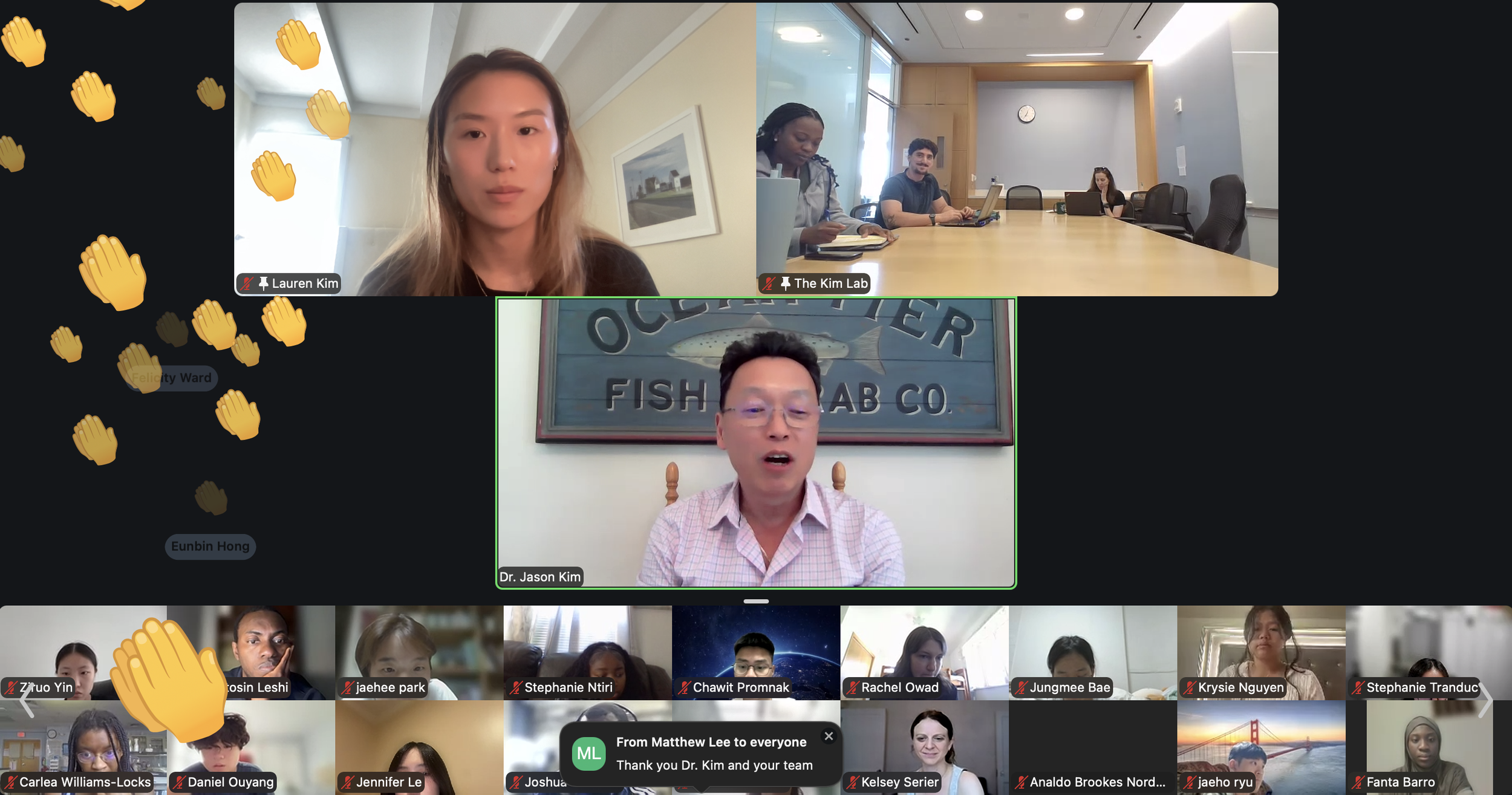
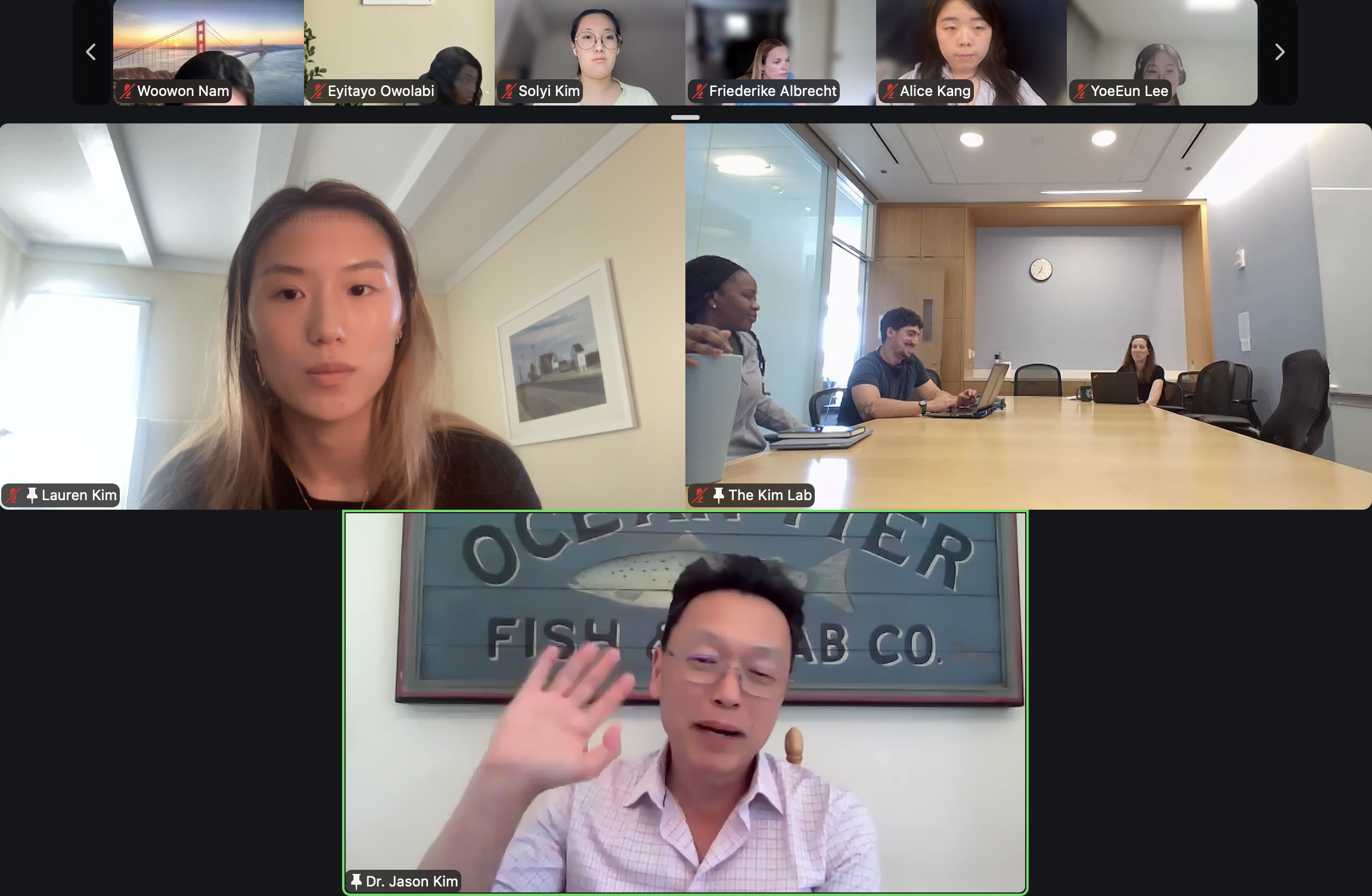
August 7, 2026
Pre-Session Q&A by Dr. Jason Kim (University of Massachusetts Chan Medical School)
The DVSC26 continued today with a Pre-Session Q&A by Dr. Jason Kim of the University of Massachusetts Chan Medical School, who answered many outstanding questions from Sessions 3 & 4.
-
![Session 2: Opening Session & Introduction to Diabetes by Lauren, Allison, and Dr. Jason Kim (University of Massachusetts Medical School)]()
August 7, 2026 (Pre-Session Q&A - Part 1)
Dr. Jason Kim from the University of Massachusetts Chan Medical School answers many outstanding questions from Sessions 3 & 4.
-
![]()
August 7, 2026 (Pre-Session Q&A - Part 2)
Dr. Jason Kim from the University of Massachusetts Chan Medical School answers many outstanding questions from Sessions 3 & 4.
-
![]()
August 7, 2026 (Pre-Session Q&A - Part 3)
Dr. Jason Kim from the University of Massachusetts Chan Medical School answers many outstanding questions from Sessions 3 & 4.
-
![]()
August 7, 2026 (Pre-Session Q&A - Part 3)
Dr. Jason Kim from the University of Massachusetts Chan Medical School answers many outstanding questions from Sessions 3 & 4.
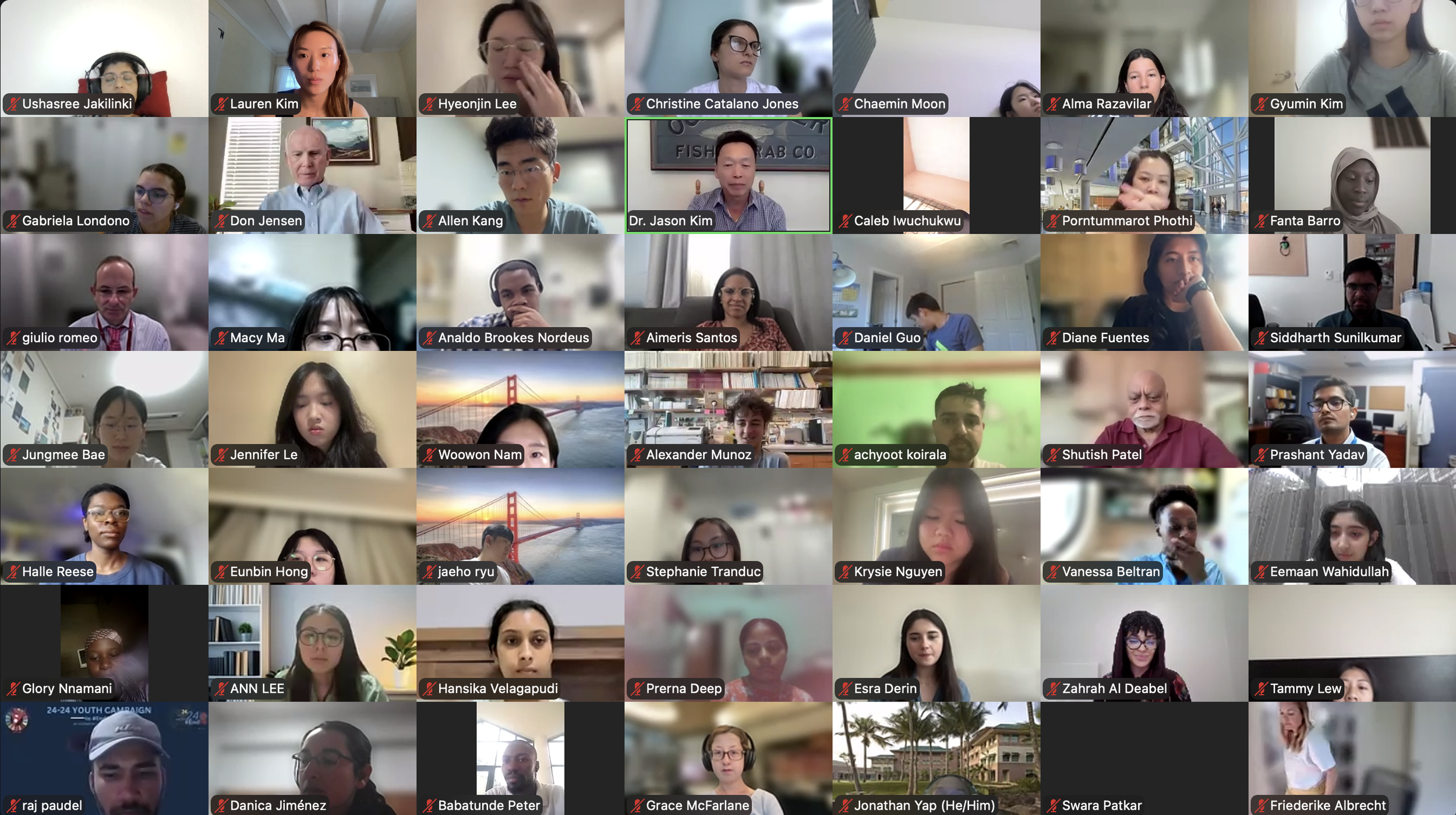
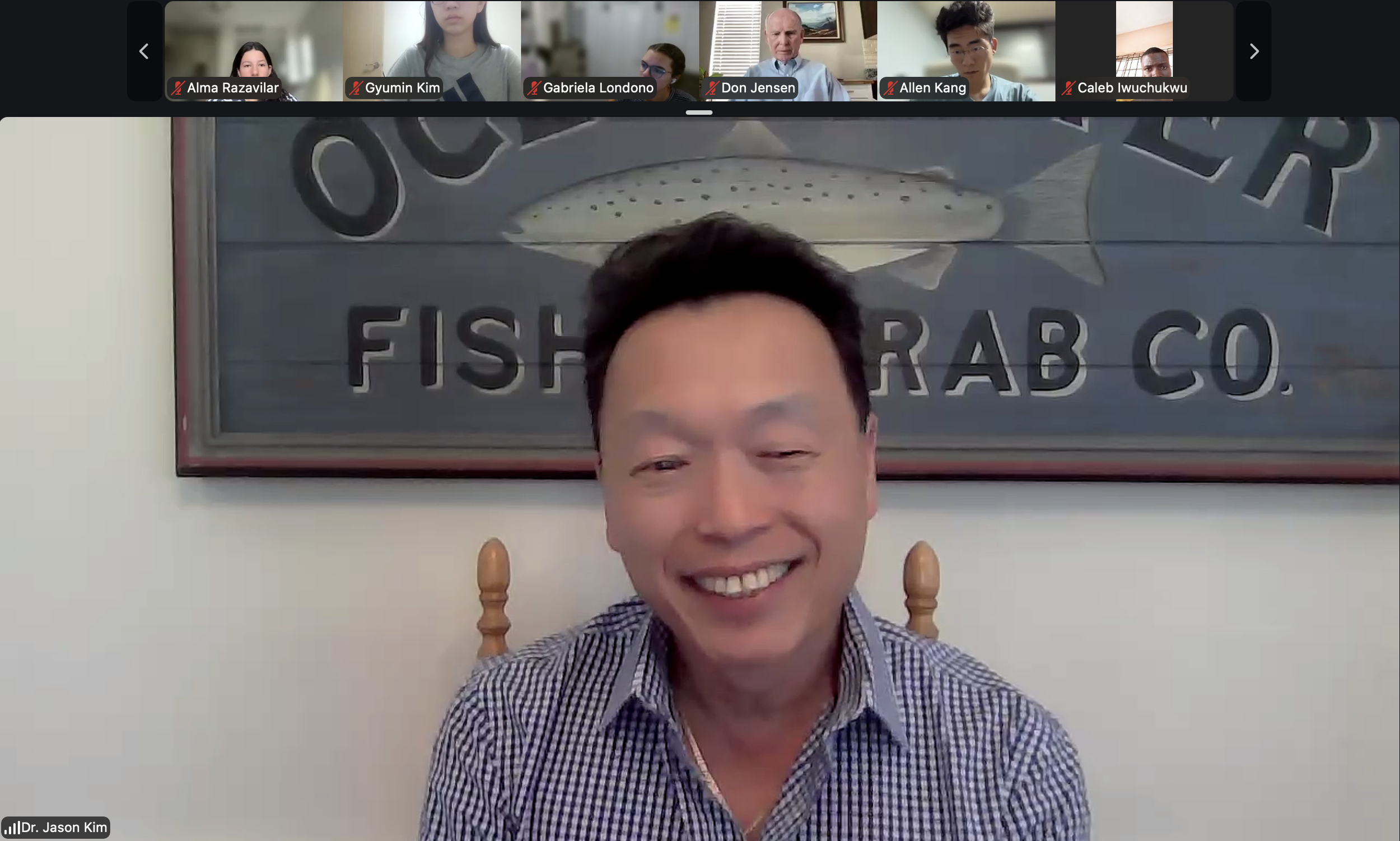

August 7, 2026
Session 5. Balancing Risks and Benefits of GLP-1-based Therapies in Type 1 Diabetes by Dr. Giulio Romeo (Harvard Medical School)
The Main Session of today’s DVSC26 featured 2 amazing experts, Dr. Giulio Romeo from Harvard Medical School and Dr. Mandeep Bajaj from the Baylor College of Medicine. Dr. Romeo began by describing the history of major discoveries in diabetes and the basic biology of GLP-1 with a comprehensive overview of direct and indirect effects of GLP-1 in various organs. Dr. Romeo highlighted GLP-1 action on feeding regulation and how GLP-1-based therapy is targeting weight management in humans. Dr. Romeo then discussed the increasing prevalence of overweight and obesity in adolescents and young adults with type 1 diabetes. Dr. Romeo shared clinical trial data from ADJUNCT ONE and TWO showing HbA1c and weight-lowering effects of once-daily liraglutide in people with type 1 diabetes and obesity. But there were major side effects with symptomatic hypoglycemia and hyperglycemia with ketosis that should be considered in future therapies. Thus, there are significant benefits of GLP-1-based therapy in people with type 1 diabetes, including reductions in daily insulin dose, HbA1c, and body weight, and there are important risks of GLP-1-based therapy, including hypoglycemia and ketoacidosis. These benefits and risks must be carefully balanced to select people with type 1 diabetes with the most favorable benefit-risk ratio for future GLP-1-based therapy. Dr. Romeo ended by discussing inequities in access to GLP-1-based therapy due to its costs and the need for referrals.
-
![Session 2: Opening Session & Introduction to Diabetes by Lauren, Allison, and Dr. Jason Kim (University of Massachusetts Medical School)]()
August 7, 2026 (Session 5 - Part 1)
Session 5: “Balancing Risks and Benefits of GLP-1-based Therapies in Type 1 Diabetes” by Dr. Giulio Romeo (Harvard Medical School)
Session 6: “Metabolic Dysfunction-Associated Steatotic Liver Disease in Type 2 Diabetes - What is New” by Dr. Mandeep Bajaj (Baylor College of Medicine)The Main Session of today’s DVSC26 featured 2 amazing experts, Dr. Giulio Romeo from Harvard Medical School and Dr. Mandeep Bajaj from the Baylor College of Medicine.
Dr. Kim introduces Dr. Giulio Romeo to our DVSC26 participants from all around the world.
-
![]()
August 7, 2026 (Session 5 - Part 2)
Session 5: “Balancing Risks and Benefits of GLP-1-based Therapies in Type 1 Diabetes” by Dr. Giulio Romeo (Harvard Medical School)
This session outlines mechanisms of action of glucagon-like peptide (GLP-1)-based therapy. Also, this session reviews current evidence for the use of GLP-1-based therapy in people with type 1 diabetes, focusing on risks and benefits specific to this population. Finally, advocacy efforts to ensure equitable access to GLP-1 receptor agonists are discussed.
-
![]()
August 7, 2026 (Session 5 - Part 3)
Session 5: “Balancing Risks and Benefits of GLP-1-based Therapies in Type 1 Diabetes” by Dr. Giulio Romeo (Harvard Medical School)
Dr. Romeo welcomes our program participants from around the world.
-
![]()
August 7, 2026 (Session 5 - Part 4)
Session 5: “Balancing Risks and Benefits of GLP-1-based Therapies in Type 1 Diabetes” by Dr. Giulio Romeo (Assistant Professor of Medicine, Associate Chief of Adult Diabetes Section, Assistant Investigator & Staff Physician, Joslin Diabetes Center, Harvard Medical School)
-
![]()
August 7, 2026 (Session 5 - Part 5)
Session 5: “Balancing Risks and Benefits of GLP-1-based Therapies in Type 1 Diabetes” by Dr. Giulio Romeo (Harvard Medical School)
This session outlines mechanisms of action of glucagon-like peptide (GLP-1)-based therapy. Also, this session reviews current evidence for the use of GLP-1-based therapy in people with type 1 diabetes, focusing on risks and benefits specific to this population. Finally, advocacy efforts to ensure equitable access to GLP-1 receptor agonists are discussed.
-
![]()
August 7, 2026 (Session 5 - Part 6)
Session 5: “Balancing Risks and Benefits of GLP-1-based Therapies in Type 1 Diabetes” by Dr. Giulio Romeo (Harvard Medical School)
This session outlines mechanisms of action of glucagon-like peptide (GLP-1)-based therapy. Also, this session reviews current evidence for the use of GLP-1-based therapy in people with type 1 diabetes, focusing on risks and benefits specific to this population. Finally, advocacy efforts to ensure equitable access to GLP-1 receptor agonists are discussed.
-
![]()
August 7, 2026 (Session 5 - Part 7)
Session 5: “Balancing Risks and Benefits of GLP-1-based Therapies in Type 1 Diabetes” by Dr. Giulio Romeo (Harvard Medical School)
This session outlines mechanisms of action of glucagon-like peptide (GLP-1)-based therapy. Also, this session reviews current evidence for the use of GLP-1-based therapy in people with type 1 diabetes, focusing on risks and benefits specific to this population. Finally, advocacy efforts to ensure equitable access to GLP-1 receptor agonists are discussed.
-
![]()
August 7, 2026 (Session 5 - Part 8)
Session 5: “Balancing Risks and Benefits of GLP-1-based Therapies in Type 1 Diabetes” by Dr. Giulio Romeo (Harvard Medical School)
Dr. Romeo began by describing the history of major discoveries in diabetes and the basic biology of GLP-1 with a comprehensive overview of direct and indirect effects of GLP-1 in various organs.
-
![]()
August 7, 2026 (Session 5 - Part 9)
Session 5: “Balancing Risks and Benefits of GLP-1-based Therapies in Type 1 Diabetes” by Dr. Giulio Romeo (Harvard Medical School)
Dr. Romeo began by describing the history of major discoveries in diabetes and the basic biology of GLP-1 with a comprehensive overview of direct and indirect effects of GLP-1 in various organs.
-
![]()
August 7, 2026 (Session 5 - Part 10)
Session 5: “Balancing Risks and Benefits of GLP-1-based Therapies in Type 1 Diabetes” by Dr. Giulio Romeo (Harvard Medical School)
Dr. Romeo began by describing the history of major discoveries in diabetes and the basic biology of GLP-1 with a comprehensive overview of direct and indirect effects of GLP-1 in various organs.
-
![]()
August 7, 2026 (Session 5 - Part 11)
Session 5: “Balancing Risks and Benefits of GLP-1-based Therapies in Type 1 Diabetes” by Dr. Giulio Romeo (Harvard Medical School)
Dr. Romeo began by describing the history of major discoveries in diabetes and the basic biology of GLP-1 with a comprehensive overview of direct and indirect effects of GLP-1 in various organs.
-
![]()
August 7, 2026 (Session 5 - Part 12)
Session 5: “Balancing Risks and Benefits of GLP-1-based Therapies in Type 1 Diabetes” by Dr. Giulio Romeo (Harvard Medical School)
Dr. Romeo began by describing the history of major discoveries in diabetes and the basic biology of GLP-1 with a comprehensive overview of direct and indirect effects of GLP-1 in various organs.
-
![]()
August 7, 2026 (Session 5 - Part 13)
Session 5: “Balancing Risks and Benefits of GLP-1-based Therapies in Type 1 Diabetes” by Dr. Giulio Romeo (Harvard Medical School)
Dr. Romeo began by describing the history of major discoveries in diabetes and the basic biology of GLP-1 with a comprehensive overview of direct and indirect effects of GLP-1 in various organs.
-
![]()
August 7, 2026 (Session 5 - Part 14)
Session 5: “Balancing Risks and Benefits of GLP-1-based Therapies in Type 1 Diabetes” by Dr. Giulio Romeo (Harvard Medical School)
Dr. Romeo began by describing the history of major discoveries in diabetes and the basic biology of GLP-1 with a comprehensive overview of direct and indirect effects of GLP-1 in various organs.
-
![]()
August 7, 2026 (Session 5 - Part 15)
Session 5: “Balancing Risks and Benefits of GLP-1-based Therapies in Type 1 Diabetes” by Dr. Giulio Romeo (Harvard Medical School)
Dr. Romeo began by describing the history of major discoveries in diabetes and the basic biology of GLP-1 with a comprehensive overview of direct and indirect effects of GLP-1 in various organs.
-
![]()
August 7, 2026 (Session 5 - Part 16)
Session 5: “Balancing Risks and Benefits of GLP-1-based Therapies in Type 1 Diabetes” by Dr. Giulio Romeo (Harvard Medical School)
Dr. Romeo began by describing the history of major discoveries in diabetes and the basic biology of GLP-1 with a comprehensive overview of direct and indirect effects of GLP-1 in various organs.
-
![]()
August 7, 2026 (Session 5 - Part 17)
Session 5: “Balancing Risks and Benefits of GLP-1-based Therapies in Type 1 Diabetes” by Dr. Giulio Romeo (Harvard Medical School)
Dr. Romeo began by describing the history of major discoveries in diabetes and the basic biology of GLP-1 with a comprehensive overview of direct and indirect effects of GLP-1 in various organs.
-
![]()
August 7, 2026 (Session 5 - Part 18)
Session 5: “Balancing Risks and Benefits of GLP-1-based Therapies in Type 1 Diabetes” by Dr. Giulio Romeo (Harvard Medical School)
Dr. Romeo began by describing the history of major discoveries in diabetes and the basic biology of GLP-1 with a comprehensive overview of direct and indirect effects of GLP-1 in various organs.
-
![]()
August 7, 2026 (Session 5 - Part 19)
Session 5: “Balancing Risks and Benefits of GLP-1-based Therapies in Type 1 Diabetes” by Dr. Giulio Romeo (Harvard Medical School)
Dr. Romeo began by describing the history of major discoveries in diabetes and the basic biology of GLP-1 with a comprehensive overview of direct and indirect effects of GLP-1 in various organs.
-
![]()
August 7, 2026 (Session 5 - Part 20)
Session 5: “Balancing Risks and Benefits of GLP-1-based Therapies in Type 1 Diabetes” by Dr. Giulio Romeo (Harvard Medical School)
Dr. Romeo began by describing the history of major discoveries in diabetes and the basic biology of GLP-1 with a comprehensive overview of direct and indirect effects of GLP-1 in various organs.
-
![]()
August 7, 2026 (Session 5 - Part 21)
Session 5: “Balancing Risks and Benefits of GLP-1-based Therapies in Type 1 Diabetes” by Dr. Giulio Romeo (Harvard Medical School)
Dr. Romeo began by describing the history of major discoveries in diabetes and the basic biology of GLP-1 with a comprehensive overview of direct and indirect effects of GLP-1 in various organs.
-
![]()
August 7, 2026 (Session 5 - Part 22)
Session 5: “Balancing Risks and Benefits of GLP-1-based Therapies in Type 1 Diabetes” by Dr. Giulio Romeo (Harvard Medical School)
Dr. Romeo began by describing the history of major discoveries in diabetes and the basic biology of GLP-1 with a comprehensive overview of direct and indirect effects of GLP-1 in various organs.
-
![]()
August 7, 2026 (Session 5 - Part 23)
Session 5: “Balancing Risks and Benefits of GLP-1-based Therapies in Type 1 Diabetes” by Dr. Giulio Romeo (Harvard Medical School)
Dr. Romeo began by describing the history of major discoveries in diabetes and the basic biology of GLP-1 with a comprehensive overview of direct and indirect effects of GLP-1 in various organs.
-
![]()
August 7, 2026 (Session 5 - Part 24)
Session 5: “Balancing Risks and Benefits of GLP-1-based Therapies in Type 1 Diabetes” by Dr. Giulio Romeo (Harvard Medical School)
Dr. Romeo began by describing the history of major discoveries in diabetes and the basic biology of GLP-1 with a comprehensive overview of direct and indirect effects of GLP-1 in various organs.
-
![]()
August 7, 2026 (Session 5 - Part 25)
Session 5: “Balancing Risks and Benefits of GLP-1-based Therapies in Type 1 Diabetes” by Dr. Giulio Romeo (Harvard Medical School)
Dr. Romeo began by describing the history of major discoveries in diabetes and the basic biology of GLP-1 with a comprehensive overview of direct and indirect effects of GLP-1 in various organs.
-
![]()
August 7, 2026 (Session 5 - Part 26)
Session 5: “Balancing Risks and Benefits of GLP-1-based Therapies in Type 1 Diabetes” by Dr. Giulio Romeo (Harvard Medical School)
Dr. Romeo began by describing the history of major discoveries in diabetes and the basic biology of GLP-1 with a comprehensive overview of direct and indirect effects of GLP-1 in various organs.
-
![]()
August 7, 2026 (Session 5 - Part 27)
Session 5: “Balancing Risks and Benefits of GLP-1-based Therapies in Type 1 Diabetes” by Dr. Giulio Romeo (Harvard Medical School)
Dr. Romeo began by describing the history of major discoveries in diabetes and the basic biology of GLP-1 with a comprehensive overview of direct and indirect effects of GLP-1 in various organs.
-
![]()
August 7, 2026 (Session 5 - Part 28)
Session 5: “Balancing Risks and Benefits of GLP-1-based Therapies in Type 1 Diabetes” by Dr. Giulio Romeo (Harvard Medical School)
Dr. Romeo began by describing the history of major discoveries in diabetes and the basic biology of GLP-1 with a comprehensive overview of direct and indirect effects of GLP-1 in various organs.
-
![]()
August 7, 2026 (Session 5 - Part 29)
Session 5: “Balancing Risks and Benefits of GLP-1-based Therapies in Type 1 Diabetes” by Dr. Giulio Romeo (Harvard Medical School)
Dr. Romeo highlighted GLP-1 action on feeding regulation and how GLP-1-based therapy is targeting weight management in humans.
-
![]()
August 7, 2026 (Session 5 - Part 30)
Session 5: “Balancing Risks and Benefits of GLP-1-based Therapies in Type 1 Diabetes” by Dr. Giulio Romeo (Harvard Medical School)
Dr. Romeo highlighted GLP-1 action on feeding regulation and how GLP-1-based therapy is targeting weight management in humans.
-
![]()
August 7, 2026 (Session 5 - Part 31)
Session 5: “Balancing Risks and Benefits of GLP-1-based Therapies in Type 1 Diabetes” by Dr. Giulio Romeo (Harvard Medical School)
Dr. Romeo highlighted GLP-1 action on feeding regulation and how GLP-1-based therapy is targeting weight management in humans.
-
![]()
August 7, 2026 (Session 5 - Part 32)
Session 5: “Balancing Risks and Benefits of GLP-1-based Therapies in Type 1 Diabetes” by Dr. Giulio Romeo (Harvard Medical School)
Dr. Romeo highlighted GLP-1 action on feeding regulation and how GLP-1-based therapy is targeting weight management in humans.
-
![]()
August 7, 2026 (Session 5 - Part 33)
Session 5: “Balancing Risks and Benefits of GLP-1-based Therapies in Type 1 Diabetes” by Dr. Giulio Romeo (Harvard Medical School)
Dr. Romeo highlighted GLP-1 action on feeding regulation and how GLP-1-based therapy is targeting weight management in humans.
-
![]()
August 7, 2026 (Session 5 - Part 34)
Session 5: “Balancing Risks and Benefits of GLP-1-based Therapies in Type 1 Diabetes” by Dr. Giulio Romeo (Harvard Medical School)
Dr. Romeo highlighted GLP-1 action on feeding regulation and how GLP-1-based therapy is targeting weight management in humans.
-
![]()
August 7, 2026 (Session 5 - Part 35)
Session 5: “Balancing Risks and Benefits of GLP-1-based Therapies in Type 1 Diabetes” by Dr. Giulio Romeo (Harvard Medical School)
Dr. Romeo discussed the increasing prevalence of overweight and obesity in adolescents and young adults with type 1 diabetes.
-
![]()
August 7, 2026 (Session 5 - Part 36)
Session 5: “Balancing Risks and Benefits of GLP-1-based Therapies in Type 1 Diabetes” by Dr. Giulio Romeo (Harvard Medical School)
Dr. Romeo discussed the increasing prevalence of overweight and obesity in adolescents and young adults with type 1 diabetes.
-
![]()
August 7, 2026 (Session 5 - Part 37)
Session 5: “Balancing Risks and Benefits of GLP-1-based Therapies in Type 1 Diabetes” by Dr. Giulio Romeo (Harvard Medical School)
Dr. Romeo discussed the increasing prevalence of overweight and obesity in adolescents and young adults with type 1 diabetes.
-
![]()
August 7, 2026 (Session 5 - Part 38)
Session 5: “Balancing Risks and Benefits of GLP-1-based Therapies in Type 1 Diabetes” by Dr. Giulio Romeo (Harvard Medical School)
Dr. Romeo shared clinical trial data from ADJUNCT ONE and TWO showing HbA1c and weight-lowering effects of once-daily liraglutide in people with type 1 diabetes and obesity. But there were major side effects with symptomatic hypoglycemia and hyperglycemia with ketosis that should be considered in future therapies. Thus, there are significant benefits of GLP-1-based therapy in people with type 1 diabetes, including reductions in daily insulin dose, HbA1c, and body weights, and there are important risks of GLP-1-based therapy, including hypoglycemia and ketoacidosis. These benefits and risks must be carefully balanced to select people with type 1 diabetes with the most favorable benefit-risk ratio for future GLP-1-based therapy.
-
![]()
August 7, 2026 (Session 5 - Part 39)
Session 5: “Balancing Risks and Benefits of GLP-1-based Therapies in Type 1 Diabetes” by Dr. Giulio Romeo (Harvard Medical School)
Dr. Romeo shared clinical trial data from ADJUNCT ONE and TWO showing HbA1c and weight-lowering effects of once-daily liraglutide in people with type 1 diabetes and obesity. But there were major side effects with symptomatic hypoglycemia and hyperglycemia with ketosis that should be considered in future therapies. Thus, there are significant benefits of GLP-1-based therapy in people with type 1 diabetes, including reductions in daily insulin dose, HbA1c, and body weights, and there are important risks of GLP-1-based therapy, including hypoglycemia and ketoacidosis. These benefits and risks must be carefully balanced to select people with type 1 diabetes with the most favorable benefit-risk ratio for future GLP-1-based therapy.
-
![]()
August 7, 2026 (Session 5 - Part 40)
Session 5: “Balancing Risks and Benefits of GLP-1-based Therapies in Type 1 Diabetes” by Dr. Giulio Romeo (Harvard Medical School)
Dr. Romeo shared clinical trial data from ADJUNCT ONE and TWO showing HbA1c and weight-lowering effects of once-daily liraglutide in people with type 1 diabetes and obesity. But there were major side effects with symptomatic hypoglycemia and hyperglycemia with ketosis that should be considered in future therapies. Thus, there are significant benefits of GLP-1-based therapy in people with type 1 diabetes, including reductions in daily insulin dose, HbA1c, and body weights, and there are important risks of GLP-1-based therapy, including hypoglycemia and ketoacidosis. These benefits and risks must be carefully balanced to select people with type 1 diabetes with the most favorable benefit-risk ratio for future GLP-1-based therapy.
-
![]()
August 7, 2026 (Session 5 - Part 41)
Session 5: “Balancing Risks and Benefits of GLP-1-based Therapies in Type 1 Diabetes” by Dr. Giulio Romeo (Harvard Medical School)
Dr. Romeo shared clinical trial data from ADJUNCT ONE and TWO showing HbA1c and weight-lowering effects of once-daily liraglutide in people with type 1 diabetes and obesity. But there were major side effects with symptomatic hypoglycemia and hyperglycemia with ketosis that should be considered in future therapies. Thus, there are significant benefits of GLP-1-based therapy in people with type 1 diabetes, including reductions in daily insulin dose, HbA1c, and body weights, and there are important risks of GLP-1-based therapy, including hypoglycemia and ketoacidosis. These benefits and risks must be carefully balanced to select people with type 1 diabetes with the most favorable benefit-risk ratio for future GLP-1-based therapy.
-
![]()
August 7, 2026 (Session 5 - Part 42)
Session 5: “Balancing Risks and Benefits of GLP-1-based Therapies in Type 1 Diabetes” by Dr. Giulio Romeo (Harvard Medical School)
Dr. Romeo shared clinical trial data from ADJUNCT ONE and TWO showing HbA1c and weight-lowering effects of once-daily liraglutide in people with type 1 diabetes and obesity. But there were major side effects with symptomatic hypoglycemia and hyperglycemia with ketosis that should be considered in future therapies. Thus, there are significant benefits of GLP-1-based therapy in people with type 1 diabetes, including reductions in daily insulin dose, HbA1c, and body weights, and there are important risks of GLP-1-based therapy, including hypoglycemia and ketoacidosis. These benefits and risks must be carefully balanced to select people with type 1 diabetes with the most favorable benefit-risk ratio for future GLP-1-based therapy.
-
![]()
August 7, 2026 (Session 5 - Part 43)
Session 5: “Balancing Risks and Benefits of GLP-1-based Therapies in Type 1 Diabetes” by Dr. Giulio Romeo (Harvard Medical School)
Dr. Romeo shared clinical trial data from ADJUNCT ONE and TWO showing HbA1c and weight-lowering effects of once-daily liraglutide in people with type 1 diabetes and obesity. But there were major side effects with symptomatic hypoglycemia and hyperglycemia with ketosis that should be considered in future therapies. Thus, there are significant benefits of GLP-1-based therapy in people with type 1 diabetes, including reductions in daily insulin dose, HbA1c, and body weights, and there are important risks of GLP-1-based therapy, including hypoglycemia and ketoacidosis. These benefits and risks must be carefully balanced to select people with type 1 diabetes with the most favorable benefit-risk ratio for future GLP-1-based therapy.
-
![]()
August 7, 2026 (Session 5 - Part 44)
Session 5: “Balancing Risks and Benefits of GLP-1-based Therapies in Type 1 Diabetes” by Dr. Giulio Romeo (Harvard Medical School)
Dr. Romeo ended by discussing inequities in access to GLP-1-based therapy due to its costs and needs for referrals.
-
![]()
August 7, 2026 (Session 5 - Part 45)
Session 5: “Balancing Risks and Benefits of GLP-1-based Therapies in Type 1 Diabetes” by Dr. Giulio Romeo (Harvard Medical School)
Dr. Romeo ended by discussing inequities in access to GLP-1-based therapy due to its costs and needs for referrals.
-
![]()
August 7, 2026 (Session 5 - Part 46)
Session 5: “Balancing Risks and Benefits of GLP-1-based Therapies in Type 1 Diabetes” by Dr. Giulio Romeo (Harvard Medical School)
Dr. Romeo began by describing the history of major discoveries in diabetes and the basic biology of GLP-1 with a comprehensive overview of direct and indirect effects of GLP-1 in various organs. Dr. Romeo highlighted GLP-1 action on feeding regulation and how GLP-1-based therapy is targeting weight management in humans. Dr. Romeo discussed the increasing prevalence of overweight and obesity in adolescents and young adults with type 1 diabetes. Dr. Romeo shared clinical trial data from ADJUNCT ONE and TWO showing HbA1c and weight-lowering effects of once-daily liraglutide in people with type 1 diabetes and obesity. But there were major side effects with symptomatic hypoglycemia and hyperglycemia with ketosis that should be considered in future therapies. Thus, there are significant benefits of GLP-1-based therapy in people with type 1 diabetes, including reductions in daily insulin dose, HbA1c, and body weights, and there are important risks of GLP-1-based therapy, including hypoglycemia and ketoacidosis. These benefits and risks must be carefully balanced to select people with type 1 diabetes with the most favorable benefit-risk ratio for future GLP-1-based therapy. Dr. Romeo ended by discussing inequities in access to GLP-1-based therapy due to its costs and needs for referrals.
-
![]()
August 7, 2026 (Session 5 - Part 47)
Session 5: “Balancing Risks and Benefits of GLP-1-based Therapies in Type 1 Diabetes” by Dr. Giulio Romeo (Harvard Medical School)
Dr. Romeo began by describing the history of major discoveries in diabetes and the basic biology of GLP-1 with a comprehensive overview of direct and indirect effects of GLP-1 in various organs. Dr. Romeo highlighted GLP-1 action on feeding regulation and how GLP-1-based therapy is targeting weight management in humans. Dr. Romeo discussed the increasing prevalence of overweight and obesity in adolescents and young adults with type 1 diabetes. Dr. Romeo shared clinical trial data from ADJUNCT ONE and TWO showing HbA1c and weight-lowering effects of once-daily liraglutide in people with type 1 diabetes and obesity. But there were major side effects with symptomatic hypoglycemia and hyperglycemia with ketosis that should be considered in future therapies. Thus, there are significant benefits of GLP-1-based therapy in people with type 1 diabetes, including reductions in daily insulin dose, HbA1c, and body weights, and there are important risks of GLP-1-based therapy, including hypoglycemia and ketoacidosis. These benefits and risks must be carefully balanced to select people with type 1 diabetes with the most favorable benefit-risk ratio for future GLP-1-based therapy. Dr. Romeo ended by discussing inequities in access to GLP-1-based therapy due to its costs and needs for referrals.
-
![]()
August 7, 2026 (Session 5 - Part 48)
Session 5: “Balancing Risks and Benefits of GLP-1-based Therapies in Type 1 Diabetes” by Dr. Giulio Romeo (Harvard Medical School)
Dr. Romeo began by describing the history of major discoveries in diabetes and the basic biology of GLP-1 with a comprehensive overview of direct and indirect effects of GLP-1 in various organs. Dr. Romeo highlighted GLP-1 action on feeding regulation and how GLP-1-based therapy is targeting weight management in humans. Dr. Romeo discussed the increasing prevalence of overweight and obesity in adolescents and young adults with type 1 diabetes. Dr. Romeo shared clinical trial data from ADJUNCT ONE and TWO showing HbA1c and weight-lowering effects of once-daily liraglutide in people with type 1 diabetes and obesity. But there were major side effects with symptomatic hypoglycemia and hyperglycemia with ketosis that should be considered in future therapies. Thus, there are significant benefits of GLP-1-based therapy in people with type 1 diabetes, including reductions in daily insulin dose, HbA1c, and body weights, and there are important risks of GLP-1-based therapy, including hypoglycemia and ketoacidosis. These benefits and risks must be carefully balanced to select people with type 1 diabetes with the most favorable benefit-risk ratio for future GLP-1-based therapy. Dr. Romeo ended by discussing inequities in access to GLP-1-based therapy due to its costs and needs for referrals.
-
![]()
August 7, 2026 (Session 5 - Part 49)
Session 5: “Balancing Risks and Benefits of GLP-1-based Therapies in Type 1 Diabetes” by Dr. Giulio Romeo (Harvard Medical School)
Dr. Romeo began by describing the history of major discoveries in diabetes and the basic biology of GLP-1 with a comprehensive overview of direct and indirect effects of GLP-1 in various organs. Dr. Romeo highlighted GLP-1 action on feeding regulation and how GLP-1-based therapy is targeting weight management in humans. Dr. Romeo discussed the increasing prevalence of overweight and obesity in adolescents and young adults with type 1 diabetes. Dr. Romeo shared clinical trial data from ADJUNCT ONE and TWO showing HbA1c and weight-lowering effects of once-daily liraglutide in people with type 1 diabetes and obesity. But there were major side effects with symptomatic hypoglycemia and hyperglycemia with ketosis that should be considered in future therapies. Thus, there are significant benefits of GLP-1-based therapy in people with type 1 diabetes, including reductions in daily insulin dose, HbA1c, and body weights, and there are important risks of GLP-1-based therapy, including hypoglycemia and ketoacidosis. These benefits and risks must be carefully balanced to select people with type 1 diabetes with the most favorable benefit-risk ratio for future GLP-1-based therapy. Dr. Romeo ended by discussing inequities in access to GLP-1-based therapy due to its costs and needs for referrals.
-
![]()
August 7, 2026 (Session 5 - Part 50)
Session 5: “Balancing Risks and Benefits of GLP-1-based Therapies in Type 1 Diabetes” by Dr. Giulio Romeo (Harvard Medical School)
Allison moderates the Q&A period with many outstanding questions from our DVSC26 participants.
-
![]()
August 7, 2026 (Session 5 - Part 51)
Session 5: “Balancing Risks and Benefits of GLP-1-based Therapies in Type 1 Diabetes” by Dr. Giulio Romeo (Harvard Medical School)
During Q&A moderated by Allison, Dr. Romeo thoughtfully addresses outstanding questions from our DVSC26 participants.
-
![]()
August 7, 2026 (Session 5 - Part 52)
Session 5: “Balancing Risks and Benefits of GLP-1-based Therapies in Type 1 Diabetes” by Dr. Giulio Romeo (Harvard Medical School)
During Q&A moderated by Allison, Dr. Romeo thoughtfully addresses outstanding questions from our DVSC26 participants.
-
![]()
August 7, 2026 (Session 5 - Part 53)
Session 5: “Balancing Risks and Benefits of GLP-1-based Therapies in Type 1 Diabetes” by Dr. Giulio Romeo (Harvard Medical School)
Lauren moderates the Q&A period with many outstanding questions from our DVSC26 participants.
-
![]()
August 7, 2026 (Session 5 - Part 54)
Session 5: “Balancing Risks and Benefits of GLP-1-based Therapies in Type 1 Diabetes” by Dr. Giulio Romeo (Harvard Medical School)
During Q&A moderated by Lauren, Dr. Romeo thoughtfully addresses outstanding questions from our DVSC26 participants.
-
![]()
August 7, 2026 (Session 5 - Part 55)
Session 5: “Balancing Risks and Benefits of GLP-1-based Therapies in Type 1 Diabetes” by Dr. Giulio Romeo (Harvard Medical School)
Lauren moderates the Q&A period with many outstanding questions from our DVSC26 participants.
-
![]()
August 7, 2026 (Session 5 - Part 56)
Session 5: “Balancing Risks and Benefits of GLP-1-based Therapies in Type 1 Diabetes” by Dr. Giulio Romeo (Harvard Medical School)
During Q&A moderated by Lauren, Dr. Romeo thoughtfully addresses outstanding questions from our DVSC26 participants.
-
![]()
August 7, 2026 (Session 5 - Part 57)
Session 5: “Balancing Risks and Benefits of GLP-1-based Therapies in Type 1 Diabetes” by Dr. Giulio Romeo (Harvard Medical School)
Allison moderates the Q&A period with many outstanding questions from our DVSC26 participants.
-
![]()
August 7, 2026 (Session 5 - Part 58)
Session 5: “Balancing Risks and Benefits of GLP-1-based Therapies in Type 1 Diabetes” by Dr. Giulio Romeo (Harvard Medical School)
During Q&A moderated by Allison, Dr. Romeo thoughtfully addresses outstanding questions from our DVSC26 participants.
-
![]()
August 7, 2026 (Session 5 - Part 59)
Session 5: “Balancing Risks and Benefits of GLP-1-based Therapies in Type 1 Diabetes” by Dr. Giulio Romeo (Harvard Medical School)
Dr. Romeo thanks our DVSC26 participants for their passion for diabetes.
-
![]()
August 7, 2026 (Session 5 - Part 60)
Session 5: “Balancing Risks and Benefits of GLP-1-based Therapies in Type 1 Diabetes” by Dr. Giulio Romeo (Harvard Medical School)
The DVC team thanks Dr. Romeo for his support of Diabetes Virtual Camp.
-
![]()
August 7, 2026 (Session 5 - Part 61)
Dr. Romeo wishes our DVSC26 participants all the best in their journeys.
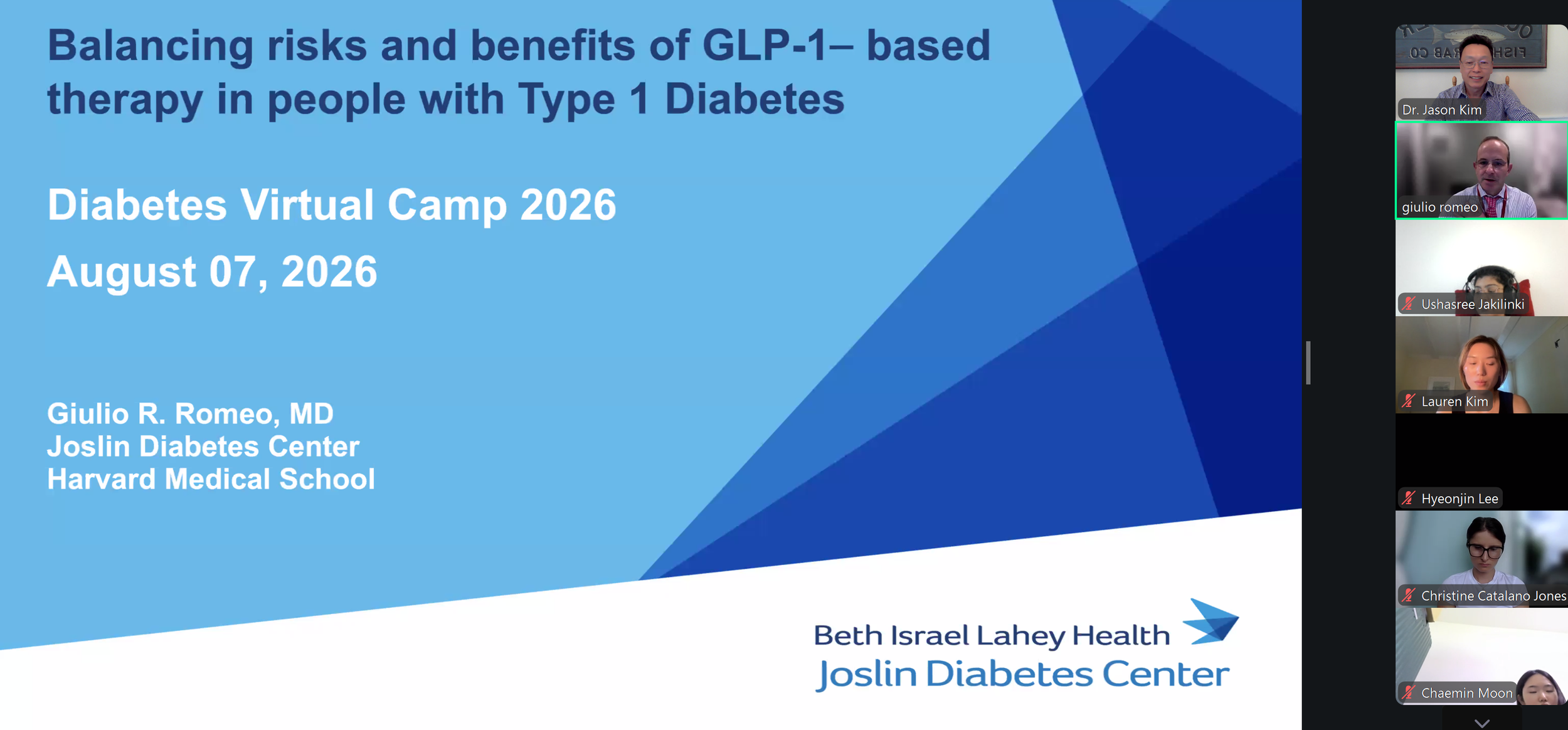
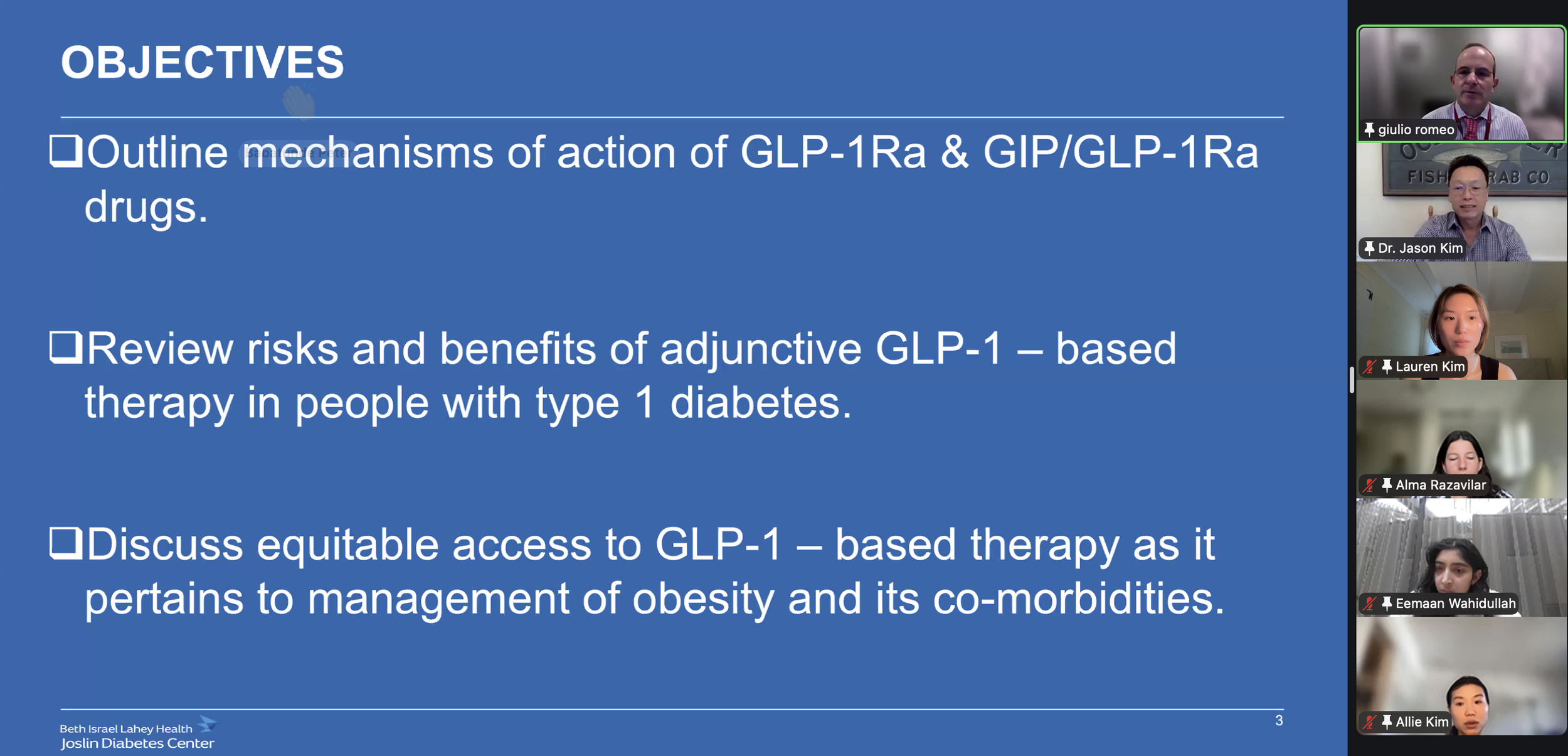
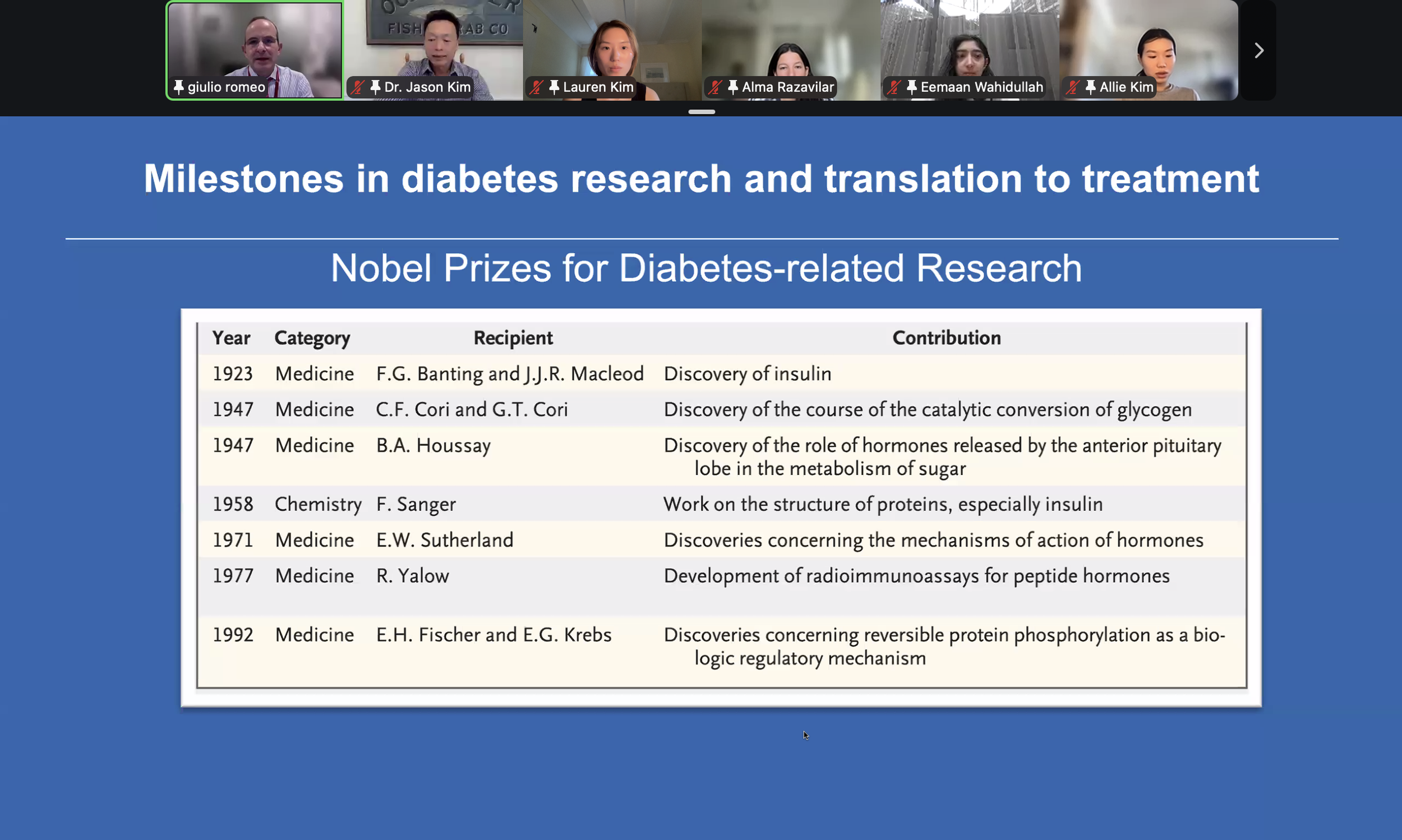
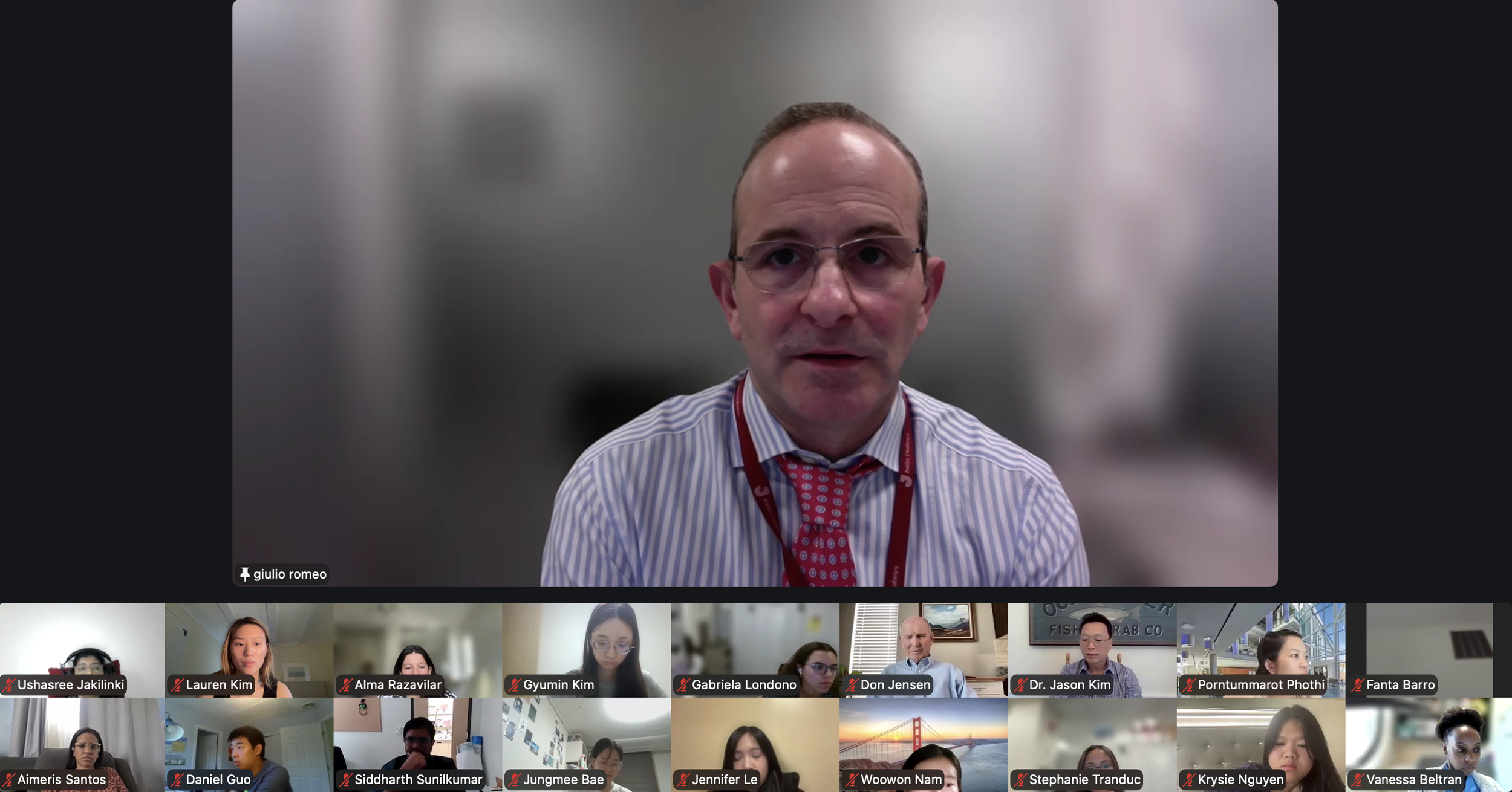
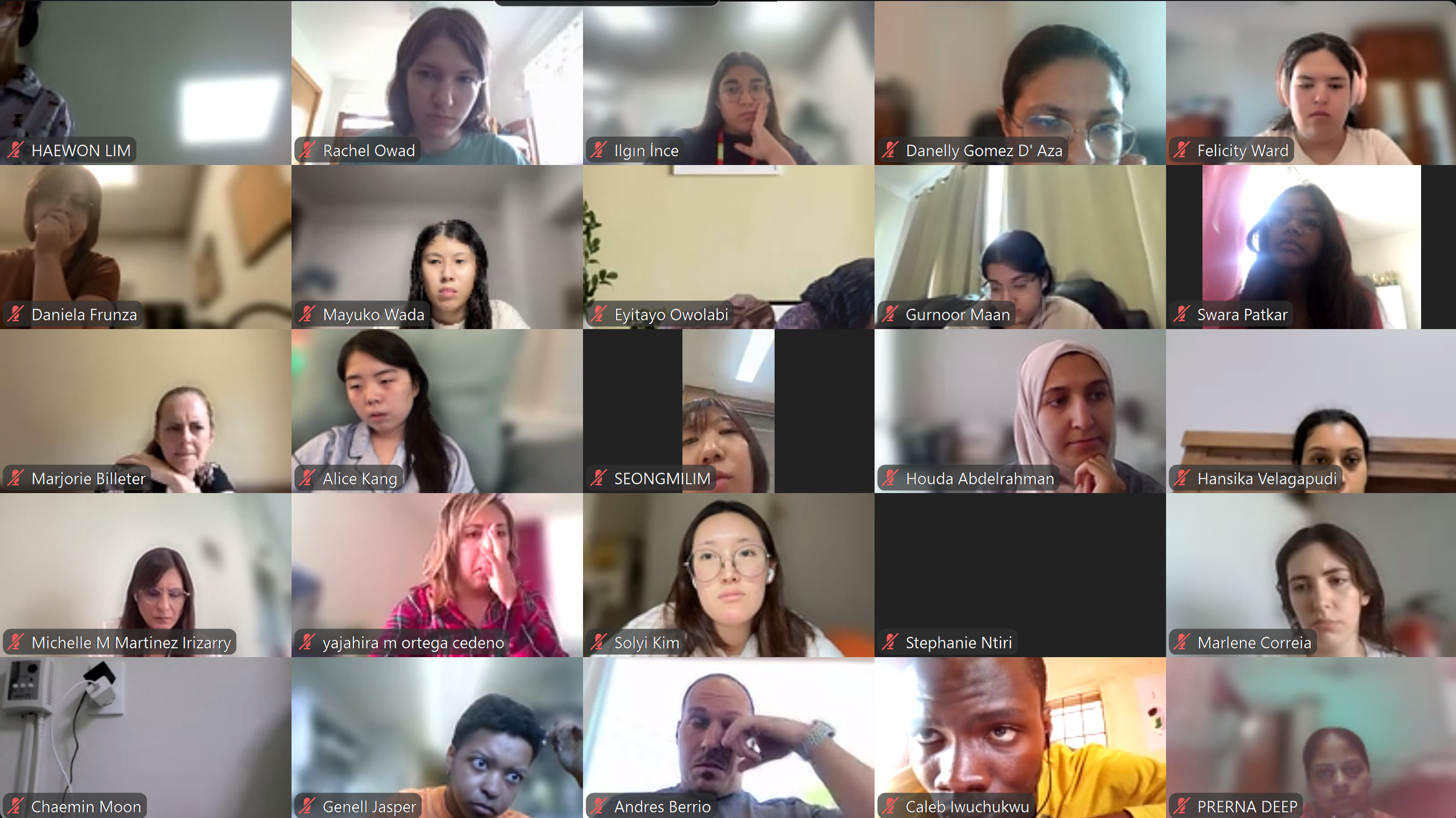
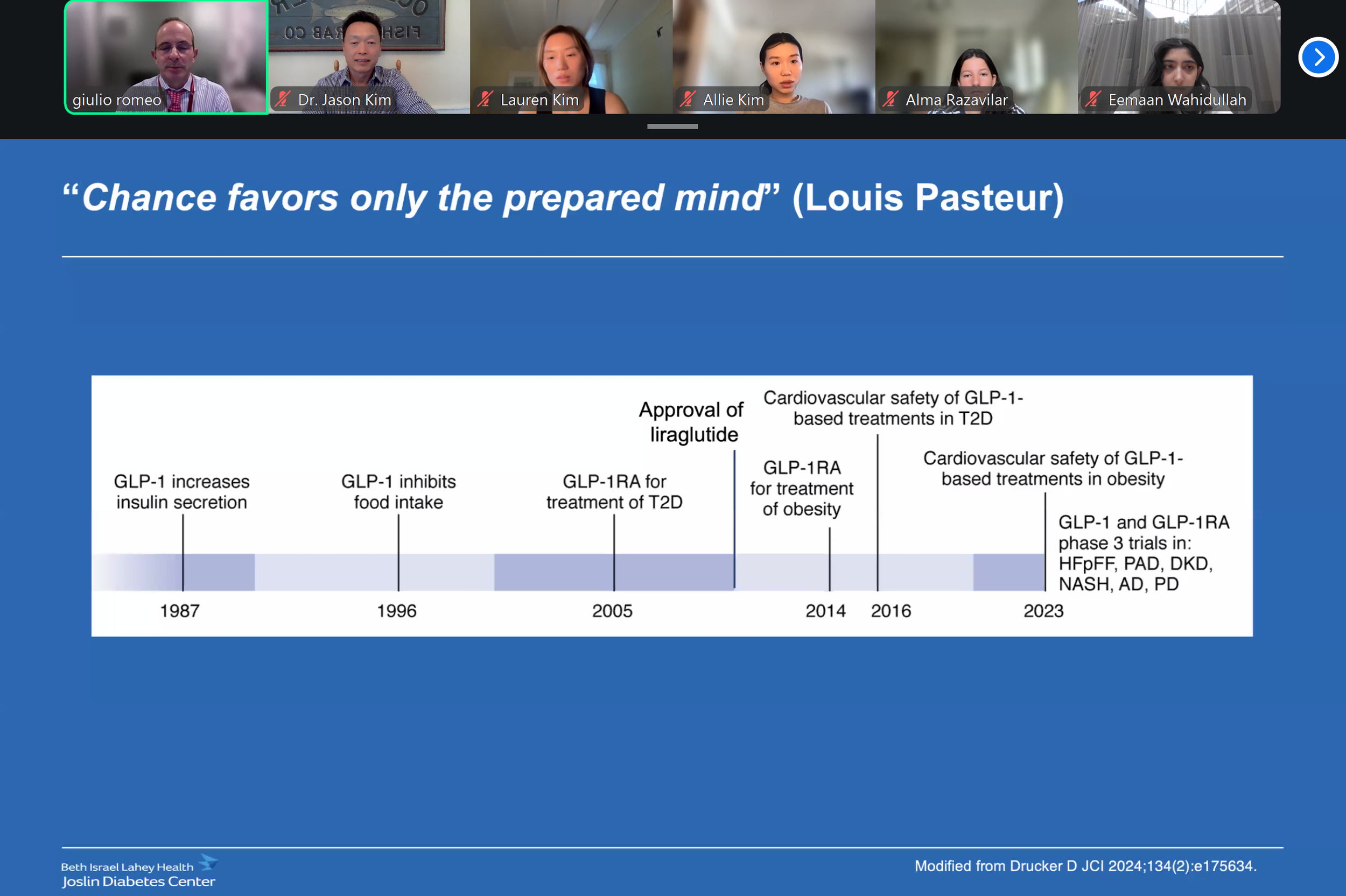
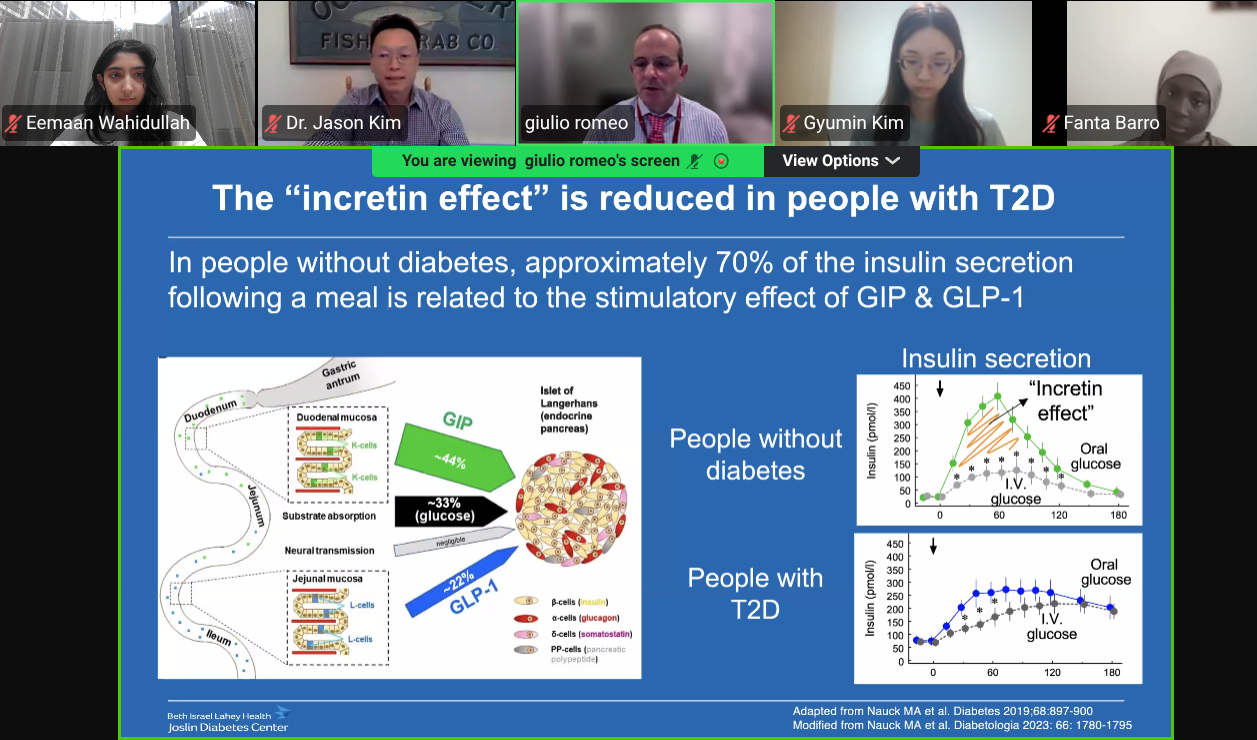
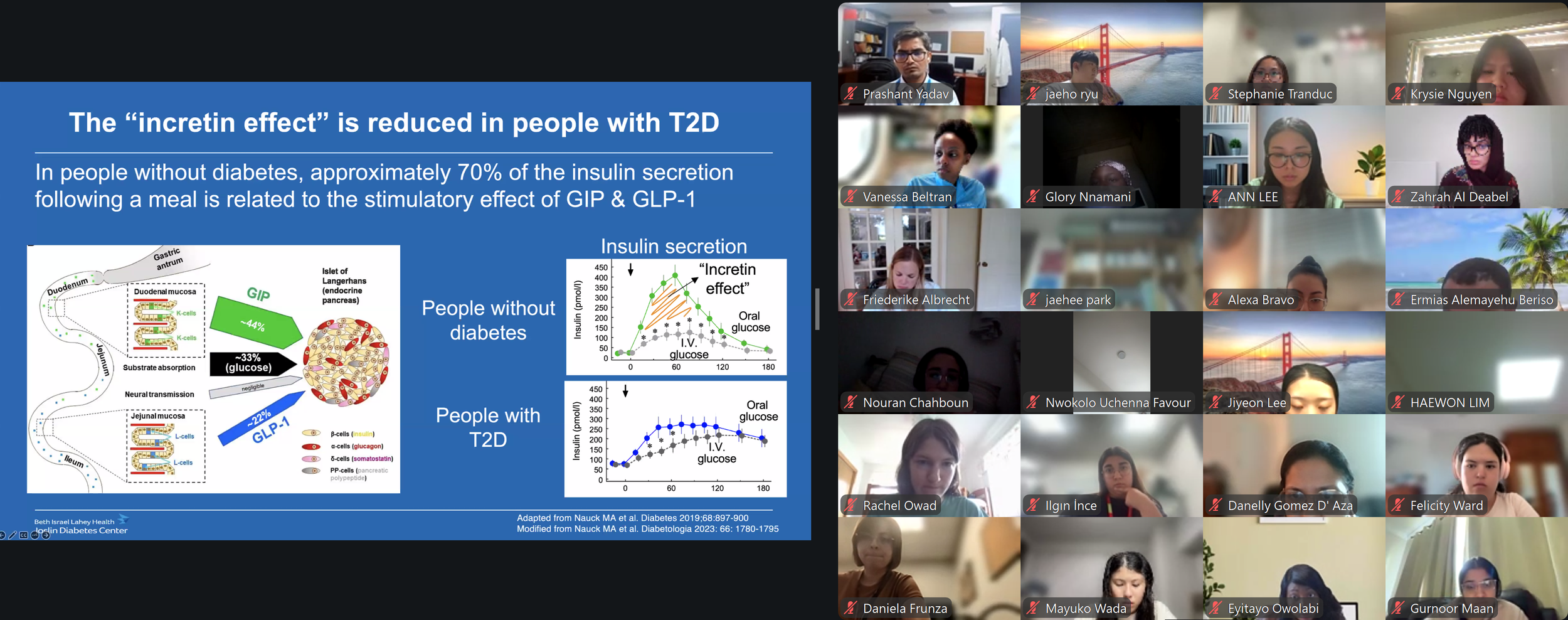
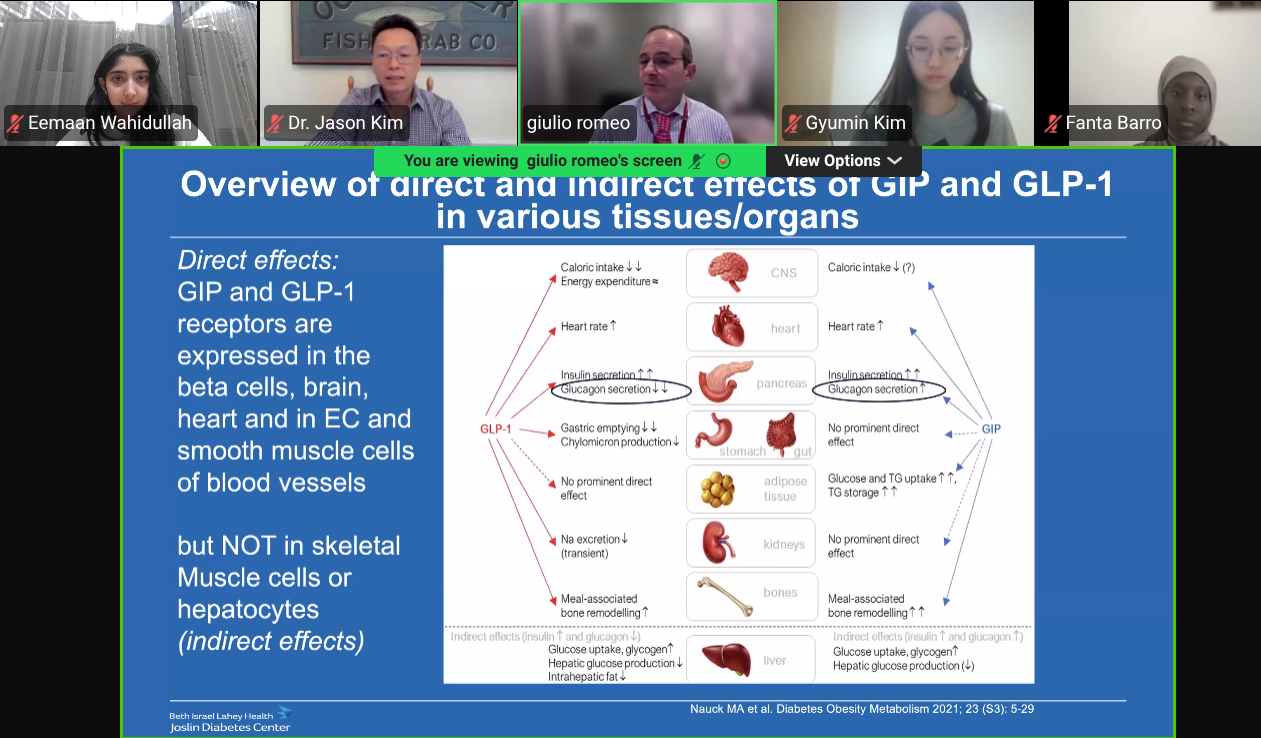
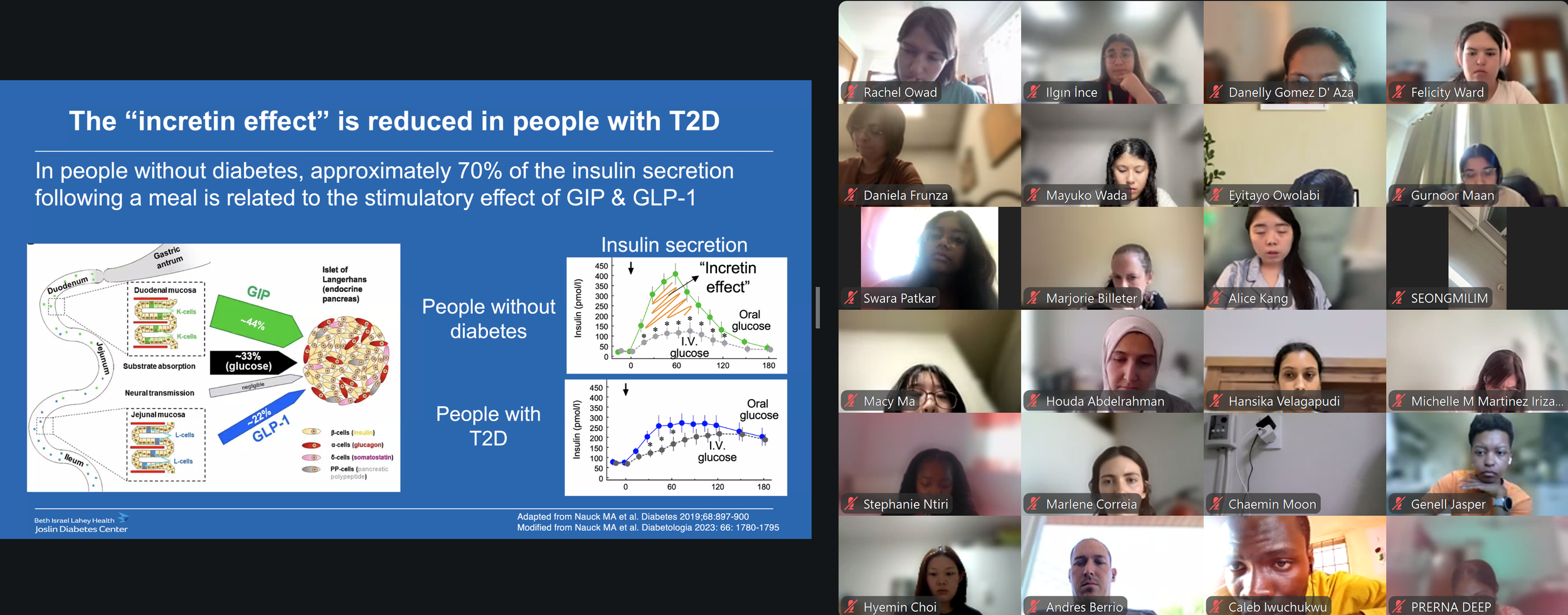
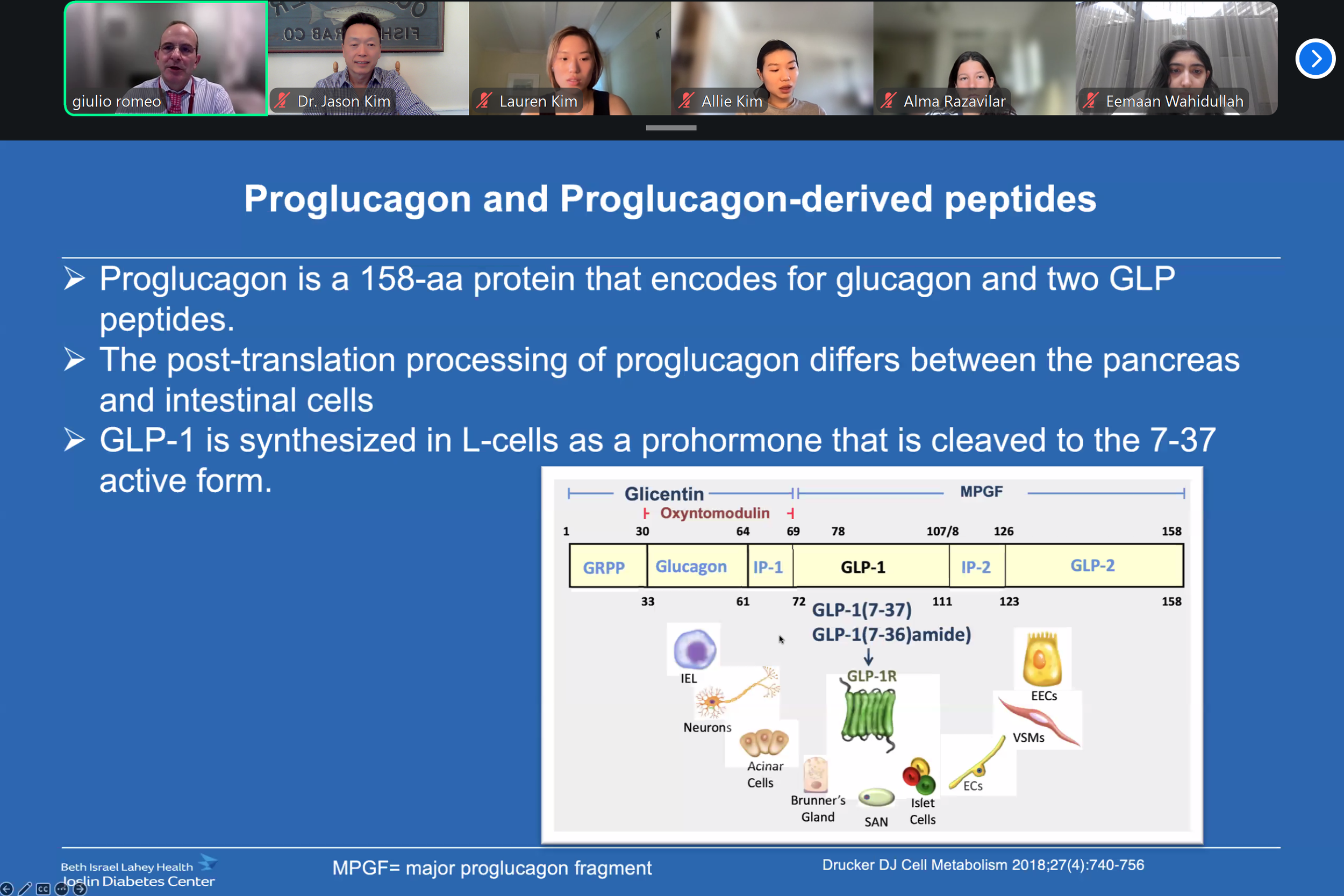
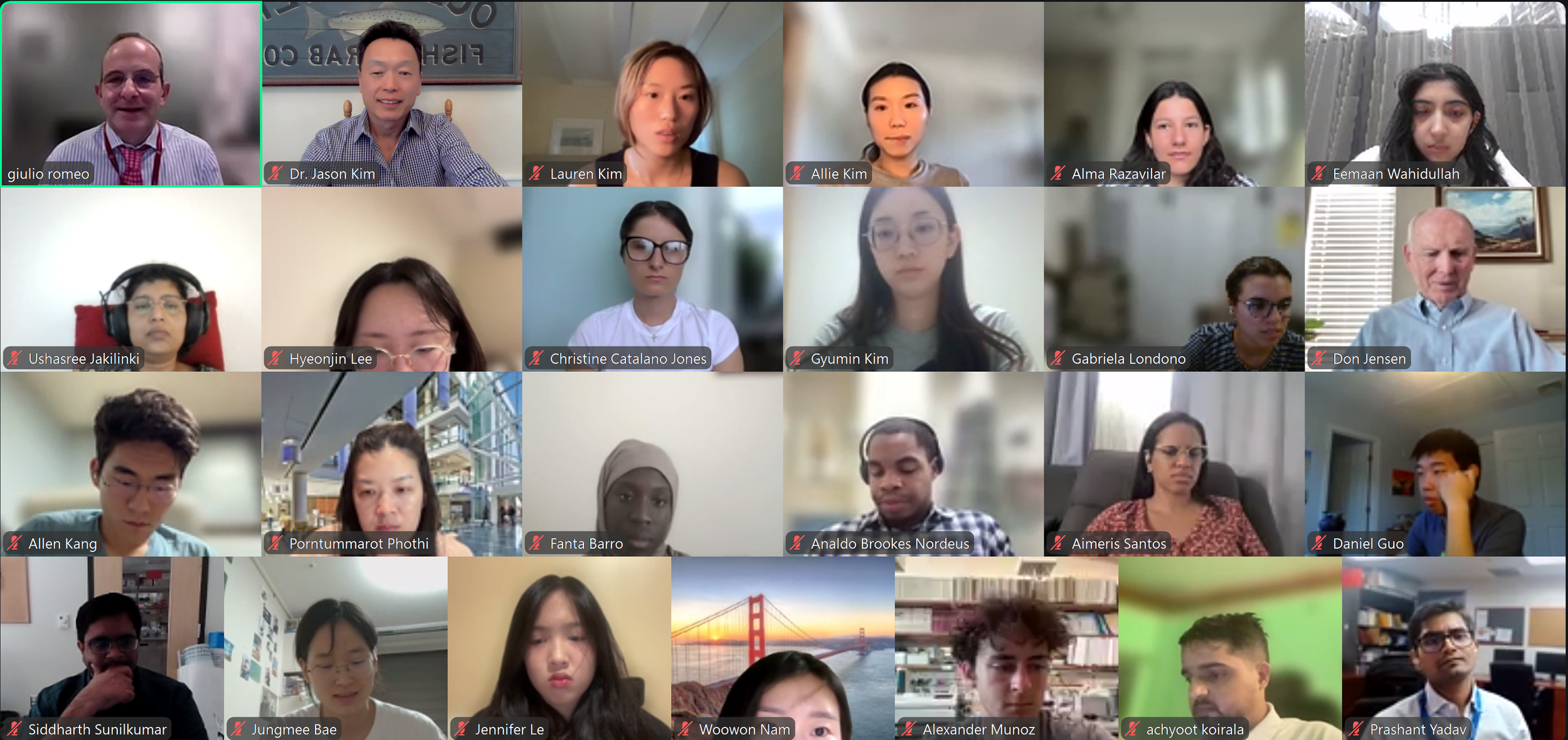
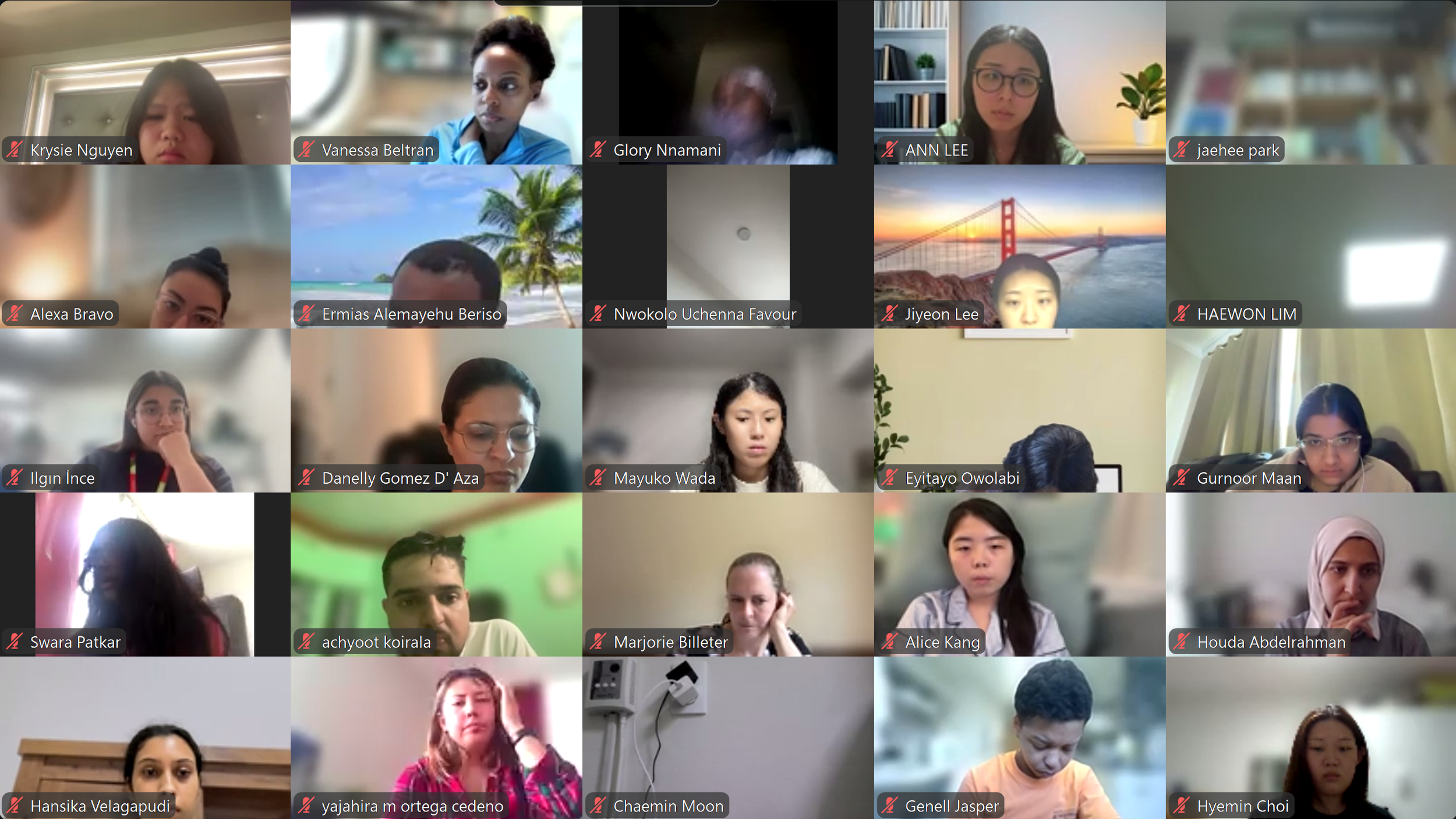
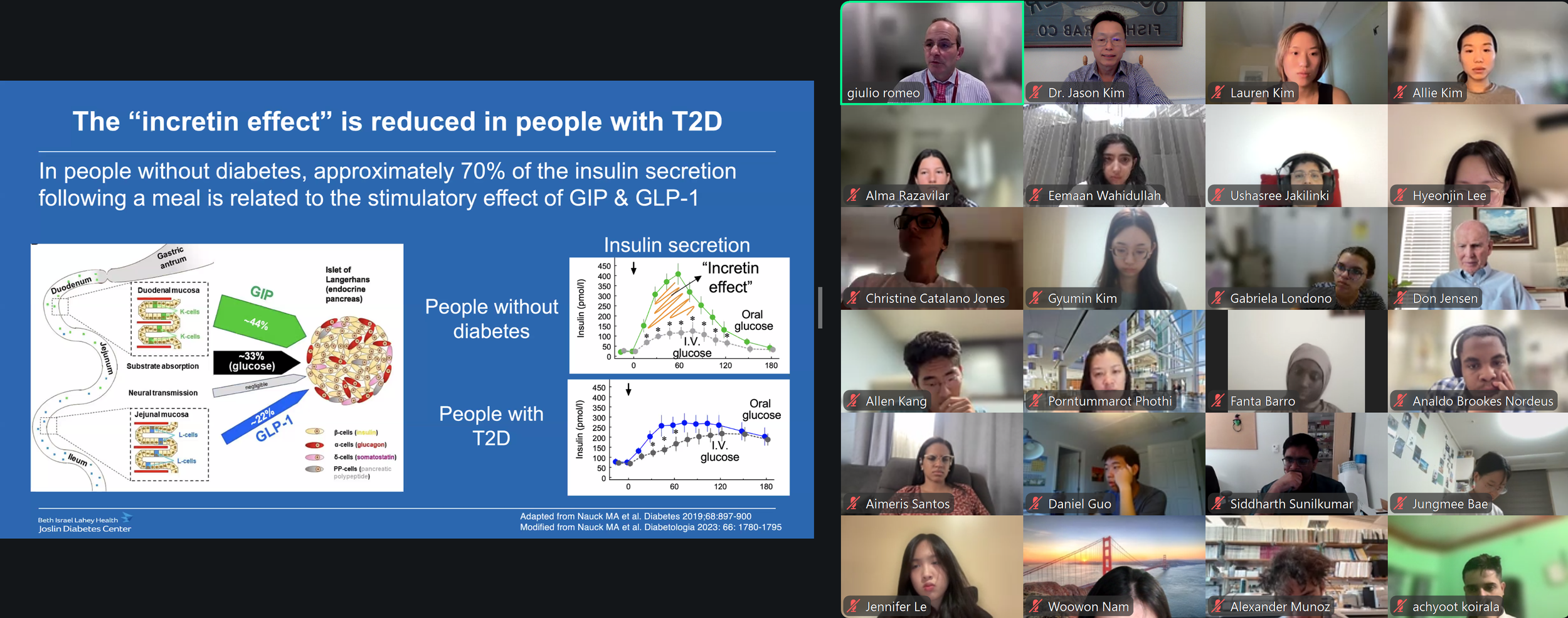
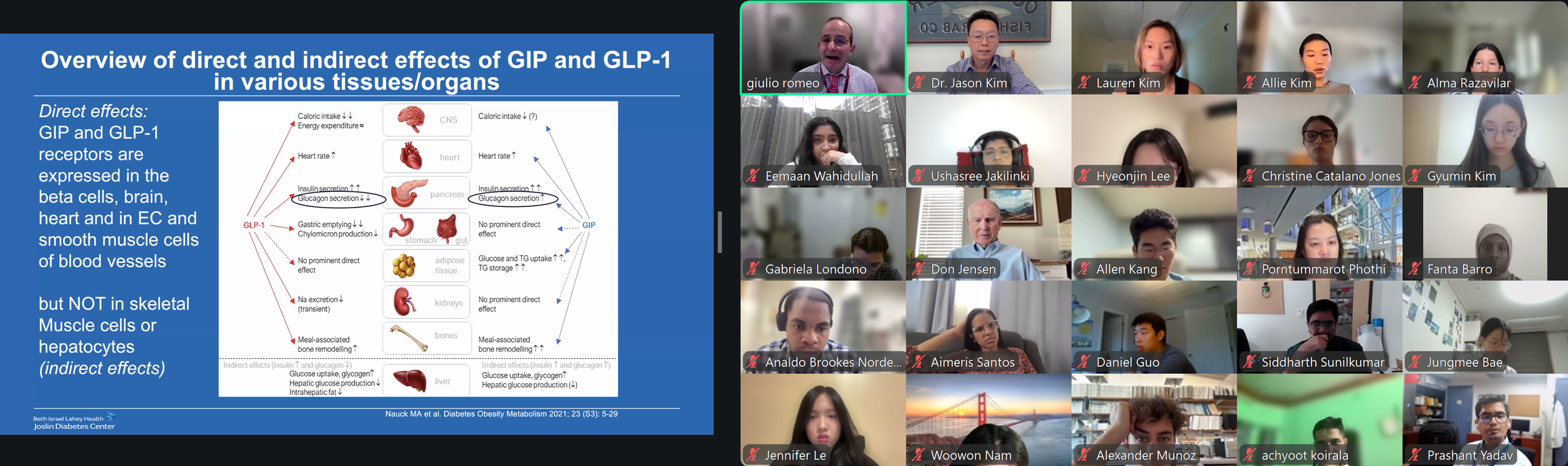
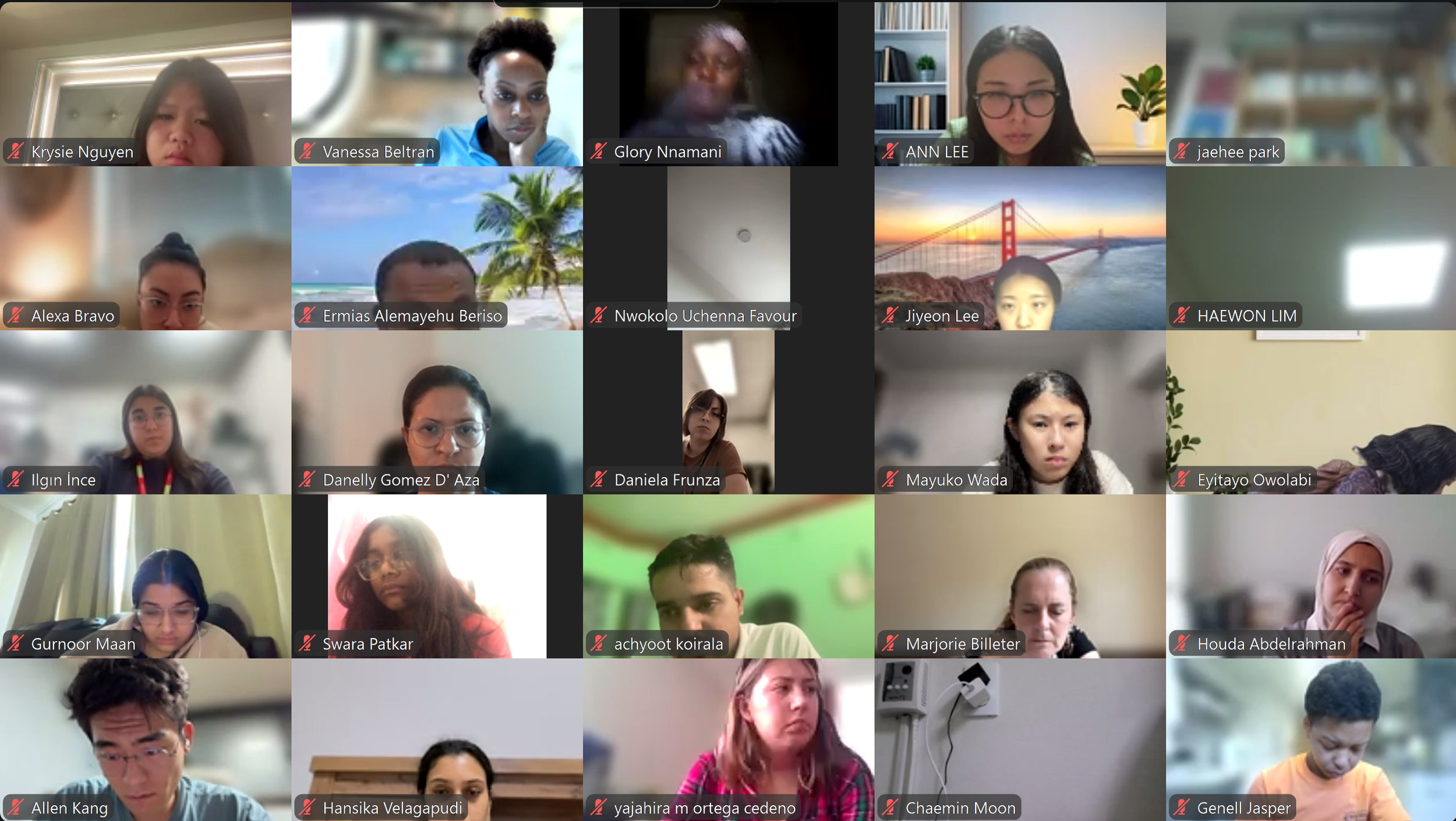
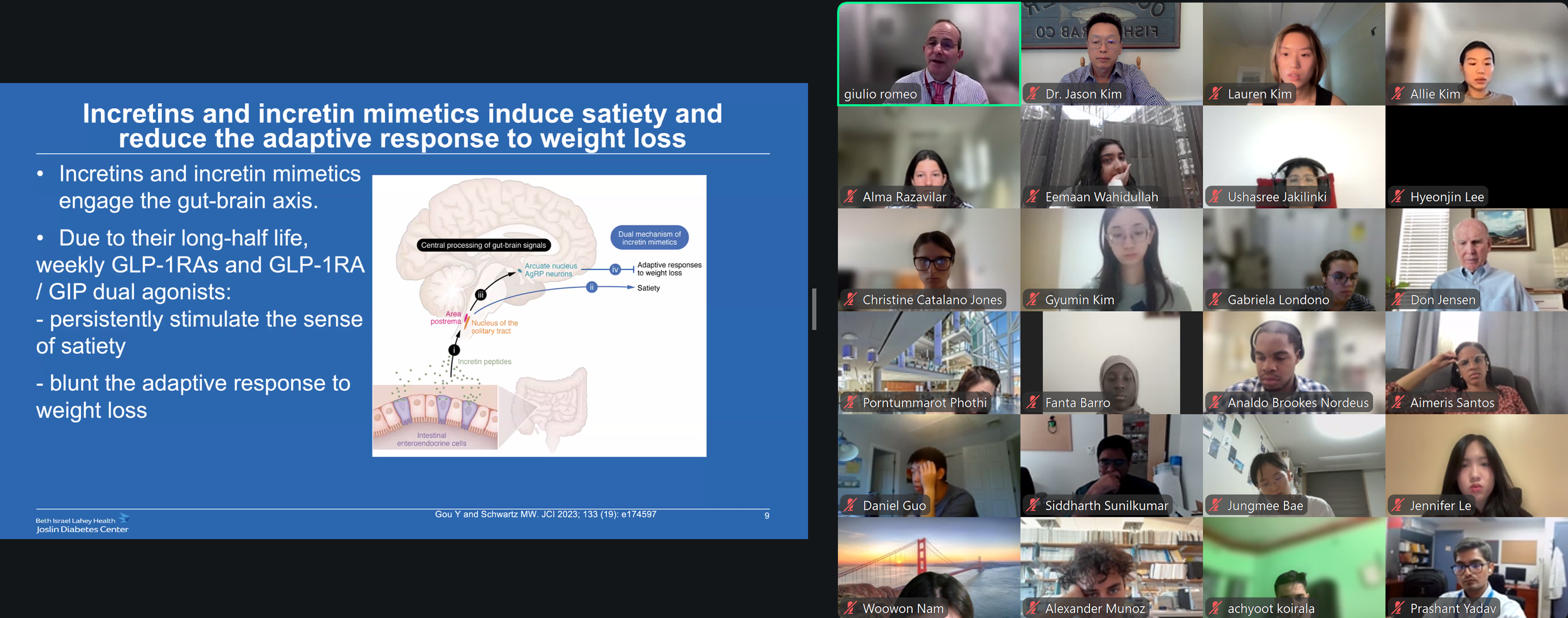
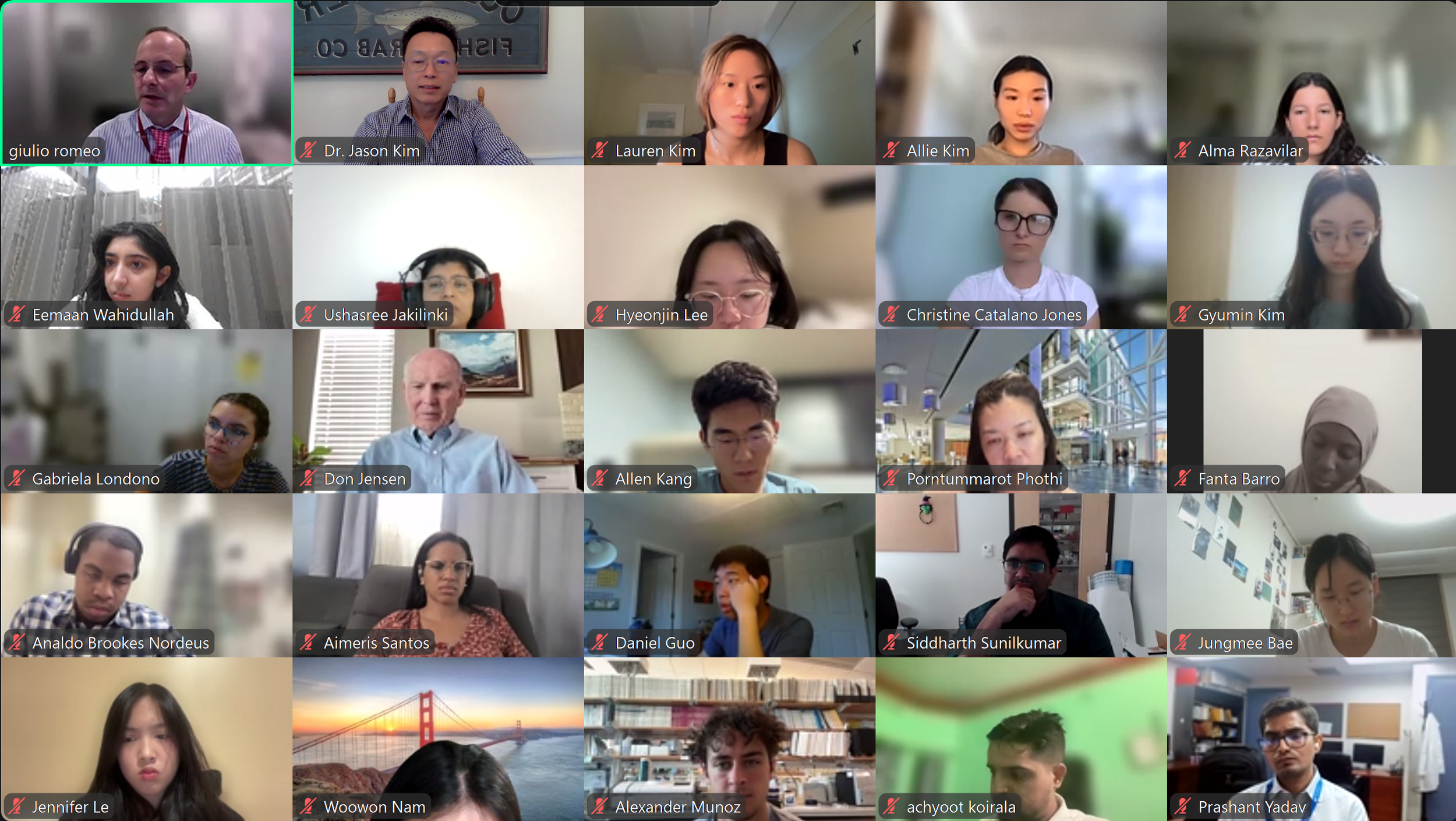
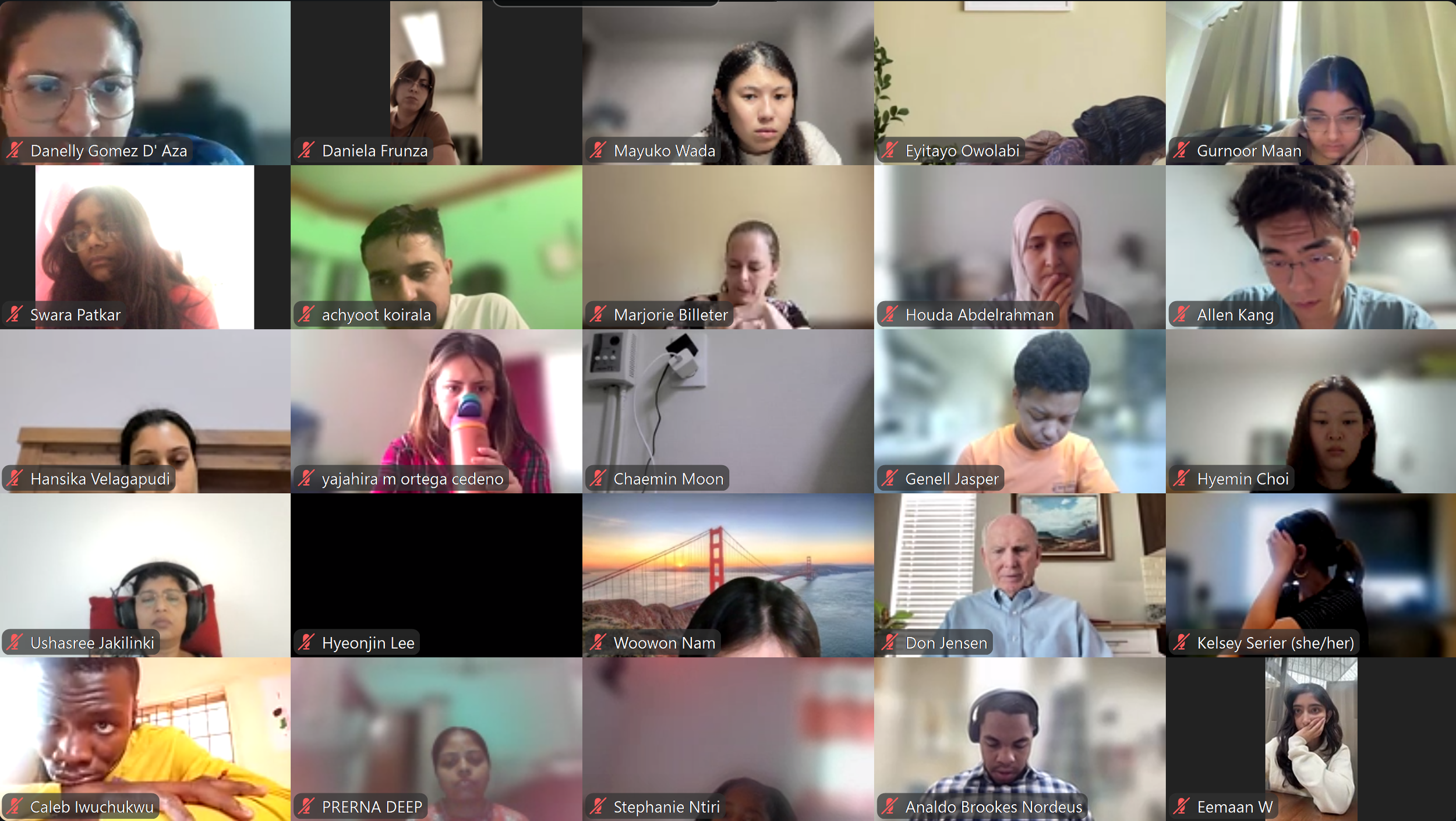
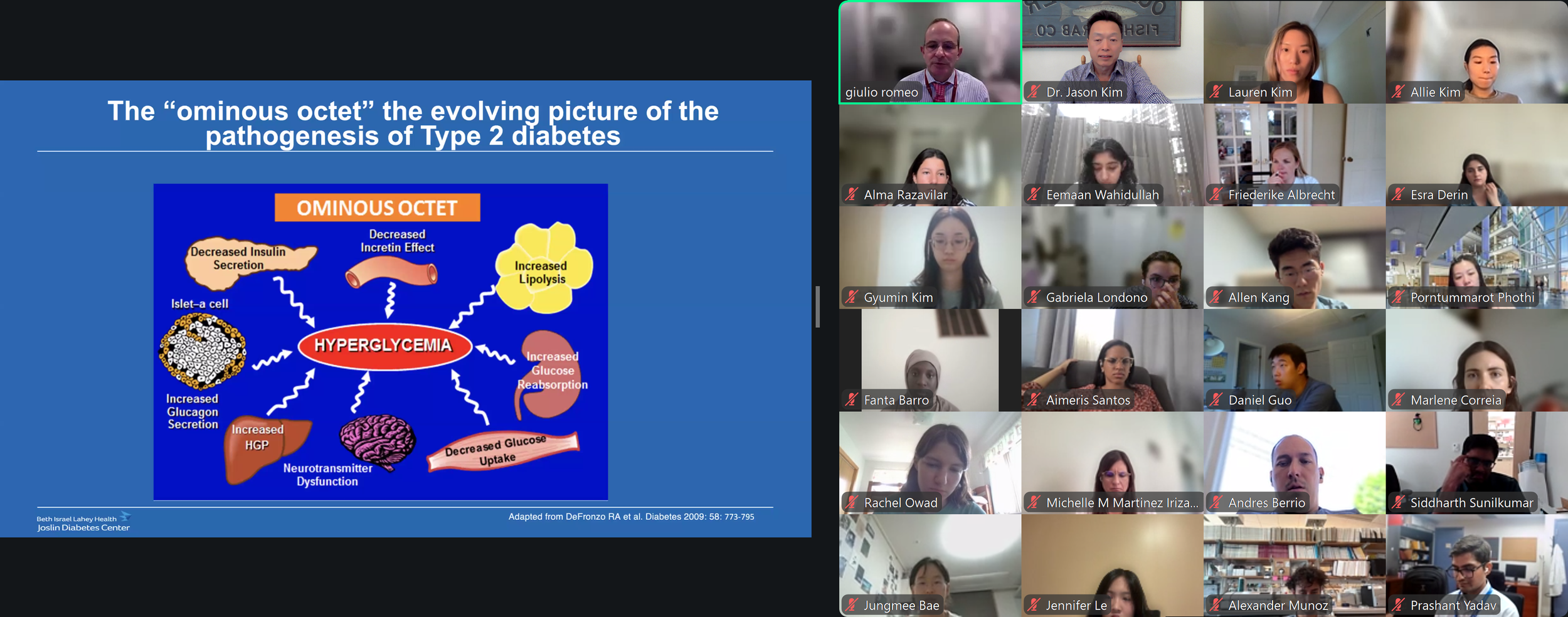
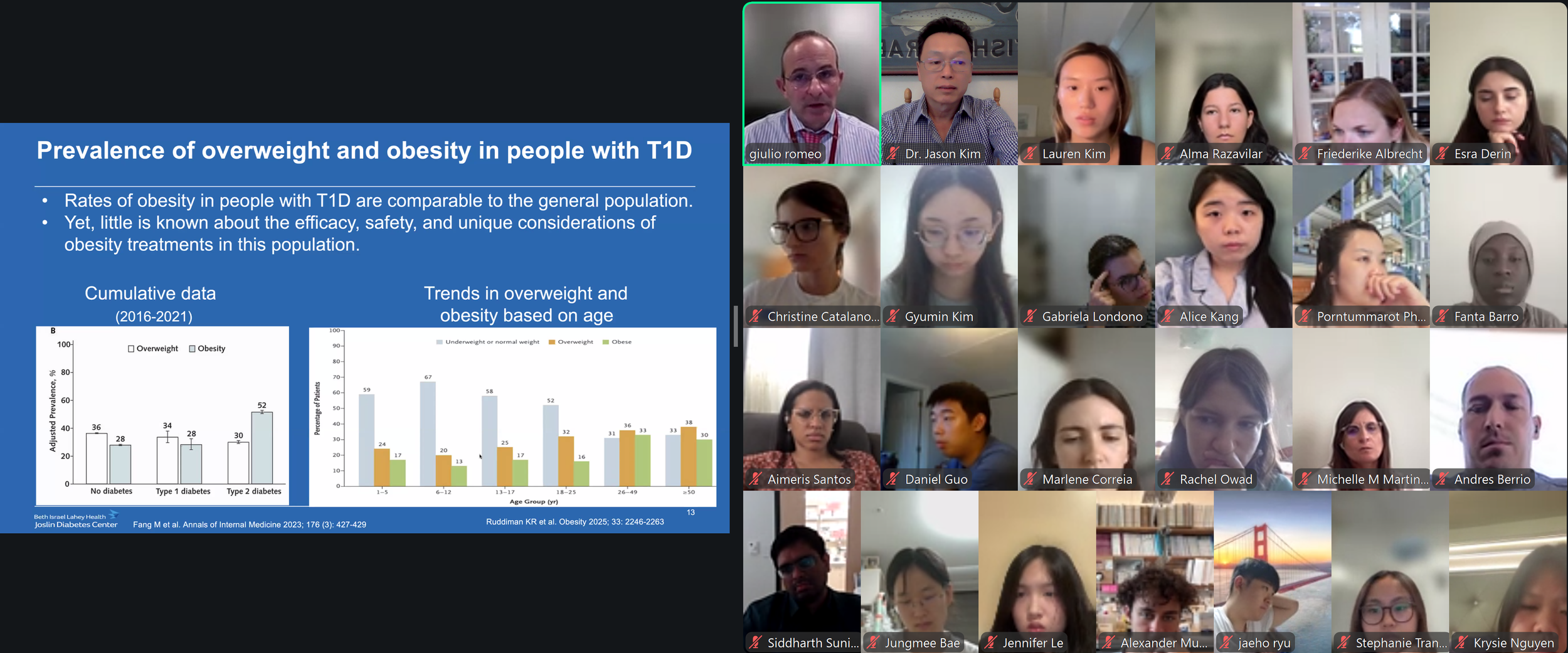
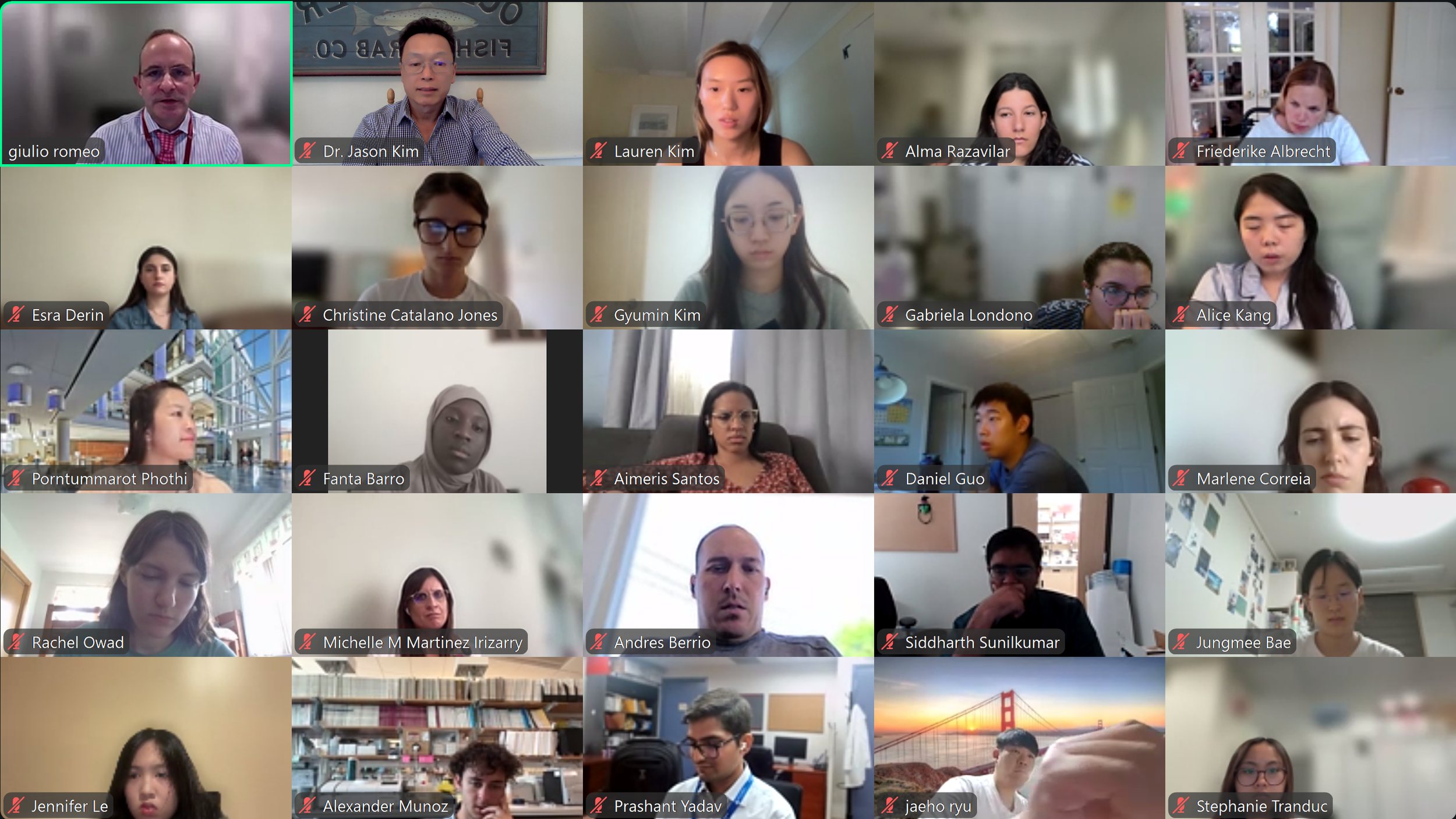
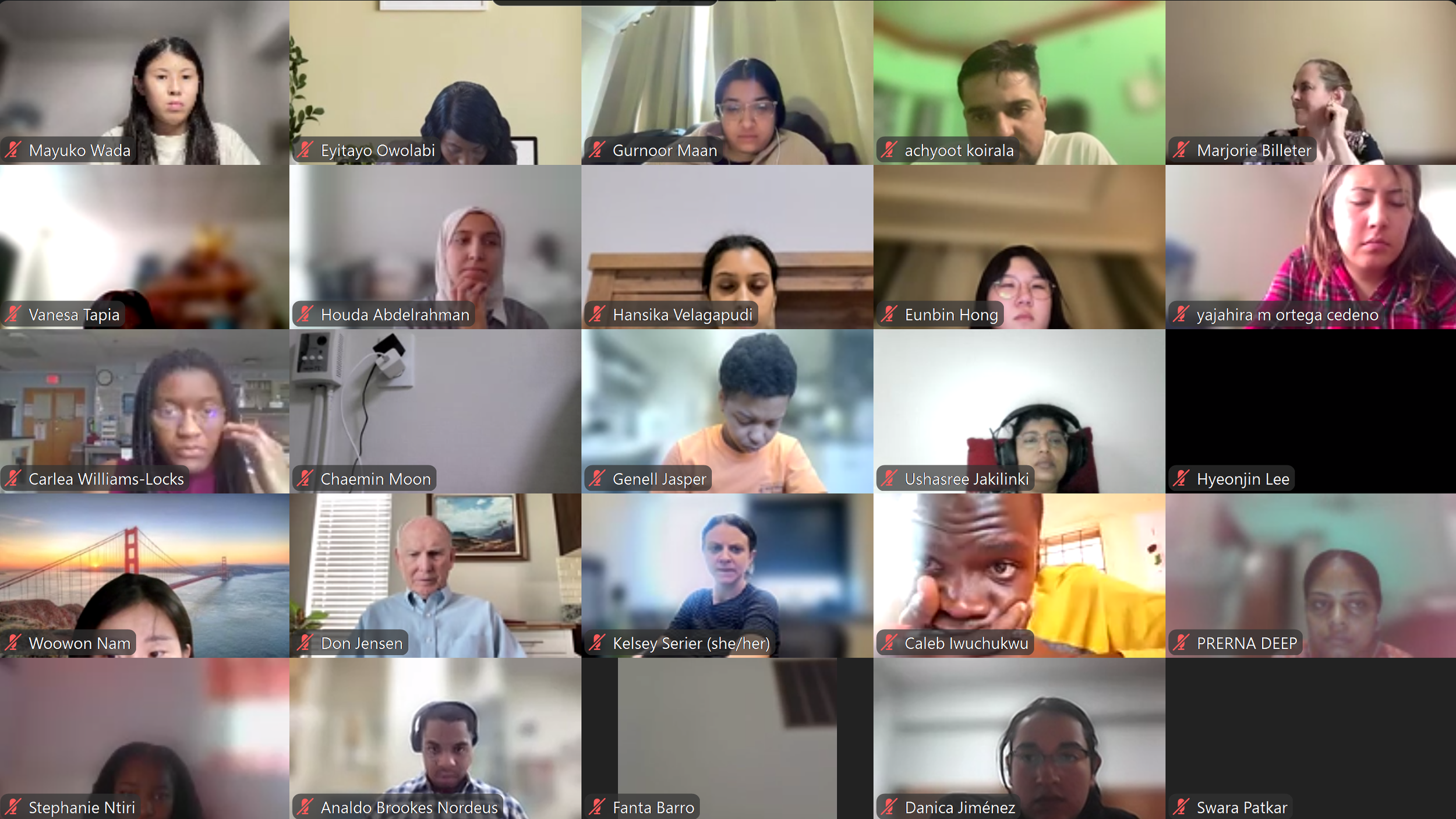
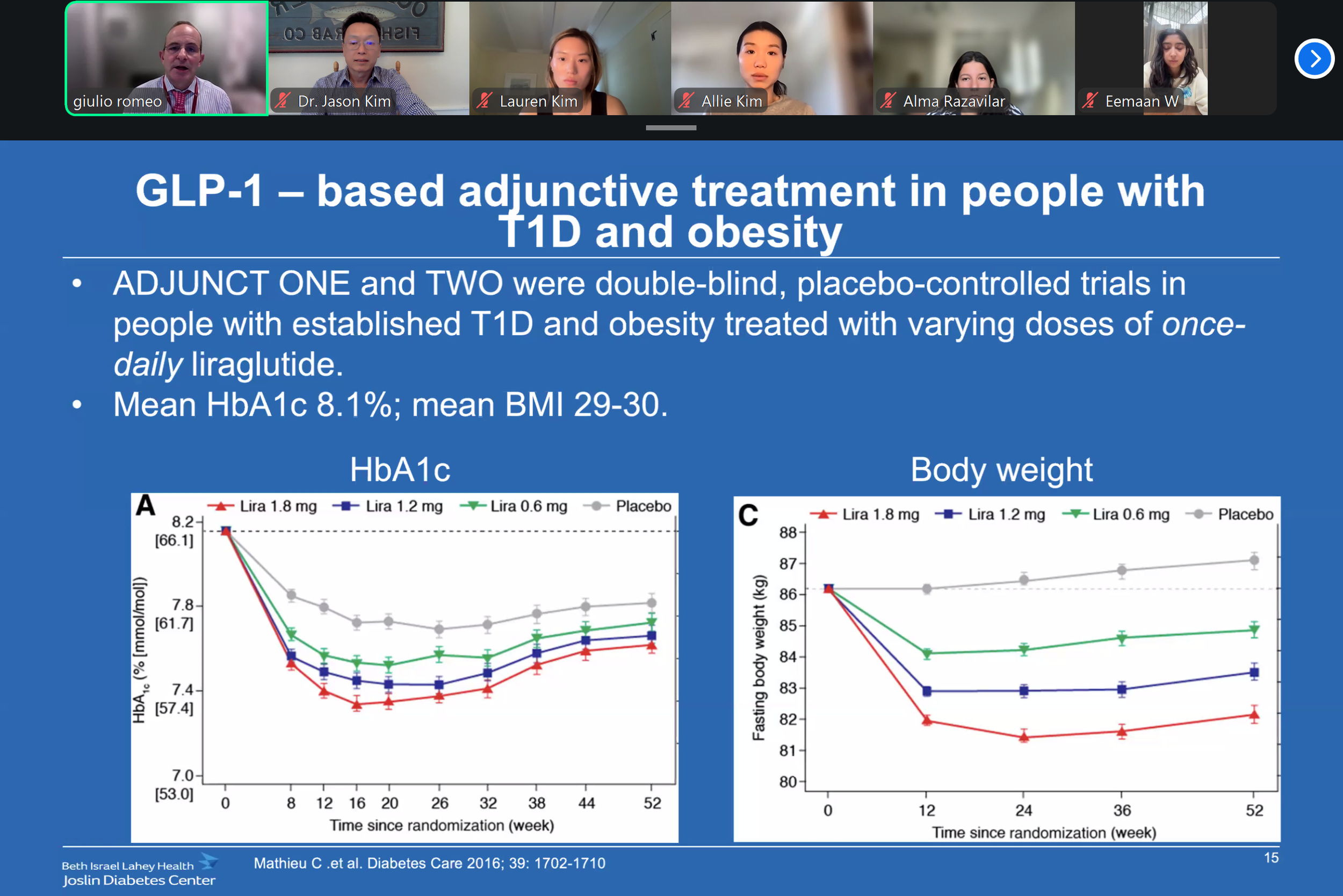
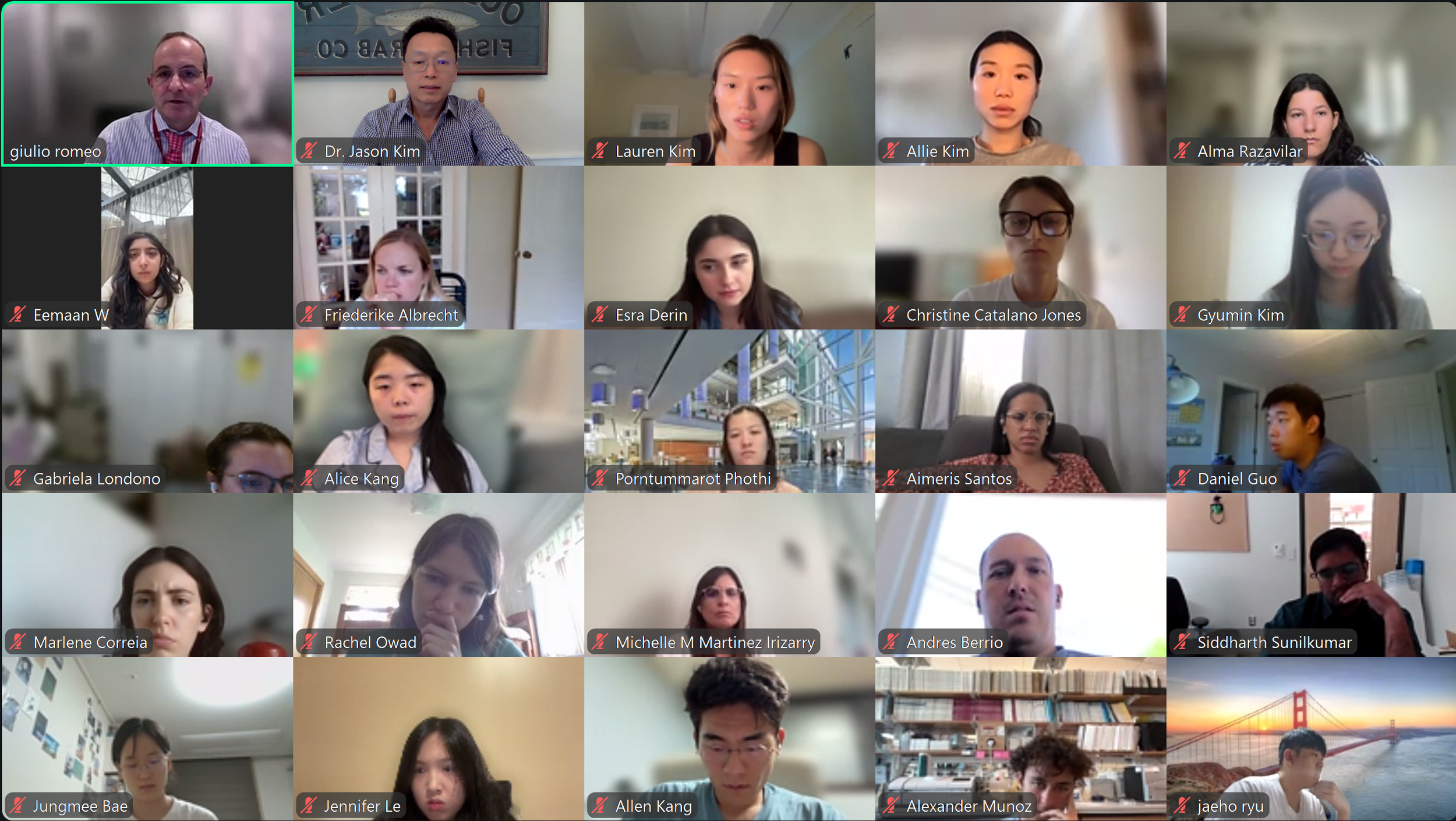
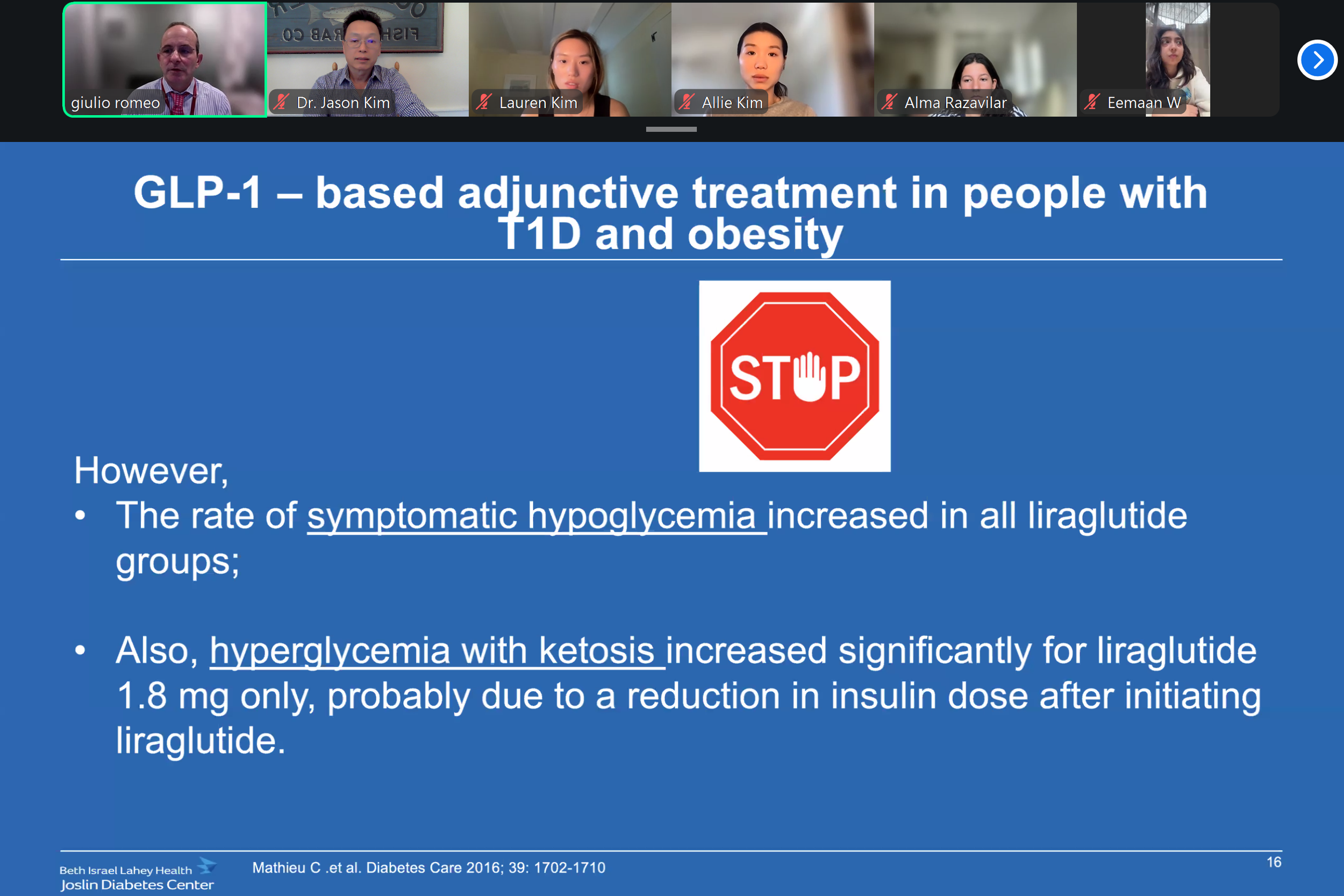
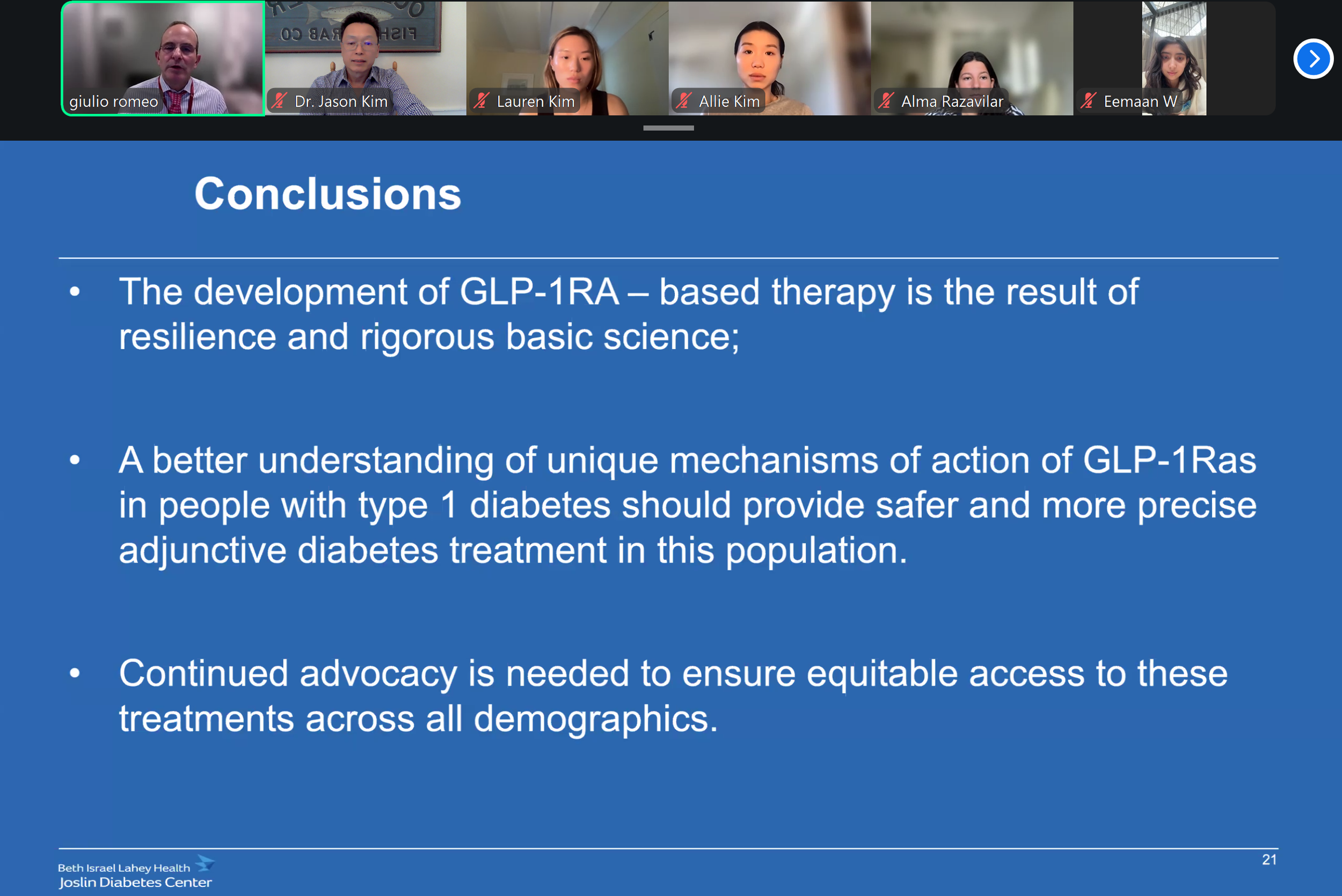
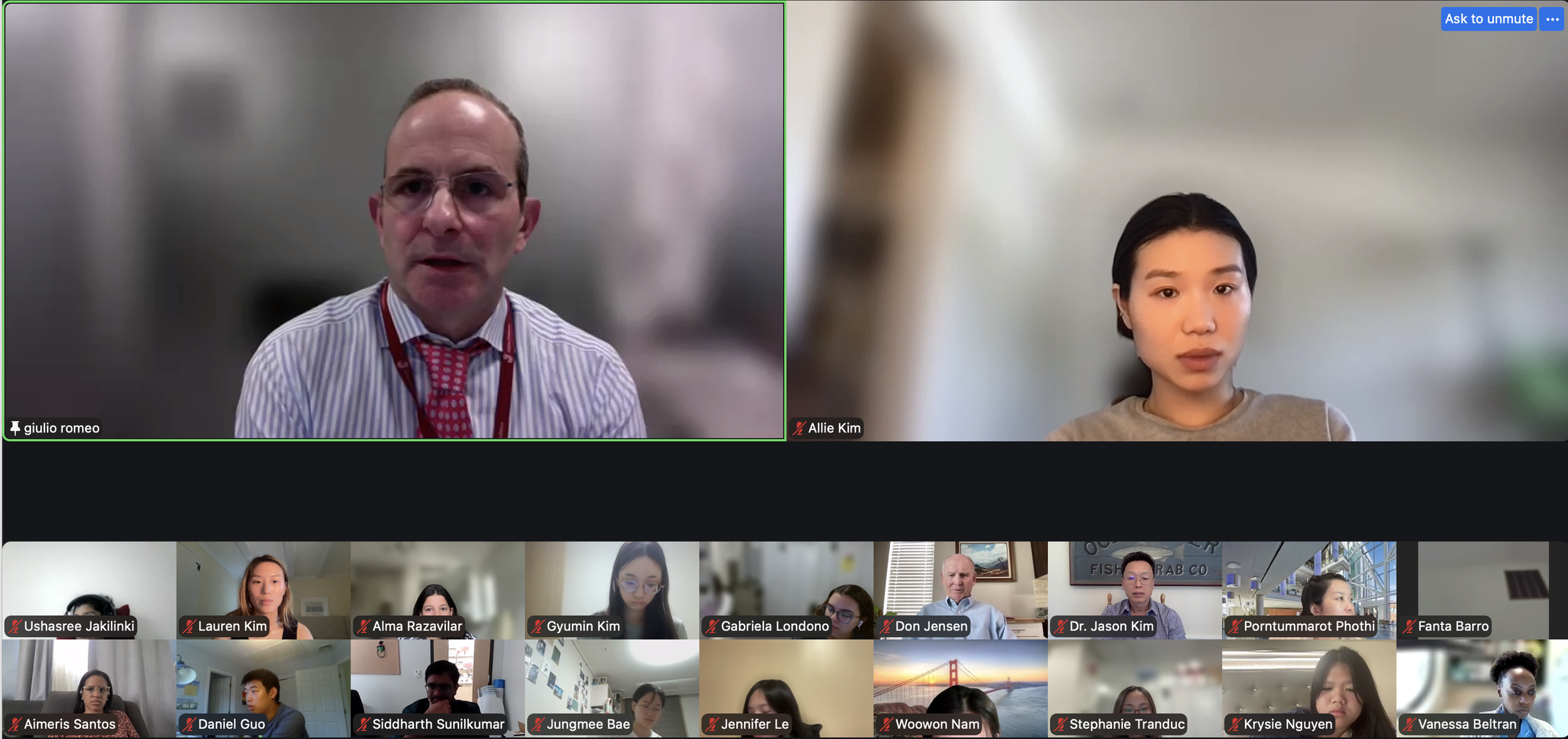
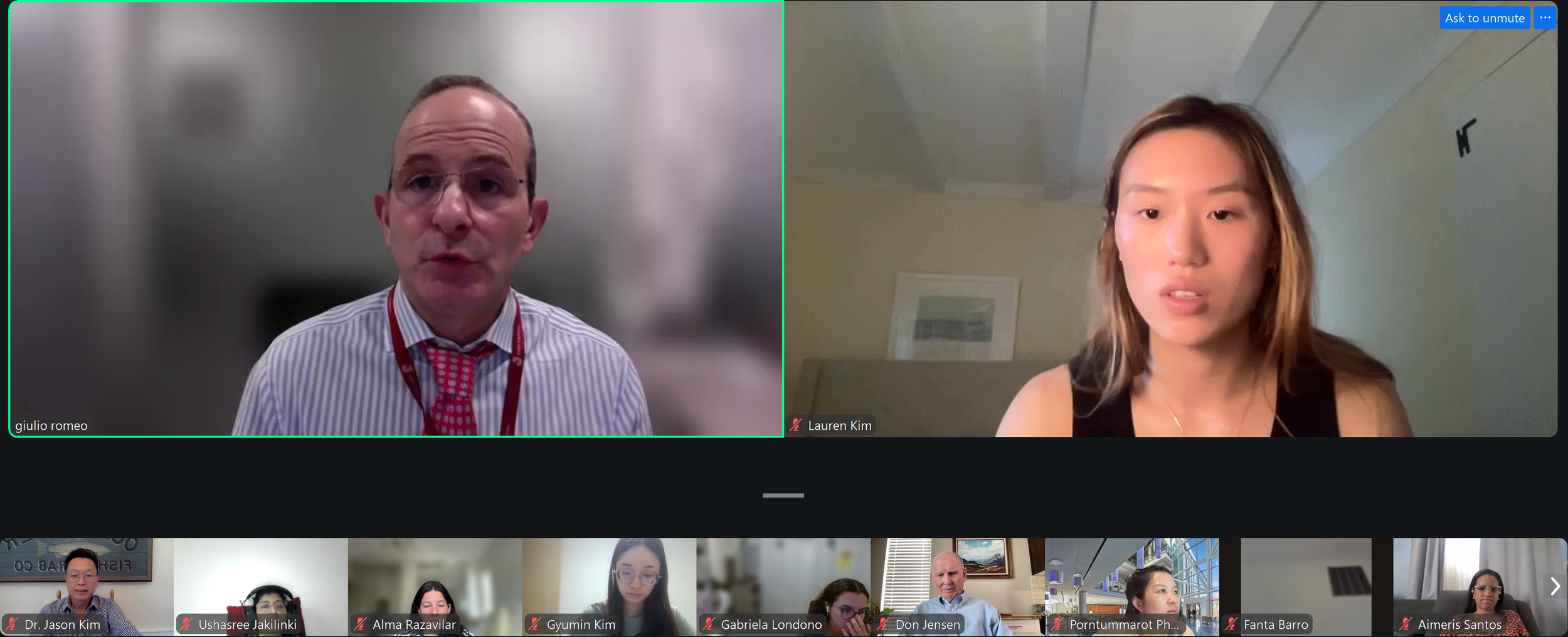
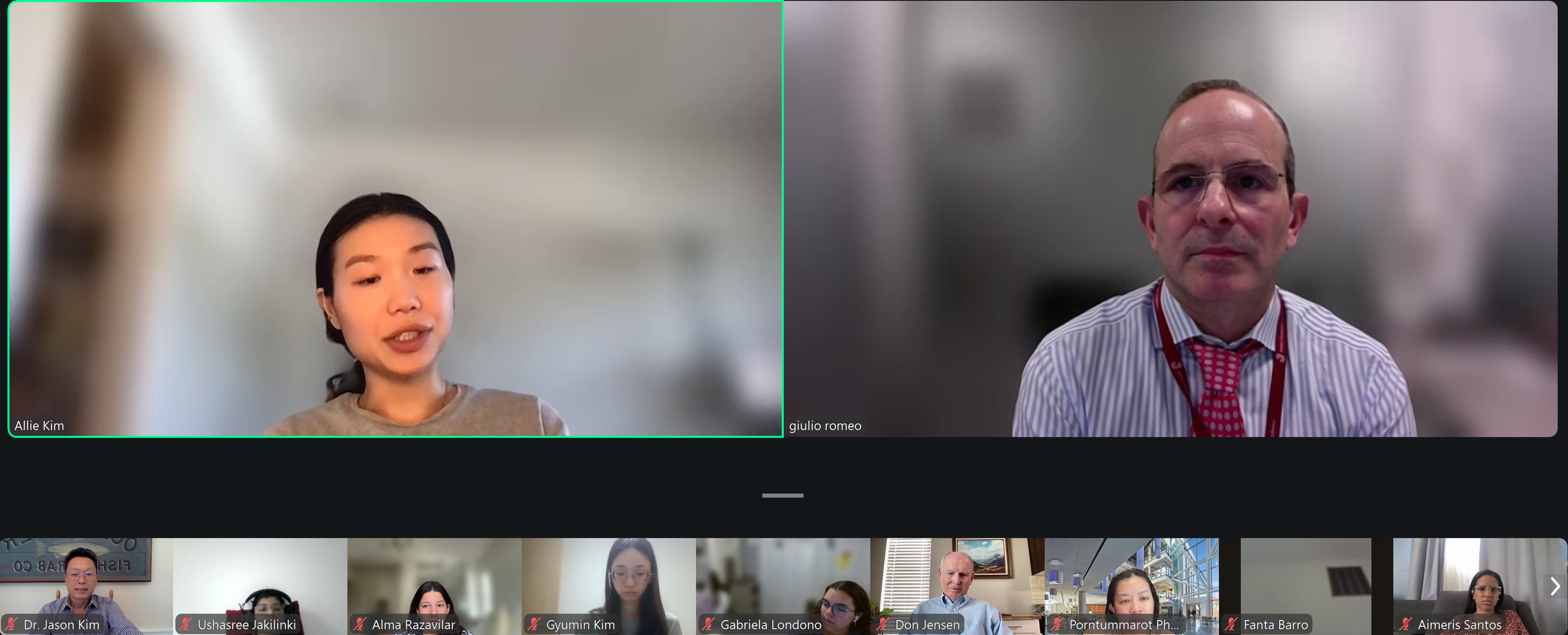
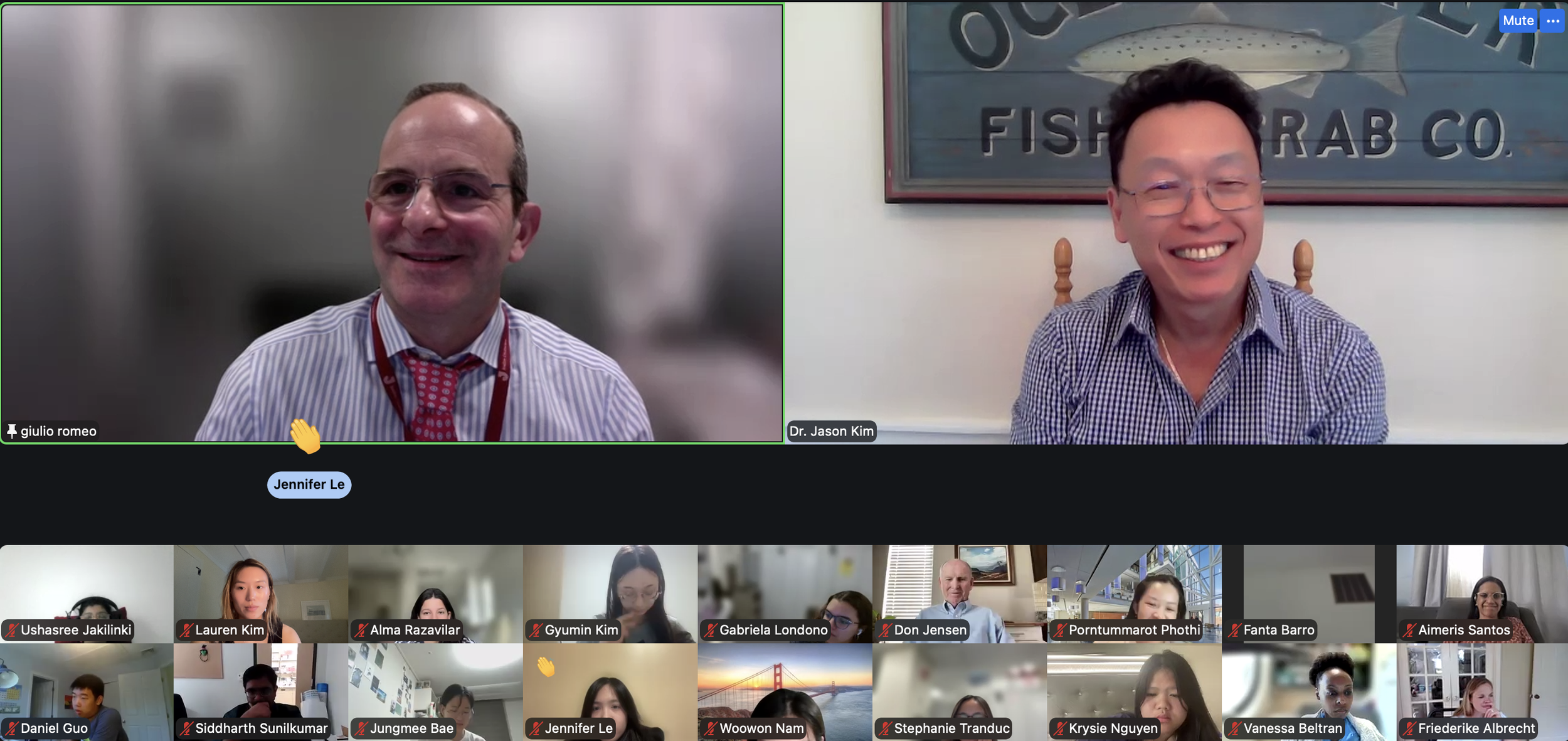
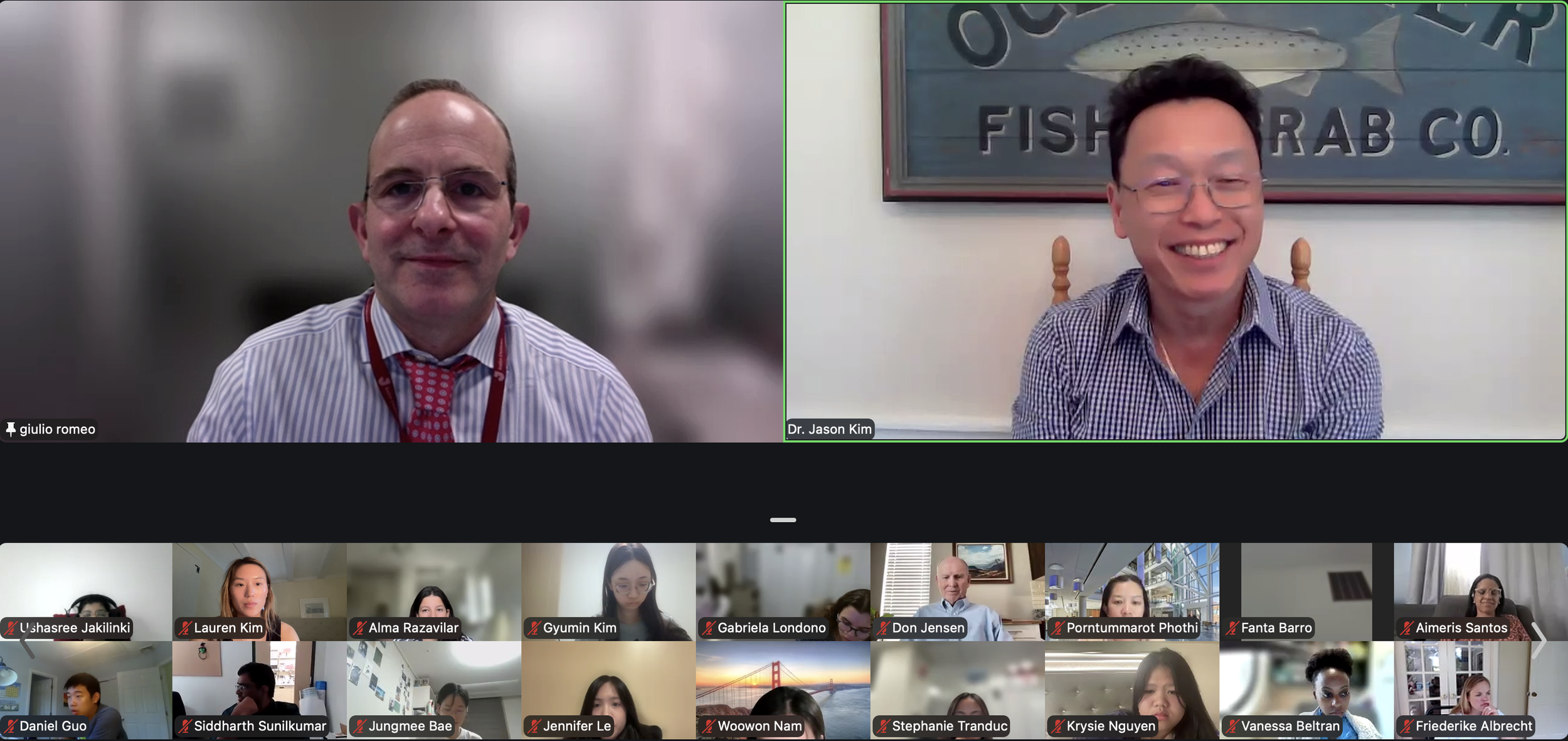
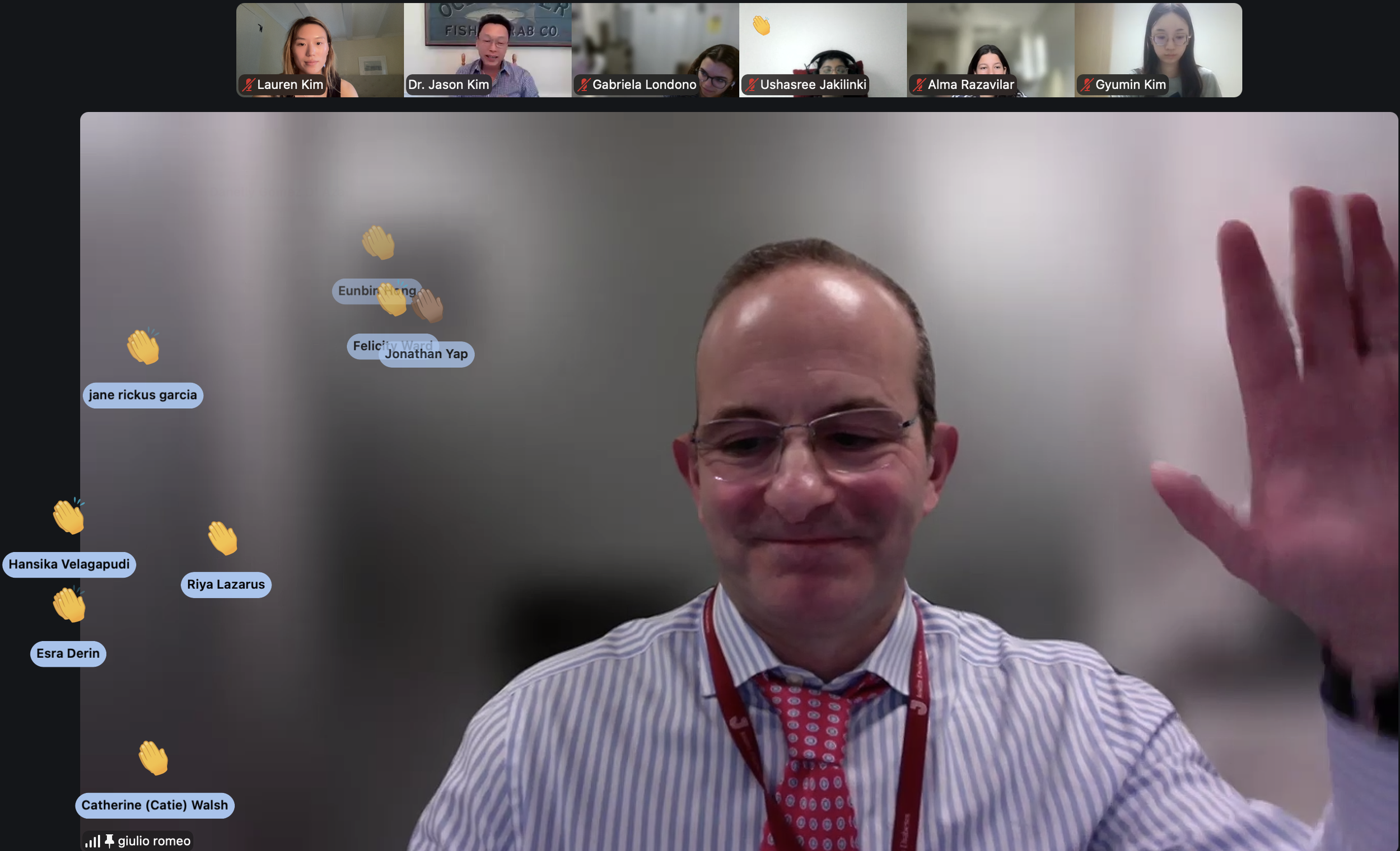
August 7, 2026
Session 6. Metabolic Dysfunction-Associated Steatotic Liver Disease in Type 2 Diabetes - What is New by Dr. Mandeep Bajaj (Baylor College of Medicine)
The Main Session of today’s DVSC26 continued with Dr. Mandeep Bajaj from the Baylor College of Medicine. Dr. Bajaj began by defining metabolic dysfunction-associated steatotic liver disease (MASLD) and metabolic dysfunction-associated steatohepatitis (MASH). Dr. Bajaj explained the fibrosis staging (F0-F4), serving as an important marker of disease severity, as MASH with F4 increases the risk of hepatocellular carcinoma and mortality, and further described the diagnostic algorithm used to assess the risk of cirrhosis in people with MASLD. Dr. Bajaj highlighted the important role of elevated fatty acids in the pathogenesis of MASH and the beneficial effects of adiponectin in MASH pathogenesis. Dr. Bajaj gave an overview of different clinical trials for MASH, targeting various proteins, such as PPAR, FGF21, THR, and GLP-1. Dr. Bajaj shared exciting clinical data from the STEP 5 trial examining the 2-year efficacy of semaglutide on weight loss and how weight loss through lifestyle modification reduced MASH features. Dr. Bajaj also shared promising clinical trial data on the efficacy of tirzepatide to improve MASH, and other GLP-1-based therapies on MASH and associated mortality. Dr. Bajaj ended with standards of care in diabetes that integrate the MASLD treatment algorithm, guiding the audience to understand what drugs can be used for obesity and diabetes management based on the MASLD with fibrosis staging score.
-
![Session 2: Opening Session & Introduction to Diabetes by Lauren, Allison, and Dr. Jason Kim (University of Massachusetts Medical School)]()
August 7, 2026 (Session 6 - Part 1)
Session 6: “Metabolic Dysfunction-Associated Steatotic Liver Disease in Type 2 Diabetes - What is New” by Dr. Mandeep Bajaj (Baylor College of Medicine)
Dr. Kim introduces Dr. Mandeep Bajaj to our DVSC26 participants from all around the world.
-
![]()
August 7, 2026 (Session 6 - Part 2)
Session 6: “Metabolic Dysfunction-Associated Steatotic Liver Disease in Type 2 Diabetes - What is New” by Dr. Mandeep Bajaj (Baylor College of Medicine)
This session highlights the link between insulin resistance and metabolic dysfunction-associated liver disease (MASLD) and further outlines the effects of PPAR agonists and GLP-1 receptor agonists on hepatic fat and glucose metabolism. This session also provides an overview of clinical trial results and current guidelines for care of people with type 2 diabetes and MASLD.
-
![]()
August 7, 2026 (Session 6 - Part 3)
Session 6: “Metabolic Dysfunction-Associated Steatotic Liver Disease in Type 2 Diabetes - What is New” by Dr. Mandeep Bajaj (Professor of Medicine, Medical Director of Baylor Medicine-Endocrinology, Diabetes & Metabolism, Section Chief of Endocrinology & Diabetes, Baylor College of Medicine, Past President of the American Diabetes Association)
-
![]()
August 7, 2026 (Session 6 - Part 4)
Session 6: “Metabolic Dysfunction-Associated Steatotic Liver Disease in Type 2 Diabetes - What is New” by Dr. Mandeep Bajaj (Baylor College of Medicine)
Dr. Bajaj welcomes our program participants from around the world.
-
![]()
August 7, 2026 (Session 6 - Part 5)
Session 6: “Metabolic Dysfunction-Associated Steatotic Liver Disease in Type 2 Diabetes - What is New” by Dr. Mandeep Bajaj (Baylor College of Medicine)
Dr. Bajaj welcomes our program participants from around the world.
-
![]()
August 7, 2026 (Session 6 - Part 6)
Session 6: “Metabolic Dysfunction-Associated Steatotic Liver Disease in Type 2 Diabetes - What is New” by Dr. Mandeep Bajaj (Baylor College of Medicine)
Dr. Bajaj began by defining metabolic dysfunction-associated steatotic liver disease (MASLD) and metabolic dysfunction-associated steatohepatitis (MASH).
-
![]()
August 7, 2026 (Session 6 - Part 7)
Session 6: “Metabolic Dysfunction-Associated Steatotic Liver Disease in Type 2 Diabetes - What is New” by Dr. Mandeep Bajaj (Baylor College of Medicine)
Dr. Bajaj began by defining metabolic dysfunction-associated steatotic liver disease (MASLD) and metabolic dysfunction-associated steatohepatitis (MASH).
-
![]()
August 7, 2026 (Session 6 - Part 8)
Session 6: “Metabolic Dysfunction-Associated Steatotic Liver Disease in Type 2 Diabetes - What is New” by Dr. Mandeep Bajaj (Baylor College of Medicine)
Dr. Bajaj began by defining metabolic dysfunction-associated steatotic liver disease (MASLD) and metabolic dysfunction-associated steatohepatitis (MASH).
-
![]()
August 7, 2026 (Session 6 - Part 9)
Session 6: “Metabolic Dysfunction-Associated Steatotic Liver Disease in Type 2 Diabetes - What is New” by Dr. Mandeep Bajaj (Baylor College of Medicine)
Dr. Bajaj began by defining metabolic dysfunction-associated steatotic liver disease (MASLD) and metabolic dysfunction-associated steatohepatitis (MASH).
-
![]()
August 7, 2026 (Session 6 - Part 10)
Session 6: “Metabolic Dysfunction-Associated Steatotic Liver Disease in Type 2 Diabetes - What is New” by Dr. Mandeep Bajaj (Baylor College of Medicine)
Dr. Bajaj began by defining metabolic dysfunction-associated steatotic liver disease (MASLD) and metabolic dysfunction-associated steatohepatitis (MASH).
-
![]()
August 7, 2026 (Session 6 - Part 11)
Session 6: “Metabolic Dysfunction-Associated Steatotic Liver Disease in Type 2 Diabetes - What is New” by Dr. Mandeep Bajaj (Baylor College of Medicine)
Dr. Bajaj began by defining metabolic dysfunction-associated steatotic liver disease (MASLD) and metabolic dysfunction-associated steatohepatitis (MASH).
-
![]()
August 7, 2026 (Session 6 - Part 12)
Session 6: “Metabolic Dysfunction-Associated Steatotic Liver Disease in Type 2 Diabetes - What is New” by Dr. Mandeep Bajaj (Baylor College of Medicine)
Dr. Bajaj explained the fibrosis staging (F0-F4), serving as an important marker of disease severity, as MASH with F4 increases the risk of hepatocellular carcinoma and mortality, and further described the diagnostic algorithm used to assess the risk of cirrhosis in people with MASLD.
-
![]()
August 7, 2026 (Session 6 - Part 13)
Session 6: “Metabolic Dysfunction-Associated Steatotic Liver Disease in Type 2 Diabetes - What is New” by Dr. Mandeep Bajaj (Baylor College of Medicine)
Dr. Bajaj explained the fibrosis staging (F0-F4), serving as an important marker of disease severity, as MASH with F4 increases the risk of hepatocellular carcinoma and mortality, and further described the diagnostic algorithm used to assess the risk of cirrhosis in people with MASLD.
-
![]()
August 7, 2026 (Session 6 - Part 14)
Session 6: “Metabolic Dysfunction-Associated Steatotic Liver Disease in Type 2 Diabetes - What is New” by Dr. Mandeep Bajaj (Baylor College of Medicine)
Dr. Bajaj explained the fibrosis staging (F0-F4), serving as an important marker of disease severity, as MASH with F4 increases the risk of hepatocellular carcinoma and mortality, and further described the diagnostic algorithm used to assess the risk of cirrhosis in people with MASLD.
-
![]()
August 7, 2026 (Session 6 - Part 15)
Session 6: “Metabolic Dysfunction-Associated Steatotic Liver Disease in Type 2 Diabetes - What is New” by Dr. Mandeep Bajaj (Baylor College of Medicine)
Dr. Bajaj explained the fibrosis staging (F0-F4), serving as an important marker of disease severity, as MASH with F4 increases the risk of hepatocellular carcinoma and mortality, and further described the diagnostic algorithm used to assess the risk of cirrhosis in people with MASLD.
-
![]()
August 7, 2026 (Session 6 - Part 16)
Session 6: “Metabolic Dysfunction-Associated Steatotic Liver Disease in Type 2 Diabetes - What is New” by Dr. Mandeep Bajaj (Baylor College of Medicine)
Dr. Bajaj explained the fibrosis staging (F0-F4), serving as an important marker of disease severity, as MASH with F4 increases the risk of hepatocellular carcinoma and mortality, and further described the diagnostic algorithm used to assess the risk of cirrhosis in people with MASLD.
-
![]()
August 7, 2026 (Session 6 - Part 17)
Session 6: “Metabolic Dysfunction-Associated Steatotic Liver Disease in Type 2 Diabetes - What is New” by Dr. Mandeep Bajaj (Baylor College of Medicine)
Dr. Bajaj explained the fibrosis staging (F0-F4), serving as an important marker of disease severity, as MASH with F4 increases the risk of hepatocellular carcinoma and mortality, and further described the diagnostic algorithm used to assess the risk of cirrhosis in people with MASLD.
-
![]()
August 7, 2026 (Session 6 - Part 18)
Session 6: “Metabolic Dysfunction-Associated Steatotic Liver Disease in Type 2 Diabetes - What is New” by Dr. Mandeep Bajaj (Baylor College of Medicine)
Dr. Bajaj highlighted the important role of elevated fatty acids in the pathogenesis of MASH and the beneficial effects of adiponectin in MASH pathogenesis.
-
![]()
August 7, 2026 (Session 6 - Part 19)
Session 6: “Metabolic Dysfunction-Associated Steatotic Liver Disease in Type 2 Diabetes - What is New” by Dr. Mandeep Bajaj (Baylor College of Medicine)
Dr. Bajaj highlighted the important role of elevated fatty acids in the pathogenesis of MASH and the beneficial effects of adiponectin in MASH pathogenesis.
-
![]()
August 7, 2026 (Session 6 - Part 20)
Session 6: “Metabolic Dysfunction-Associated Steatotic Liver Disease in Type 2 Diabetes - What is New” by Dr. Mandeep Bajaj (Baylor College of Medicine)
Dr. Bajaj highlighted the important role of elevated fatty acids in the pathogenesis of MASH and the beneficial effects of adiponectin in MASH pathogenesis.
-
![]()
August 7, 2026 (Session 6 - Part 21)
Session 6: “Metabolic Dysfunction-Associated Steatotic Liver Disease in Type 2 Diabetes - What is New” by Dr. Mandeep Bajaj (Baylor College of Medicine)
Dr. Bajaj highlighted the important role of elevated fatty acids in the pathogenesis of MASH and the beneficial effects of adiponectin in MASH pathogenesis.
-
![]()
August 7, 2026 (Session 6 - Part 22)
Session 6: “Metabolic Dysfunction-Associated Steatotic Liver Disease in Type 2 Diabetes - What is New” by Dr. Mandeep Bajaj (Baylor College of Medicine)
Dr. Bajaj highlighted the important role of elevated fatty acids in the pathogenesis of MASH and the beneficial effects of adiponectin in MASH pathogenesis.
-
![]()
August 7, 2026 (Session 6 - Part 23)
Session 6: “Metabolic Dysfunction-Associated Steatotic Liver Disease in Type 2 Diabetes - What is New” by Dr. Mandeep Bajaj (Baylor College of Medicine)
Dr. Bajaj highlighted the important role of elevated fatty acids in the pathogenesis of MASH and the beneficial effects of adiponectin in MASH pathogenesis.
-
![]()
August 7, 2026 (Session 6 - Part 24)
Session 6: “Metabolic Dysfunction-Associated Steatotic Liver Disease in Type 2 Diabetes - What is New” by Dr. Mandeep Bajaj (Baylor College of Medicine)
Dr. Bajaj highlighted the important role of elevated fatty acids in the pathogenesis of MASH and the beneficial effects of adiponectin in MASH pathogenesis.
-
![]()
August 7, 2026 (Session 6 - Part 25)
Session 6: “Metabolic Dysfunction-Associated Steatotic Liver Disease in Type 2 Diabetes - What is New” by Dr. Mandeep Bajaj (Baylor College of Medicine)
Dr. Bajaj highlighted the important role of elevated fatty acids in the pathogenesis of MASH and the beneficial effects of adiponectin in MASH pathogenesis.
-
![]()
August 7, 2026 (Session 6 - Part 26)
Session 6: “Metabolic Dysfunction-Associated Steatotic Liver Disease in Type 2 Diabetes - What is New” by Dr. Mandeep Bajaj (Baylor College of Medicine)
Dr. Bajaj highlighted the important role of elevated fatty acids in the pathogenesis of MASH and the beneficial effects of adiponectin in MASH pathogenesis.
-
![]()
August 7, 2026 (Session 6 - Part 27)
Session 6: “Metabolic Dysfunction-Associated Steatotic Liver Disease in Type 2 Diabetes - What is New” by Dr. Mandeep Bajaj (Baylor College of Medicine)
Dr. Bajaj gave an overview of different clinical trials for MASH, targeting various proteins, such as PPAR, FGF21, THR, and GLP-1.
-
![]()
August 7, 2026 (Session 6 - Part 28)
Session 6: “Metabolic Dysfunction-Associated Steatotic Liver Disease in Type 2 Diabetes - What is New” by Dr. Mandeep Bajaj (Baylor College of Medicine)
Dr. Bajaj gave an overview of different clinical trials for MASH, targeting various proteins, such as PPAR, FGF21, THR, and GLP-1.
-
![]()
August 7, 2026 (Session 6 - Part 29)
Session 6: “Metabolic Dysfunction-Associated Steatotic Liver Disease in Type 2 Diabetes - What is New” by Dr. Mandeep Bajaj (Baylor College of Medicine)
Dr. Bajaj gave an overview of different clinical trials for MASH, targeting various proteins, such as PPAR, FGF21, THR, and GLP-1.
-
![]()
August 7, 2026 (Session 6 - Part 30)
Session 6: “Metabolic Dysfunction-Associated Steatotic Liver Disease in Type 2 Diabetes - What is New” by Dr. Mandeep Bajaj (Baylor College of Medicine)
Dr. Bajaj gave an overview of different clinical trials for MASH, targeting various proteins, such as PPAR, FGF21, THR, and GLP-1.
-
![]()
August 7, 2026 (Session 6 - Part 31)
Session 6: “Metabolic Dysfunction-Associated Steatotic Liver Disease in Type 2 Diabetes - What is New” by Dr. Mandeep Bajaj (Baylor College of Medicine)
Dr. Bajaj gave an overview of different clinical trials for MASH, targeting various proteins, such as PPAR, FGF21, THR, and GLP-1.
-
![]()
August 7, 2026 (Session 6 - Part 32)
Session 6: “Metabolic Dysfunction-Associated Steatotic Liver Disease in Type 2 Diabetes - What is New” by Dr. Mandeep Bajaj (Baylor College of Medicine)
Dr. Bajaj gave an overview of different clinical trials for MASH, targeting various proteins, such as PPAR, FGF21, THR, and GLP-1.
-
![]()
August 7, 2026 (Session 6 - Part 33)
Session 6: “Metabolic Dysfunction-Associated Steatotic Liver Disease in Type 2 Diabetes - What is New” by Dr. Mandeep Bajaj (Baylor College of Medicine)
Dr. Bajaj gave an overview of different clinical trials for MASH, targeting various proteins, such as PPAR, FGF21, THR, and GLP-1.
-
![]()
August 7, 2026 (Session 6 - Part 34)
Session 6: “Metabolic Dysfunction-Associated Steatotic Liver Disease in Type 2 Diabetes - What is New” by Dr. Mandeep Bajaj (Baylor College of Medicine)
Dr. Bajaj gave an overview of different clinical trials for MASH, targeting various proteins, such as PPAR, FGF21, THR, and GLP-1.
-
![]()
August 7, 2026 (Session 6 - Part 35)
Session 6: “Metabolic Dysfunction-Associated Steatotic Liver Disease in Type 2 Diabetes - What is New” by Dr. Mandeep Bajaj (Baylor College of Medicine)
Dr. Bajaj shared exciting clinical data from the STEP 5 trial examining the 2-year efficacy of semaglutide on weight loss and how weight loss through lifestyle modification reduced MASH features.
-
![]()
August 7, 2026 (Session 6 - Part 36)
Session 6: “Metabolic Dysfunction-Associated Steatotic Liver Disease in Type 2 Diabetes - What is New” by Dr. Mandeep Bajaj (Baylor College of Medicine)
Dr. Bajaj shared exciting clinical data from the STEP 5 trial examining the 2-year efficacy of semaglutide on weight loss and how weight loss through lifestyle modification reduced MASH features.
-
![]()
August 7, 2026 (Session 6 - Part 37)
Session 6: “Metabolic Dysfunction-Associated Steatotic Liver Disease in Type 2 Diabetes - What is New” by Dr. Mandeep Bajaj (Baylor College of Medicine)
Dr. Bajaj shared exciting clinical data from the STEP 5 trial examining the 2-year efficacy of semaglutide on weight loss and how weight loss through lifestyle modification reduced MASH features.
-
![]()
August 7, 2026 (Session 6 - Part 38)
Session 6: “Metabolic Dysfunction-Associated Steatotic Liver Disease in Type 2 Diabetes - What is New” by Dr. Mandeep Bajaj (Baylor College of Medicine)
Dr. Bajaj shared exciting clinical data from the STEP 5 trial examining the 2-year efficacy of semaglutide on weight loss and how weight loss through lifestyle modification reduced MASH features.
-
![]()
August 7, 2026 (Session 6 - Part 39)
Session 6: “Metabolic Dysfunction-Associated Steatotic Liver Disease in Type 2 Diabetes - What is New” by Dr. Mandeep Bajaj (Baylor College of Medicine)
Dr. Bajaj shared exciting clinical data from the STEP 5 trial examining the 2-year efficacy of semaglutide on weight loss and how weight loss through lifestyle modification reduced MASH features.
-
![]()
August 7, 2026 (Session 6 - Part 40)
Session 6: “Metabolic Dysfunction-Associated Steatotic Liver Disease in Type 2 Diabetes - What is New” by Dr. Mandeep Bajaj (Baylor College of Medicine)
Dr. Bajaj shared exciting clinical data from the STEP 5 trial examining the 2-year efficacy of semaglutide on weight loss and how weight loss through lifestyle modification reduced MASH features.
-
![]()
August 7, 2026 (Session 6 - Part 41)
Session 6: “Metabolic Dysfunction-Associated Steatotic Liver Disease in Type 2 Diabetes - What is New” by Dr. Mandeep Bajaj (Baylor College of Medicine)
Dr. Bajaj shared promising clinical trial data on the efficacy of tirzepatide to improve MASH, and other GLP-1-based therapies on MASH and associated mortality.
-
![]()
August 7, 2026 (Session 6 - Part 42)
Session 6: “Metabolic Dysfunction-Associated Steatotic Liver Disease in Type 2 Diabetes - What is New” by Dr. Mandeep Bajaj (Baylor College of Medicine)
Dr. Bajaj shared promising clinical trial data on the efficacy of tirzepatide to improve MASH, and other GLP-1-based therapies on MASH and associated mortality.
-
![]()
August 7, 2026 (Session 6 - Part 43)
Session 6: “Metabolic Dysfunction-Associated Steatotic Liver Disease in Type 2 Diabetes - What is New” by Dr. Mandeep Bajaj (Baylor College of Medicine)
Dr. Bajaj shared promising clinical trial data on the efficacy of tirzepatide to improve MASH, and other GLP-1-based therapies on MASH and associated mortality.
-
![]()
August 7, 2026 (Session 6 - Part 44)
Session 6: “Metabolic Dysfunction-Associated Steatotic Liver Disease in Type 2 Diabetes - What is New” by Dr. Mandeep Bajaj (Baylor College of Medicine)
Dr. Bajaj shared promising clinical trial data on the efficacy of tirzepatide to improve MASH, and other GLP-1-based therapies on MASH and associated mortality.
-
![]()
August 7, 2026 (Session 6 - Part 45)
Session 6: “Metabolic Dysfunction-Associated Steatotic Liver Disease in Type 2 Diabetes - What is New” by Dr. Mandeep Bajaj (Baylor College of Medicine)
Dr. Bajaj shared promising clinical trial data on the efficacy of tirzepatide to improve MASH, and other GLP-1-based therapies on MASH and associated mortality.
-
![]()
August 7, 2026 (Session 6 - Part 46)
Session 6: “Metabolic Dysfunction-Associated Steatotic Liver Disease in Type 2 Diabetes - What is New” by Dr. Mandeep Bajaj (Baylor College of Medicine)
Dr. Bajaj shared promising clinical trial data on the efficacy of tirzepatide to improve MASH, and other GLP-1-based therapies on MASH and associated mortality.
-
![]()
August 7, 2026 (Session 6 - Part 47)
Session 6: “Metabolic Dysfunction-Associated Steatotic Liver Disease in Type 2 Diabetes - What is New” by Dr. Mandeep Bajaj (Baylor College of Medicine)
Dr. Bajaj ended with standards of care in diabetes that integrate the MASLD treatment algorithm, guiding the audience to understand what drugs can be used for obesity and diabetes management based on the MASLD with fibrosis staging score.
-
![]()
August 7, 2026 (Session 6 - Part 48)
Session 6: “Metabolic Dysfunction-Associated Steatotic Liver Disease in Type 2 Diabetes - What is New” by Dr. Mandeep Bajaj (Baylor College of Medicine)
Dr. Bajaj ended with standards of care in diabetes that integrate the MASLD treatment algorithm, guiding the audience to understand what drugs can be used for obesity and diabetes management based on the MASLD with fibrosis staging score.
-
![]()
August 7, 2026 (Session 6 - Part 49)
Session 6: “Metabolic Dysfunction-Associated Steatotic Liver Disease in Type 2 Diabetes - What is New” by Dr. Mandeep Bajaj (Baylor College of Medicine)
Dr. Bajaj ended with standards of care in diabetes that integrate the MASLD treatment algorithm, guiding the audience to understand what drugs can be used for obesity and diabetes management based on the MASLD with fibrosis staging score.
-
![]()
August 7, 2026 (Session 6 - Part 50)
Session 6: “Metabolic Dysfunction-Associated Steatotic Liver Disease in Type 2 Diabetes - What is New” by Dr. Mandeep Bajaj (Baylor College of Medicine)
Dr. Bajaj ended with standards of care in diabetes that integrate the MASLD treatment algorithm, guiding the audience to understand what drugs can be used for obesity and diabetes management based on the MASLD with fibrosis staging score.
-
![]()
August 7, 2026 (Session 6 - Part 51)
Session 6: “Metabolic Dysfunction-Associated Steatotic Liver Disease in Type 2 Diabetes - What is New” by Dr. Mandeep Bajaj (Baylor College of Medicine)
Dr. Bajaj ended with standards of care in diabetes that integrate the MASLD treatment algorithm, guiding the audience to understand what drugs can be used for obesity and diabetes management based on the MASLD with fibrosis staging score.
-
![]()
August 7, 2026 (Session 6 - Part 52)
Session 6: “Metabolic Dysfunction-Associated Steatotic Liver Disease in Type 2 Diabetes - What is New” by Dr. Mandeep Bajaj (Baylor College of Medicine)
Lauren moderates the Q&A period with many outstanding questions from our DVSC26 participants.
-
![]()
August 7, 2026 (Session 6 - Part 53)
Session 6: “Metabolic Dysfunction-Associated Steatotic Liver Disease in Type 2 Diabetes - What is New” by Dr. Mandeep Bajaj (Baylor College of Medicine)
During Q&A moderated by Lauren, Dr. Bajaj thoughtfully addresses outstanding questions from our DVSC26 participants.
-
![]()
August 7, 2026 (Session 6 - Part 54)
Session 6: “Metabolic Dysfunction-Associated Steatotic Liver Disease in Type 2 Diabetes - What is New” by Dr. Mandeep Bajaj (Baylor College of Medicine)
Allison moderates the Q&A period with many outstanding questions from our DVSC26 participants.
-
![]()
August 7, 2026 (Session 6 - Part 55)
Session 6: “Metabolic Dysfunction-Associated Steatotic Liver Disease in Type 2 Diabetes - What is New” by Dr. Mandeep Bajaj (Baylor College of Medicine)
During Q&A moderated by Allison, Dr. Bajaj thoughtfully addresses outstanding questions from our DVSC26 participants.
-
![]()
August 7, 2026 (Session 6 - Part 56)
Session 6: “Metabolic Dysfunction-Associated Steatotic Liver Disease in Type 2 Diabetes - What is New” by Dr. Mandeep Bajaj (Baylor College of Medicine)
Lauren moderates the Q&A period with many outstanding questions from our DVSC26 participants.
-
![]()
August 7, 2026 (Session 6 - Part 57)
Session 6: “Metabolic Dysfunction-Associated Steatotic Liver Disease in Type 2 Diabetes - What is New” by Dr. Mandeep Bajaj (Baylor College of Medicine)
During Q&A moderated by Lauren, Dr. Bajaj thoughtfully addresses outstanding questions from our DVSC26 participants.
-
![]()
August 7, 2026 (Session 6 - Part 58)
Session 6: “Metabolic Dysfunction-Associated Steatotic Liver Disease in Type 2 Diabetes - What is New” by Dr. Mandeep Bajaj (Baylor College of Medicine)
Allison moderates the Q&A period with many outstanding questions from our DVSC26 participants.
-
![]()
August 7, 2026 (Session 6 - Part 59)
Session 6: “Metabolic Dysfunction-Associated Steatotic Liver Disease in Type 2 Diabetes - What is New” by Dr. Mandeep Bajaj (Baylor College of Medicine)
During Q&A moderated by Allison, Dr. Bajaj thoughtfully addresses outstanding questions from our DVSC26 participants.
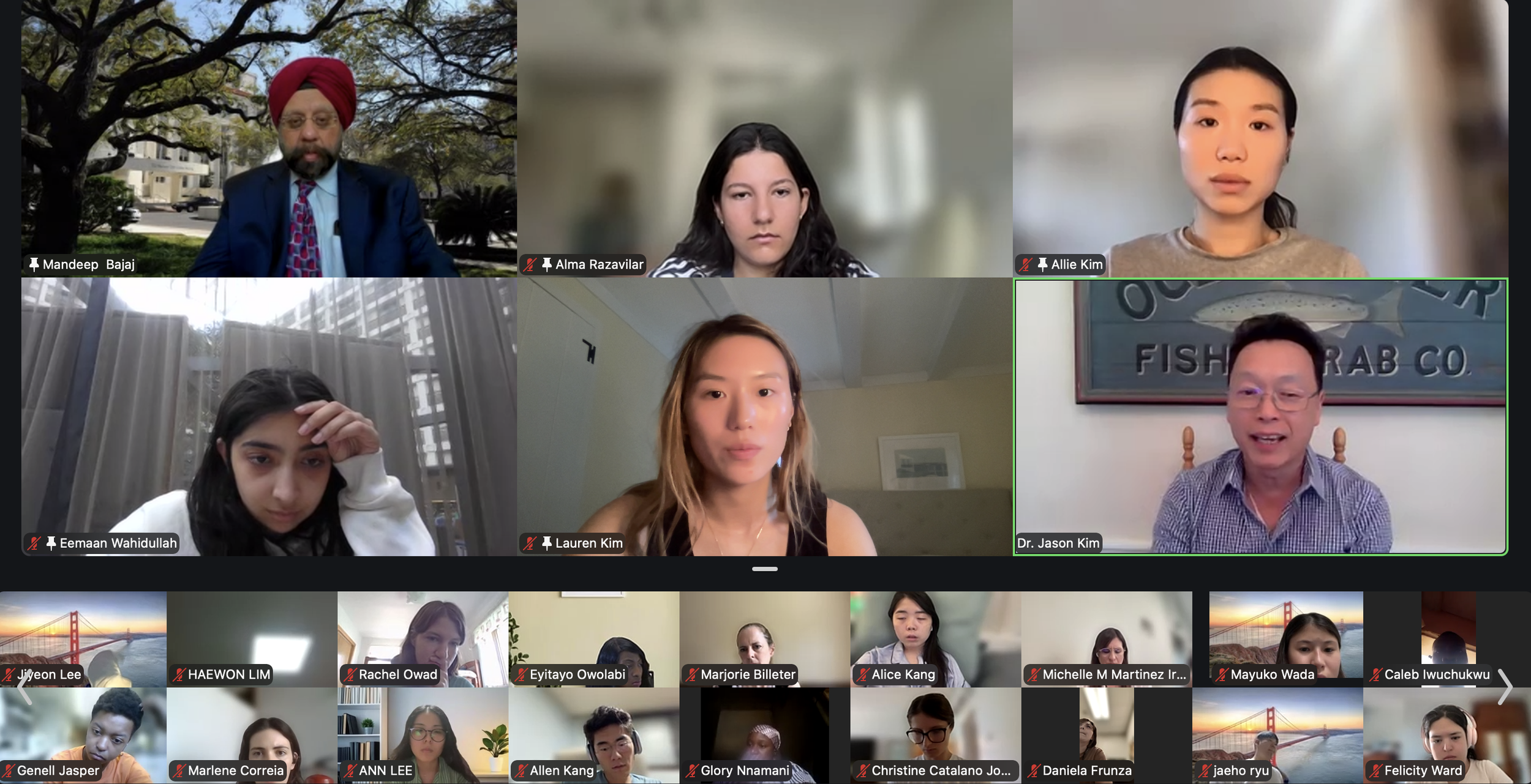
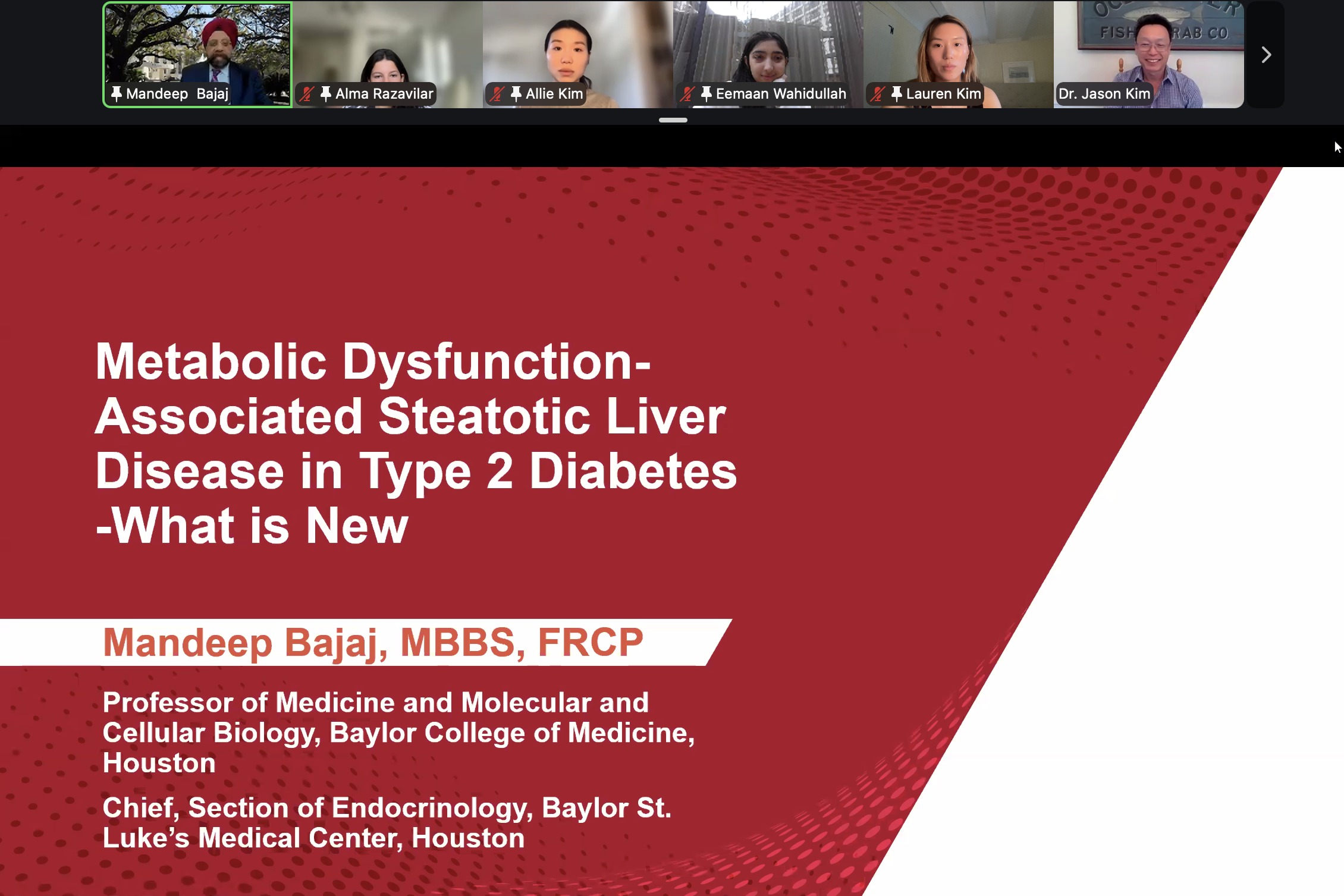
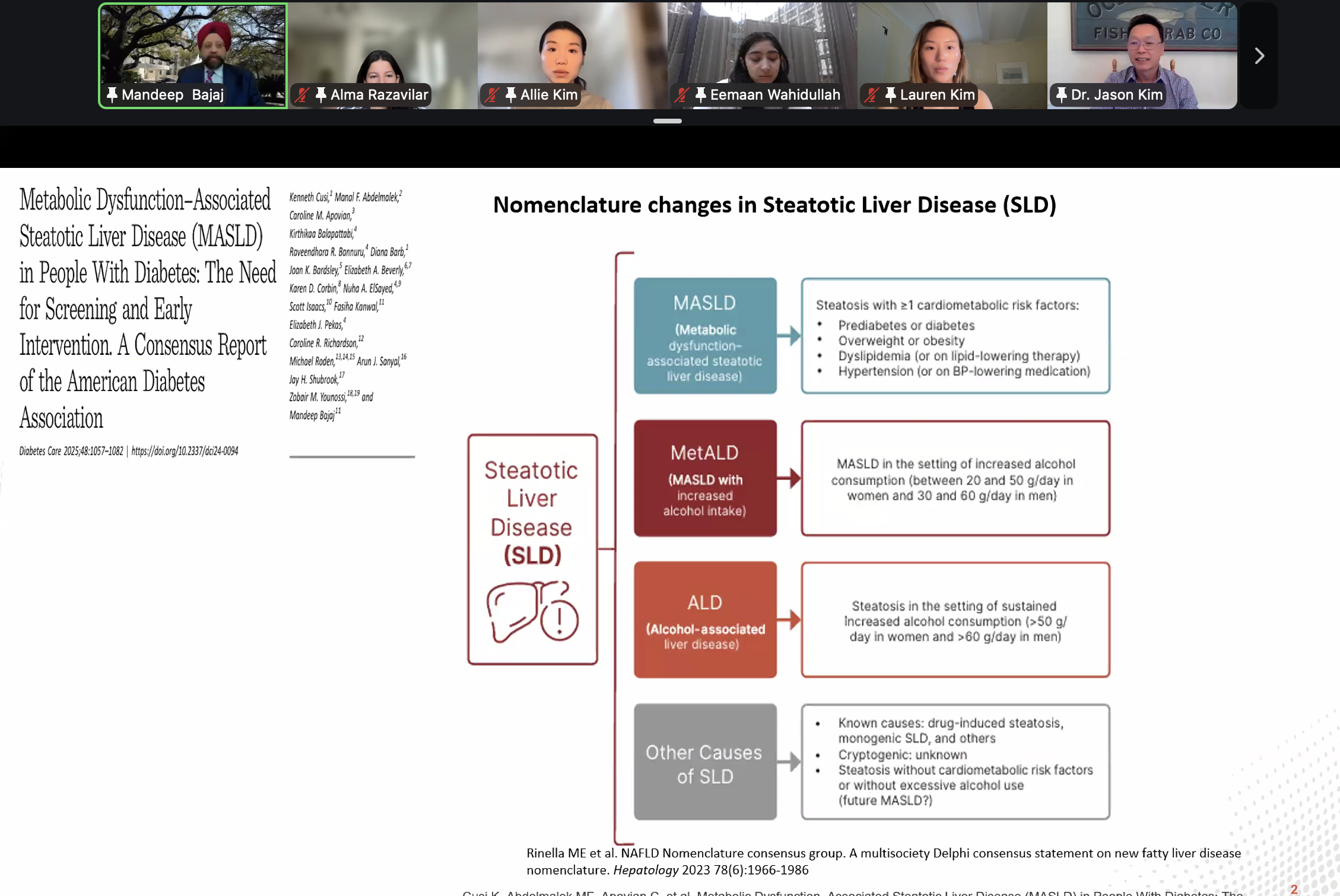
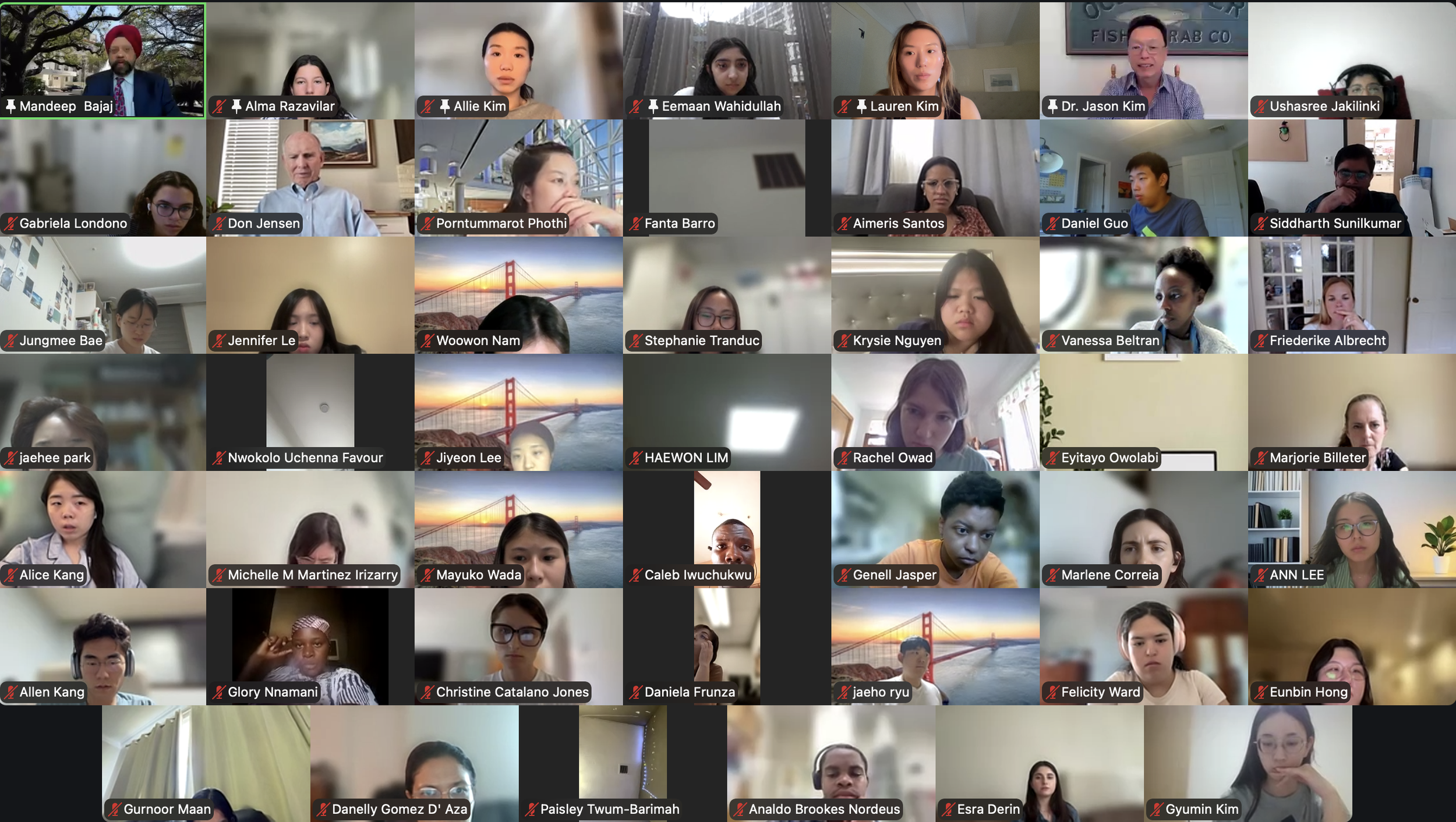
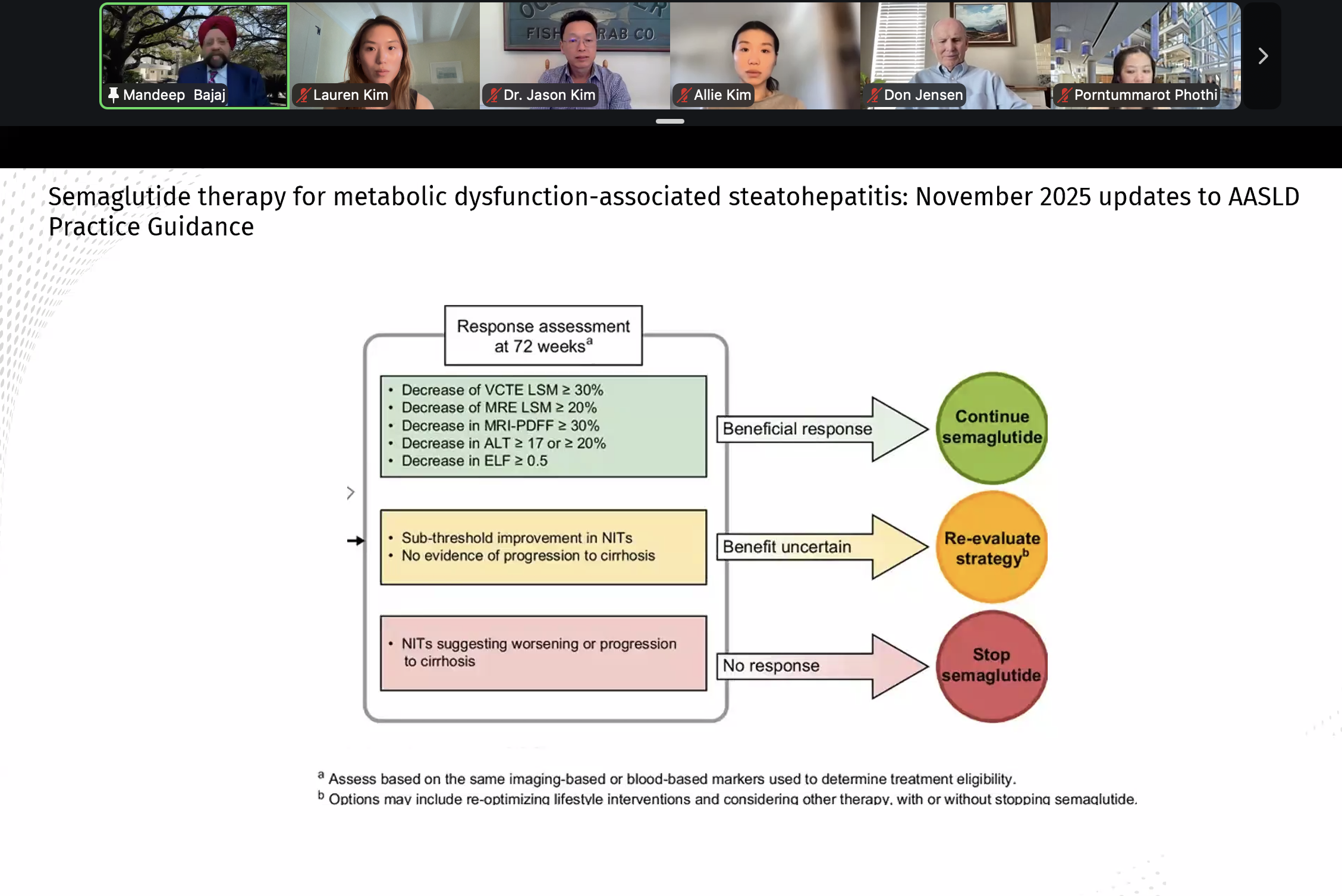
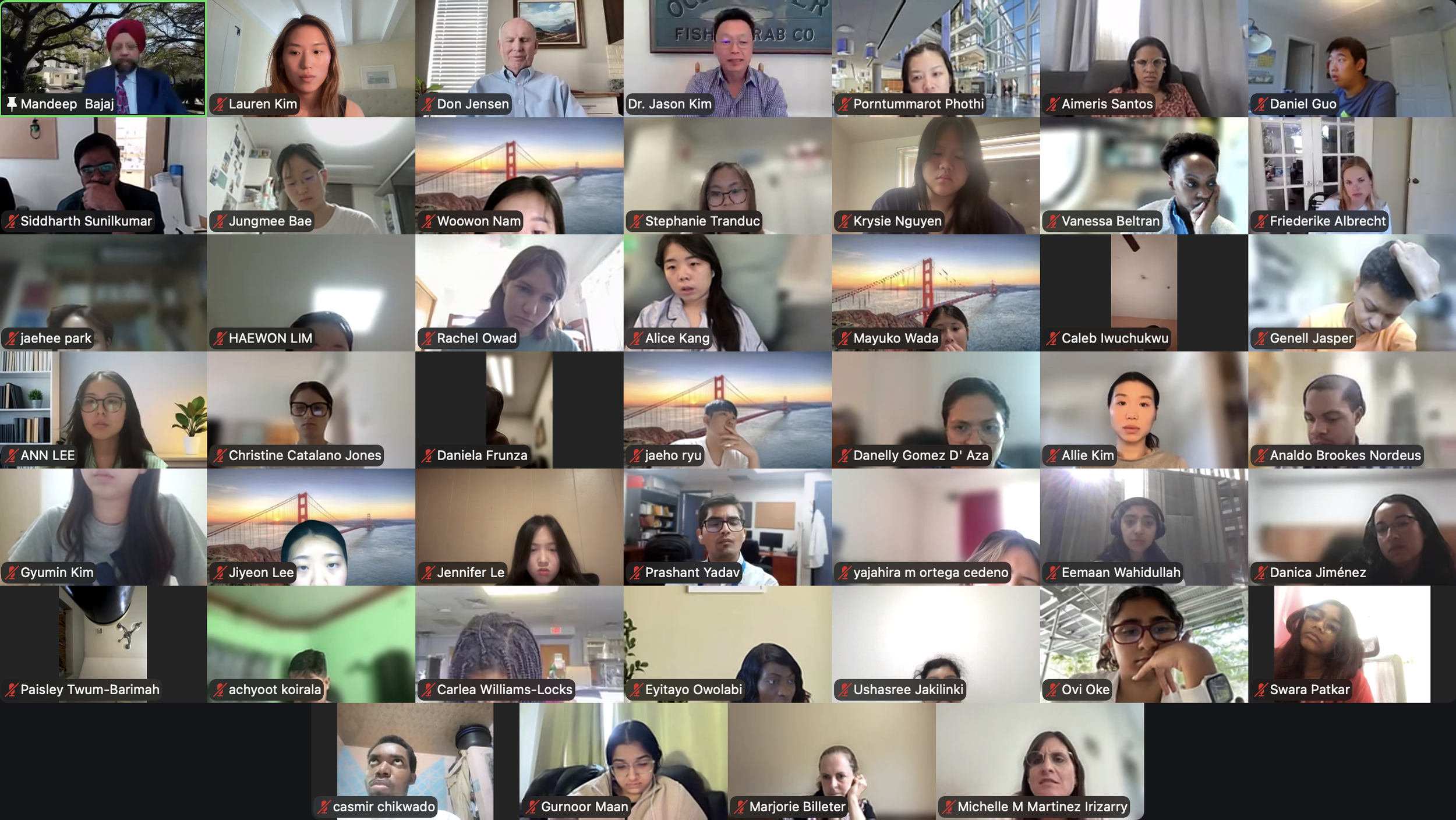
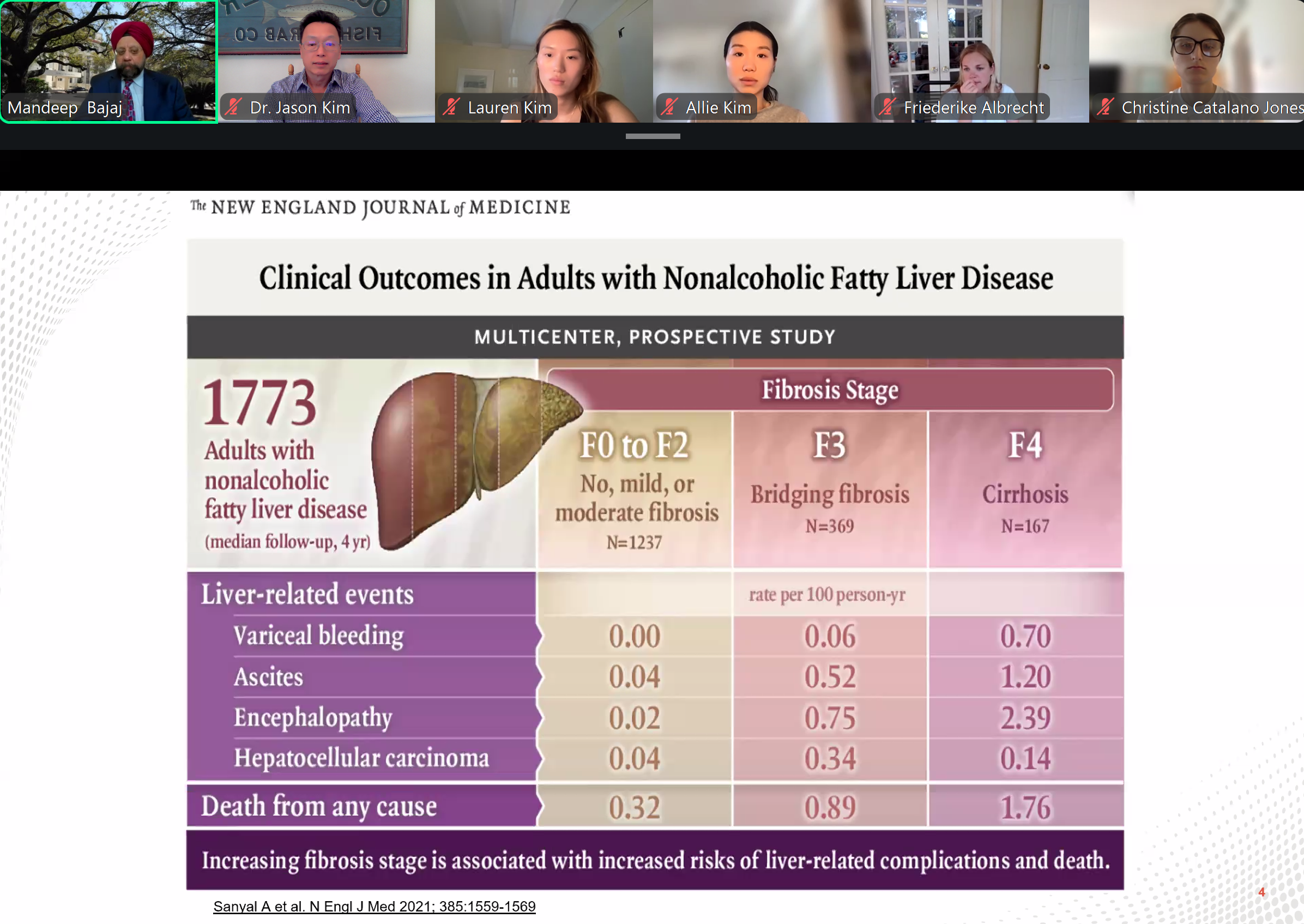
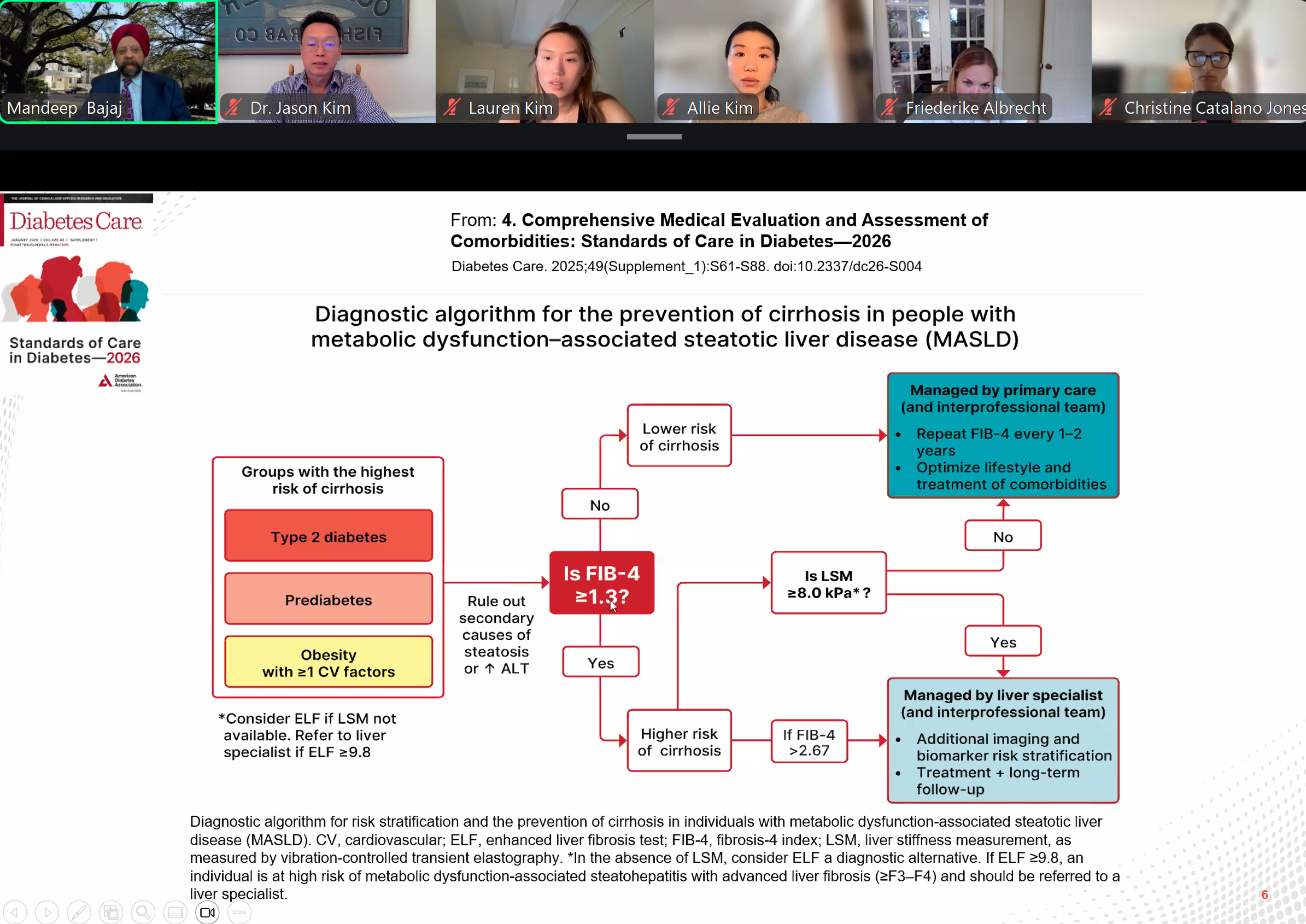
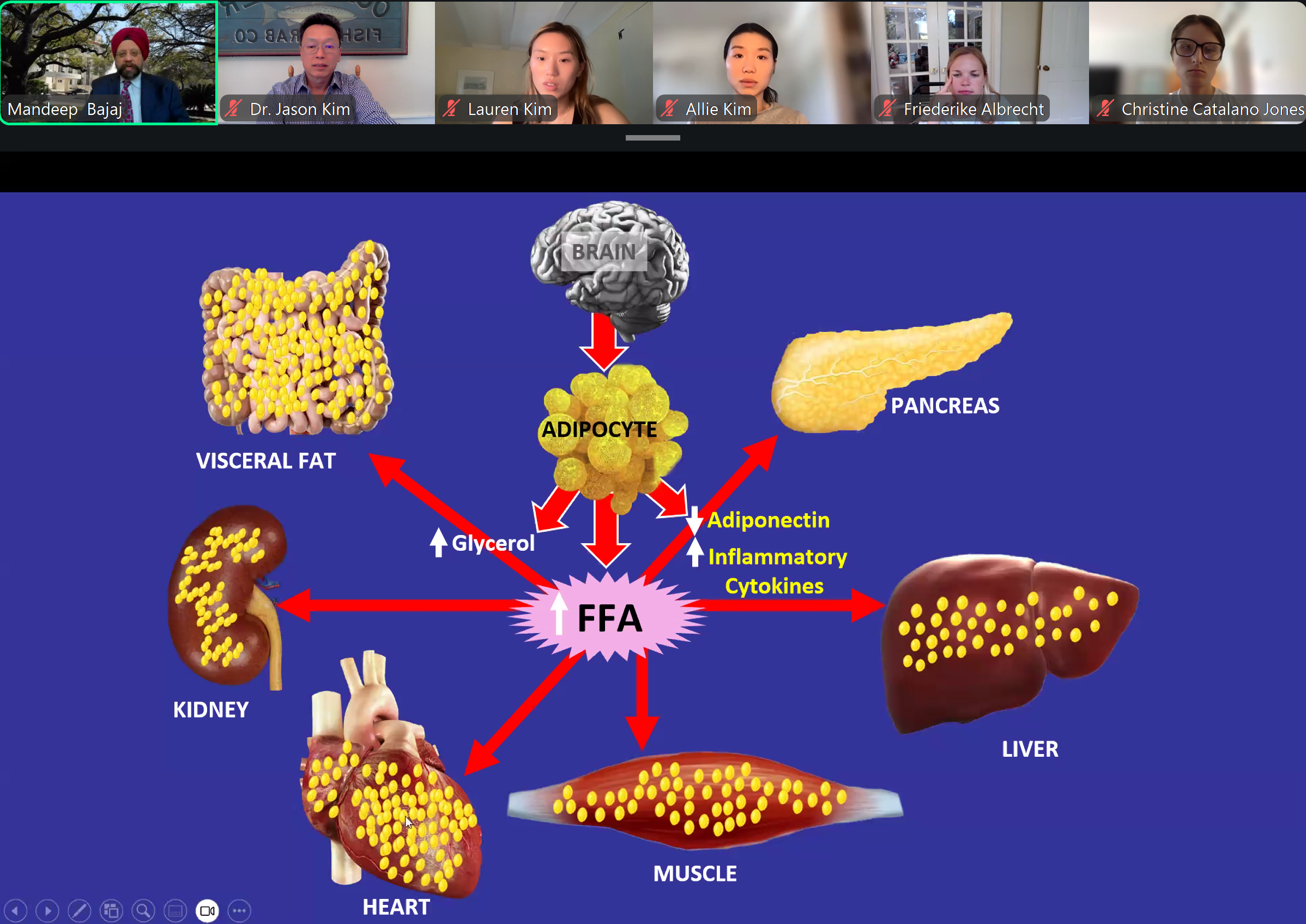
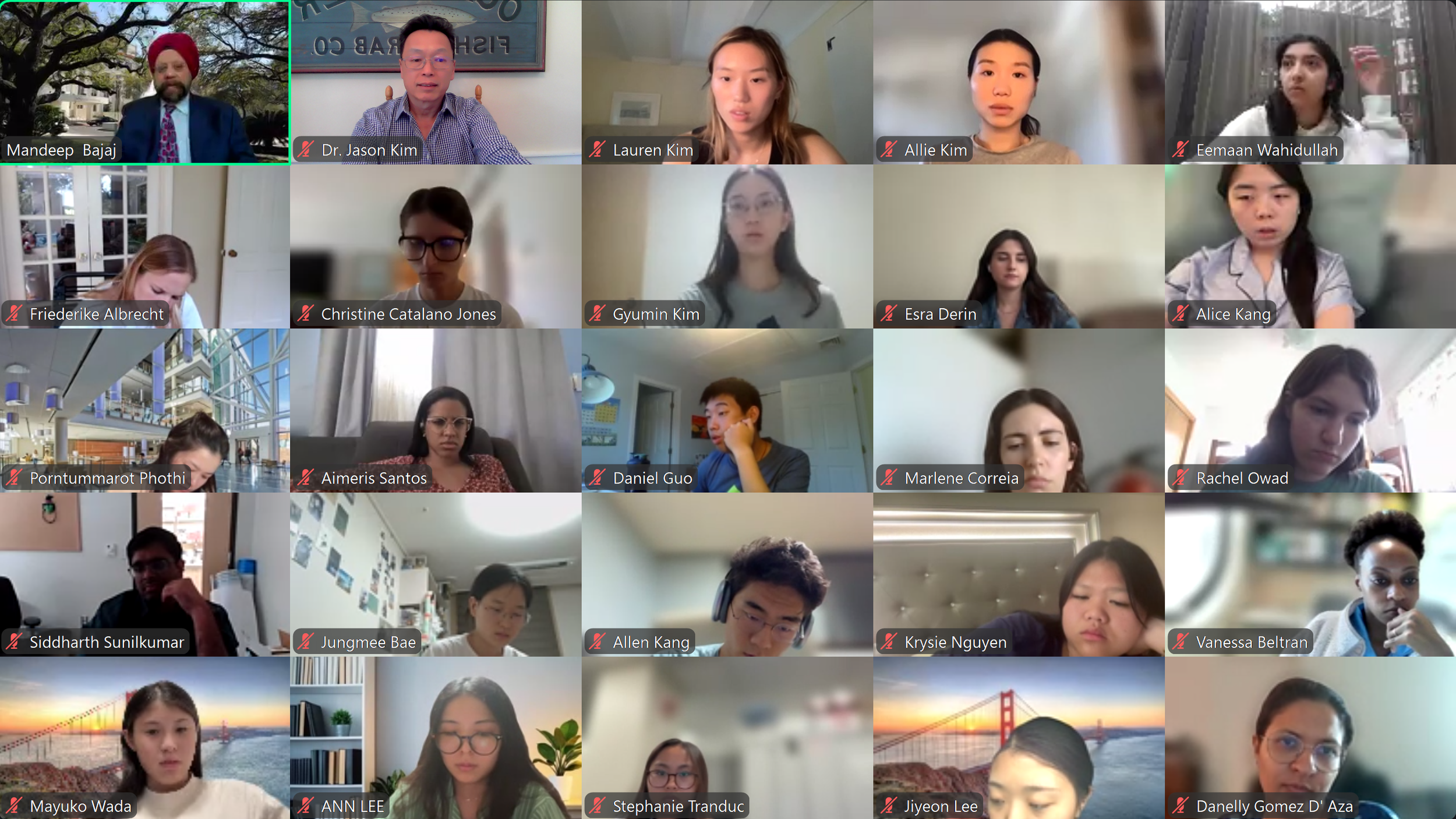
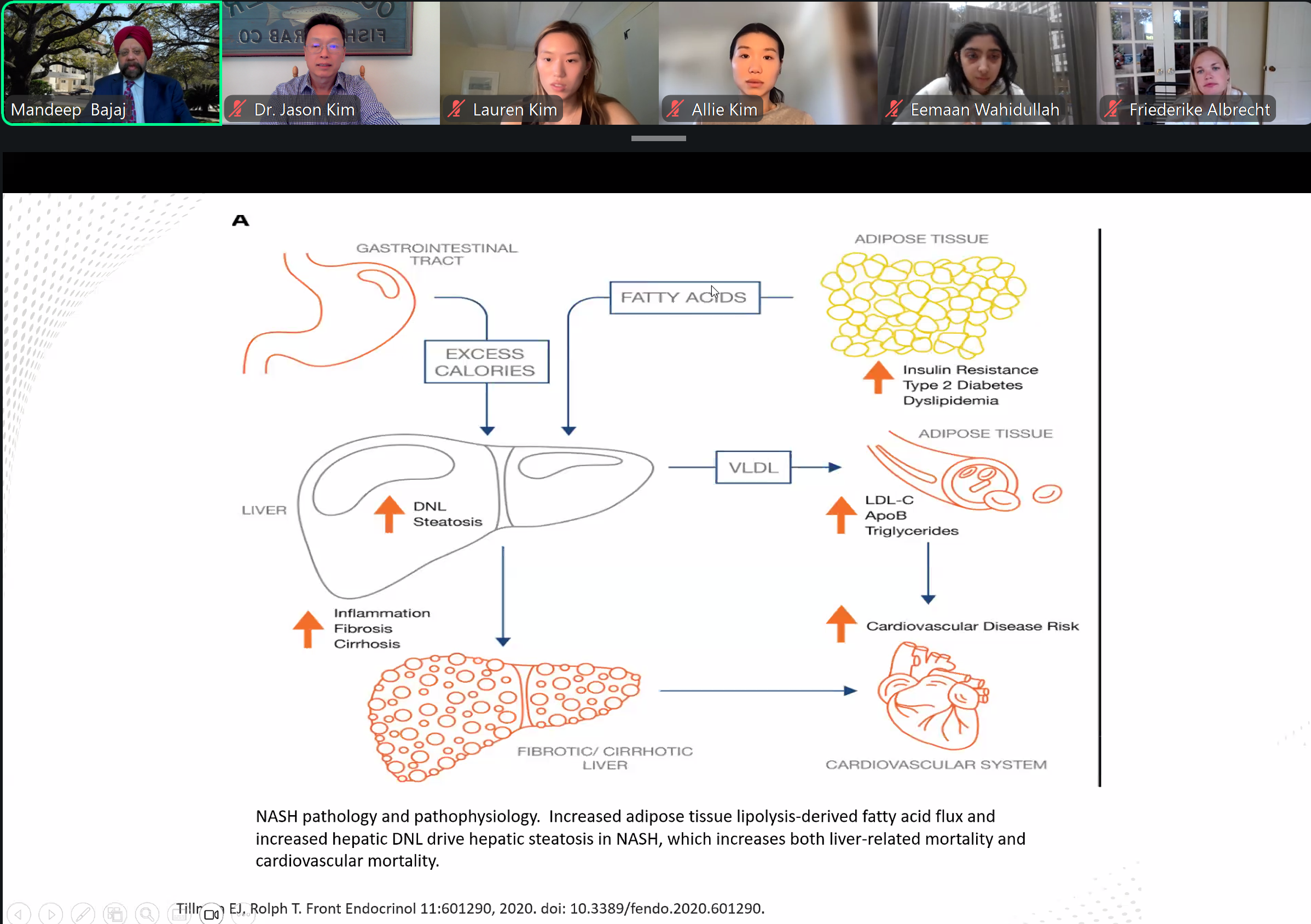
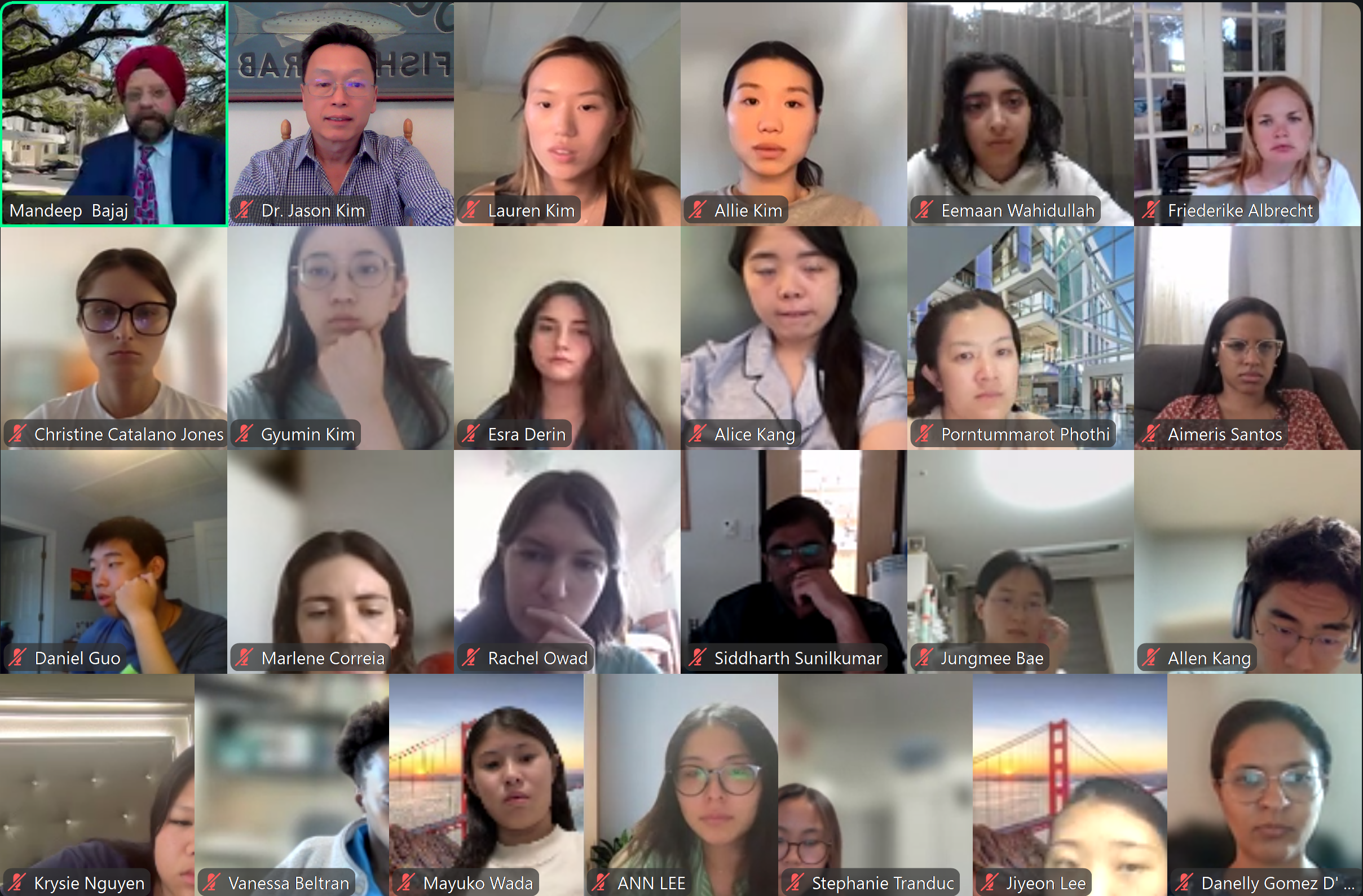
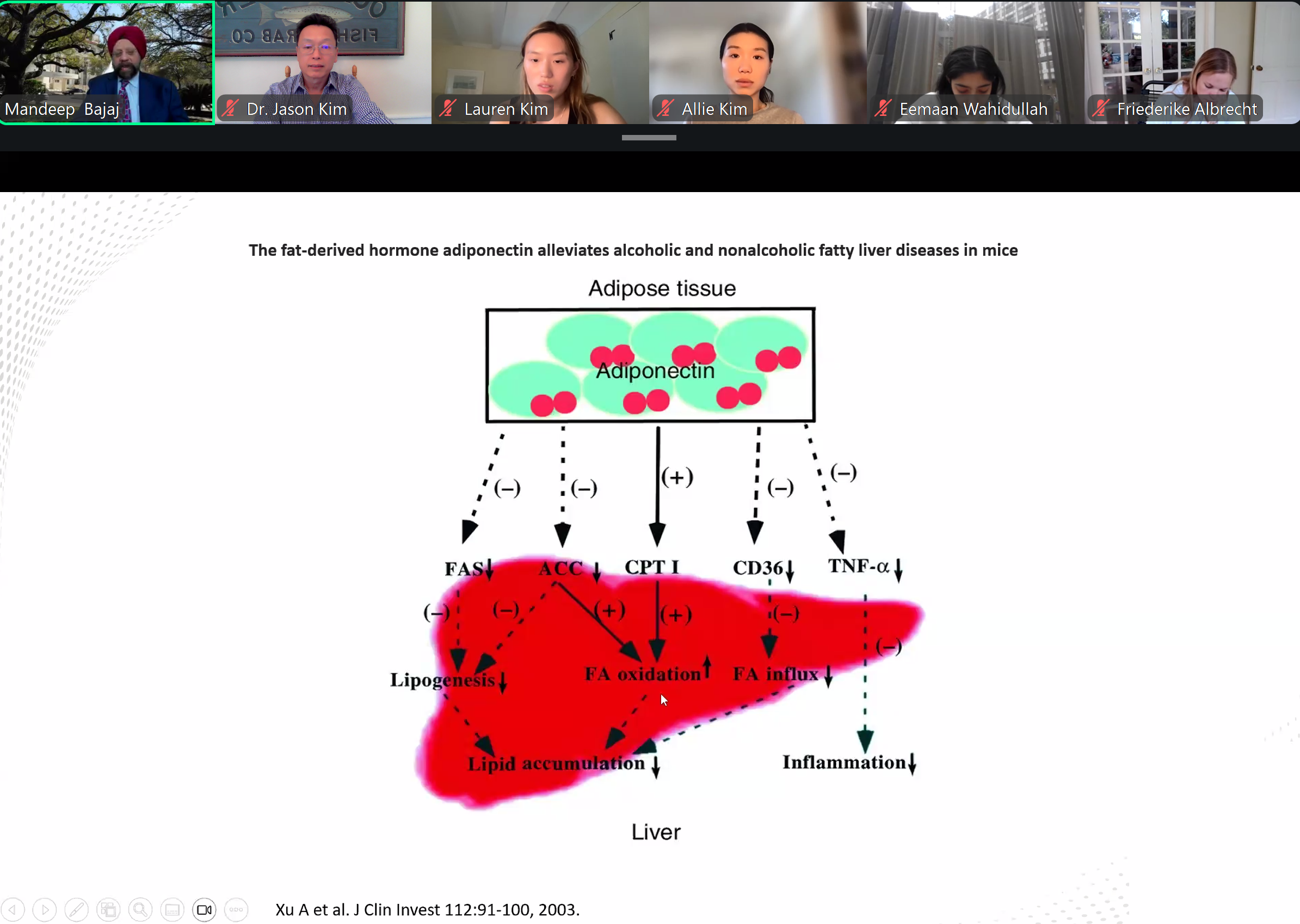
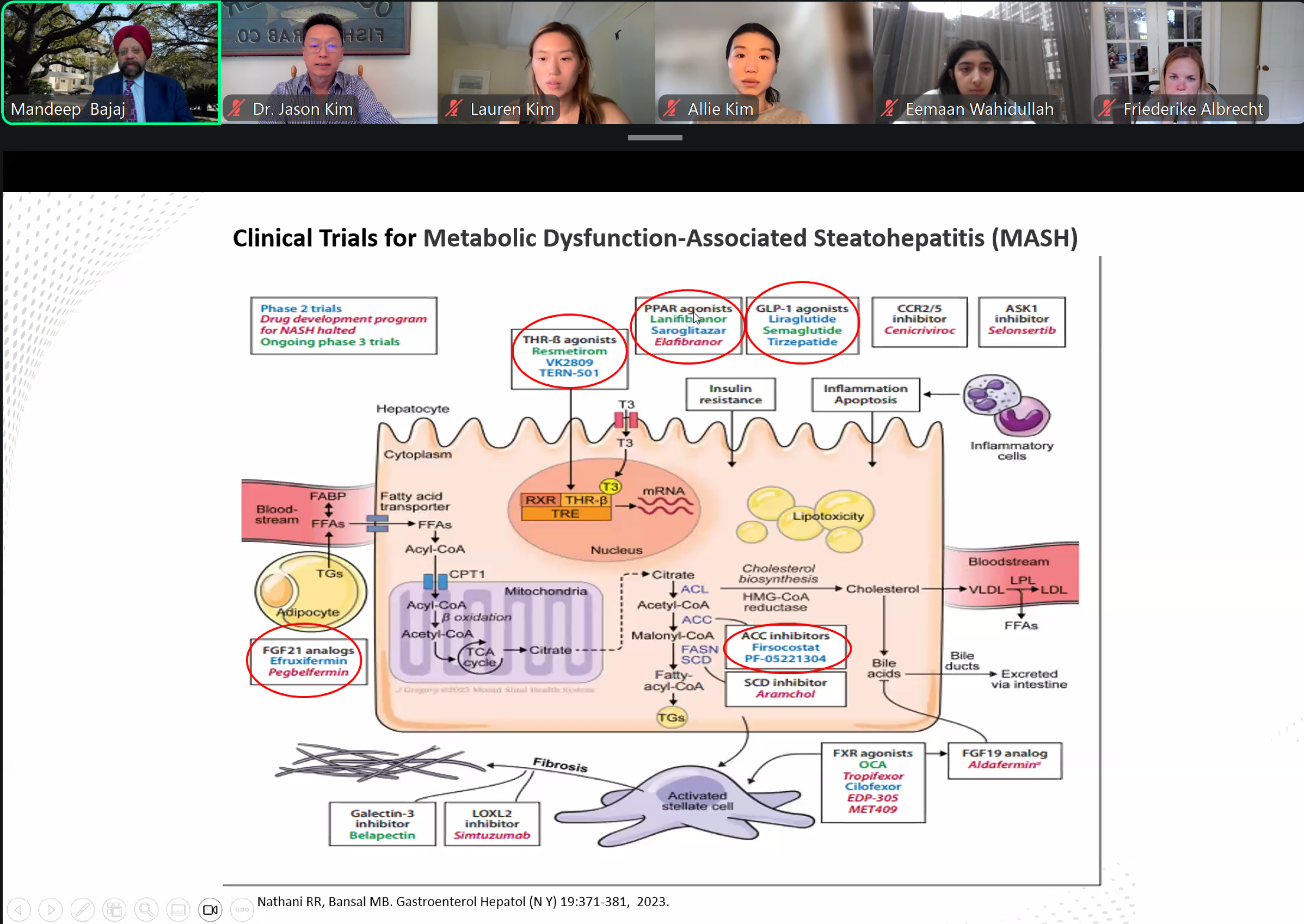
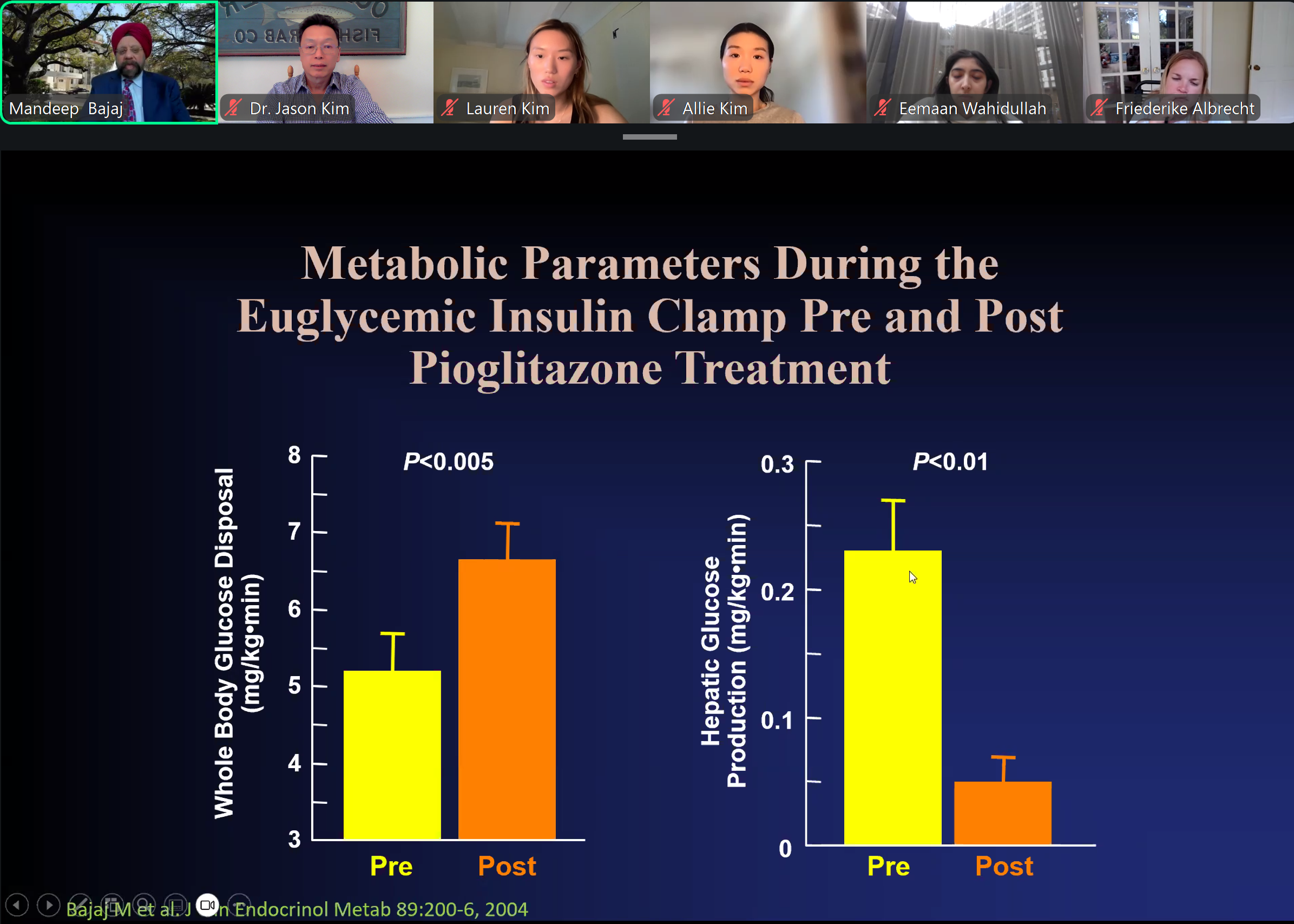
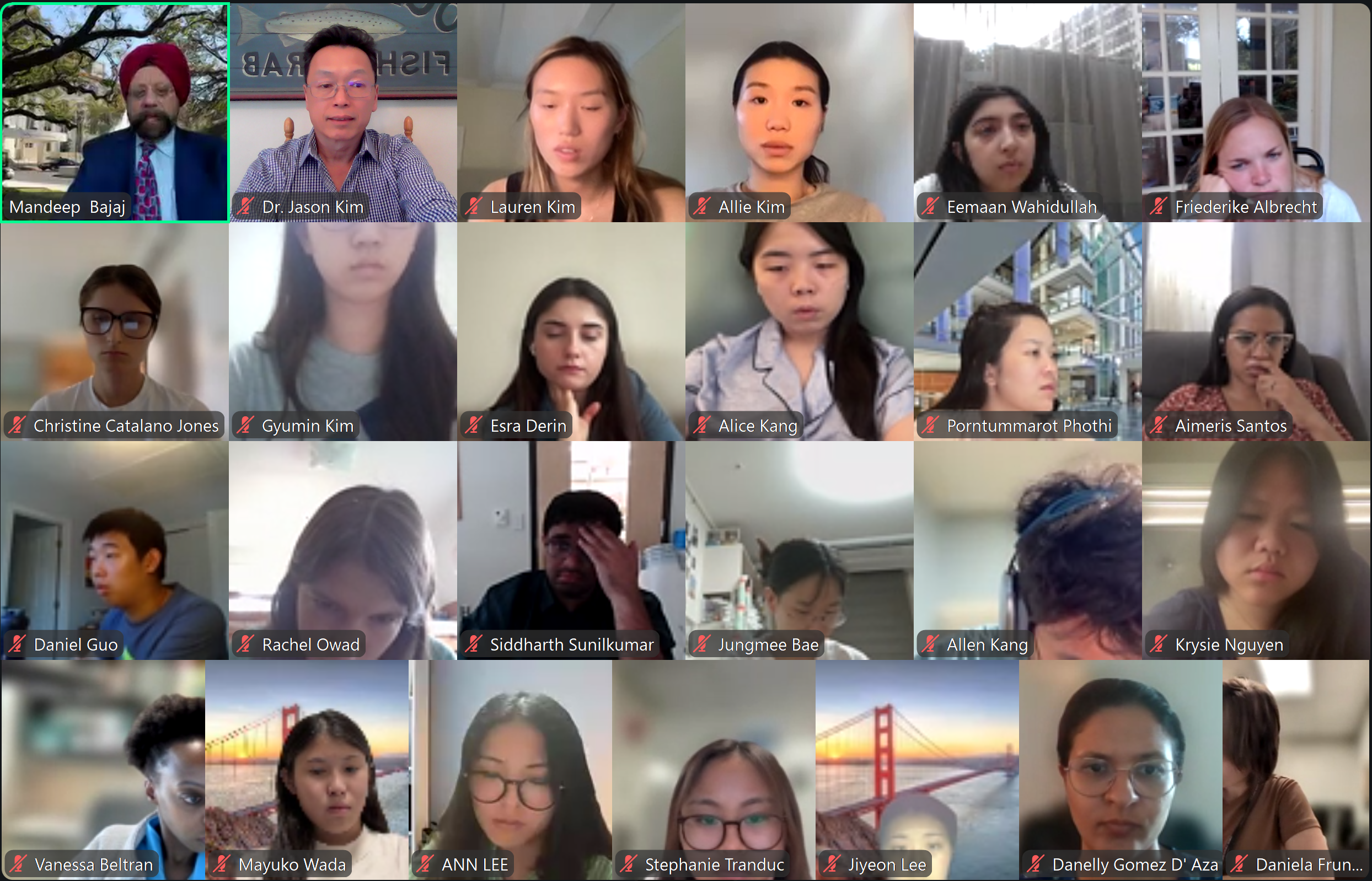
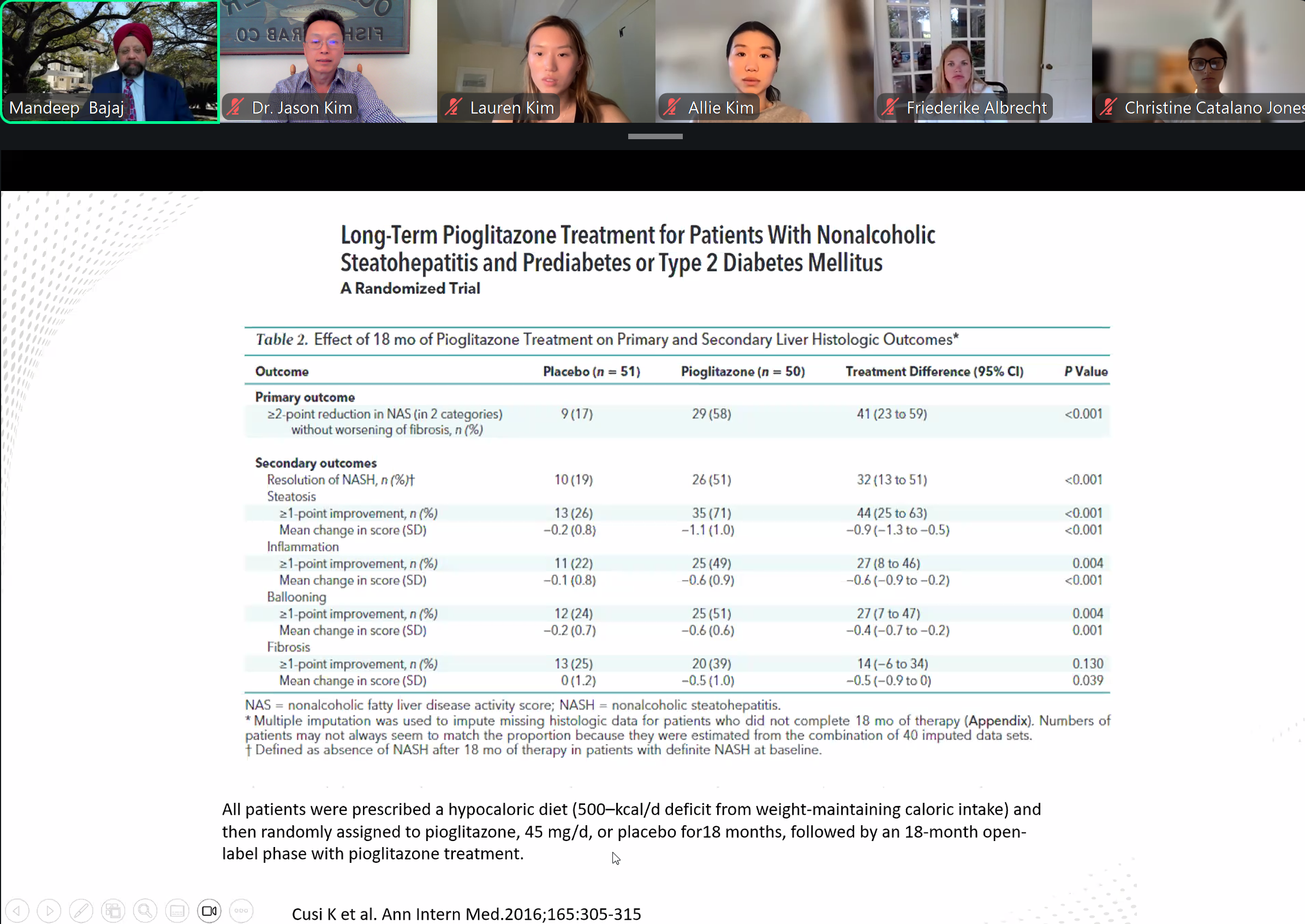
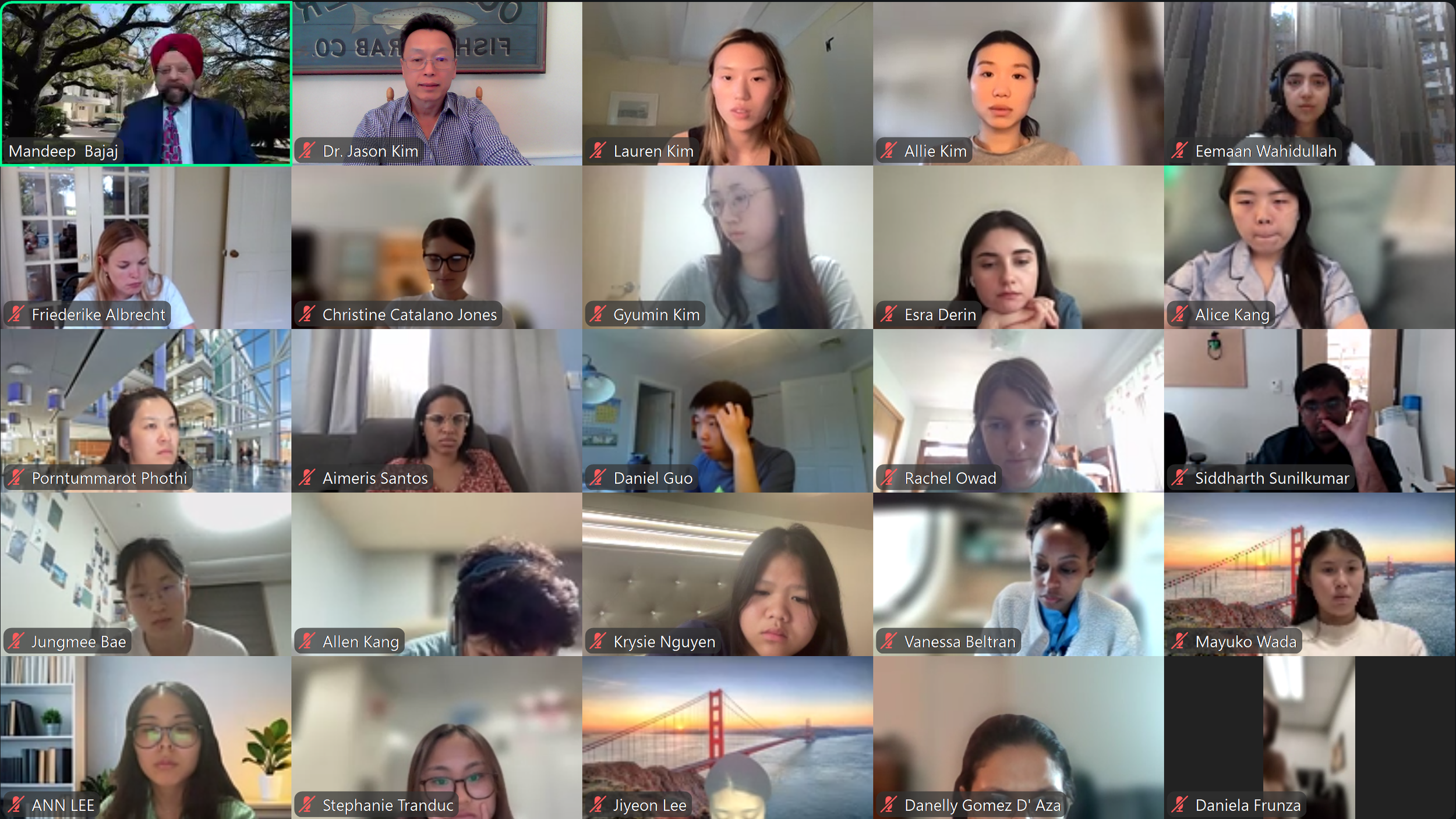
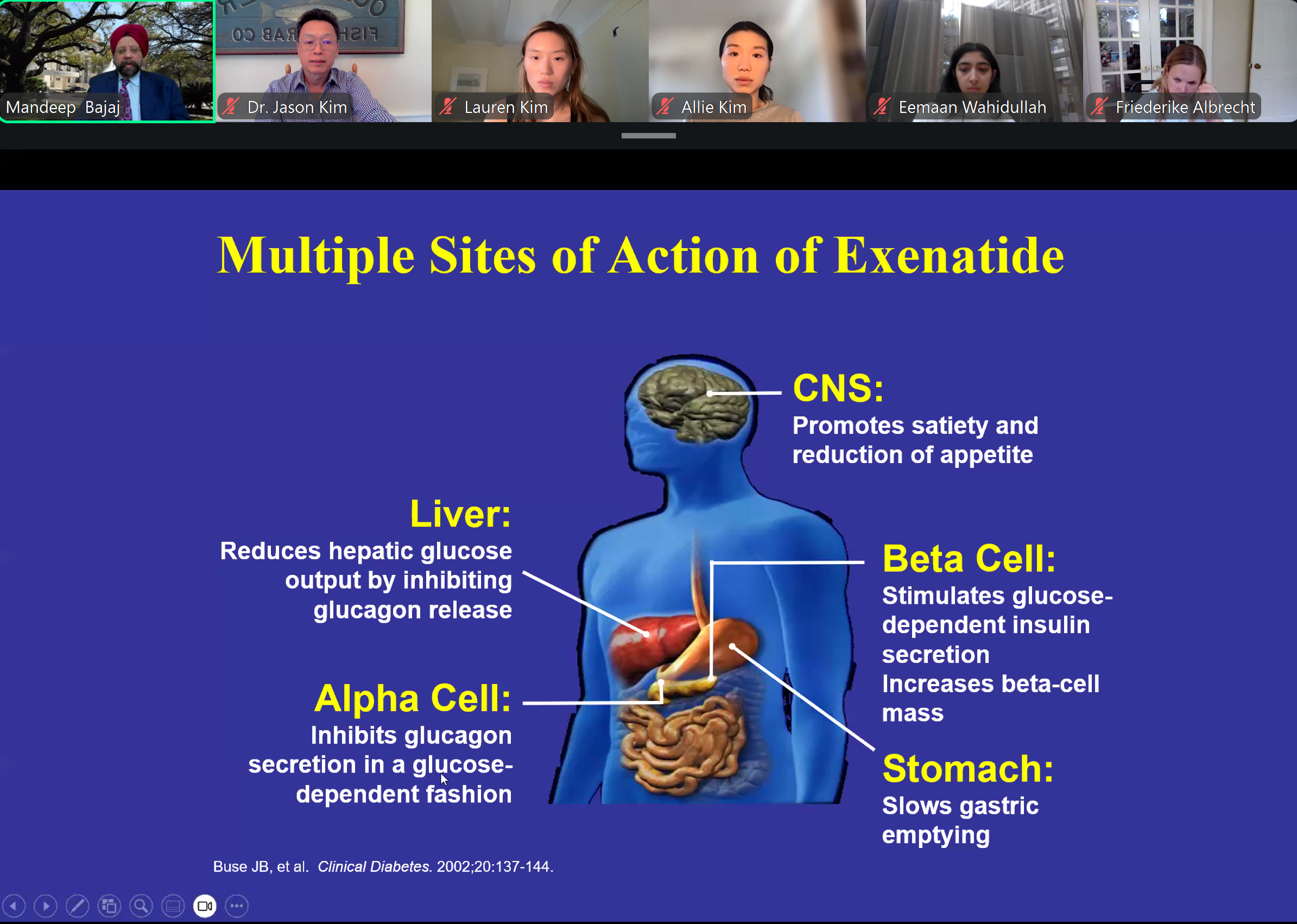
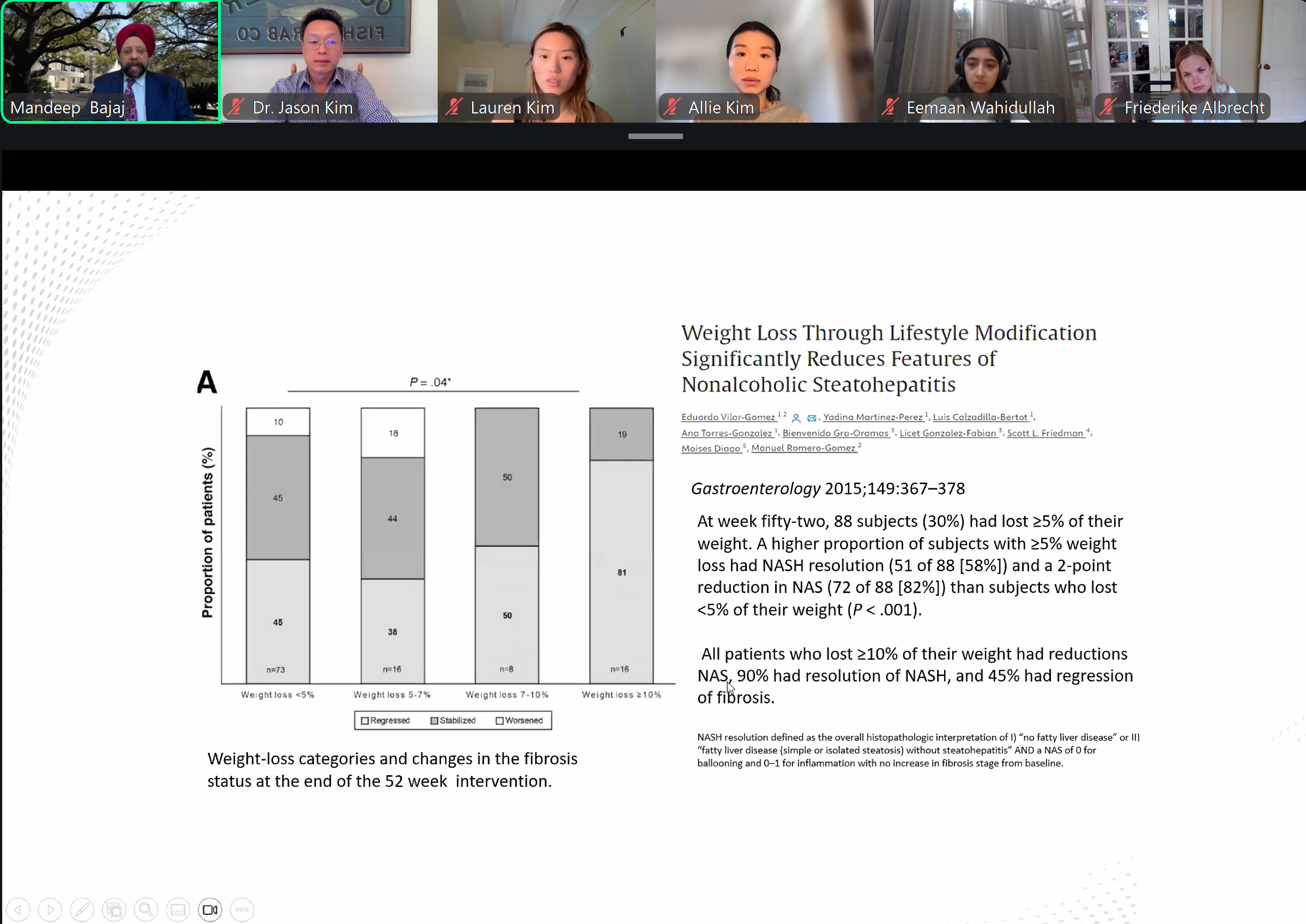
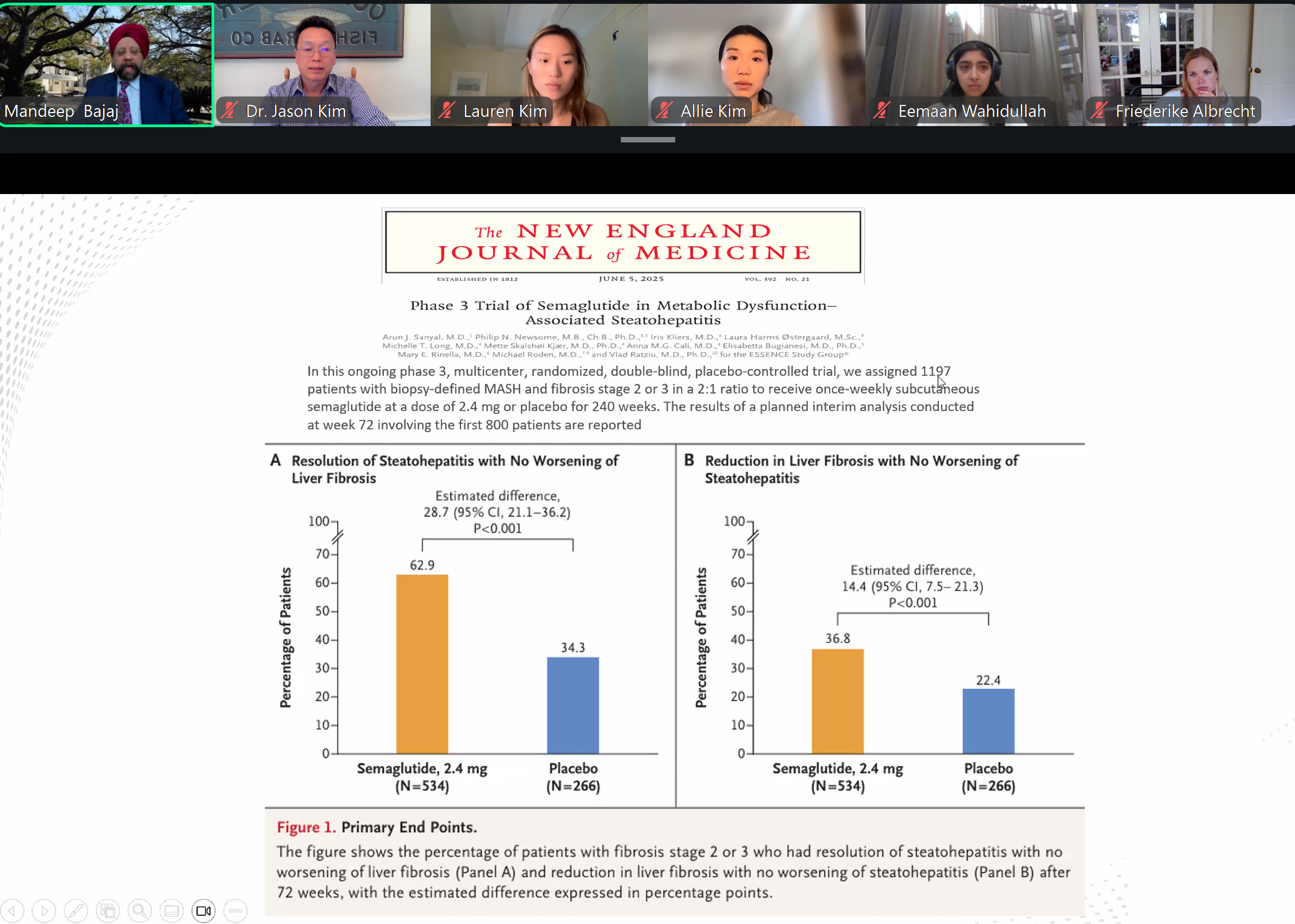
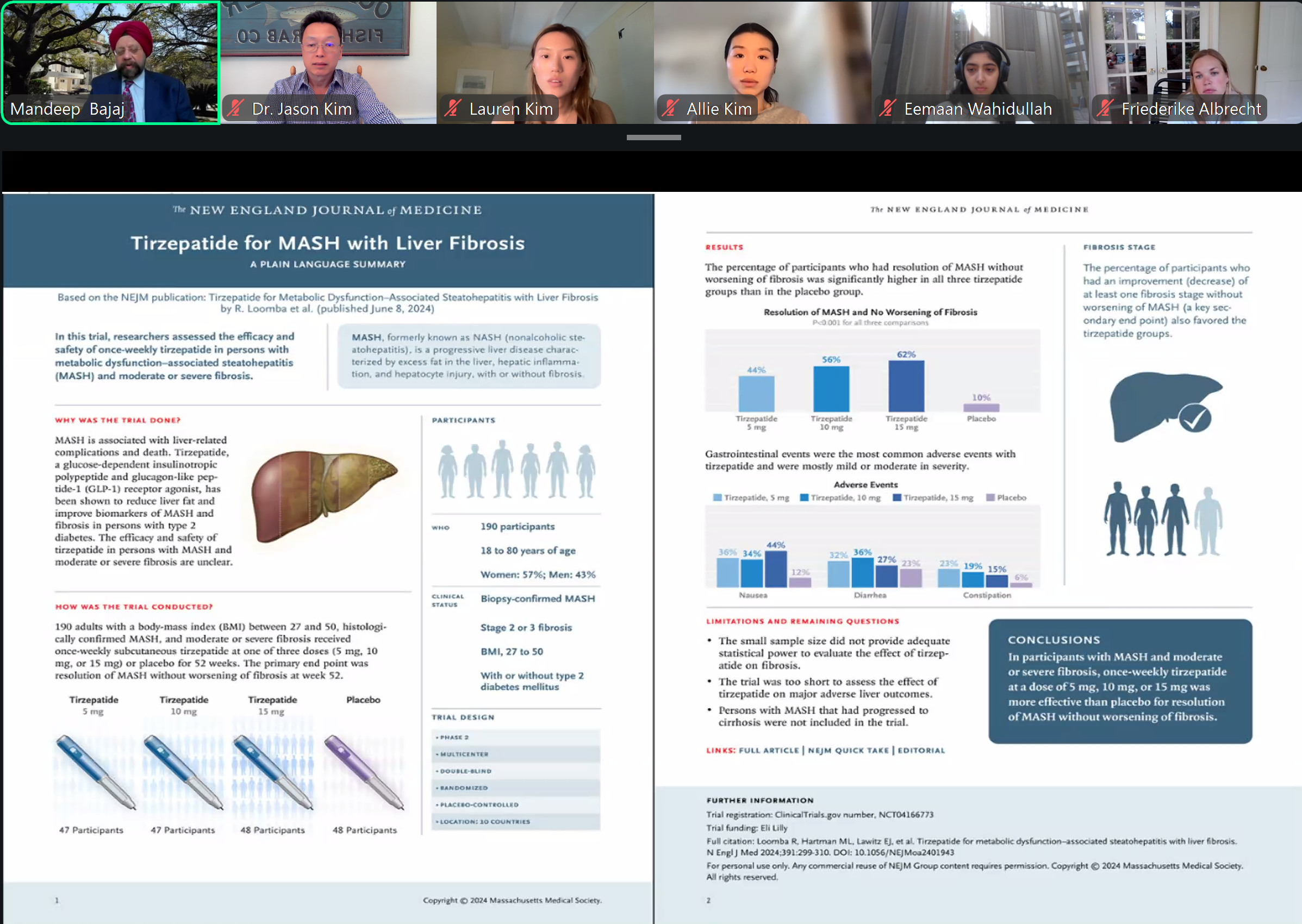
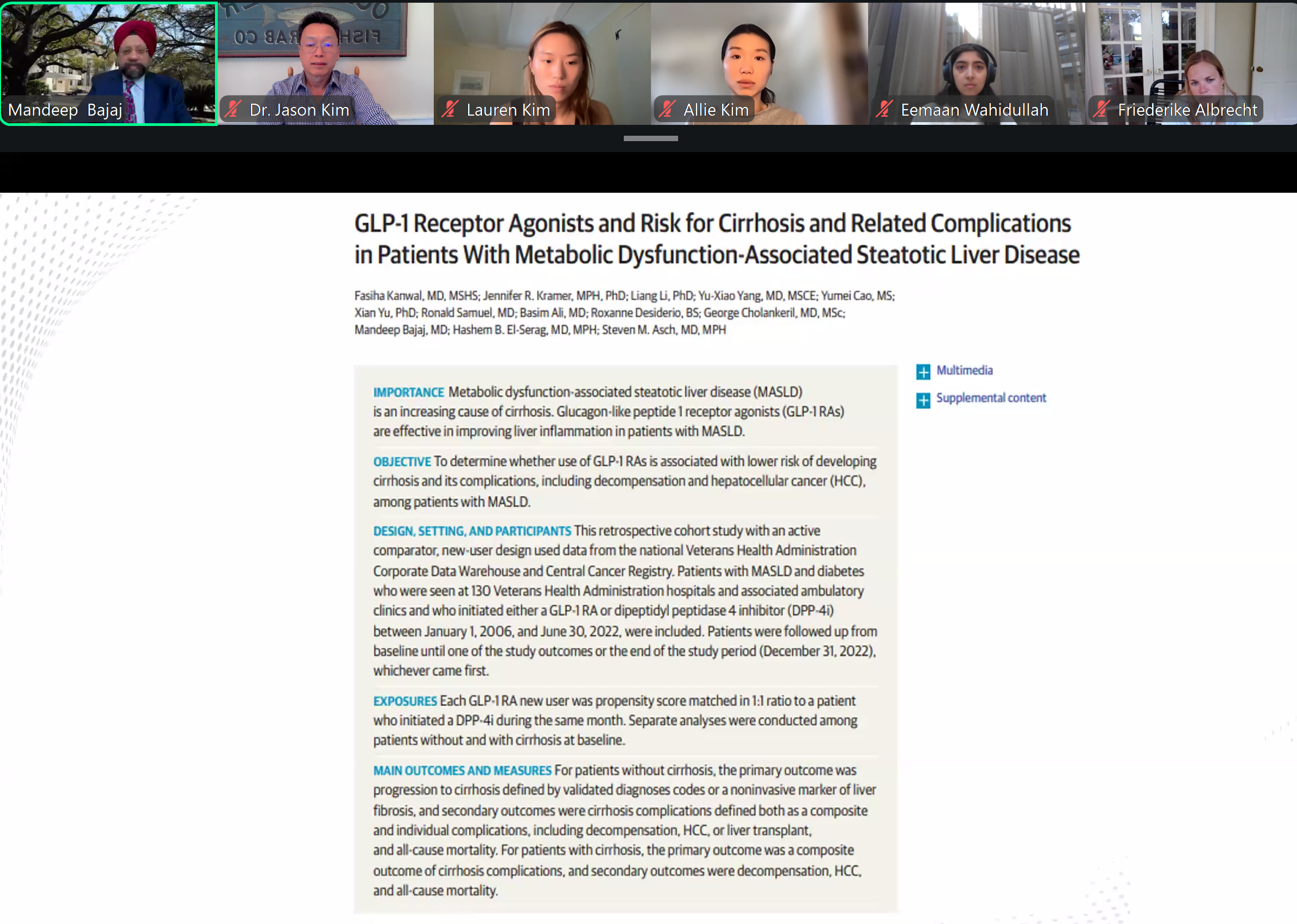
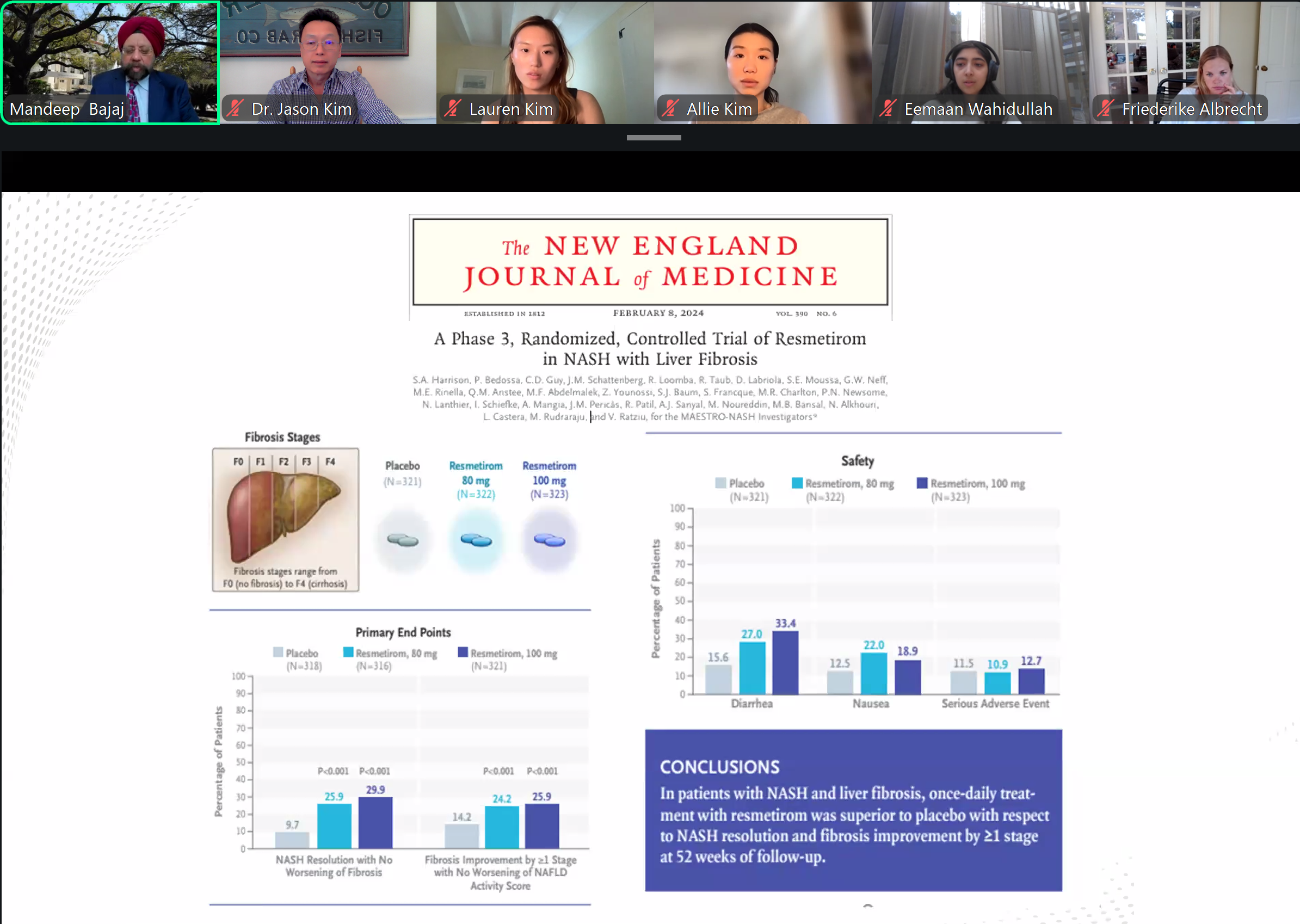
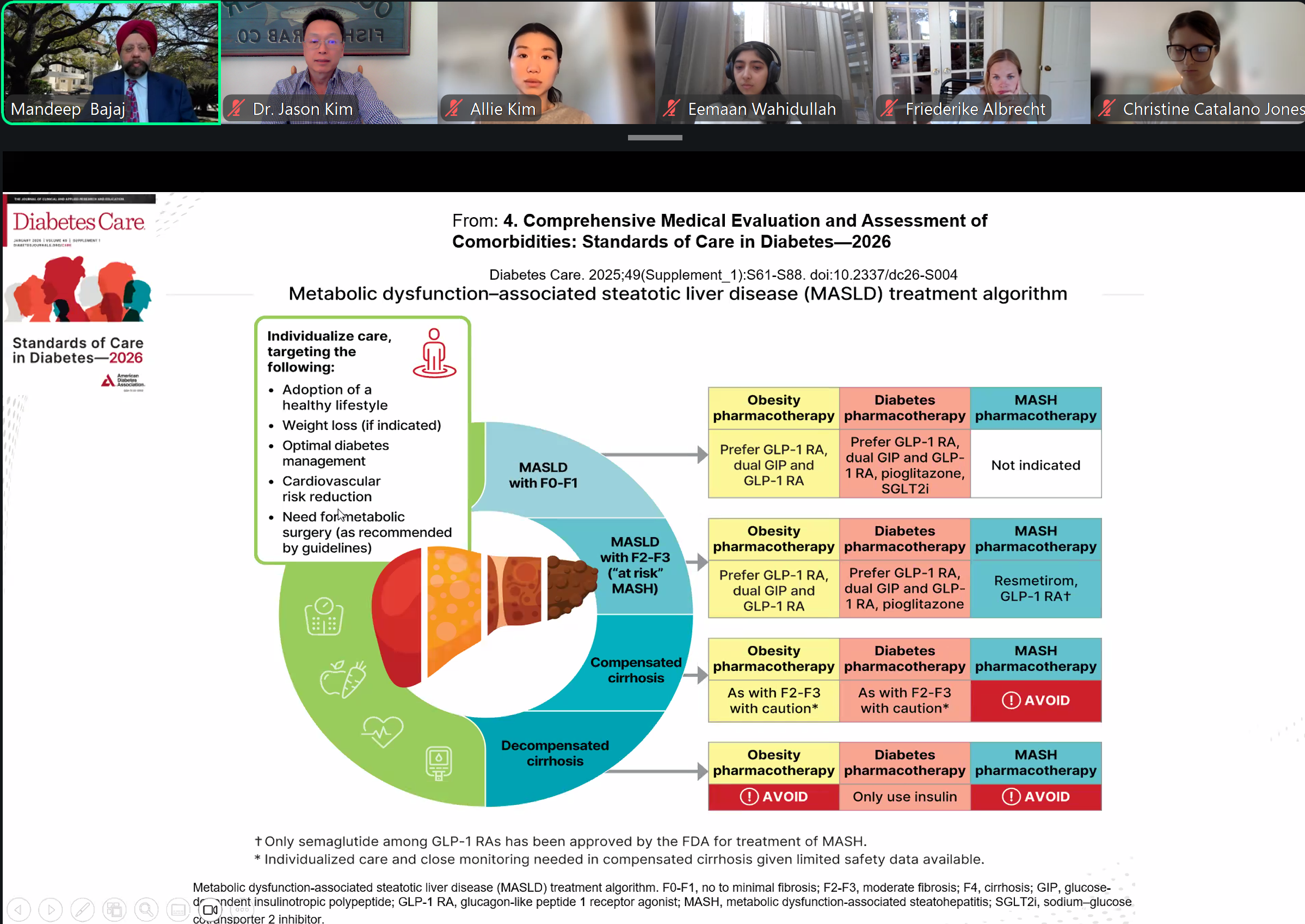
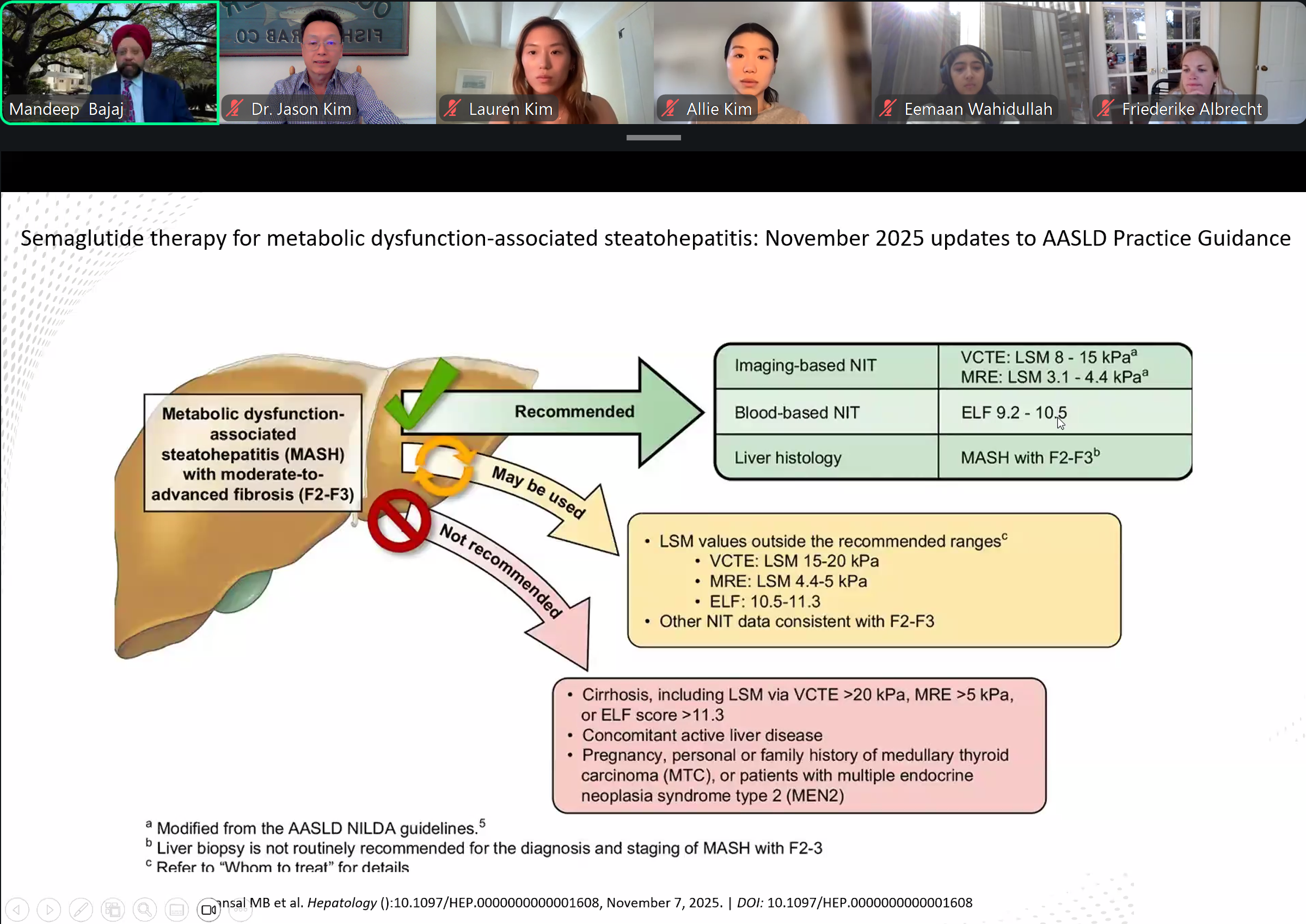
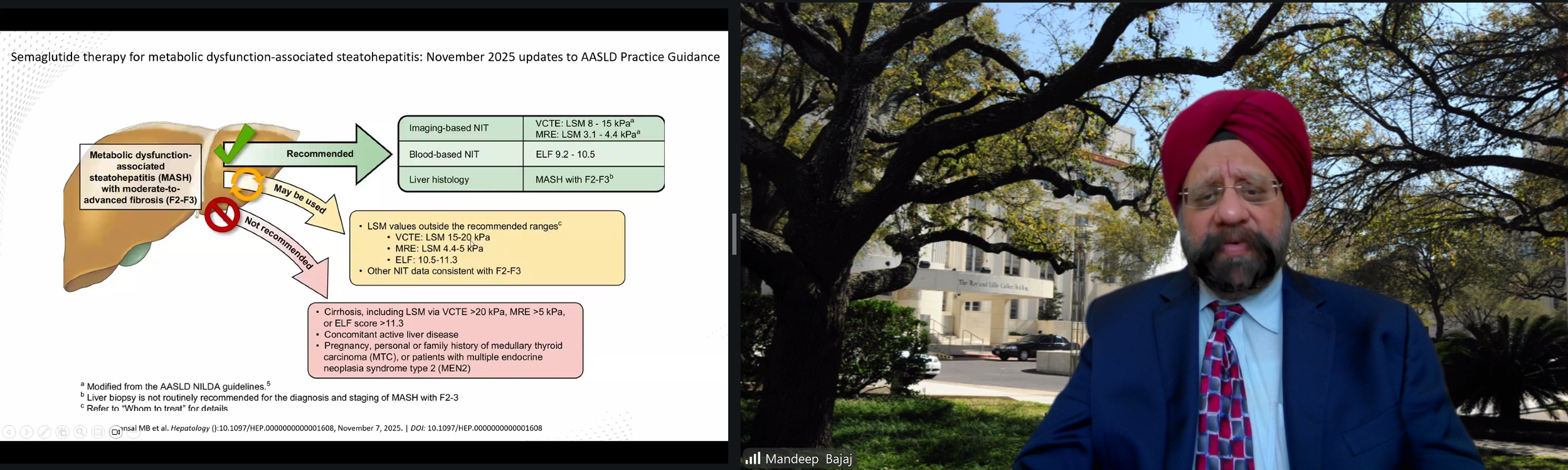
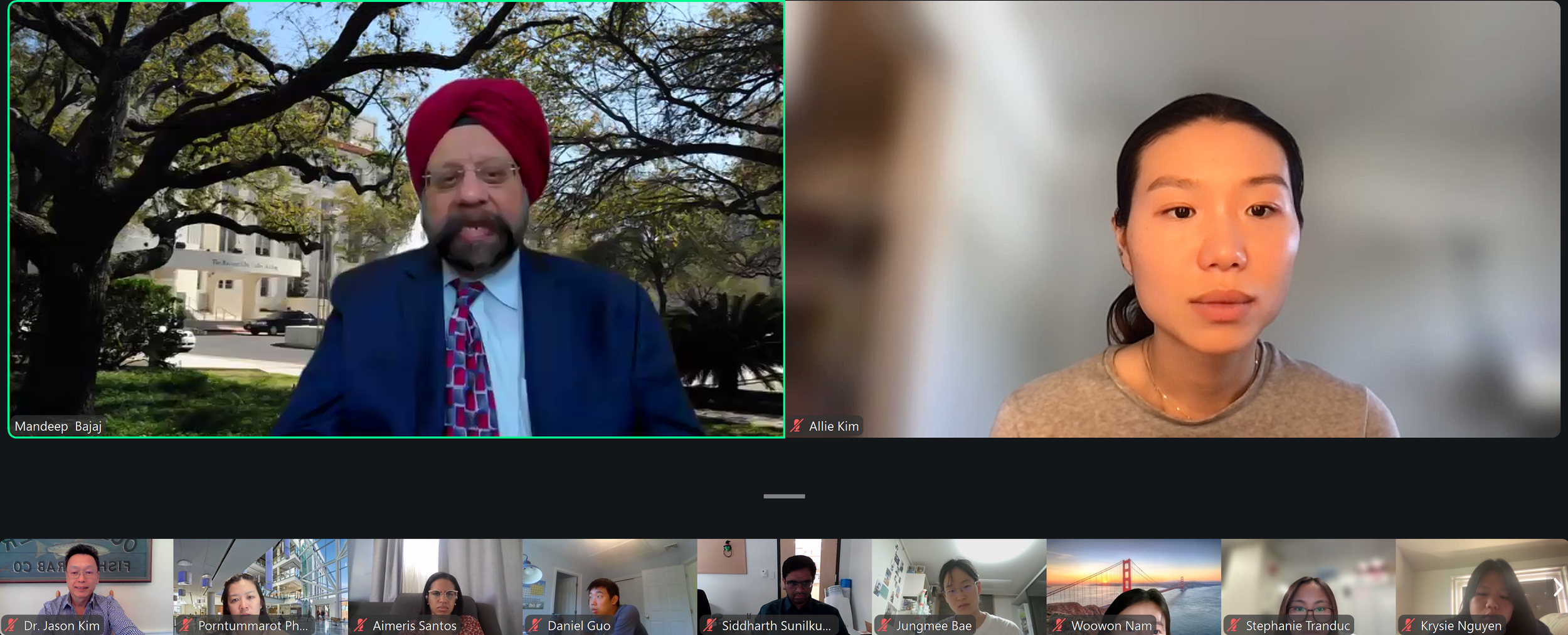
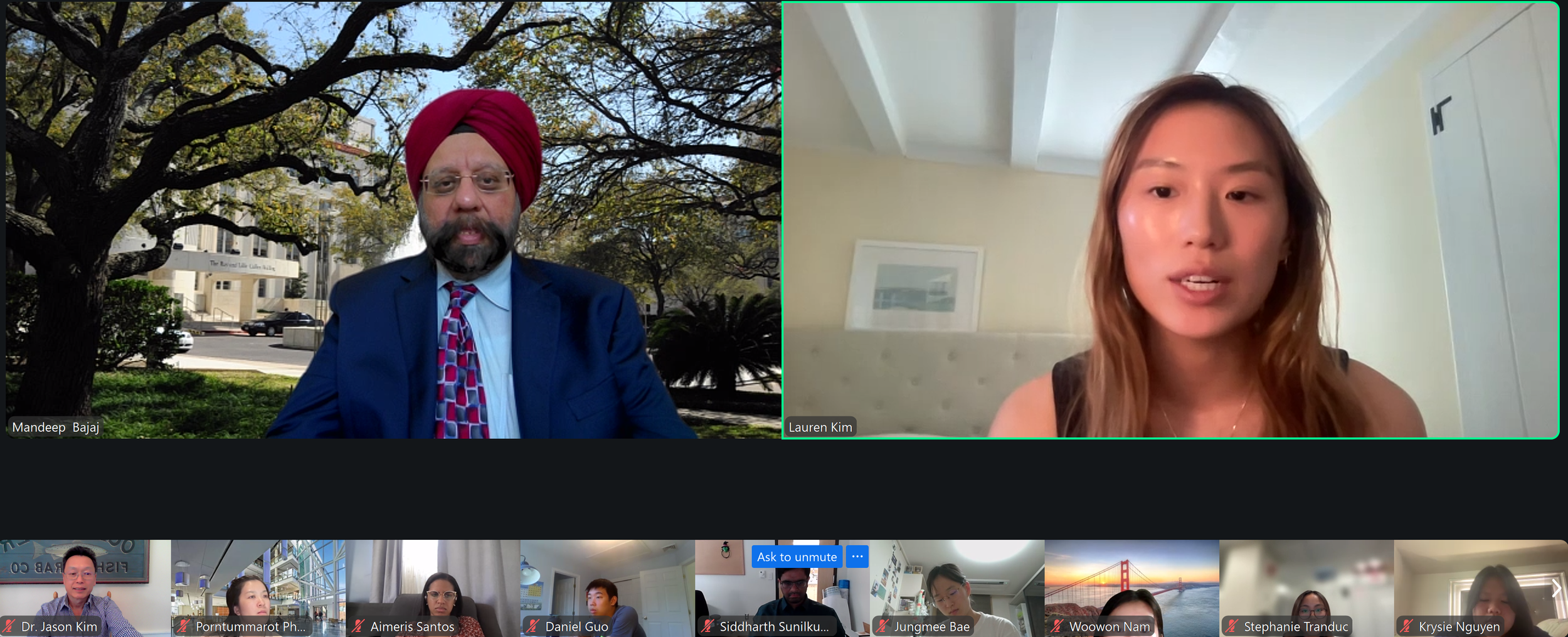
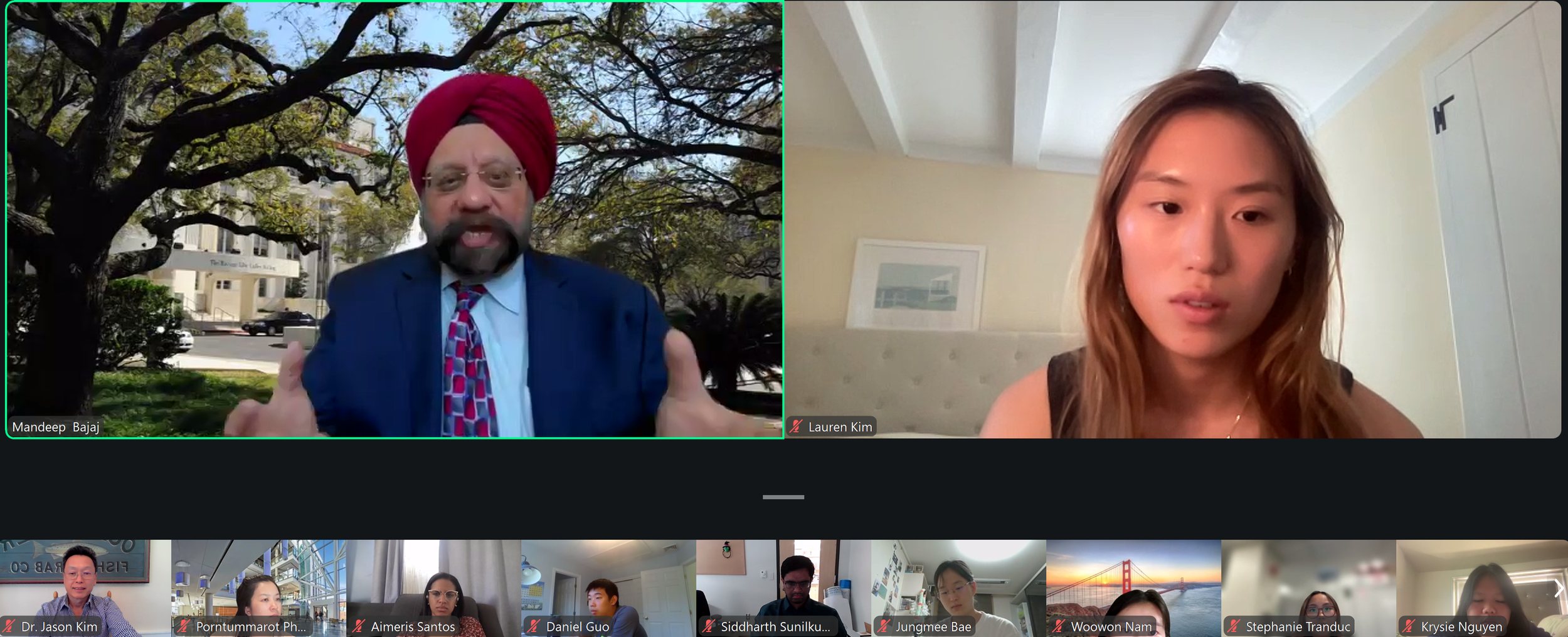
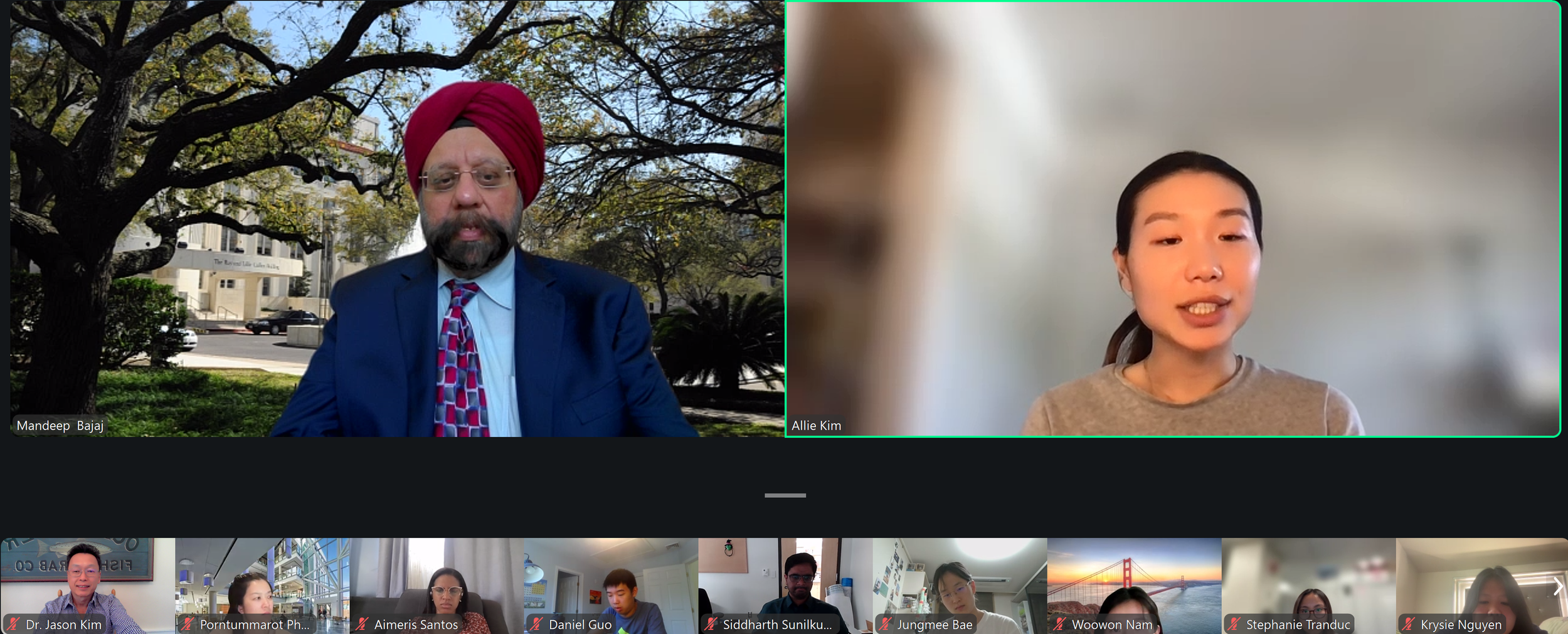
August 7, 2026
Open Mic Forum by Dr. Jason Kim (University of Massachusetts Chan Medical School)
Today’s DVSC26 program ends with an Open Mic Forum where our participants are invited to ask questions and engage in a lively discussion with video on and audio unmuted.
-
![Session 2: Opening Session & Introduction to Diabetes by Lauren, Allison, and Dr. Jason Kim (University of Massachusetts Medical School)]()
August 7, 2026 (Open Mic Forum - Part 1)
Session 5: “Balancing Risks and Benefits of GLP-1-based Therapies in Type 1 Diabetes” by Dr. Giulio Romeo (Harvard Medical School)
Session 6: “Metabolic Dysfunction-Associated Steatotic Liver Disease in Type 2 Diabetes - What is New” by Dr. Mandeep Bajaj (Baylor College of Medicine)During Open Mic Forum, Dr. Kim answers questions from the audience and engages in an interactive discussion with video on and audio unmuted.
-
![]()
August 7, 2026 (Open Mic Forum - Part 2)
Session 5: “Balancing Risks and Benefits of GLP-1-based Therapies in Type 1 Diabetes” by Dr. Giulio Romeo (Harvard Medical School)
Session 6: “Metabolic Dysfunction-Associated Steatotic Liver Disease in Type 2 Diabetes - What is New” by Dr. Mandeep Bajaj (Baylor College of Medicine)The DVC team invites our audience to ask questions and engage in a lively discussion with video on and audio unmuted.
-
![]()
August 7, 2026 (Open Mic Forum - Part 3)
Session 5: “Balancing Risks and Benefits of GLP-1-based Therapies in Type 1 Diabetes” by Dr. Giulio Romeo (Harvard Medical School)
Session 6: “Metabolic Dysfunction-Associated Steatotic Liver Disease in Type 2 Diabetes - What is New” by Dr. Mandeep Bajaj (Baylor College of Medicine)During Open Mic Forum, Dr. Kim answers questions from the audience and engages in an interactive discussion with video on and audio unmuted.
-
![]()
August 7, 2026 (Open Mic Forum - Part 4)
Session 5: “Balancing Risks and Benefits of GLP-1-based Therapies in Type 1 Diabetes” by Dr. Giulio Romeo (Harvard Medical School)
Session 6: “Metabolic Dysfunction-Associated Steatotic Liver Disease in Type 2 Diabetes - What is New” by Dr. Mandeep Bajaj (Baylor College of Medicine)During Open Mic Forum, Dr. Kim answers questions from the audience and engages in an interactive discussion with video on and audio unmuted.
-
![]()
August 7, 2026 (Open Mic Forum - Part 5)
Session 5: “Balancing Risks and Benefits of GLP-1-based Therapies in Type 1 Diabetes” by Dr. Giulio Romeo (Harvard Medical School)
Session 6: “Metabolic Dysfunction-Associated Steatotic Liver Disease in Type 2 Diabetes - What is New” by Dr. Mandeep Bajaj (Baylor College of Medicine)During Open Mic Forum, Dr. Kim answers questions from the audience and engages in an interactive discussion with video on and audio unmuted.
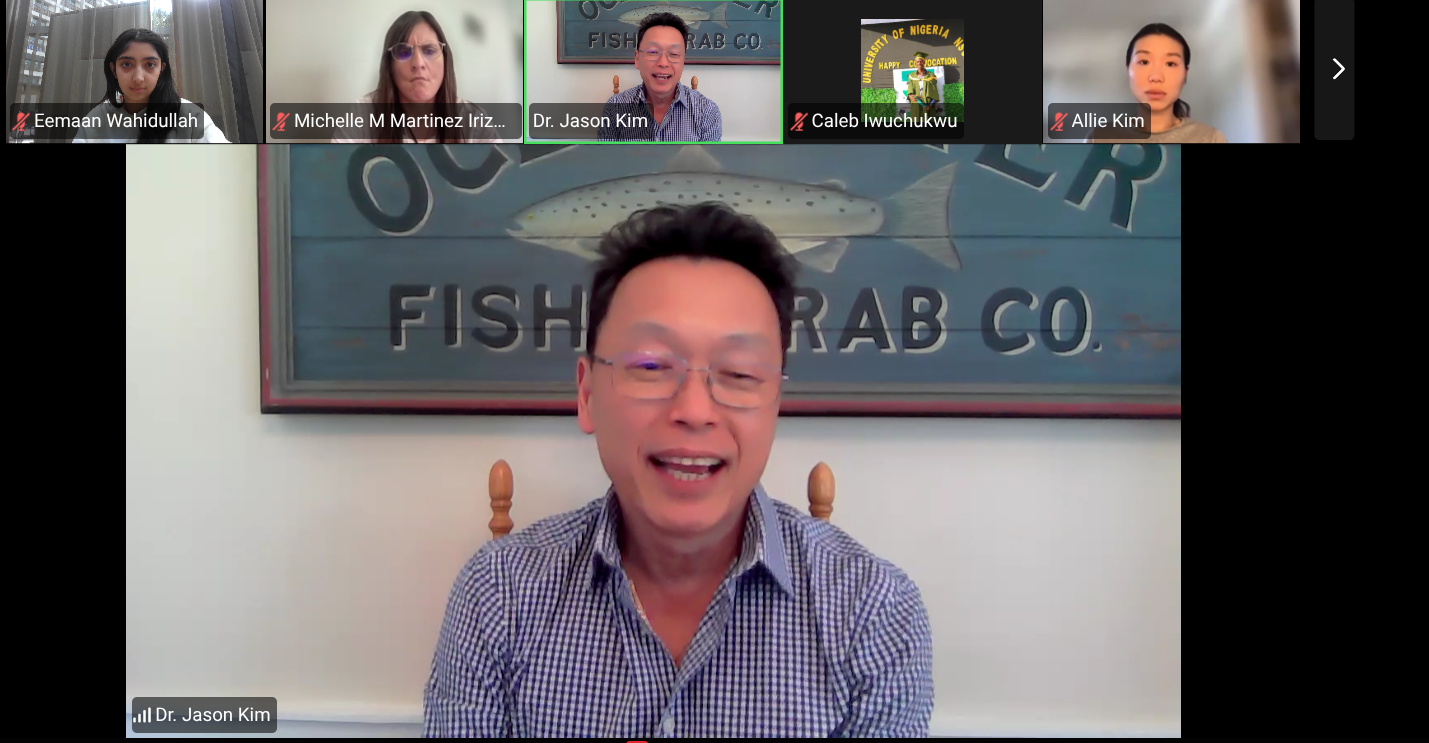
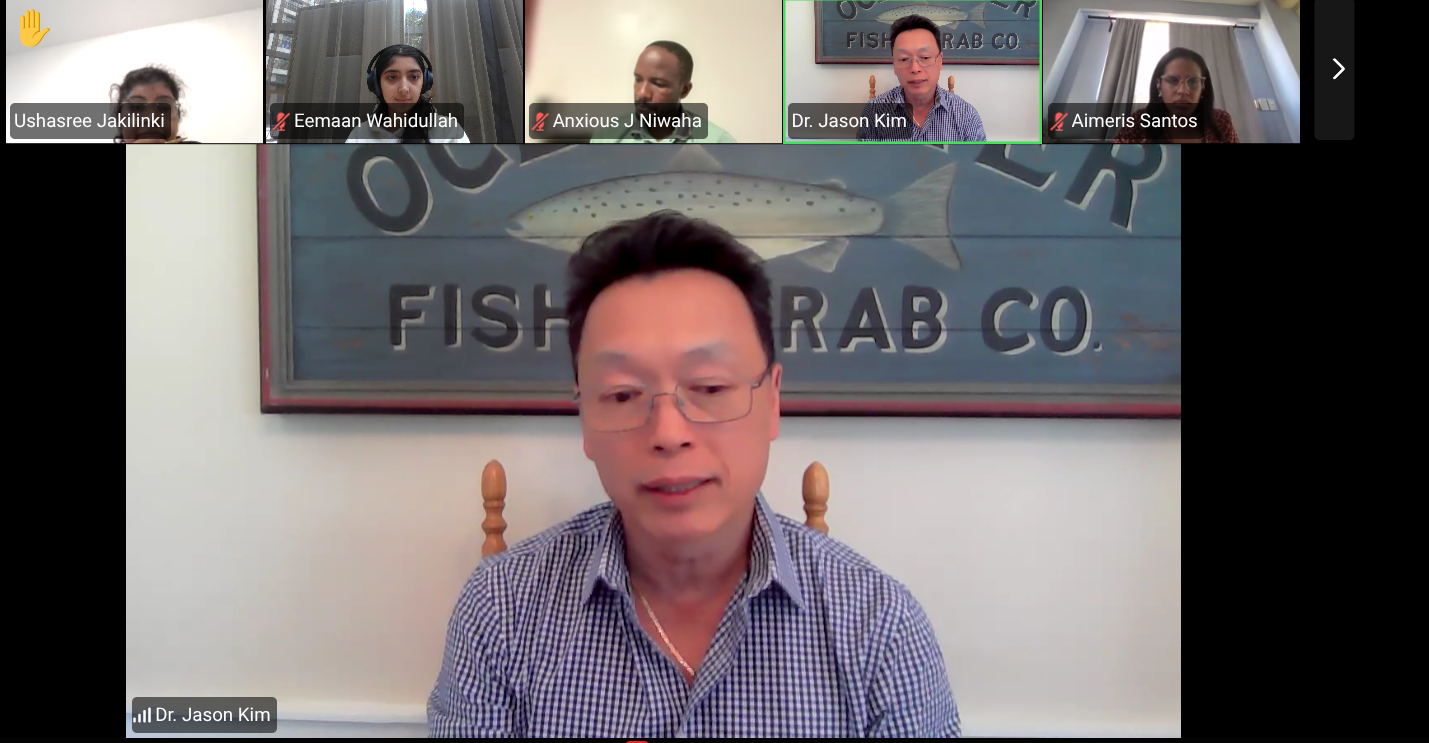
August 10, 2026
Pre-Session Q&A by Dr. Jason Kim (University of Massachusetts Chan Medical School)
The DVSC26 continued today with a Pre-Session Q&A by Dr. Jason Kim of the University of Massachusetts Chan Medical School, who answered many outstanding questions from Sessions 5 & 6.
-
![Session 2: Opening Session & Introduction to Diabetes by Lauren, Allison, and Dr. Jason Kim (University of Massachusetts Medical School)]()
August 10, 2026 (Pre-Session Q&A - Part 1)
Dr. Jason Kim from the University of Massachusetts Chan Medical School answers many outstanding questions from Sessions 5 & 6.
-
![]()
August 10, 2026 (Pre-Session Q&A - Part 2)
Dr. Jason Kim from the University of Massachusetts Chan Medical School answers many outstanding questions from Sessions 5 & 6.
-
![]()
August 10, 2026 (Pre-Session Q&A - Part 3)
Dr. Jason Kim from the University of Massachusetts Chan Medical School answers many outstanding questions from Sessions 5 & 6.

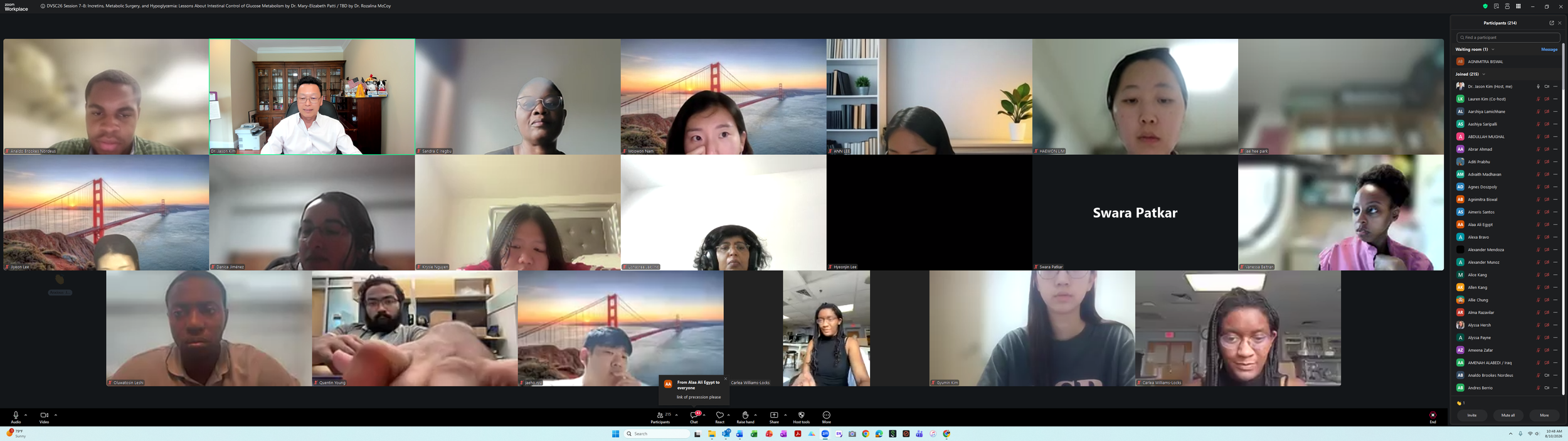

August 10, 2026
Session 7. Incretins, Metabolic Surgery, and Hypoglycemia: Lessons About Intestinal Control of Glucose Metabolism by Dr. Mary-Elizabeth Patti (Harvard Medical School)
The Main Session of today’s DVSC26 featured 2 spectacular experts, Dr. Mary-Elizabeth Patti from Harvard Medical School and Dr. Rozalina McCoy from the University of Maryland School of Medicine. Dr. Patti began by sharing her personal journey to become a world-renowned physician-scientist and described multiple organs that contribute to the pathogenesis of type 2 diabetes, highlighting the gut-brain-liver axis as a key driver of metabolic regulation. Dr. Patti introduced the biology of gut-derived factors regulating systemic metabolism, focusing on GLP-1 and GIP actions and further explained the incretin-based combination therapy for diabetes. Dr. Patti shared exciting clinical trial data involving a triple agonist, Retatrutide, in people with type 2 diabetes, improving metabolic and cardiovascular markers, but mentioned that incretin-based therapy is not a perfect solution due to various side effects, heterogeneity of response, costs, and weight regain upon cessation of medicine. Dr. Patti discussed the importance of metabolic surgery for weight loss and improvement in glucose metabolism and diabetes management, particularly for its durability and cost-effectiveness, and further explained the mechanisms of altered postprandial metabolism following metabolic surgery. Dr. Patti shared exciting clinical data from the ARMMS-T2D Randomized Trial showing the beneficial effects of metabolic surgery on long-term sustained weight loss and glycemic control. Dr. Patti shared exciting results from a database study (2025 Cohort Study) showing beneficial effects of metabolic surgery on weight loss and reducing diabetic complications in 30,000 patients. Dr. Patti ended with potential noninvasive strategies to alter intestinal function, harnessing the beneficial effects of metabolic surgery by designing better nonsurgical approaches in the future.
-
![]()
August 10, 2026 (Session 7 - Part 1)
Session 7: “Incretins, Metabolic Surgery, and Hypoglycemia: Lessons About Intestinal Control of Glucose Metabolism” by Dr. Mary-Elizabeth Patti (Harvard Medical School)
Session 8: “Bridging the Evidence Gap: Real-World Data as a Tool for High-Quality, Accessible, and Sustainable Diabetes Care” by Dr. Rozalina McCoy (University of Maryland School of Medicine)The Main Session of today’s DVSC26 featured 2 spectacular experts, Dr. Mary-Elizabeth Patti from Harvard Medical School and Dr. Rozalina McCoy from the University of Maryland School of Medicine.
-
![Session 2: Opening Session & Introduction to Diabetes by Lauren, Allison, and Dr. Jason Kim (University of Massachusetts Medical School)]()
August 10, 2026 (Session 7 - Part 2)
Session 7: “Incretins, Metabolic Surgery, and Hypoglycemia: Lessons About Intestinal Control of Glucose Metabolism” by Dr. Mary-Elizabeth Patti (Harvard Medical School)
Dr. Kim introduces Dr. Mary-Elizabeth Patti to our DVSC26 participants from all around the world.
-
![]()
August 10, 2026 (Session 7 - Part 3)
Session 7: “Incretins, Metabolic Surgery, and Hypoglycemia: Lessons About Intestinal Control of Glucose Metabolism” by Dr. Mary-Elizabeth Patti (Harvard Medical School)
Dr. Kim introduces Dr. Mary-Elizabeth Patti to our DVSC26 participants from all around the world.
-
![]()
August 10, 2026 (Session 7 - Part 4)
Session 7: “Incretins, Metabolic Surgery, and Hypoglycemia: Lessons About Intestinal Control of Glucose Metabolism” by Dr. Mary-Elizabeth Patti (Harvard Medical School)
Dr. Kim introduces Dr. Mary-Elizabeth Patti to our DVSC26 participants from all around the world.
-
![]()
August 10, 2026 (Session 7 - Part 5)
Session 7: “Incretins, Metabolic Surgery, and Hypoglycemia: Lessons About Intestinal Control of Glucose Metabolism” by Dr. Mary-Elizabeth Patti (Harvard Medical School)
This session focuses on intestinal control of glucose metabolism, including (1) how incretin hormones derived from the intestine are now being used as treatments for obesity and diabetes, (2) how changing the anatomy of the intestine alters glucose metabolism, and (3) how sometimes these mechanisms are exaggerated and can even cause low blood glucose.
-
![]()
August 10, 2026 (Session 7 - Part 6)
Session 7: “Incretins, Metabolic Surgery, and Hypoglycemia: Lessons About Intestinal Control of Glucose Metabolism” by Dr. Mary-Elizabeth Patti (Professor of Medicine, Investigator & Adult Endocrinologist, Director of Hypoglycemia Clinic, Co-Director of Molecular Phenotyping & Genotyping Core, Joslin Diabetes Center, Harvard Medical School)
-
![]()
August 10, 2026 (Session 7 - Part 7)
Session 7: “Incretins, Metabolic Surgery, and Hypoglycemia: Lessons About Intestinal Control of Glucose Metabolism” by Dr. Mary-Elizabeth Patti (Harvard Medical School)
Dr. Patti welcomes our program participants from around the world.
-
![]()
August 10, 2026 (Session 7 - Part 8)
Session 7: “Incretins, Metabolic Surgery, and Hypoglycemia: Lessons About Intestinal Control of Glucose Metabolism” by Dr. Mary-Elizabeth Patti (Harvard Medical School)
Dr. Patti welcomes our program participants from around the world.
-
![]()
August 10, 2026 (Session 7 - Part 9)
Session 7: “Incretins, Metabolic Surgery, and Hypoglycemia: Lessons About Intestinal Control of Glucose Metabolism” by Dr. Mary-Elizabeth Patti (Harvard Medical School)
Dr. Patti began by sharing her personal journey to become a world-renowned physician-scientist and described multiple organs that contribute to the pathogenesis of type 2 diabetes, highlighting the gut-brain-liver axis as a key driver of metabolic regulation.
-
![]()
August 10, 2026 (Session 7 - Part 10)
Session 7: “Incretins, Metabolic Surgery, and Hypoglycemia: Lessons About Intestinal Control of Glucose Metabolism” by Dr. Mary-Elizabeth Patti (Harvard Medical School)
Dr. Patti began by sharing her personal journey to become a world-renowned physician-scientist and described multiple organs that contribute to the pathogenesis of type 2 diabetes, highlighting the gut-brain-liver axis as a key driver of metabolic regulation.
-
![]()
August 10, 2026 (Session 7 - Part 11)
Session 7: “Incretins, Metabolic Surgery, and Hypoglycemia: Lessons About Intestinal Control of Glucose Metabolism” by Dr. Mary-Elizabeth Patti (Harvard Medical School)
Dr. Patti began by sharing her personal journey to become a world-renowned physician-scientist and described multiple organs that contribute to the pathogenesis of type 2 diabetes, highlighting the gut-brain-liver axis as a key driver of metabolic regulation.
-
![]()
August 10, 2026 (Session 7 - Part 12)
Session 7: “Incretins, Metabolic Surgery, and Hypoglycemia: Lessons About Intestinal Control of Glucose Metabolism” by Dr. Mary-Elizabeth Patti (Harvard Medical School)
Dr. Patti began by sharing her personal journey to become a world-renowned physician-scientist and described multiple organs that contribute to the pathogenesis of type 2 diabetes, highlighting the gut-brain-liver axis as a key driver of metabolic regulation.
-
![]()
August 10, 2026 (Session 7 - Part 13)
Session 7: “Incretins, Metabolic Surgery, and Hypoglycemia: Lessons About Intestinal Control of Glucose Metabolism” by Dr. Mary-Elizabeth Patti (Harvard Medical School)
Dr. Patti began by sharing her personal journey to become a world-renowned physician-scientist and described multiple organs that contribute to the pathogenesis of type 2 diabetes, highlighting the gut-brain-liver axis as a key driver of metabolic regulation.
-
![]()
August 10, 2026 (Session 7 - Part 14)
Session 7: “Incretins, Metabolic Surgery, and Hypoglycemia: Lessons About Intestinal Control of Glucose Metabolism” by Dr. Mary-Elizabeth Patti (Harvard Medical School)
Dr. Patti began by sharing her personal journey to become a world-renowned physician-scientist and described multiple organs that contribute to the pathogenesis of type 2 diabetes, highlighting the gut-brain-liver axis as a key driver of metabolic regulation.
-
![]()
August 10, 2026 (Session 7 - Part 15)
Session 7: “Incretins, Metabolic Surgery, and Hypoglycemia: Lessons About Intestinal Control of Glucose Metabolism” by Dr. Mary-Elizabeth Patti (Harvard Medical School)
Dr. Patti began by sharing her personal journey to become a world-renowned physician-scientist and described multiple organs that contribute to the pathogenesis of type 2 diabetes, highlighting the gut-brain-liver axis as a key driver of metabolic regulation.
-
![]()
August 10, 2026 (Session 7 - Part 16)
Session 7: “Incretins, Metabolic Surgery, and Hypoglycemia: Lessons About Intestinal Control of Glucose Metabolism” by Dr. Mary-Elizabeth Patti (Harvard Medical School)
Dr. Patti began by sharing her personal journey to become a world-renowned physician-scientist and described multiple organs that contribute to the pathogenesis of type 2 diabetes, highlighting the gut-brain-liver axis as a key driver of metabolic regulation.
-
![]()
August 10, 2026 (Session 7 - Part 17)
Session 7: “Incretins, Metabolic Surgery, and Hypoglycemia: Lessons About Intestinal Control of Glucose Metabolism” by Dr. Mary-Elizabeth Patti (Harvard Medical School)
Dr. Patti began by sharing her personal journey to become a world-renowned physician-scientist and described multiple organs that contribute to the pathogenesis of type 2 diabetes, highlighting the gut-brain-liver axis as a key driver of metabolic regulation.
-
![]()
August 10, 2026 (Session 7 - Part 18)
Session 7: “Incretins, Metabolic Surgery, and Hypoglycemia: Lessons About Intestinal Control of Glucose Metabolism” by Dr. Mary-Elizabeth Patti (Harvard Medical School)
Dr. Patti began by sharing her personal journey to become a world-renowned physician-scientist and described multiple organs that contribute to the pathogenesis of type 2 diabetes, highlighting the gut-brain-liver axis as a key driver of metabolic regulation.
-
![]()
August 10, 2026 (Session 7 - Part 19)
Session 7: “Incretins, Metabolic Surgery, and Hypoglycemia: Lessons About Intestinal Control of Glucose Metabolism” by Dr. Mary-Elizabeth Patti (Harvard Medical School)
Dr. Patti began by sharing her personal journey to become a world-renowned physician-scientist and described multiple organs that contribute to the pathogenesis of type 2 diabetes, highlighting the gut-brain-liver axis as a key driver of metabolic regulation.
-
![]()
August 10, 2026 (Session 7 - Part 20)
Session 7: “Incretins, Metabolic Surgery, and Hypoglycemia: Lessons About Intestinal Control of Glucose Metabolism” by Dr. Mary-Elizabeth Patti (Harvard Medical School)
Dr. Patti began by sharing her personal journey to become a world-renowned physician-scientist and described multiple organs that contribute to the pathogenesis of type 2 diabetes, highlighting the gut-brain-liver axis as a key driver of metabolic regulation.
-
![]()
August 10, 2026 (Session 7 - Part 21)
Session 7: “Incretins, Metabolic Surgery, and Hypoglycemia: Lessons About Intestinal Control of Glucose Metabolism” by Dr. Mary-Elizabeth Patti (Harvard Medical School)
Dr. Patti introduced the biology of gut-derived factors regulating systemic metabolism, focusing on GLP-1 and GIP actions, and further explained the incretin-based combination therapy for diabetes.
-
![]()
August 10, 2026 (Session 7 - Part 22)
Session 7: “Incretins, Metabolic Surgery, and Hypoglycemia: Lessons About Intestinal Control of Glucose Metabolism” by Dr. Mary-Elizabeth Patti (Harvard Medical School)
Dr. Patti introduced the biology of gut-derived factors regulating systemic metabolism, focusing on GLP-1 and GIP actions, and further explained the incretin-based combination therapy for diabetes.
-
![]()
August 10, 2026 (Session 7 - Part 23)
Session 7: “Incretins, Metabolic Surgery, and Hypoglycemia: Lessons About Intestinal Control of Glucose Metabolism” by Dr. Mary-Elizabeth Patti (Harvard Medical School)
Dr. Patti introduced the biology of gut-derived factors regulating systemic metabolism, focusing on GLP-1 and GIP actions, and further explained the incretin-based combination therapy for diabetes.
-
![]()
August 10, 2026 (Session 7 - Part 24)
Session 7: “Incretins, Metabolic Surgery, and Hypoglycemia: Lessons About Intestinal Control of Glucose Metabolism” by Dr. Mary-Elizabeth Patti (Harvard Medical School)
Dr. Patti introduced the biology of gut-derived factors regulating systemic metabolism, focusing on GLP-1 and GIP actions, and further explained the incretin-based combination therapy for diabetes.
-
![]()
August 10, 2026 (Session 7 - Part 25)
Session 7: “Incretins, Metabolic Surgery, and Hypoglycemia: Lessons About Intestinal Control of Glucose Metabolism” by Dr. Mary-Elizabeth Patti (Harvard Medical School)
Dr. Patti introduced the biology of gut-derived factors regulating systemic metabolism, focusing on GLP-1 and GIP actions, and further explained the incretin-based combination therapy for diabetes.
-
![]()
August 10, 2026 (Session 7 - Part 26)
Session 7: “Incretins, Metabolic Surgery, and Hypoglycemia: Lessons About Intestinal Control of Glucose Metabolism” by Dr. Mary-Elizabeth Patti (Harvard Medical School)
Dr. Patti introduced the biology of gut-derived factors regulating systemic metabolism, focusing on GLP-1 and GIP actions, and further explained the incretin-based combination therapy for diabetes.
-
![]()
August 10, 2026 (Session 7 - Part 27)
Session 7: “Incretins, Metabolic Surgery, and Hypoglycemia: Lessons About Intestinal Control of Glucose Metabolism” by Dr. Mary-Elizabeth Patti (Harvard Medical School)
Dr. Patti introduced the biology of gut-derived factors regulating systemic metabolism, focusing on GLP-1 and GIP actions, and further explained the incretin-based combination therapy for diabetes.
-
![]()
August 10, 2026 (Session 7 - Part 28)
Session 7: “Incretins, Metabolic Surgery, and Hypoglycemia: Lessons About Intestinal Control of Glucose Metabolism” by Dr. Mary-Elizabeth Patti (Harvard Medical School)
Dr. Patti introduced the biology of gut-derived factors regulating systemic metabolism, focusing on GLP-1 and GIP actions, and further explained the incretin-based combination therapy for diabetes.
-
![]()
August 10, 2026 (Session 7 - Part 29)
Session 7: “Incretins, Metabolic Surgery, and Hypoglycemia: Lessons About Intestinal Control of Glucose Metabolism” by Dr. Mary-Elizabeth Patti (Harvard Medical School)
Dr. Patti introduced the biology of gut-derived factors regulating systemic metabolism, focusing on GLP-1 and GIP actions, and further explained the incretin-based combination therapy for diabetes.
-
![]()
August 10, 2026 (Session 7 - Part 30)
Session 7: “Incretins, Metabolic Surgery, and Hypoglycemia: Lessons About Intestinal Control of Glucose Metabolism” by Dr. Mary-Elizabeth Patti (Harvard Medical School)
Dr. Patti introduced the biology of gut-derived factors regulating systemic metabolism, focusing on GLP-1 and GIP actions, and further explained the incretin-based combination therapy for diabetes.
-
![]()
August 10, 2026 (Session 7 - Part 31)
Session 7: “Incretins, Metabolic Surgery, and Hypoglycemia: Lessons About Intestinal Control of Glucose Metabolism” by Dr. Mary-Elizabeth Patti (Harvard Medical School)
Dr. Patti introduced the biology of gut-derived factors regulating systemic metabolism, focusing on GLP-1 and GIP actions, and further explained the incretin-based combination therapy for diabetes.
-
![]()
August 10, 2026 (Session 7 - Part 32)
Session 7: “Incretins, Metabolic Surgery, and Hypoglycemia: Lessons About Intestinal Control of Glucose Metabolism” by Dr. Mary-Elizabeth Patti (Harvard Medical School)
Dr. Patti introduced the biology of gut-derived factors regulating systemic metabolism, focusing on GLP-1 and GIP actions, and further explained the incretin-based combination therapy for diabetes.
-
![]()
August 10, 2026 (Session 7 - Part 33)
Session 7: “Incretins, Metabolic Surgery, and Hypoglycemia: Lessons About Intestinal Control of Glucose Metabolism” by Dr. Mary-Elizabeth Patti (Harvard Medical School)
Dr. Patti shared exciting clinical trial data involving a triple agonist, Retatrutide, in people with type 2 diabetes, improving metabolic and cardiovascular markers, but mentioned that incretin-based therapy is not a perfect solution due to various side effects, heterogeneity of response, costs, and weight regain upon cessation of medicine.
-
![]()
August 10, 2026 (Session 7 - Part 34)
Session 7: “Incretins, Metabolic Surgery, and Hypoglycemia: Lessons About Intestinal Control of Glucose Metabolism” by Dr. Mary-Elizabeth Patti (Harvard Medical School)
Dr. Patti shared exciting clinical trial data involving a triple agonist, Retatrutide, in people with type 2 diabetes, improving metabolic and cardiovascular markers, but mentioned that incretin-based therapy is not a perfect solution due to various side effects, heterogeneity of response, costs, and weight regain upon cessation of medicine.
-
![]()
August 10, 2026 (Session 7 - Part 35)
Session 7: “Incretins, Metabolic Surgery, and Hypoglycemia: Lessons About Intestinal Control of Glucose Metabolism” by Dr. Mary-Elizabeth Patti (Harvard Medical School)
Dr. Patti shared exciting clinical trial data involving a triple agonist, Retatrutide, in people with type 2 diabetes, improving metabolic and cardiovascular markers, but mentioned that incretin-based therapy is not a perfect solution due to various side effects, heterogeneity of response, costs, and weight regain upon cessation of medicine.
-
![]()
August 10, 2026 (Session 7 - Part 36)
Session 7: “Incretins, Metabolic Surgery, and Hypoglycemia: Lessons About Intestinal Control of Glucose Metabolism” by Dr. Mary-Elizabeth Patti (Harvard Medical School)
Dr. Patti shared exciting clinical trial data involving a triple agonist, Retatrutide, in people with type 2 diabetes, improving metabolic and cardiovascular markers, but mentioned that incretin-based therapy is not a perfect solution due to various side effects, heterogeneity of response, costs, and weight regain upon cessation of medicine.
-
![]()
August 10, 2026 (Session 7 - Part 37)
Session 7: “Incretins, Metabolic Surgery, and Hypoglycemia: Lessons About Intestinal Control of Glucose Metabolism” by Dr. Mary-Elizabeth Patti (Harvard Medical School)
Dr. Patti shared exciting clinical trial data involving a triple agonist, Retatrutide, in people with type 2 diabetes, improving metabolic and cardiovascular markers, but mentioned that incretin-based therapy is not a perfect solution due to various side effects, heterogeneity of response, costs, and weight regain upon cessation of medicine.
-
![]()
August 10, 2026 (Session 7 - Part 38)
Session 7: “Incretins, Metabolic Surgery, and Hypoglycemia: Lessons About Intestinal Control of Glucose Metabolism” by Dr. Mary-Elizabeth Patti (Harvard Medical School)
Dr. Patti shared exciting clinical trial data involving a triple agonist, Retatrutide, in people with type 2 diabetes, improving metabolic and cardiovascular markers, but mentioned that incretin-based therapy is not a perfect solution due to various side effects, heterogeneity of response, costs, and weight regain upon cessation of medicine.
-
![]()
August 10, 2026 (Session 7 - Part 39)
Session 7: “Incretins, Metabolic Surgery, and Hypoglycemia: Lessons About Intestinal Control of Glucose Metabolism” by Dr. Mary-Elizabeth Patti (Harvard Medical School)
Dr. Patti shared exciting clinical trial data involving a triple agonist, Retatrutide, in people with type 2 diabetes, improving metabolic and cardiovascular markers, but mentioned that incretin-based therapy is not a perfect solution due to various side effects, heterogeneity of response, costs, and weight regain upon cessation of medicine.
-
![]()
August 10, 2026 (Session 7 - Part 40)
Session 7: “Incretins, Metabolic Surgery, and Hypoglycemia: Lessons About Intestinal Control of Glucose Metabolism” by Dr. Mary-Elizabeth Patti (Harvard Medical School)
Dr. Patti shared exciting clinical trial data involving a triple agonist, Retatrutide, in people with type 2 diabetes, improving metabolic and cardiovascular markers, but mentioned that incretin-based therapy is not a perfect solution due to various side effects, heterogeneity of response, costs, and weight regain upon cessation of medicine.
-
![]()
August 10, 2026 (Session 7 - Part 41)
Session 7: “Incretins, Metabolic Surgery, and Hypoglycemia: Lessons About Intestinal Control of Glucose Metabolism” by Dr. Mary-Elizabeth Patti (Harvard Medical School)
Dr. Patti shared exciting clinical trial data involving a triple agonist, Retatrutide, in people with type 2 diabetes, improving metabolic and cardiovascular markers, but mentioned that incretin-based therapy is not a perfect solution due to various side effects, heterogeneity of response, costs, and weight regain upon cessation of medicine.
-
![]()
August 10, 2026 (Session 7 - Part 42)
Session 7: “Incretins, Metabolic Surgery, and Hypoglycemia: Lessons About Intestinal Control of Glucose Metabolism” by Dr. Mary-Elizabeth Patti (Harvard Medical School)
Dr. Patti discussed the importance of metabolic surgery for weight loss and improvement in glucose metabolism and diabetes management, particularly for its durability and cost-effectiveness, and further explained the mechanisms of altered postprandial metabolism following metabolic surgery.
-
![]()
August 10, 2026 (Session 7 - Part 43)
Session 7: “Incretins, Metabolic Surgery, and Hypoglycemia: Lessons About Intestinal Control of Glucose Metabolism” by Dr. Mary-Elizabeth Patti (Harvard Medical School)
Dr. Patti discussed the importance of metabolic surgery for weight loss and improvement in glucose metabolism and diabetes management, particularly for its durability and cost-effectiveness, and further explained the mechanisms of altered postprandial metabolism following metabolic surgery.
-
![]()
August 10, 2026 (Session 7 - Part 44)
Session 7: “Incretins, Metabolic Surgery, and Hypoglycemia: Lessons About Intestinal Control of Glucose Metabolism” by Dr. Mary-Elizabeth Patti (Harvard Medical School)
Dr. Patti discussed the importance of metabolic surgery for weight loss and improvement in glucose metabolism and diabetes management, particularly for its durability and cost-effectiveness, and further explained the mechanisms of altered postprandial metabolism following metabolic surgery.
-
![]()
August 10, 2026 (Session 7 - Part 45)
Session 7: “Incretins, Metabolic Surgery, and Hypoglycemia: Lessons About Intestinal Control of Glucose Metabolism” by Dr. Mary-Elizabeth Patti (Harvard Medical School)
Dr. Patti discussed the importance of metabolic surgery for weight loss and improvement in glucose metabolism and diabetes management, particularly for its durability and cost-effectiveness, and further explained the mechanisms of altered postprandial metabolism following metabolic surgery.
-
![]()
August 10, 2026 (Session 7 - Part 46)
Session 7: “Incretins, Metabolic Surgery, and Hypoglycemia: Lessons About Intestinal Control of Glucose Metabolism” by Dr. Mary-Elizabeth Patti (Harvard Medical School)
Dr. Patti discussed the importance of metabolic surgery for weight loss and improvement in glucose metabolism and diabetes management, particularly for its durability and cost-effectiveness, and further explained the mechanisms of altered postprandial metabolism following metabolic surgery.
-
![]()
August 10, 2026 (Session 7 - Part 47)
Session 7: “Incretins, Metabolic Surgery, and Hypoglycemia: Lessons About Intestinal Control of Glucose Metabolism” by Dr. Mary-Elizabeth Patti (Harvard Medical School)
Dr. Patti shared exciting clinical data from the ARMMS-T2D Randomized Trial showing the beneficial effects of metabolic surgery on long-term sustained weight loss and glycemic control. Dr. Patti also shared exciting results from a database study (2025 Cohort Study) showing beneficial effects of metabolic surgery on weight loss and reducing diabetic complications in 30,000 patients.
-
![]()
August 10, 2026 (Session 7 - Part 48)
Session 7: “Incretins, Metabolic Surgery, and Hypoglycemia: Lessons About Intestinal Control of Glucose Metabolism” by Dr. Mary-Elizabeth Patti (Harvard Medical School)
Dr. Patti shared exciting clinical data from the ARMMS-T2D Randomized Trial showing the beneficial effects of metabolic surgery on long-term sustained weight loss and glycemic control. Dr. Patti also shared exciting results from a database study (2025 Cohort Study) showing beneficial effects of metabolic surgery on weight loss and reducing diabetic complications in 30,000 patients.
-
![]()
August 10, 2026 (Session 7 - Part 49)
Session 7: “Incretins, Metabolic Surgery, and Hypoglycemia: Lessons About Intestinal Control of Glucose Metabolism” by Dr. Mary-Elizabeth Patti (Harvard Medical School)
Dr. Patti shared exciting clinical data from the ARMMS-T2D Randomized Trial showing the beneficial effects of metabolic surgery on long-term sustained weight loss and glycemic control. Dr. Patti also shared exciting results from a database study (2025 Cohort Study) showing beneficial effects of metabolic surgery on weight loss and reducing diabetic complications in 30,000 patients.
-
![]()
August 10, 2026 (Session 7 - Part 50)
Session 7: “Incretins, Metabolic Surgery, and Hypoglycemia: Lessons About Intestinal Control of Glucose Metabolism” by Dr. Mary-Elizabeth Patti (Harvard Medical School)
Dr. Patti ended with potential noninvasive strategies to alter intestinal function, harnessing the beneficial effects of metabolic surgery by designing better nonsurgical approaches in the future.
-
![]()
August 10, 2026 (Session 7 - Part 51)
Session 7: “Incretins, Metabolic Surgery, and Hypoglycemia: Lessons About Intestinal Control of Glucose Metabolism” by Dr. Mary-Elizabeth Patti (Harvard Medical School)
Dr. Patti began by sharing her personal journey to become a world-renowned physician-scientist and described multiple organs that contribute to the pathogenesis of type 2 diabetes, highlighting the gut-brain-liver axis as a key driver of metabolic regulation. Dr. Patti introduced the biology of gut-derived factors regulating systemic metabolism, focusing on GLP-1 and GIP actions and further explained the incretin-based combination therapy for diabetes. Dr. Patti shared exciting clinical trial data involving a triple agonist, Retatrutide, in people with type 2 diabetes, improving metabolic and cardiovascular markers, but mentioned that incretin-based therapy is not a perfect solution due to various side effects, heterogeneity of response, costs, and weight regain upon cessation of medicine. Dr. Patti discussed the importance of metabolic surgery for weight loss and improvement in glucose metabolism and diabetes management, particularly for its durability and cost-effectiveness, and further explained the mechanisms of altered postprandial metabolism following metabolic surgery. Dr. Patti shared exciting clinical data from the ARMMS-T2D Randomized Trial showing the beneficial effects of metabolic surgery on long-term sustained weight loss and glycemic control. Dr. Patti also shared exciting results from a database study (2025 Cohort Study) showing beneficial effects of metabolic surgery on weight loss and reducing diabetic complications in 30,000 patients. Dr. Patti ended with potential noninvasive strategies to alter intestinal function, harnessing the beneficial effects of metabolic surgery by designing better nonsurgical approaches in the future.
-
![]()
August 10, 2026 (Session 7 - Part 52)
Session 7: “Incretins, Metabolic Surgery, and Hypoglycemia: Lessons About Intestinal Control of Glucose Metabolism” by Dr. Mary-Elizabeth Patti (Harvard Medical School)
Lauren moderates the Q&A period with many outstanding questions from our DVSC26 participants.
-
![]()
August 10, 2026 (Session 7 - Part 53)
Session 7: “Incretins, Metabolic Surgery, and Hypoglycemia: Lessons About Intestinal Control of Glucose Metabolism” by Dr. Mary-Elizabeth Patti (Harvard Medical School)
During Q&A moderated by Lauren, Dr. Patti thoughtfully addresses outstanding questions from our DVSC26 participants.
-
![]()
August 10, 2026 (Session 7 - Part 54)
Session 7: “Incretins, Metabolic Surgery, and Hypoglycemia: Lessons About Intestinal Control of Glucose Metabolism” by Dr. Mary-Elizabeth Patti (Harvard Medical School)
Allison moderates the Q&A period with many outstanding questions from our DVSC26 participants.
-
![]()
August 10, 2026 (Session 7 - Part 55)
Session 7: “Incretins, Metabolic Surgery, and Hypoglycemia: Lessons About Intestinal Control of Glucose Metabolism” by Dr. Mary-Elizabeth Patti (Harvard Medical School)
During Q&A moderated by Allison, Dr. Patti thoughtfully addresses outstanding questions from our DVSC26 participants.
-
![]()
August 10, 2026 (Session 7 - Part 56)
Session 7: “Incretins, Metabolic Surgery, and Hypoglycemia: Lessons About Intestinal Control of Glucose Metabolism” by Dr. Mary-Elizabeth Patti (Harvard Medical School)
Lauren moderates the Q&A period with many outstanding questions from our DVSC26 participants.
-
![]()
August 10, 2026 (Session 7 - Part 57)
Session 7: “Incretins, Metabolic Surgery, and Hypoglycemia: Lessons About Intestinal Control of Glucose Metabolism” by Dr. Mary-Elizabeth Patti (Harvard Medical School)
During Q&A moderated by Allison, Dr. Patti thoughtfully addresses outstanding questions from our DVSC26 participants.
-
![]()
August 10, 2026 (Session 7 - Part 58)
Session 7: “Incretins, Metabolic Surgery, and Hypoglycemia: Lessons About Intestinal Control of Glucose Metabolism” by Dr. Mary-Elizabeth Patti (Harvard Medical School)
During Q&A moderated by Lauren, Dr. Patti thoughtfully addresses outstanding questions from our DVSC26 participants.
-
![]()
August 10, 2026 (Session 7 - Part 59)
Session 7: “Incretins, Metabolic Surgery, and Hypoglycemia: Lessons About Intestinal Control of Glucose Metabolism” by Dr. Mary-Elizabeth Patti (Harvard Medical School)
The DVC team thanks Dr. Patti for her support of Diabetes Virtual Camp.
-
![]()
August 10, 2026 (Session 7 - Part 60)
Session 7: “Incretins, Metabolic Surgery, and Hypoglycemia: Lessons About Intestinal Control of Glucose Metabolism” by Dr. Mary-Elizabeth Patti (Harvard Medical School)
Dr. Patti wishes our DVSC26 participants all the best in their journeys.
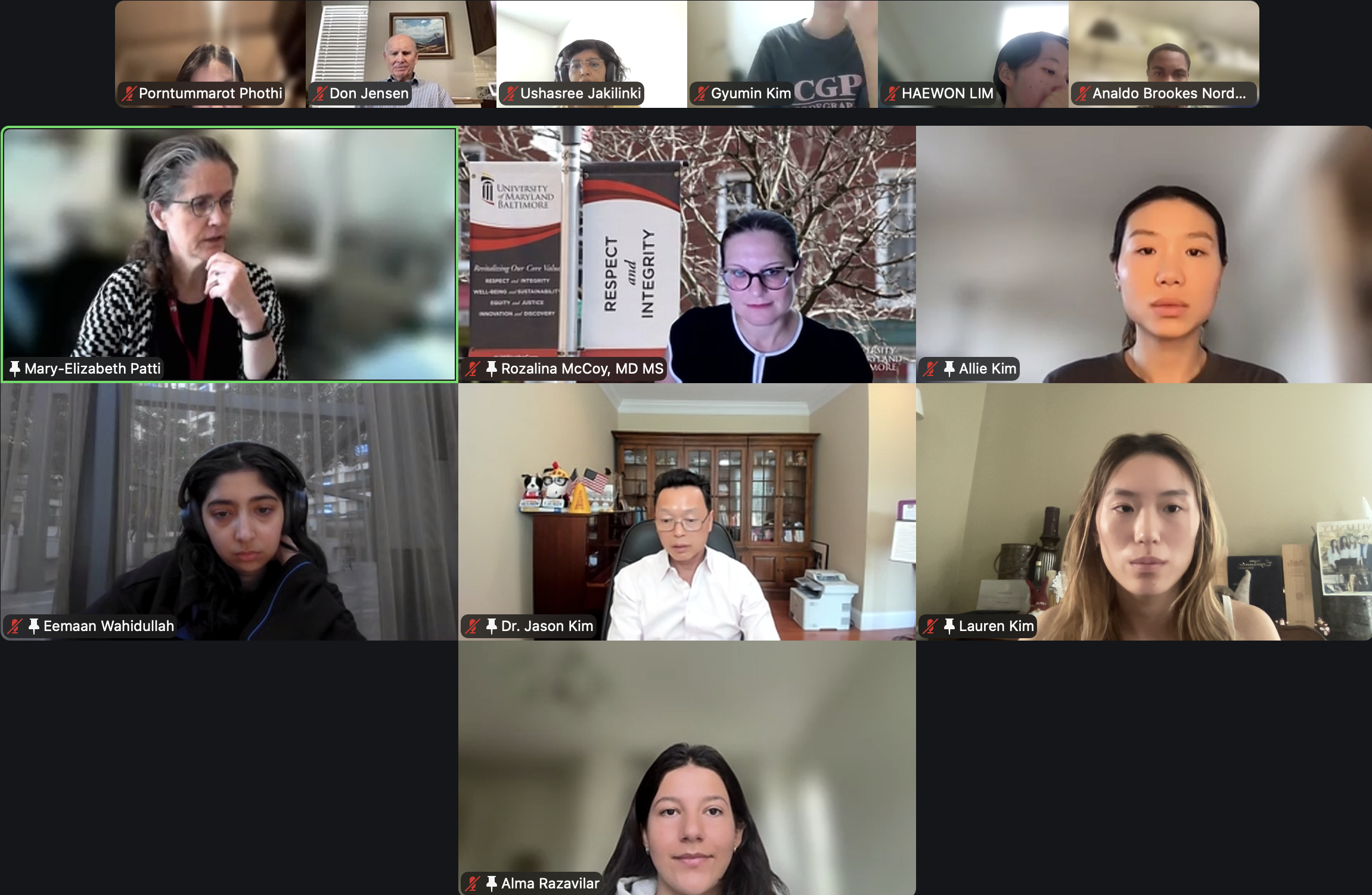
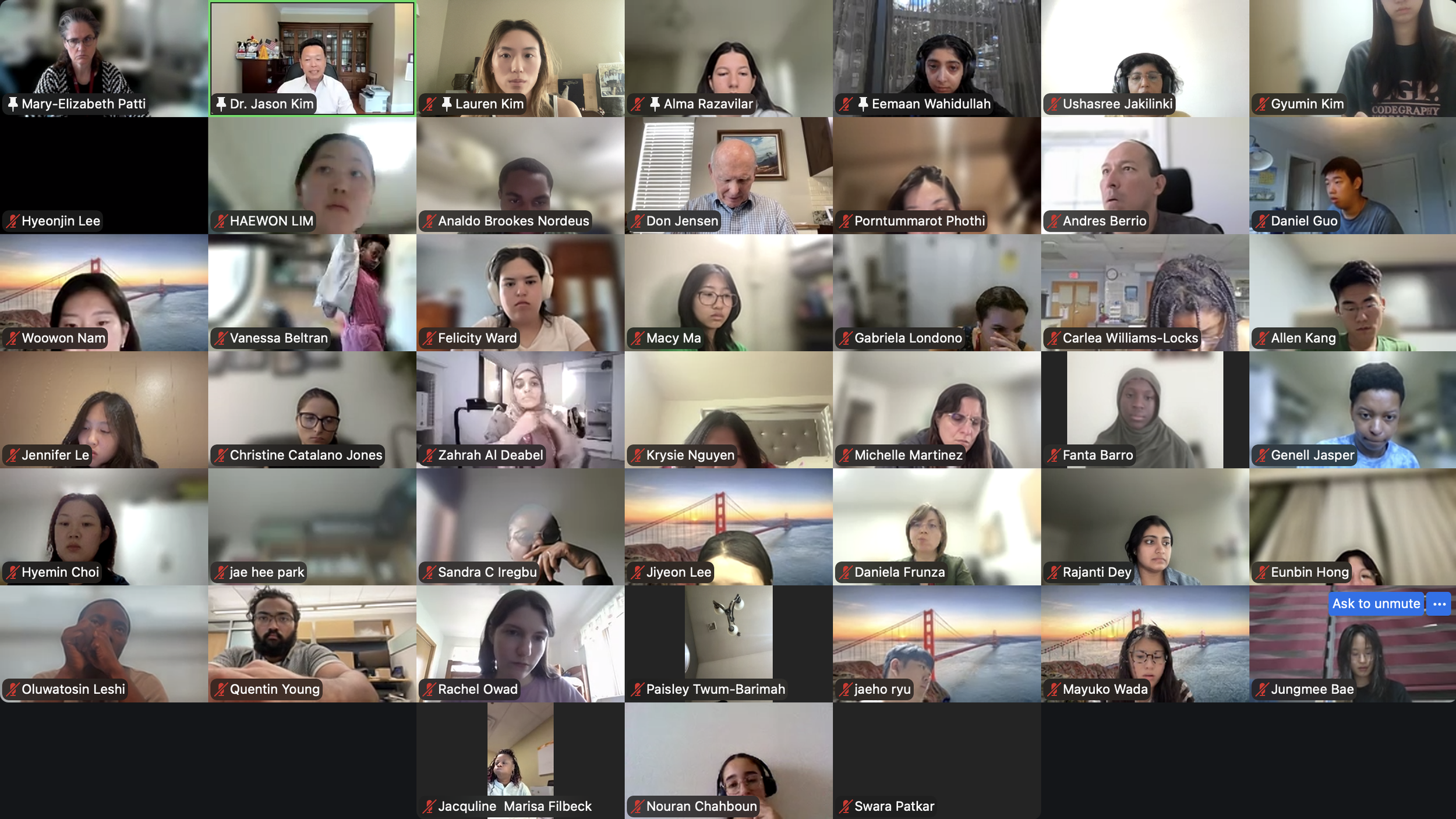
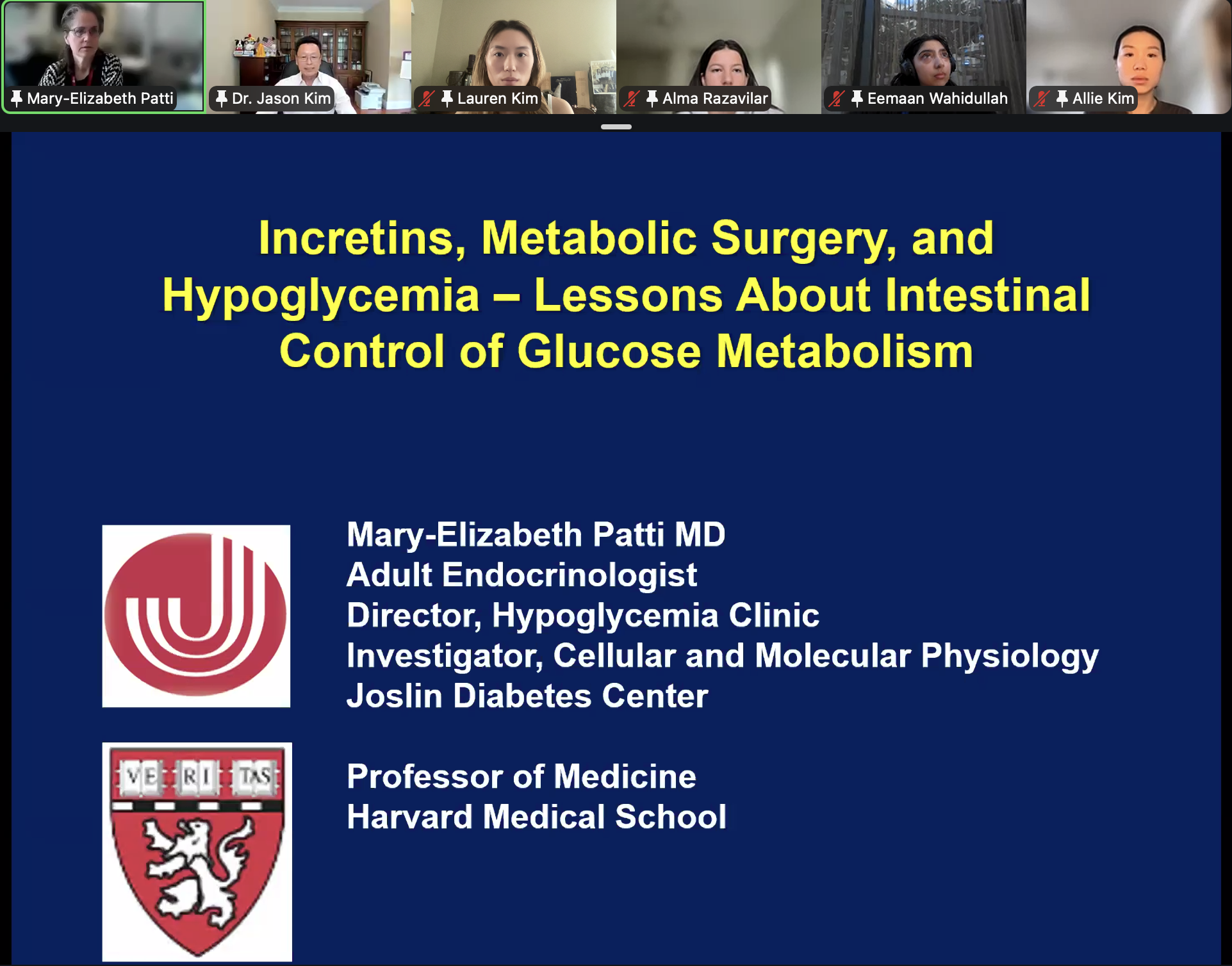
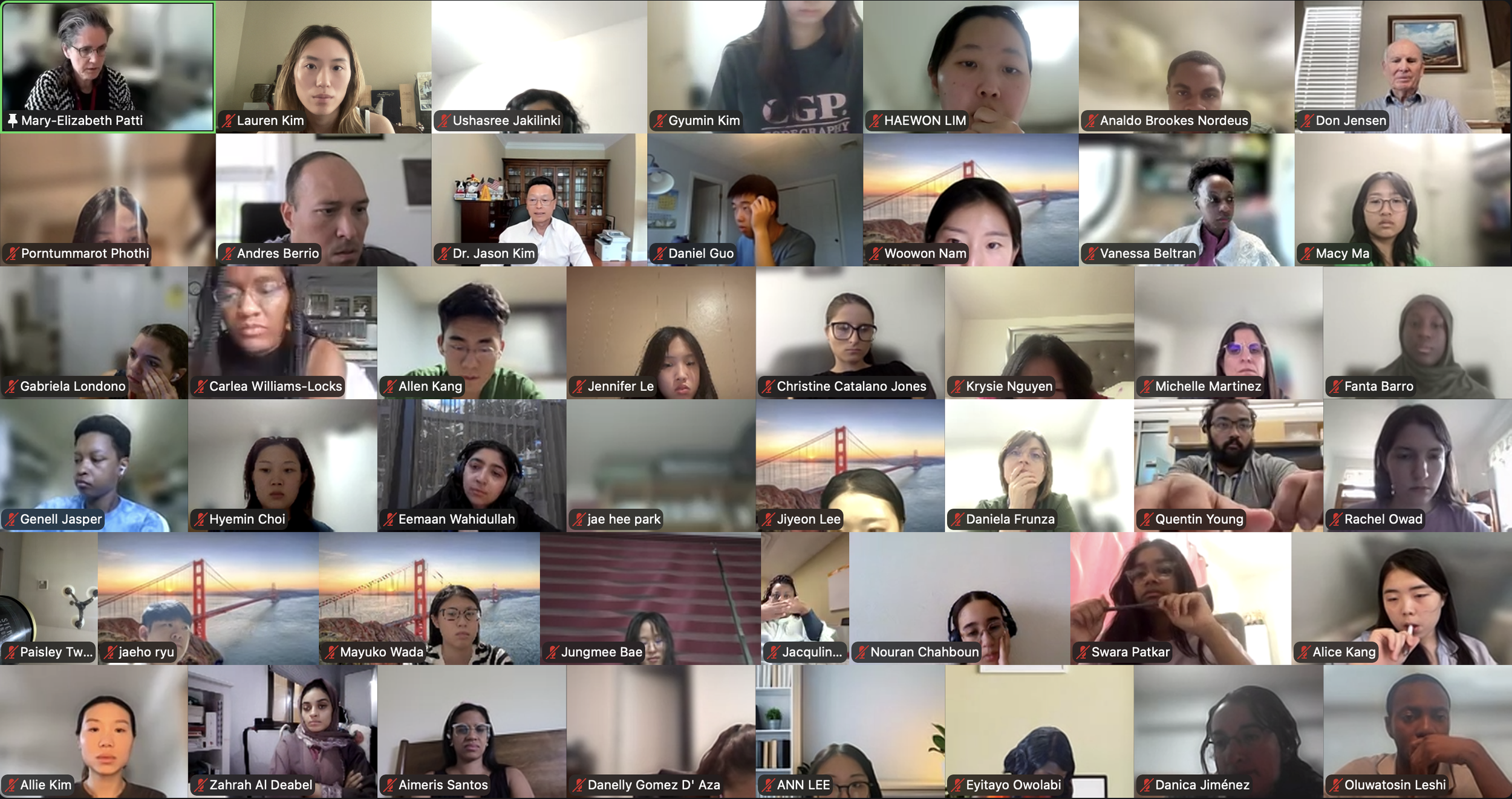
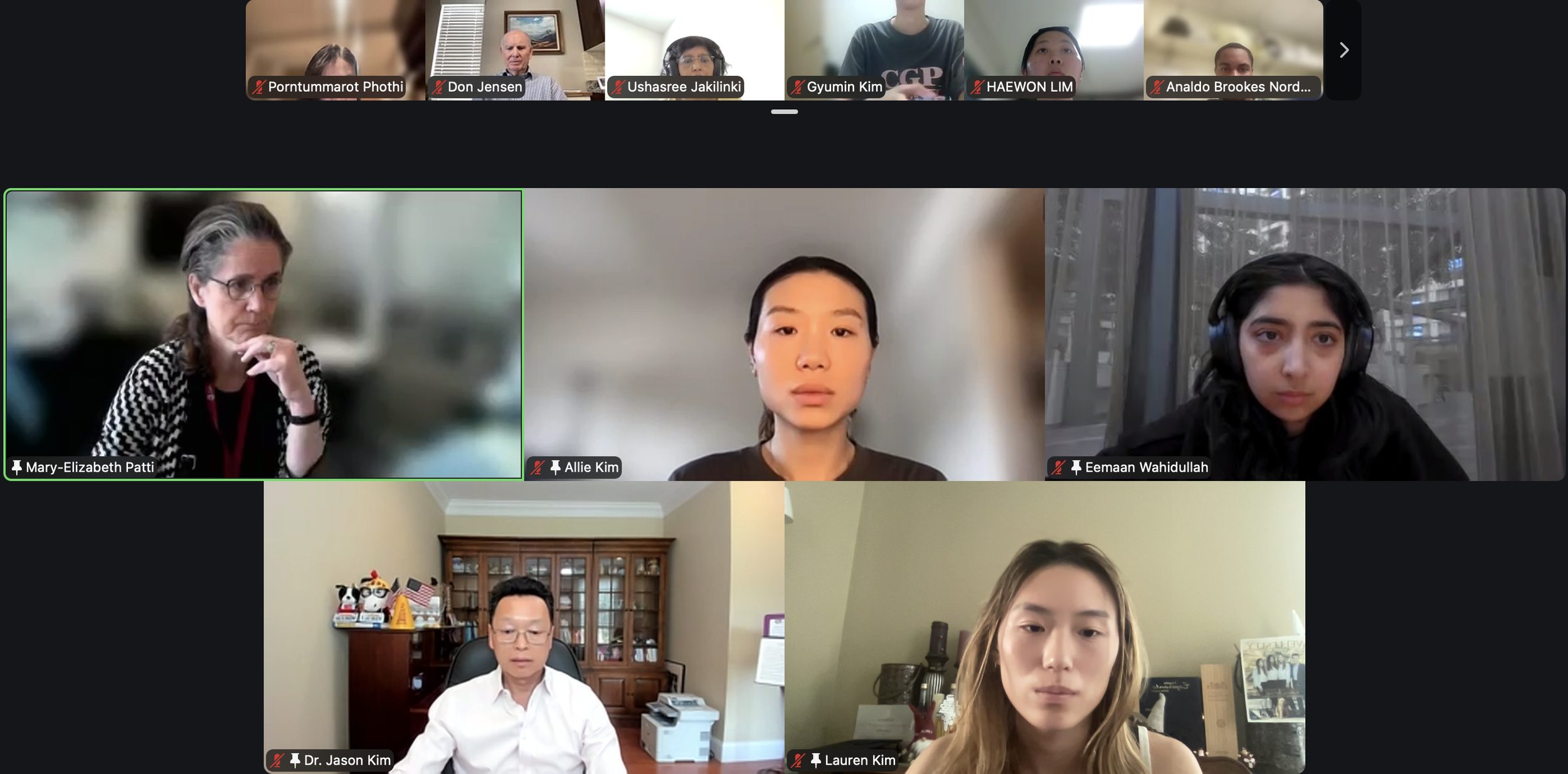
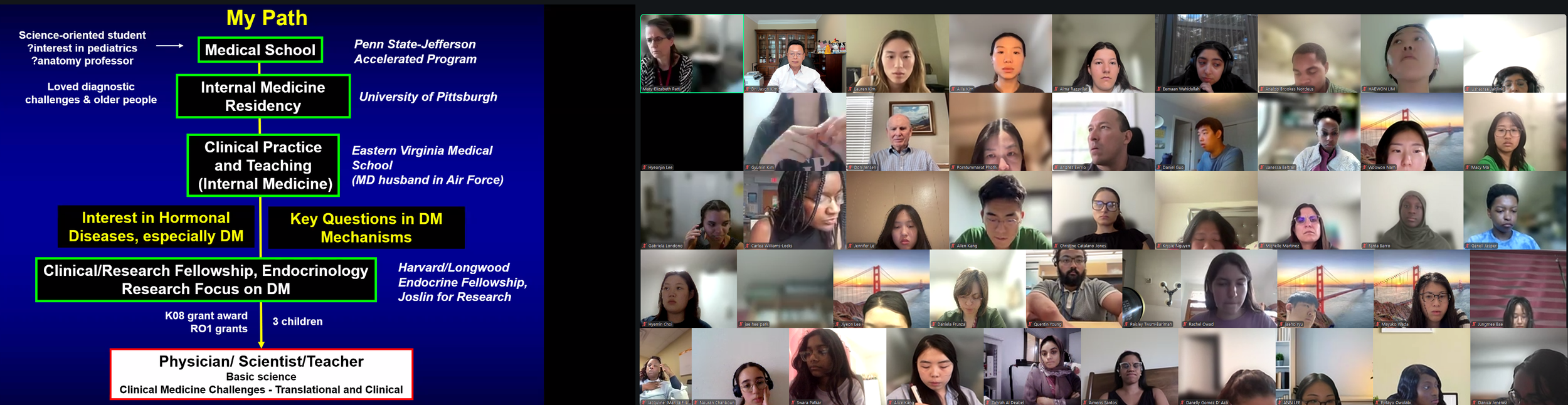
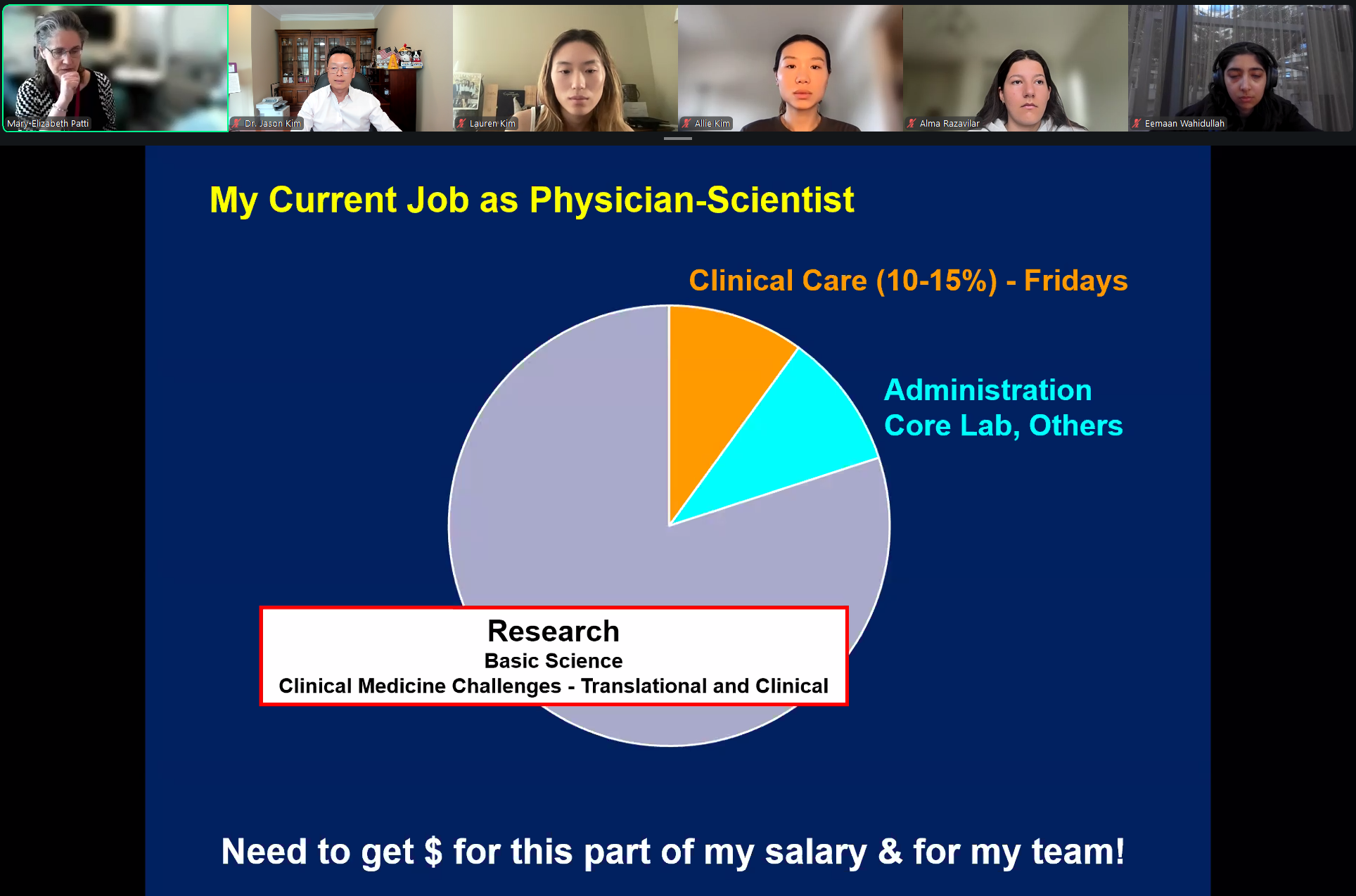
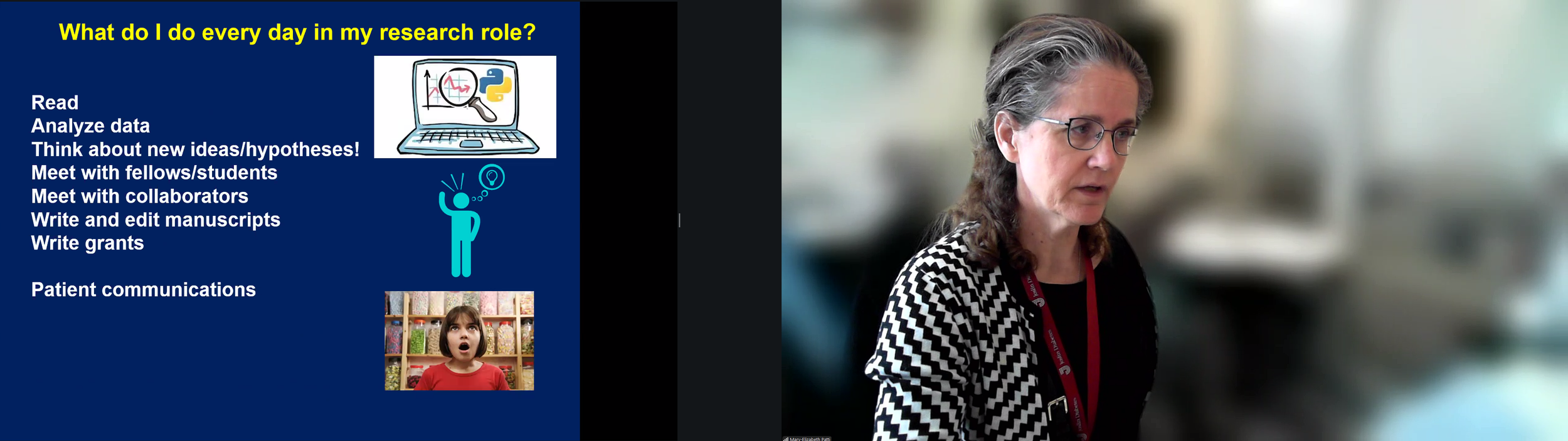
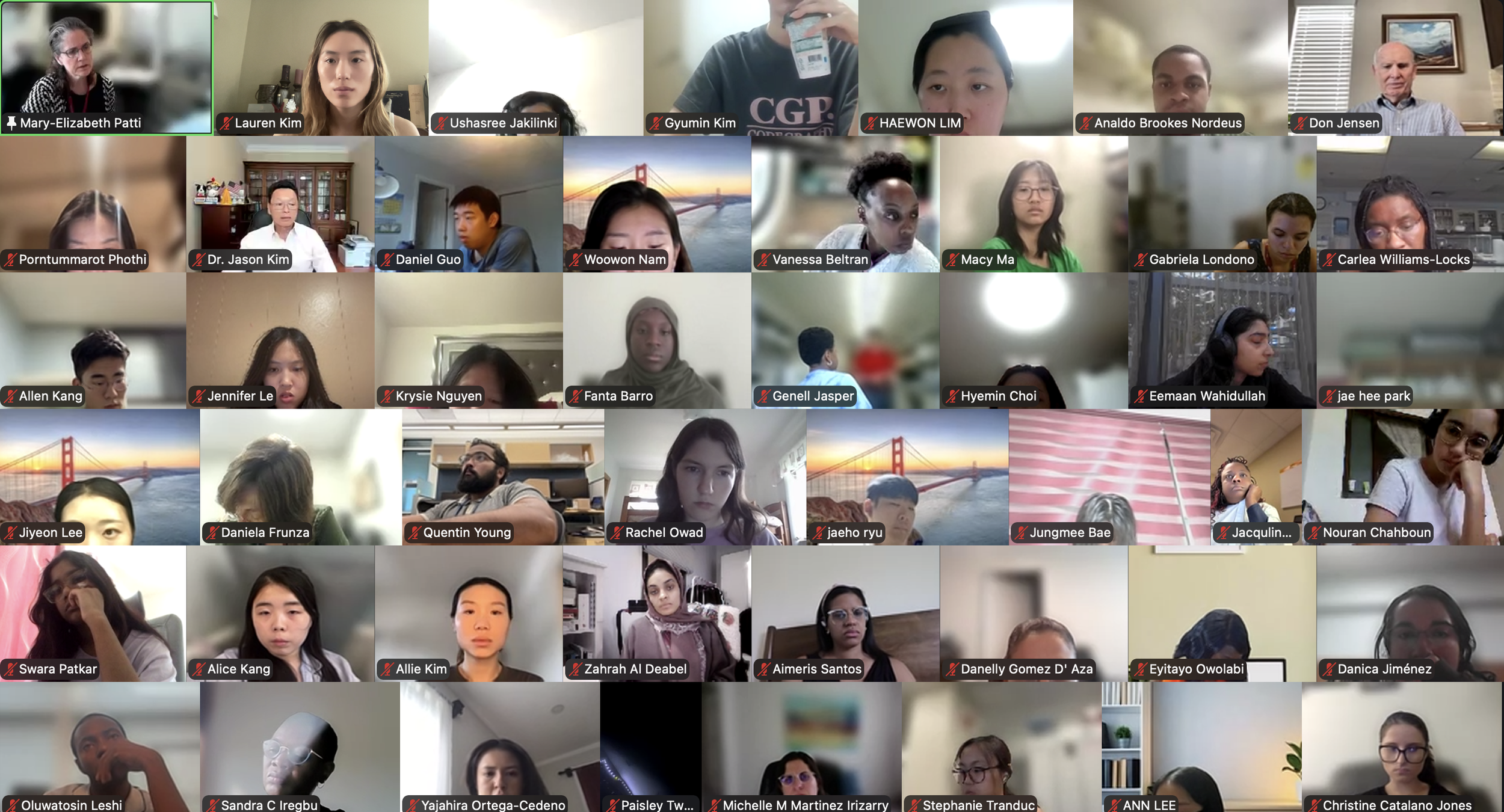
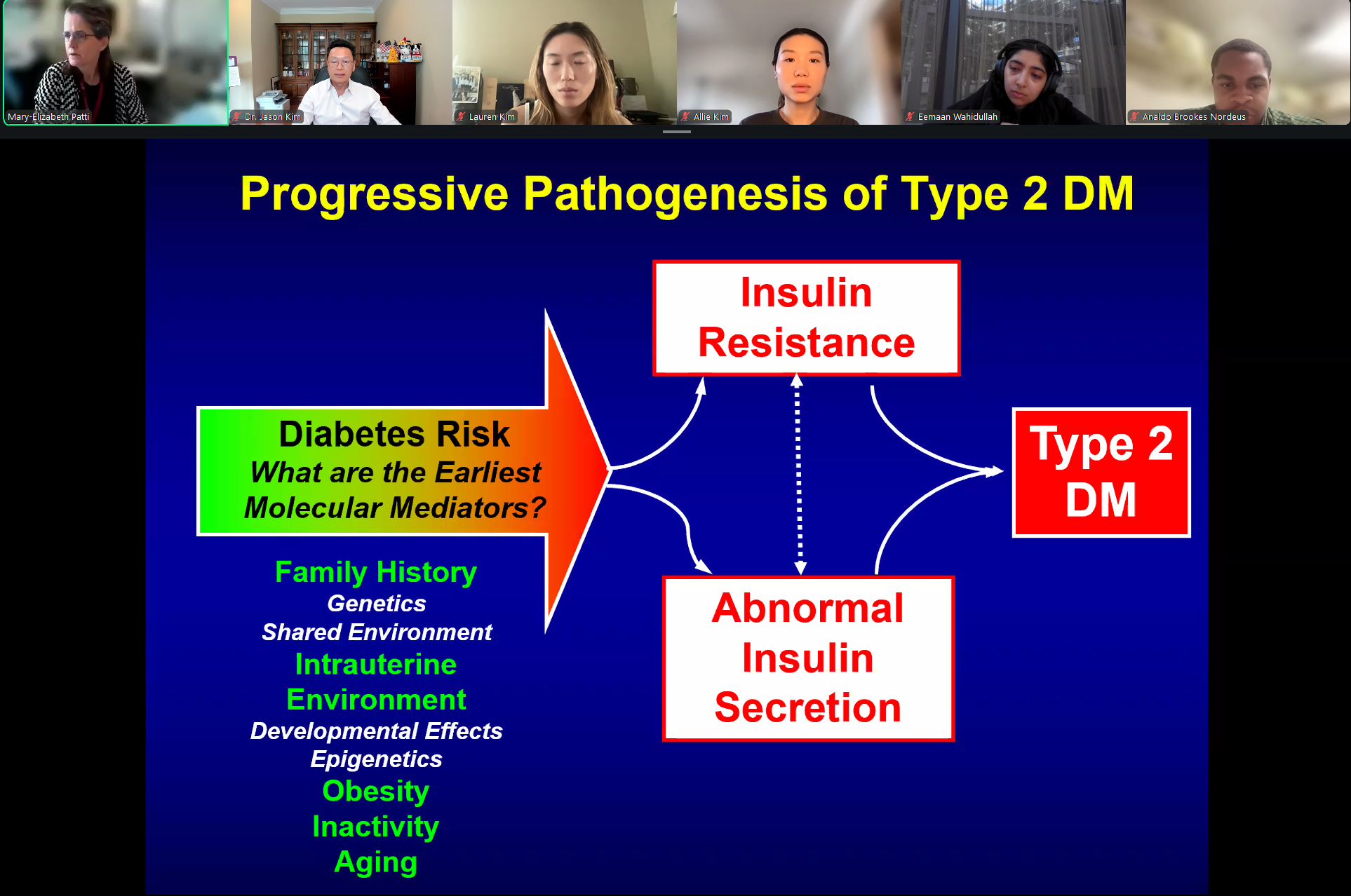
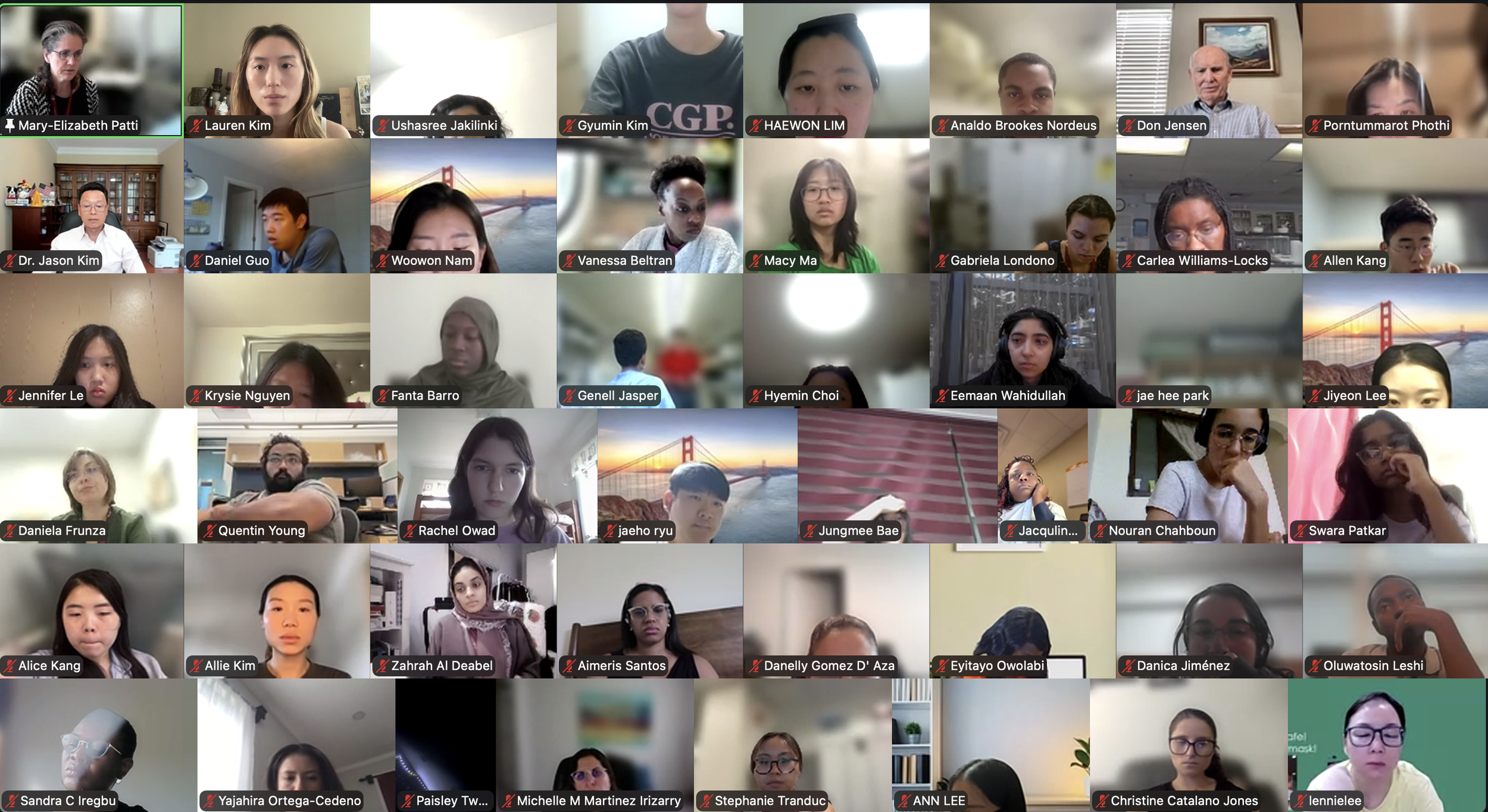
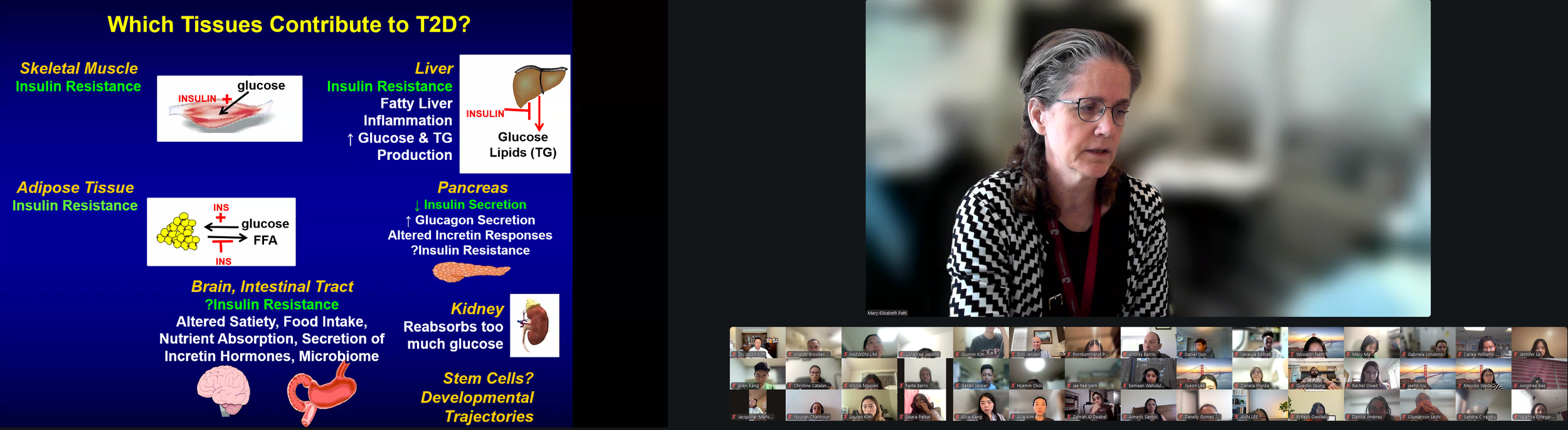
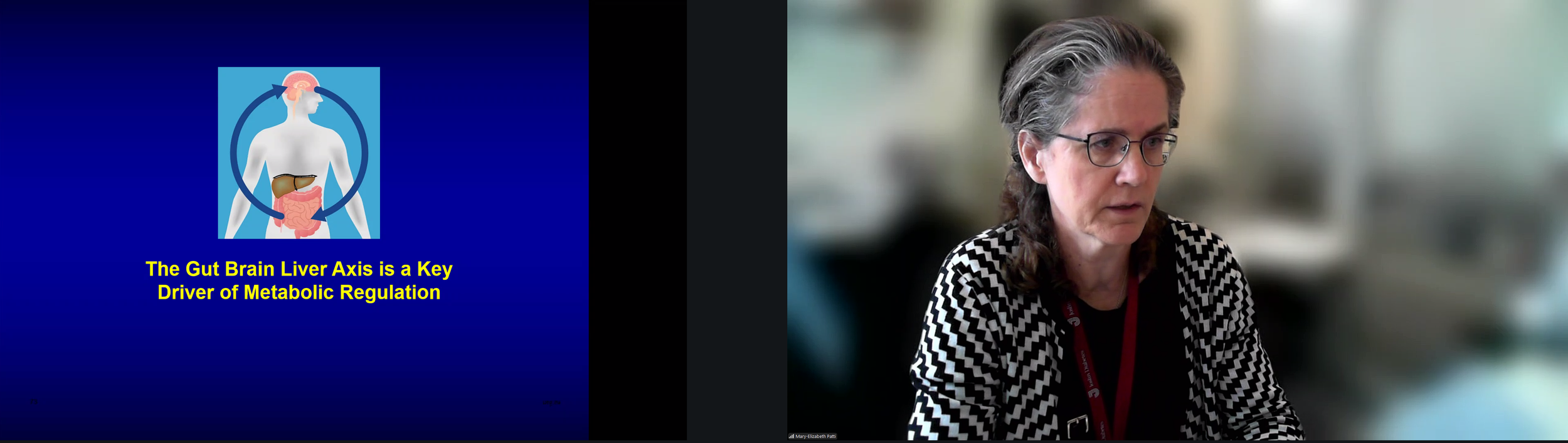
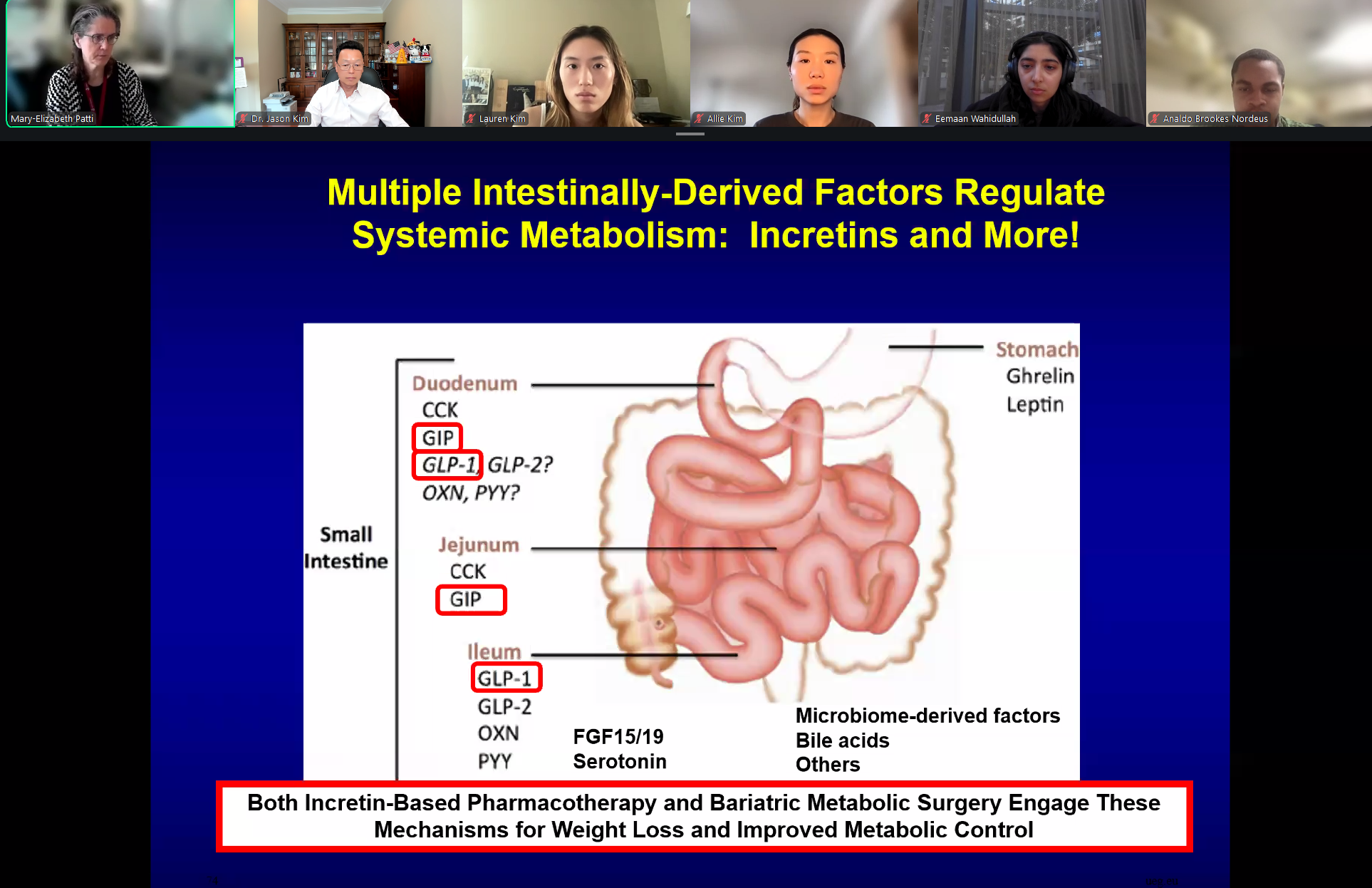
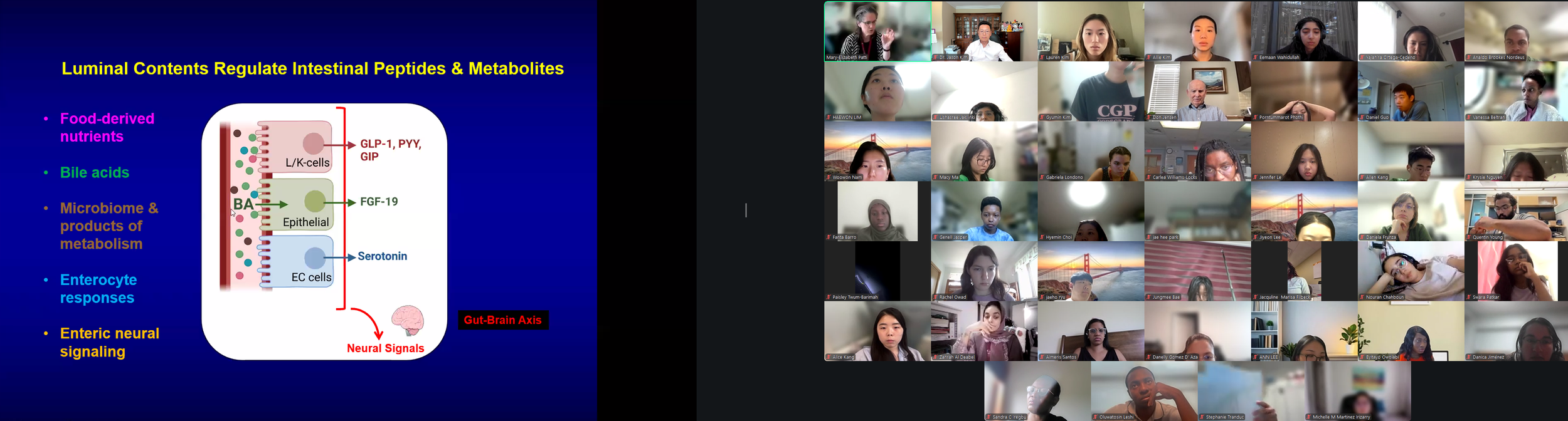
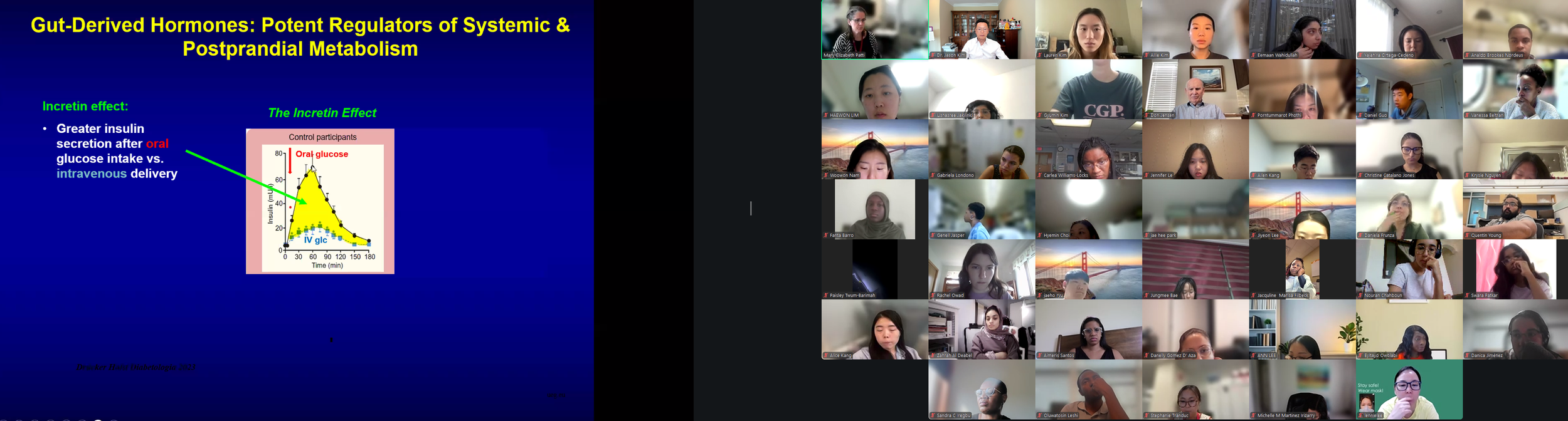
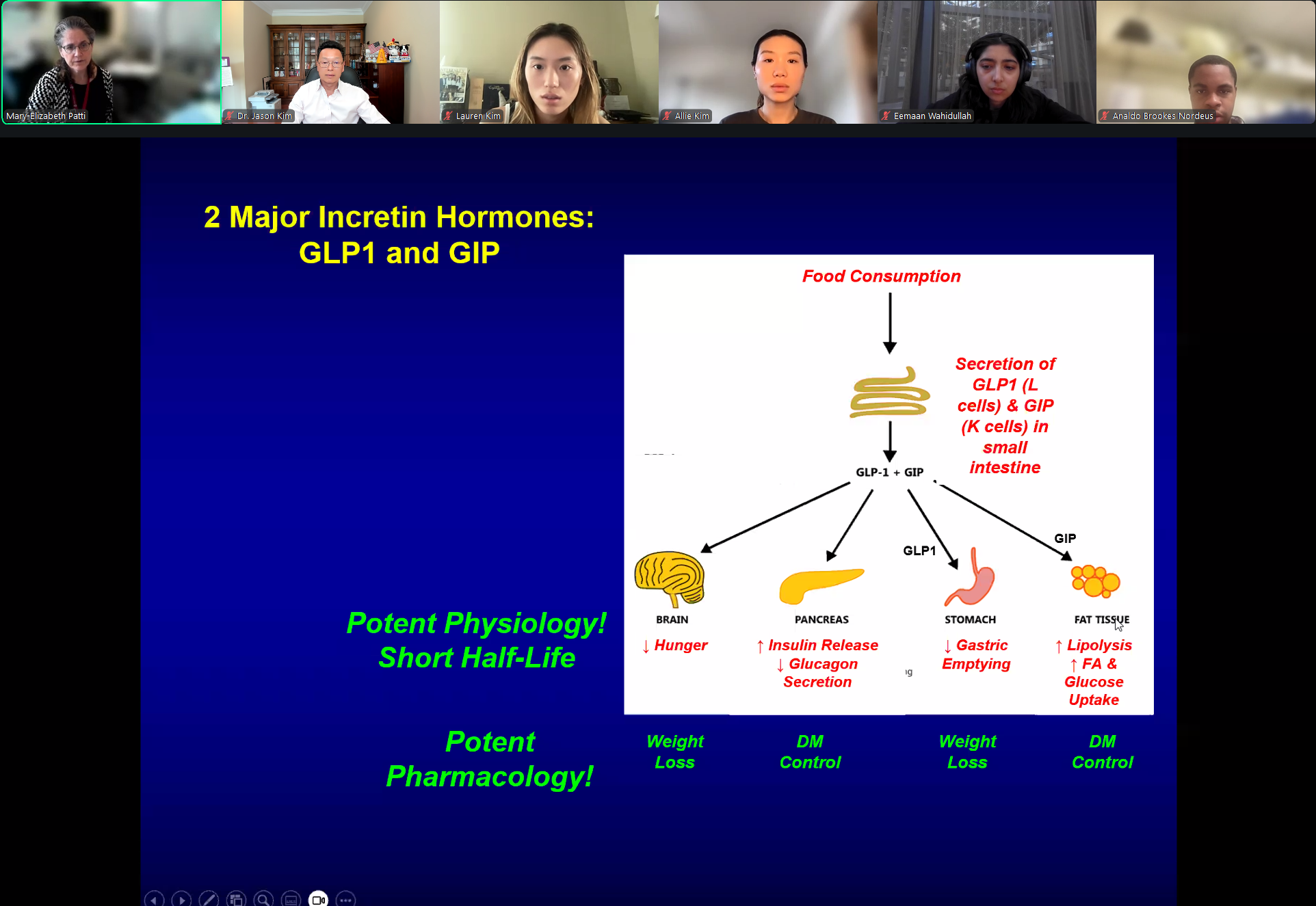
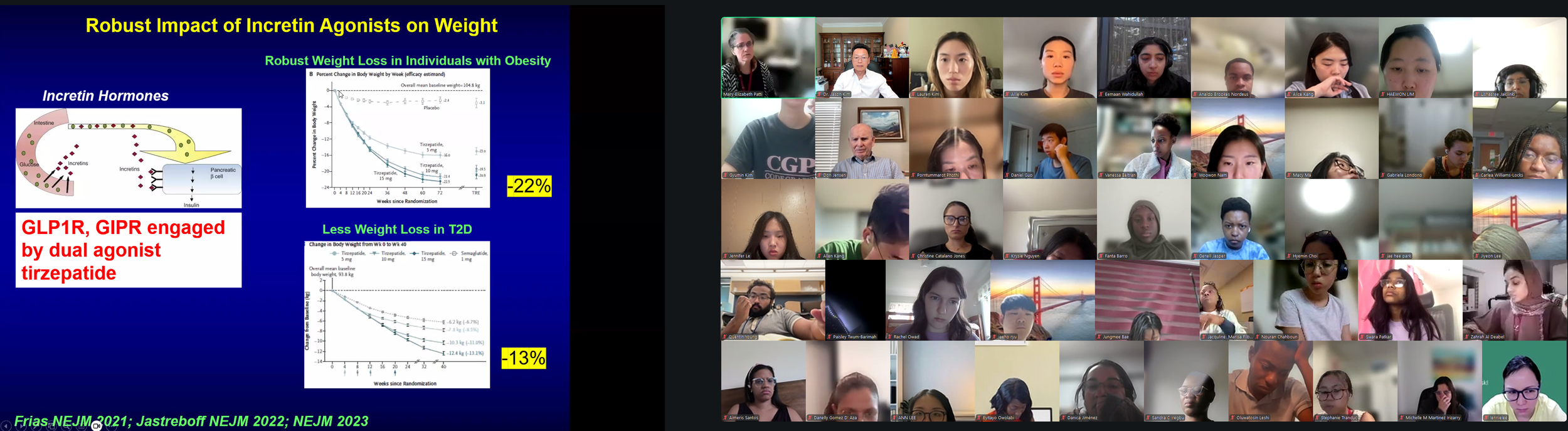
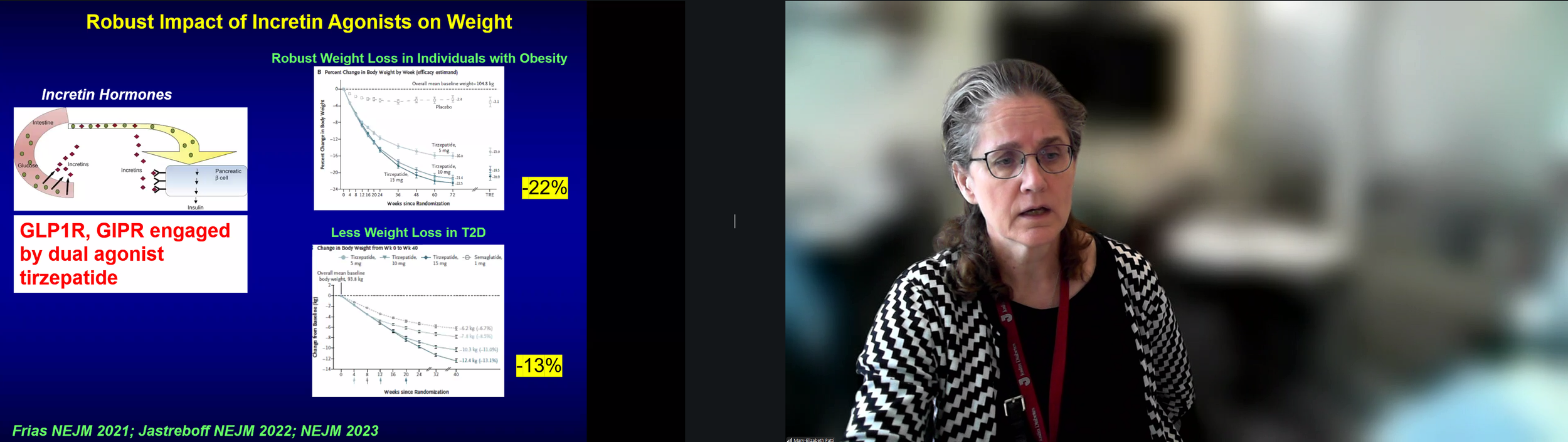
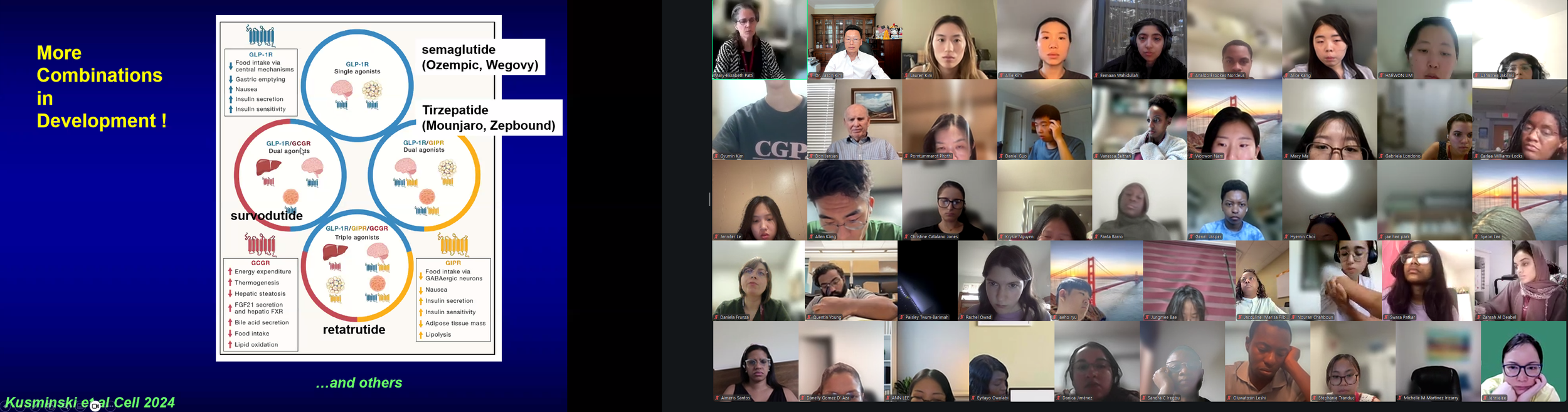
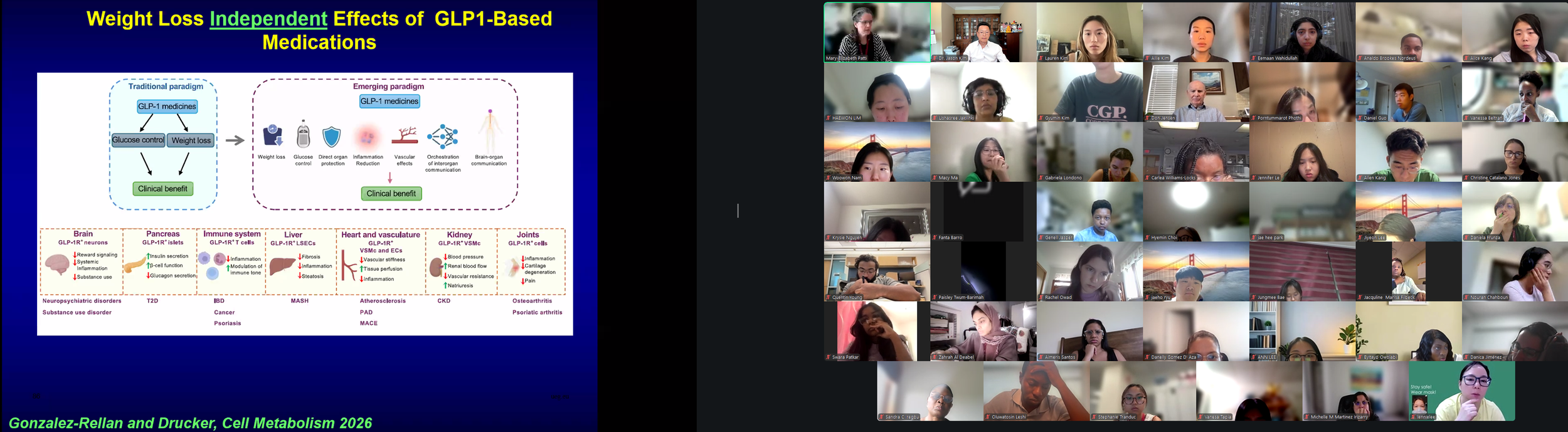
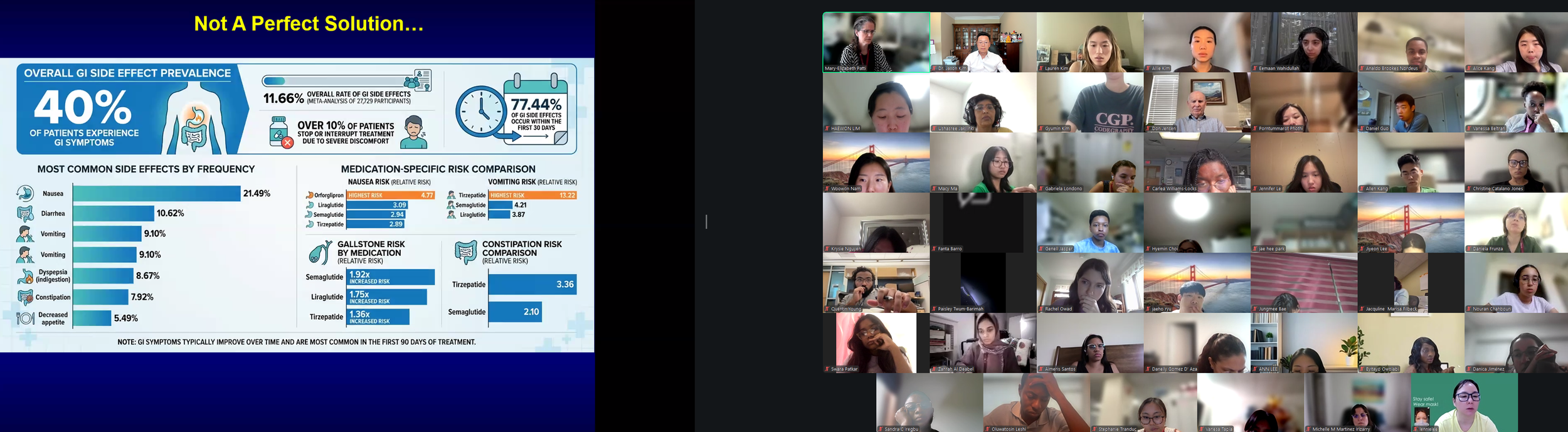
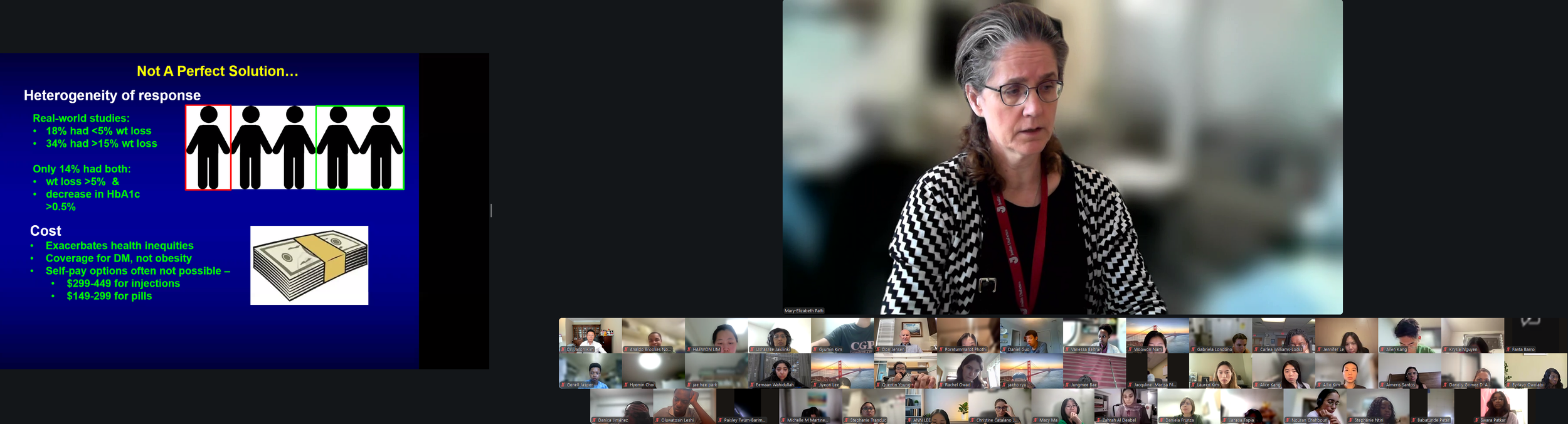
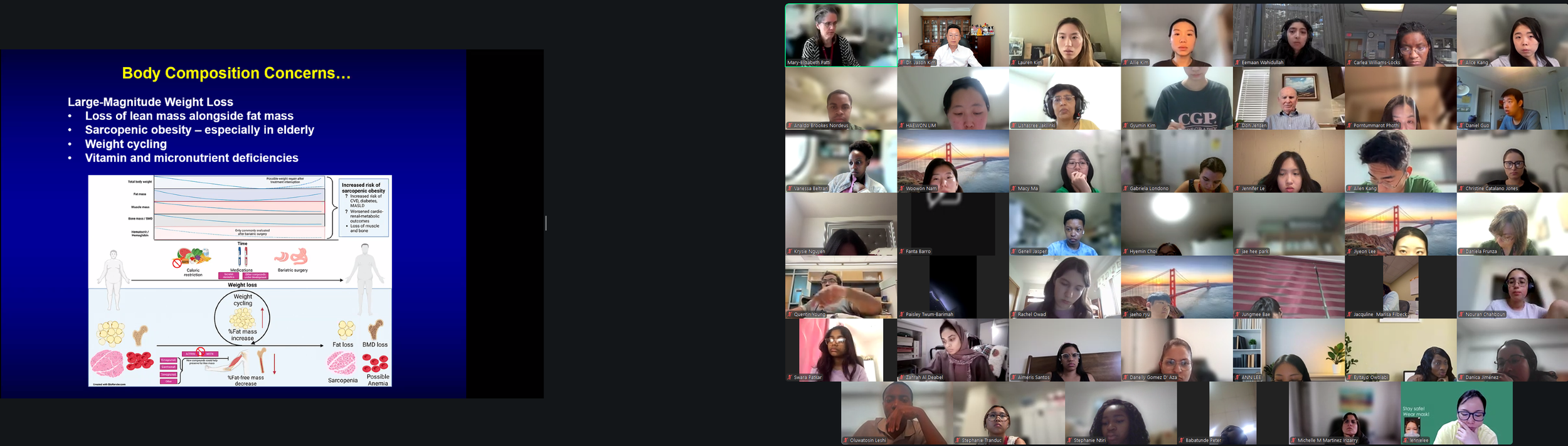
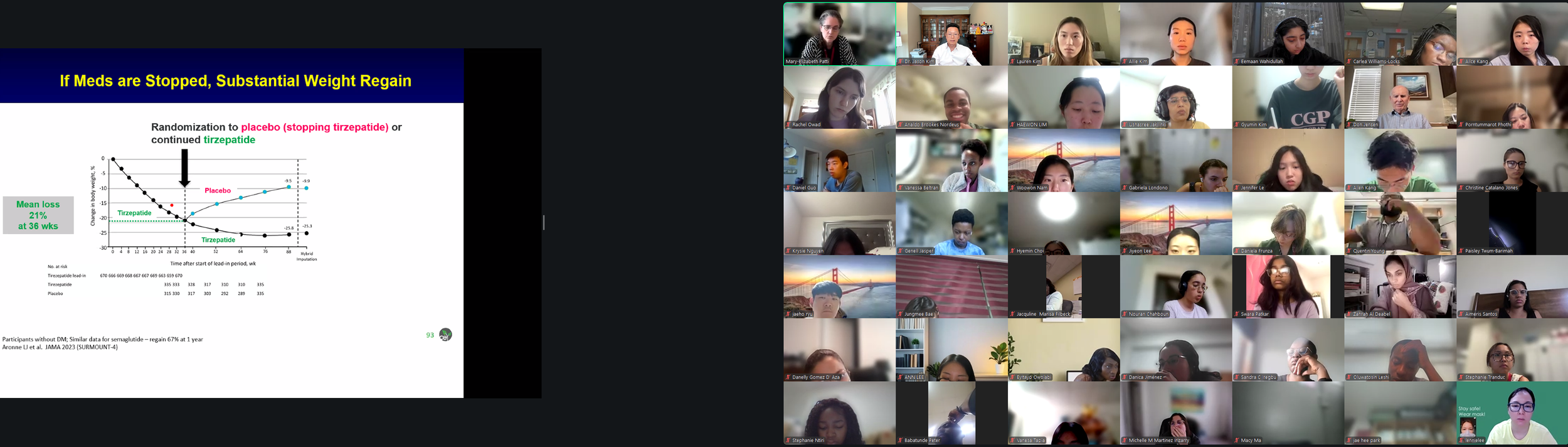
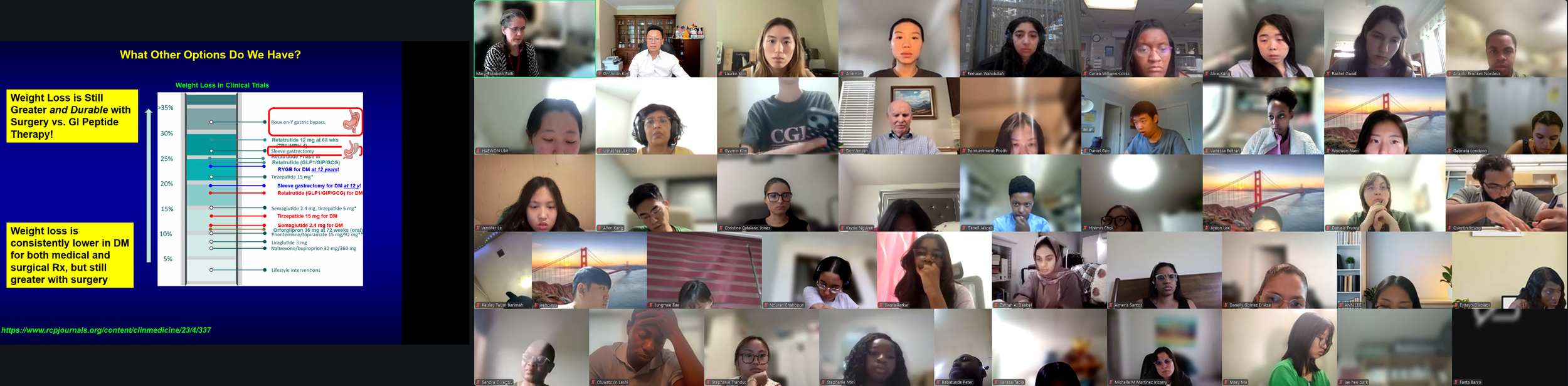
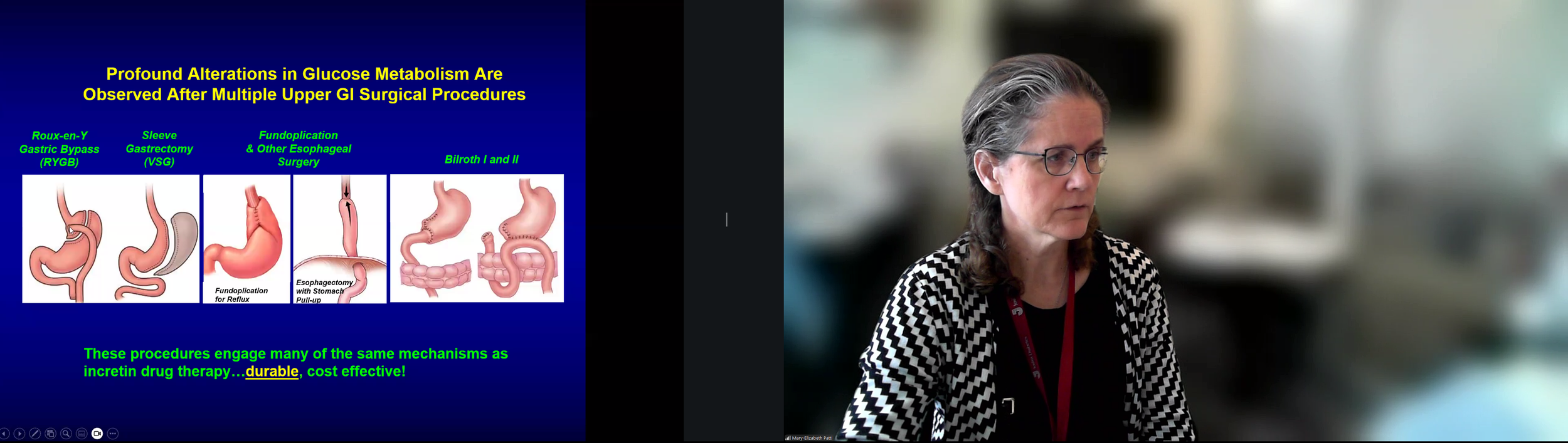
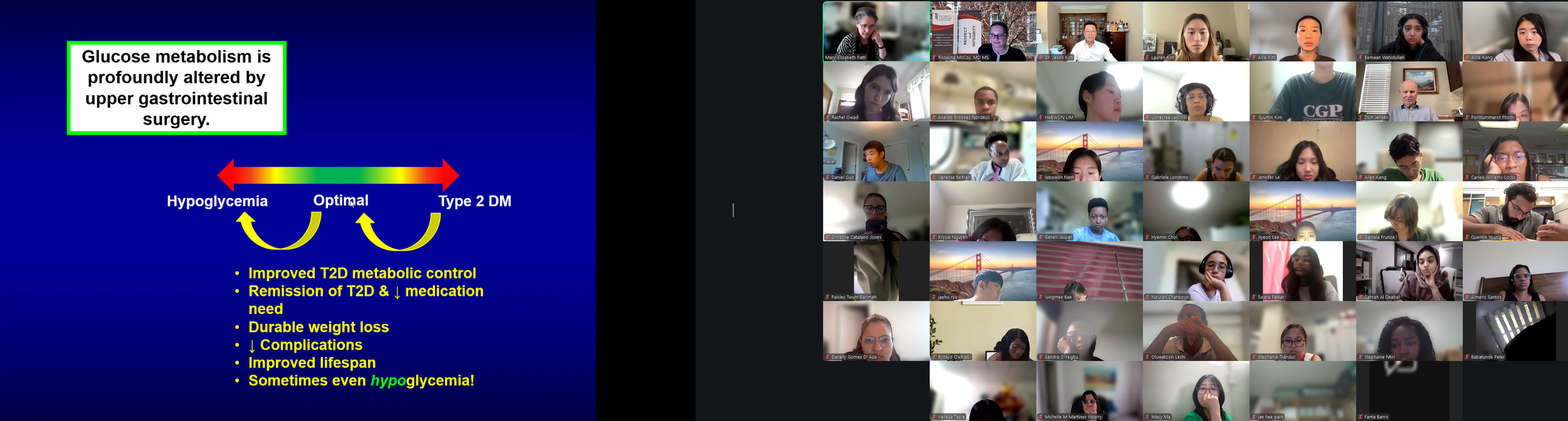
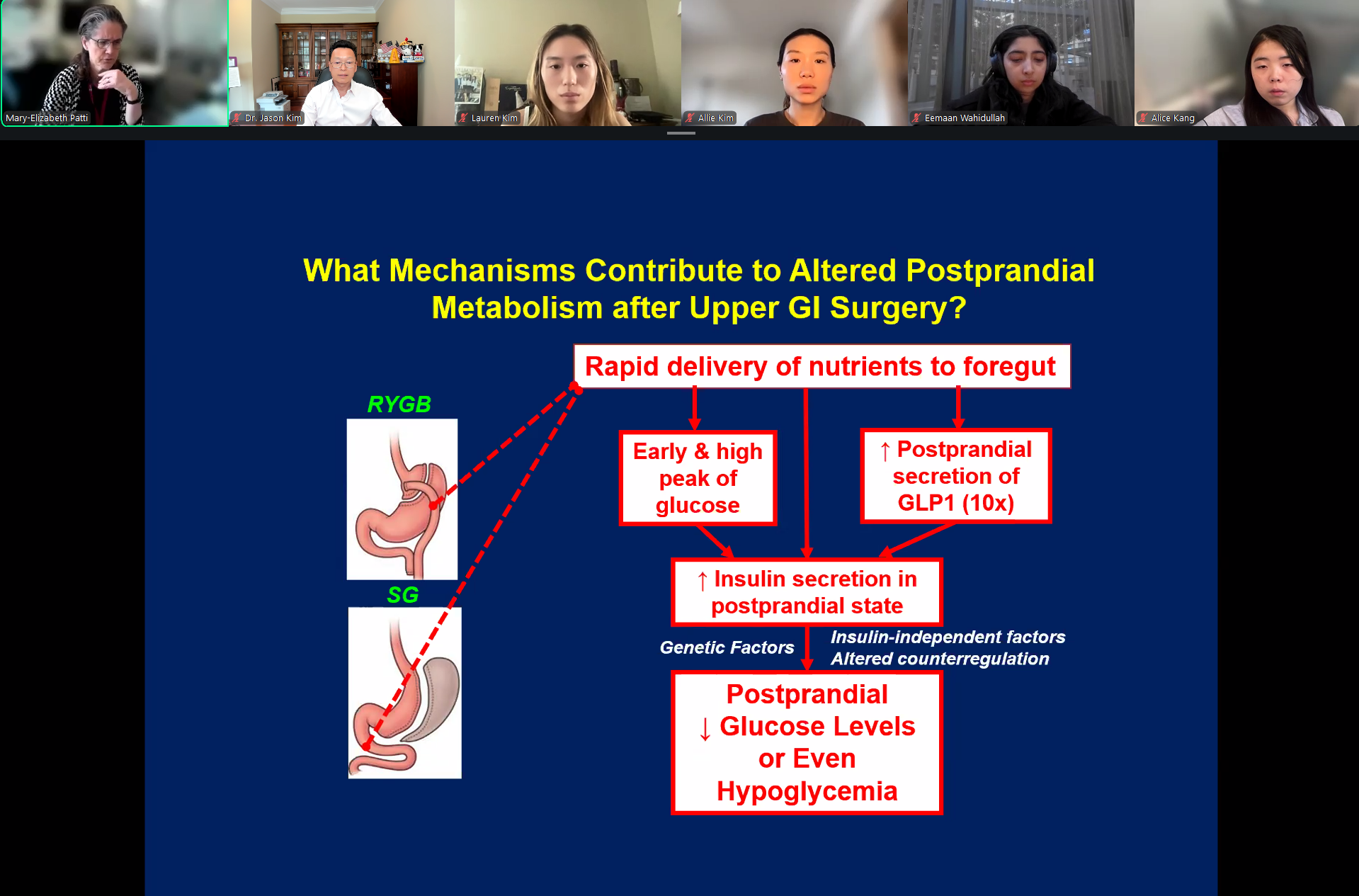
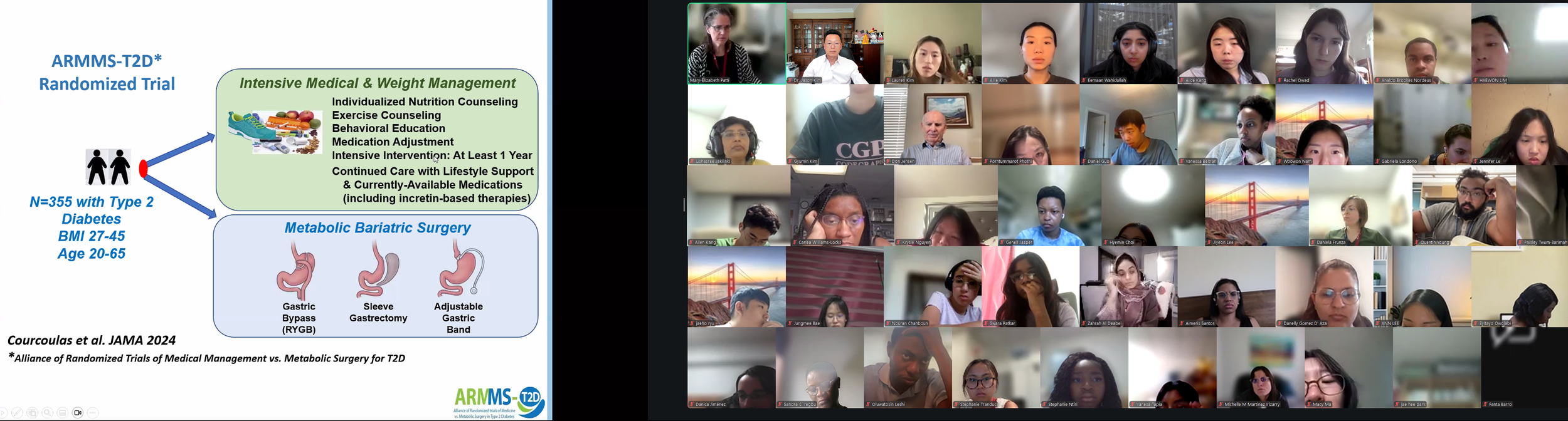

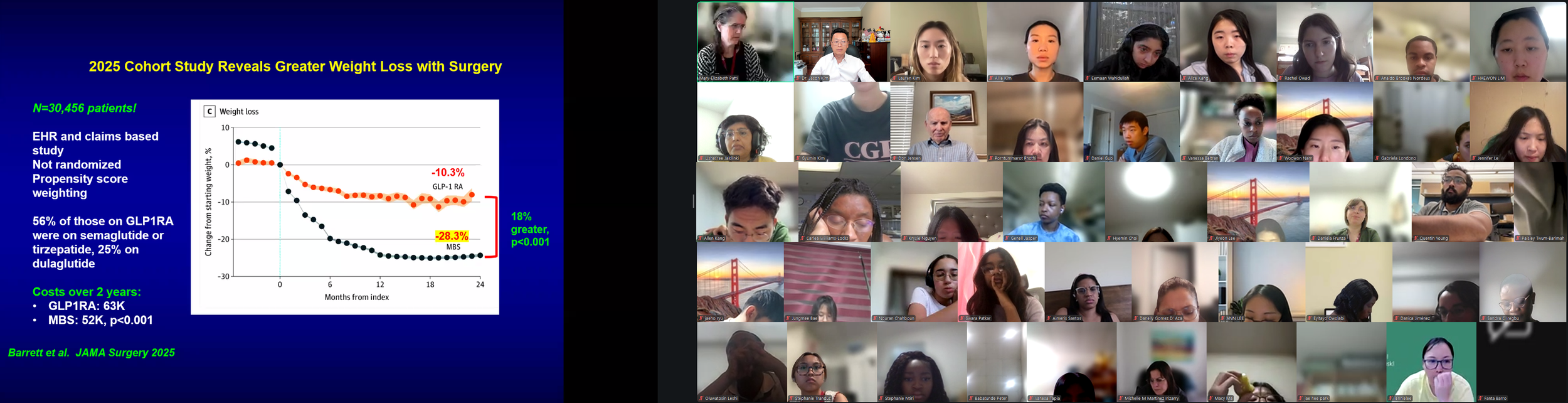
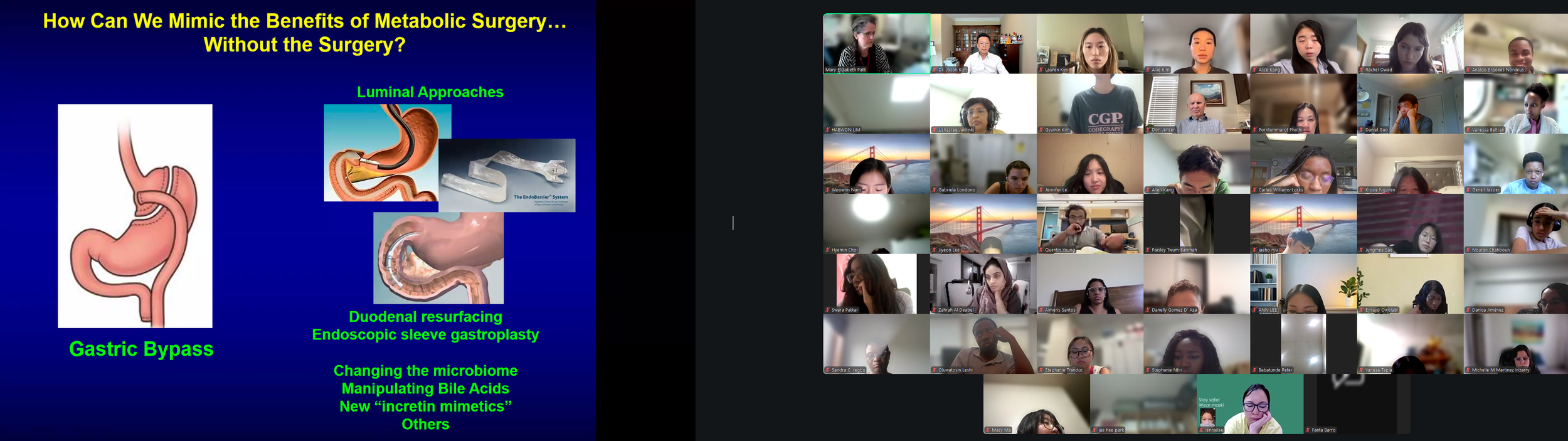
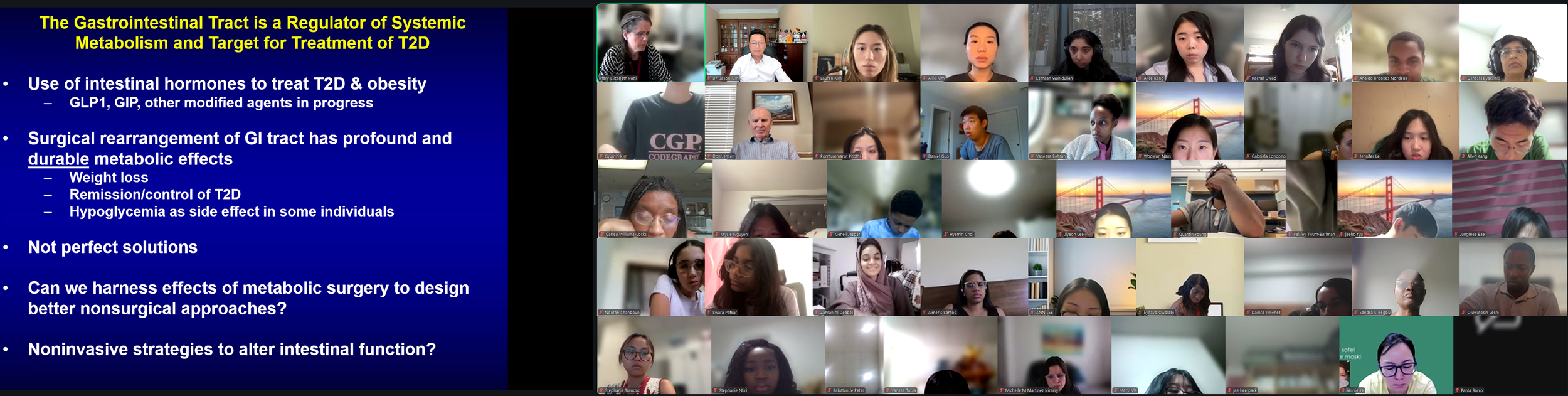

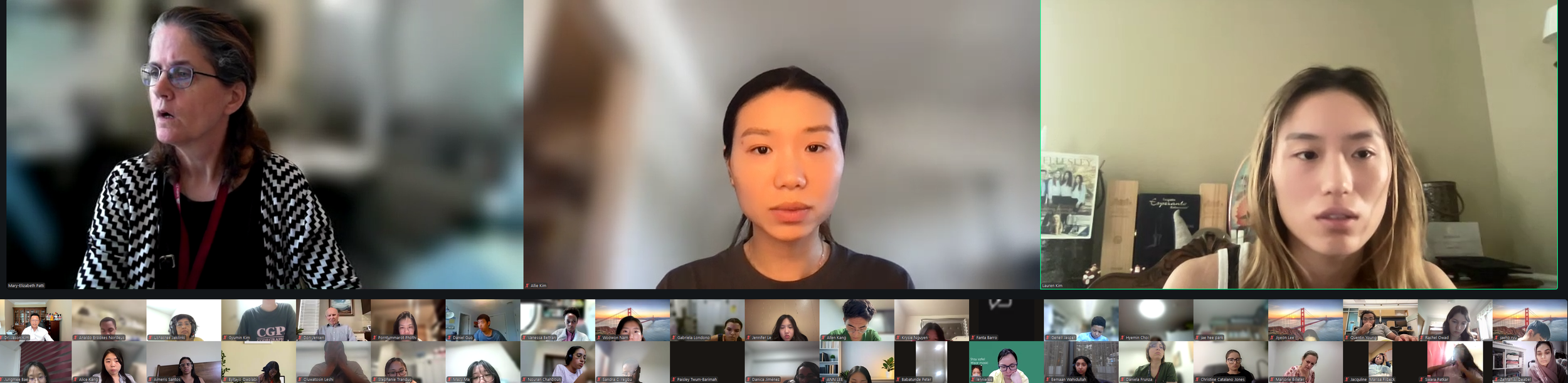


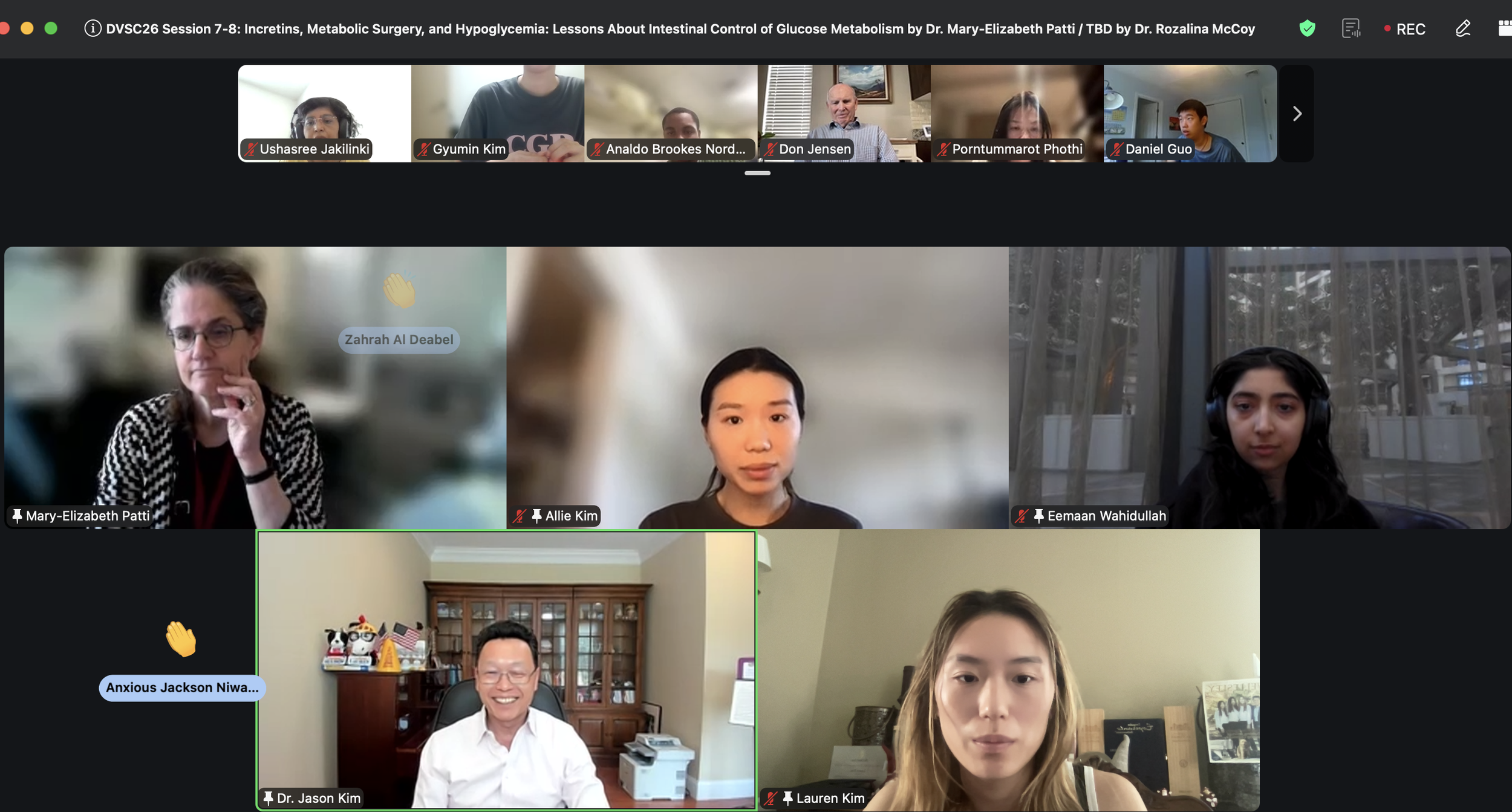
August 10, 2026
Session 8. Bridging the Evidence Gap: Real-World Data as a Tool for High-Quality, Accessible, and Sustainable Diabetes Care by Dr. Rozalina McCoy (University of Maryland School of Medicine)
The Main Session of today’s DVSC26 continued with Dr. Rozalina McCoy from the University of Maryland School of Medicine. Dr. McCoy began by stating the problem: Despite more innovation, medications, and technology, diabetes prevalence continues to rise, and diabetes outcomes have stalled. Why? Dr. McCoy defined “real-world data” as data generated during routine care, and therefore, real-world data are broadly representative and large-scale, helping to turn routine care into evidence for improving decisions. Real-world data are complementary to clinical trial data and importantly enable us to see across individual, health system, and society levels at once in ways that a clinical trial cannot. Real-world health-related data includes data from insurance companies related to administrative claims, electronic health records, disease registries, health surveys, linked/hybrid data, and patient-generated/digital/social media data. Dr. McCoy found common and widespread occurrences of severe hyperglycemic and dangerous hypoglycemic (diabetic ketoacidosis) crises requiring treatment during type 1 and type 2 diabetes management. Dr. McCoy discussed the treatment paradox: overtreatment from very tight blood glucose targets using high-risk drugs leading to severe hypoglycemia and requiring hospital care, particularly in older patients, and undertreatment of patients most likely to benefit from medications with CKM benefits and clinical inertia following a severe hypoglycemic event. Dr. McCoy found that hypoglycemic and hyperglycemic emergencies occur at higher rates in Black/Hispanic patients and individuals associated with low household income, high area-level deprivation, rural/suburban areas, underinsured, and multiple chronic health conditions. Dr. McCoy examined the exposome, exposures that shape health, and found that social determinants of health, such as area deprivation index, rural-urban continuum, and GPS-health, largely influence health outcomes. Thus, where people live shapes whether and how well they are cared for and what health outcomes they experience. In a cross-sectional study of over 31,000 adults with diabetes living in Minnesota, Iowa, and Wisconsin, Dr. McCoy found that people who live in most-deprived counties are 28% less likely to receive optimal diabetes care, 22% less likely to achieve glycemic control, and 62% less likely to be tobacco-free. In a retrospective cohort study involving over 1.1 million adults with diabetes living across 2,900 US counties, Dr. McCoy found that people who live in most-deprived quintiles have 41% higher odds of having severe hypoglycemia and 12% higher odds of having hyperglycemic/DKA state. Dr. McCoy found that the Geospatial Patterns of Social Determinants of Health (GPS-health) model was able to superbly predict people likely to have diabetes based on their exposure and where they live, and the strongest prediction features were economic value (wealth), access to health care (hospital), quality of school (school metrics), and proximity to gun violence. Dr. McCoy highlighted the importance of emulating clinical trials when a clinical trial can’t be done and real-world data can be used to estimate outcomes and gave an example of how clinical trial emulation was used to predict comparative effectiveness of type 2 diabetes drugs in moderate cardiovascular risk. Dr. McCoy ended by describing community paramedicine as an effort to bring care to patients who can’t easily reach the clinic. Thus, Dr. McCoy summarized how our efforts at the clinic level, health system level, and population level must come together to achieve equitable care for all.
-
![Session 2: Opening Session & Introduction to Diabetes by Lauren, Allison, and Dr. Jason Kim (University of Massachusetts Medical School)]()
August 10, 2026 (Session 8 - Part 1)
Session 8: “Bridging the Evidence Gap: Real-World Data as a Tool for High-Quality, Accessible, and Sustainable Diabetes Care” by Dr. Rozalina McCoy (University of Maryland School of Medicine)
Dr. Kim introduces Dr. Rozalina McCoy to our DVSC26 participants from all around the world.
-
![]()
August 10, 2026 (Session 8 - Part 2)
Session 8: “Bridging the Evidence Gap: Real-World Data as a Tool for High-Quality, Accessible, and Sustainable Diabetes Care” by Dr. Rozalina McCoy (University of Maryland School of Medicine)
Dr. Kim introduces Dr. Rozalina McCoy to our DVSC26 participants from all around the world.
-
![]()
August 10, 2026 (Session 8 - Part 3)
Session 8: “Bridging the Evidence Gap: Real-World Data as a Tool for High-Quality, Accessible, and Sustainable Diabetes Care” by Dr. Rozalina McCoy (University of Maryland School of Medicine)
Dr. Kim introduces Dr. Rozalina McCoy to our DVSC26 participants from all around the world.
-
![]()
August 10, 2026 (Session 8 - Part 4)
Session 8: “Bridging the Evidence Gap: Real-World Data as a Tool for High-Quality, Accessible, and Sustainable Diabetes Care” by Dr. Rozalina McCoy (University of Maryland School of Medicine)
More than 40 million Americans live with diabetes, yet despite remarkable innovations in medications and technology, health outcomes have plateaued—or even worsened—for many. This session focuses on 3 critical questions: who is being left behind, why, and what can we do about it? This session shares how Dr. McCoy’s research uses real-world data to uncover the multi-level drivers behind these stalled outcomes, from individual and clinical factors to health system and community-level barriers to care. This session closes by showing how these insights inform interventions at the clinic, health system, and population levels to ensure that innovation in diabetes care translates into better outcomes for everyone, not just those who can most easily access it.
-
![]()
August 10, 2026 (Session 8 - Part 5)
Session 8: “Bridging the Evidence Gap: Real-World Data as a Tool for High-Quality, Accessible, and Sustainable Diabetes Care” by Dr. Rozalina McCoy (Associate Professor of Medicine, Vice Chief of Clinical Research, Director of Precision Medicine & Population Health, Co-Director of Center for SUNSHINE, Director of Research, Rural-MD Scholars Program, University of Maryland School of Medicine & School of Public Health)
-
![]()
August 10, 2026 (Session 8 - Part 6)
Session 8: “Bridging the Evidence Gap: Real-World Data as a Tool for High-Quality, Accessible, and Sustainable Diabetes Care” by Dr. Rozalina McCoy (University of Maryland School of Medicine)
Dr. Rozalina McCoy welcomes our program participants from around the world.
-
![]()
August 10, 2026 (Session 8 - Part 7)
Session 8: “Bridging the Evidence Gap: Real-World Data as a Tool for High-Quality, Accessible, and Sustainable Diabetes Care” by Dr. Rozalina McCoy (University of Maryland School of Medicine)
Dr. Rozalina McCoy welcomes our program participants from around the world.
-
![]()
August 10, 2026 (Session 8 - Part 8)
Session 8: “Bridging the Evidence Gap: Real-World Data as a Tool for High-Quality, Accessible, and Sustainable Diabetes Care” by Dr. Rozalina McCoy (University of Maryland School of Medicine)
Dr. McCoy began by stating the problem: Despite more innovation, medications, and technology, diabetes prevalence continues to rise, and diabetes outcomes have stalled. Why?
-
![]()
August 10, 2026 (Session 8 - Part 9)
Session 8: “Bridging the Evidence Gap: Real-World Data as a Tool for High-Quality, Accessible, and Sustainable Diabetes Care” by Dr. Rozalina McCoy (University of Maryland School of Medicine)
Dr. McCoy began by stating the problem: Despite more innovation, medications, and technology, diabetes prevalence continues to rise, and diabetes outcomes have stalled. Why?
-
![]()
August 10, 2026 (Session 8 - Part 10)
Session 8: “Bridging the Evidence Gap: Real-World Data as a Tool for High-Quality, Accessible, and Sustainable Diabetes Care” by Dr. Rozalina McCoy (University of Maryland School of Medicine)
Dr. McCoy defined “real-world data” as data generated during routine care, and therefore, real-world data are broadly representative and large-scale, helping to turn routine care into evidence for improving decisions. Real-world data are complementary to clinical trial data and importantly enable us to see across individual, health system, and society levels at once in ways that a clinical trial cannot. Real-world health-related data includes data from insurance companies related to administrative claims, electronic health records, disease registries, health surveys, linked/hybrid data, and patient-generated/digital/social media data.
-
![]()
August 10, 2026 (Session 8 - Part 11)
Session 8: “Bridging the Evidence Gap: Real-World Data as a Tool for High-Quality, Accessible, and Sustainable Diabetes Care” by Dr. Rozalina McCoy (University of Maryland School of Medicine)
Dr. McCoy defined “real-world data” as data generated during routine care, and therefore, real-world data are broadly representative and large-scale, helping to turn routine care into evidence for improving decisions. Real-world data are complementary to clinical trial data and importantly enable us to see across individual, health system, and society levels at once in ways that a clinical trial cannot. Real-world health-related data includes data from insurance companies related to administrative claims, electronic health records, disease registries, health surveys, linked/hybrid data, and patient-generated/digital/social media data.
-
![]()
August 10, 2026 (Session 8 - Part 12)
Session 8: “Bridging the Evidence Gap: Real-World Data as a Tool for High-Quality, Accessible, and Sustainable Diabetes Care” by Dr. Rozalina McCoy (University of Maryland School of Medicine)
Dr. McCoy defined “real-world data” as data generated during routine care, and therefore, real-world data are broadly representative and large-scale, helping to turn routine care into evidence for improving decisions. Real-world data are complementary to clinical trial data and importantly enable us to see across individual, health system, and society levels at once in ways that a clinical trial cannot. Real-world health-related data includes data from insurance companies related to administrative claims, electronic health records, disease registries, health surveys, linked/hybrid data, and patient-generated/digital/social media data.
-
![]()
August 10, 2026 (Session 8 - Part 13)
Session 8: “Bridging the Evidence Gap: Real-World Data as a Tool for High-Quality, Accessible, and Sustainable Diabetes Care” by Dr. Rozalina McCoy (University of Maryland School of Medicine)
Dr. McCoy defined “real-world data” as data generated during routine care, and therefore, real-world data are broadly representative and large-scale, helping to turn routine care into evidence for improving decisions. Real-world data are complementary to clinical trial data and importantly enable us to see across individual, health system, and society levels at once in ways that a clinical trial cannot. Real-world health-related data includes data from insurance companies related to administrative claims, electronic health records, disease registries, health surveys, linked/hybrid data, and patient-generated/digital/social media data.
-
![]()
August 10, 2026 (Session 8 - Part 14)
Session 8: “Bridging the Evidence Gap: Real-World Data as a Tool for High-Quality, Accessible, and Sustainable Diabetes Care” by Dr. Rozalina McCoy (University of Maryland School of Medicine)
Dr. McCoy defined “real-world data” as data generated during routine care, and therefore, real-world data are broadly representative and large-scale, helping to turn routine care into evidence for improving decisions. Real-world data are complementary to clinical trial data and importantly enable us to see across individual, health system, and society levels at once in ways that a clinical trial cannot. Real-world health-related data includes data from insurance companies related to administrative claims, electronic health records, disease registries, health surveys, linked/hybrid data, and patient-generated/digital/social media data.
-
![]()
August 10, 2026 (Session 8 - Part 15)
Session 8: “Bridging the Evidence Gap: Real-World Data as a Tool for High-Quality, Accessible, and Sustainable Diabetes Care” by Dr. Rozalina McCoy (University of Maryland School of Medicine)
Dr. McCoy defined “real-world data” as data generated during routine care, and therefore, real-world data are broadly representative and large-scale, helping to turn routine care into evidence for improving decisions. Real-world data are complementary to clinical trial data and importantly enable us to see across individual, health system, and society levels at once in ways that a clinical trial cannot. Real-world health-related data includes data from insurance companies related to administrative claims, electronic health records, disease registries, health surveys, linked/hybrid data, and patient-generated/digital/social media data.
-
![]()
August 10, 2026 (Session 8 - Part 16)
Session 8: “Bridging the Evidence Gap: Real-World Data as a Tool for High-Quality, Accessible, and Sustainable Diabetes Care” by Dr. Rozalina McCoy (University of Maryland School of Medicine)
Dr. McCoy found common and widespread occurrences of severe hyperglycemic and dangerous hypoglycemic (diabetic ketoacidosis) crises requiring treatment during type 1 and type 2 diabetes management. Dr. McCoy discussed the treatment paradox: overtreatment from very tight blood glucose targets using high-risk drugs leading to severe hypoglycemia and requiring hospital care, particularly in older patients, and undertreatment of patients most likely to benefit from medications with CKM benefits and clinical inertia following a severe hypoglycemic event.
-
![]()
August 10, 2026 (Session 8 - Part 17)
Session 8: “Bridging the Evidence Gap: Real-World Data as a Tool for High-Quality, Accessible, and Sustainable Diabetes Care” by Dr. Rozalina McCoy (University of Maryland School of Medicine)
Dr. McCoy found common and widespread occurrences of severe hyperglycemic and dangerous hypoglycemic (diabetic ketoacidosis) crises requiring treatment during type 1 and type 2 diabetes management. Dr. McCoy discussed the treatment paradox: overtreatment from very tight blood glucose targets using high-risk drugs leading to severe hypoglycemia and requiring hospital care, particularly in older patients, and undertreatment of patients most likely to benefit from medications with CKM benefits and clinical inertia following a severe hypoglycemic event.
-
![]()
August 10, 2026 (Session 8 - Part 18)
Session 8: “Bridging the Evidence Gap: Real-World Data as a Tool for High-Quality, Accessible, and Sustainable Diabetes Care” by Dr. Rozalina McCoy (University of Maryland School of Medicine)
Dr. McCoy found common and widespread occurrences of severe hyperglycemic and dangerous hypoglycemic (diabetic ketoacidosis) crises requiring treatment during type 1 and type 2 diabetes management. Dr. McCoy discussed the treatment paradox: overtreatment from very tight blood glucose targets using high-risk drugs leading to severe hypoglycemia and requiring hospital care, particularly in older patients, and undertreatment of patients most likely to benefit from medications with CKM benefits and clinical inertia following a severe hypoglycemic event.
-
![]()
August 10, 2026 (Session 8 - Part 19)
Session 8: “Bridging the Evidence Gap: Real-World Data as a Tool for High-Quality, Accessible, and Sustainable Diabetes Care” by Dr. Rozalina McCoy (University of Maryland School of Medicine)
Dr. McCoy found common and widespread occurrences of severe hyperglycemic and dangerous hypoglycemic (diabetic ketoacidosis) crises requiring treatment during type 1 and type 2 diabetes management. Dr. McCoy discussed the treatment paradox: overtreatment from very tight blood glucose targets using high-risk drugs leading to severe hypoglycemia and requiring hospital care, particularly in older patients, and undertreatment of patients most likely to benefit from medications with CKM benefits and clinical inertia following a severe hypoglycemic event.
-
![]()
August 10, 2026 (Session 8 - Part 20)
Session 8: “Bridging the Evidence Gap: Real-World Data as a Tool for High-Quality, Accessible, and Sustainable Diabetes Care” by Dr. Rozalina McCoy (University of Maryland School of Medicine)
Dr. McCoy found common and widespread occurrences of severe hyperglycemic and dangerous hypoglycemic (diabetic ketoacidosis) crises requiring treatment during type 1 and type 2 diabetes management. Dr. McCoy discussed the treatment paradox: overtreatment from very tight blood glucose targets using high-risk drugs leading to severe hypoglycemia and requiring hospital care, particularly in older patients, and undertreatment of patients most likely to benefit from medications with CKM benefits and clinical inertia following a severe hypoglycemic event.
-
![]()
August 10, 2026 (Session 8 - Part 21)
Session 8: “Bridging the Evidence Gap: Real-World Data as a Tool for High-Quality, Accessible, and Sustainable Diabetes Care” by Dr. Rozalina McCoy (University of Maryland School of Medicine)
Dr. McCoy found common and widespread occurrences of severe hyperglycemic and dangerous hypoglycemic (diabetic ketoacidosis) crises requiring treatment during type 1 and type 2 diabetes management. Dr. McCoy discussed the treatment paradox: overtreatment from very tight blood glucose targets using high-risk drugs leading to severe hypoglycemia and requiring hospital care, particularly in older patients, and undertreatment of patients most likely to benefit from medications with CKM benefits and clinical inertia following a severe hypoglycemic event.
-
![]()
August 10, 2026 (Session 8 - Part 22)
Session 8: “Bridging the Evidence Gap: Real-World Data as a Tool for High-Quality, Accessible, and Sustainable Diabetes Care” by Dr. Rozalina McCoy (University of Maryland School of Medicine)
Dr. McCoy found that hypoglycemic and hyperglycemic emergencies occur at higher rates in Black/Hispanic patients and individuals associated with low household income, high area-level deprivation, rural/suburban areas, underinsured, and multiple chronic health conditions.
-
![]()
August 10, 2026 (Session 8 - Part 23)
Session 8: “Bridging the Evidence Gap: Real-World Data as a Tool for High-Quality, Accessible, and Sustainable Diabetes Care” by Dr. Rozalina McCoy (University of Maryland School of Medicine)
Dr. McCoy found that hypoglycemic and hyperglycemic emergencies occur at higher rates in Black/Hispanic patients and individuals associated with low household income, high area-level deprivation, rural/suburban areas, underinsured, and multiple chronic health conditions.
-
![]()
August 10, 2026 (Session 8 - Part 24)
Session 8: “Bridging the Evidence Gap: Real-World Data as a Tool for High-Quality, Accessible, and Sustainable Diabetes Care” by Dr. Rozalina McCoy (University of Maryland School of Medicine)
Dr. McCoy examined the exposome, exposures that shape health, and found that social determinants of health, such as area deprivation index, rural-urban continuum, and GPS-health, largely influence health outcomes. Thus, where people live shapes whether and how well they are cared for and what health outcomes they experience.
-
![]()
August 10, 2026 (Session 8 - Part 25)
Session 8: “Bridging the Evidence Gap: Real-World Data as a Tool for High-Quality, Accessible, and Sustainable Diabetes Care” by Dr. Rozalina McCoy (University of Maryland School of Medicine)
Dr. McCoy examined the exposome, exposures that shape health, and found that social determinants of health, such as area deprivation index, rural-urban continuum, and GPS-health, largely influence health outcomes. Thus, where people live shapes whether and how well they are cared for and what health outcomes they experience.
-
![]()
August 10, 2026 (Session 8 - Part 26)
Session 8: “Bridging the Evidence Gap: Real-World Data as a Tool for High-Quality, Accessible, and Sustainable Diabetes Care” by Dr. Rozalina McCoy (University of Maryland School of Medicine)
In a cross-sectional study of over 31,000 adults with diabetes living in Minnesota, Iowa, and Wisconsin, Dr. McCoy found that people who live in most-deprived counties are 28% less likely to receive optimal diabetes care, 22% less likely to achieve glycemic control, and 62% less likely to be tobacco-free.
-
![]()
August 10, 2026 (Session 8 - Part 27)
Session 8: “Bridging the Evidence Gap: Real-World Data as a Tool for High-Quality, Accessible, and Sustainable Diabetes Care” by Dr. Rozalina McCoy (University of Maryland School of Medicine)
In a cross-sectional study of over 31,000 adults with diabetes living in Minnesota, Iowa, and Wisconsin, Dr. McCoy found that people who live in most-deprived counties are 28% less likely to receive optimal diabetes care, 22% less likely to achieve glycemic control, and 62% less likely to be tobacco-free.
-
![]()
August 10, 2026 (Session 8 - Part 28)
Session 8: “Bridging the Evidence Gap: Real-World Data as a Tool for High-Quality, Accessible, and Sustainable Diabetes Care” by Dr. Rozalina McCoy (University of Maryland School of Medicine)
In a retrospective cohort study involving over 1.1 million adults with diabetes living across 2,900 US counties, Dr. McCoy found that people who live in most-deprived quintiles have 41% higher odds of having severe hypoglycemia and 12% higher odds of having hyperglycemic/DKA state.
-
![]()
August 10, 2026 (Session 8 - Part 29)
Session 8: “Bridging the Evidence Gap: Real-World Data as a Tool for High-Quality, Accessible, and Sustainable Diabetes Care” by Dr. Rozalina McCoy (University of Maryland School of Medicine)
In a retrospective cohort study involving over 1.1 million adults with diabetes living across 2,900 US counties, Dr. McCoy found that people who live in most-deprived quintiles have 41% higher odds of having severe hypoglycemia and 12% higher odds of having hyperglycemic/DKA state.
-
![]()
August 10, 2026 (Session 8 - Part 30)
Session 8: “Bridging the Evidence Gap: Real-World Data as a Tool for High-Quality, Accessible, and Sustainable Diabetes Care” by Dr. Rozalina McCoy (University of Maryland School of Medicine)
Dr. McCoy found that the Geospatial Patterns of Social Determinants of Health (GPS-health) model was able to superbly predict people likely to have diabetes based on their exposure and where they live, and the strongest prediction features were economic value (wealth), access to health care (hospital), quality of school (school metrics), and proximity to gun violence.
-
![]()
August 10, 2026 (Session 8 - Part 31)
Session 8: “Bridging the Evidence Gap: Real-World Data as a Tool for High-Quality, Accessible, and Sustainable Diabetes Care” by Dr. Rozalina McCoy (University of Maryland School of Medicine)
Dr. McCoy found that the Geospatial Patterns of Social Determinants of Health (GPS-health) model was able to superbly predict people likely to have diabetes based on their exposure and where they live, and the strongest prediction features were economic value (wealth), access to health care (hospital), quality of school (school metrics), and proximity to gun violence.
-
![]()
August 10, 2026 (Session 8 - Part 32)
Session 8: “Bridging the Evidence Gap: Real-World Data as a Tool for High-Quality, Accessible, and Sustainable Diabetes Care” by Dr. Rozalina McCoy (University of Maryland School of Medicine)
Dr. McCoy highlighted the importance of emulating clinical trials when a clinical trial can’t be done and real-world data can be used to estimate outcomes and gave an example of how clinical trial emulation was used to predict comparative effectiveness of type 2 diabetes drugs in moderate cardiovascular risk.
-
![]()
August 10, 2026 (Session 8 - Part 33)
Session 8: “Bridging the Evidence Gap: Real-World Data as a Tool for High-Quality, Accessible, and Sustainable Diabetes Care” by Dr. Rozalina McCoy (University of Maryland School of Medicine)
Dr. McCoy highlighted the importance of emulating clinical trials when a clinical trial can’t be done and real-world data can be used to estimate outcomes and gave an example of how clinical trial emulation was used to predict comparative effectiveness of type 2 diabetes drugs in moderate cardiovascular risk.
-
![]()
August 10, 2026 (Session 8 - Part 34)
Session 8: “Bridging the Evidence Gap: Real-World Data as a Tool for High-Quality, Accessible, and Sustainable Diabetes Care” by Dr. Rozalina McCoy (University of Maryland School of Medicine)
Dr. McCoy highlighted the importance of emulating clinical trials when a clinical trial can’t be done and real-world data can be used to estimate outcomes and gave an example of how clinical trial emulation was used to predict comparative effectiveness of type 2 diabetes drugs in moderate cardiovascular risk.
-
![]()
August 10, 2026 (Session 8 - Part 35)
Session 8: “Bridging the Evidence Gap: Real-World Data as a Tool for High-Quality, Accessible, and Sustainable Diabetes Care” by Dr. Rozalina McCoy (University of Maryland School of Medicine)
Dr. McCoy highlighted the importance of emulating clinical trials when a clinical trial can’t be done and real-world data can be used to estimate outcomes and gave an example of how clinical trial emulation was used to predict comparative effectiveness of type 2 diabetes drugs in moderate cardiovascular risk.
-
![]()
August 10, 2026 (Session 8 - Part 36)
Session 8: “Bridging the Evidence Gap: Real-World Data as a Tool for High-Quality, Accessible, and Sustainable Diabetes Care” by Dr. Rozalina McCoy (University of Maryland School of Medicine)
Dr. McCoy highlighted the importance of emulating clinical trials when a clinical trial can’t be done and real-world data can be used to estimate outcomes and gave an example of how clinical trial emulation was used to predict comparative effectiveness of type 2 diabetes drugs in moderate cardiovascular risk.
-
![]()
August 10, 2026 (Session 8 - Part 37)
Session 8: “Bridging the Evidence Gap: Real-World Data as a Tool for High-Quality, Accessible, and Sustainable Diabetes Care” by Dr. Rozalina McCoy (University of Maryland School of Medicine)
Dr. McCoy ended by describing community paramedicine as an effort to bring care to patients who can’t easily reach the clinic. Thus, Dr. McCoy summarized how our efforts at the clinic level, health system level, and population level must come together to achieve equitable care for all.
-
![]()
August 10, 2026 (Session 8 - Part 38)
Session 8: “Bridging the Evidence Gap: Real-World Data as a Tool for High-Quality, Accessible, and Sustainable Diabetes Care” by Dr. Rozalina McCoy (University of Maryland School of Medicine)
Dr. McCoy ended by describing community paramedicine as an effort to bring care to patients who can’t easily reach the clinic. Thus, Dr. McCoy summarized how our efforts at the clinic level, health system level, and population level must come together to achieve equitable care for all.
-
![]()
August 10, 2026 (Session 8 - Part 39)
Session 8: “Bridging the Evidence Gap: Real-World Data as a Tool for High-Quality, Accessible, and Sustainable Diabetes Care” by Dr. Rozalina McCoy (University of Maryland School of Medicine)
Lauren moderates the Q&A period with many outstanding questions from our DVSC26 participants.
-
![]()
August 10, 2026 (Session 8 - Part 40)
Session 8: “Bridging the Evidence Gap: Real-World Data as a Tool for High-Quality, Accessible, and Sustainable Diabetes Care” by Dr. Rozalina McCoy (University of Maryland School of Medicine)
During Q&A moderated by Lauren, Dr. McCoy thoughtfully addresses outstanding questions from our DVSC26 participants.
-
![]()
August 10, 2026 (Session 8 - Part 41)
Session 8: “Bridging the Evidence Gap: Real-World Data as a Tool for High-Quality, Accessible, and Sustainable Diabetes Care” by Dr. Rozalina McCoy (University of Maryland School of Medicine)
Allison moderates the Q&A period with many outstanding questions from our DVSC26 participants.
-
![]()
August 10, 2026 (Session 8 - Part 42)
Session 8: “Bridging the Evidence Gap: Real-World Data as a Tool for High-Quality, Accessible, and Sustainable Diabetes Care” by Dr. Rozalina McCoy (University of Maryland School of Medicine)
During Q&A moderated by Allison, Dr. McCoy thoughtfully addresses outstanding questions from our DVSC26 participants.
-
![]()
August 10, 2026 (Session 8 - Part 43)
Session 8: “Bridging the Evidence Gap: Real-World Data as a Tool for High-Quality, Accessible, and Sustainable Diabetes Care” by Dr. Rozalina McCoy (University of Maryland School of Medicine)
Lauren moderates the Q&A period with many outstanding questions from our DVSC26 participants.
-
![]()
August 10, 2026 (Session 8 - Part 44)
Session 8: “Bridging the Evidence Gap: Real-World Data as a Tool for High-Quality, Accessible, and Sustainable Diabetes Care” by Dr. Rozalina McCoy (University of Maryland School of Medicine)
During Q&A moderated by Lauren, Dr. McCoy thoughtfully addresses outstanding questions from our DVSC26 participants.
-
![]()
August 10, 2026 (Session 8 - Part 45)
Session 8: “Bridging the Evidence Gap: Real-World Data as a Tool for High-Quality, Accessible, and Sustainable Diabetes Care” by Dr. Rozalina McCoy (University of Maryland School of Medicine)
Allison moderates the Q&A period with many outstanding questions from our DVSC26 participants.
-
![]()
August 10, 2026 (Session 8 - Part 46)
Session 8: “Bridging the Evidence Gap: Real-World Data as a Tool for High-Quality, Accessible, and Sustainable Diabetes Care” by Dr. Rozalina McCoy (University of Maryland School of Medicine)
During Q&A moderated by Allison, Dr. McCoy thoughtfully addresses outstanding questions from our DVSC26 participants.
-
![]()
August 10, 2026 (Session 8 - Part 47)
Session 8: “Bridging the Evidence Gap: Real-World Data as a Tool for High-Quality, Accessible, and Sustainable Diabetes Care” by Dr. Rozalina McCoy (University of Maryland School of Medicine)
Lauren moderates the Q&A period with many outstanding questions from our DVSC26 participants.
-
![]()
August 10, 2026 (Session 8 - Part 48)
Session 8: “Bridging the Evidence Gap: Real-World Data as a Tool for High-Quality, Accessible, and Sustainable Diabetes Care” by Dr. Rozalina McCoy (University of Maryland School of Medicine)
During Q&A moderated by Lauren, Dr. McCoy thoughtfully addresses outstanding questions from our DVSC26 participants.
-
![]()
August 10, 2026 (Session 8 - Part 49)
Session 8: “Bridging the Evidence Gap: Real-World Data as a Tool for High-Quality, Accessible, and Sustainable Diabetes Care” by Dr. Rozalina McCoy (University of Maryland School of Medicine)
The DVC team thanks Dr. McCoy for her support of Diabetes Virtual Camp.
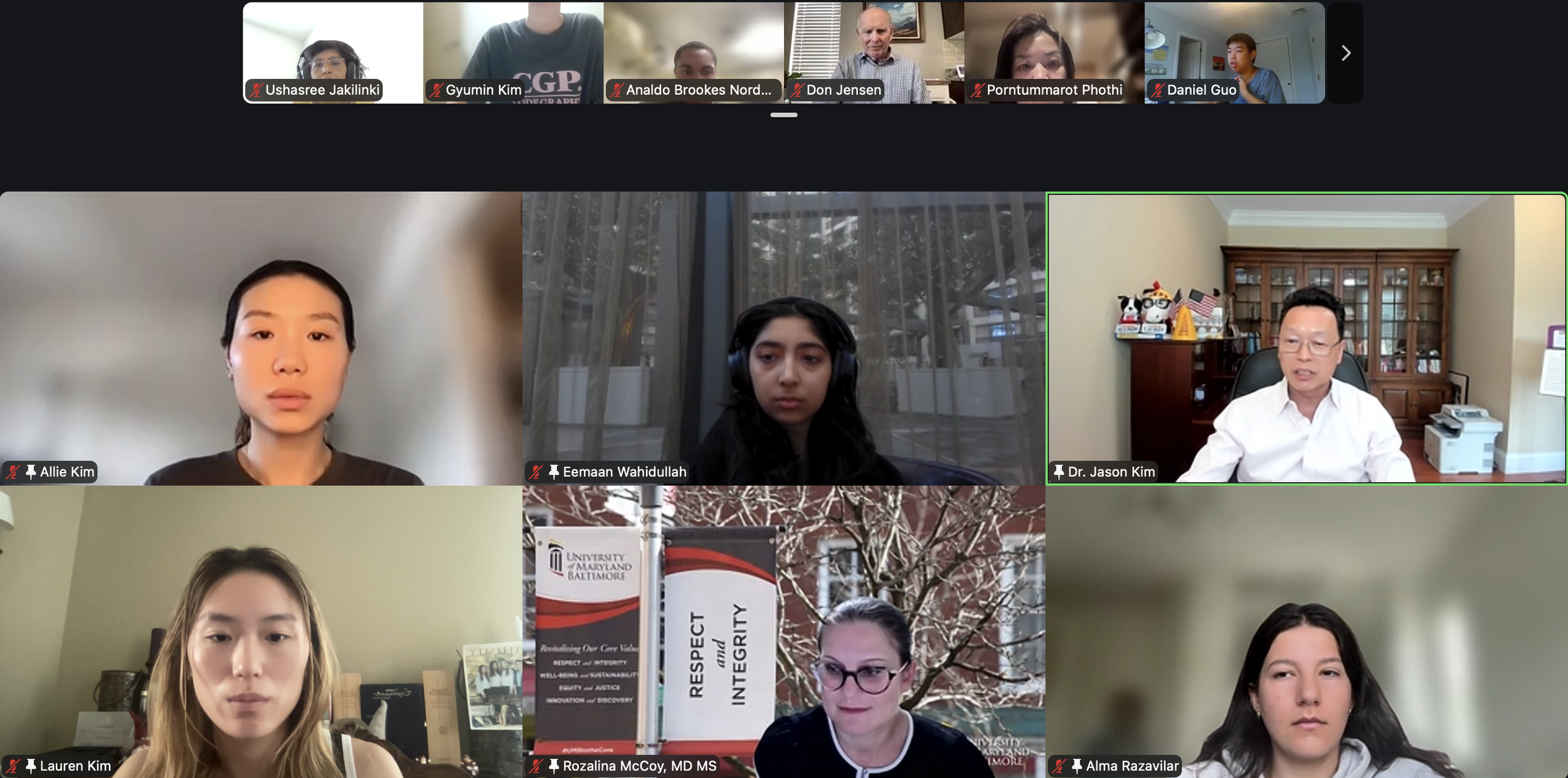
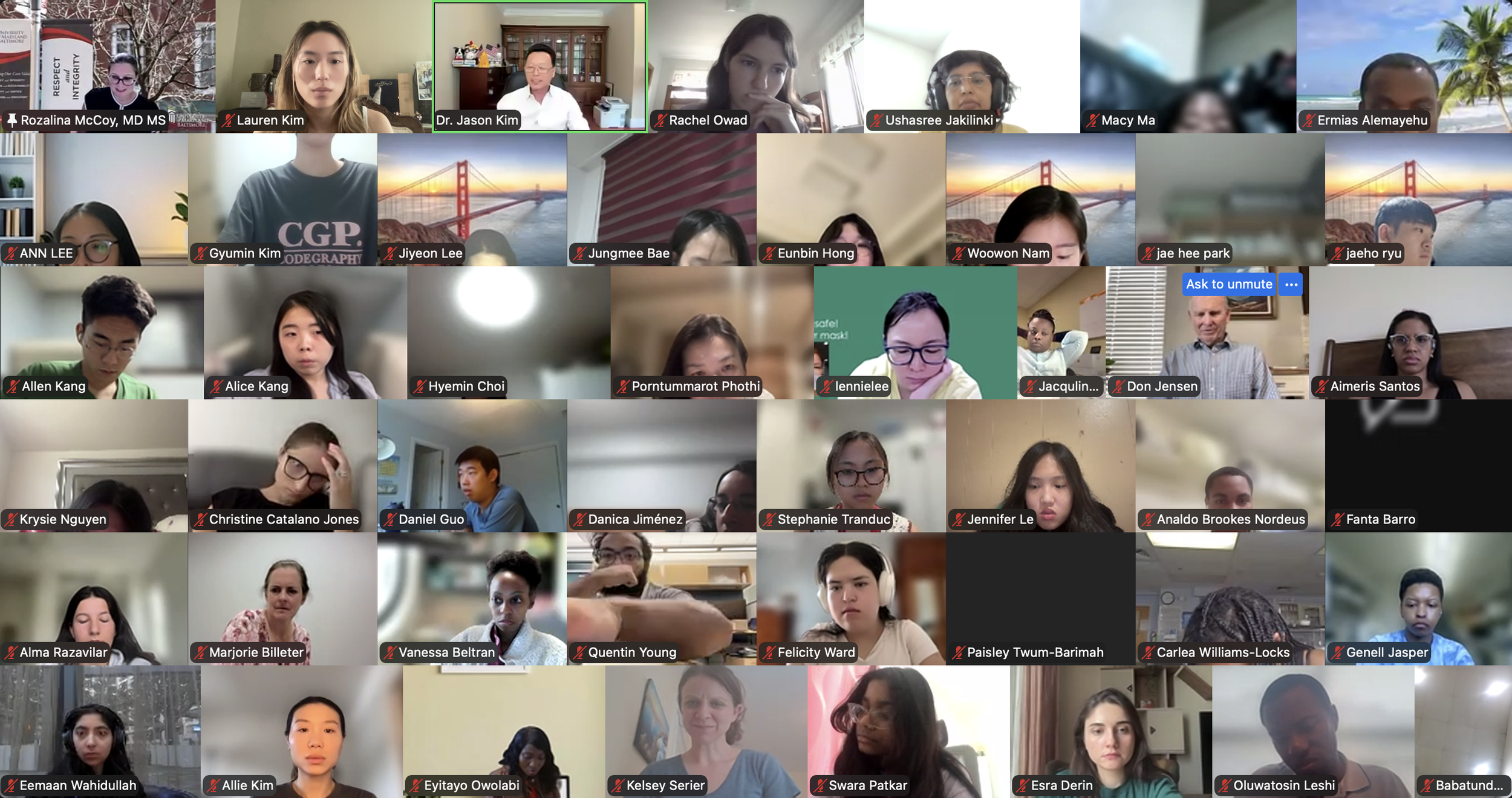
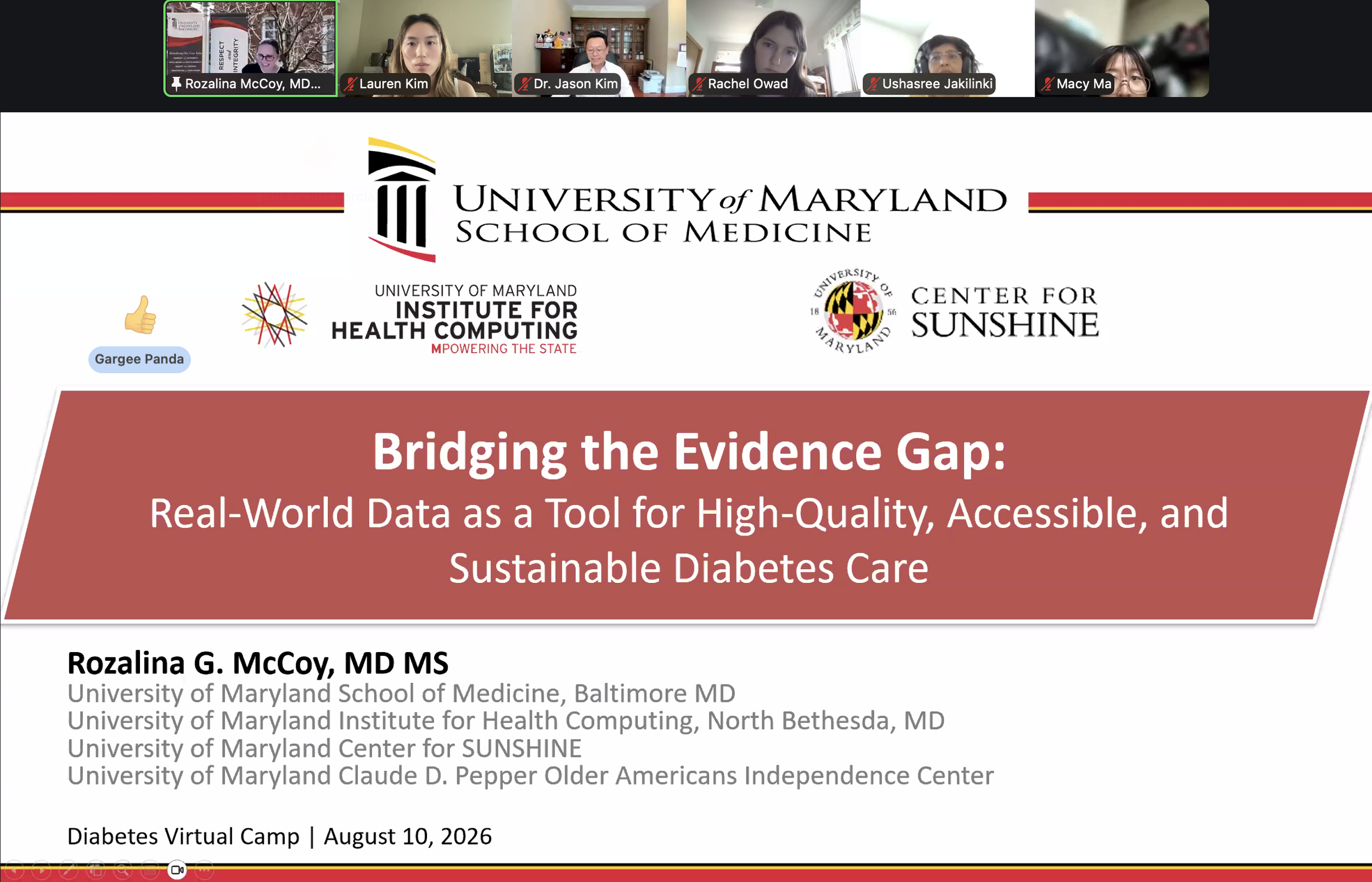
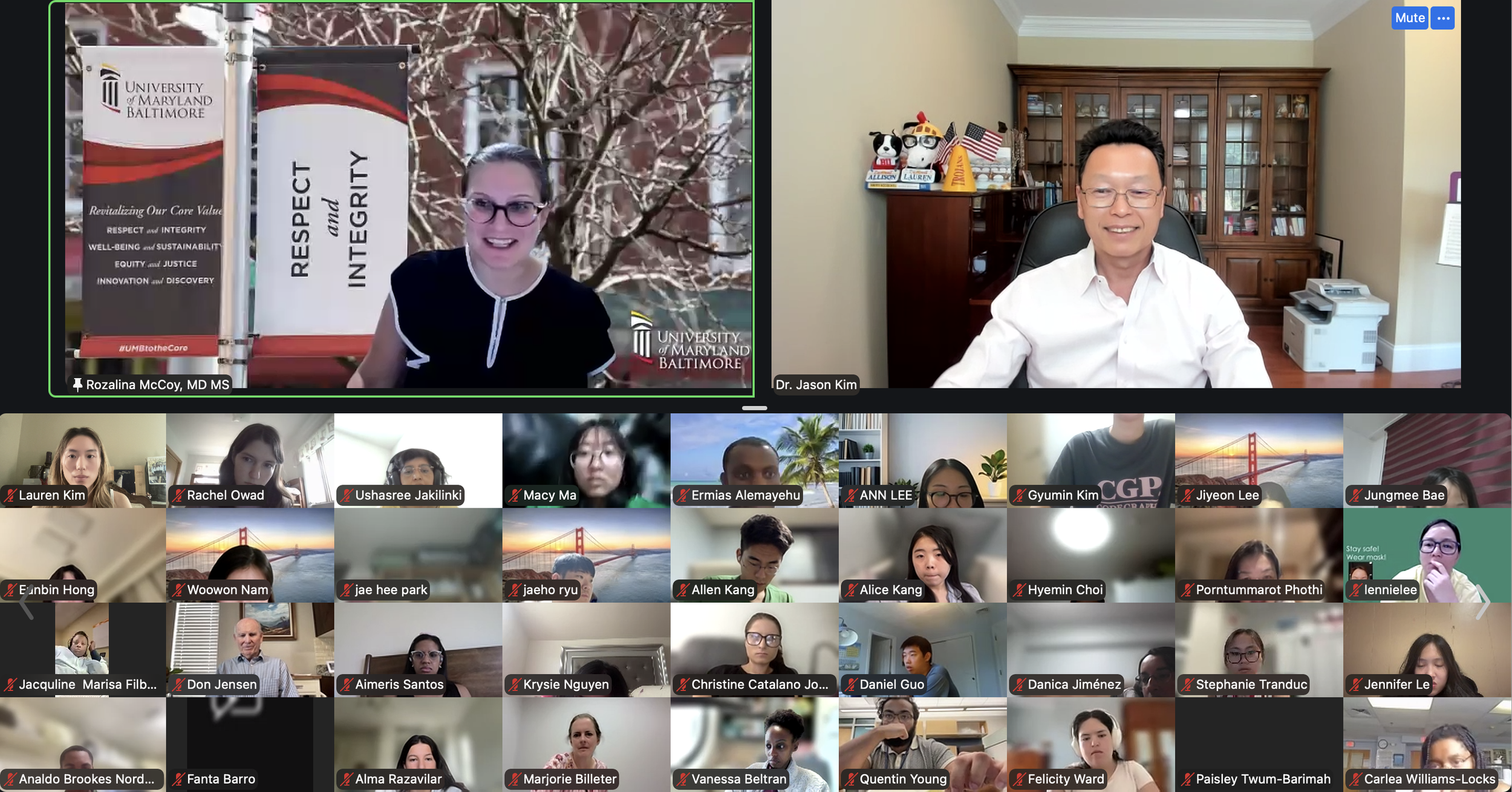
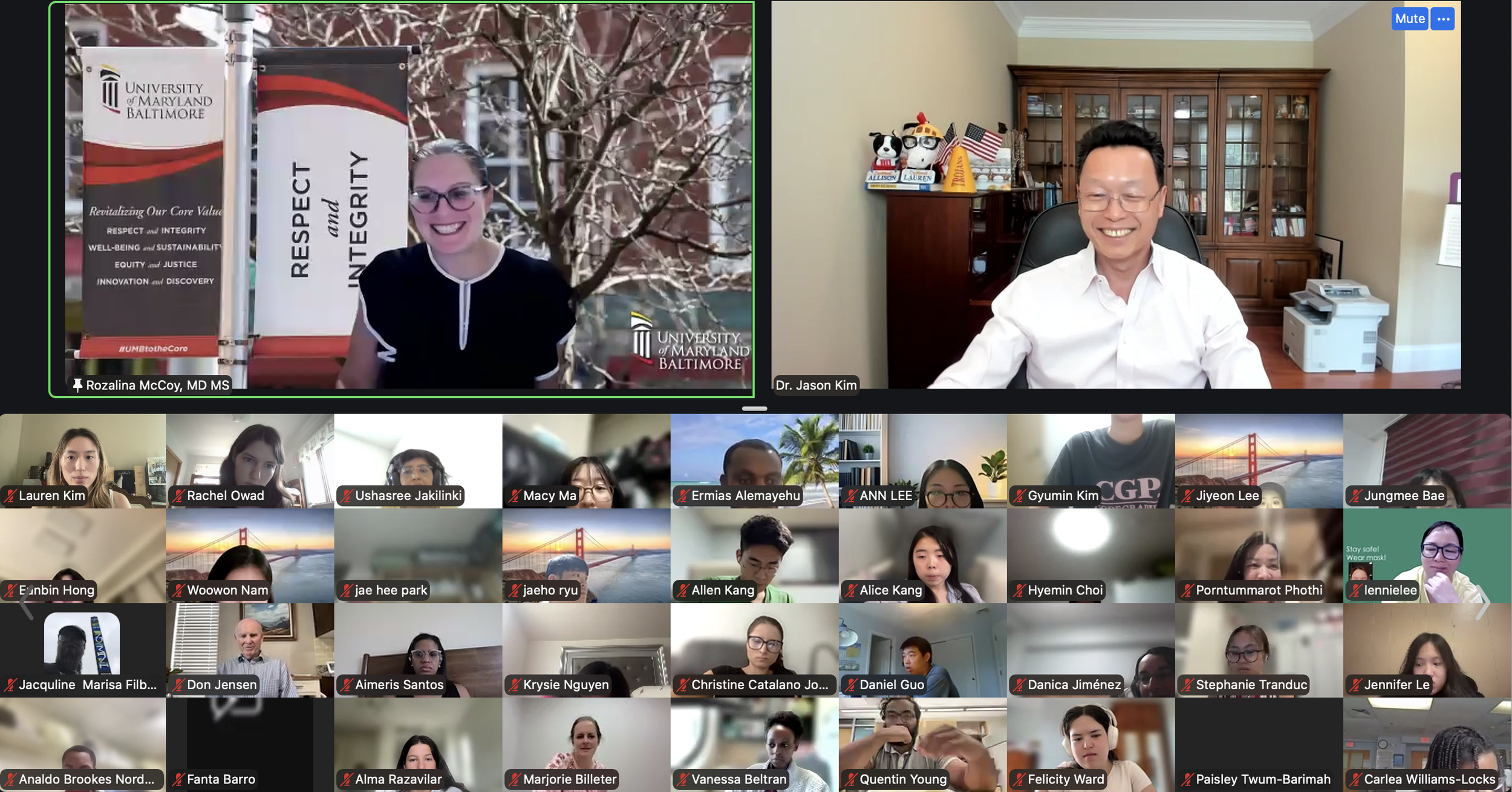
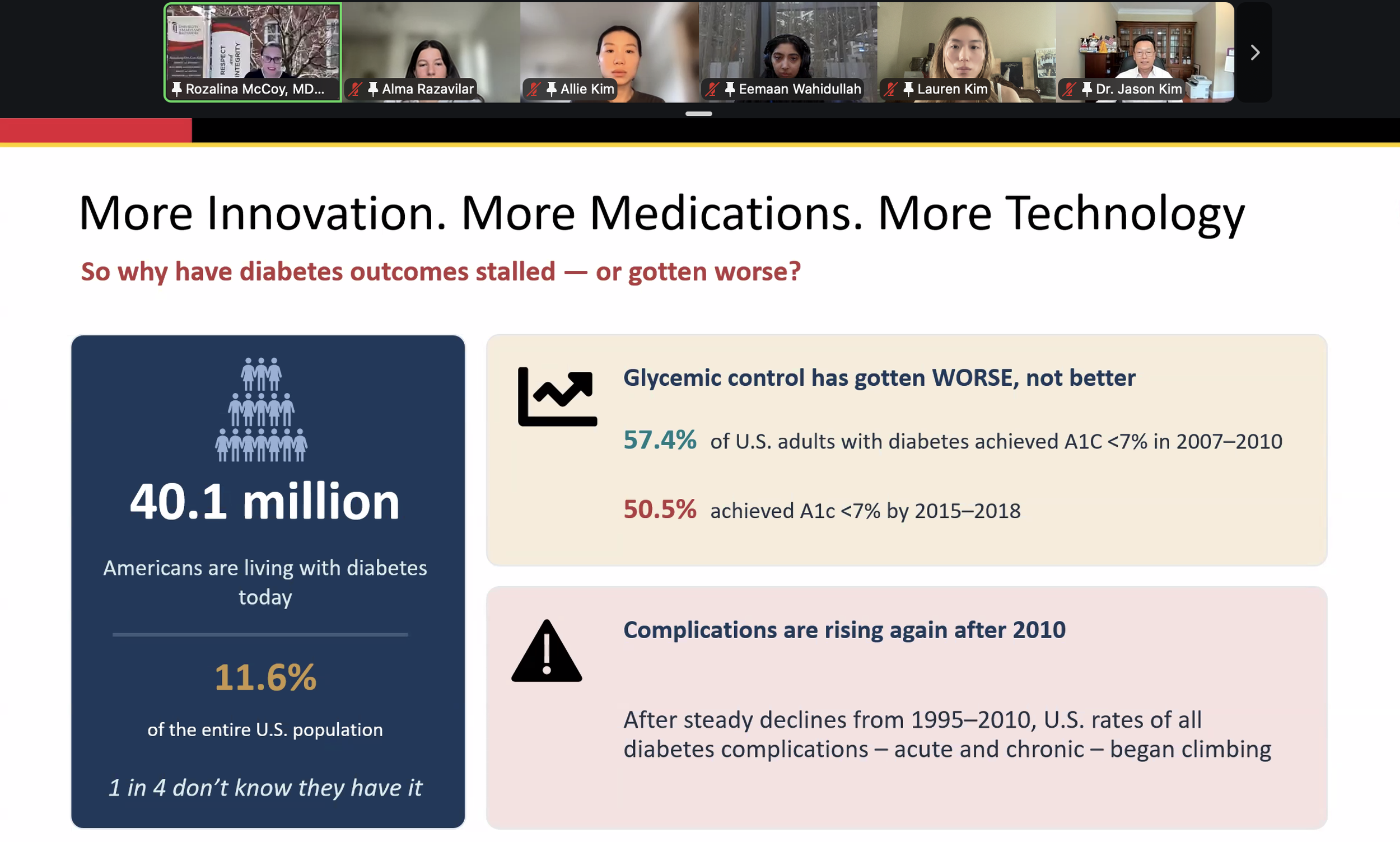
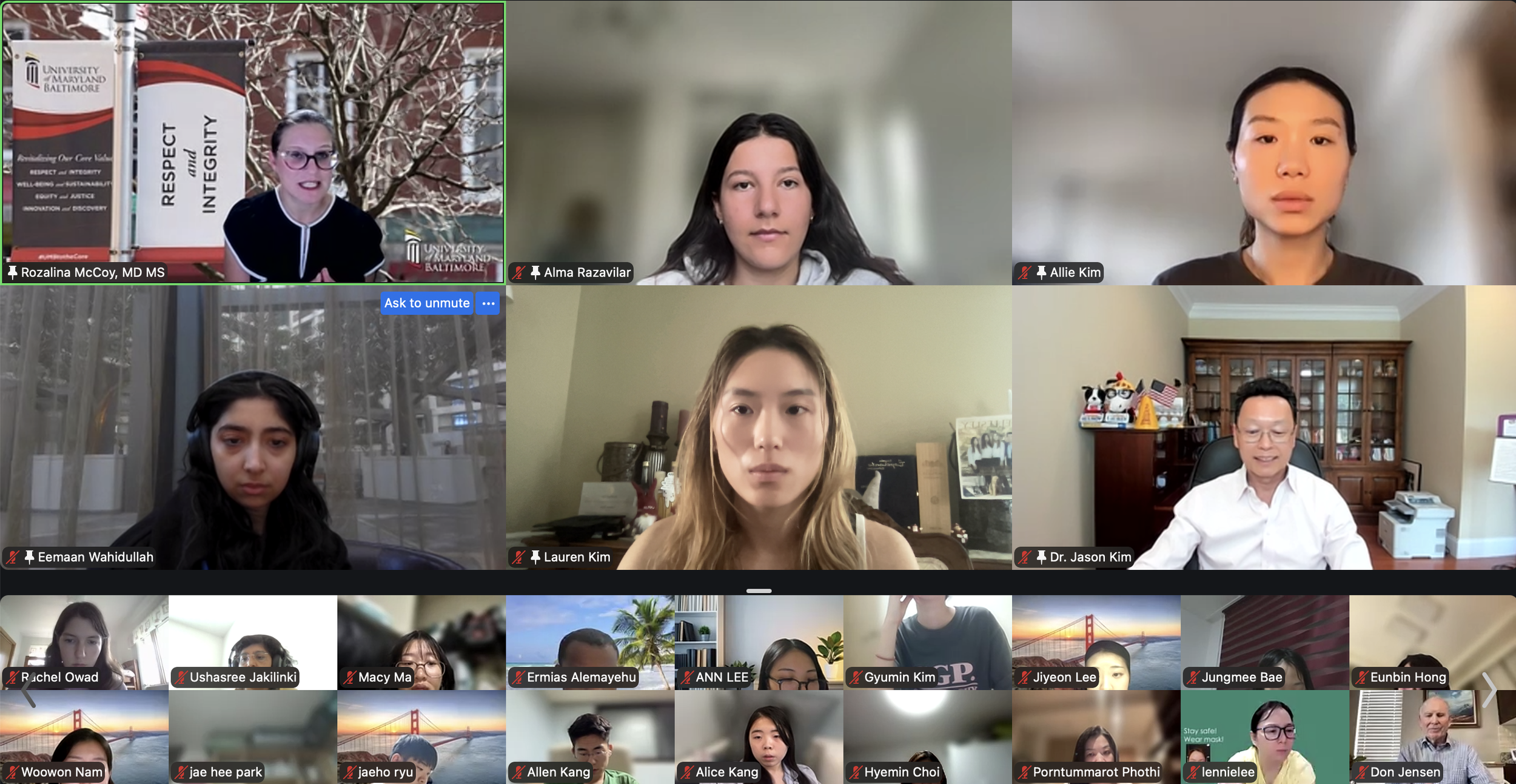
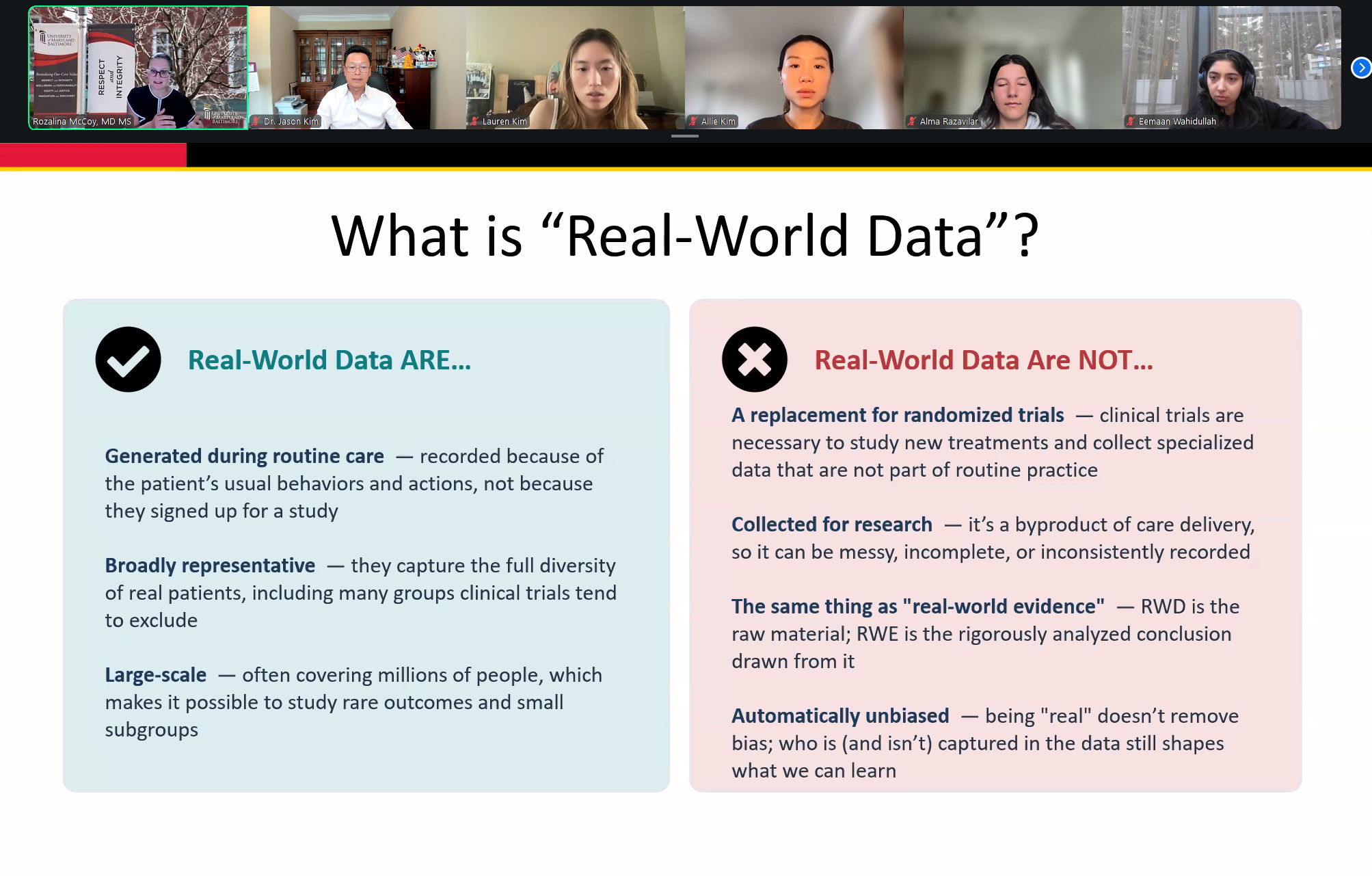
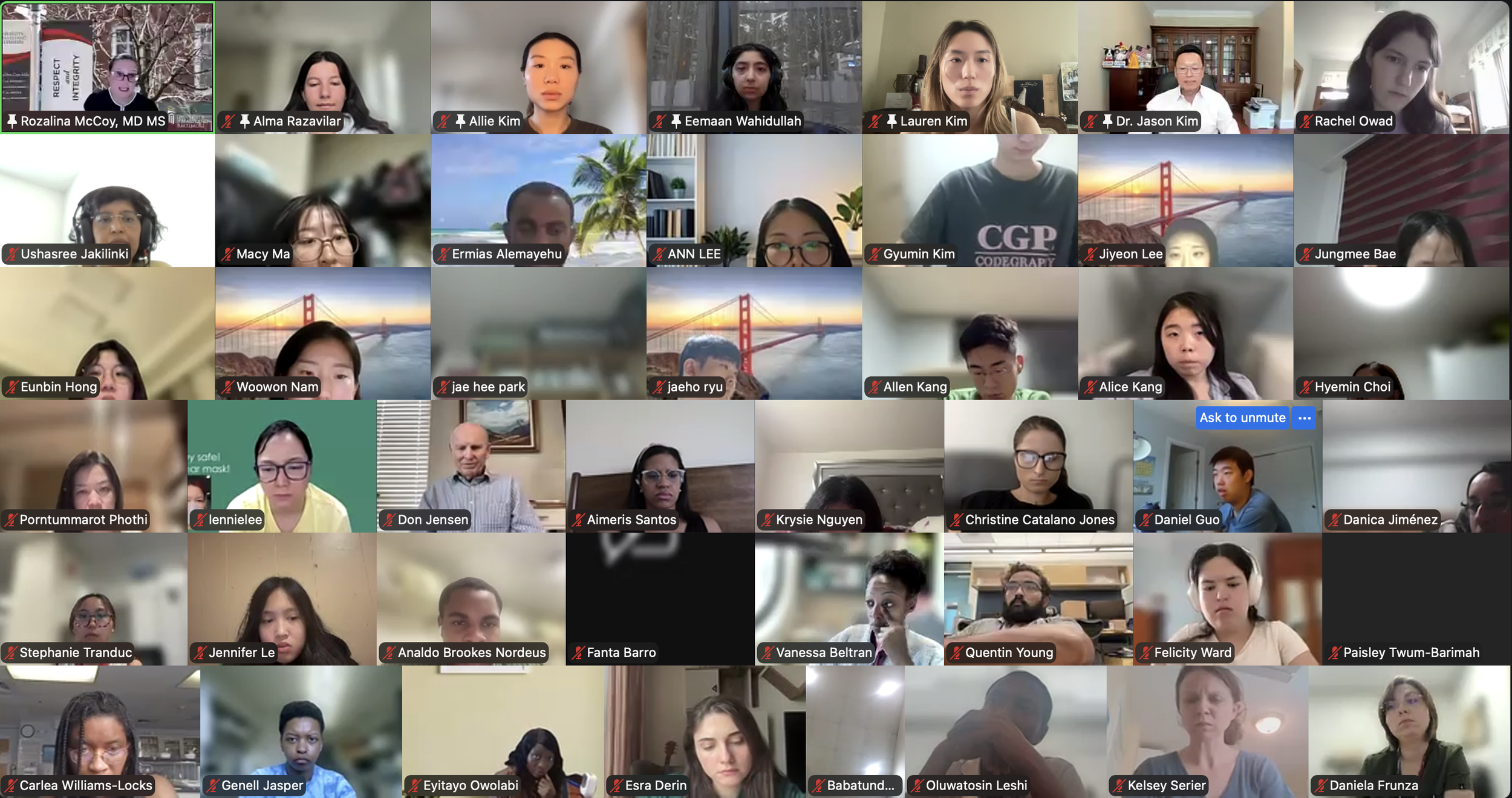
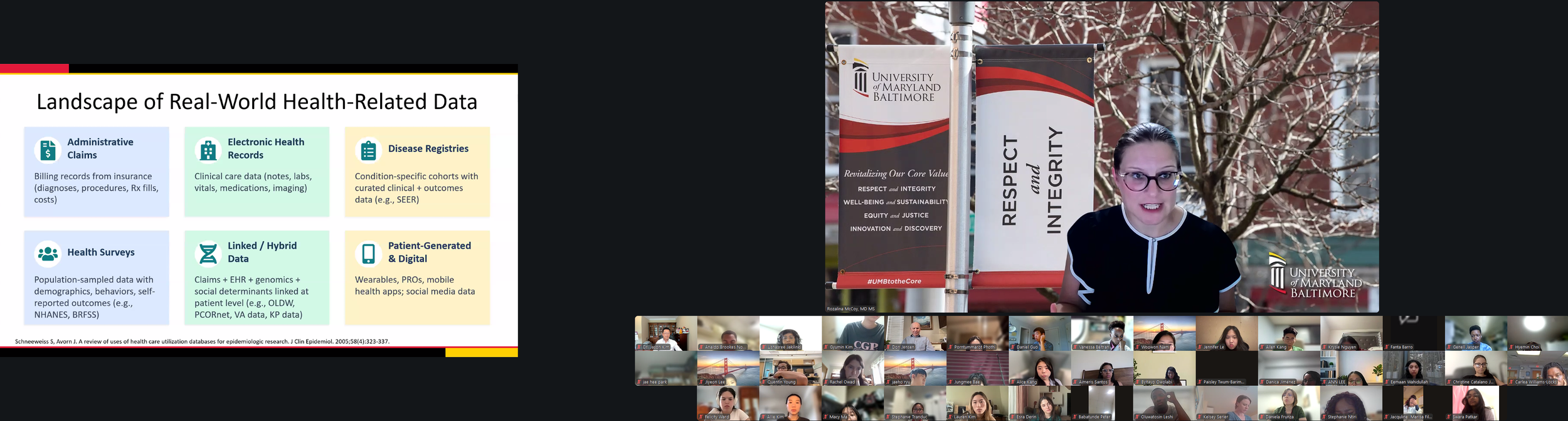
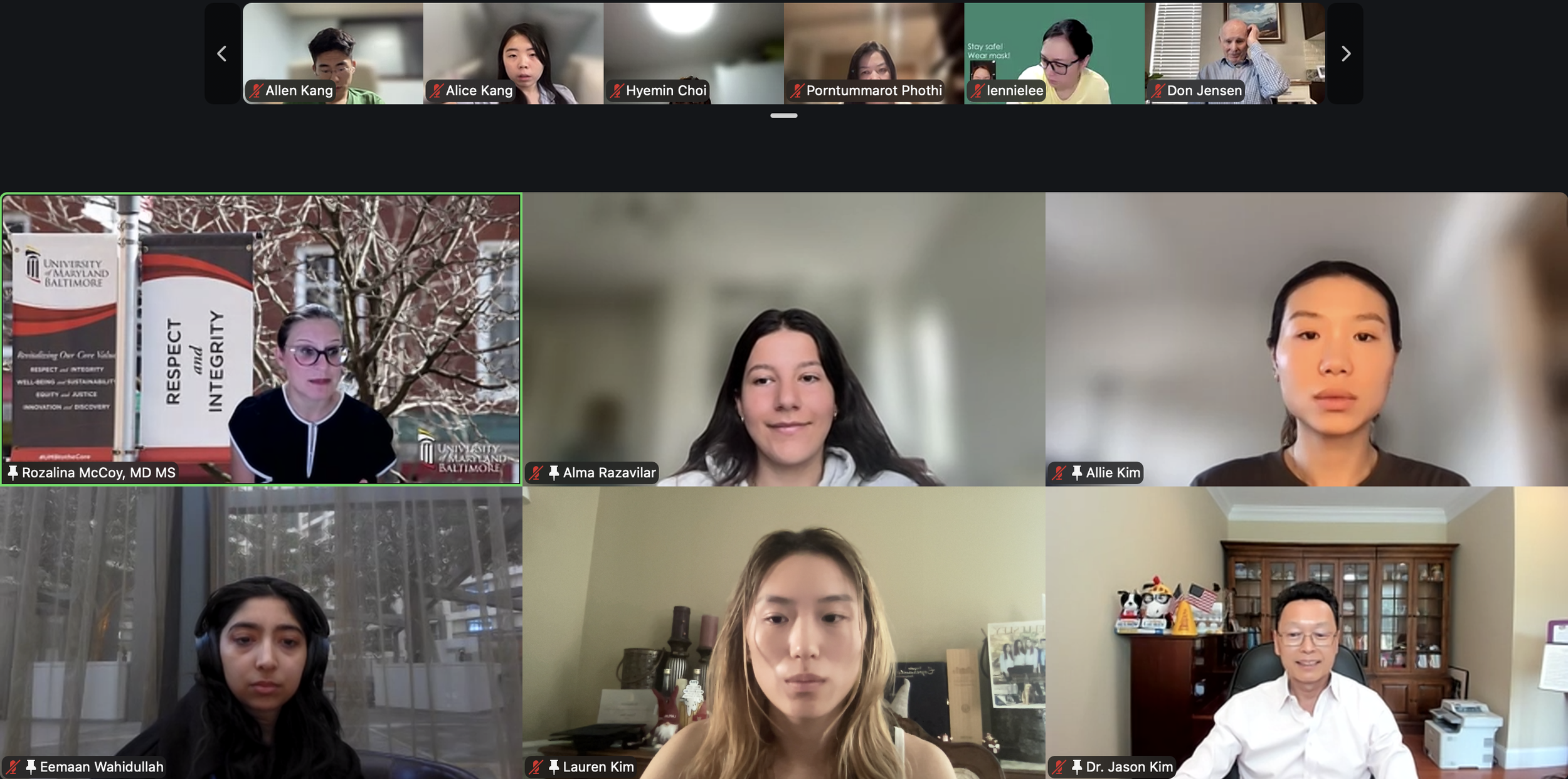
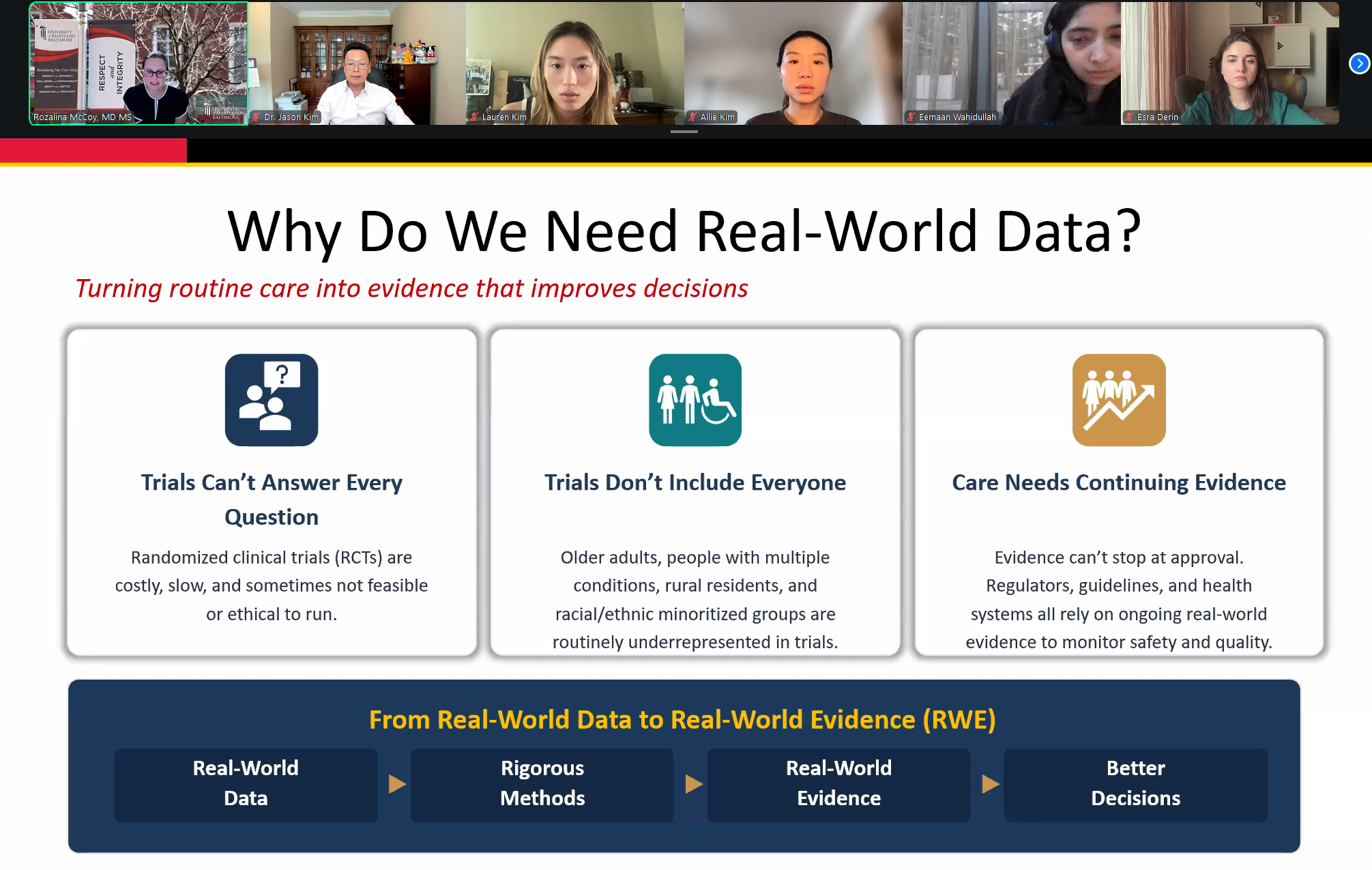
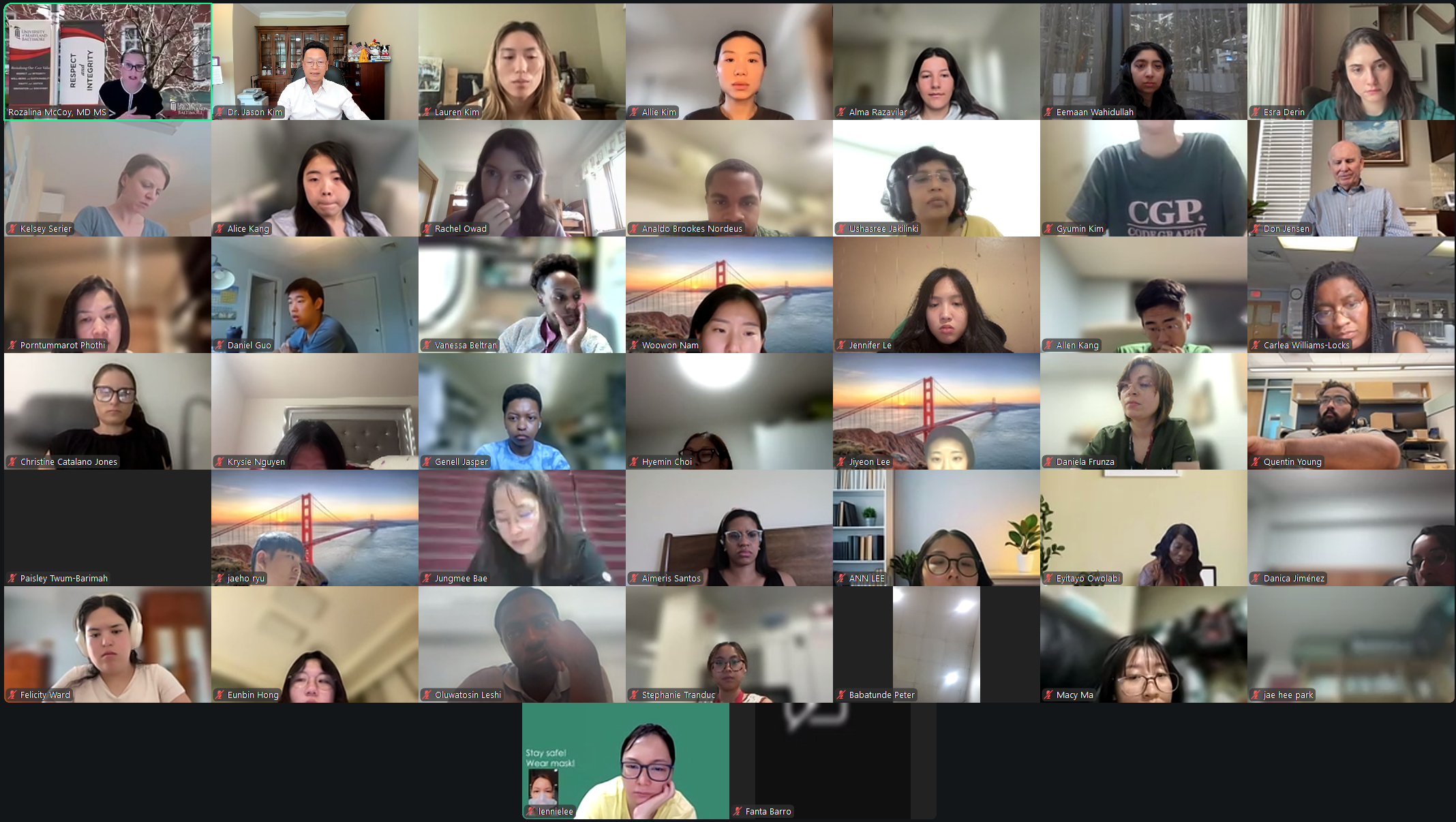
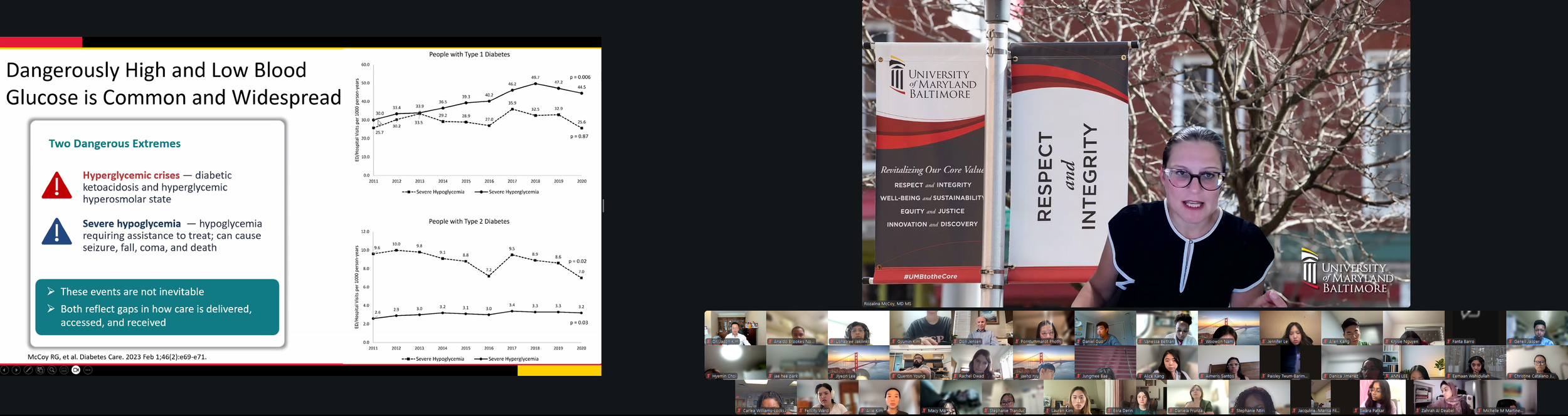
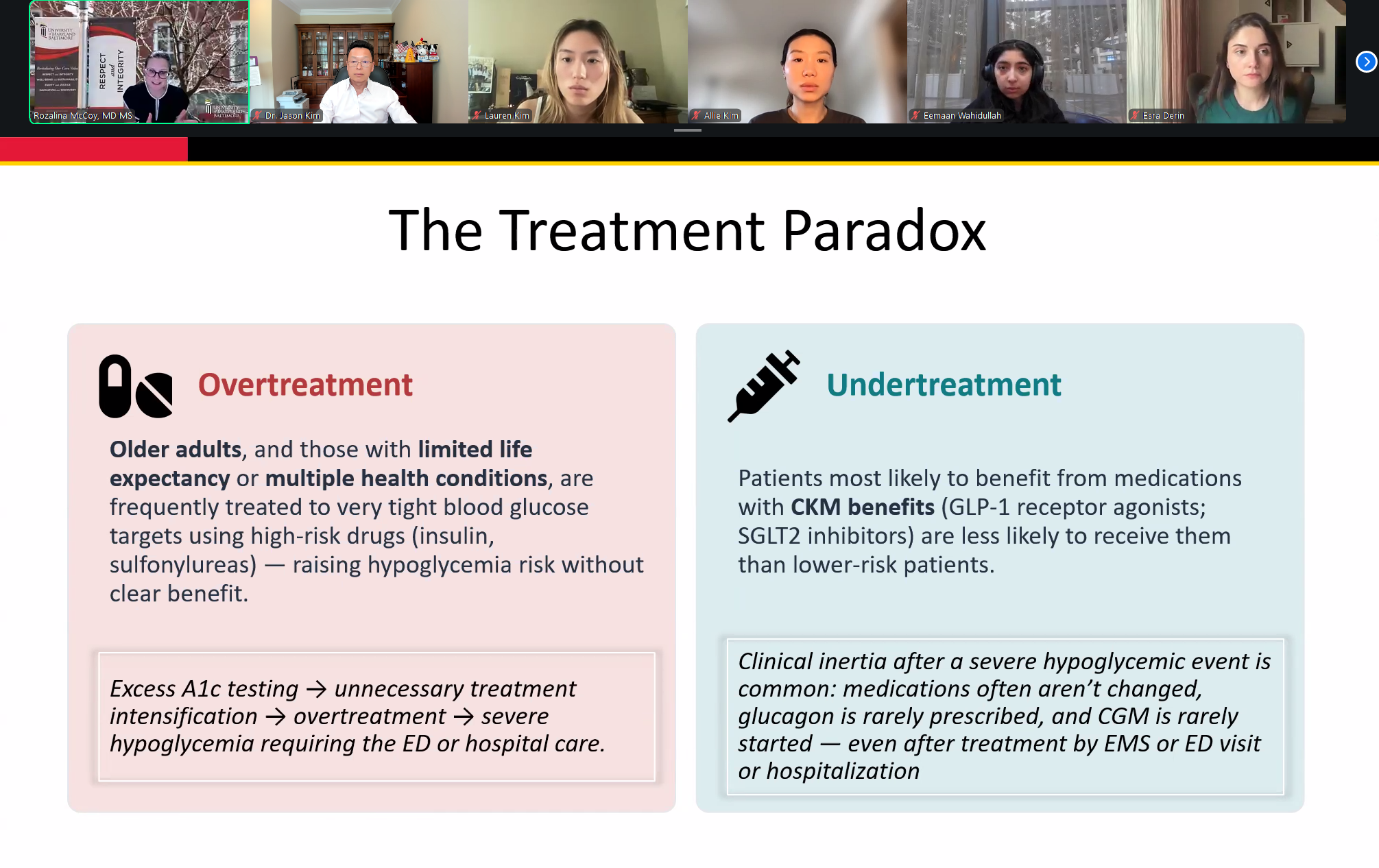
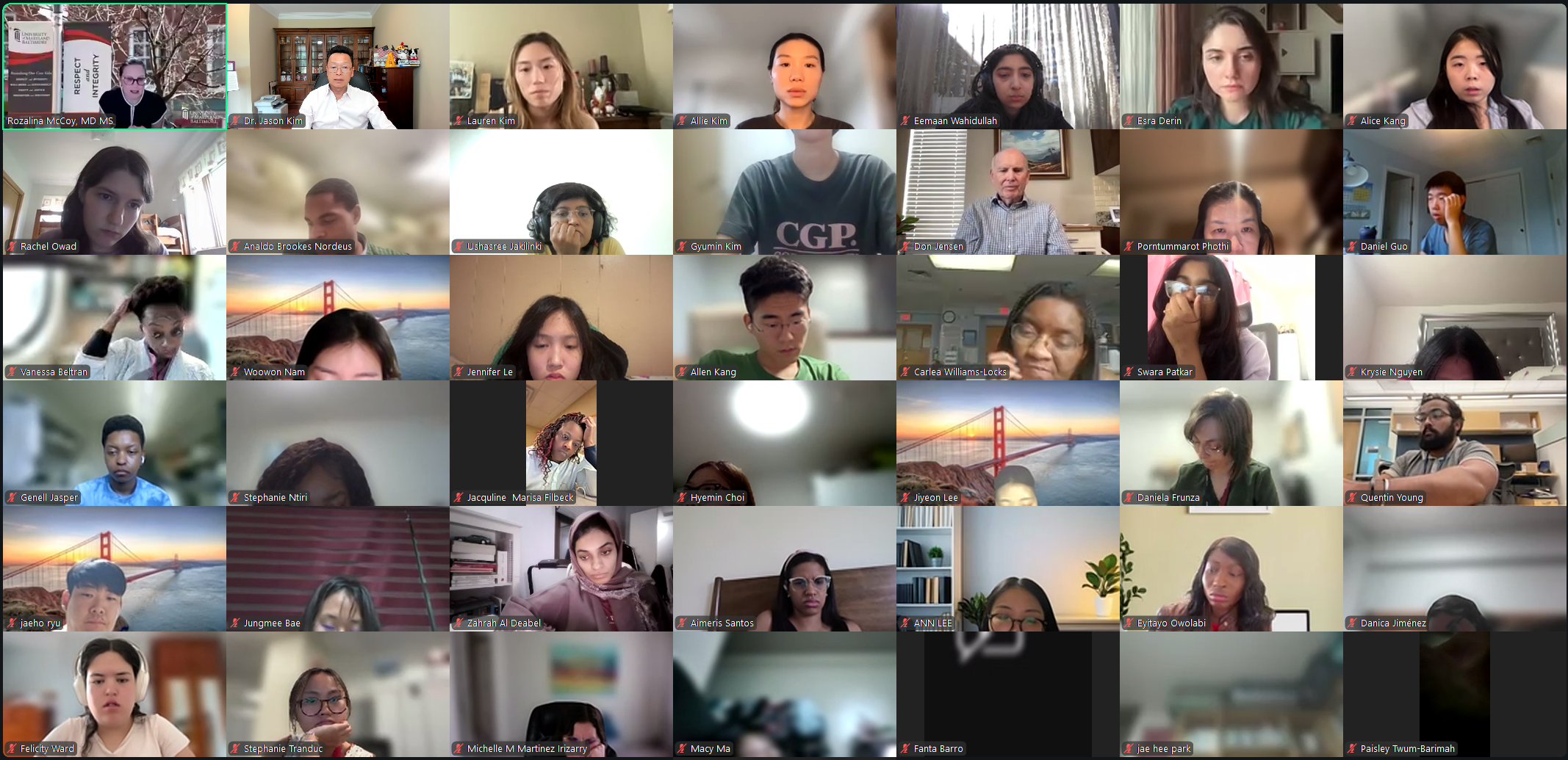
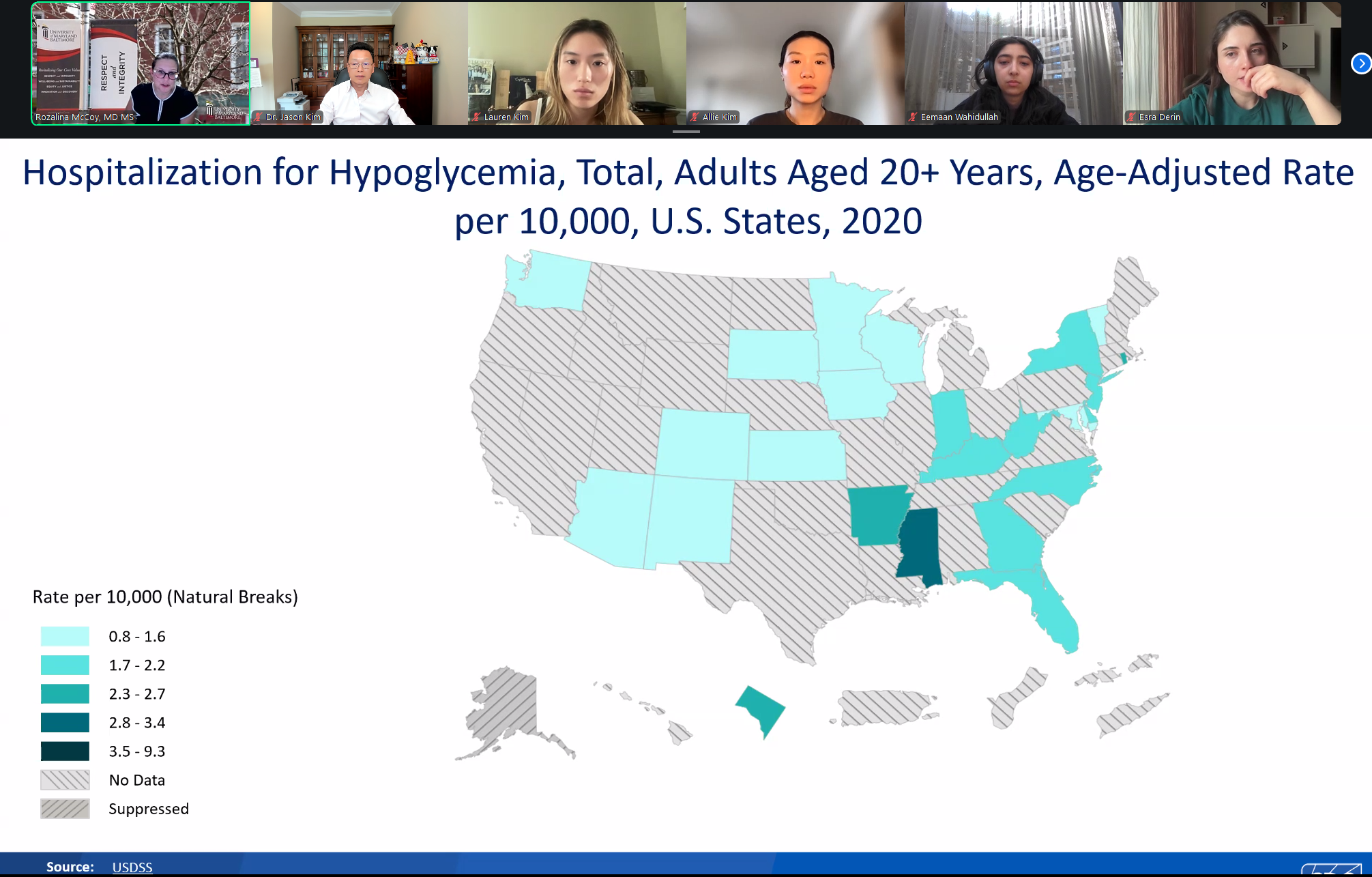
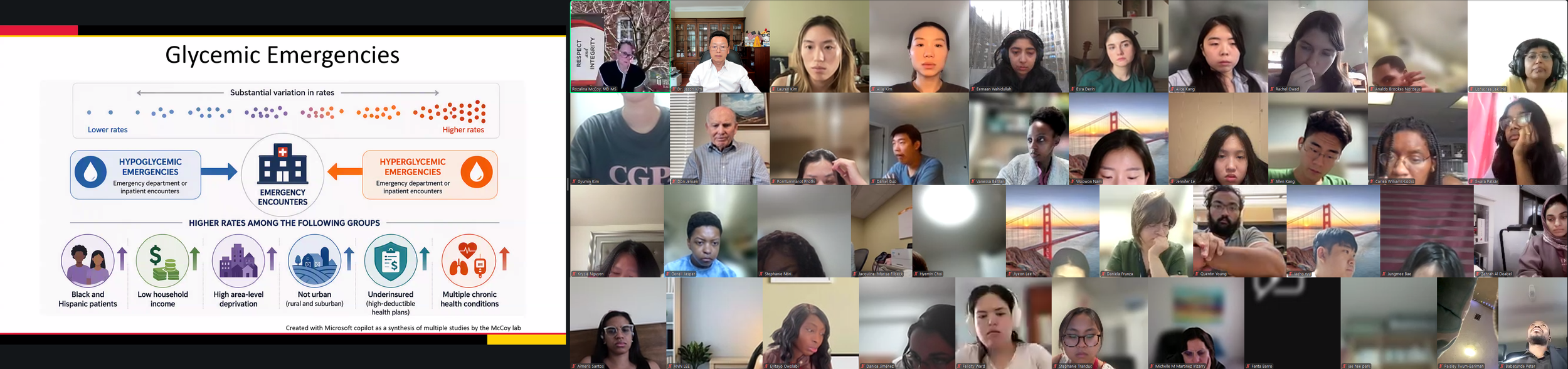
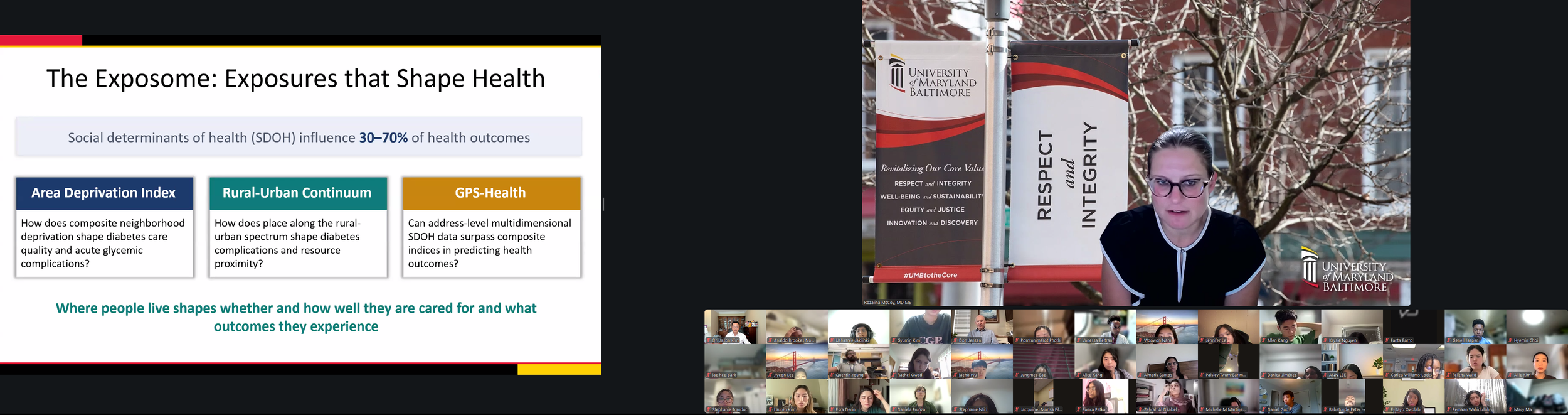
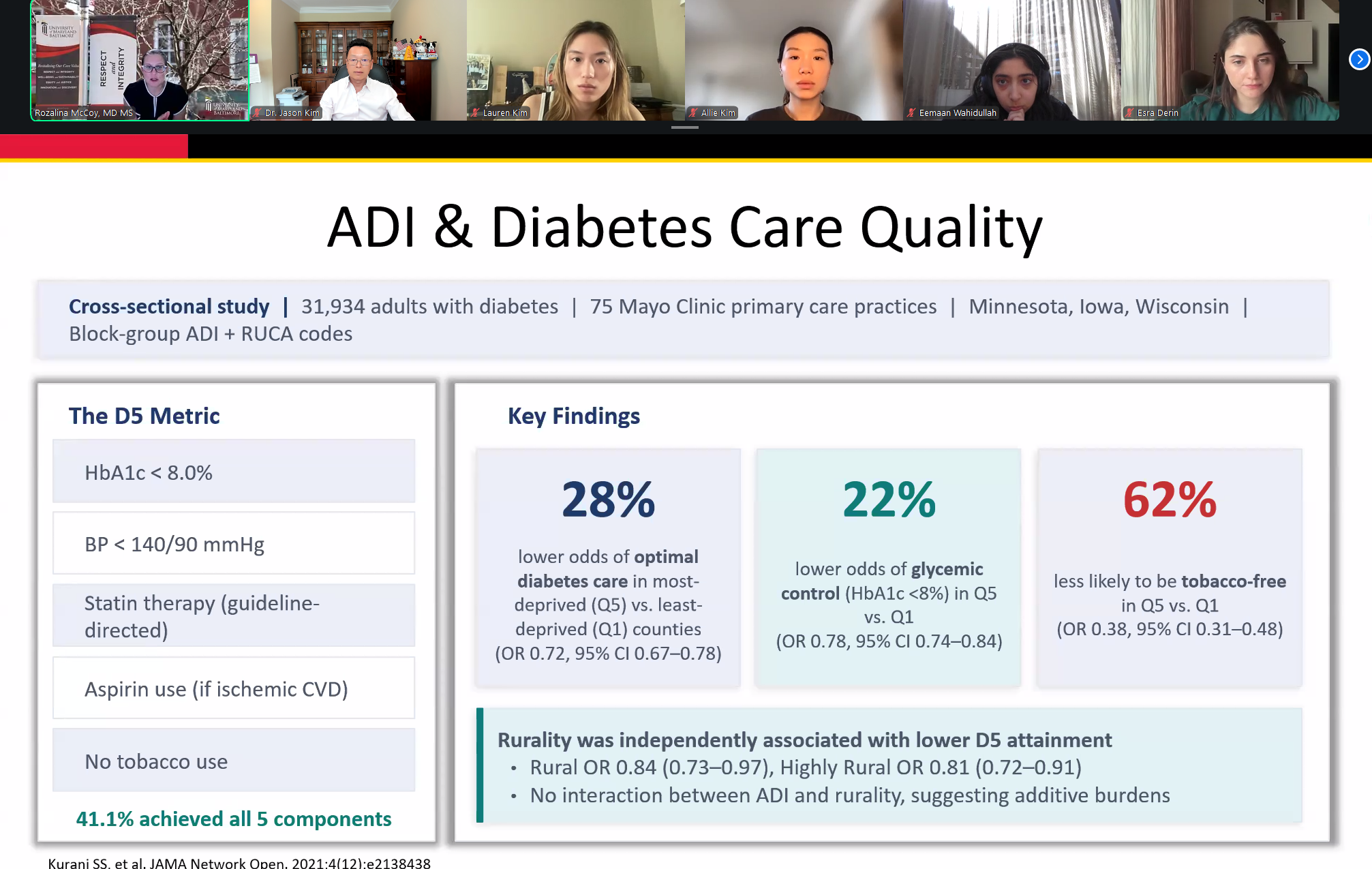
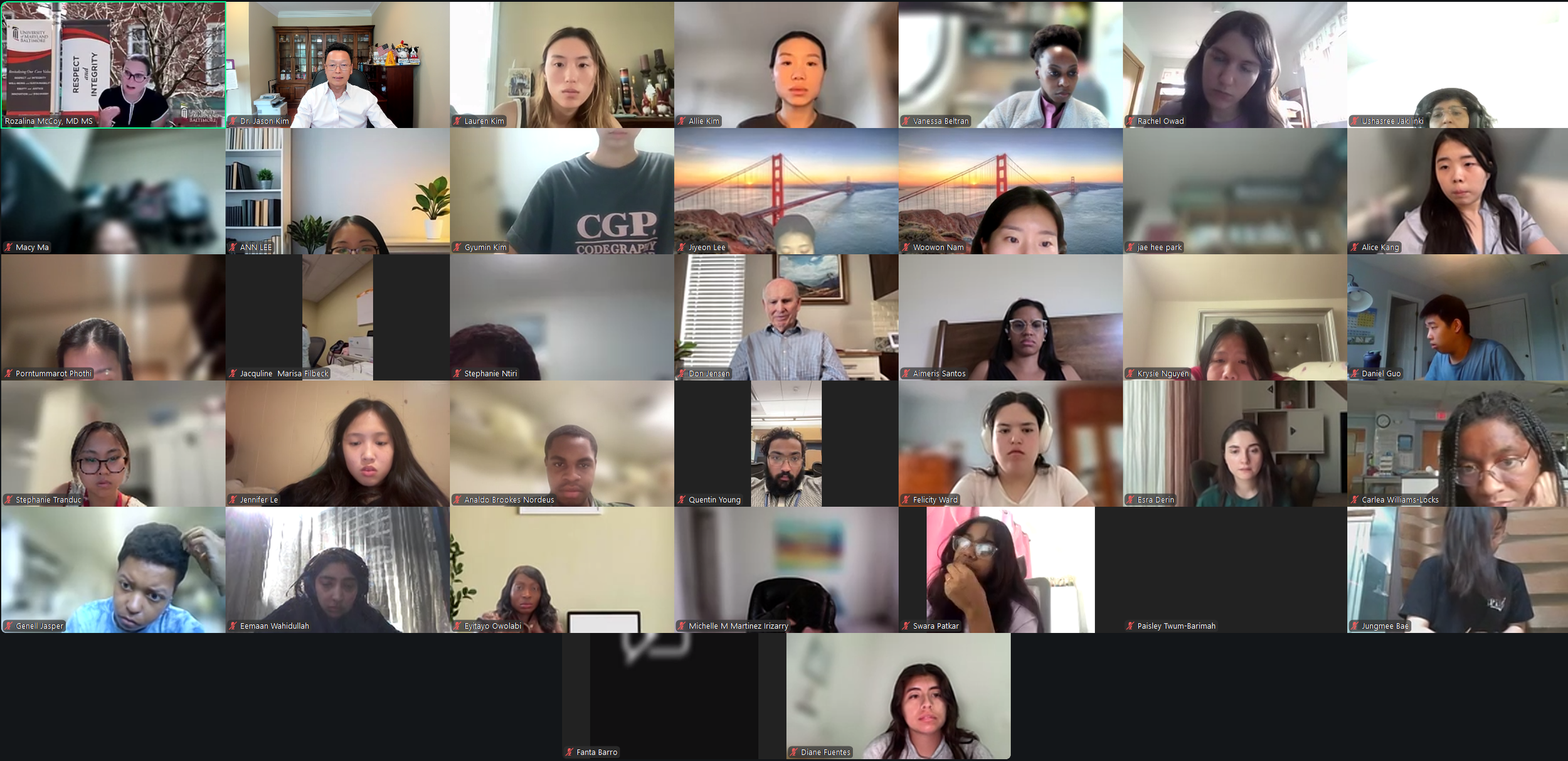
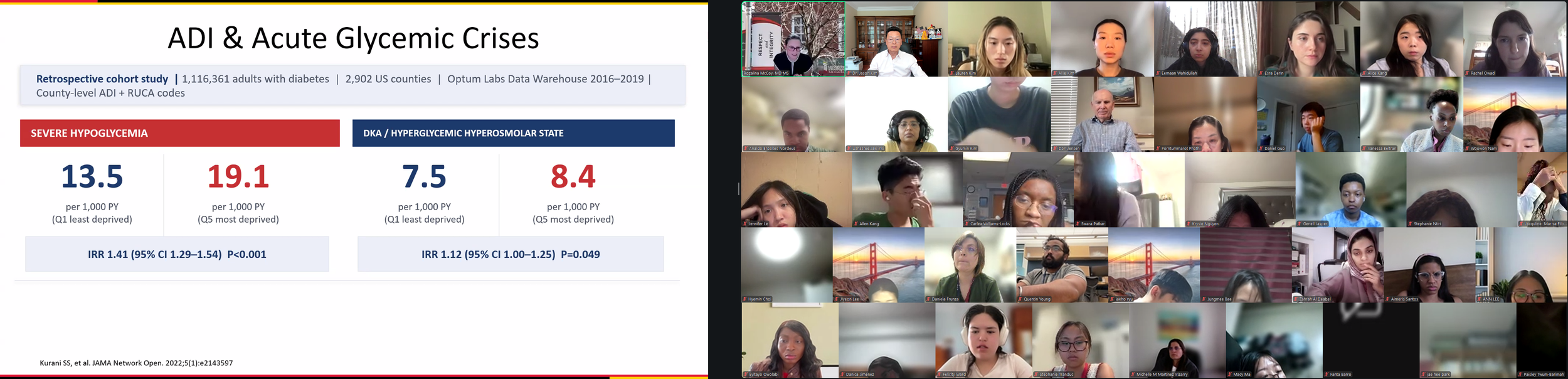
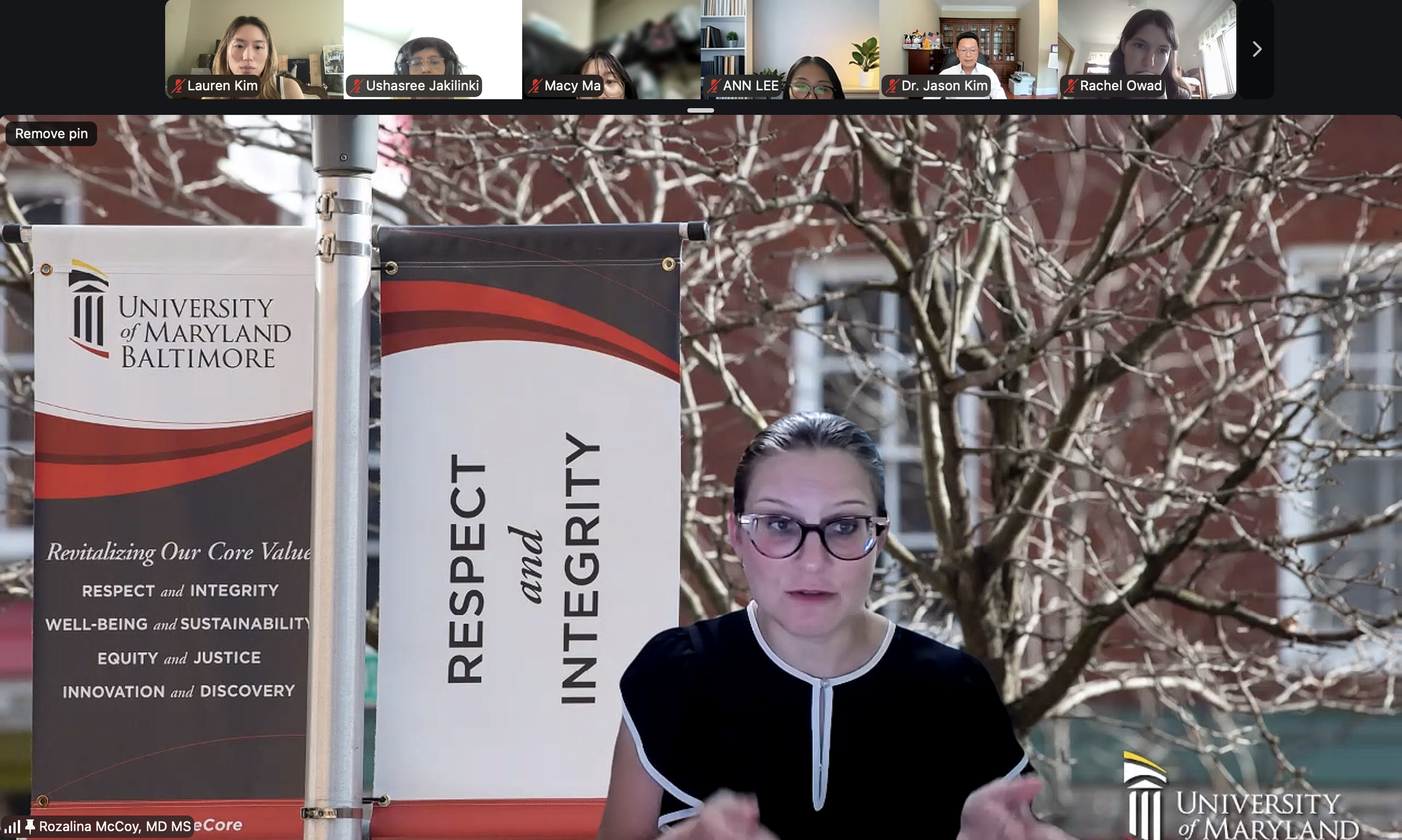
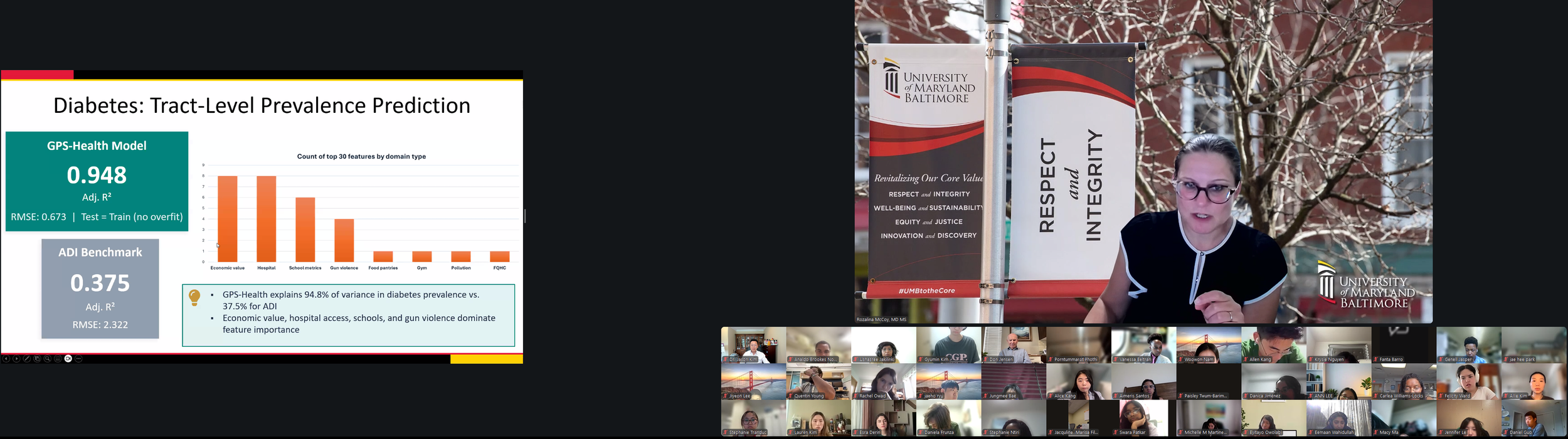
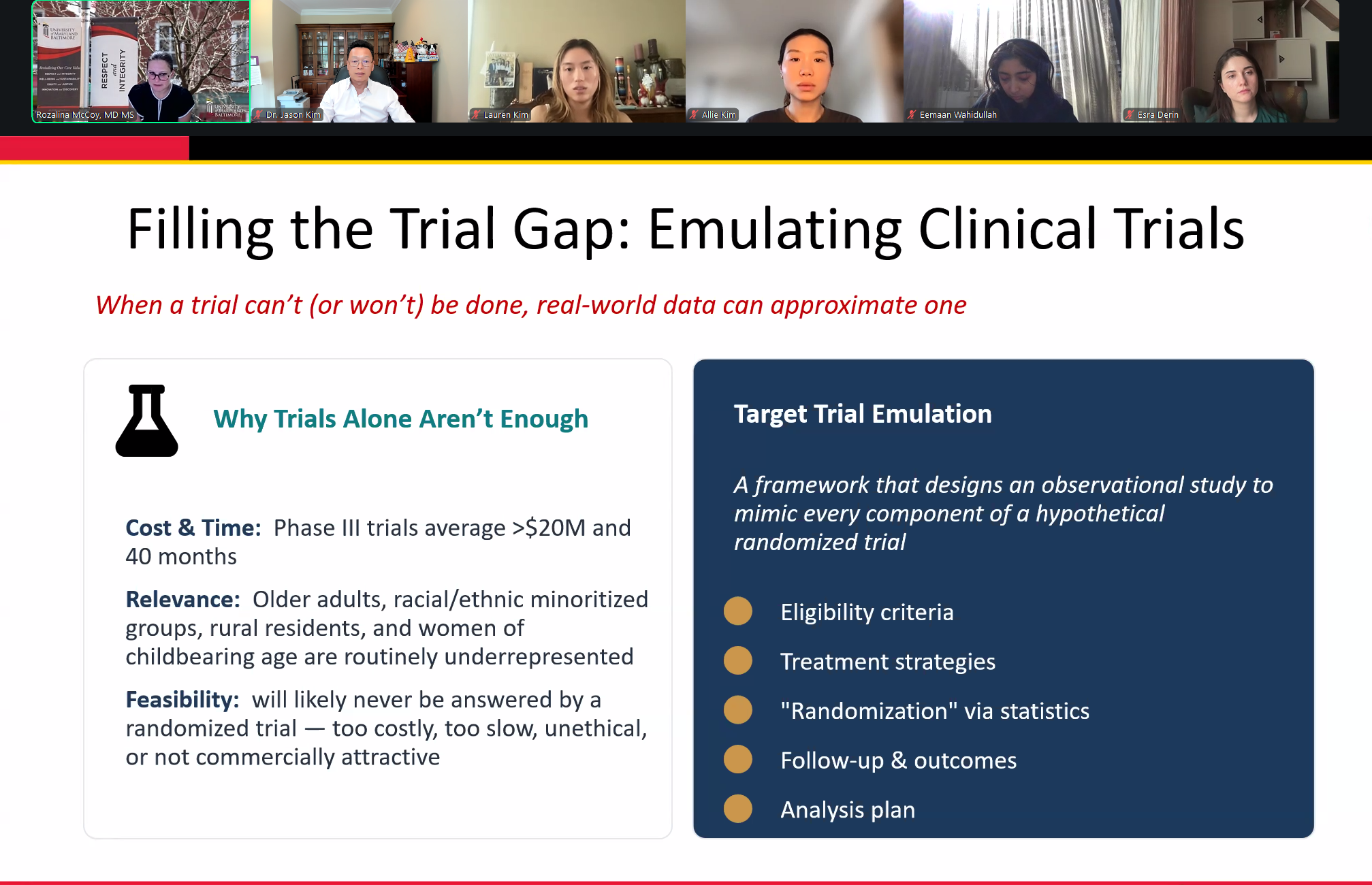

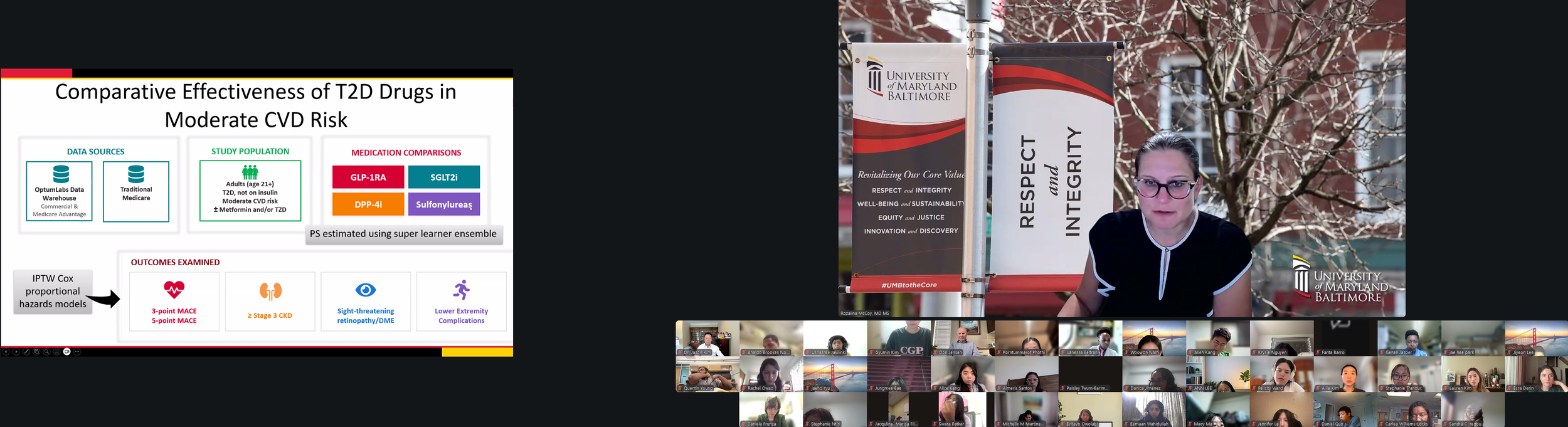
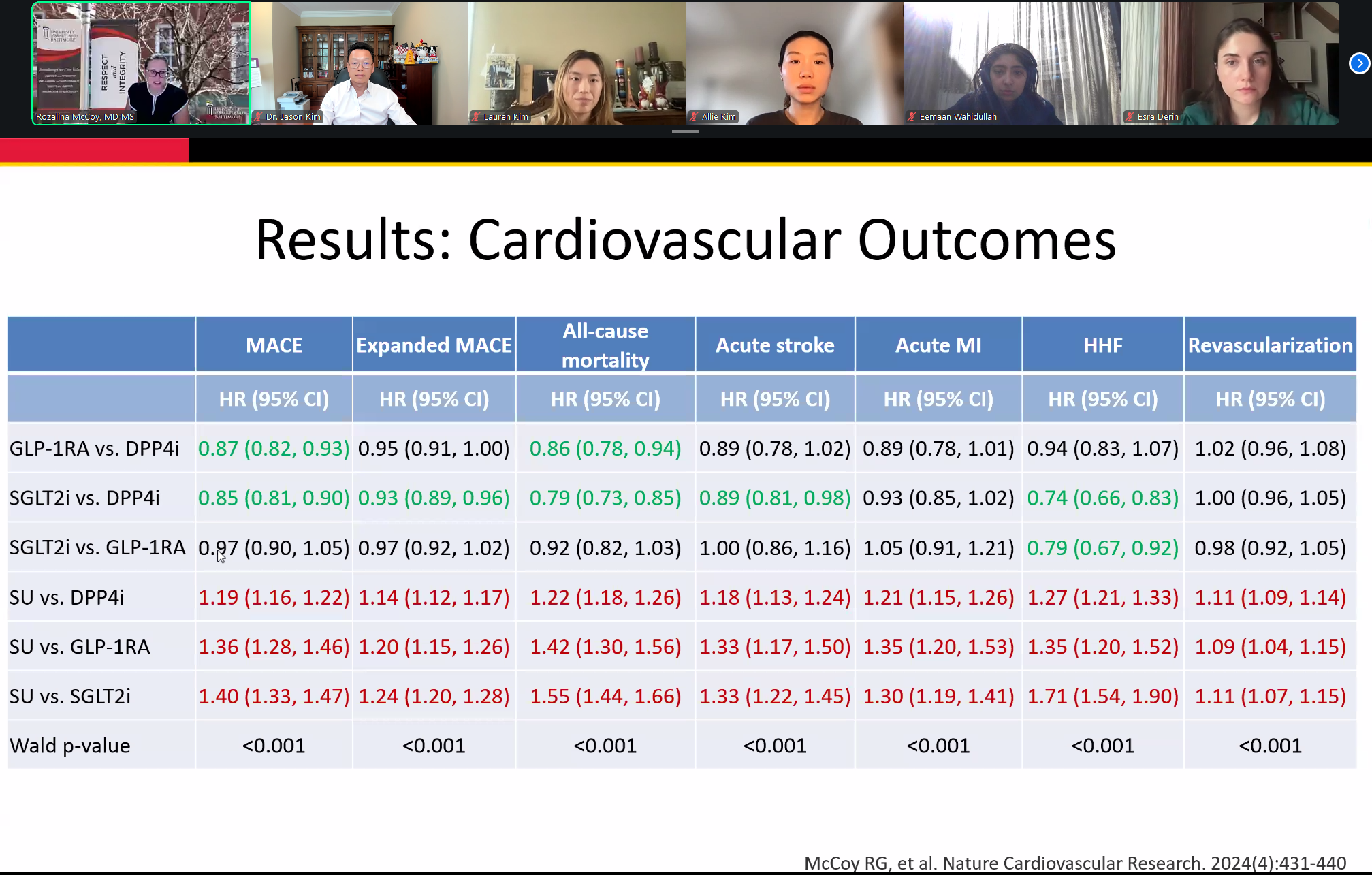
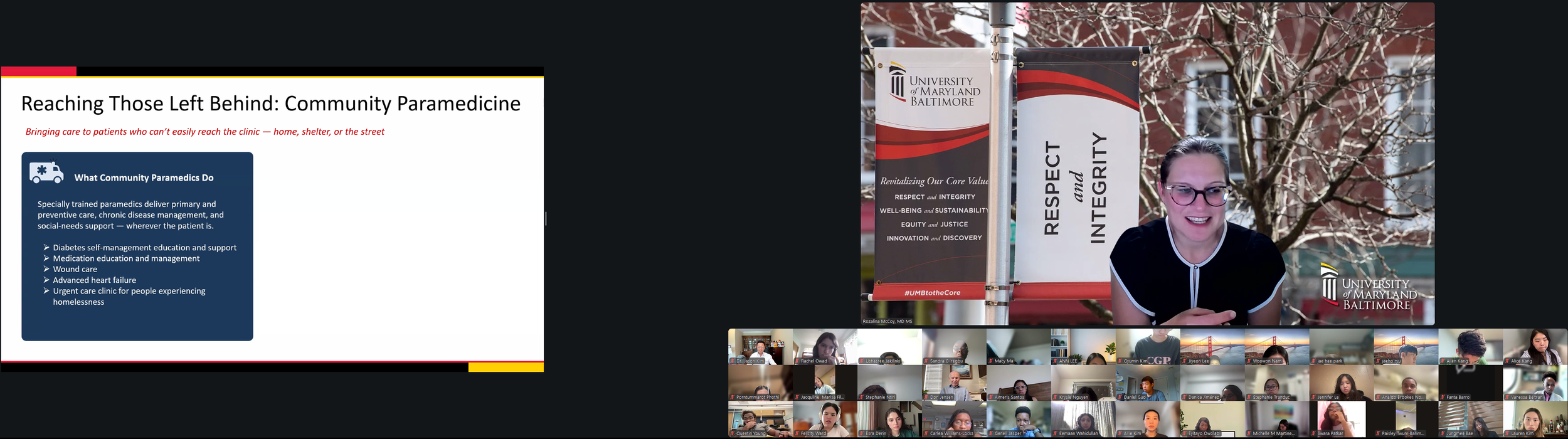
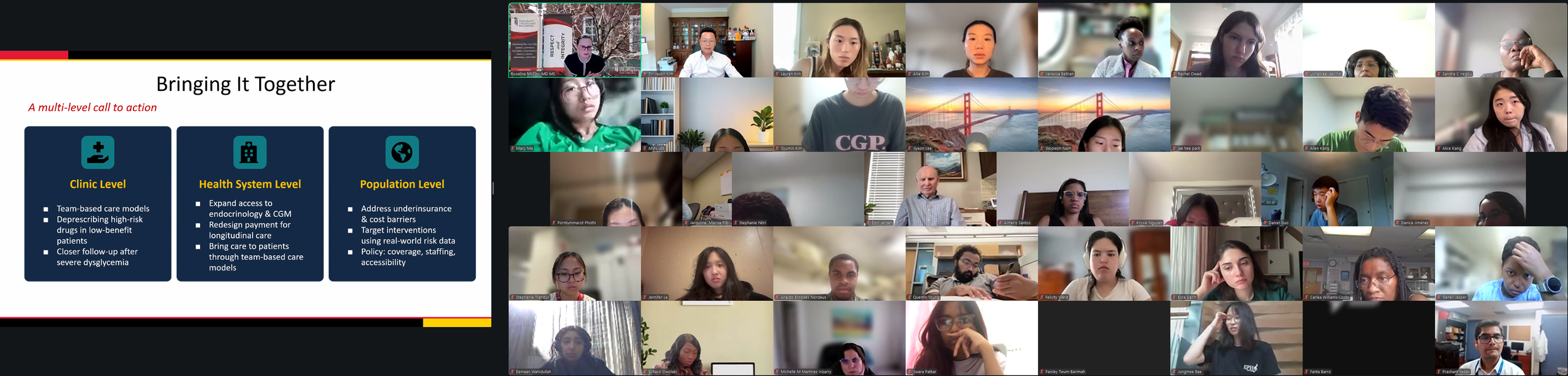

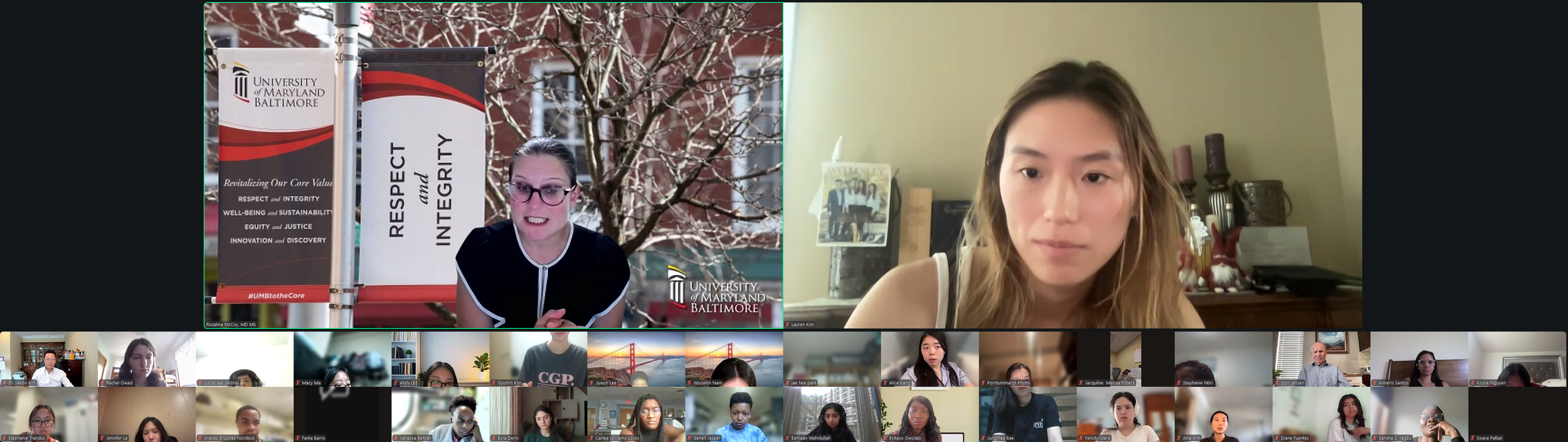

August 10, 2026
Open Mic Forum by Dr. Jason Kim (University of Massachusetts Chan Medical School)
Today’s DVSC26 program ends with an Open Mic Forum where our participants are invited to ask questions and engage in a lively discussion with video on and audio unmuted.
-
![Session 2: Opening Session & Introduction to Diabetes by Lauren, Allison, and Dr. Jason Kim (University of Massachusetts Medical School)]()
August 10, 2026 (Open Mic Forum - Part 1)
Session 7: “Incretins, Metabolic Surgery, and Hypoglycemia: Lessons About Intestinal Control of Glucose Metabolism” by Dr. Mary-Elizabeth Patti (Harvard Medical School)
Session 8: “Bridging the Evidence Gap: Real-World Data as a Tool for High-Quality, Accessible, and Sustainable Diabetes Care” by Dr. Rozalina McCoy (University of Maryland School of Medicine)During the Open Mic Forum, Dr. Kim answers questions from the audience and engages in an interactive discussion with video on and audio unmuted.
-
![]()
August 10, 2026 (Open Mic Forum - Part 2)
Session 7: “Incretins, Metabolic Surgery, and Hypoglycemia: Lessons About Intestinal Control of Glucose Metabolism” by Dr. Mary-Elizabeth Patti (Harvard Medical School)
Session 8: “Bridging the Evidence Gap: Real-World Data as a Tool for High-Quality, Accessible, and Sustainable Diabetes Care” by Dr. Rozalina McCoy (University of Maryland School of Medicine)During the Open Mic Forum, Dr. Kim answers questions from the audience and engages in an interactive discussion with video on and audio unmuted.
-
![]()
August 10, 2026 (Open Mic Forum - Part 3)
Session 7: “Incretins, Metabolic Surgery, and Hypoglycemia: Lessons About Intestinal Control of Glucose Metabolism” by Dr. Mary-Elizabeth Patti (Harvard Medical School)
Session 8: “Bridging the Evidence Gap: Real-World Data as a Tool for High-Quality, Accessible, and Sustainable Diabetes Care” by Dr. Rozalina McCoy (University of Maryland School of Medicine)During the Open Mic Forum, Dr. Kim answers questions from the audience and engages in an interactive discussion with video on and audio unmuted.
-
![]()
August 10, 2026 (Open Mic Forum - Part 4)
Session 7: “Incretins, Metabolic Surgery, and Hypoglycemia: Lessons About Intestinal Control of Glucose Metabolism” by Dr. Mary-Elizabeth Patti (Harvard Medical School)
Session 8: “Bridging the Evidence Gap: Real-World Data as a Tool for High-Quality, Accessible, and Sustainable Diabetes Care” by Dr. Rozalina McCoy (University of Maryland School of Medicine)During the Open Mic Forum, Dr. Kim answers questions from the audience and engages in an interactive discussion with video on and audio unmuted.
-
![]()
August 10, 2026 (Open Mic Forum - Part 4)
Session 7: “Incretins, Metabolic Surgery, and Hypoglycemia: Lessons About Intestinal Control of Glucose Metabolism” by Dr. Mary-Elizabeth Patti (Harvard Medical School)
Session 8: “Bridging the Evidence Gap: Real-World Data as a Tool for High-Quality, Accessible, and Sustainable Diabetes Care” by Dr. Rozalina McCoy (University of Maryland School of Medicine)During the Open Mic Forum, Dr. Kim answers questions from the audience and engages in an interactive discussion with video on and audio unmuted.
-
![]()
August 10, 2026 (Open Mic Forum - Part 6)
Session 7: “Incretins, Metabolic Surgery, and Hypoglycemia: Lessons About Intestinal Control of Glucose Metabolism” by Dr. Mary-Elizabeth Patti (Harvard Medical School)
Session 8: “Bridging the Evidence Gap: Real-World Data as a Tool for High-Quality, Accessible, and Sustainable Diabetes Care” by Dr. Rozalina McCoy (University of Maryland School of Medicine)During the Open Mic Forum, Dr. Kim answers questions from the audience and engages in an interactive discussion with video on and audio unmuted.


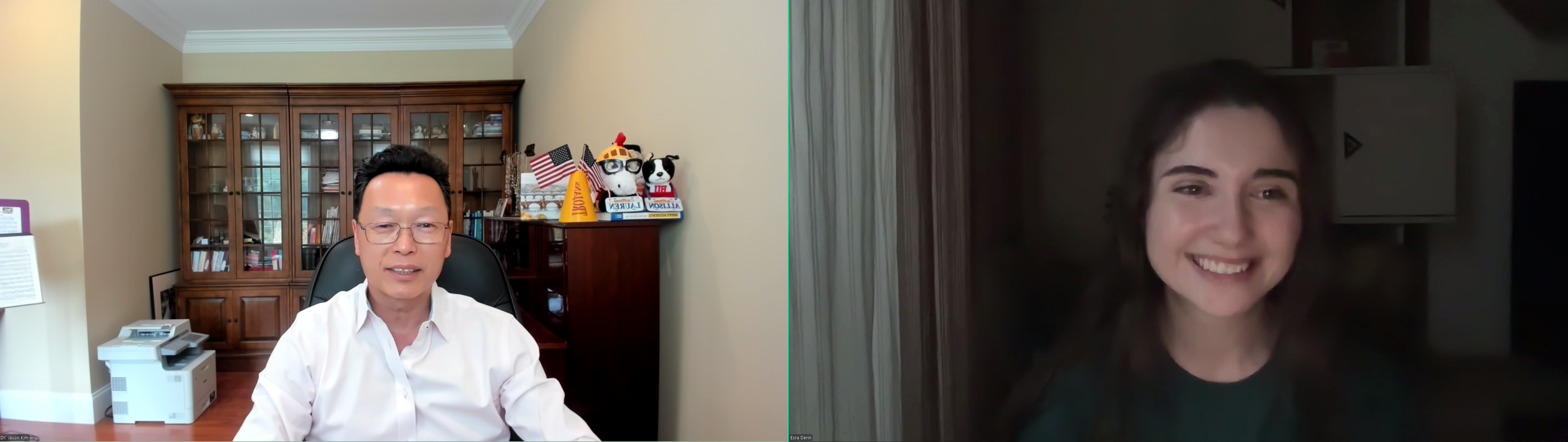
August 12, 2026
Pre-Session Q&A by Dr. Jason Kim (University of Massachusetts Chan Medical School)
The DVSC26 continued today with a Pre-Session Q&A by Dr. Jason Kim of the University of Massachusetts Chan Medical School, who answered many outstanding questions from Sessions 7 & 8.
-
![Session 2: Opening Session & Introduction to Diabetes by Lauren, Allison, and Dr. Jason Kim (University of Massachusetts Medical School)]()
August 12, 2026 (Pre-Session Q&A - Part 1)
Dr. Jason Kim from the University of Massachusetts Chan Medical School answers many outstanding questions from Sessions 7 & 8.
-
![]()
August 12, 2026 (Pre-Session Q&A - Part 2)
Dr. Jason Kim from the University of Massachusetts Chan Medical School answers many outstanding questions from Sessions 7 & 8.
-
![]()
August 12, 2026 (Pre-Session Q&A - Part 3)
Dr. Jason Kim from the University of Massachusetts Chan Medical School answers many outstanding questions from Sessions 7 & 8.
-
![]()
August 12, 2026 (Pre-Session Q&A - Part 4)
Dr. Jason Kim from the University of Massachusetts Chan Medical School answers many outstanding questions from Sessions 7 & 8.
-
![]()
August 12, 2026 (Pre-Session Q&A - Part 4)
Dr. Jason Kim from the University of Massachusetts Chan Medical School answers many outstanding questions from Sessions 7 & 8.
-
![]()
August 12, 2026 (Pre-Session Q&A - Part 6)
Dr. Jason Kim from the University of Massachusetts Chan Medical School answers many outstanding questions from Sessions 7 & 8.
-
![]()
August 12, 2026 (Pre-Session Q&A - Part 7)
Dr. Jason Kim from the University of Massachusetts Chan Medical School answers many outstanding questions from Sessions 7 & 8.
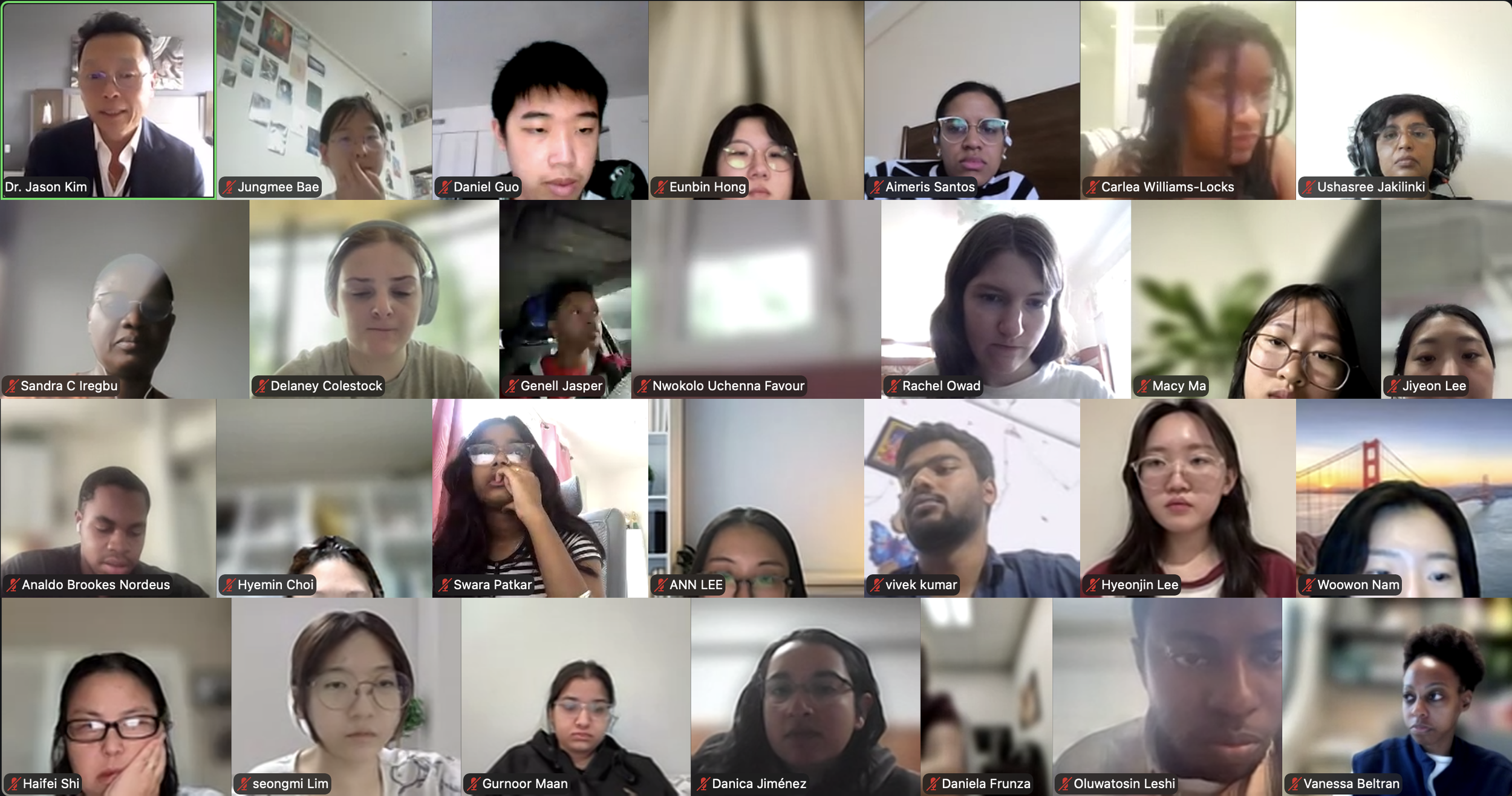
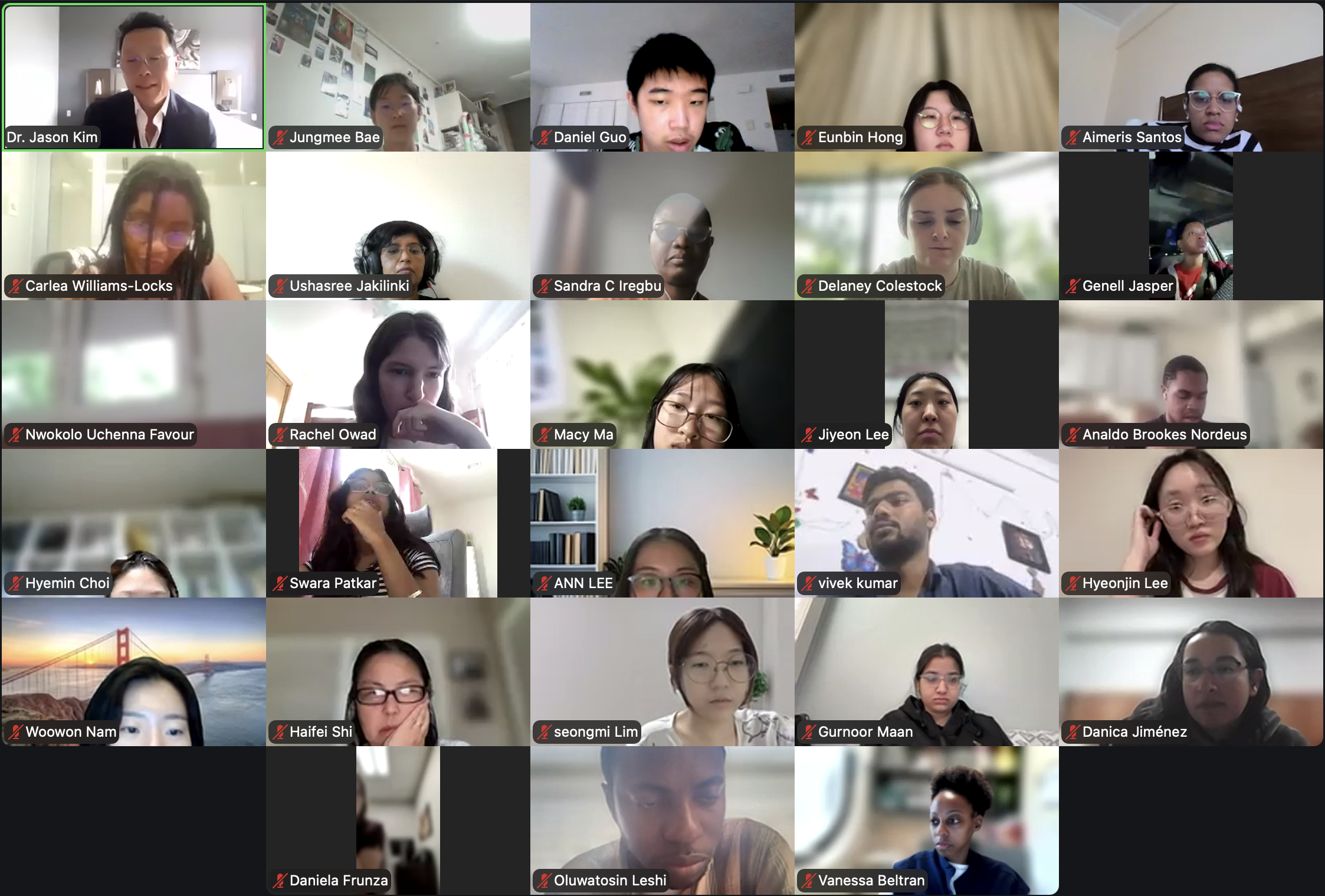
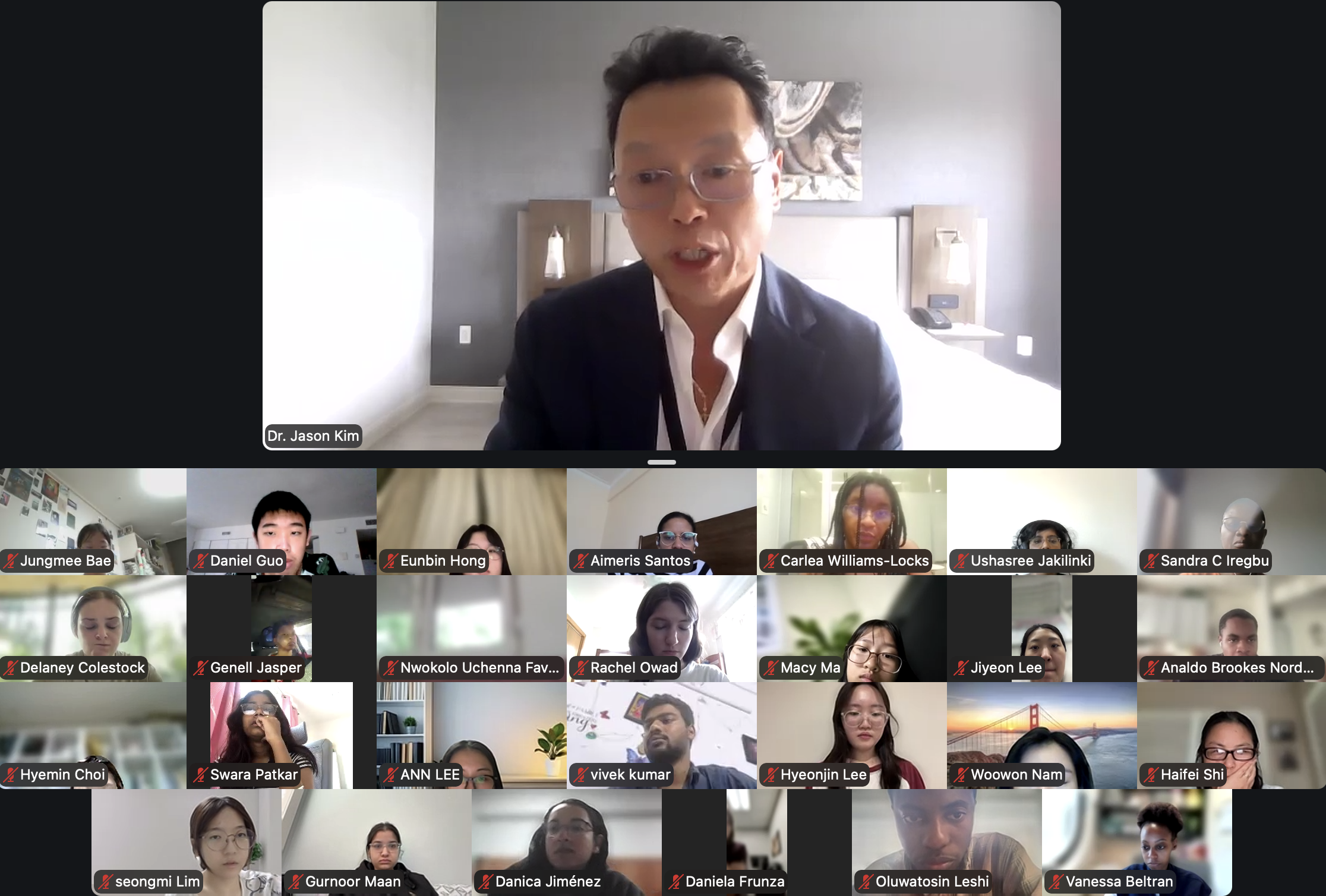
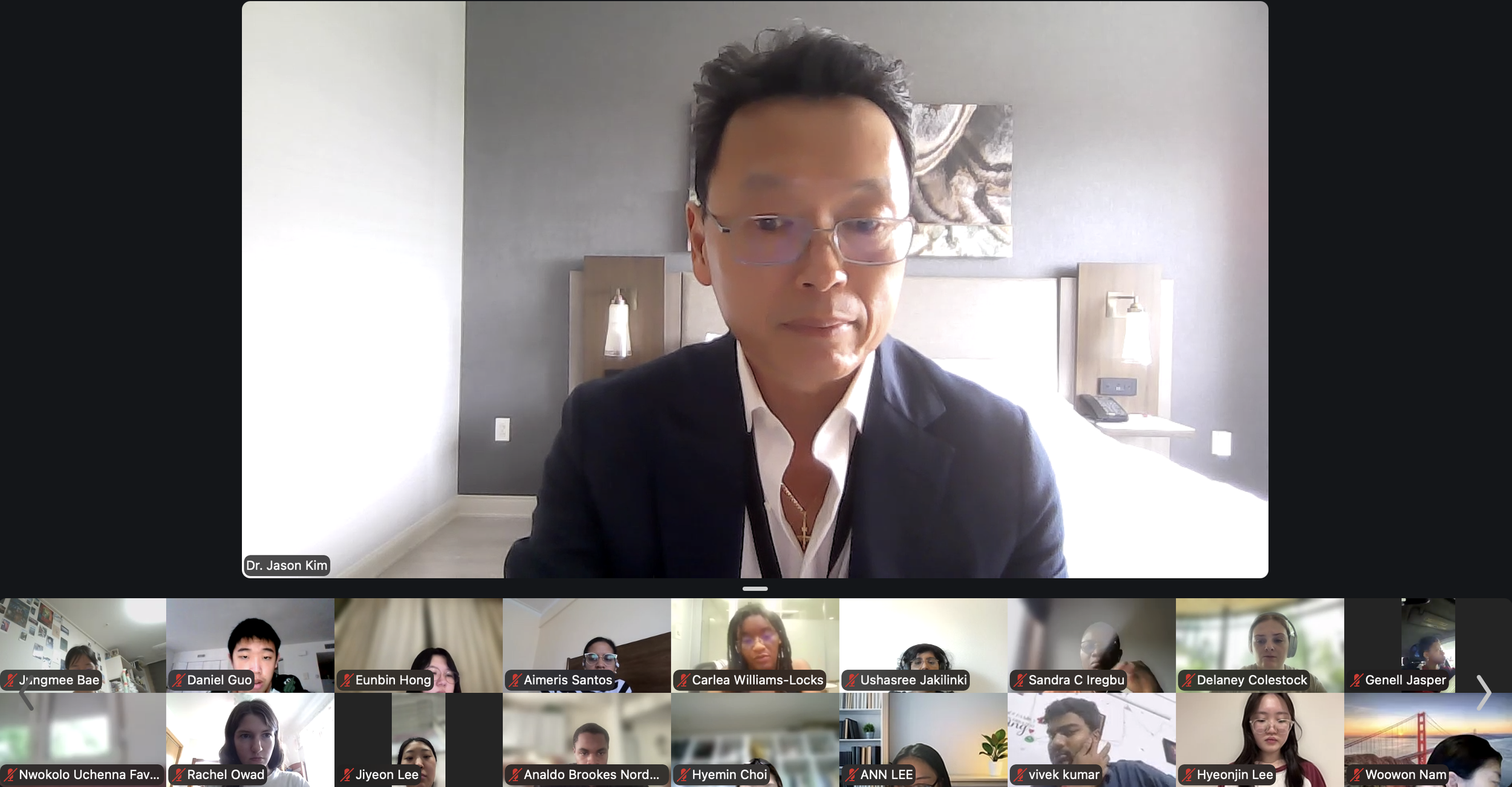
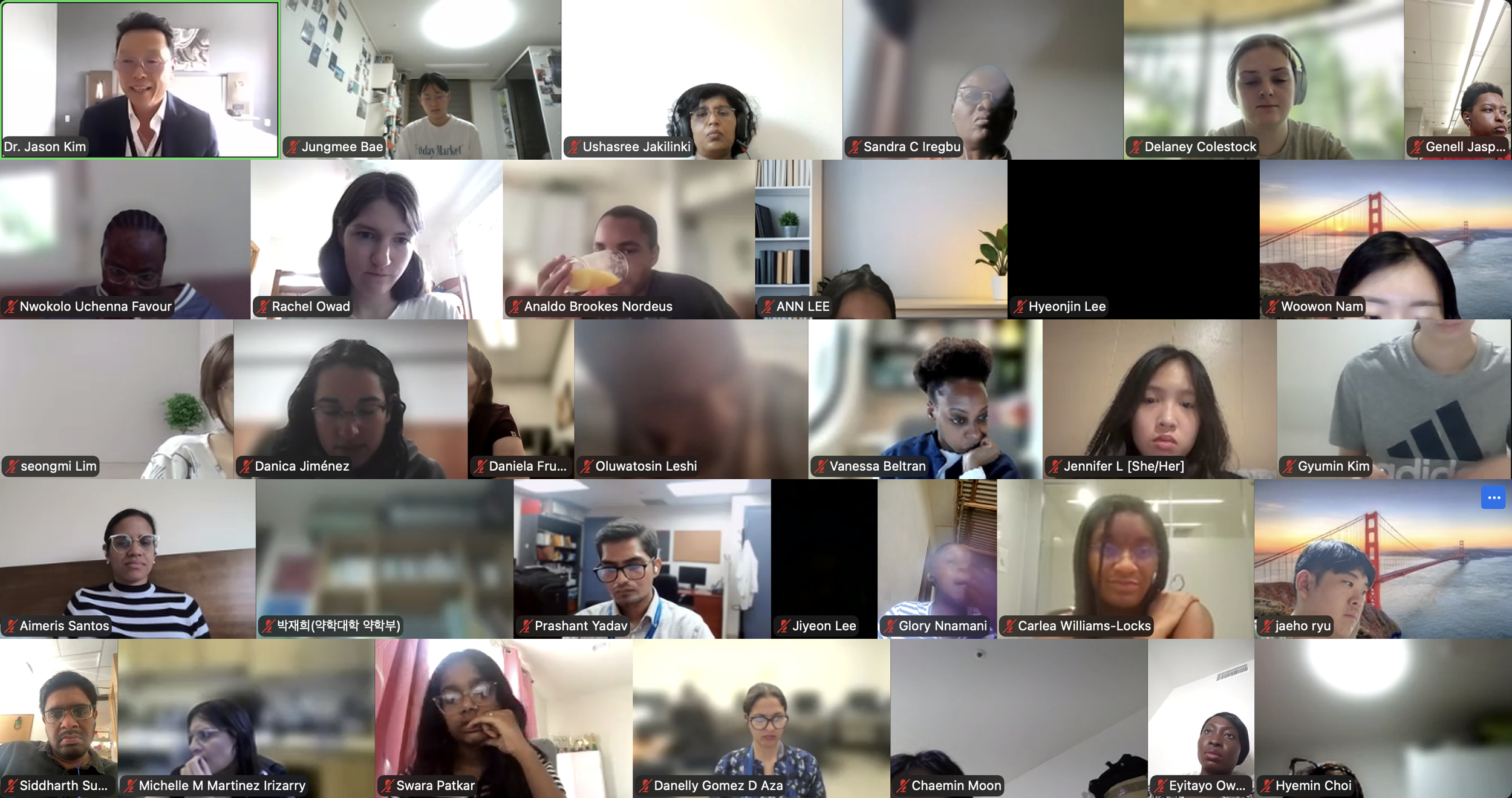
August 12, 2026
Session 9. Early-Life Origins of Type 2 Diabetes by Dr. Emilyn Alejandro (University of Minnesota Medical School)
The Main Session of today’s DVSC26 featured 2 remarkable experts, Dr. Emilyn Alejandro from the University of Minnesota Medical School and Dr. Lori Laffel from Harvard Medical School. Dr. Alejandro began by presenting the risk factors associated with type 2 diabetes, highlighting the history of gestational diabetes and poor maternal nutrition during pregnancy, and described the important role of maternal health in the current prevalence of obesity and gestational diabetes. Dr. Alejandro discussed the developmental origins of health and disease, hypothesizing that early-life environmental exposures can affect health and disease vulnerability later in life, sharing several studies, including preclinical in vivo studies from her lab, demonstrating the link between reduced birth weight and increased risks of obesity, type 2 diabetes, and cardiovascular disease. Dr. Alejandro explained how pancreatic beta-cells play a critical role in type 2 diabetes as beta-cells transition from susceptibility to adaptation to failure during the development of type 2 diabetes. Dr. Alejandro described how pancreatic beta-cells are sensitive to nutrient stress in utero, particularly amino acids, and her research hypothesizes that placental insulin/mTOR signaling regulates nutrient transfer to the growing fetus, affecting birthweight and beta-cell mass. Dr. Alejandro showed a mouse model of maternal hyperinsulinemia that led to insulin resistance in offspring mice. Dr. Alejandro ended by discussing how loss of placental mTOR signaling reduces fetal birthweight and increases the risk of obesity and insulin resistance, with increased SNAT expression and beta-cell proliferation/mass in offspring females, demonstrating that placental mTOR signaling modulates the metabolic health of the offspring.
-
![Session 2: Opening Session & Introduction to Diabetes by Lauren, Allison, and Dr. Jason Kim (University of Massachusetts Medical School)]()
August 12, 2026 (Session 9 - Part 1)
Session 9: “Early-Life Origins of Type 2 Diabetes” by Dr. Emilyn Alejandro (University of Minnesota Medical School)
Session 10: “Update on Advanced Diabetes Technologies Use in Type 1 and Type 2 Diabetes” by Dr. Lori Laffel (Harvard Medical School)The Main Session of today’s DVSC26 featured 2 remarkable experts, Dr. Emilyn Alejandro from the University of Minnesota Medical School and Dr. Lori Laffel from Harvard Medical School.
-
![]()
August 12, 2026 (Session 9 - Part 2)
Session 9: “Early-Life Origins of Type 2 Diabetes” by Dr. Emilyn Alejandro (University of Minnesota Medical School)
Dr. Kim introduces Dr. Emilyn Alejandro to our DVSC26 participants from all around the world.
-
![]()
August 12, 2026 (Session 9 - Part 3)
Session 9: “Early-Life Origins of Type 2 Diabetes” by Dr. Emilyn Alejandro (University of Minnesota Medical School)
Dr. Kim introduces Dr. Emilyn Alejandro to our DVSC26 participants from all around the world.
-
![]()
August 12, 2026 (Session 9 - Part 4)
Session 9: “Early-Life Origins of Type 2 Diabetes” by Dr. Emilyn Alejandro (University of Minnesota Medical School)
Some individuals are born with an increased susceptibility to type 2 diabetes due to influences during fetal development. This session explores how maternal diet and placental function shape the development of pancreatic β-cell mass and establish the metabolic set points of peripheral tissues. Understanding these early-life mechanisms provides insight into how the prenatal environment programs lifelong risk for type 2 diabetes.
-
![]()
August 12, 2026 (Session 9 - Part 5)
Session 9: “Early-Life Origins of Type 2 Diabetes” by Dr. Emilyn Alejandro (Marvin and Hadassah Bacaner Chair in Cardiovascular Physiology, Associate Director of the Minnesota Institute of Diabetes, Obesity and Metabolism, McKnight Presidential Fellow, McKnight Land Grant Professor, University of Minnesota Medical School)
-
![]()
August 12, 2026 (Session 9 - Part 6)
Session 9: “Early-Life Origins of Type 2 Diabetes” by Dr. Emilyn Alejandro (University of Minnesota Medical School)
Dr. Alejandro began by presenting the risk factors associated with type 2 diabetes, highlighting the history of gestational diabetes and poor maternal nutrition during pregnancy, and described the important role of maternal health in the current prevalence of obesity and gestational diabetes.
-
![]()
August 12, 2026 (Session 9 - Part 7)
Session 9: “Early-Life Origins of Type 2 Diabetes” by Dr. Emilyn Alejandro (University of Minnesota Medical School)
Dr. Alejandro began by presenting the risk factors associated with type 2 diabetes, highlighting the history of gestational diabetes and poor maternal nutrition during pregnancy, and described the important role of maternal health in the current prevalence of obesity and gestational diabetes.
-
![]()
August 12, 2026 (Session 9 - Part 8)
Session 9: “Early-Life Origins of Type 2 Diabetes” by Dr. Emilyn Alejandro (University of Minnesota Medical School)
Dr. Alejandro began by presenting the risk factors associated with type 2 diabetes, highlighting the history of gestational diabetes and poor maternal nutrition during pregnancy, and described the important role of maternal health in the current prevalence of obesity and gestational diabetes.
-
![]()
August 12, 2026 (Session 9 - Part 9)
Session 9: “Early-Life Origins of Type 2 Diabetes” by Dr. Emilyn Alejandro (University of Minnesota Medical School)
Dr. Alejandro began by presenting the risk factors associated with type 2 diabetes, highlighting the history of gestational diabetes and poor maternal nutrition during pregnancy, and described the important role of maternal health in the current prevalence of obesity and gestational diabetes.
-
![]()
August 12, 2026 (Session 9 - Part 10)
Session 9: “Early-Life Origins of Type 2 Diabetes” by Dr. Emilyn Alejandro (University of Minnesota Medical School)
Dr. Alejandro discussed the developmental origins of health and disease, hypothesizing that early-life environmental exposures can affect health and disease vulnerability later in life, sharing several studies, including preclinical in vivo studies from her lab, demonstrating the link between reduced birth weight and increased risks of obesity, type 2 diabetes, and cardiovascular disease.
-
![]()
August 12, 2026 (Session 9 - Part 11)
Session 9: “Early-Life Origins of Type 2 Diabetes” by Dr. Emilyn Alejandro (University of Minnesota Medical School)
Dr. Alejandro discussed the developmental origins of health and disease, hypothesizing that early-life environmental exposures can affect health and disease vulnerability later in life, sharing several studies, including preclinical in vivo studies from her lab, demonstrating the link between reduced birth weight and increased risks of obesity, type 2 diabetes, and cardiovascular disease.
-
![]()
August 12, 2026 (Session 9 - Part 12)
Session 9: “Early-Life Origins of Type 2 Diabetes” by Dr. Emilyn Alejandro (University of Minnesota Medical School)
Dr. Alejandro discussed the developmental origins of health and disease, hypothesizing that early-life environmental exposures can affect health and disease vulnerability later in life, sharing several studies, including preclinical in vivo studies from her lab, demonstrating the link between reduced birth weight and increased risks of obesity, type 2 diabetes, and cardiovascular disease.
-
![]()
August 12, 2026 (Session 9 - Part 13)
Session 9: “Early-Life Origins of Type 2 Diabetes” by Dr. Emilyn Alejandro (University of Minnesota Medical School)
Dr. Alejandro discussed the developmental origins of health and disease, hypothesizing that early-life environmental exposures can affect health and disease vulnerability later in life, sharing several studies, including preclinical in vivo studies from her lab, demonstrating the link between reduced birth weight and increased risks of obesity, type 2 diabetes, and cardiovascular disease.
-
![]()
August 12, 2026 (Session 9 - Part 14)
Session 9: “Early-Life Origins of Type 2 Diabetes” by Dr. Emilyn Alejandro (University of Minnesota Medical School)
Dr. Alejandro discussed the developmental origins of health and disease, hypothesizing that early-life environmental exposures can affect health and disease vulnerability later in life, sharing several studies, including preclinical in vivo studies from her lab, demonstrating the link between reduced birth weight and increased risks of obesity, type 2 diabetes, and cardiovascular disease.
-
![]()
August 12, 2026 (Session 9 - Part 15)
Session 9: “Early-Life Origins of Type 2 Diabetes” by Dr. Emilyn Alejandro (University of Minnesota Medical School)
Dr. Alejandro discussed the developmental origins of health and disease, hypothesizing that early-life environmental exposures can affect health and disease vulnerability later in life, sharing several studies, including preclinical in vivo studies from her lab, demonstrating the link between reduced birth weight and increased risks of obesity, type 2 diabetes, and cardiovascular disease.
-
![]()
August 12, 2026 (Session 9 - Part 16)
Session 9: “Early-Life Origins of Type 2 Diabetes” by Dr. Emilyn Alejandro (University of Minnesota Medical School)
Dr. Alejandro discussed the developmental origins of health and disease, hypothesizing that early-life environmental exposures can affect health and disease vulnerability later in life, sharing several studies, including preclinical in vivo studies from her lab, demonstrating the link between reduced birth weight and increased risks of obesity, type 2 diabetes, and cardiovascular disease.
-
![]()
August 12, 2026 (Session 9 - Part 17)
Session 9: “Early-Life Origins of Type 2 Diabetes” by Dr. Emilyn Alejandro (University of Minnesota Medical School)
Dr. Alejandro discussed the developmental origins of health and disease, hypothesizing that early-life environmental exposures can affect health and disease vulnerability later in life, sharing several studies, including preclinical in vivo studies from her lab, demonstrating the link between reduced birth weight and increased risks of obesity, type 2 diabetes, and cardiovascular disease.
-
![]()
August 12, 2026 (Session 9 - Part 18)
Session 9: “Early-Life Origins of Type 2 Diabetes” by Dr. Emilyn Alejandro (University of Minnesota Medical School)
Dr. Alejandro explained how pancreatic beta-cells play a critical role in type 2 diabetes as beta-cells transition from susceptibility to adaptation to failure during the development of type 2 diabetes.
-
![]()
August 12, 2026 (Session 9 - Part 19)
Session 9: “Early-Life Origins of Type 2 Diabetes” by Dr. Emilyn Alejandro (University of Minnesota Medical School)
Dr. Alejandro explained how pancreatic beta-cells play a critical role in type 2 diabetes as beta-cells transition from susceptibility to adaptation to failure during the development of type 2 diabetes.
-
![]()
August 12, 2026 (Session 9 - Part 20)
Session 9: “Early-Life Origins of Type 2 Diabetes” by Dr. Emilyn Alejandro (University of Minnesota Medical School)
Dr. Alejandro explained how pancreatic beta-cells play a critical role in type 2 diabetes as beta-cells transition from susceptibility to adaptation to failure during the development of type 2 diabetes.
-
![]()
August 12, 2026 (Session 9 - Part 21)
Session 9: “Early-Life Origins of Type 2 Diabetes” by Dr. Emilyn Alejandro (University of Minnesota Medical School)
Dr. Alejandro explained how pancreatic beta-cells play a critical role in type 2 diabetes as beta-cells transition from susceptibility to adaptation to failure during the development of type 2 diabetes.
-
![]()
August 12, 2026 (Session 9 - Part 22)
Session 9: “Early-Life Origins of Type 2 Diabetes” by Dr. Emilyn Alejandro (University of Minnesota Medical School)
Dr. Alejandro described how pancreatic beta-cells are sensitive to nutrient stress in utero, particularly amino acids, and her research hypothesizes that placental insulin/mTOR signaling regulates nutrient transfer to the growing fetus, affecting birthweight and beta-cell mass.
-
![]()
August 12, 2026 (Session 9 - Part 23)
Session 9: “Early-Life Origins of Type 2 Diabetes” by Dr. Emilyn Alejandro (University of Minnesota Medical School)
Dr. Alejandro described how pancreatic beta-cells are sensitive to nutrient stress in utero, particularly amino acids, and her research hypothesizes that placental insulin/mTOR signaling regulates nutrient transfer to the growing fetus, affecting birthweight and beta-cell mass.
-
![]()
August 12, 2026 (Session 9 - Part 24)
Session 9: “Early-Life Origins of Type 2 Diabetes” by Dr. Emilyn Alejandro (University of Minnesota Medical School)
Dr. Alejandro described how pancreatic beta-cells are sensitive to nutrient stress in utero, particularly amino acids, and her research hypothesizes that placental insulin/mTOR signaling regulates nutrient transfer to the growing fetus, affecting birthweight and beta-cell mass.
-
![]()
August 12, 2026 (Session 9 - Part 25)
Session 9: “Early-Life Origins of Type 2 Diabetes” by Dr. Emilyn Alejandro (University of Minnesota Medical School)
Dr. Alejandro described how pancreatic beta-cells are sensitive to nutrient stress in utero, particularly amino acids, and her research hypothesizes that placental insulin/mTOR signaling regulates nutrient transfer to the growing fetus, affecting birthweight and beta-cell mass.
-
![]()
August 12, 2026 (Session 9 - Part 26)
Session 9: “Early-Life Origins of Type 2 Diabetes” by Dr. Emilyn Alejandro (University of Minnesota Medical School)
Dr. Alejandro described how pancreatic beta-cells are sensitive to nutrient stress in utero, particularly amino acids, and her research hypothesizes that placental insulin/mTOR signaling regulates nutrient transfer to the growing fetus, affecting birthweight and beta-cell mass.
-
![]()
August 12, 2026 (Session 9 - Part 27)
Session 9: “Early-Life Origins of Type 2 Diabetes” by Dr. Emilyn Alejandro (University of Minnesota Medical School)
Dr. Alejandro described how pancreatic beta-cells are sensitive to nutrient stress in utero, particularly amino acids, and her research hypothesizes that placental insulin/mTOR signaling regulates nutrient transfer to the growing fetus, affecting birthweight and beta-cell mass.
-
![]()
August 12, 2026 (Session 9 - Part 28)
Session 9: “Early-Life Origins of Type 2 Diabetes” by Dr. Emilyn Alejandro (University of Minnesota Medical School)
Dr. Alejandro showed a mouse model of maternal hyperinsulinemia that led to insulin resistance in offspring mice.
-
![]()
August 12, 2026 (Session 9 - Part 29)
Session 9: “Early-Life Origins of Type 2 Diabetes” by Dr. Emilyn Alejandro (University of Minnesota Medical School)
Dr. Alejandro showed a mouse model of maternal hyperinsulinemia that led to insulin resistance in offspring mice.
-
![]()
August 12, 2026 (Session 9 - Part 30)
Session 9: “Early-Life Origins of Type 2 Diabetes” by Dr. Emilyn Alejandro (University of Minnesota Medical School)
Dr. Alejandro showed a mouse model of maternal hyperinsulinemia that led to insulin resistance in offspring mice.
-
![]()
August 12, 2026 (Session 9 - Part 31)
Session 9: “Early-Life Origins of Type 2 Diabetes” by Dr. Emilyn Alejandro (University of Minnesota Medical School)
Dr. Alejandro showed a mouse model of maternal hyperinsulinemia that led to insulin resistance in offspring mice.
-
![]()
August 12, 2026 (Session 9 - Part 32)
Session 9: “Early-Life Origins of Type 2 Diabetes” by Dr. Emilyn Alejandro (University of Minnesota Medical School)
Dr. Alejandro showed a mouse model of maternal hyperinsulinemia that led to insulin resistance in offspring mice.
-
![]()
August 12, 2026 (Session 9 - Part 33)
Session 9: “Early-Life Origins of Type 2 Diabetes” by Dr. Emilyn Alejandro (University of Minnesota Medical School)
Dr. Alejandro showed a mouse model of maternal hyperinsulinemia that led to insulin resistance in offspring mice.
-
![]()
August 12, 2026 (Session 9 - Part 34)
Session 9: “Early-Life Origins of Type 2 Diabetes” by Dr. Emilyn Alejandro (University of Minnesota Medical School)
Dr. Alejandro ended by discussing how loss of placental mTOR signaling reduces fetal birthweight and increases the risk of obesity and insulin resistance, with increased SNAT expression and beta-cell proliferation/mass in offspring females, demonstrating that placental mTOR signaling modulates the metabolic health of the offspring.
-
![]()
August 12, 2026 (Session 9 - Part 35)
Session 9: “Early-Life Origins of Type 2 Diabetes” by Dr. Emilyn Alejandro (University of Minnesota Medical School)
Dr. Alejandro ended by discussing how loss of placental mTOR signaling reduces fetal birthweight and increases the risk of obesity and insulin resistance, with increased SNAT expression and beta-cell proliferation/mass in offspring females, demonstrating that placental mTOR signaling modulates the metabolic health of the offspring.
-
![]()
August 12, 2026 (Session 9 - Part 36)
Session 9: “Early-Life Origins of Type 2 Diabetes” by Dr. Emilyn Alejandro (University of Minnesota Medical School)
Dr. Alejandro ended by discussing how loss of placental mTOR signaling reduces fetal birthweight and increases the risk of obesity and insulin resistance, with increased SNAT expression and beta-cell proliferation/mass in offspring females, demonstrating that placental mTOR signaling modulates the metabolic health of the offspring.
-
![]()
August 12, 2026 (Session 9 - Part 37)
Session 9: “Early-Life Origins of Type 2 Diabetes” by Dr. Emilyn Alejandro (University of Minnesota Medical School)
Dr. Alejandro ended by discussing how loss of placental mTOR signaling reduces fetal birthweight and increases the risk of obesity and insulin resistance, with increased SNAT expression and beta-cell proliferation/mass in offspring females, demonstrating that placental mTOR signaling modulates the metabolic health of the offspring.
-
![]()
August 12, 2026 (Session 9 - Part 38)
Session 9: “Early-Life Origins of Type 2 Diabetes” by Dr. Emilyn Alejandro (University of Minnesota Medical School)
Dr. Alejandro ended by discussing how loss of placental mTOR signaling reduces fetal birthweight and increases the risk of obesity and insulin resistance, with increased SNAT expression and beta-cell proliferation/mass in offspring females, demonstrating that placental mTOR signaling modulates the metabolic health of the offspring.
-
![]()
August 12, 2026 (Session 9 - Part 39)
Session 9: “Early-Life Origins of Type 2 Diabetes” by Dr. Emilyn Alejandro (University of Minnesota Medical School)
Dr. Alejandro ended by discussing how loss of placental mTOR signaling reduces fetal birthweight and increases the risk of obesity and insulin resistance, with increased SNAT expression and beta-cell proliferation/mass in offspring females, demonstrating that placental mTOR signaling modulates the metabolic health of the offspring.
-
![]()
August 12, 2026 (Session 9 - Part 40)
Session 9: “Early-Life Origins of Type 2 Diabetes” by Dr. Emilyn Alejandro (University of Minnesota Medical School)
Dr. Alejandro ended by discussing how loss of placental mTOR signaling reduces fetal birthweight and increases the risk of obesity and insulin resistance, with increased SNAT expression and beta-cell proliferation/mass in offspring females, demonstrating that placental mTOR signaling modulates the metabolic health of the offspring.
-
![]()
August 12, 2026 (Session 9 - Part 41)
Session 9: “Early-Life Origins of Type 2 Diabetes” by Dr. Emilyn Alejandro (University of Minnesota Medical School)
Dr. Alejandro ended by discussing how loss of placental mTOR signaling reduces fetal birthweight and increases the risk of obesity and insulin resistance, with increased SNAT expression and beta-cell proliferation/mass in offspring females, demonstrating that placental mTOR signaling modulates the metabolic health of the offspring.
-
![]()
August 12, 2026 (Session 9 - Part 42)
Session 9: “Early-Life Origins of Type 2 Diabetes” by Dr. Emilyn Alejandro (University of Minnesota Medical School)
Dr. Alejandro began by presenting the risk factors associated with type 2 diabetes, highlighting the history of gestational diabetes and poor maternal nutrition during pregnancy, and described the important role of maternal health in the current prevalence of obesity and gestational diabetes. Dr. Alejandro discussed the developmental origins of health and disease, hypothesizing that early-life environmental exposures can affect health and disease vulnerability later in life, sharing several studies, including preclinical in vivo studies from her lab, demonstrating the link between reduced birth weight and increased risks of obesity, type 2 diabetes, and cardiovascular disease. Dr. Alejandro explained how pancreatic beta-cells play a critical role in type 2 diabetes as beta-cells transition from susceptibility to adaptation to failure during the development of type 2 diabetes. Dr. Alejandro described how pancreatic beta-cells are sensitive to nutrient stress in utero, particularly amino acids, and her research hypothesizes that placental insulin/mTOR signaling regulates nutrient transfer to the growing fetus, affecting birthweight and beta-cell mass. Dr. Alejandro showed a mouse model of maternal hyperinsulinemia that led to insulin resistance in offspring mice. Dr. Alejandro ended by discussing how loss of placental mTOR signaling reduces fetal birthweight and increases the risk of obesity and insulin resistance, with increased SNAT expression and beta-cell proliferation/mass in offspring females, demonstrating that placental mTOR signaling modulates the metabolic health of the offspring.
-
![]()
August 12, 2026 (Session 9 - Part 43)
Session 9: “Early-Life Origins of Type 2 Diabetes” by Dr. Emilyn Alejandro (University of Minnesota Medical School)
Dr. Alejandro began by presenting the risk factors associated with type 2 diabetes, highlighting the history of gestational diabetes and poor maternal nutrition during pregnancy, and described the important role of maternal health in the current prevalence of obesity and gestational diabetes. Dr. Alejandro discussed the developmental origins of health and disease, hypothesizing that early-life environmental exposures can affect health and disease vulnerability later in life, sharing several studies, including preclinical in vivo studies from her lab, demonstrating the link between reduced birth weight and increased risks of obesity, type 2 diabetes, and cardiovascular disease. Dr. Alejandro explained how pancreatic beta-cells play a critical role in type 2 diabetes as beta-cells transition from susceptibility to adaptation to failure during the development of type 2 diabetes. Dr. Alejandro described how pancreatic beta-cells are sensitive to nutrient stress in utero, particularly amino acids, and her research hypothesizes that placental insulin/mTOR signaling regulates nutrient transfer to the growing fetus, affecting birthweight and beta-cell mass. Dr. Alejandro showed a mouse model of maternal hyperinsulinemia that led to insulin resistance in offspring mice. Dr. Alejandro ended by discussing how loss of placental mTOR signaling reduces fetal birthweight and increases the risk of obesity and insulin resistance, with increased SNAT expression and beta-cell proliferation/mass in offspring females, demonstrating that placental mTOR signaling modulates the metabolic health of the offspring.
-
![]()
August 12, 2026 (Session 9 - Part 44)
Session 9: “Early-Life Origins of Type 2 Diabetes” by Dr. Emilyn Alejandro (University of Minnesota Medical School)
Dr. Alejandro began by presenting the risk factors associated with type 2 diabetes, highlighting the history of gestational diabetes and poor maternal nutrition during pregnancy, and described the important role of maternal health in the current prevalence of obesity and gestational diabetes. Dr. Alejandro discussed the developmental origins of health and disease, hypothesizing that early-life environmental exposures can affect health and disease vulnerability later in life, sharing several studies, including preclinical in vivo studies from her lab, demonstrating the link between reduced birth weight and increased risks of obesity, type 2 diabetes, and cardiovascular disease. Dr. Alejandro explained how pancreatic beta-cells play a critical role in type 2 diabetes as beta-cells transition from susceptibility to adaptation to failure during the development of type 2 diabetes. Dr. Alejandro described how pancreatic beta-cells are sensitive to nutrient stress in utero, particularly amino acids, and her research hypothesizes that placental insulin/mTOR signaling regulates nutrient transfer to the growing fetus, affecting birthweight and beta-cell mass. Dr. Alejandro showed a mouse model of maternal hyperinsulinemia that led to insulin resistance in offspring mice. Dr. Alejandro ended by discussing how loss of placental mTOR signaling reduces fetal birthweight and increases the risk of obesity and insulin resistance, with increased SNAT expression and beta-cell proliferation/mass in offspring females, demonstrating that placental mTOR signaling modulates the metabolic health of the offspring.
-
![]()
August 12, 2026 (Session 9 - Part 45)
Session 9: “Early-Life Origins of Type 2 Diabetes” by Dr. Emilyn Alejandro (University of Minnesota Medical School)
Dr. Alejandro began by presenting the risk factors associated with type 2 diabetes, highlighting the history of gestational diabetes and poor maternal nutrition during pregnancy, and described the important role of maternal health in the current prevalence of obesity and gestational diabetes. Dr. Alejandro discussed the developmental origins of health and disease, hypothesizing that early-life environmental exposures can affect health and disease vulnerability later in life, sharing several studies, including preclinical in vivo studies from her lab, demonstrating the link between reduced birth weight and increased risks of obesity, type 2 diabetes, and cardiovascular disease. Dr. Alejandro explained how pancreatic beta-cells play a critical role in type 2 diabetes as beta-cells transition from susceptibility to adaptation to failure during the development of type 2 diabetes. Dr. Alejandro described how pancreatic beta-cells are sensitive to nutrient stress in utero, particularly amino acids, and her research hypothesizes that placental insulin/mTOR signaling regulates nutrient transfer to the growing fetus, affecting birthweight and beta-cell mass. Dr. Alejandro showed a mouse model of maternal hyperinsulinemia that led to insulin resistance in offspring mice. Dr. Alejandro ended by discussing how loss of placental mTOR signaling reduces fetal birthweight and increases the risk of obesity and insulin resistance, with increased SNAT expression and beta-cell proliferation/mass in offspring females, demonstrating that placental mTOR signaling modulates the metabolic health of the offspring.
-
![]()
August 12, 2026 (Session 9 - Part 46)
Session 9: “Early-Life Origins of Type 2 Diabetes” by Dr. Emilyn Alejandro (University of Minnesota Medical School)
Dr. Alejandro began by presenting the risk factors associated with type 2 diabetes, highlighting the history of gestational diabetes and poor maternal nutrition during pregnancy, and described the important role of maternal health in the current prevalence of obesity and gestational diabetes. Dr. Alejandro discussed the developmental origins of health and disease, hypothesizing that early-life environmental exposures can affect health and disease vulnerability later in life, sharing several studies, including preclinical in vivo studies from her lab, demonstrating the link between reduced birth weight and increased risks of obesity, type 2 diabetes, and cardiovascular disease. Dr. Alejandro explained how pancreatic beta-cells play a critical role in type 2 diabetes as beta-cells transition from susceptibility to adaptation to failure during the development of type 2 diabetes. Dr. Alejandro described how pancreatic beta-cells are sensitive to nutrient stress in utero, particularly amino acids, and her research hypothesizes that placental insulin/mTOR signaling regulates nutrient transfer to the growing fetus, affecting birthweight and beta-cell mass. Dr. Alejandro showed a mouse model of maternal hyperinsulinemia that led to insulin resistance in offspring mice. Dr. Alejandro ended by discussing how loss of placental mTOR signaling reduces fetal birthweight and increases the risk of obesity and insulin resistance, with increased SNAT expression and beta-cell proliferation/mass in offspring females, demonstrating that placental mTOR signaling modulates the metabolic health of the offspring.
-
![]()
August 12, 2026 (Session 9 - Part 47)
Session 9: “Early-Life Origins of Type 2 Diabetes” by Dr. Emilyn Alejandro (University of Minnesota Medical School)
Allison moderates the Q&A period with many outstanding questions from our DVSC26 participants.
-
![]()
August 12, 2026 (Session 9 - Part 48)
Session 9: “Early-Life Origins of Type 2 Diabetes” by Dr. Emilyn Alejandro (University of Minnesota Medical School)
During Q&A moderated by Allison, Dr. Alejandro thoughtfully addresses outstanding questions from our DVSC26 participants.
-
![]()
August 12, 2026 (Session 9 - Part 49)
Session 9: “Early-Life Origins of Type 2 Diabetes” by Dr. Emilyn Alejandro (University of Minnesota Medical School)
Lauren moderates the Q&A period with many outstanding questions from our DVSC26 participants.
-
![]()
August 12, 2026 (Session 9 - Part 50)
Session 9: “Early-Life Origins of Type 2 Diabetes” by Dr. Emilyn Alejandro (University of Minnesota Medical School)
During Q&A moderated by Lauren, Dr. Alejandro thoughtfully addresses outstanding questions from our DVSC26 participants.
-
![]()
August 12, 2026 (Session 9 - Part 51)
Session 9: “Early-Life Origins of Type 2 Diabetes” by Dr. Emilyn Alejandro (University of Minnesota Medical School)
Allison moderates the Q&A period with many outstanding questions from our DVSC26 participants.
-
![]()
August 12, 2026 (Session 9 - Part 52)
Session 9: “Early-Life Origins of Type 2 Diabetes” by Dr. Emilyn Alejandro (University of Minnesota Medical School)
During Q&A moderated by Lauren, Dr. Alejandro thoughtfully addresses outstanding questions from our DVSC26 participants.
-
![]()
August 12, 2026 (Session 9 - Part 53)
Session 9: “Early-Life Origins of Type 2 Diabetes” by Dr. Emilyn Alejandro (University of Minnesota Medical School)
During Q&A moderated by Allison, Dr. Alejandro thoughtfully addresses outstanding questions from our DVSC26 participants.
-
![]()
August 12, 2026 (Session 9 - Part 54)
Session 9: “Early-Life Origins of Type 2 Diabetes” by Dr. Emilyn Alejandro (University of Minnesota Medical School)
Dr. Alejandro wishes our DVSC26 participants all the best in their journeys.
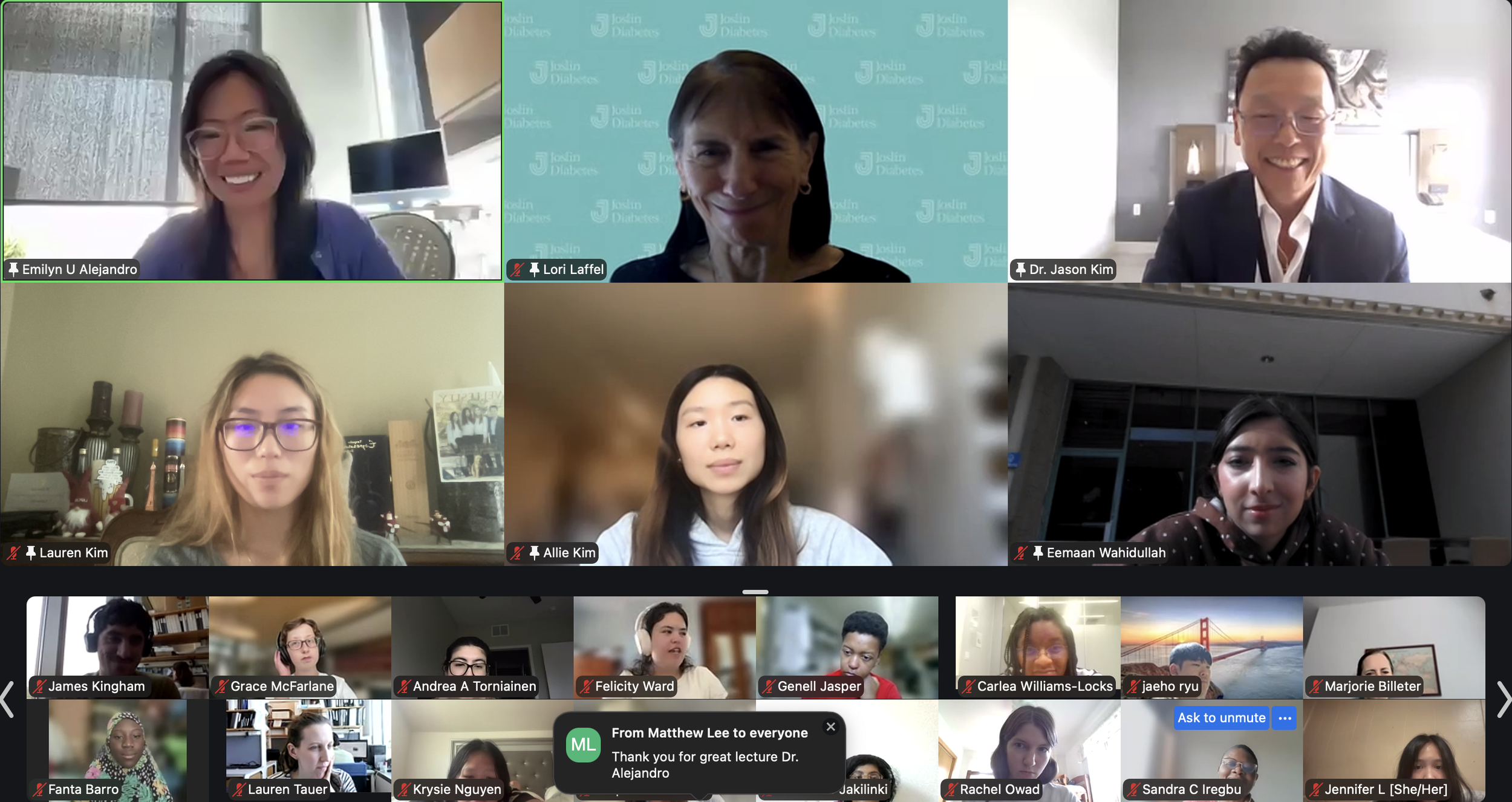
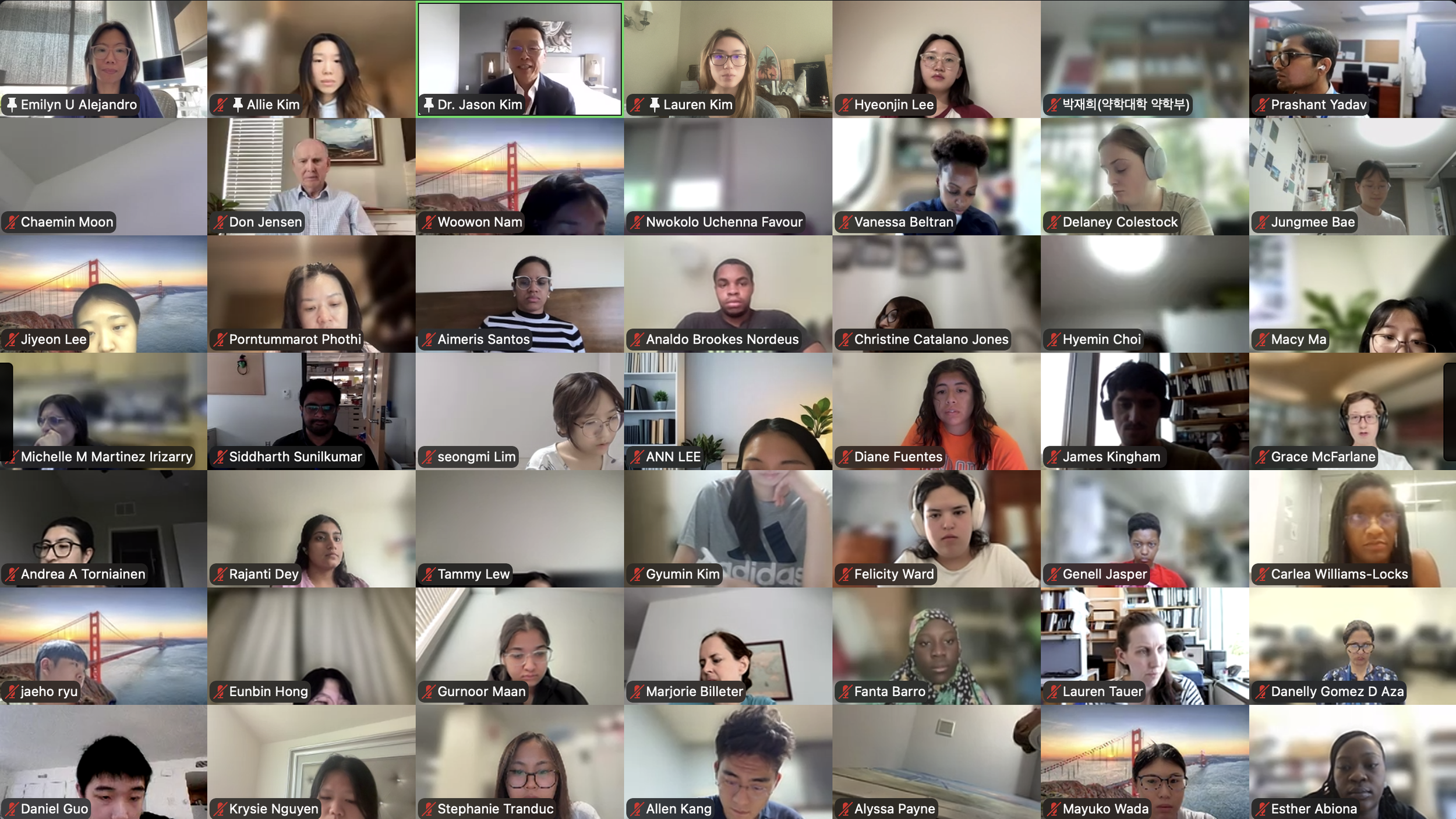

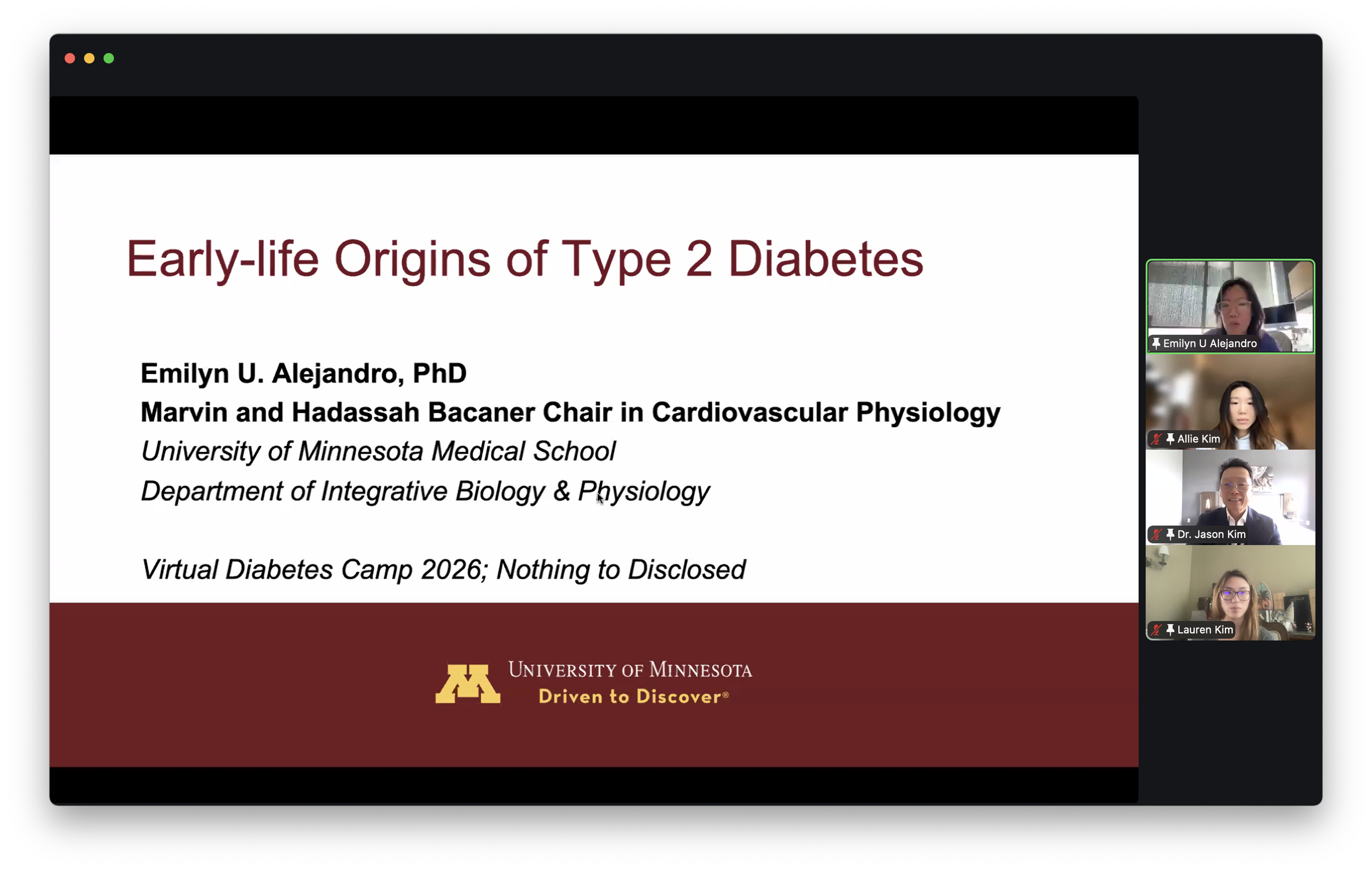
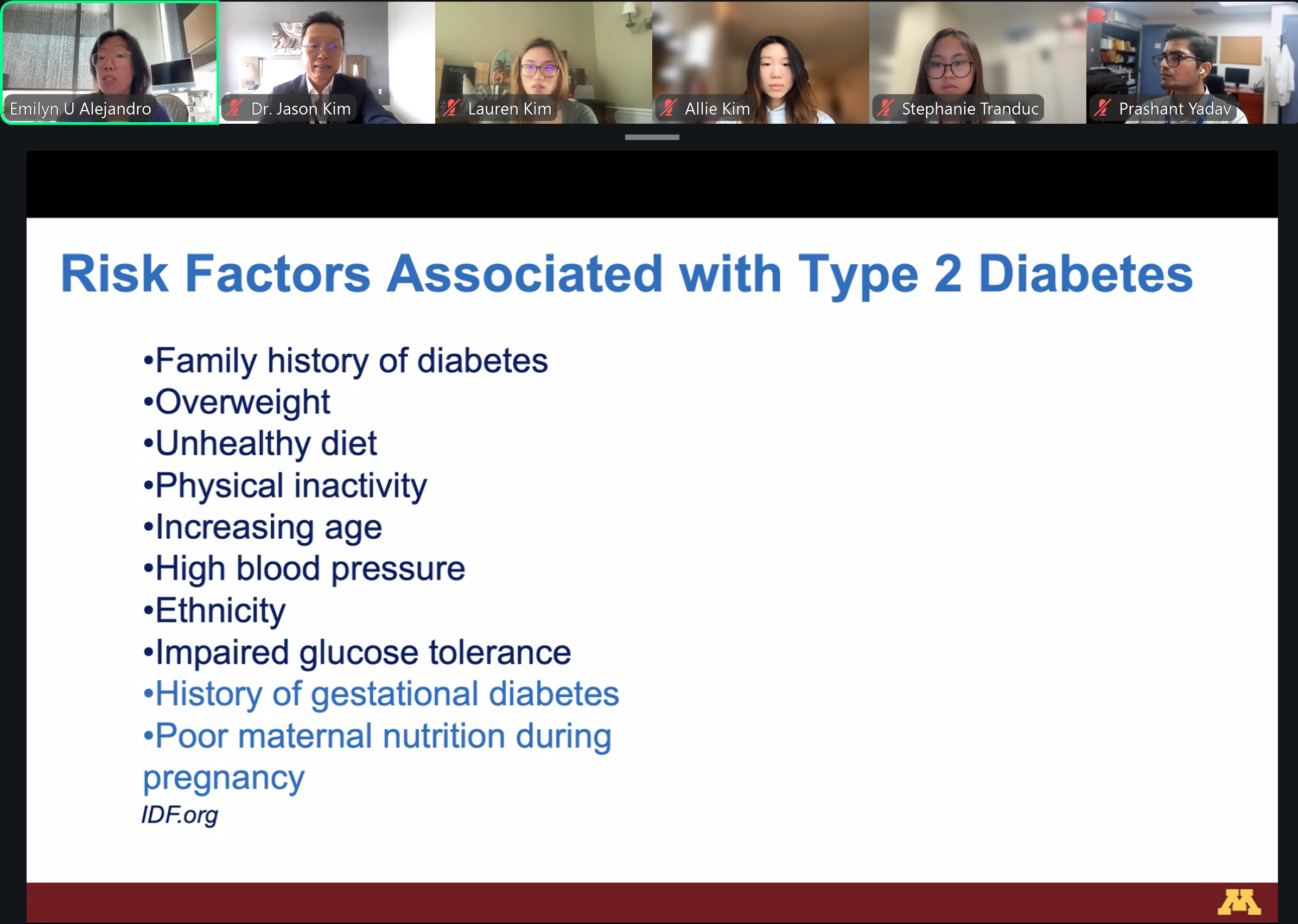
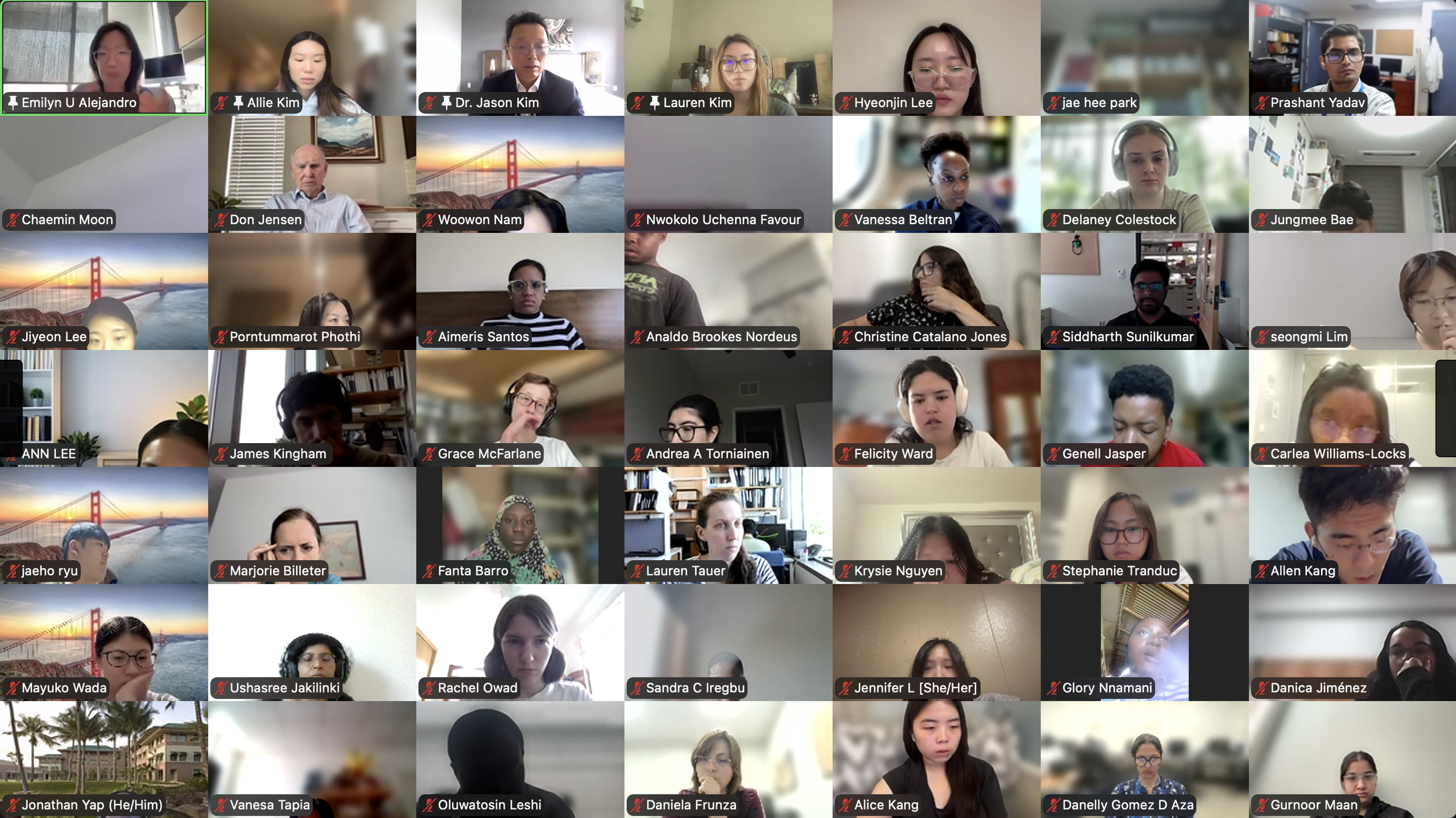
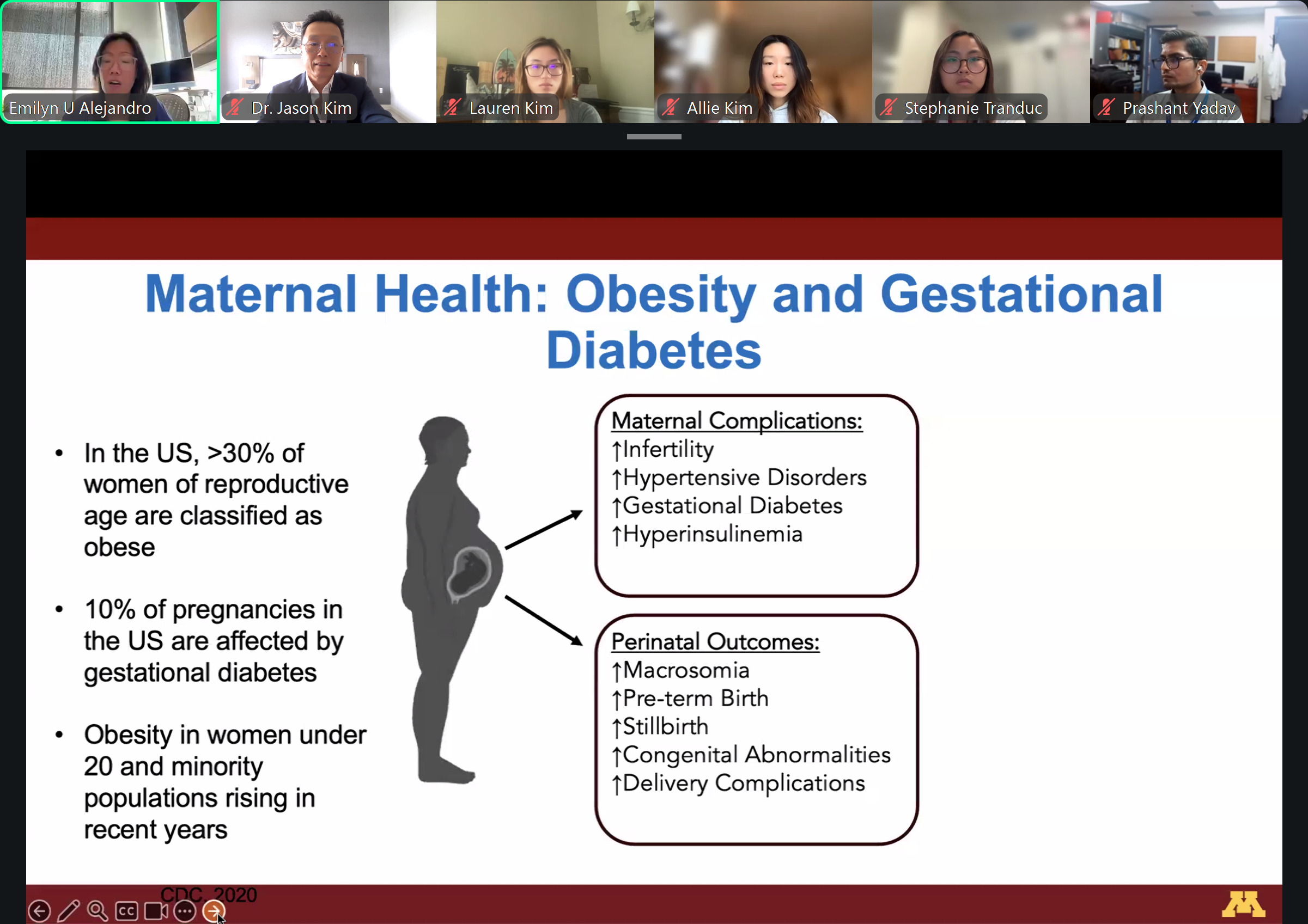
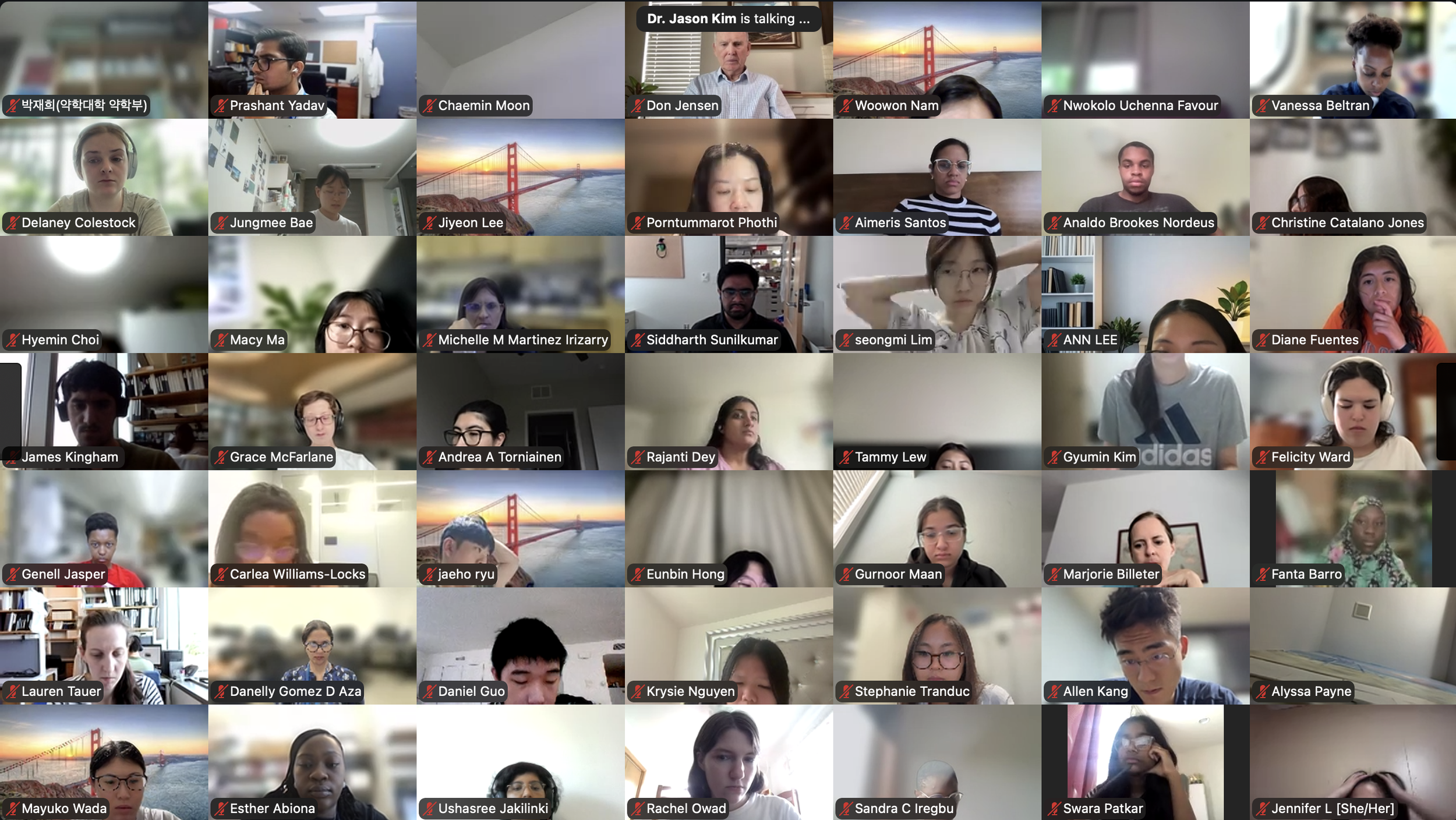
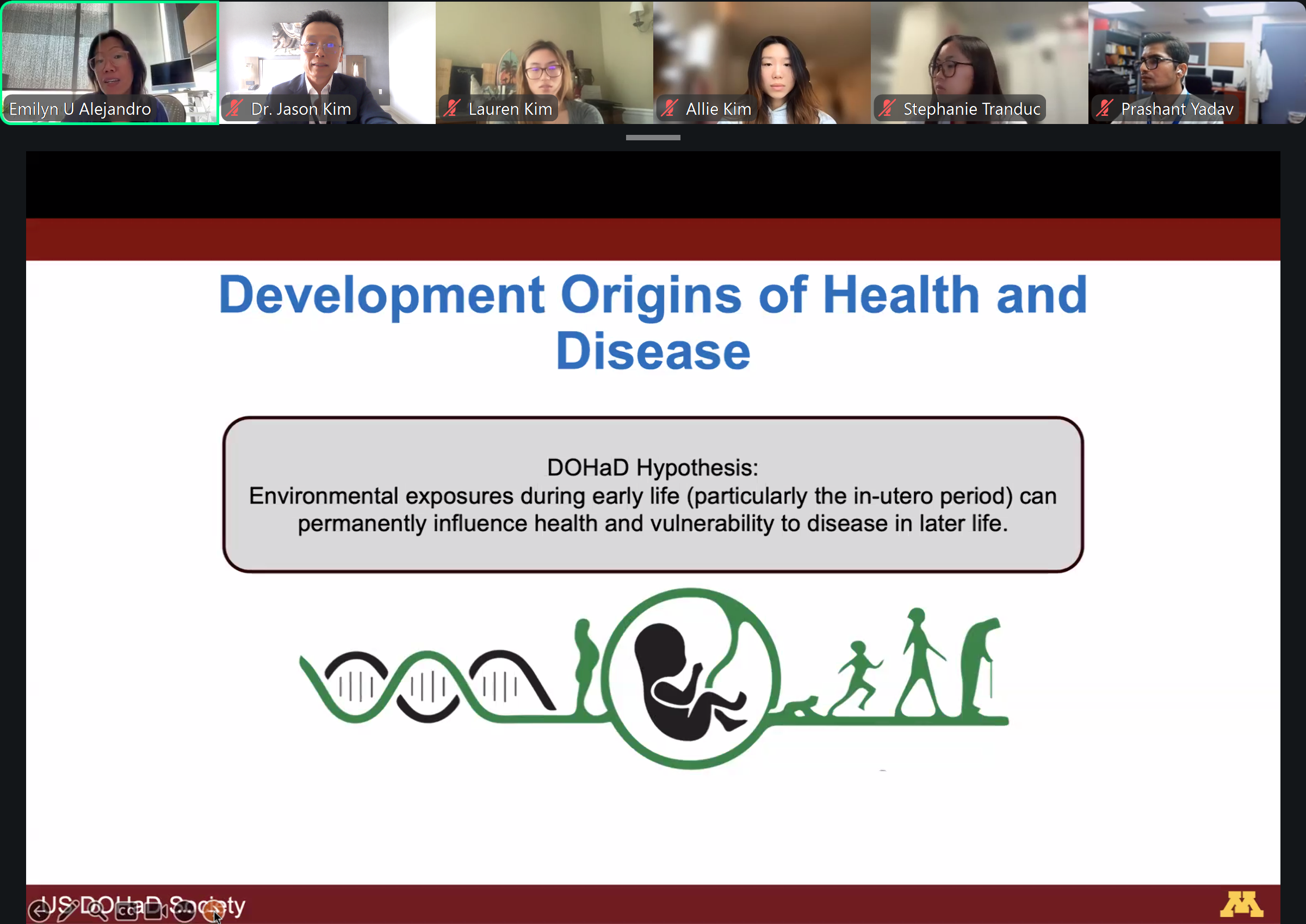
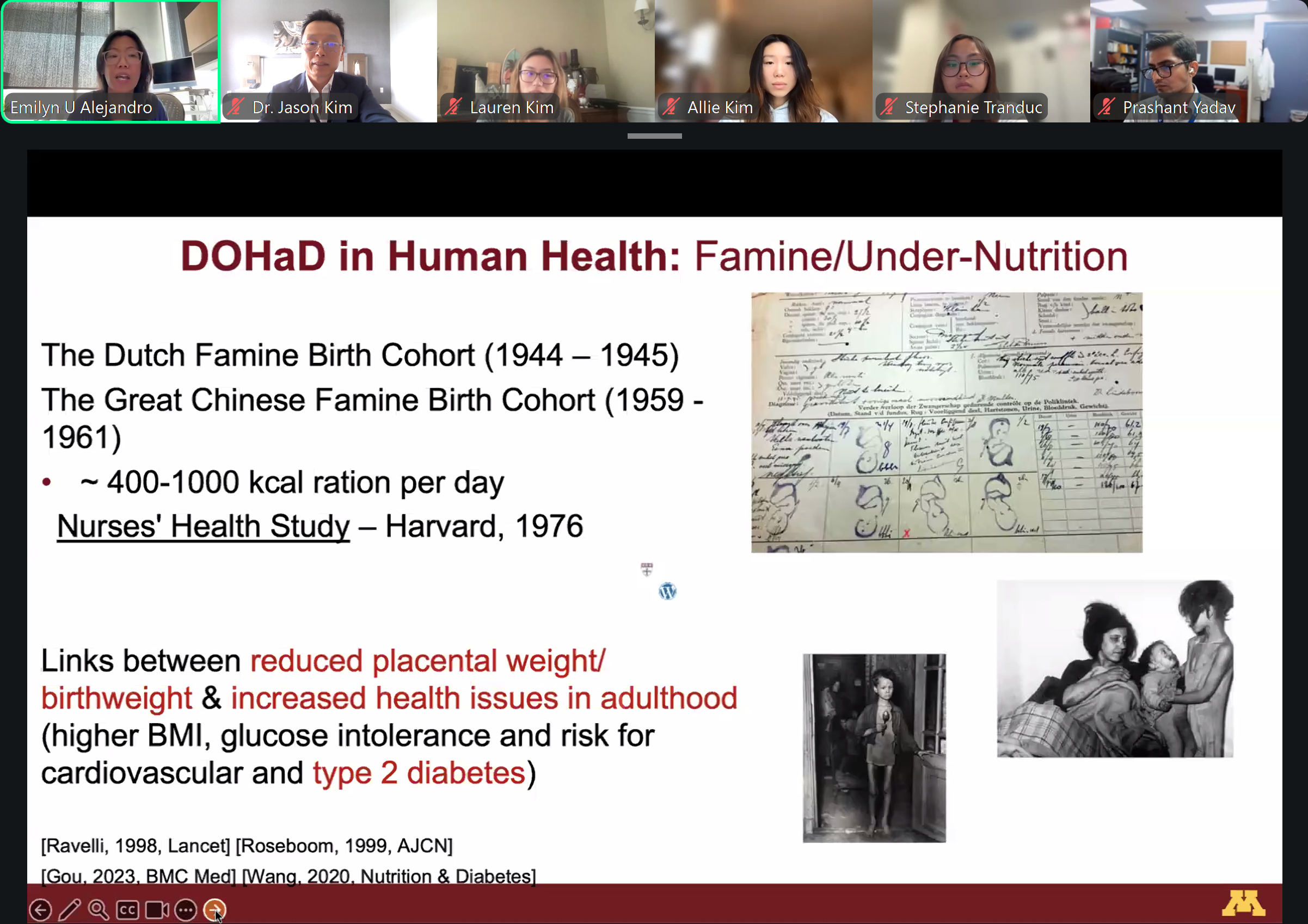
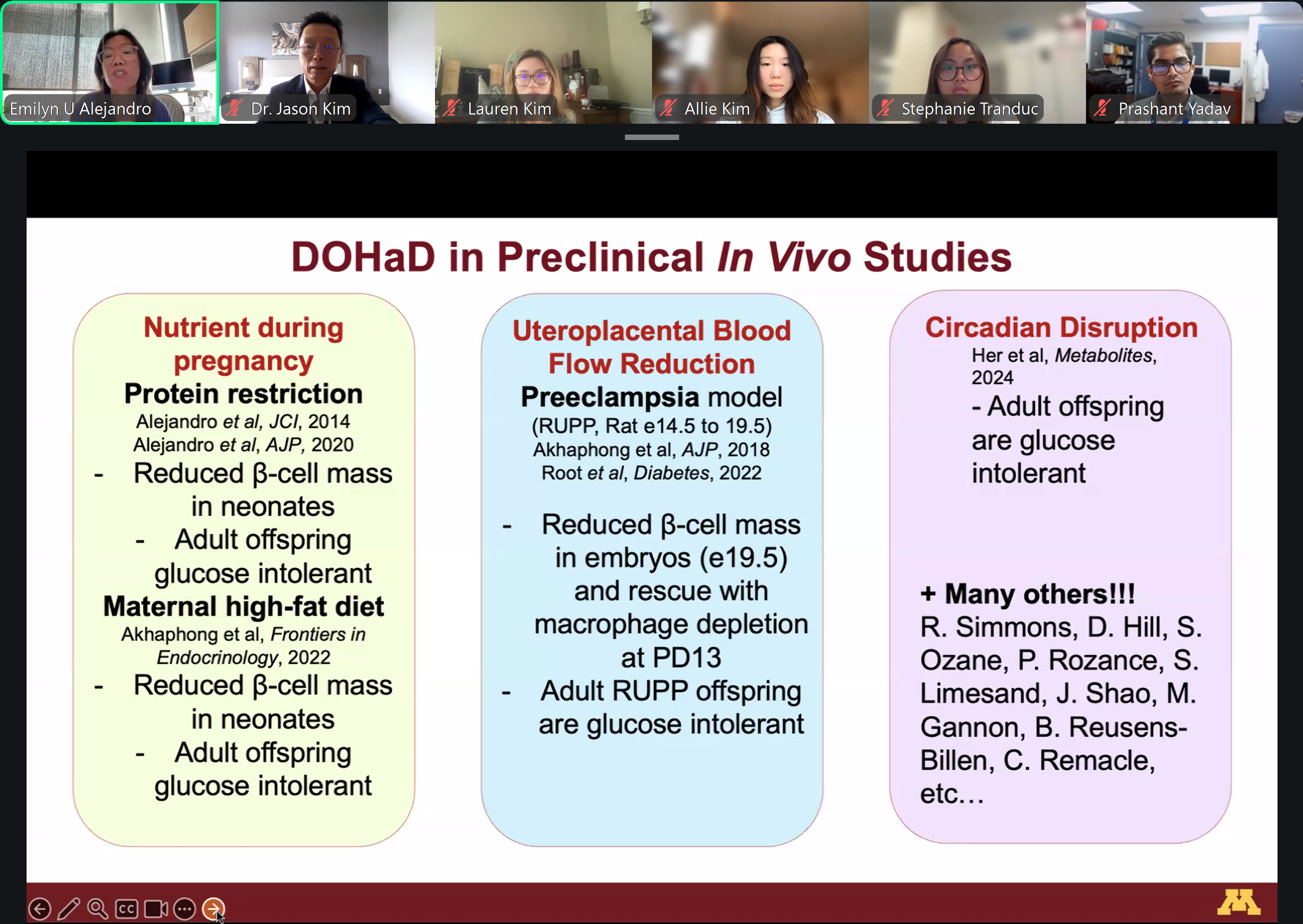
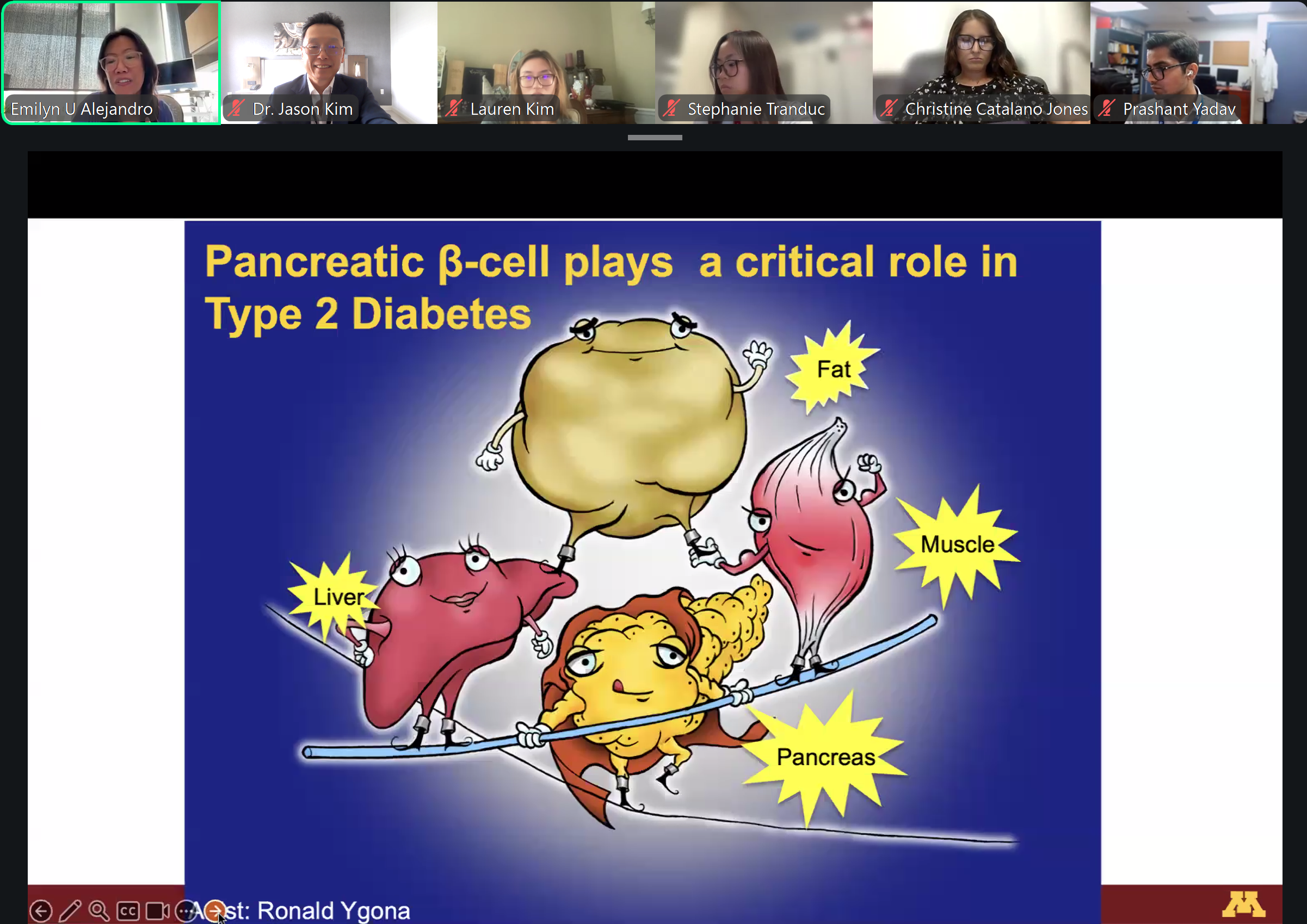

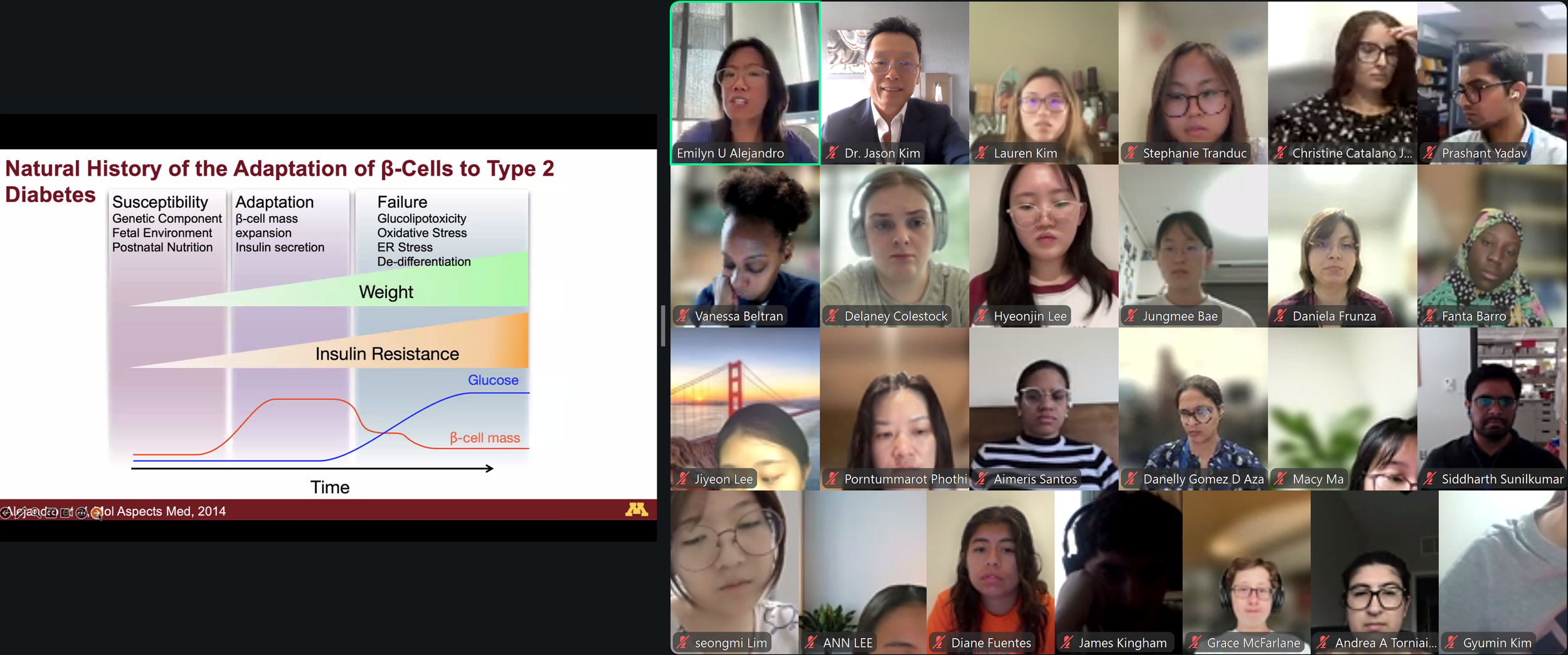
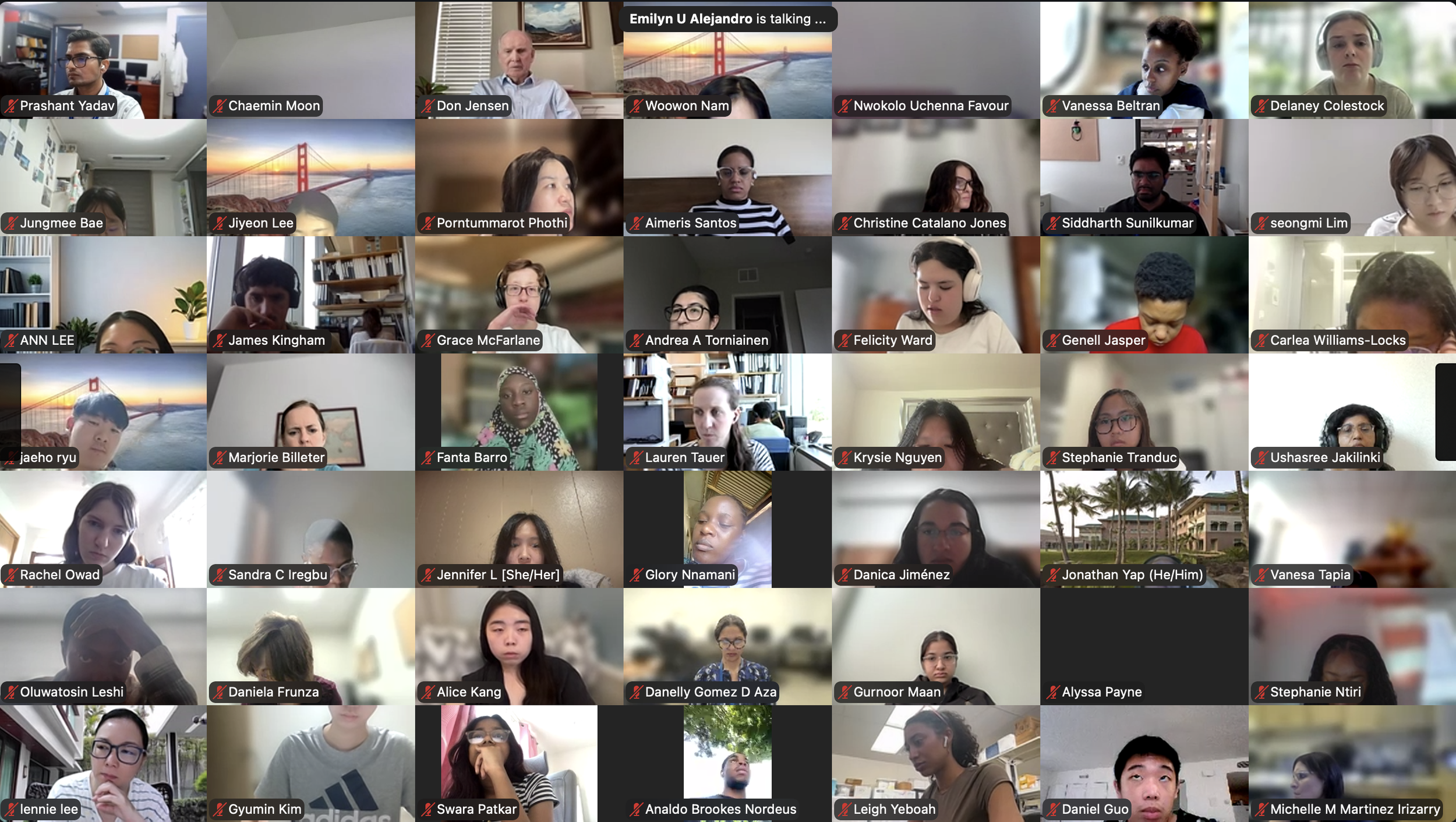
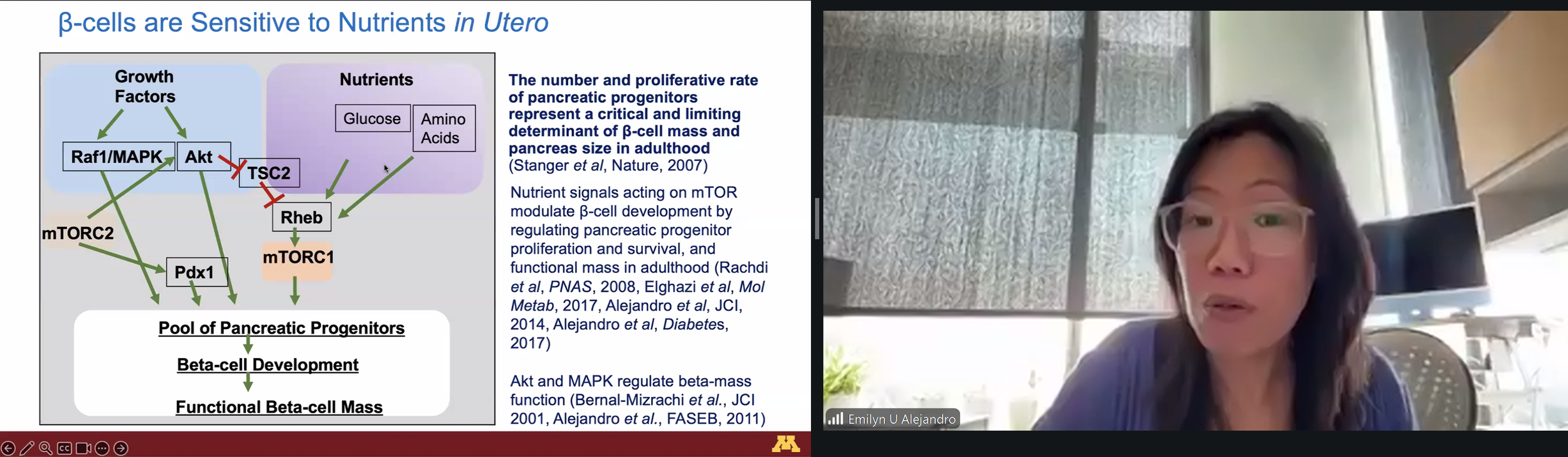
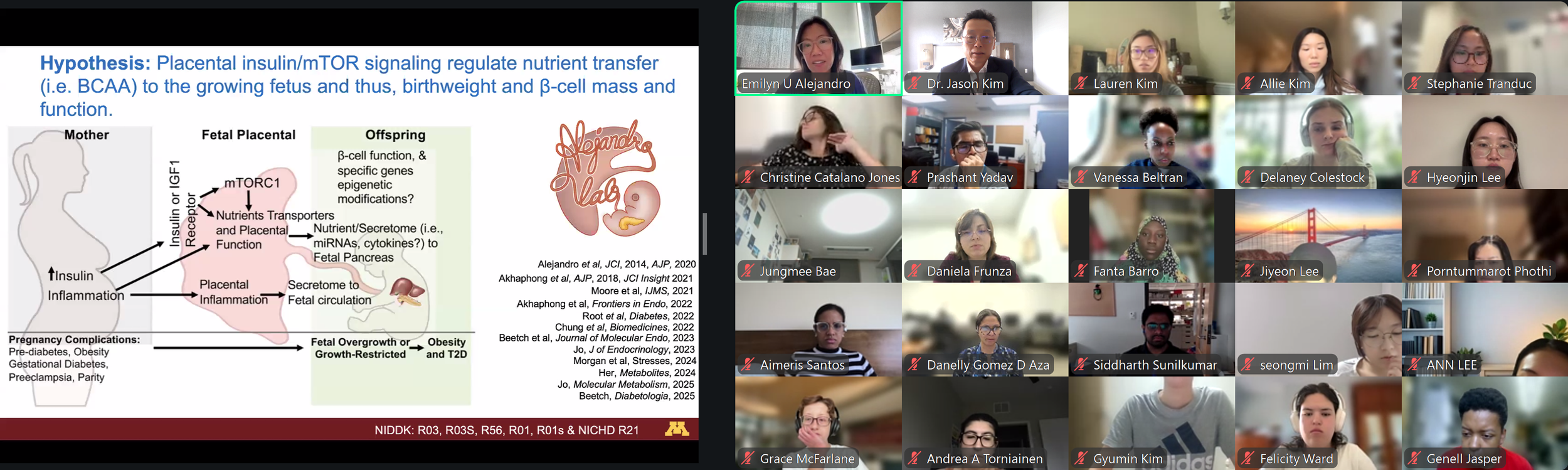
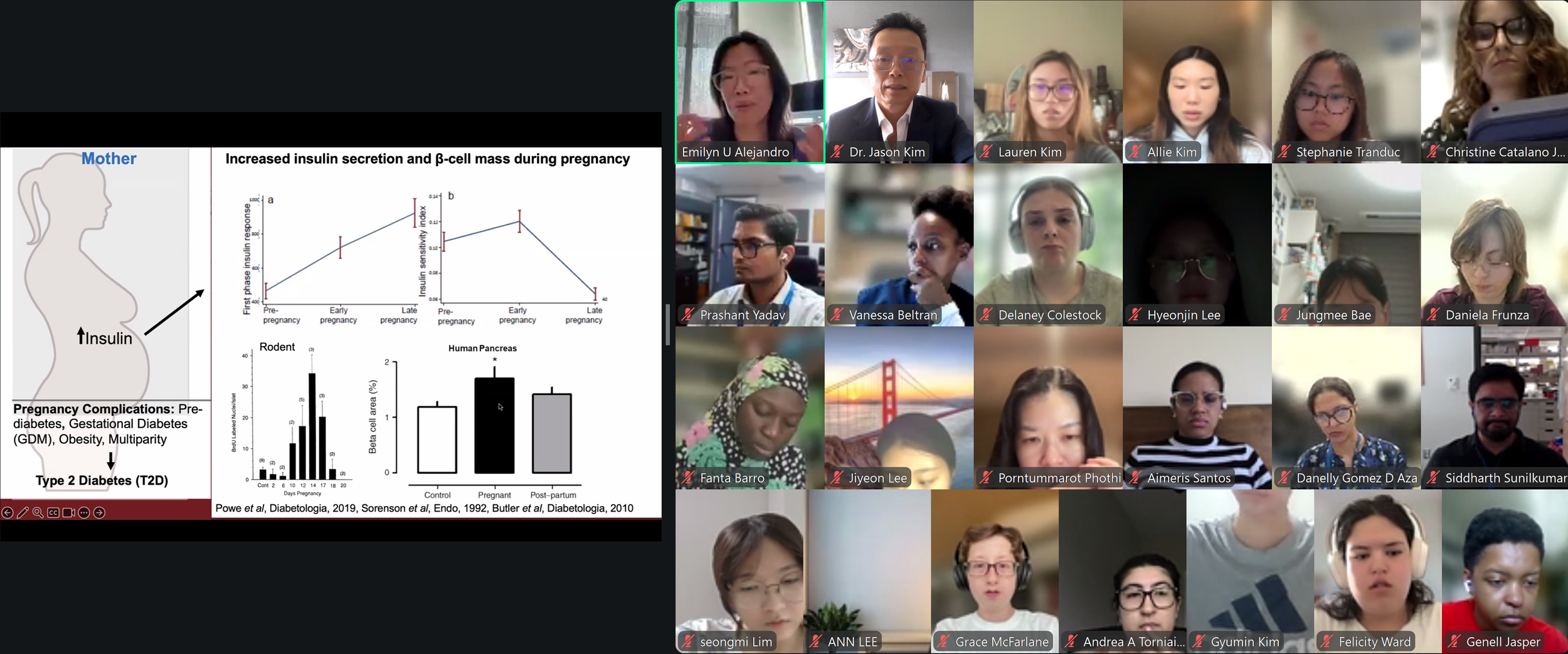
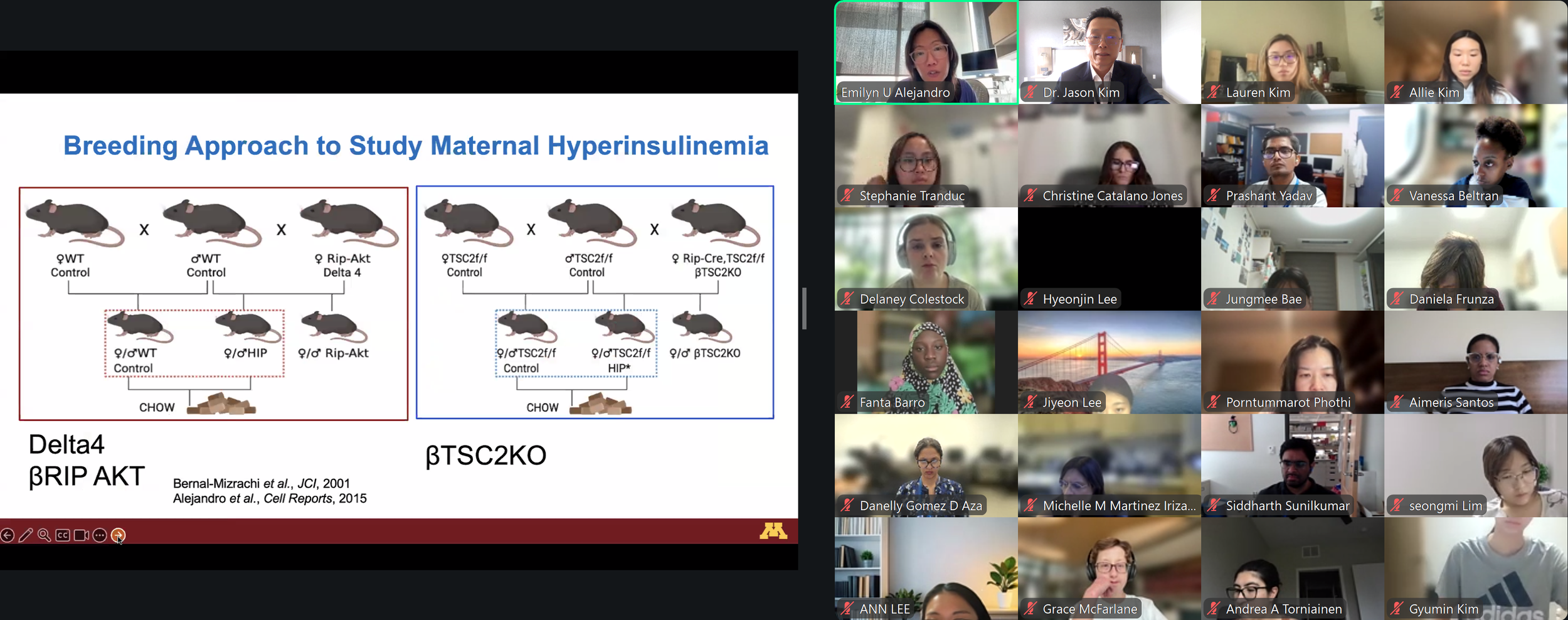
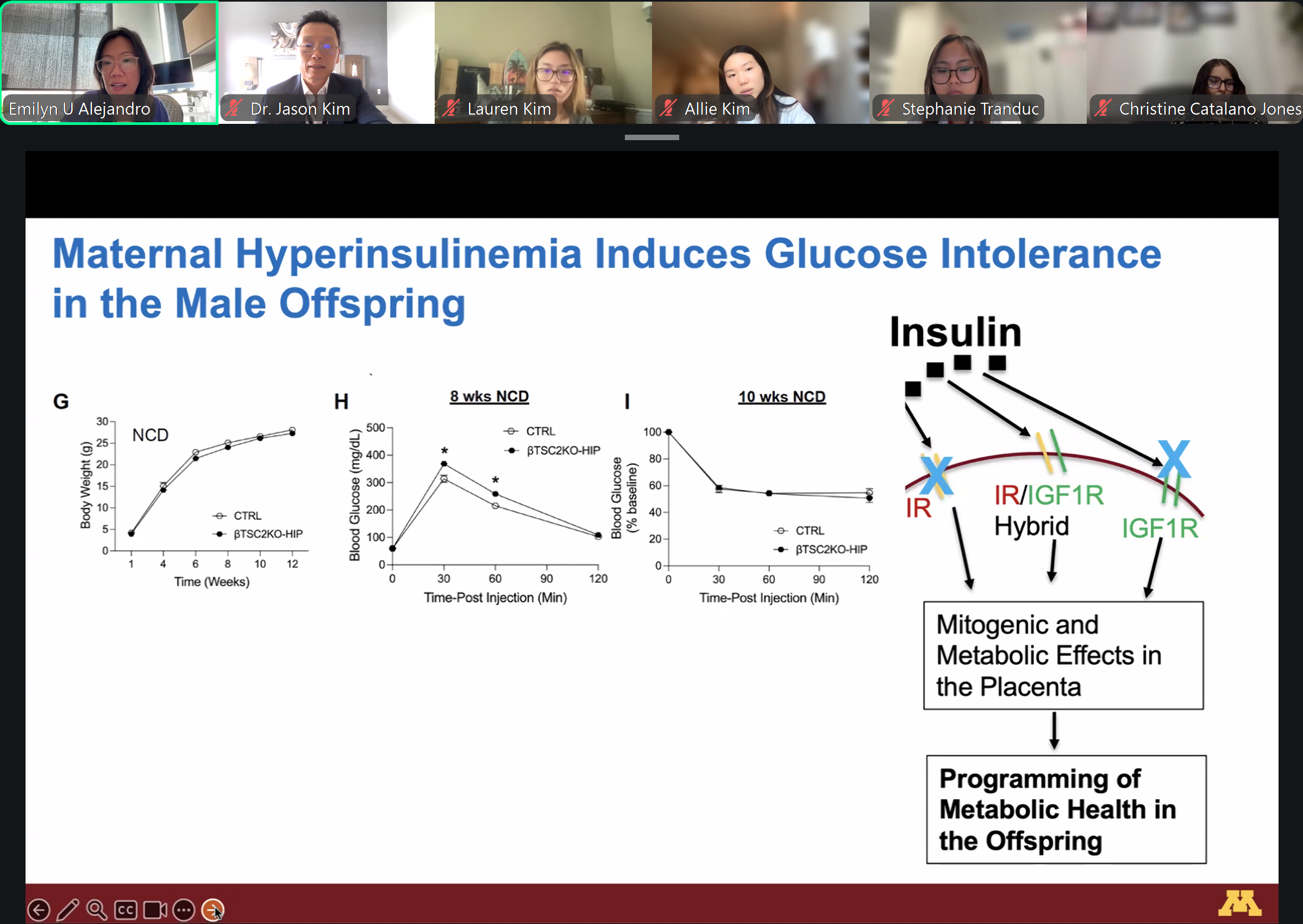
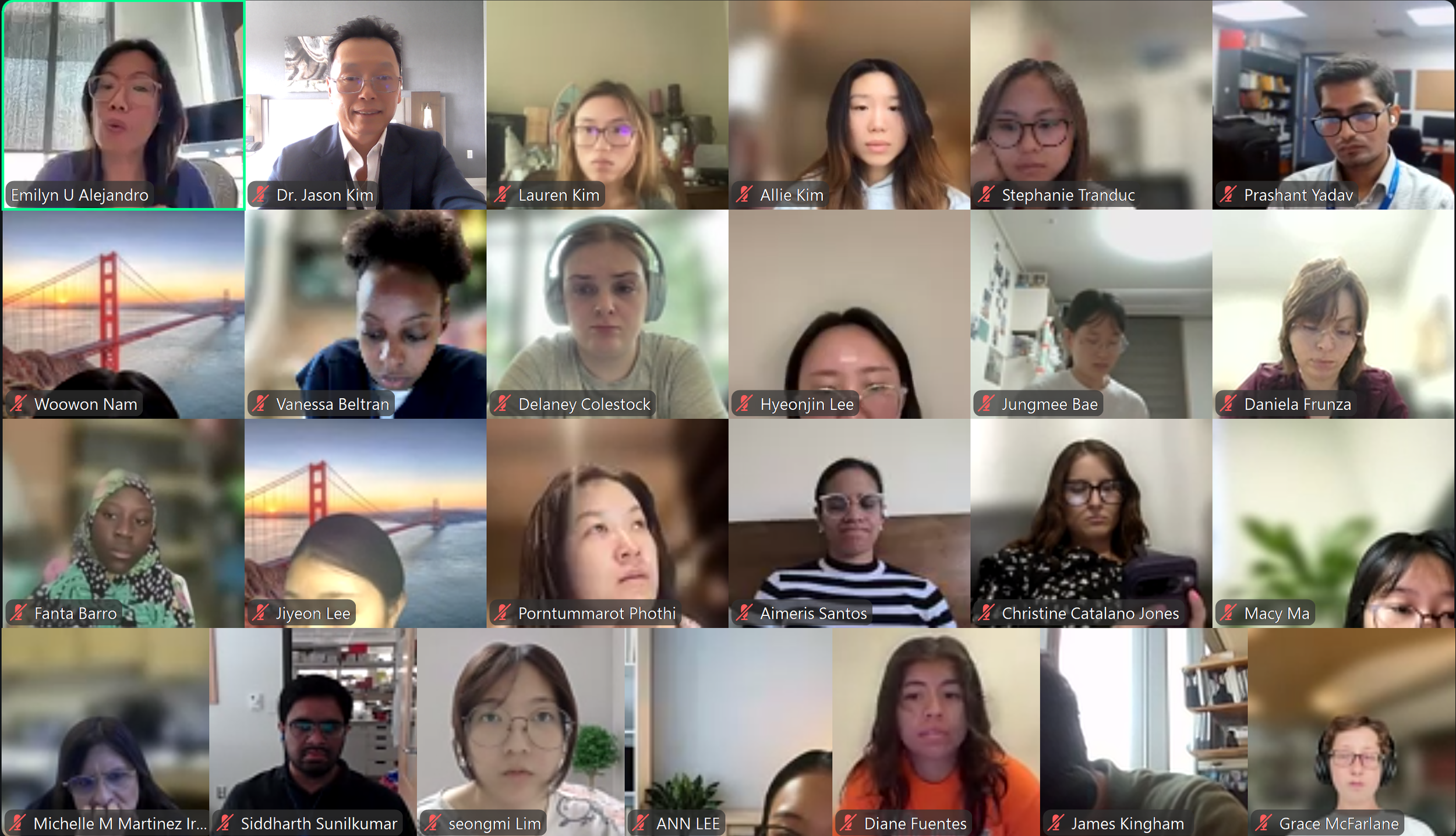
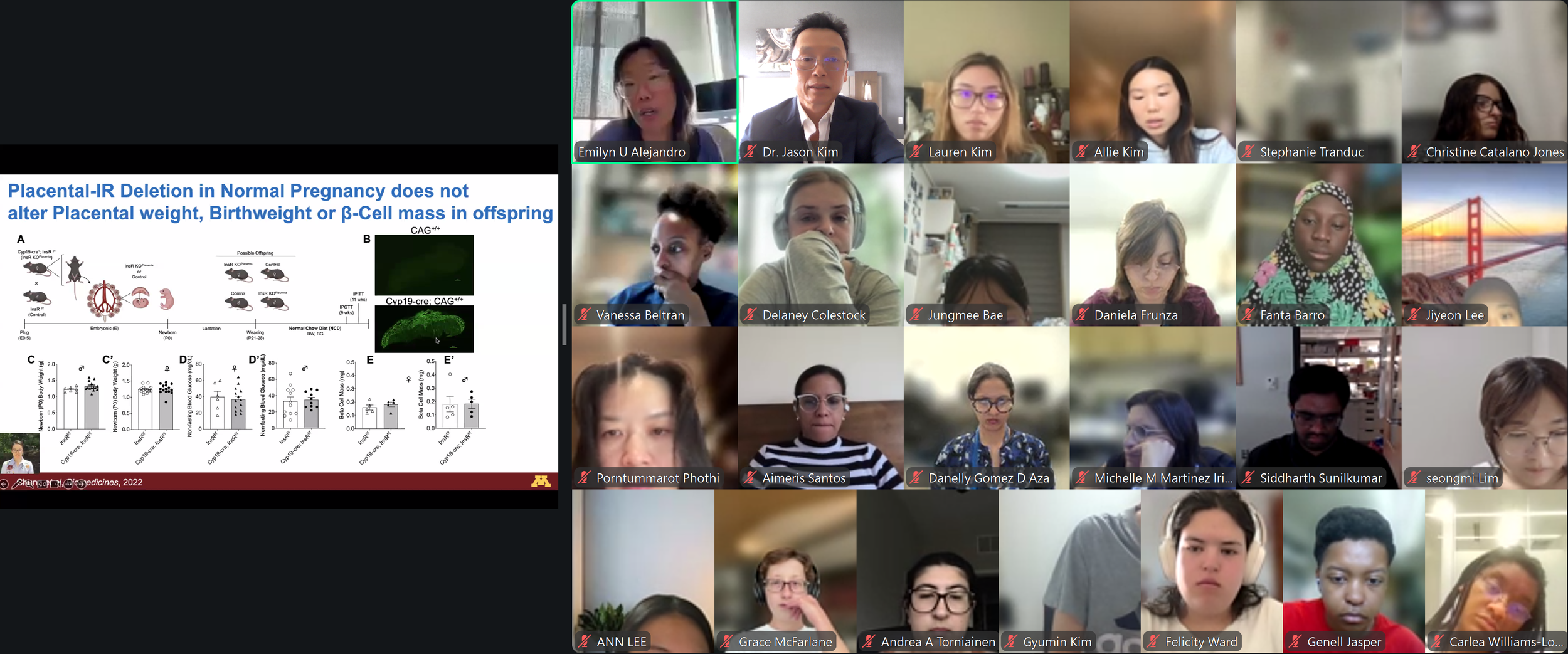
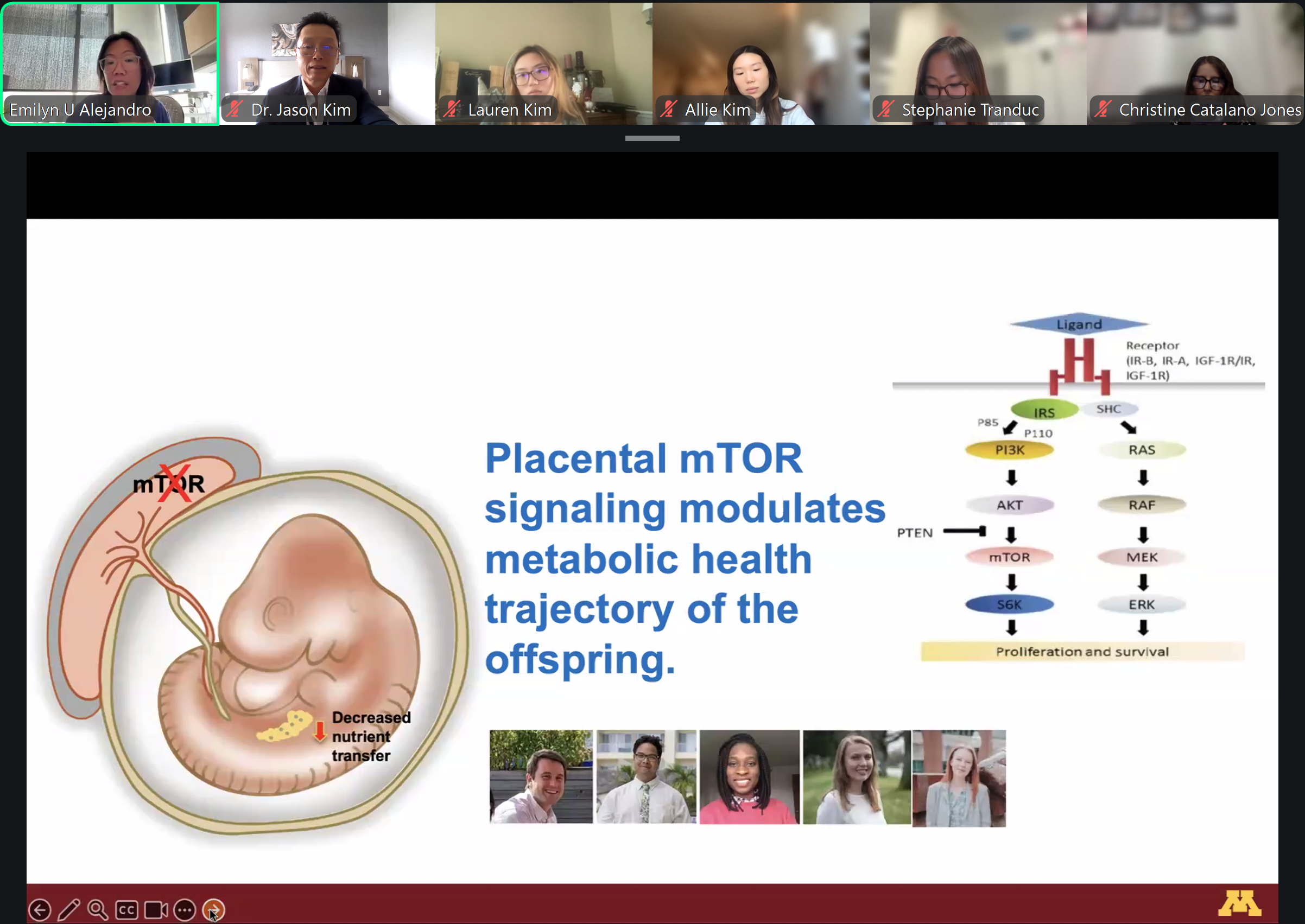

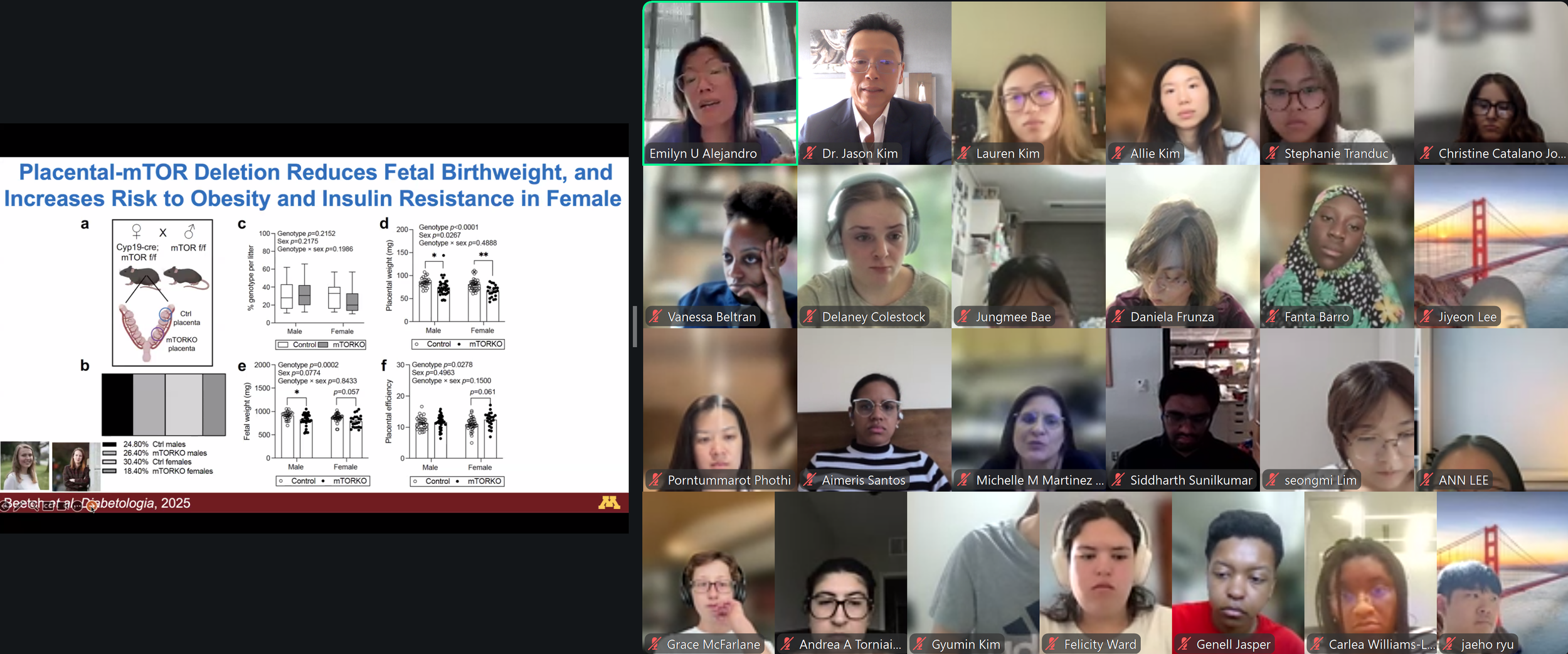
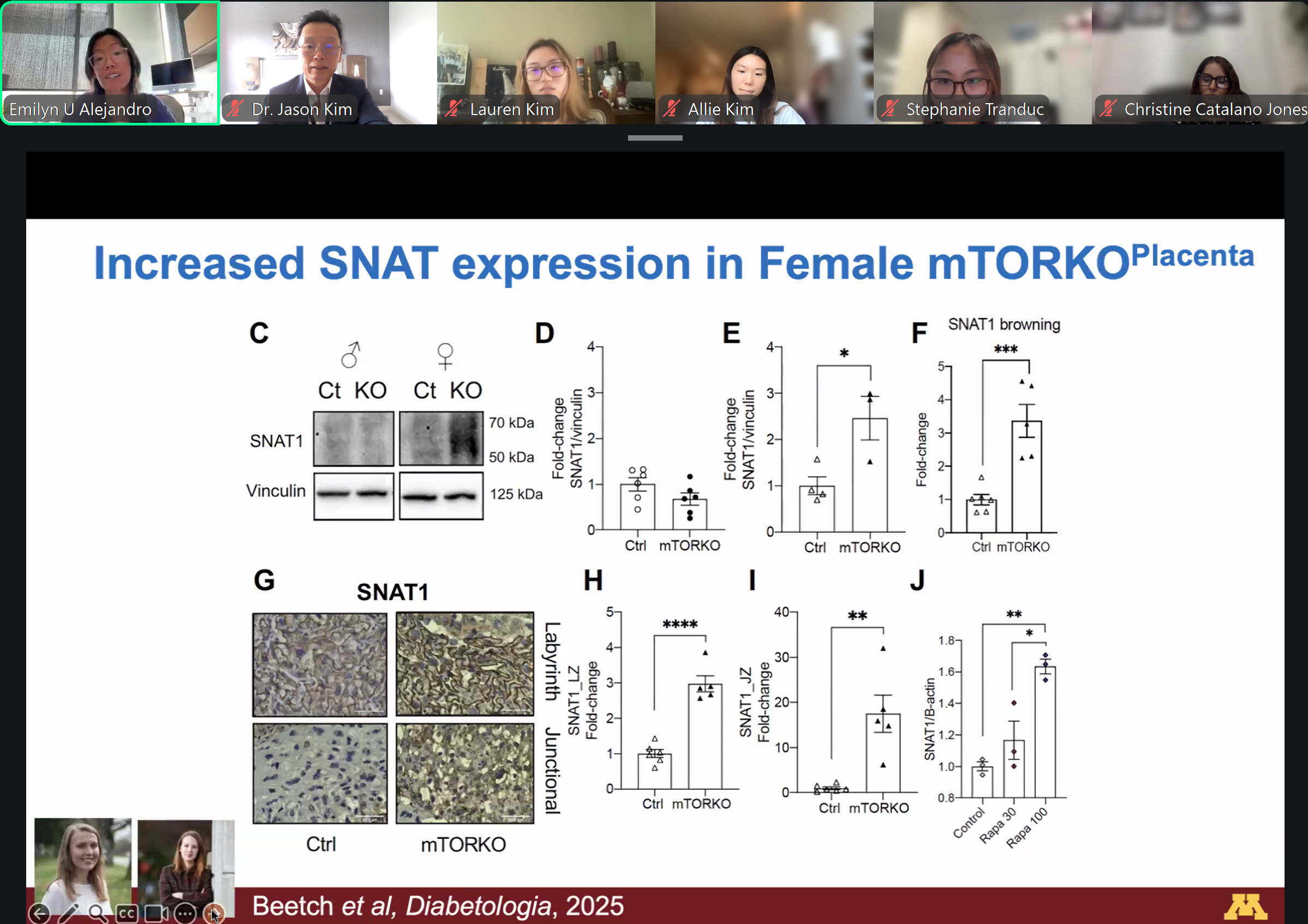
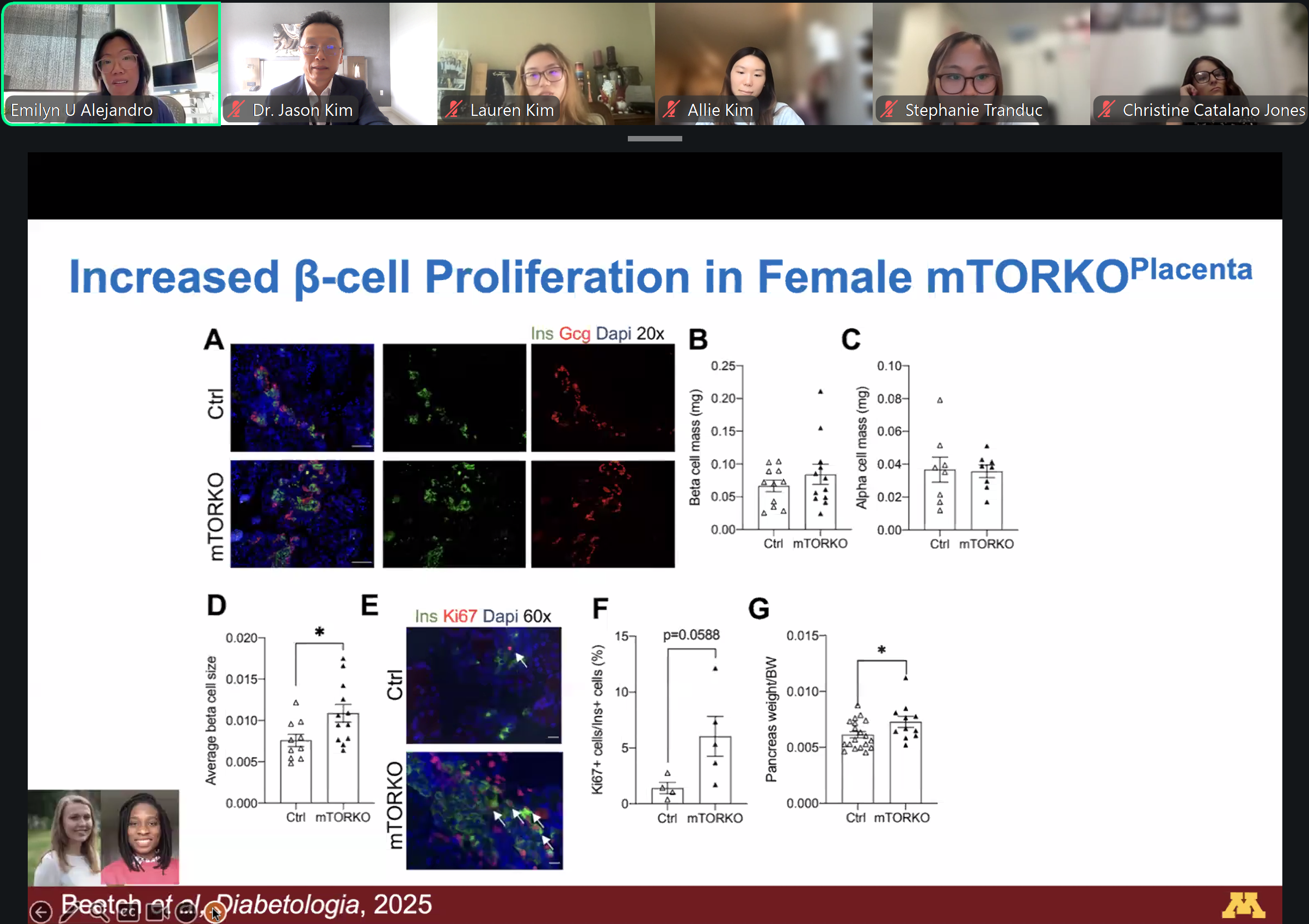
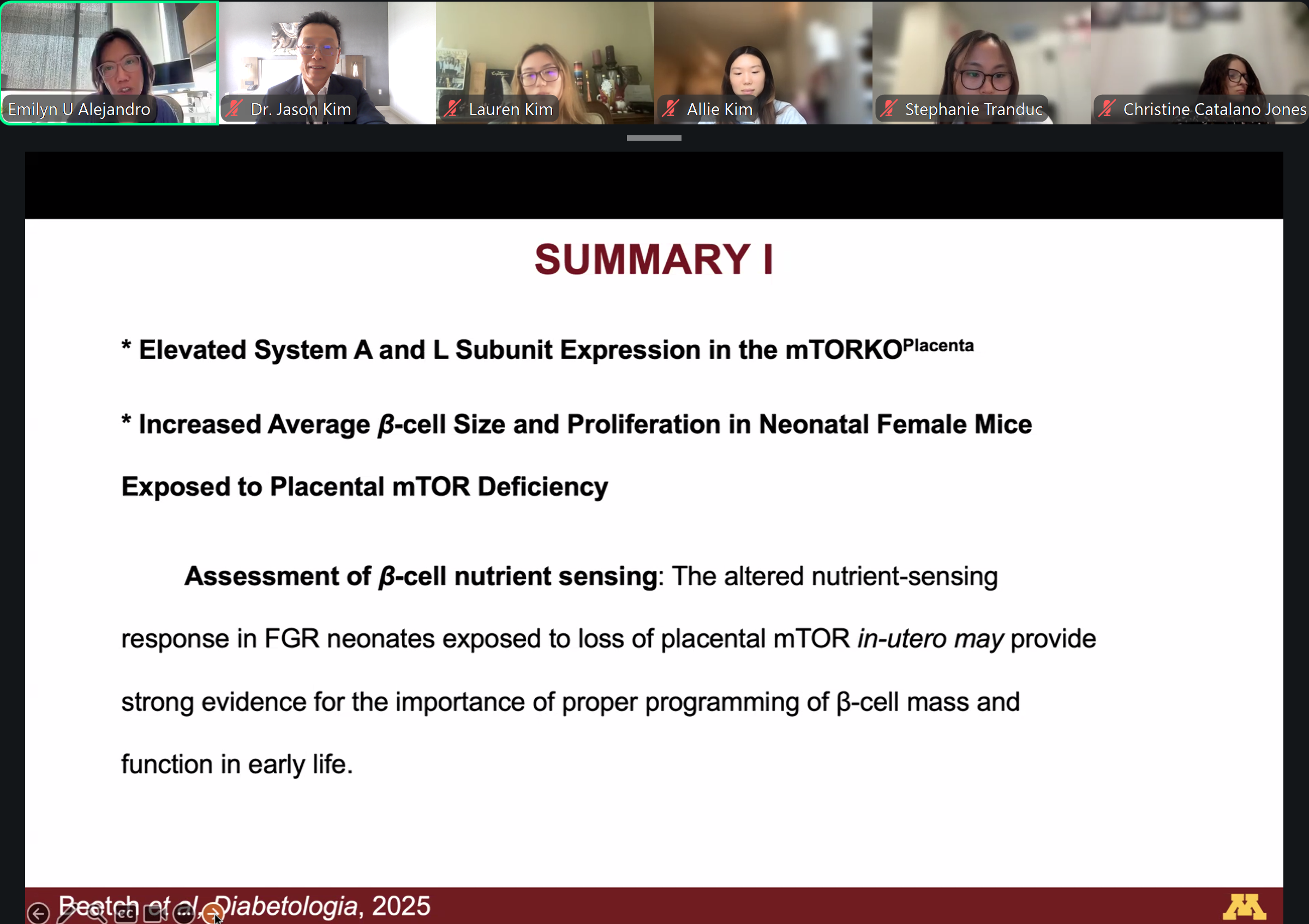
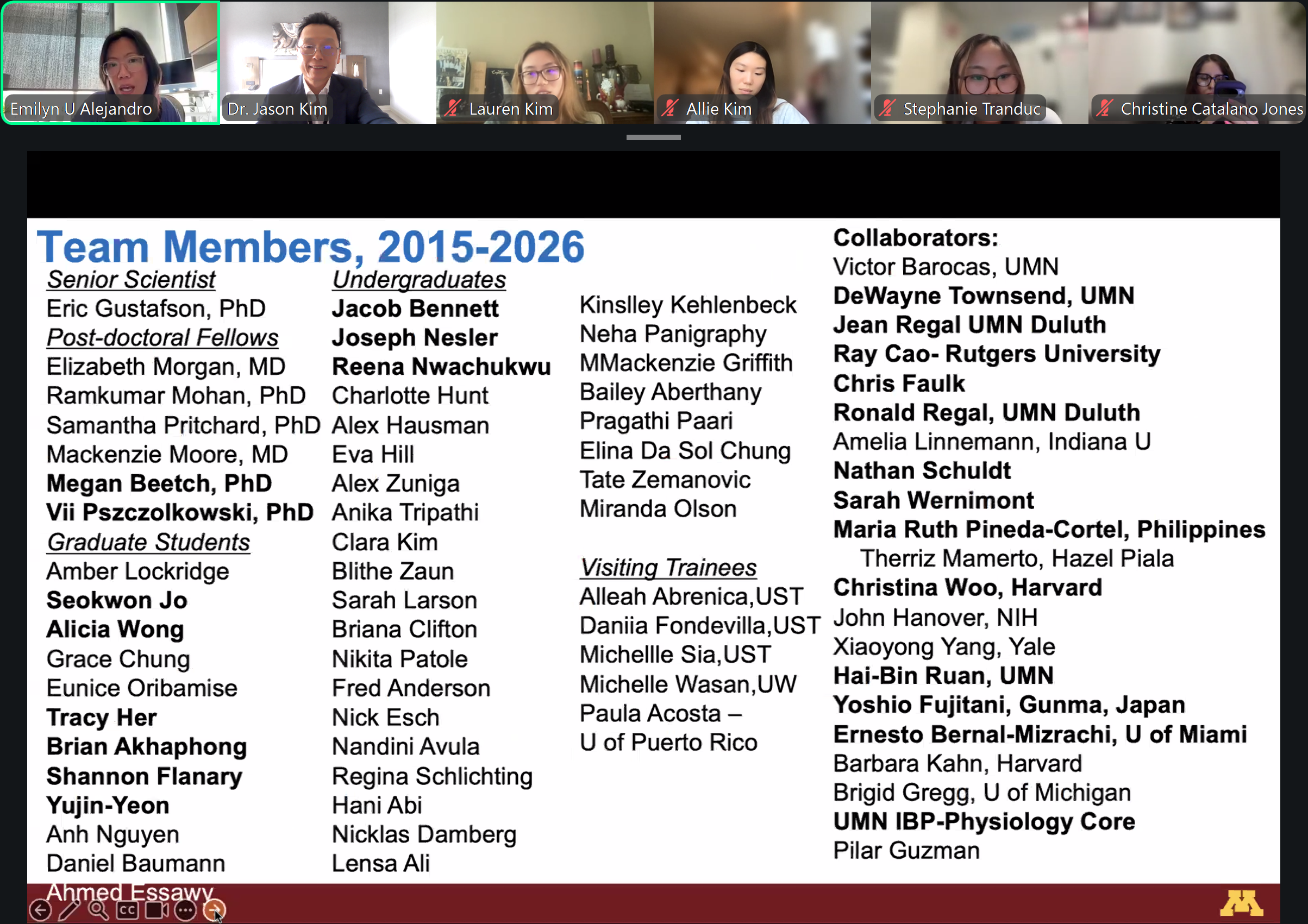
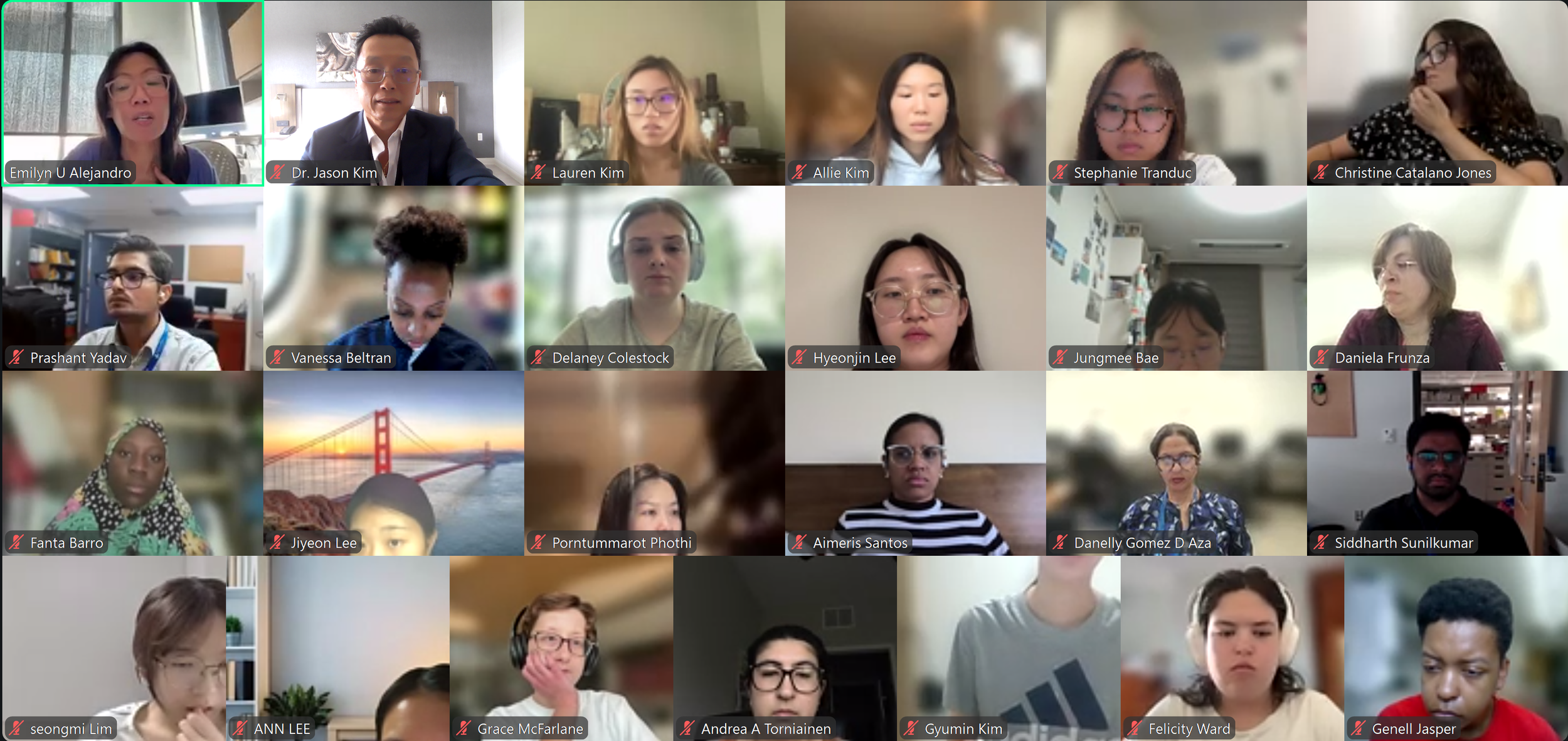
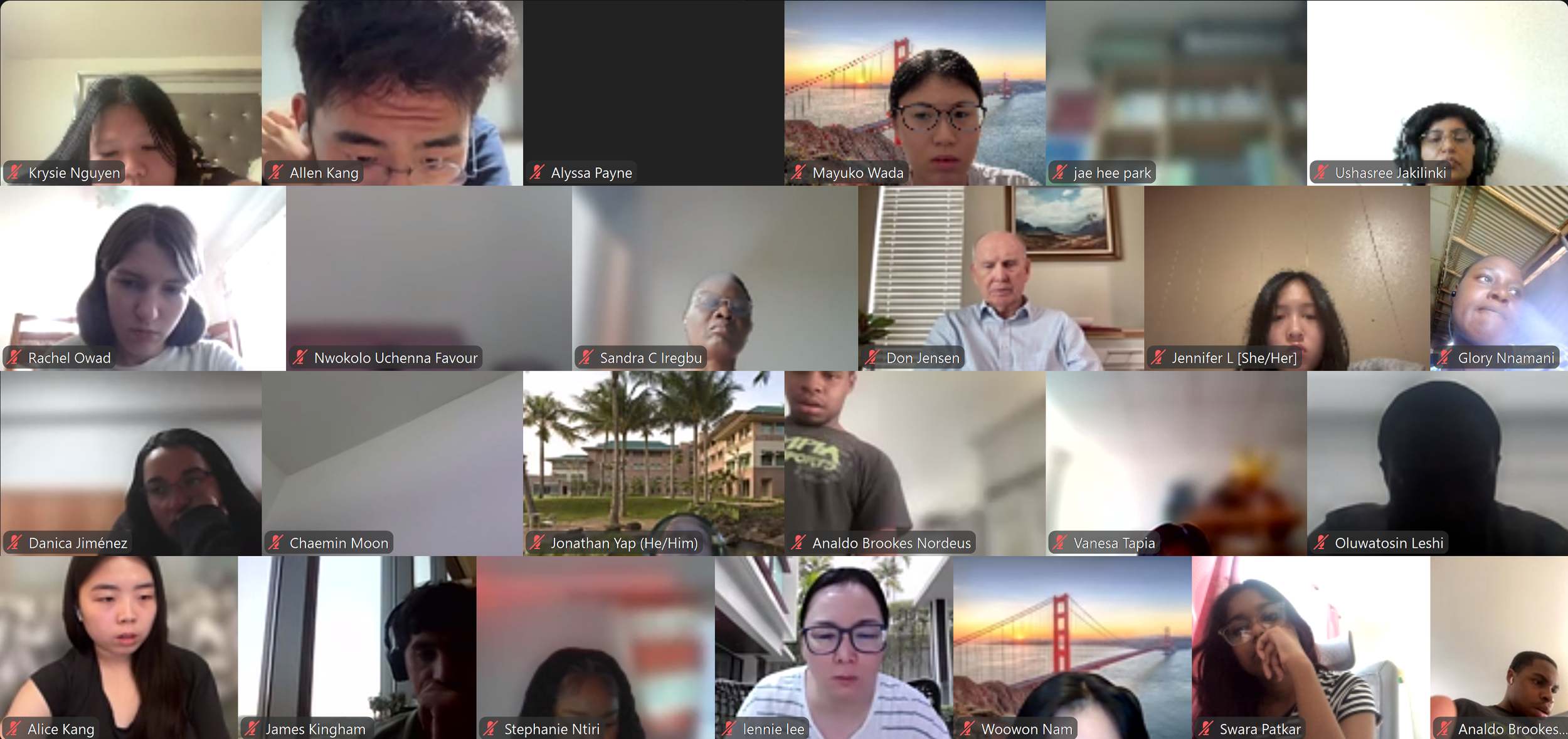
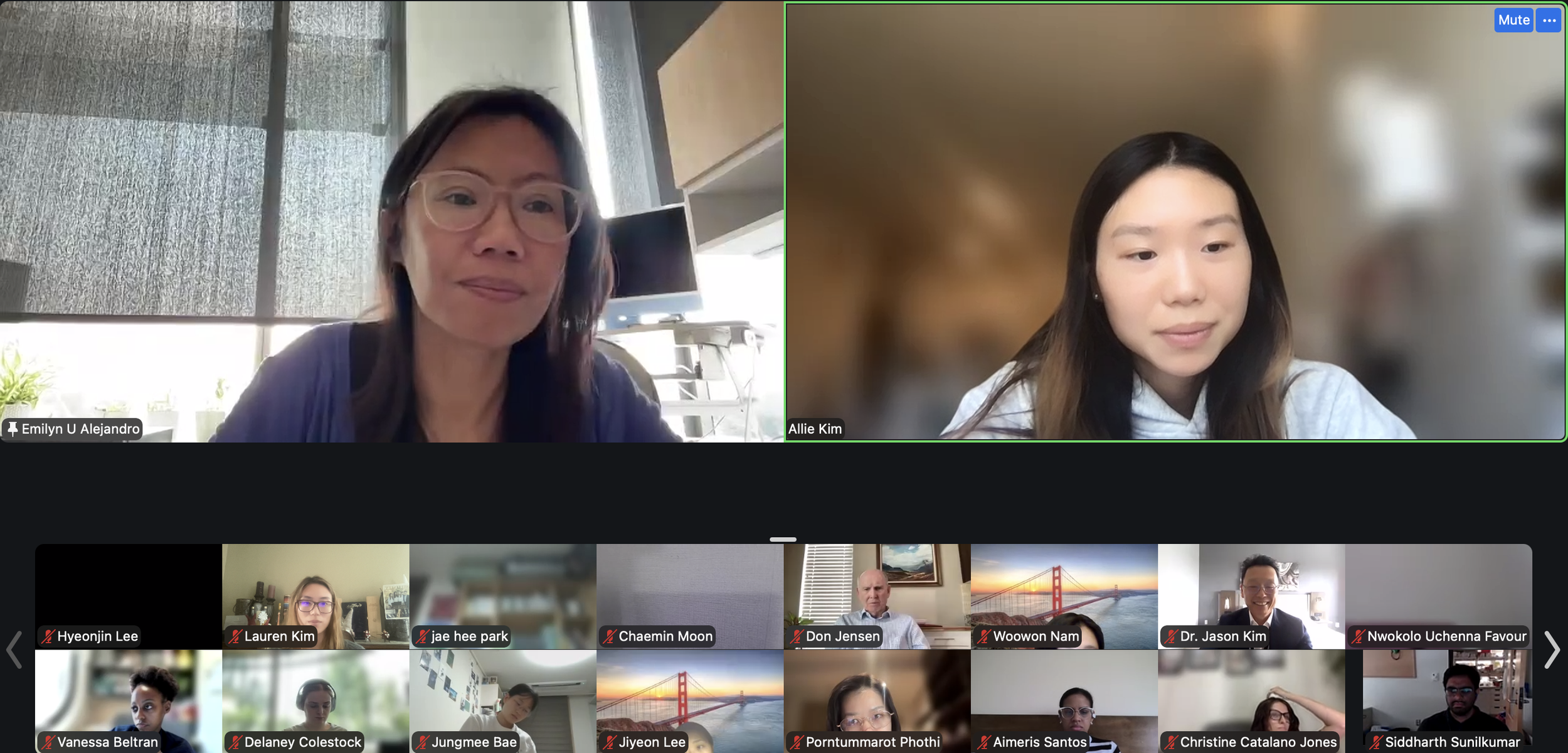
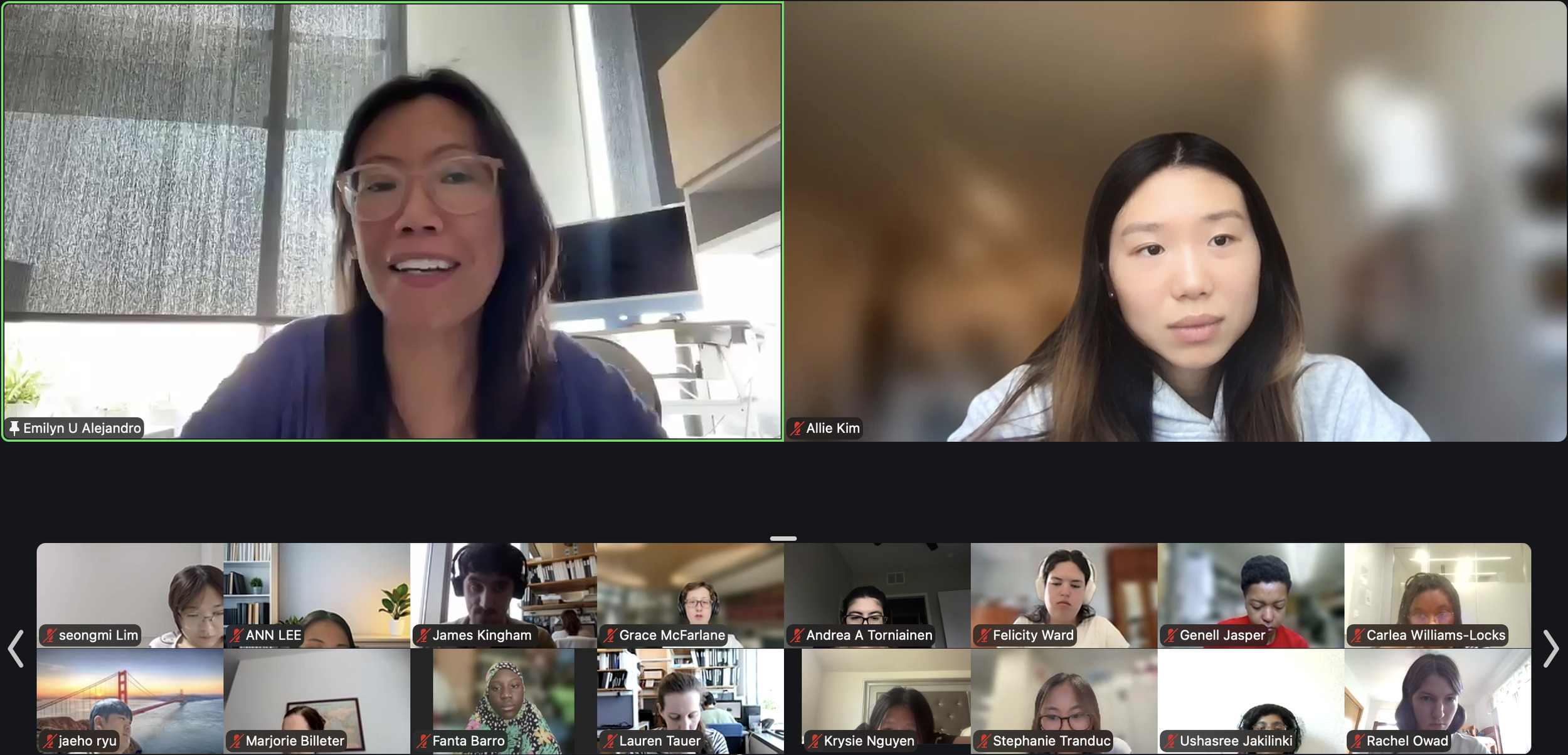
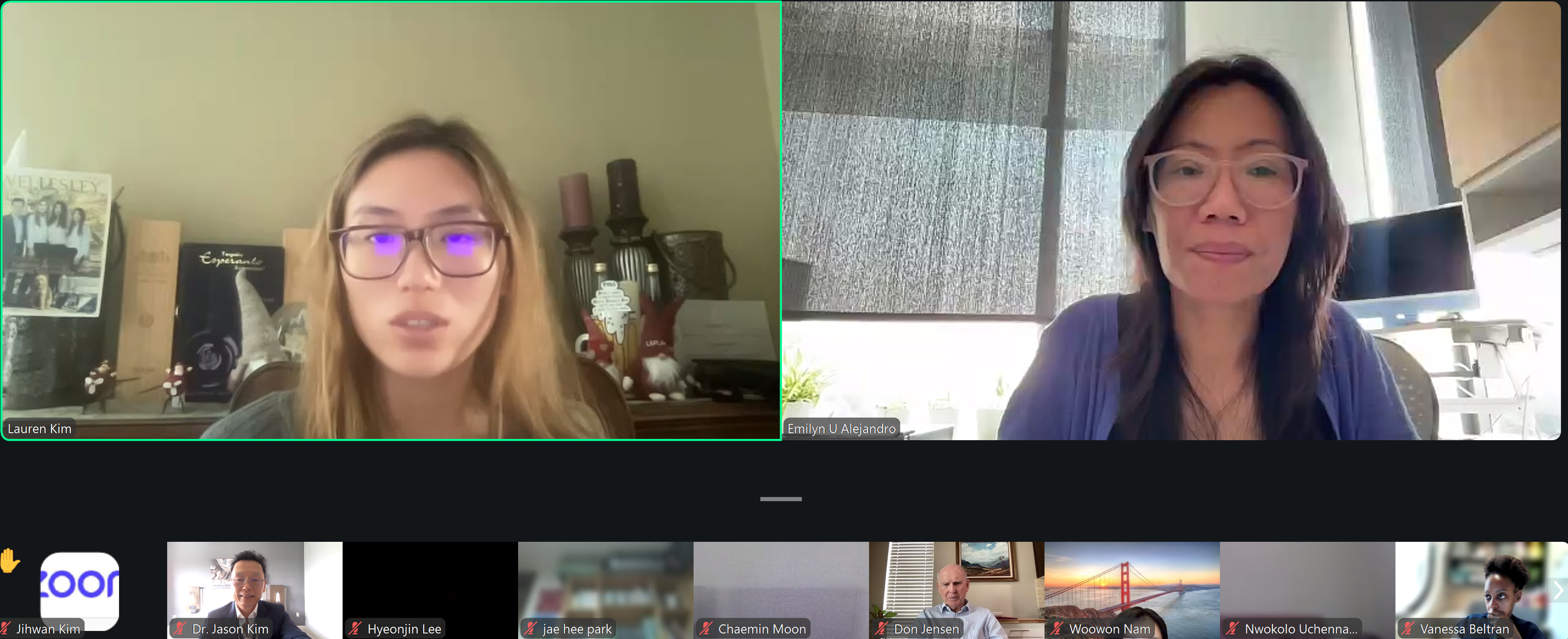
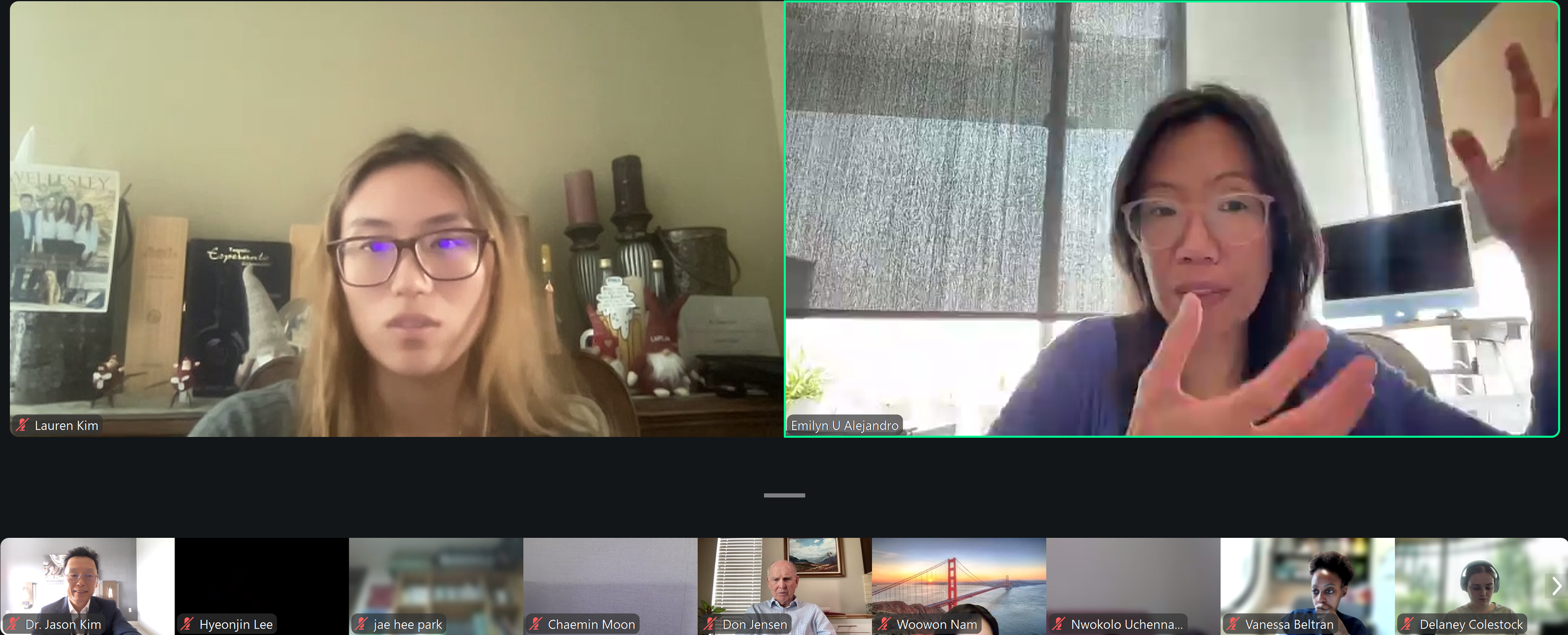


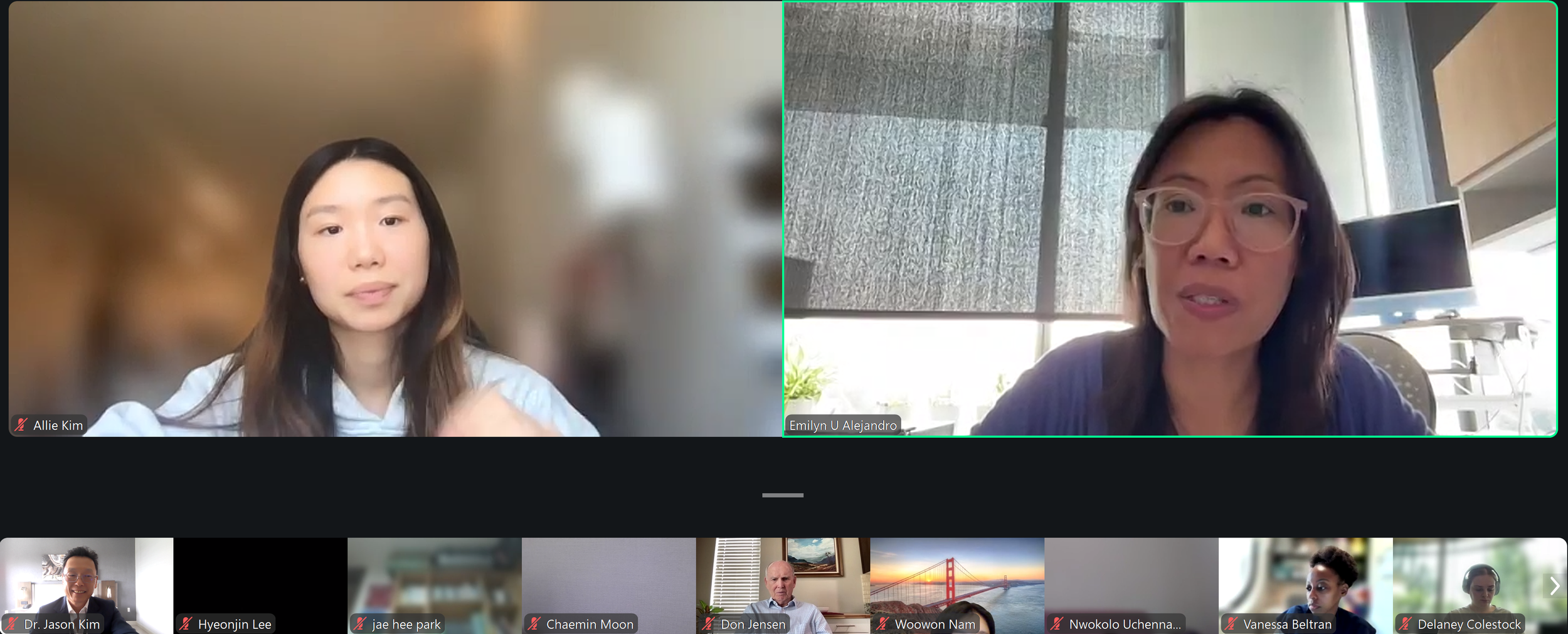
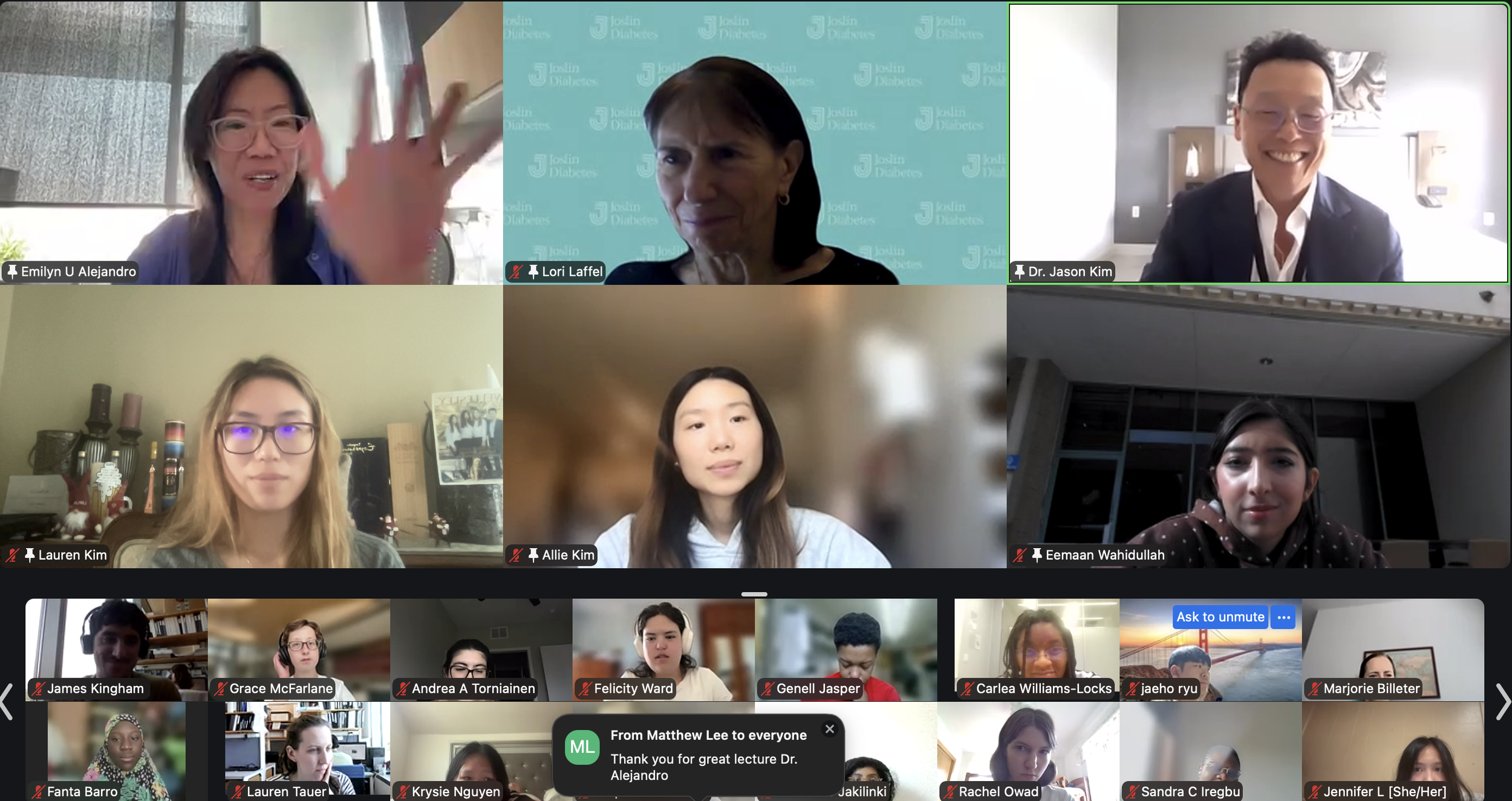
August 12, 2026
Session 10. Update on Advanced Diabetes Technologies Use in Type 1 and Type 2 Diabetes by Dr. Lori Laffel (Harvard Medical School)
The Main Session of today’s DVSC26 continued with Dr. Lori Laffel from Harvard Medical School. Dr. Laffel began by describing a glycemic target range (70~180 mg/dL) for people living with diabetes and the evolution of automated insulin delivery (AID) devices, hybrid closed-loop systems, and continuous glucose monitoring (CGM). Dr. Laffel discussed many options in today’s CGM devices and the complex algorithms that are integrated into continuous glucose monitoring. Dr. Laffel also discussed the spectrum of closed-loop systems that evolved from hybrid to fully closed-loop systems, better managing glycemic targets with minimal insulin boluses, to future integration of artificial pancreas partnered with cell or gene therapy. Automated insulin delivery continues to evolve with a hybrid closed-loop system that uses algorithms to direct the insulin pump to adjust insulin for hypoglycemia and hyperglycemia. Dr. Laffel explained sensor-augmented pump therapy using CGM data to affect insulin pump action with low glucose suspend function for protecting against hypoglycemic events. Dr. Laffel discussed a recent randomized, multicenter clinical trial involving people with type 1 diabetes showing that a closed-loop system with Control-IQ technology achieved a better time in glycemic target range than a sensor-augmented insulin pump. Dr. Laffel discussed another multicenter, prospective study involving pediatric and adult subjects with type 1 diabetes showing that the Omnipod 5 AID system achieved a better time in glycemic target range with improved HbA1c in both study groups. Dr. Laffel discussed a multicenter, randomized, crossover trial study in adolescents and young adults with type 1 diabetes showing a better time in glycemic target range with an advanced hybrid closed-loop system, which was largely due to the automated bolus insulin features. Dr. Laffel discussed the Omnipod 5 Type 2 Diabetes Pivotal Trial showing that the Omnipod 5 reduced HbA1c, particularly in those diabetic subjects with a higher baseline HbA1c prior to the study, and better time in glycemic target range. Dr. Laffel explained the major features of 3 different AID systems (Omnipod 5/6, Medtronic 780G, and Tandem Control-IQ) and other options in the market. Dr. Laffel described the next steps for fully closed-loop systems that reduce the burden of daily diabetes self-management and summarized the positive psychosocial outcomes with AID devices. Dr. Laffel ended with brief updates on the CONNECT RCT landmark study of CGM vs. BGM in adults with non-insulin-treated type 2 diabetes, and studies in New Zealand and the USA on fully automated AID systems in adults with type 2 diabetes, all indicating better diabetes treatment options using advanced diabetes technologies in the future.
-
![Session 2: Opening Session & Introduction to Diabetes by Lauren, Allison, and Dr. Jason Kim (University of Massachusetts Medical School)]()
August 12, 2026 (Session 10 - Part 1)
Session 10: “Update on Advanced Diabetes Technologies Use in Type 1 and Type 2 Diabetes” by Dr. Lori Laffel (Harvard Medical School)
Dr. Kim introduces Dr. Lori Laffel to our DVSC26 participants from all around the world.
-
![]()
August 12, 2026 (Session 10 - Part 2)
Session 10: “Update on Advanced Diabetes Technologies Use in Type 1 and Type 2 Diabetes” by Dr. Lori Laffel (Harvard Medical School)
Dr. Kim introduces Dr. Lori Laffel to our DVSC26 participants from all around the world.
-
![]()
August 12, 2026 (Session 10 - Part 3)
Session 10: “Update on Advanced Diabetes Technologies Use in Type 1 and Type 2 Diabetes” by Dr. Lori Laffel (Harvard Medical School)
Dr. Kim introduces Dr. Lori Laffel to our DVSC26 participants from all around the world.
-
![]()
August 12, 2026 (Session 10 - Part 4)
Session 10: “Update on Advanced Diabetes Technologies Use in Type 1 and Type 2 Diabetes” by Dr. Lori Laffel (Harvard Medical School)
This session reviews recent updates and approvals of advanced diabetes technologies for persons with diabetes across the lifespan. There is a review of automated insulin delivery systems, including system enhancements to further improve glycemic outcomes while reducing self-care burden. There is also a review of continuous glucose monitoring in adults with type 2 diabetes not treated with insulin and the safe use of diabetes technology in persons with type 1 diabetes and executive function challenges.
-
![]()
August 12, 2026 (Session 10 - Part 5)
Session 10. “Update on Advanced Diabetes Technologies Use in Type 1 and Type 2 Diabetes” by Dr. Lori Laffel (Professor of Pediatrics, Chief of Pediatric, Adolescent and Young Adult Section, Senior Investigator, Section Head on Clinical, Behavioral and Outcomes Research, Joslin Diabetes Center, Harvard Medical School)
-
![]()
August 12, 2026 (Session 10 - Part 6)
Session 10: “Update on Advanced Diabetes Technologies Use in Type 1 and Type 2 Diabetes” by Dr. Lori Laffel (Harvard Medical School)
Dr. Laffel welcomes our program participants from around the world.
-
![]()
August 12, 2026 (Session 10 - Part 7)
Session 10: “Update on Advanced Diabetes Technologies Use in Type 1 and Type 2 Diabetes” by Dr. Lori Laffel (Harvard Medical School)
Dr. Laffel began by describing a glycemic target range (70~180 mg/dL) for people living with diabetes and the evolution of automated insulin delivery (AID) devices, hybrid closed-loop systems, and continuous glucose monitoring (CGM). Dr. Laffel discussed many options in today’s CGM devices and the complex algorithms that are integrated into continuous glucose monitoring. Dr. Laffel also discussed the spectrum of closed-loop systems that evolved from hybrid to fully closed-loop systems, better managing glycemic targets with minimal insulin boluses, to future integration of artificial pancreas partnered with cell or gene therapy. Dr. Laffel explained sensor-augmented pump therapy using CGM data to affect insulin pump action with low glucose suspend function for protecting against hypoglycemic events. Automated insulin delivery continues to evolve with a hybrid closed-loop system that uses algorithms to direct the insulin pump to adjust insulin for hypoglycemia and hyperglycemia. Dr. Laffel discussed a recent randomized, multicenter clinical trial involving people with type 1 diabetes showing that a closed-loop system with Control-IQ technology achieved a better time in glycemic target range than a sensor-augmented insulin pump. Dr. Laffel discussed another multicenter, prospective study involving pediatric and adult subjects with type 1 diabetes showing that the Omnipod 5 AID system achieved a better time in glycemic target range with improved HbA1c in both study groups. Dr. Laffel discussed a multicenter, randomized, crossover trial study in adolescents and young adults with type 1 diabetes showing a better time in glycemic target range with an advanced hybrid closed-loop system, which was largely due to the automated bolus insulin features. Dr. Laffel discussed the Omnipod 5 Type 2 Diabetes Pivotal Trial showing that the Omnipod 5 reduced HbA1c, particularly in those diabetic subjects with a higher baseline HbA1c prior to the study, and better time in glycemic target range. Dr. Laffel explained the major features of 3 different AID systems (Omnipod 5/6, Medtronic 780G, and Tandem Control-IQ) and other options in the market. Dr. Laffel described the next steps for fully closed-loop systems that reduce the burden of daily diabetes self-management and summarized the positive psychosocial outcomes with AID devices. Dr. Laffel ended with brief updates on the CONNECT RCT landmark study of CGM vs. BGM in adults with non-insulin-treated type 2 diabetes, and studies in New Zealand and the USA on fully automated AID systems in adults with type 2 diabetes, all indicating better diabetes treatment options using advanced diabetes technologies in the future.
-
![]()
August 12, 2026 (Session 10 - Part 8)
Session 10: “Update on Advanced Diabetes Technologies Use in Type 1 and Type 2 Diabetes” by Dr. Lori Laffel (Harvard Medical School)
Dr. Laffel began by describing a glycemic target range (70~180 mg/dL) for people living with diabetes and the evolution of automated insulin delivery (AID) devices, hybrid closed-loop systems, and continuous glucose monitoring (CGM).
-
![]()
August 12, 2026 (Session 10 - Part 9)
Session 10: “Update on Advanced Diabetes Technologies Use in Type 1 and Type 2 Diabetes” by Dr. Lori Laffel (Harvard Medical School)
Dr. Laffel began by describing a glycemic target range (70~180 mg/dL) for people living with diabetes and the evolution of automated insulin delivery (AID) devices, hybrid closed-loop systems, and continuous glucose monitoring (CGM).
-
![]()
August 12, 2026 (Session 10 - Part 10)
Session 10: “Update on Advanced Diabetes Technologies Use in Type 1 and Type 2 Diabetes” by Dr. Lori Laffel (Harvard Medical School)
Dr. Laffel began by describing a glycemic target range (70~180 mg/dL) for people living with diabetes and the evolution of automated insulin delivery (AID) devices, hybrid closed-loop systems, and continuous glucose monitoring (CGM).
-
![]()
August 12, 2026 (Session 10 - Part 11)
Session 10: “Update on Advanced Diabetes Technologies Use in Type 1 and Type 2 Diabetes” by Dr. Lori Laffel (Harvard Medical School)
Dr. Laffel began by describing a glycemic target range (70~180 mg/dL) for people living with diabetes and the evolution of automated insulin delivery (AID) devices, hybrid closed-loop systems, and continuous glucose monitoring (CGM).
-
![]()
August 12, 2026 (Session 10 - Part 12)
Session 10: “Update on Advanced Diabetes Technologies Use in Type 1 and Type 2 Diabetes” by Dr. Lori Laffel (Harvard Medical School)
Dr. Laffel began by describing a glycemic target range (70~180 mg/dL) for people living with diabetes and the evolution of automated insulin delivery (AID) devices, hybrid closed-loop systems, and continuous glucose monitoring (CGM).
-
![]()
August 12, 2026 (Session 10 - Part 13)
Session 10: “Update on Advanced Diabetes Technologies Use in Type 1 and Type 2 Diabetes” by Dr. Lori Laffel (Harvard Medical School)
Dr. Laffel began by describing a glycemic target range (70~180 mg/dL) for people living with diabetes and the evolution of automated insulin delivery (AID) devices, hybrid closed-loop systems, and continuous glucose monitoring (CGM).
-
![]()
August 12, 2026 (Session 10 - Part 14)
Session 10: “Update on Advanced Diabetes Technologies Use in Type 1 and Type 2 Diabetes” by Dr. Lori Laffel (Harvard Medical School)
Dr. Laffel began by describing a glycemic target range (70~180 mg/dL) for people living with diabetes and the evolution of automated insulin delivery (AID) devices, hybrid closed-loop systems, and continuous glucose monitoring (CGM).
-
![]()
August 12, 2026 (Session 10 - Part 15)
Session 10: “Update on Advanced Diabetes Technologies Use in Type 1 and Type 2 Diabetes” by Dr. Lori Laffel (Harvard Medical School)
Dr. Laffel began by describing a glycemic target range (70~180 mg/dL) for people living with diabetes and the evolution of automated insulin delivery (AID) devices, hybrid closed-loop systems, and continuous glucose monitoring (CGM).
-
![]()
August 12, 2026 (Session 10 - Part 16)
Session 10: “Update on Advanced Diabetes Technologies Use in Type 1 and Type 2 Diabetes” by Dr. Lori Laffel (Harvard Medical School)
Dr. Laffel discussed many options in today’s CGM devices and the complex algorithms that are integrated into continuous glucose monitoring. Dr. Laffel also discussed the spectrum of closed-loop systems that evolved from hybrid to fully closed-loop systems, better managing glycemic targets with minimal insulin boluses, to future integration of artificial pancreas partnered with cell or gene therapy.
-
![]()
August 12, 2026 (Session 10 - Part 17)
Session 10: “Update on Advanced Diabetes Technologies Use in Type 1 and Type 2 Diabetes” by Dr. Lori Laffel (Harvard Medical School)
Dr. Laffel discussed many options in today’s CGM devices and the complex algorithms that are integrated into continuous glucose monitoring. Dr. Laffel also discussed the spectrum of closed-loop systems that evolved from hybrid to fully closed-loop systems, better managing glycemic targets with minimal insulin boluses, to future integration of artificial pancreas partnered with cell or gene therapy.
-
![]()
August 12, 2026 (Session 10 - Part 18)
Session 10: “Update on Advanced Diabetes Technologies Use in Type 1 and Type 2 Diabetes” by Dr. Lori Laffel (Harvard Medical School)
Dr. Laffel discussed many options in today’s CGM devices and the complex algorithms that are integrated into continuous glucose monitoring. Dr. Laffel also discussed the spectrum of closed-loop systems that evolved from hybrid to fully closed-loop systems, better managing glycemic targets with minimal insulin boluses, to future integration of artificial pancreas partnered with cell or gene therapy.
-
![]()
August 12, 2026 (Session 10 - Part 19)
Session 10: “Update on Advanced Diabetes Technologies Use in Type 1 and Type 2 Diabetes” by Dr. Lori Laffel (Harvard Medical School)
Dr. Laffel discussed many options in today’s CGM devices and the complex algorithms that are integrated into continuous glucose monitoring. Dr. Laffel also discussed the spectrum of closed-loop systems that evolved from hybrid to fully closed-loop systems, better managing glycemic targets with minimal insulin boluses, to future integration of artificial pancreas partnered with cell or gene therapy.
-
![]()
August 12, 2026 (Session 10 - Part 20)
Session 10: “Update on Advanced Diabetes Technologies Use in Type 1 and Type 2 Diabetes” by Dr. Lori Laffel (Harvard Medical School)
Dr. Laffel discussed many options in today’s CGM devices and the complex algorithms that are integrated into continuous glucose monitoring. Dr. Laffel also discussed the spectrum of closed-loop systems that evolved from hybrid to fully closed-loop systems, better managing glycemic targets with minimal insulin boluses, to future integration of artificial pancreas partnered with cell or gene therapy.
-
![]()
August 12, 2026 (Session 10 - Part 21)
Session 10: “Update on Advanced Diabetes Technologies Use in Type 1 and Type 2 Diabetes” by Dr. Lori Laffel (Harvard Medical School)
Dr. Laffel discussed many options in today’s CGM devices and the complex algorithms that are integrated into continuous glucose monitoring. Dr. Laffel also discussed the spectrum of closed-loop systems that evolved from hybrid to fully closed-loop systems, better managing glycemic targets with minimal insulin boluses, to future integration of artificial pancreas partnered with cell or gene therapy.
-
![]()
August 12, 2026 (Session 10 - Part 22)
Session 10: “Update on Advanced Diabetes Technologies Use in Type 1 and Type 2 Diabetes” by Dr. Lori Laffel (Harvard Medical School)
Dr. Laffel discussed many options in today’s CGM devices and the complex algorithms that are integrated into continuous glucose monitoring. Dr. Laffel also discussed the spectrum of closed-loop systems that evolved from hybrid to fully closed-loop systems, better managing glycemic targets with minimal insulin boluses, to future integration of artificial pancreas partnered with cell or gene therapy.
-
![]()
August 12, 2026 (Session 10 - Part 23)
Session 10: “Update on Advanced Diabetes Technologies Use in Type 1 and Type 2 Diabetes” by Dr. Lori Laffel (Harvard Medical School)
Dr. Laffel discussed many options in today’s CGM devices and the complex algorithms that are integrated into continuous glucose monitoring. Dr. Laffel also discussed the spectrum of closed-loop systems that evolved from hybrid to fully closed-loop systems, better managing glycemic targets with minimal insulin boluses, to future integration of artificial pancreas partnered with cell or gene therapy.
-
![]()
August 12, 2026 (Session 10 - Part 24)
Session 10: “Update on Advanced Diabetes Technologies Use in Type 1 and Type 2 Diabetes” by Dr. Lori Laffel (Harvard Medical School)
Dr. Laffel explained sensor-augmented pump therapy using CGM data to affect insulin pump action with low glucose suspend function for protecting against hypoglycemic events. Automated insulin delivery continues to evolve with a hybrid closed-loop system that uses algorithms to direct the insulin pump to adjust insulin for hypoglycemia and hyperglycemia.
-
![]()
August 12, 2026 (Session 10 - Part 25)
Session 10: “Update on Advanced Diabetes Technologies Use in Type 1 and Type 2 Diabetes” by Dr. Lori Laffel (Harvard Medical School)
Dr. Laffel explained sensor-augmented pump therapy using CGM data to affect insulin pump action with low glucose suspend function for protecting against hypoglycemic events. Automated insulin delivery continues to evolve with a hybrid closed-loop system that uses algorithms to direct the insulin pump to adjust insulin for hypoglycemia and hyperglycemia.
-
![]()
August 12, 2026 (Session 10 - Part 26)
Session 10: “Update on Advanced Diabetes Technologies Use in Type 1 and Type 2 Diabetes” by Dr. Lori Laffel (Harvard Medical School)
Dr. Laffel explained sensor-augmented pump therapy using CGM data to affect insulin pump action with low glucose suspend function for protecting against hypoglycemic events. Automated insulin delivery continues to evolve with a hybrid closed-loop system that uses algorithms to direct the insulin pump to adjust insulin for hypoglycemia and hyperglycemia.
-
![]()
August 12, 2026 (Session 10 - Part 27)
Session 10: “Update on Advanced Diabetes Technologies Use in Type 1 and Type 2 Diabetes” by Dr. Lori Laffel (Harvard Medical School)
Dr. Laffel explained sensor-augmented pump therapy using CGM data to affect insulin pump action with low glucose suspend function for protecting against hypoglycemic events. Automated insulin delivery continues to evolve with a hybrid closed-loop system that uses algorithms to direct the insulin pump to adjust insulin for hypoglycemia and hyperglycemia.
-
![]()
August 12, 2026 (Session 10 - Part 28)
Session 10: “Update on Advanced Diabetes Technologies Use in Type 1 and Type 2 Diabetes” by Dr. Lori Laffel (Harvard Medical School)
Dr. Laffel discussed a recent randomized, multicenter clinical trial involving people with type 1 diabetes showing that a closed-loop system with Control-IQ technology achieved a better time in glycemic target range than a sensor-augmented insulin pump.
-
![]()
August 12, 2026 (Session 10 - Part 29)
Session 10: “Update on Advanced Diabetes Technologies Use in Type 1 and Type 2 Diabetes” by Dr. Lori Laffel (Harvard Medical School)
Dr. Laffel discussed a recent randomized, multicenter clinical trial involving people with type 1 diabetes showing that a closed-loop system with Control-IQ technology achieved a better time in glycemic target range than a sensor-augmented insulin pump.
-
![]()
August 12, 2026 (Session 10 - Part 30)
Session 10: “Update on Advanced Diabetes Technologies Use in Type 1 and Type 2 Diabetes” by Dr. Lori Laffel (Harvard Medical School)
Dr. Laffel discussed a recent randomized, multicenter clinical trial involving people with type 1 diabetes showing that a closed-loop system with Control-IQ technology achieved a better time in glycemic target range than a sensor-augmented insulin pump.
-
![]()
August 12, 2026 (Session 10 - Part 31)
Session 10: “Update on Advanced Diabetes Technologies Use in Type 1 and Type 2 Diabetes” by Dr. Lori Laffel (Harvard Medical School)
Dr. Laffel discussed a recent randomized, multicenter clinical trial involving people with type 1 diabetes showing that a closed-loop system with Control-IQ technology achieved a better time in glycemic target range than a sensor-augmented insulin pump.
-
![]()
August 12, 2026 (Session 10 - Part 32)
Session 10: “Update on Advanced Diabetes Technologies Use in Type 1 and Type 2 Diabetes” by Dr. Lori Laffel (Harvard Medical School)
Dr. Laffel discussed a recent randomized, multicenter clinical trial involving people with type 1 diabetes showing that a closed-loop system with Control-IQ technology achieved a better time in glycemic target range than a sensor-augmented insulin pump.
-
![]()
August 12, 2026 (Session 10 - Part 33)
Session 10: “Update on Advanced Diabetes Technologies Use in Type 1 and Type 2 Diabetes” by Dr. Lori Laffel (Harvard Medical School)
Dr. Laffel discussed a recent randomized, multicenter clinical trial involving people with type 1 diabetes showing that a closed-loop system with Control-IQ technology achieved a better time in glycemic target range than a sensor-augmented insulin pump.
-
![]()
August 12, 2026 (Session 10 - Part 34)
Session 10: “Update on Advanced Diabetes Technologies Use in Type 1 and Type 2 Diabetes” by Dr. Lori Laffel (Harvard Medical School)
Dr. Laffel discussed a recent randomized, multicenter clinical trial involving people with type 1 diabetes showing that a closed-loop system with Control-IQ technology achieved a better time in glycemic target range than a sensor-augmented insulin pump.
-
![]()
August 12, 2026 (Session 10 - Part 35)
Session 10: “Update on Advanced Diabetes Technologies Use in Type 1 and Type 2 Diabetes” by Dr. Lori Laffel (Harvard Medical School)
Dr. Laffel discussed a recent randomized, multicenter clinical trial involving people with type 1 diabetes showing that a closed-loop system with Control-IQ technology achieved a better time in glycemic target range than a sensor-augmented insulin pump.
-
![]()
August 12, 2026 (Session 10 - Part 36)
Session 10: “Update on Advanced Diabetes Technologies Use in Type 1 and Type 2 Diabetes” by Dr. Lori Laffel (Harvard Medical School)
Dr. Laffel discussed another multicenter, prospective study involving pediatric and adult subjects with type 1 diabetes showing that the Omnipod 5 AID system achieved a better time in glycemic target range with improved HbA1c in both study groups.
-
![]()
August 12, 2026 (Session 10 - Part 37)
Session 10: “Update on Advanced Diabetes Technologies Use in Type 1 and Type 2 Diabetes” by Dr. Lori Laffel (Harvard Medical School)
Dr. Laffel discussed another multicenter, prospective study involving pediatric and adult subjects with type 1 diabetes showing that the Omnipod 5 AID system achieved a better time in glycemic target range with improved HbA1c in both study groups.
-
![]()
August 12, 2026 (Session 10 - Part 38)
Session 10: “Update on Advanced Diabetes Technologies Use in Type 1 and Type 2 Diabetes” by Dr. Lori Laffel (Harvard Medical School)
Dr. Laffel discussed another multicenter, prospective study involving pediatric and adult subjects with type 1 diabetes showing that the Omnipod 5 AID system achieved a better time in glycemic target range with improved HbA1c in both study groups.
-
![]()
August 12, 2026 (Session 10 - Part 39)
Session 10: “Update on Advanced Diabetes Technologies Use in Type 1 and Type 2 Diabetes” by Dr. Lori Laffel (Harvard Medical School)
Dr. Laffel discussed another multicenter, prospective study involving pediatric and adult subjects with type 1 diabetes showing that the Omnipod 5 AID system achieved a better time in glycemic target range with improved HbA1c in both study groups.
-
![]()
August 12, 2026 (Session 10 - Part 40)
Session 10: “Update on Advanced Diabetes Technologies Use in Type 1 and Type 2 Diabetes” by Dr. Lori Laffel (Harvard Medical School)
Dr. Laffel discussed another multicenter, prospective study involving pediatric and adult subjects with type 1 diabetes showing that the Omnipod 5 AID system achieved a better time in glycemic target range with improved HbA1c in both study groups.
-
![]()
August 12, 2026 (Session 10 - Part 41)
Session 10: “Update on Advanced Diabetes Technologies Use in Type 1 and Type 2 Diabetes” by Dr. Lori Laffel (Harvard Medical School)
Dr. Laffel discussed another multicenter, prospective study involving pediatric and adult subjects with type 1 diabetes showing that the Omnipod 5 AID system achieved a better time in glycemic target range with improved HbA1c in both study groups.
-
![]()
August 12, 2026 (Session 10 - Part 42)
Session 10: “Update on Advanced Diabetes Technologies Use in Type 1 and Type 2 Diabetes” by Dr. Lori Laffel (Harvard Medical School)
Dr. Laffel discussed a multicenter, randomized, crossover trial study in adolescents and young adults with type 1 diabetes showing a better time in glycemic target range with an advanced hybrid closed-loop system, which was largely due to the automated bolus insulin features.
-
![]()
August 12, 2026 (Session 10 - Part 43)
Session 10: “Update on Advanced Diabetes Technologies Use in Type 1 and Type 2 Diabetes” by Dr. Lori Laffel (Harvard Medical School)
Dr. Laffel discussed a multicenter, randomized, crossover trial study in adolescents and young adults with type 1 diabetes showing a better time in glycemic target range with an advanced hybrid closed-loop system, which was largely due to the automated bolus insulin features.
-
![]()
August 12, 2026 (Session 10 - Part 44)
Session 10: “Update on Advanced Diabetes Technologies Use in Type 1 and Type 2 Diabetes” by Dr. Lori Laffel (Harvard Medical School)
Dr. Laffel discussed the Omnipod 5 Type 2 Diabetes Pivotal Trial showing that the Omnipod 5 reduced HbA1c, particularly in those diabetic subjects with a higher baseline HbA1c prior to the study, and better time in glycemic target range.
-
![]()
August 12, 2026 (Session 10 - Part 45)
Session 10: “Update on Advanced Diabetes Technologies Use in Type 1 and Type 2 Diabetes” by Dr. Lori Laffel (Harvard Medical School)
Dr. Laffel discussed the Omnipod 5 Type 2 Diabetes Pivotal Trial showing that the Omnipod 5 reduced HbA1c, particularly in those diabetic subjects with a higher baseline HbA1c prior to the study, and better time in glycemic target range.
-
![]()
August 12, 2026 (Session 10 - Part 46)
Session 10: “Update on Advanced Diabetes Technologies Use in Type 1 and Type 2 Diabetes” by Dr. Lori Laffel (Harvard Medical School)
Dr. Laffel discussed the Omnipod 5 Type 2 Diabetes Pivotal Trial showing that the Omnipod 5 reduced HbA1c, particularly in those diabetic subjects with a higher baseline HbA1c prior to the study, and better time in glycemic target range.
-
![]()
August 12, 2026 (Session 10 - Part 47)
Session 10: “Update on Advanced Diabetes Technologies Use in Type 1 and Type 2 Diabetes” by Dr. Lori Laffel (Harvard Medical School)
Dr. Laffel discussed the Omnipod 5 Type 2 Diabetes Pivotal Trial showing that the Omnipod 5 reduced HbA1c, particularly in those diabetic subjects with a higher baseline HbA1c prior to the study, and better time in glycemic target range.
-
![]()
August 12, 2026 (Session 10 - Part 48)
Session 10: “Update on Advanced Diabetes Technologies Use in Type 1 and Type 2 Diabetes” by Dr. Lori Laffel (Harvard Medical School)
Dr. Laffel explained the major features of 3 different AID systems (Omnipod 5/6, Medtronic 780G, and Tandem Control-IQ) and other options in the market.
-
![]()
August 12, 2026 (Session 10 - Part 49)
Session 10: “Update on Advanced Diabetes Technologies Use in Type 1 and Type 2 Diabetes” by Dr. Lori Laffel (Harvard Medical School)
Dr. Laffel explained the major features of 3 different AID systems (Omnipod 5/6, Medtronic 780G, and Tandem Control-IQ) and other options in the market.
-
![]()
August 12, 2026 (Session 10 - Part 50)
Session 10: “Update on Advanced Diabetes Technologies Use in Type 1 and Type 2 Diabetes” by Dr. Lori Laffel (Harvard Medical School)
Dr. Laffel explained the major features of 3 different AID systems (Omnipod 5/6, Medtronic 780G, and Tandem Control-IQ) and other options in the market.
-
![]()
August 12, 2026 (Session 10 - Part 51)
Session 10: “Update on Advanced Diabetes Technologies Use in Type 1 and Type 2 Diabetes” by Dr. Lori Laffel (Harvard Medical School)
Dr. Laffel explained the major features of 3 different AID systems (Omnipod 5/6, Medtronic 780G, and Tandem Control-IQ) and other options in the market.
-
![]()
August 12, 2026 (Session 10 - Part 52)
Session 10: “Update on Advanced Diabetes Technologies Use in Type 1 and Type 2 Diabetes” by Dr. Lori Laffel (Harvard Medical School)
Dr. Laffel explained the major features of 3 different AID systems (Omnipod 5/6, Medtronic 780G, and Tandem Control-IQ) and other options in the market.
-
![]()
August 12, 2026 (Session 10 - Part 53)
Session 10: “Update on Advanced Diabetes Technologies Use in Type 1 and Type 2 Diabetes” by Dr. Lori Laffel (Harvard Medical School)
Dr. Laffel explained the major features of 3 different AID systems (Omnipod 5/6, Medtronic 780G, and Tandem Control-IQ) and other options in the market.
-
![]()
August 12, 2026 (Session 10 - Part 54)
Session 10: “Update on Advanced Diabetes Technologies Use in Type 1 and Type 2 Diabetes” by Dr. Lori Laffel (Harvard Medical School)
Dr. Laffel described the next steps for fully closed-loop systems that reduce the burden of daily diabetes self-management and summarized the positive psychosocial outcomes with AID devices.
-
![]()
August 12, 2026 (Session 10 - Part 55)
Description goes here -
![]()
August 12, 2026 (Session 10 - Part 56)
Session 10: “Update on Advanced Diabetes Technologies Use in Type 1 and Type 2 Diabetes” by Dr. Lori Laffel (Harvard Medical School)
Dr. Laffel described the next steps for fully closed-loop systems that reduce the burden of daily diabetes self-management and summarized the positive psychosocial outcomes with AID devices.
-
![]()
August 12, 2026 (Session 10 - Part 57)
Session 10: “Update on Advanced Diabetes Technologies Use in Type 1 and Type 2 Diabetes” by Dr. Lori Laffel (Harvard Medical School)
Dr. Laffel described the next steps for fully closed-loop systems that reduce the burden of daily diabetes self-management and summarized the positive psychosocial outcomes with AID devices.
-
![]()
August 12, 2026 (Session 10 - Part 58)
Session 10: “Update on Advanced Diabetes Technologies Use in Type 1 and Type 2 Diabetes” by Dr. Lori Laffel (Harvard Medical School)
Dr. Laffel ended with brief updates on the CONNECT RCT landmark study of CGM vs. BGM in adults with non-insulin-treated type 2 diabetes, and studies in New Zealand and the USA on fully automated AID systems in adults with type 2 diabetes, all indicating better diabetes treatment options using advanced diabetes technologies in the future.
-
![]()
August 12, 2026 (Session 10 - Part 59)
Session 10: “Update on Advanced Diabetes Technologies Use in Type 1 and Type 2 Diabetes” by Dr. Lori Laffel (Harvard Medical School)
Dr. Laffel ended with brief updates on the CONNECT RCT landmark study of CGM vs. BGM in adults with non-insulin-treated type 2 diabetes, and studies in New Zealand and the USA on fully automated AID systems in adults with type 2 diabetes, all indicating better diabetes treatment options using advanced diabetes technologies in the future.
-
![]()
August 12, 2026 (Session 10 - Part 60)
Session 10: “Update on Advanced Diabetes Technologies Use in Type 1 and Type 2 Diabetes” by Dr. Lori Laffel (Harvard Medical School)
Dr. Laffel began by describing a glycemic target range (70~180 mg/dL) for people living with diabetes and the evolution of automated insulin delivery (AID) devices, hybrid closed-loop systems, and continuous glucose monitoring (CGM). Dr. Laffel discussed many options in today’s CGM devices and the complex algorithms that are integrated into continuous glucose monitoring. Dr. Laffel also discussed the spectrum of closed-loop systems that evolved from hybrid to fully closed-loop systems, better managing glycemic targets with minimal insulin boluses, to future integration of artificial pancreas partnered with cell or gene therapy. Dr. Laffel explained sensor-augmented pump therapy using CGM data to affect insulin pump action with low glucose suspend function for protecting against hypoglycemic events. Automated insulin delivery continues to evolve with a hybrid closed-loop system that uses algorithms to direct the insulin pump to adjust insulin for hypoglycemia and hyperglycemia. Dr. Laffel discussed a recent randomized, multicenter clinical trial involving people with type 1 diabetes showing that a closed-loop system with Control-IQ technology achieved a better time in glycemic target range than a sensor-augmented insulin pump. Dr. Laffel discussed another multicenter, prospective study involving pediatric and adult subjects with type 1 diabetes showing that the Omnipod 5 AID system achieved a better time in glycemic target range with improved HbA1c in both study groups. Dr. Laffel discussed a multicenter, randomized, crossover trial study in adolescents and young adults with type 1 diabetes showing a better time in glycemic target range with an advanced hybrid closed-loop system, which was largely due to the automated bolus insulin features. Dr. Laffel discussed the Omnipod 5 Type 2 Diabetes Pivotal Trial showing that the Omnipod 5 reduced HbA1c, particularly in those diabetic subjects with a higher baseline HbA1c prior to the study, and better time in glycemic target range. Dr. Laffel explained the major features of 3 different AID systems (Omnipod 5/6, Medtronic 780G, and Tandem Control-IQ) and other options in the market. Dr. Laffel described the next steps for fully closed-loop systems that reduce the burden of daily diabetes self-management and summarized the positive psychosocial outcomes with AID devices. Dr. Laffel ended with brief updates on the CONNECT RCT landmark study of CGM vs. BGM in adults with non-insulin-treated type 2 diabetes, and studies in New Zealand and the USA on fully automated AID systems in adults with type 2 diabetes, all indicating better diabetes treatment options using advanced diabetes technologies in the future.
-
![]()
August 12, 2026 (Session 10 - Part 61)
Session 10: “Update on Advanced Diabetes Technologies Use in Type 1 and Type 2 Diabetes” by Dr. Lori Laffel (Harvard Medical School)
Dr. Laffel began by describing a glycemic target range (70~180 mg/dL) for people living with diabetes and the evolution of automated insulin delivery (AID) devices, hybrid closed-loop systems, and continuous glucose monitoring (CGM). Dr. Laffel discussed many options in today’s CGM devices and the complex algorithms that are integrated into continuous glucose monitoring. Dr. Laffel also discussed the spectrum of closed-loop systems that evolved from hybrid to fully closed-loop systems, better managing glycemic targets with minimal insulin boluses, to future integration of artificial pancreas partnered with cell or gene therapy. Dr. Laffel explained sensor-augmented pump therapy using CGM data to affect insulin pump action with low glucose suspend function for protecting against hypoglycemic events. Automated insulin delivery continues to evolve with a hybrid closed-loop system that uses algorithms to direct the insulin pump to adjust insulin for hypoglycemia and hyperglycemia. Dr. Laffel discussed a recent randomized, multicenter clinical trial involving people with type 1 diabetes showing that a closed-loop system with Control-IQ technology achieved a better time in glycemic target range than a sensor-augmented insulin pump. Dr. Laffel discussed another multicenter, prospective study involving pediatric and adult subjects with type 1 diabetes showing that the Omnipod 5 AID system achieved a better time in glycemic target range with improved HbA1c in both study groups. Dr. Laffel discussed a multicenter, randomized, crossover trial study in adolescents and young adults with type 1 diabetes showing a better time in glycemic target range with an advanced hybrid closed-loop system, which was largely due to the automated bolus insulin features. Dr. Laffel discussed the Omnipod 5 Type 2 Diabetes Pivotal Trial showing that the Omnipod 5 reduced HbA1c, particularly in those diabetic subjects with a higher baseline HbA1c prior to the study, and better time in glycemic target range. Dr. Laffel explained the major features of 3 different AID systems (Omnipod 5/6, Medtronic 780G, and Tandem Control-IQ) and other options in the market. Dr. Laffel described the next steps for fully closed-loop systems that reduce the burden of daily diabetes self-management and summarized the positive psychosocial outcomes with AID devices. Dr. Laffel ended with brief updates on the CONNECT RCT landmark study of CGM vs. BGM in adults with non-insulin-treated type 2 diabetes, and studies in New Zealand and the USA on fully automated AID systems in adults with type 2 diabetes, all indicating better diabetes treatment options using advanced diabetes technologies in the future.
-
![]()
August 12, 2026 (Session 10 - Part 62)
Session 10: “Update on Advanced Diabetes Technologies Use in Type 1 and Type 2 Diabetes” by Dr. Lori Laffel (Harvard Medical School)
Allison moderates the Q&A period with many outstanding questions from our DVSC26 participants.
-
![]()
August 12, 2026 (Session 10 - Part 63)
Session 10: “Update on Advanced Diabetes Technologies Use in Type 1 and Type 2 Diabetes” by Dr. Lori Laffel (Harvard Medical School)
During Q&A moderated by Allison, Dr. Laffel thoughtfully addresses outstanding questions from our DVSC26 participants.
-
![]()
August 12, 2026 (Session 10 - Part 64)
Session 10: “Update on Advanced Diabetes Technologies Use in Type 1 and Type 2 Diabetes” by Dr. Lori Laffel (Harvard Medical School)
Lauren moderates the Q&A period with many outstanding questions from our DVSC26 participants.
-
![]()
August 12, 2026 (Session 10 - Part 65)
Session 10: “Update on Advanced Diabetes Technologies Use in Type 1 and Type 2 Diabetes” by Dr. Lori Laffel (Harvard Medical School)
During Q&A moderated by Lauren, Dr. Laffel thoughtfully addresses outstanding questions from our DVSC26 participants.
-
![]()
August 12, 2026 (Session 10 - Part 66)
Session 10: “Update on Advanced Diabetes Technologies Use in Type 1 and Type 2 Diabetes” by Dr. Lori Laffel (Harvard Medical School)
Allison moderates the Q&A period with many outstanding questions from our DVSC26 participants.
-
![]()
August 12, 2026 (Session 10 - Part 67)
Session 10: “Update on Advanced Diabetes Technologies Use in Type 1 and Type 2 Diabetes” by Dr. Lori Laffel (Harvard Medical School)
During Q&A moderated by Allison, Dr. Laffel thoughtfully addresses outstanding questions from our DVSC26 participants.
-
![]()
August 12, 2026 (Session 10 - Part 68)
Session 10: “Update on Advanced Diabetes Technologies Use in Type 1 and Type 2 Diabetes” by Dr. Lori Laffel (Harvard Medical School)
Lauren moderates the Q&A period with many outstanding questions from our DVSC26 participants.
-
![]()
August 12, 2026 (Session 10 - Part 69)
Session 10: “Update on Advanced Diabetes Technologies Use in Type 1 and Type 2 Diabetes” by Dr. Lori Laffel (Harvard Medical School)
During Q&A moderated by Lauren and Allison, Dr. Laffel thoughtfully addresses outstanding questions from our DVSC26 participants.
-
![]()
August 12, 2026 (Session 10 - Part 70)
Session 10: “Update on Advanced Diabetes Technologies Use in Type 1 and Type 2 Diabetes” by Dr. Lori Laffel (Harvard Medical School)
The DVC team thanks Dr. Laffel for her support of Diabetes Virtual Camp.
-
![]()
August 12, 2026 (Session 10 - Part 71)
Session 10: “Update on Advanced Diabetes Technologies Use in Type 1 and Type 2 Diabetes” by Dr. Lori Laffel (Harvard Medical School)
The DVC team thanks Dr. Laffel for her support of Diabetes Virtual Camp.
-
![]()
August 12, 2026 (Session 10 - Part 72)
Session 10: “Update on Advanced Diabetes Technologies Use in Type 1 and Type 2 Diabetes” by Dr. Lori Laffel (Harvard Medical School)
Dr. Laffel wishes our DVSC26 participants all the best in their journeys.
-
![]()
August 12, 2026 (Session 10 - Part 73)
Session 9: “Early-Life Origins of Type 2 Diabetes” by Dr. Emilyn Alejandro (University of Minnesota Medical School)
Session 10: “Update on Advanced Diabetes Technologies Use in Type 1 and Type 2 Diabetes” by Dr. Lori Laffel (Harvard Medical School)

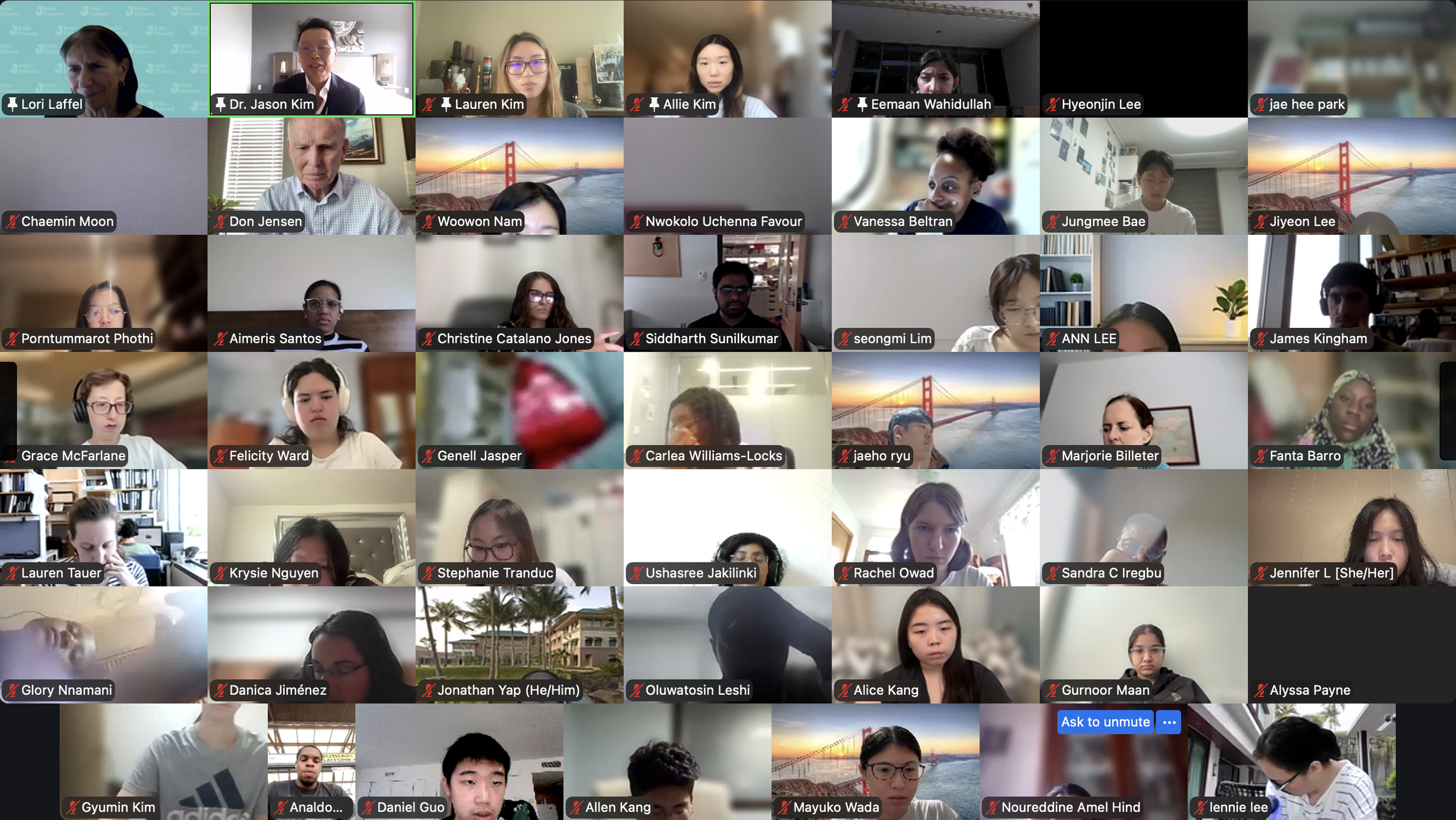

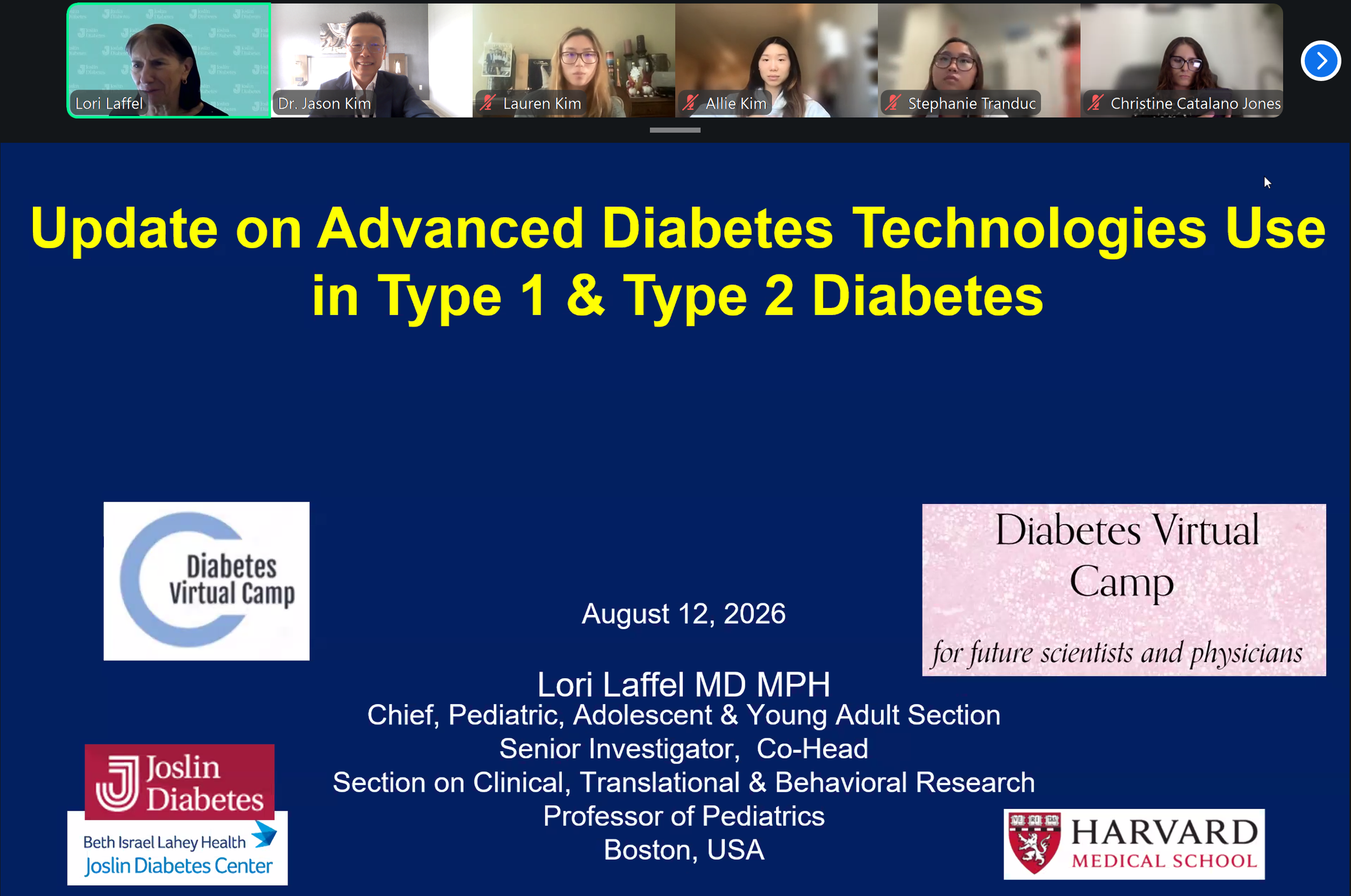
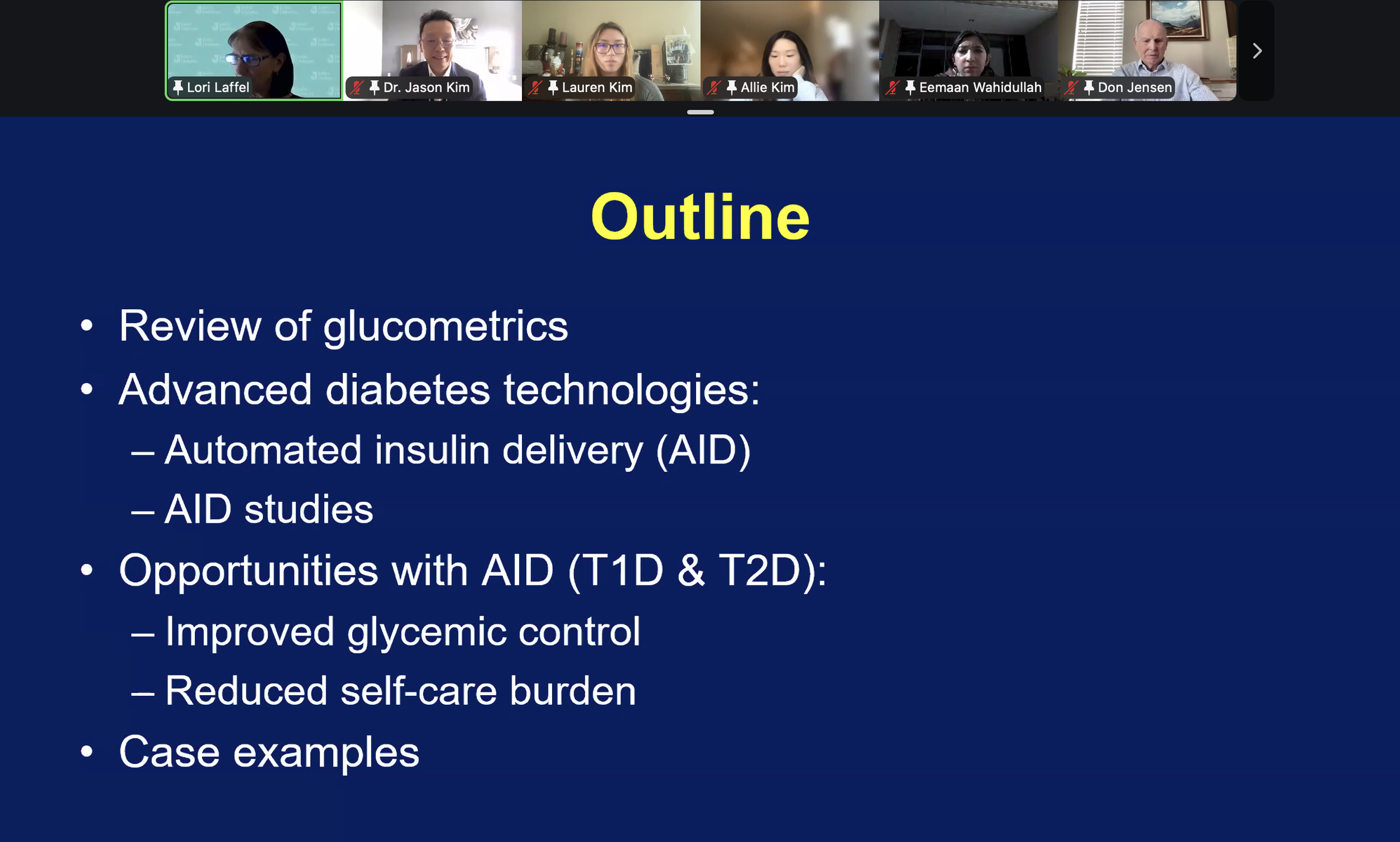
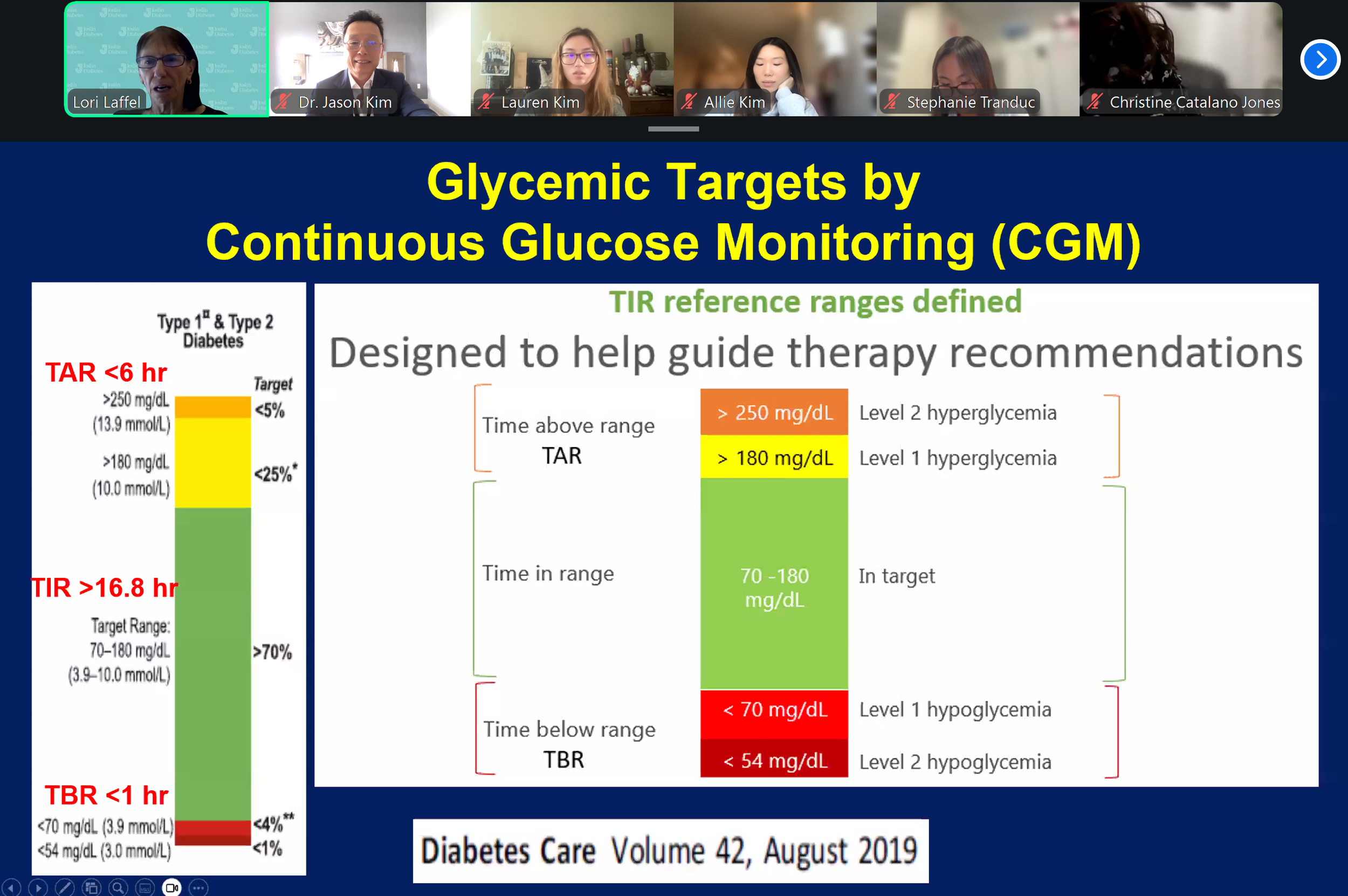
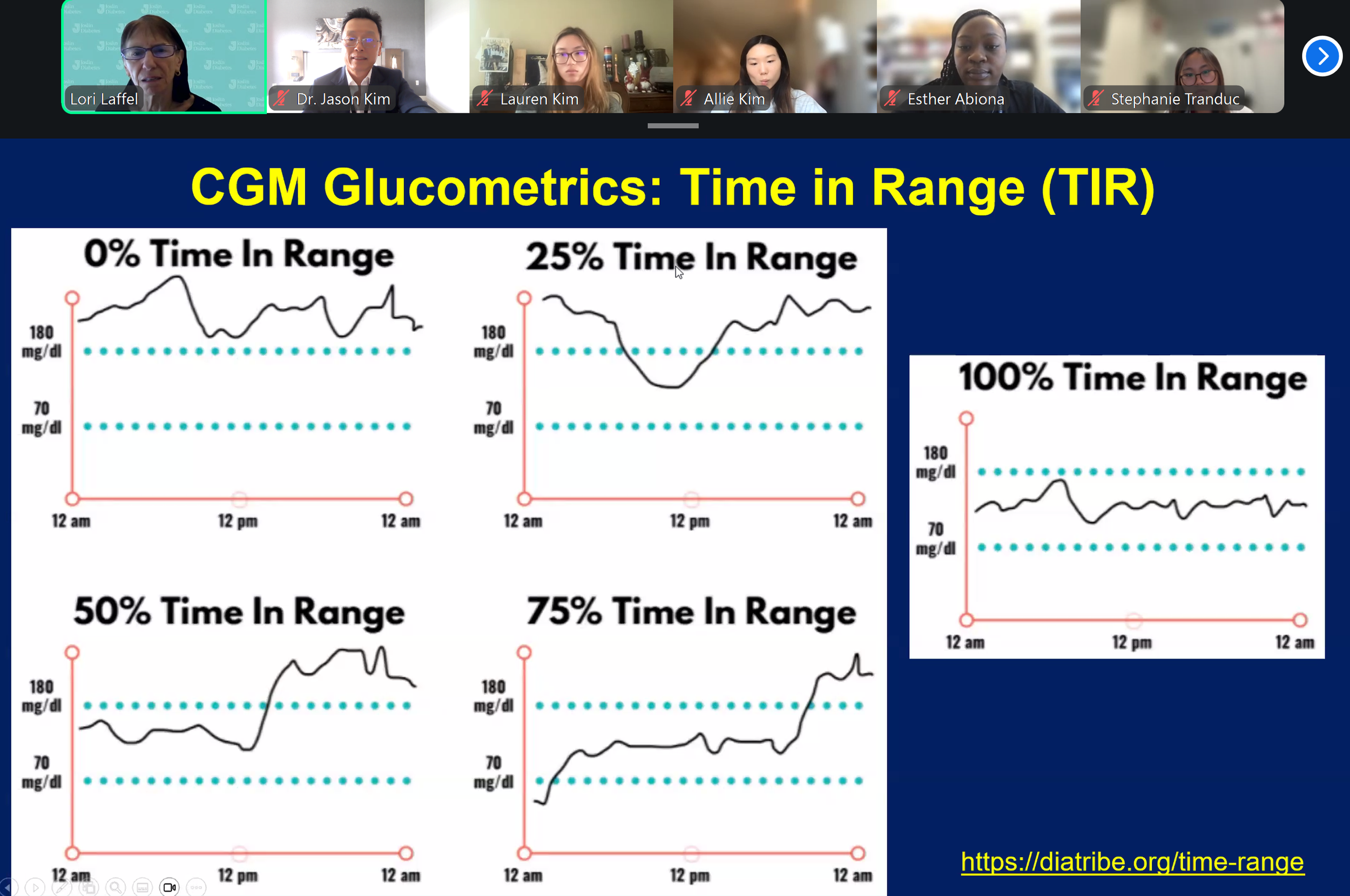
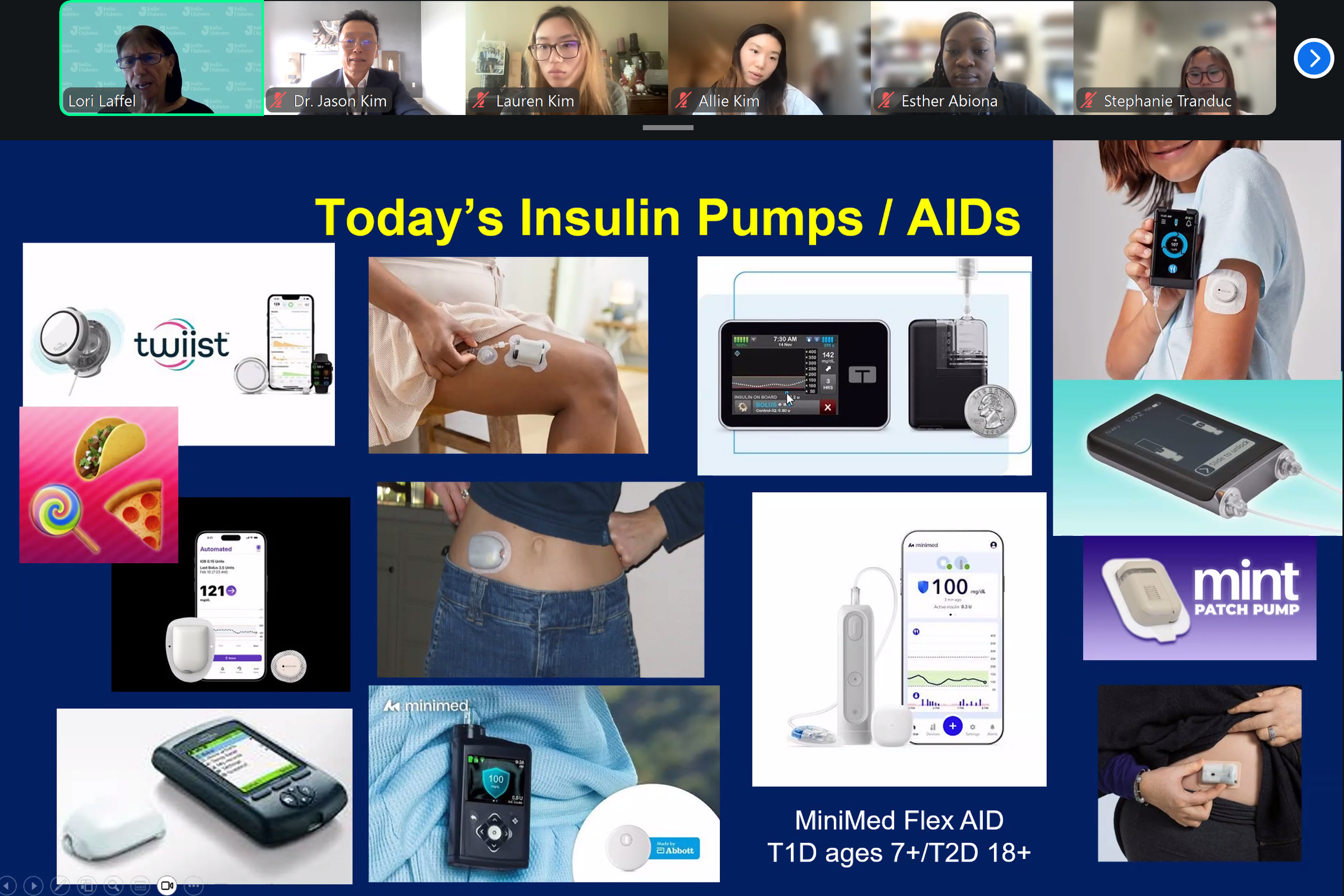
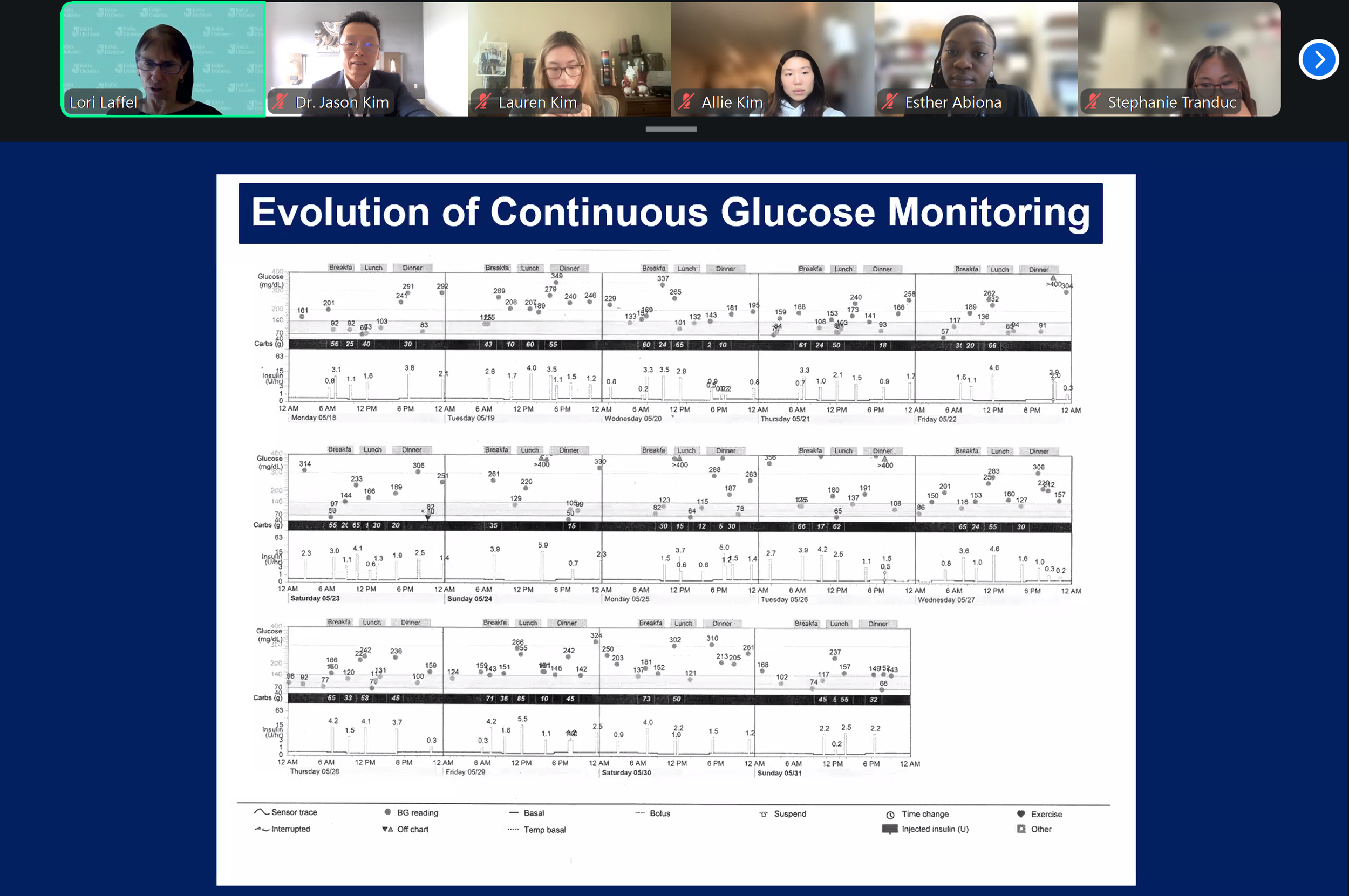
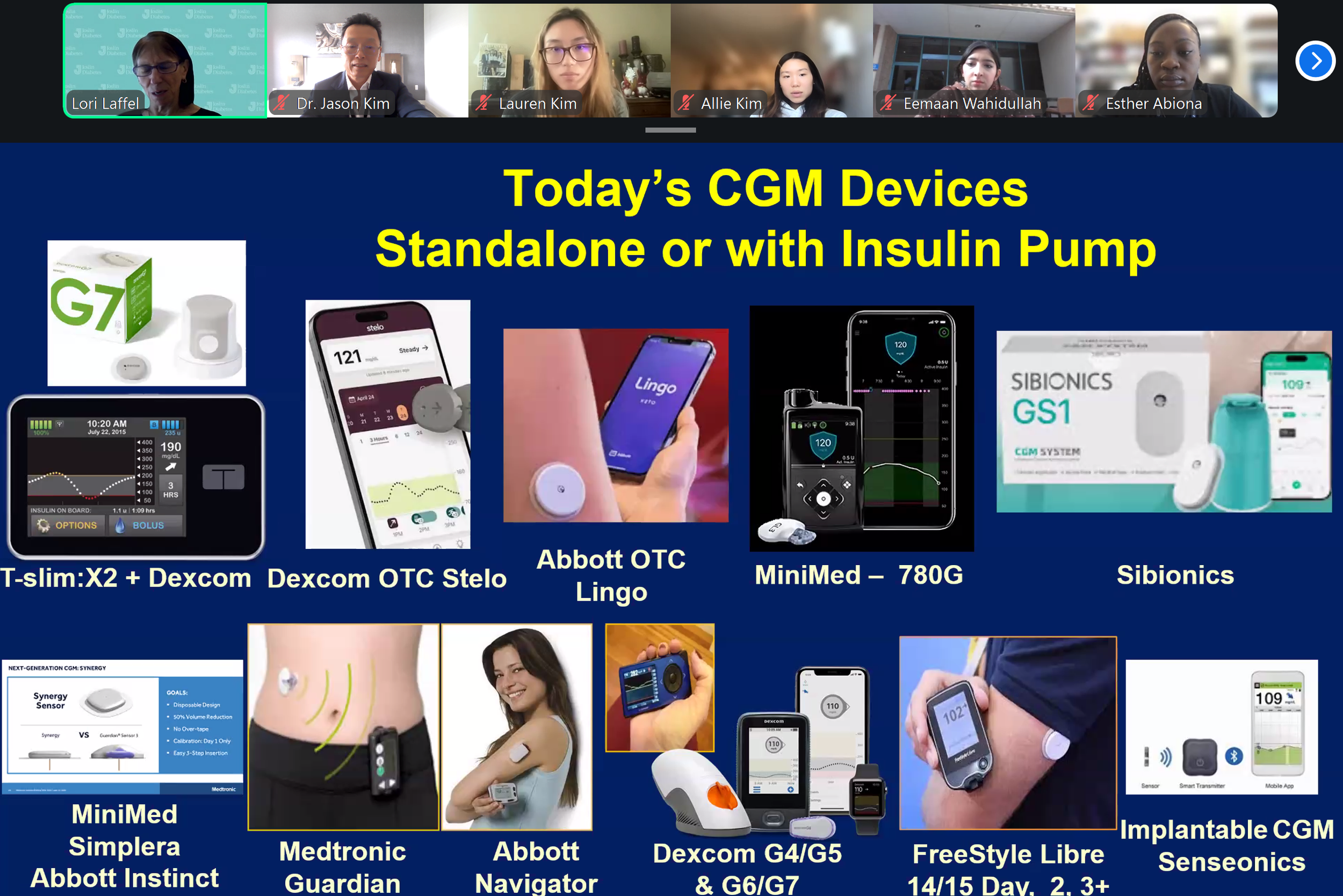
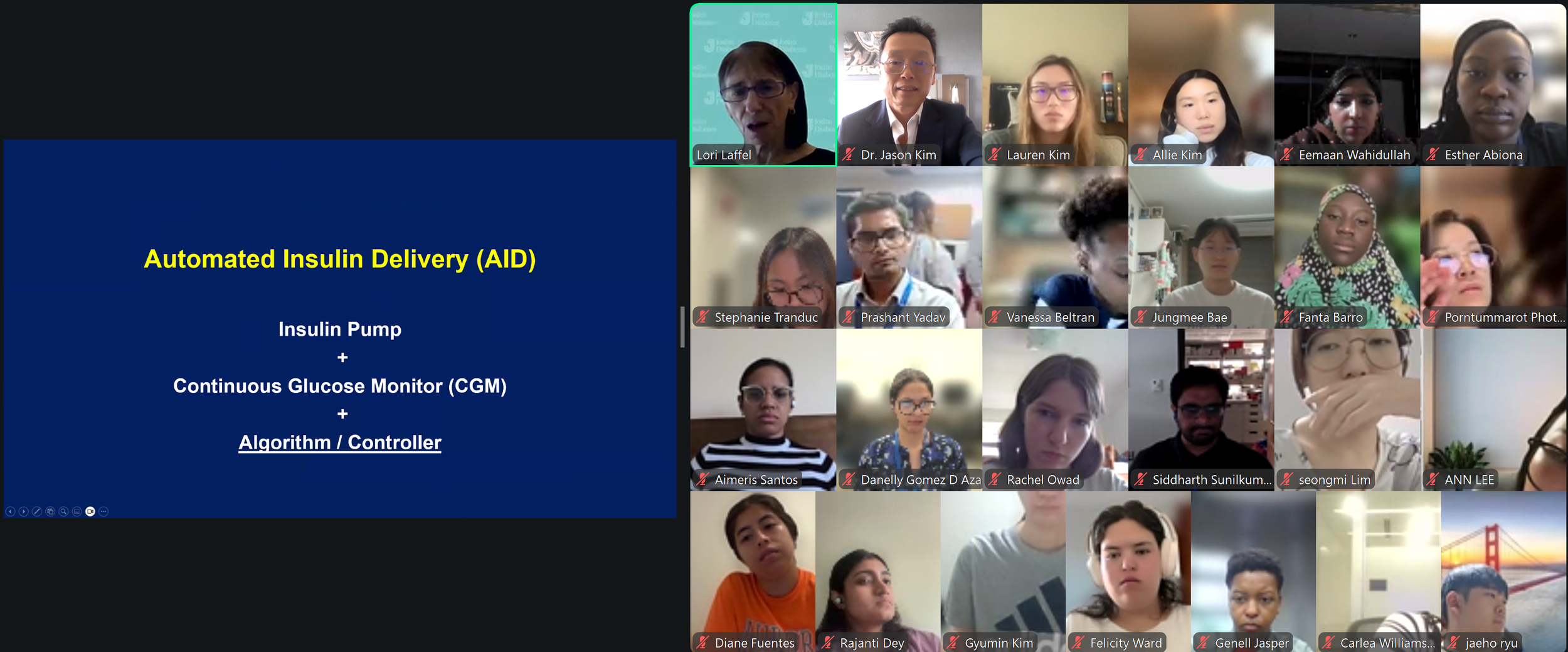
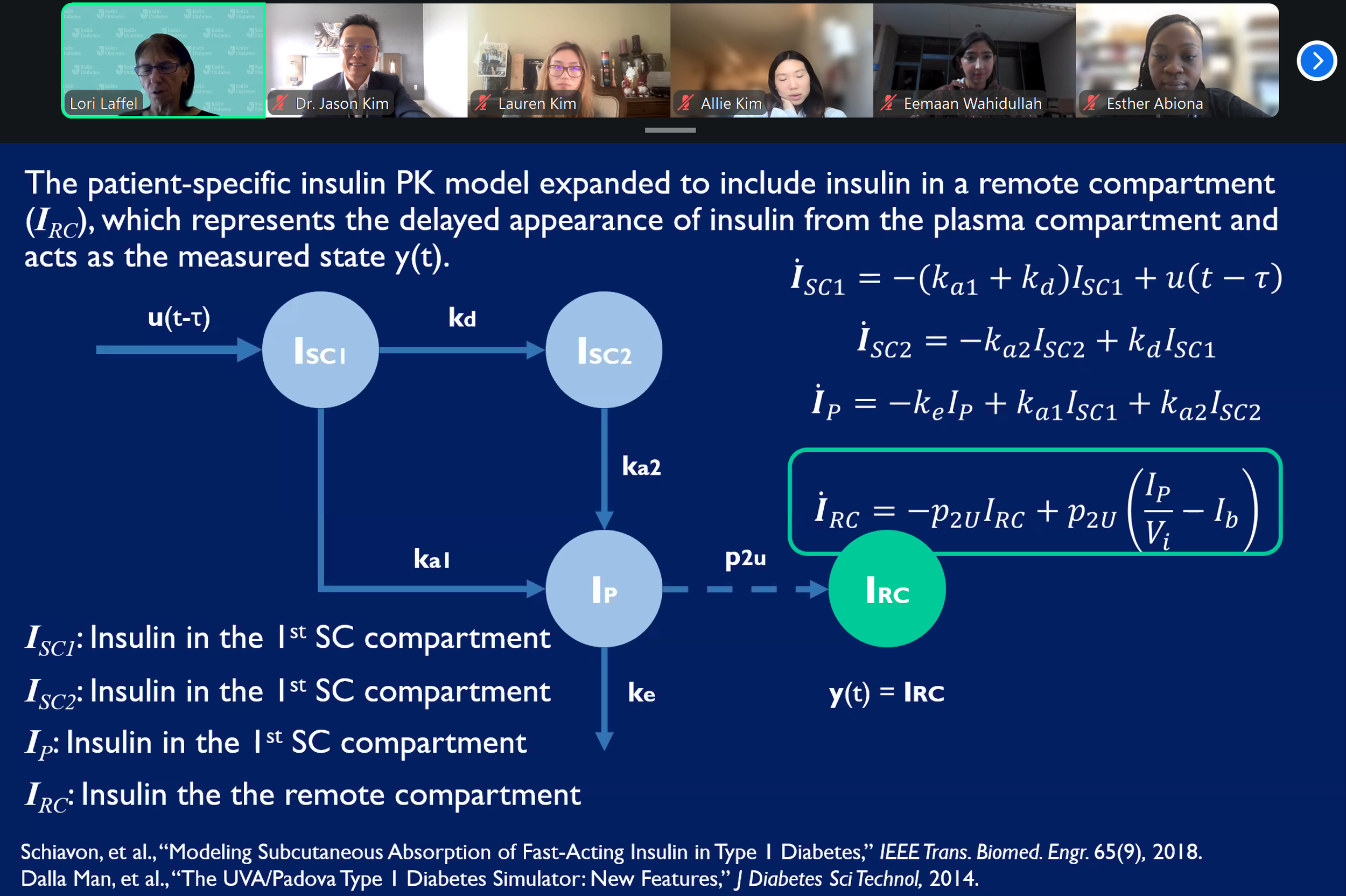
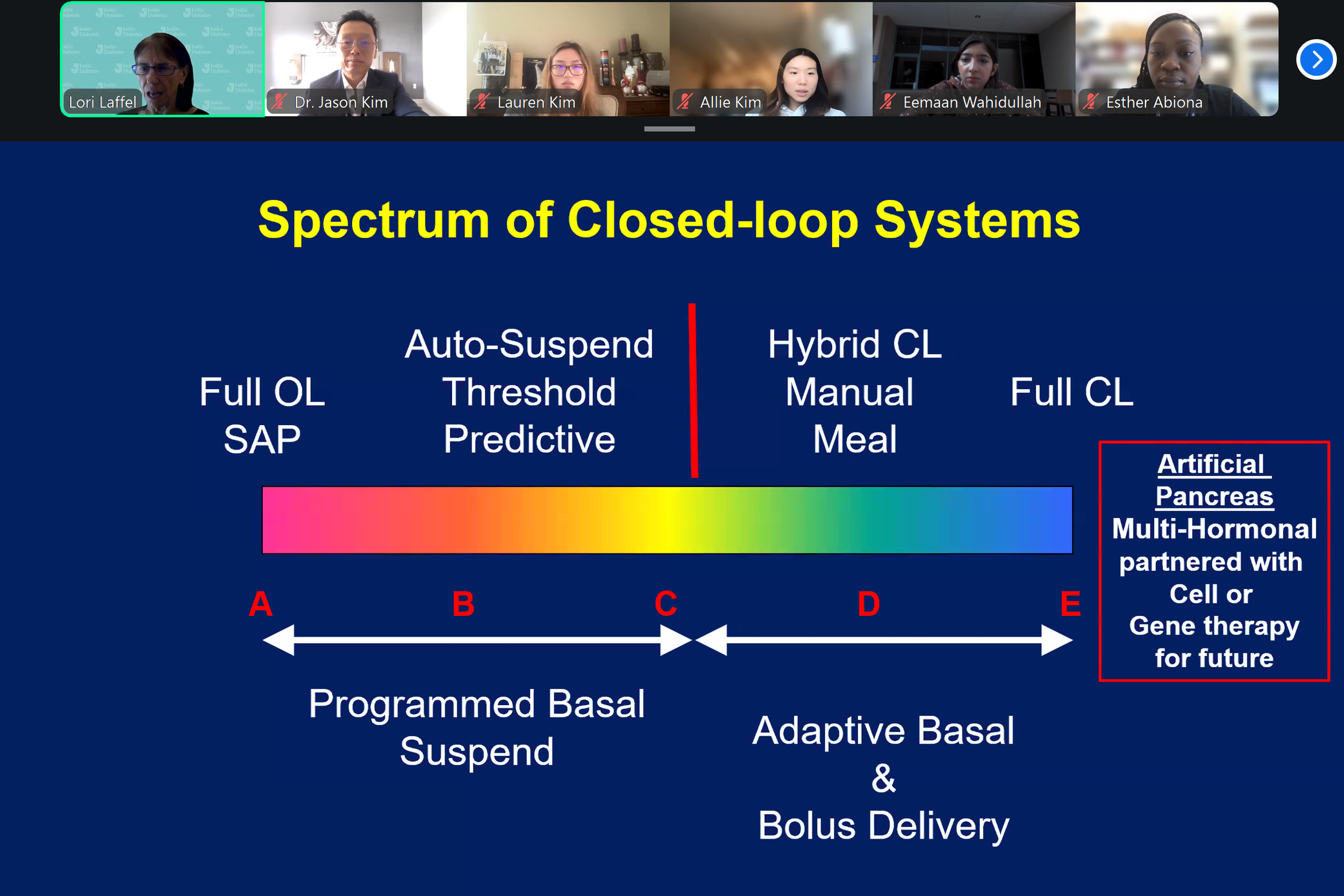
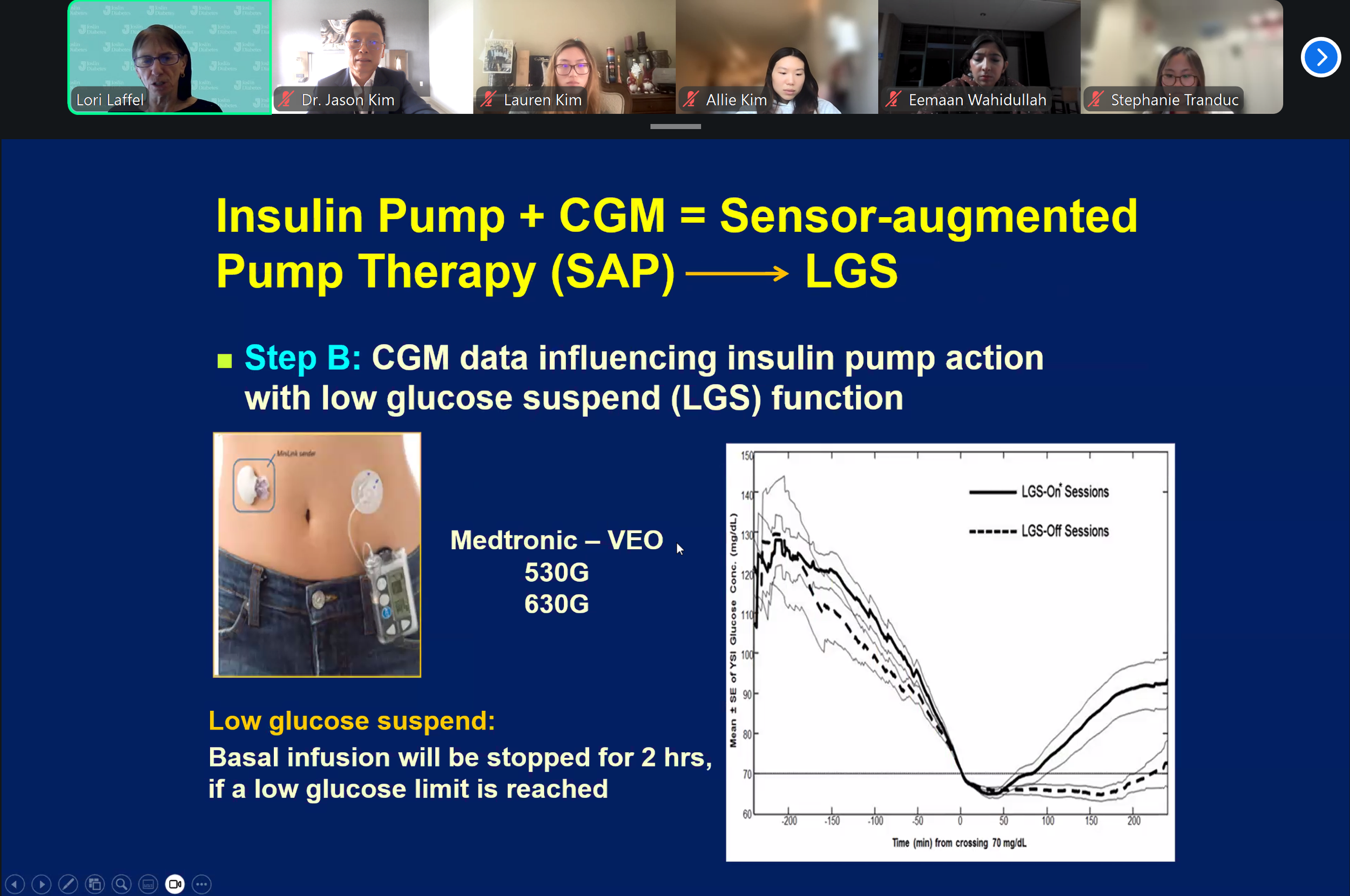
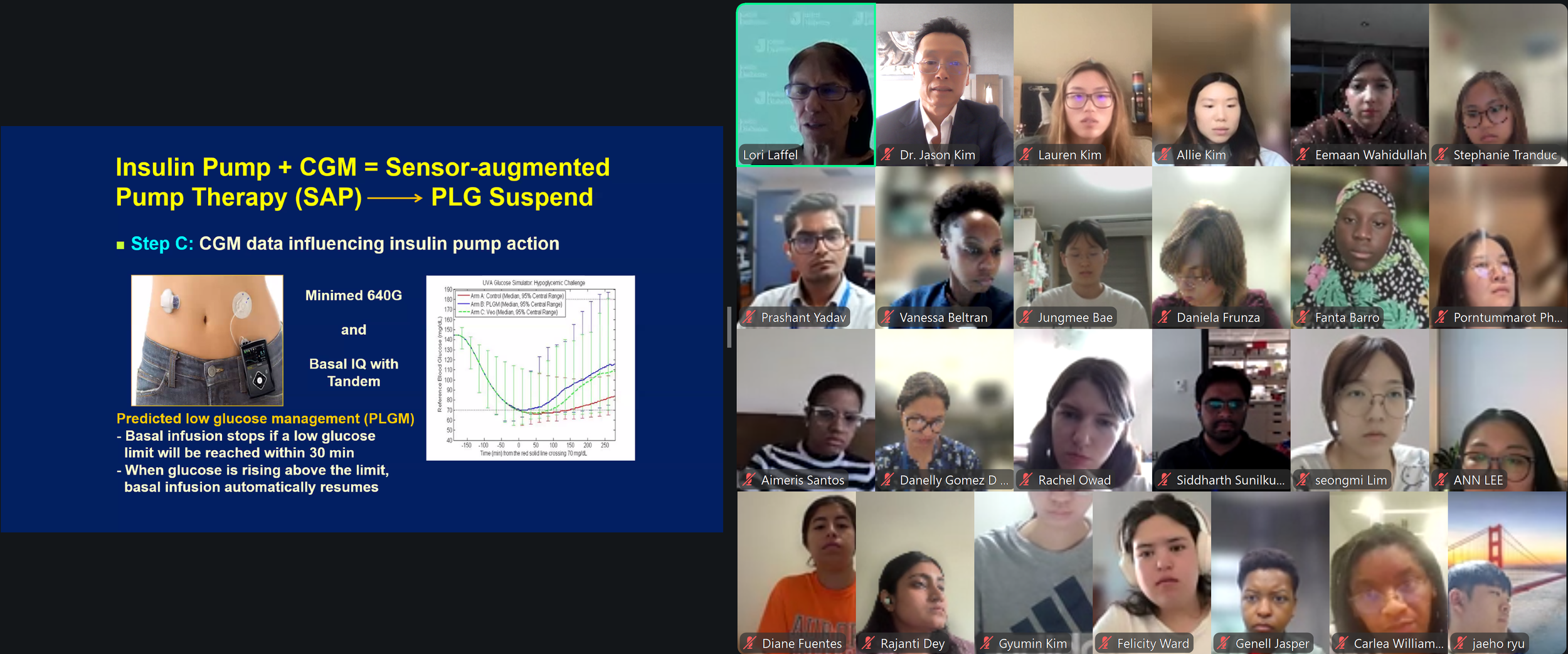
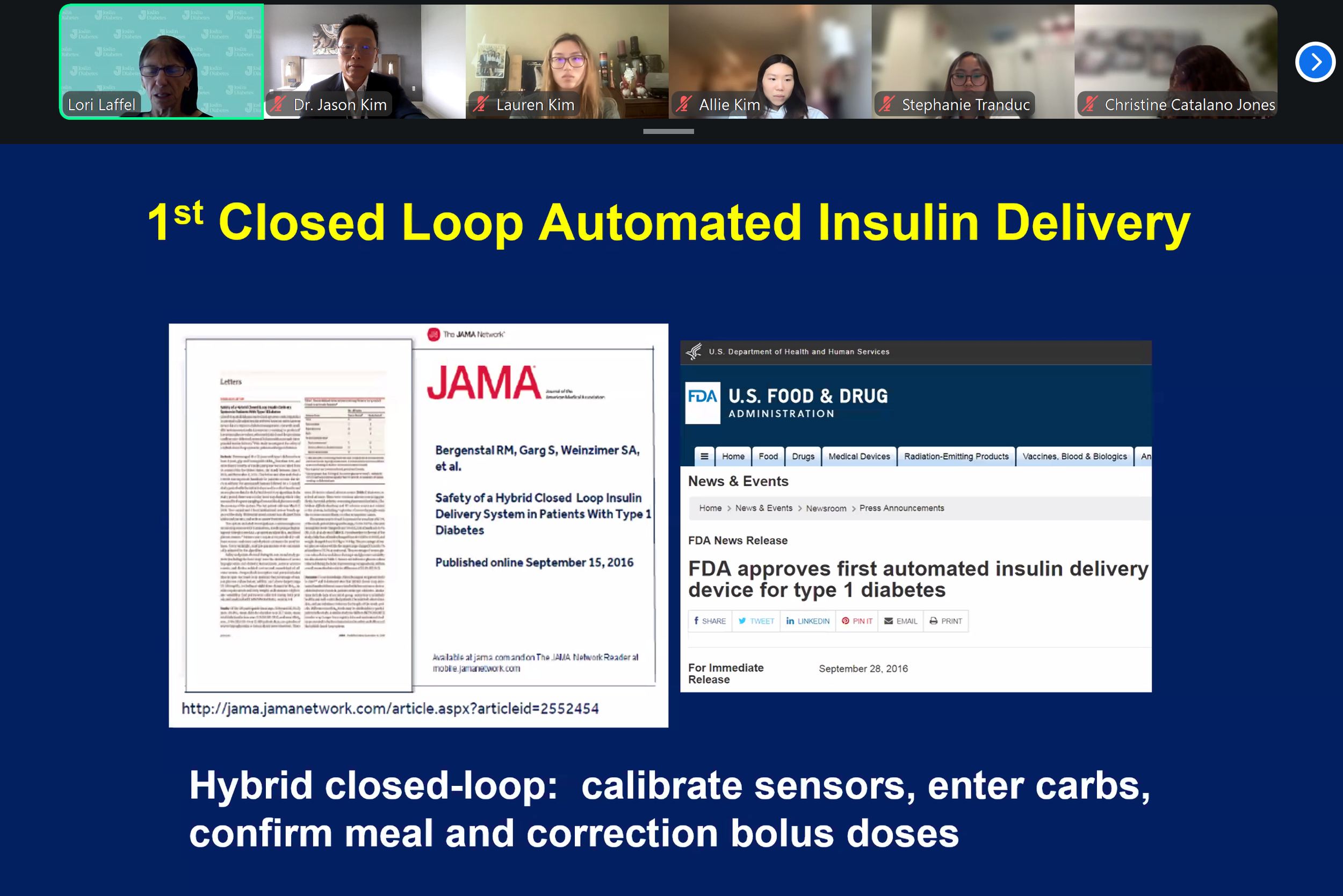
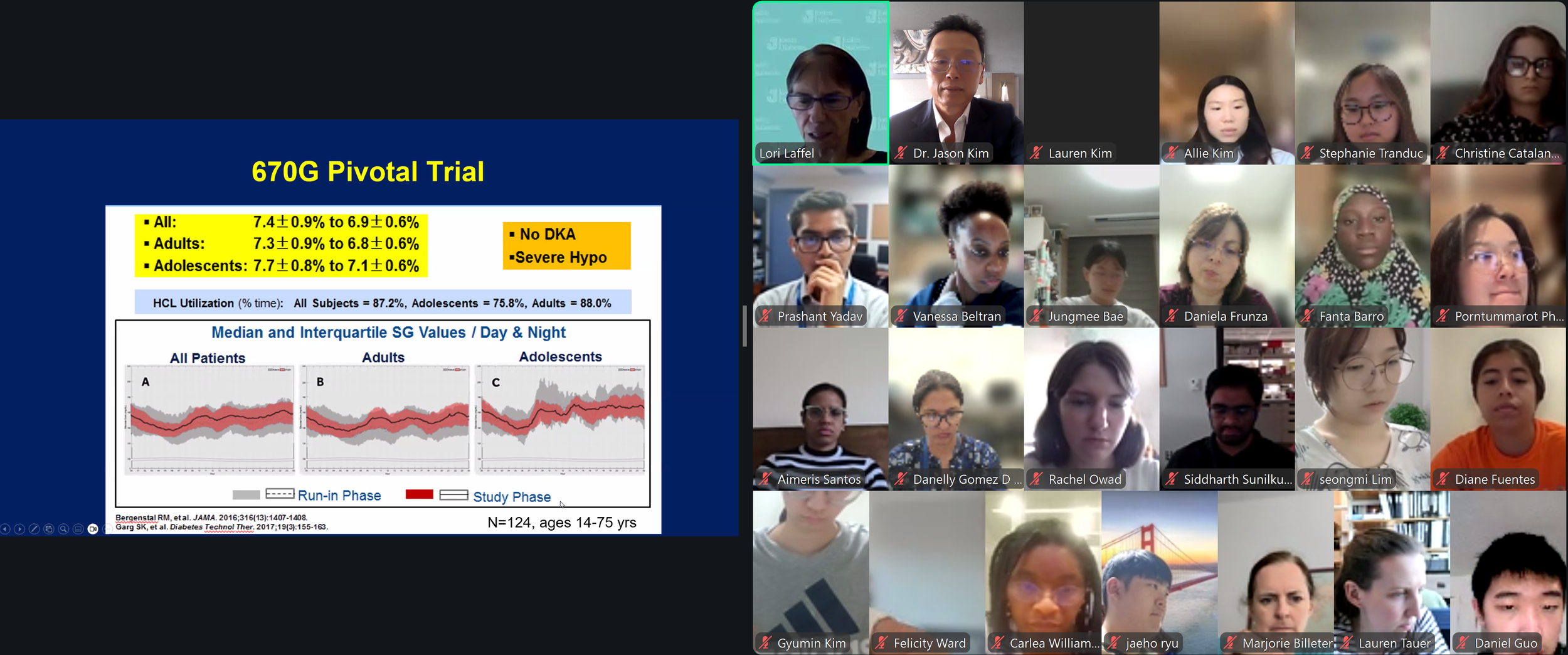
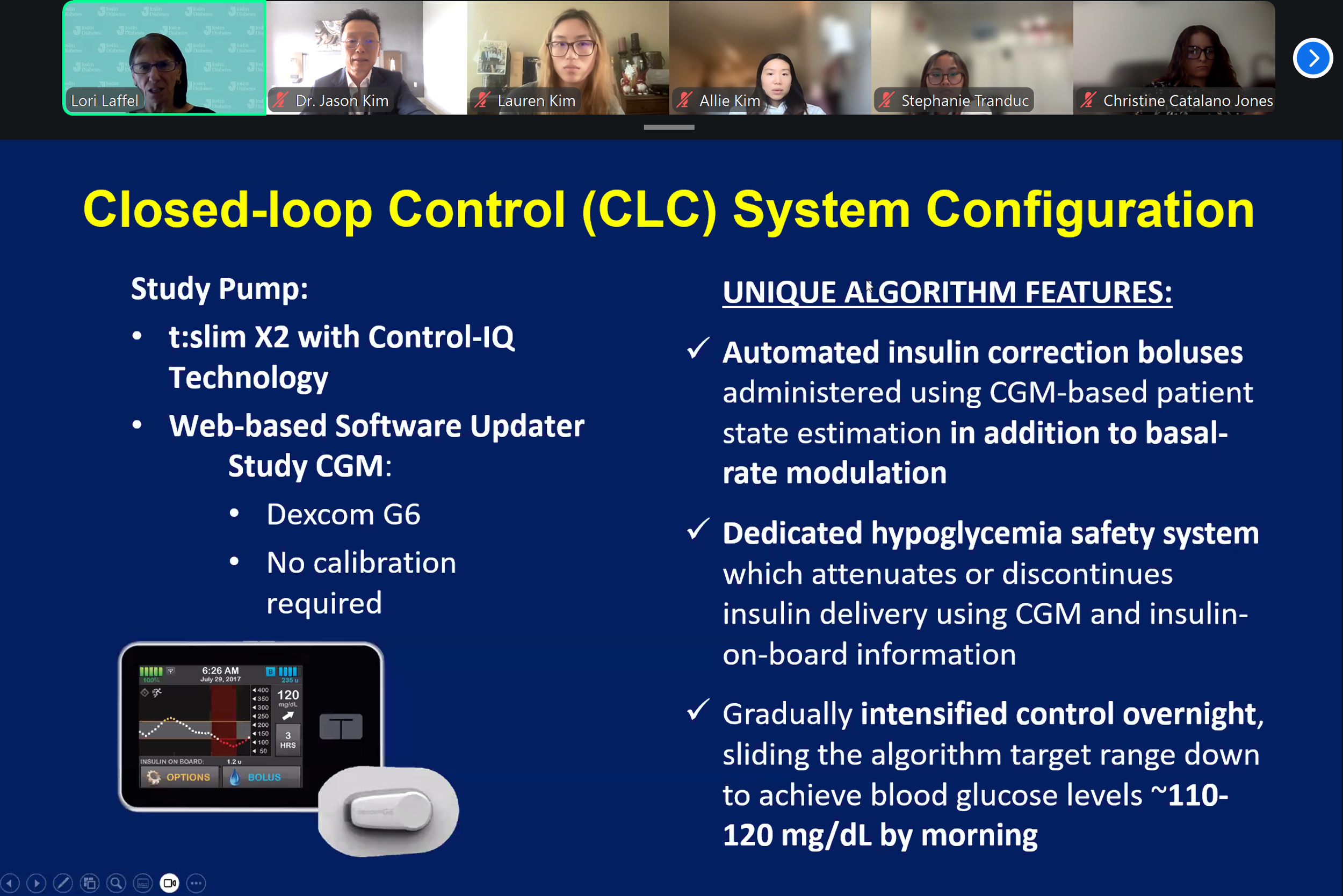
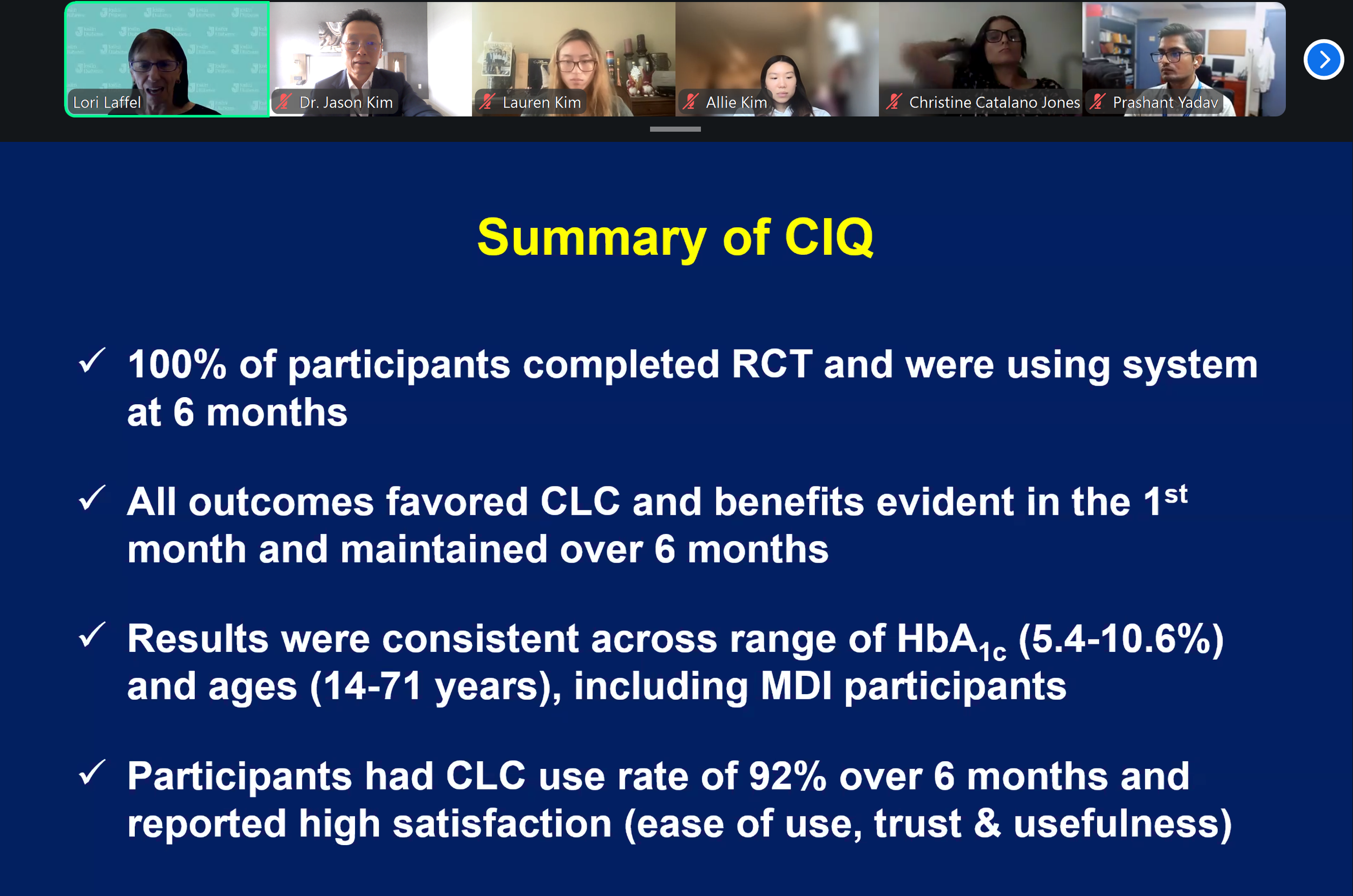
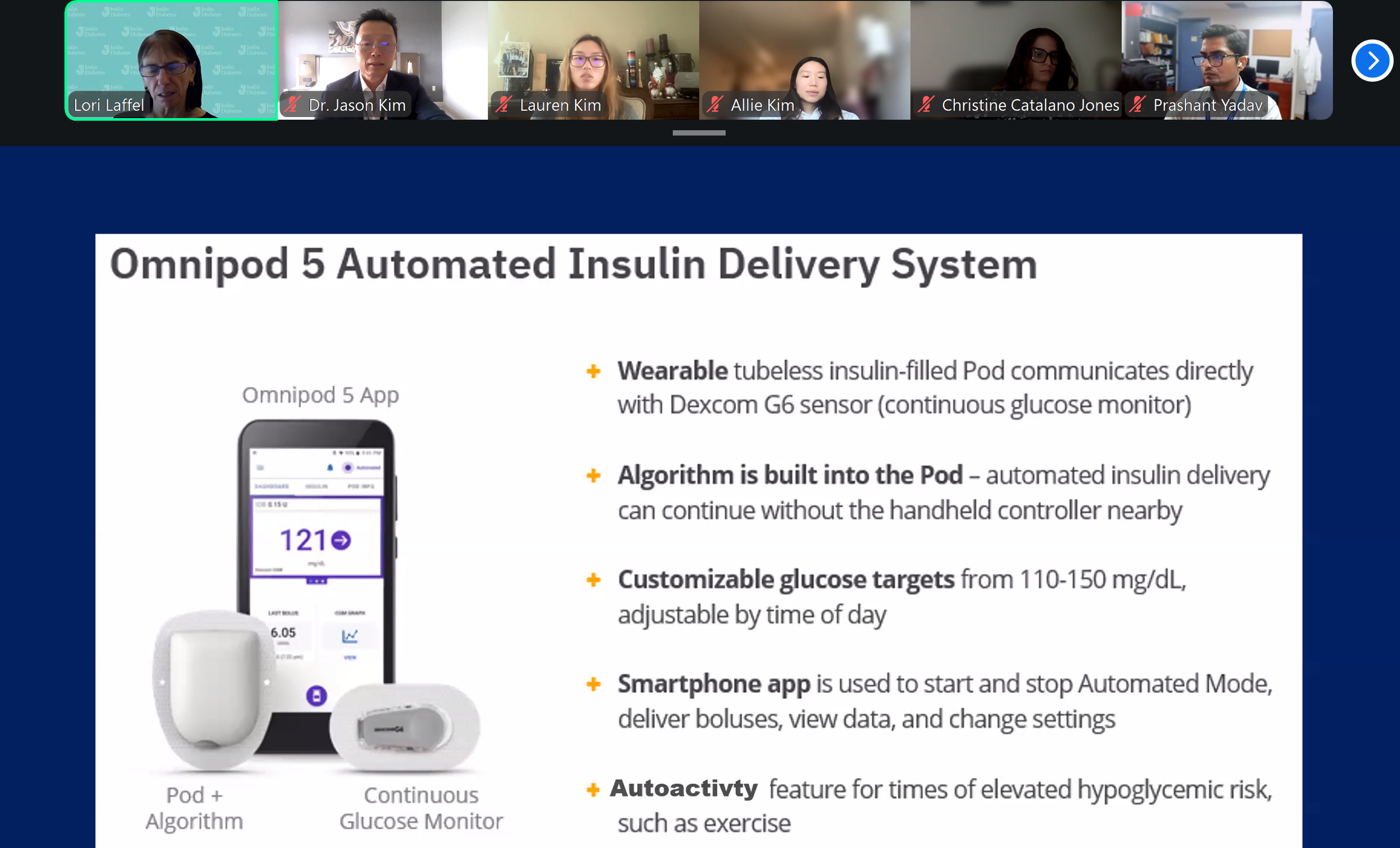
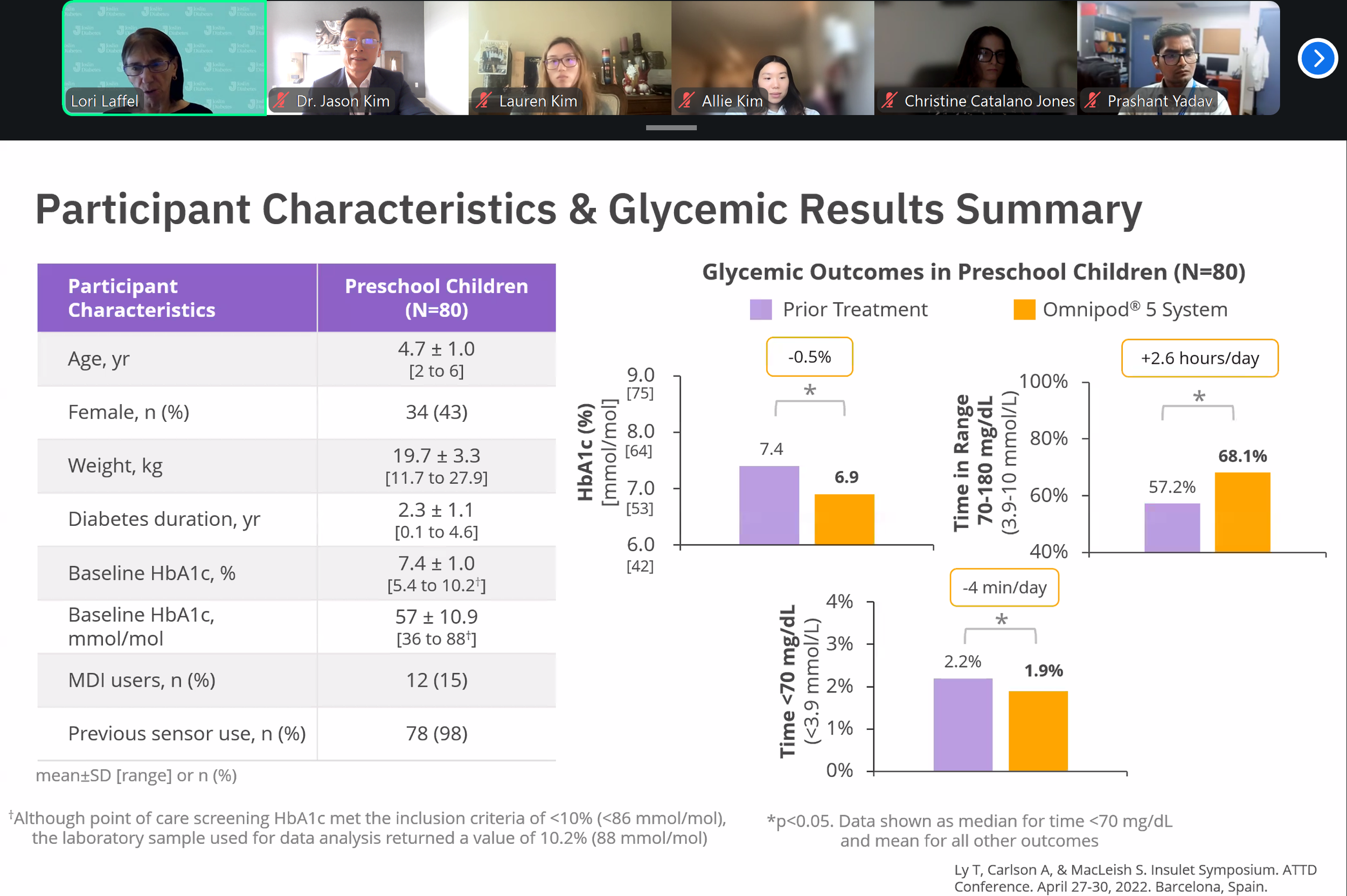
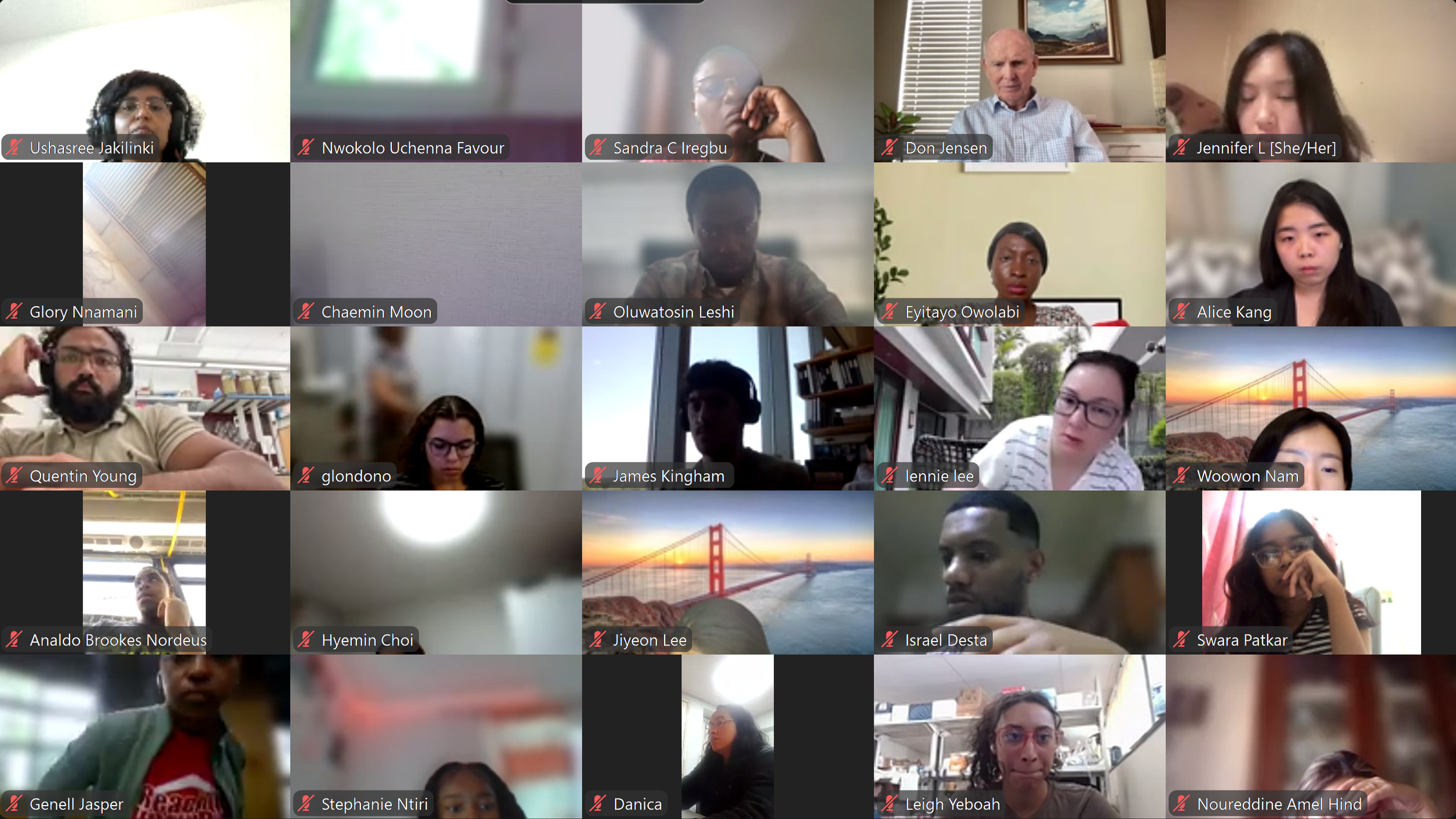
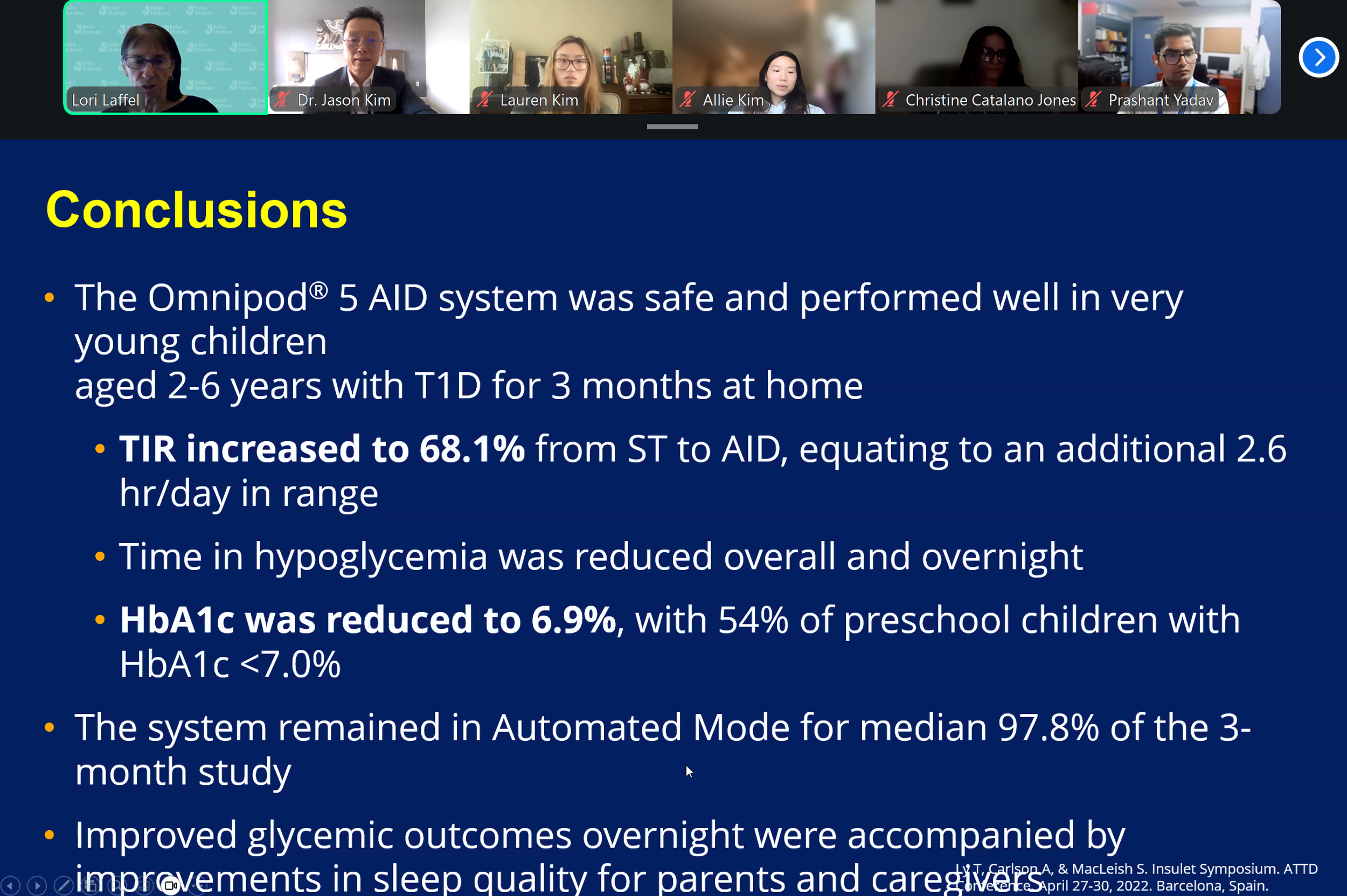
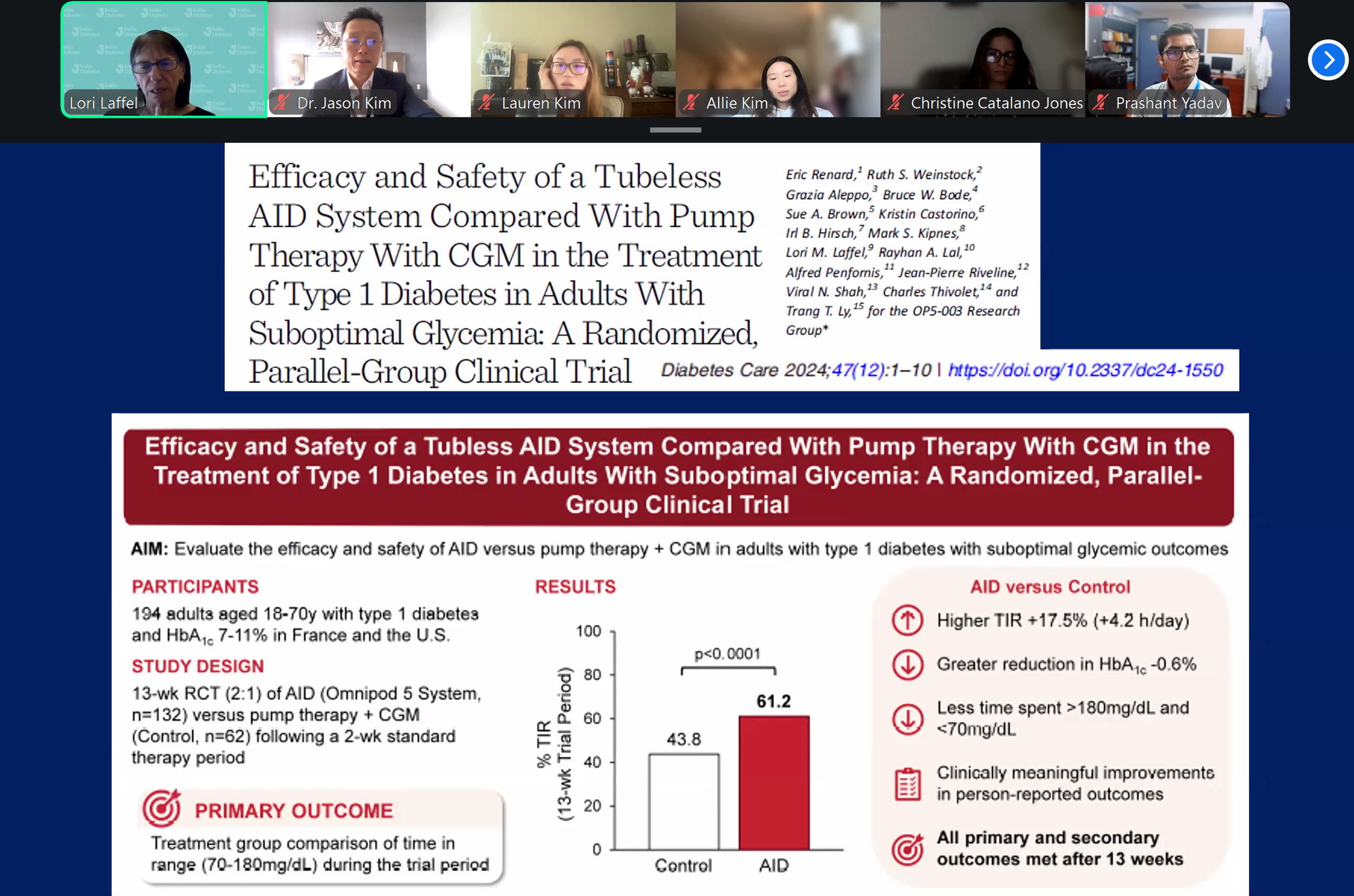
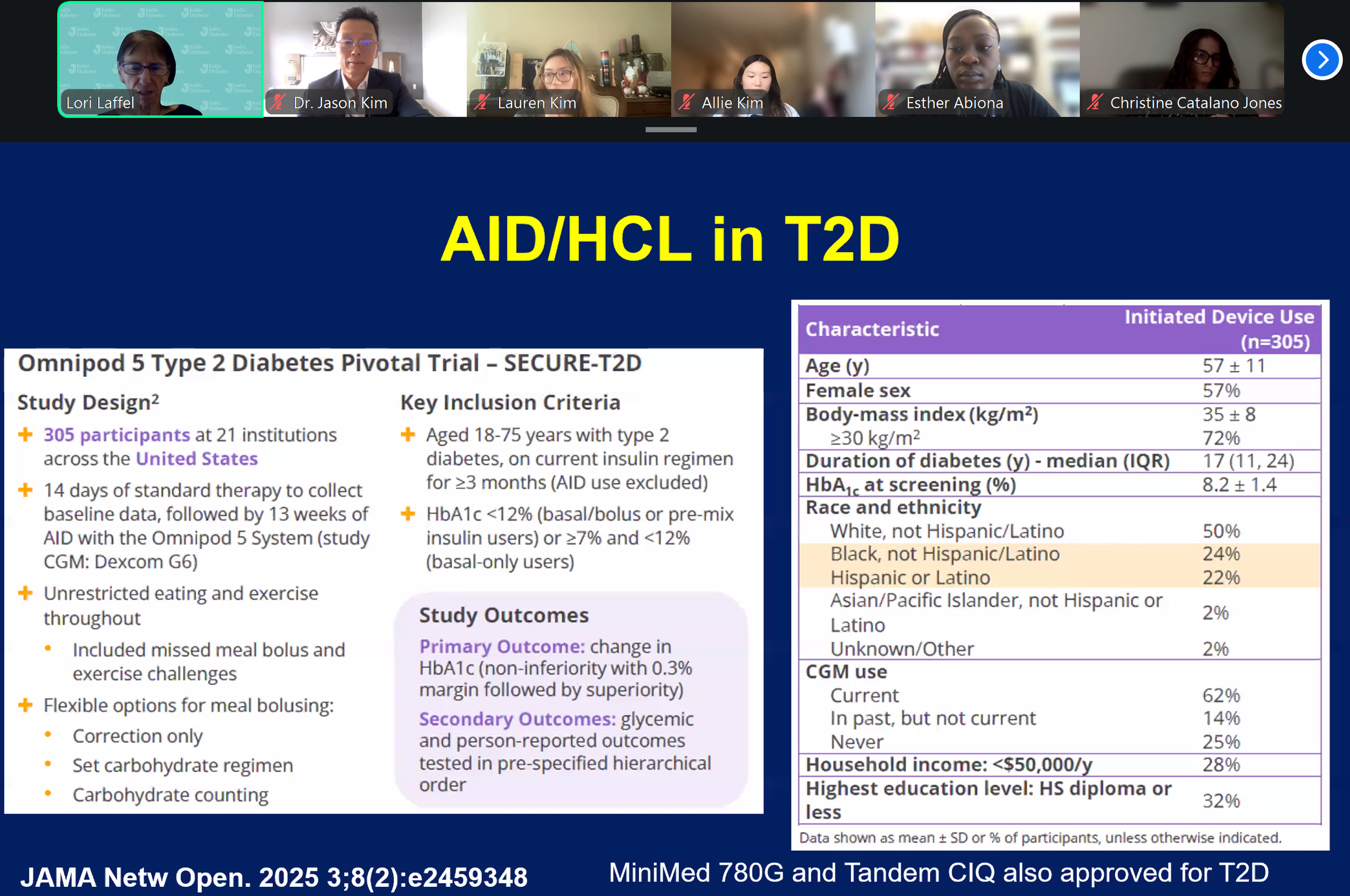
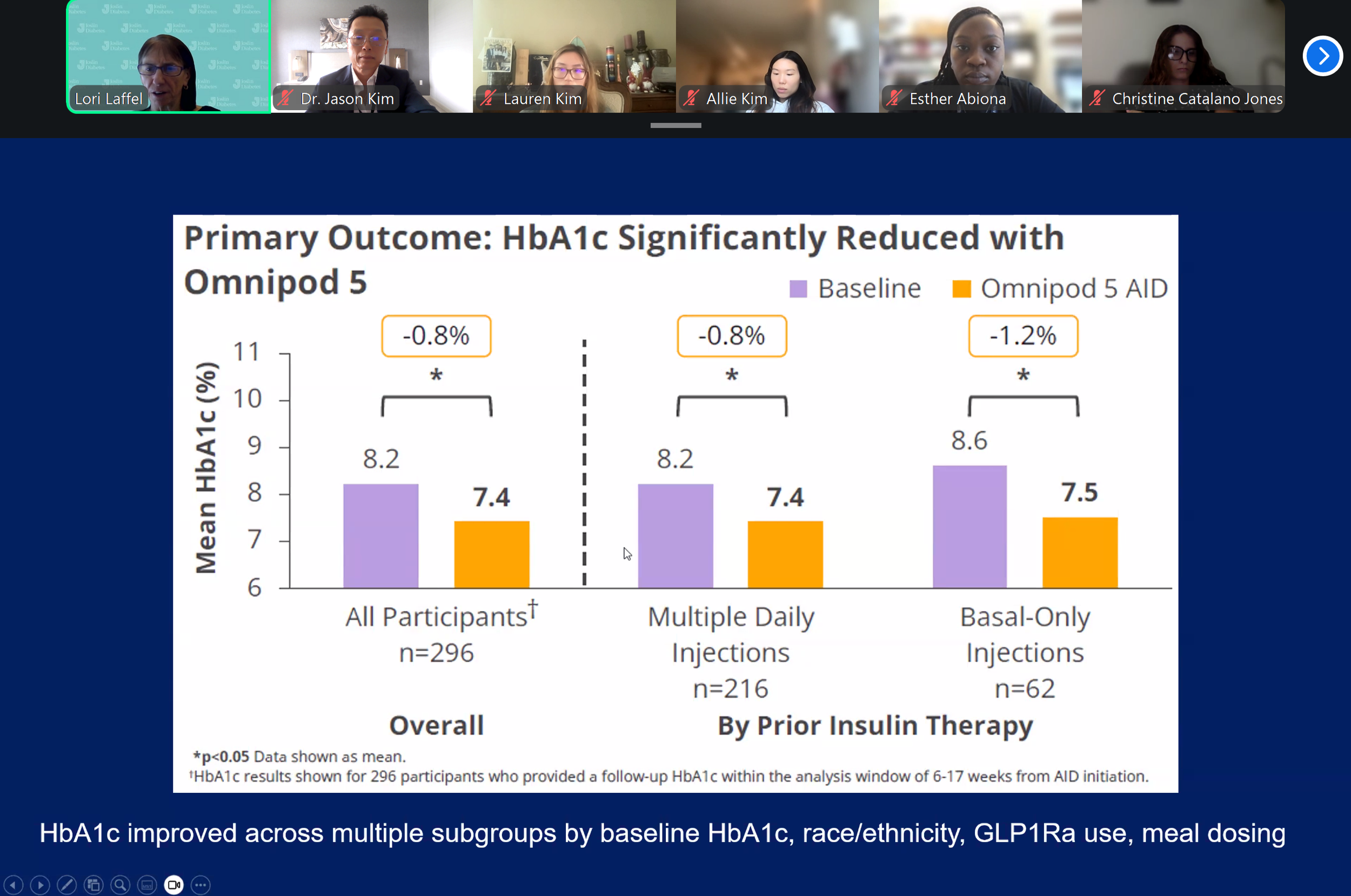
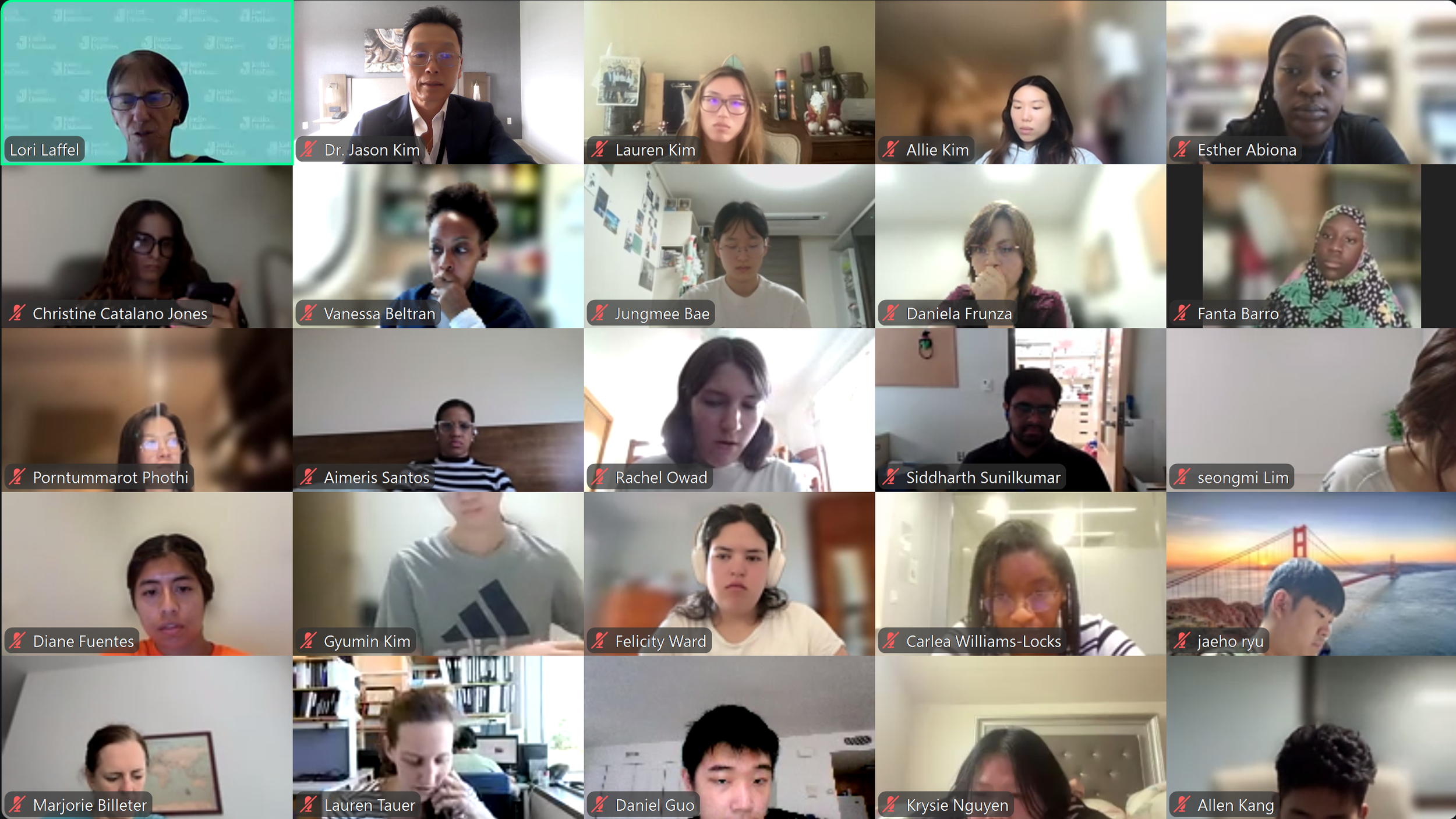
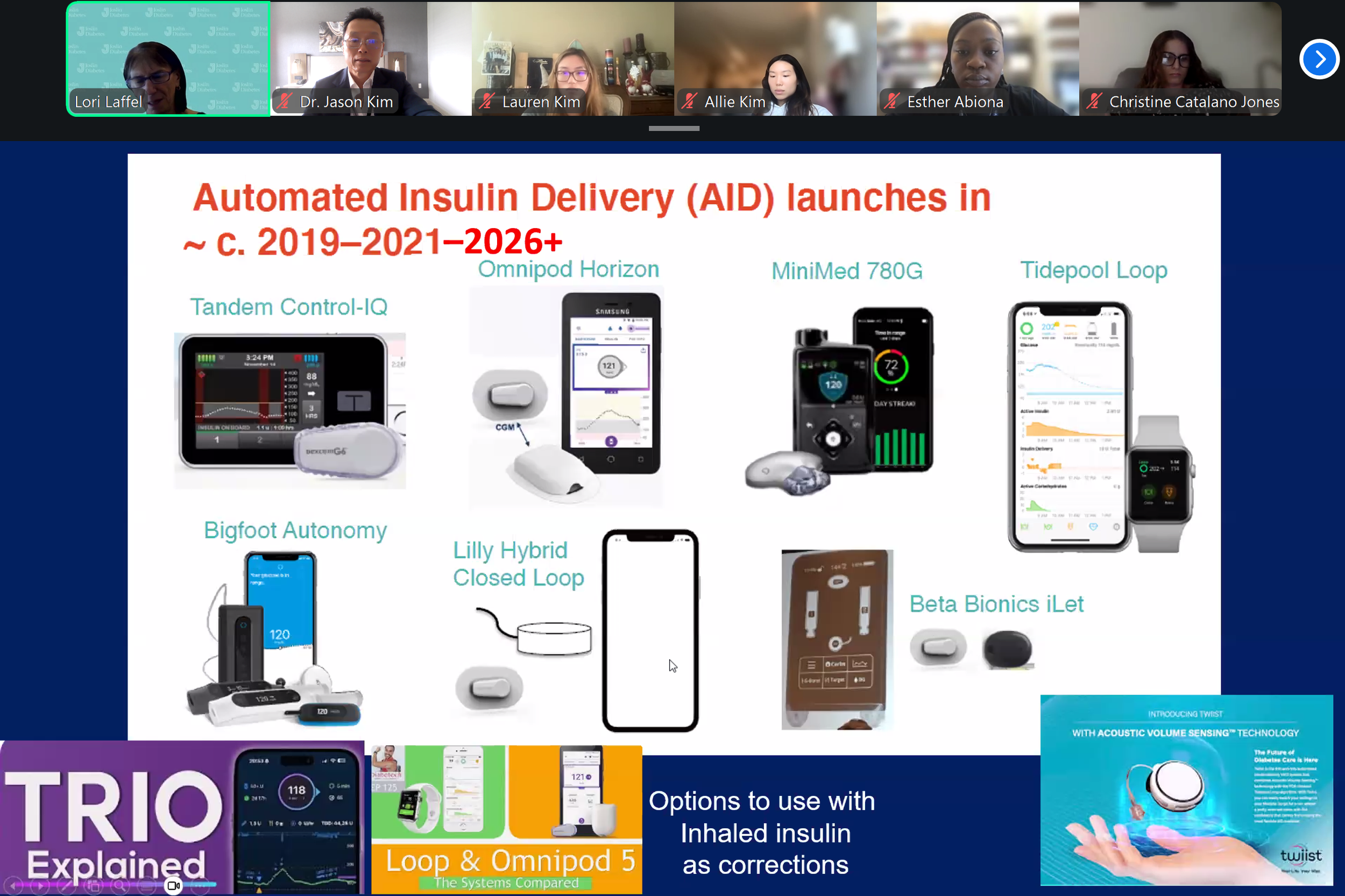
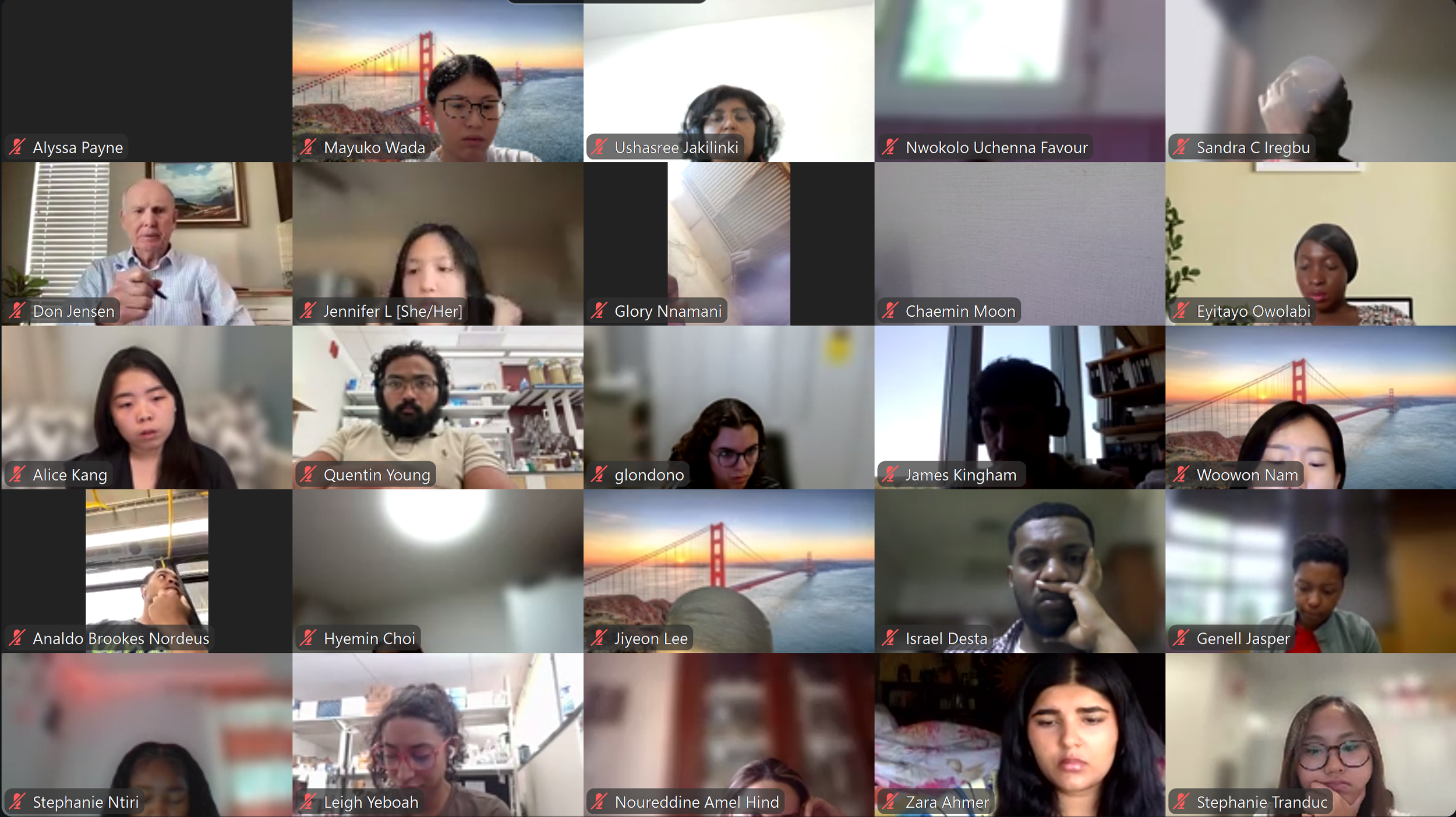
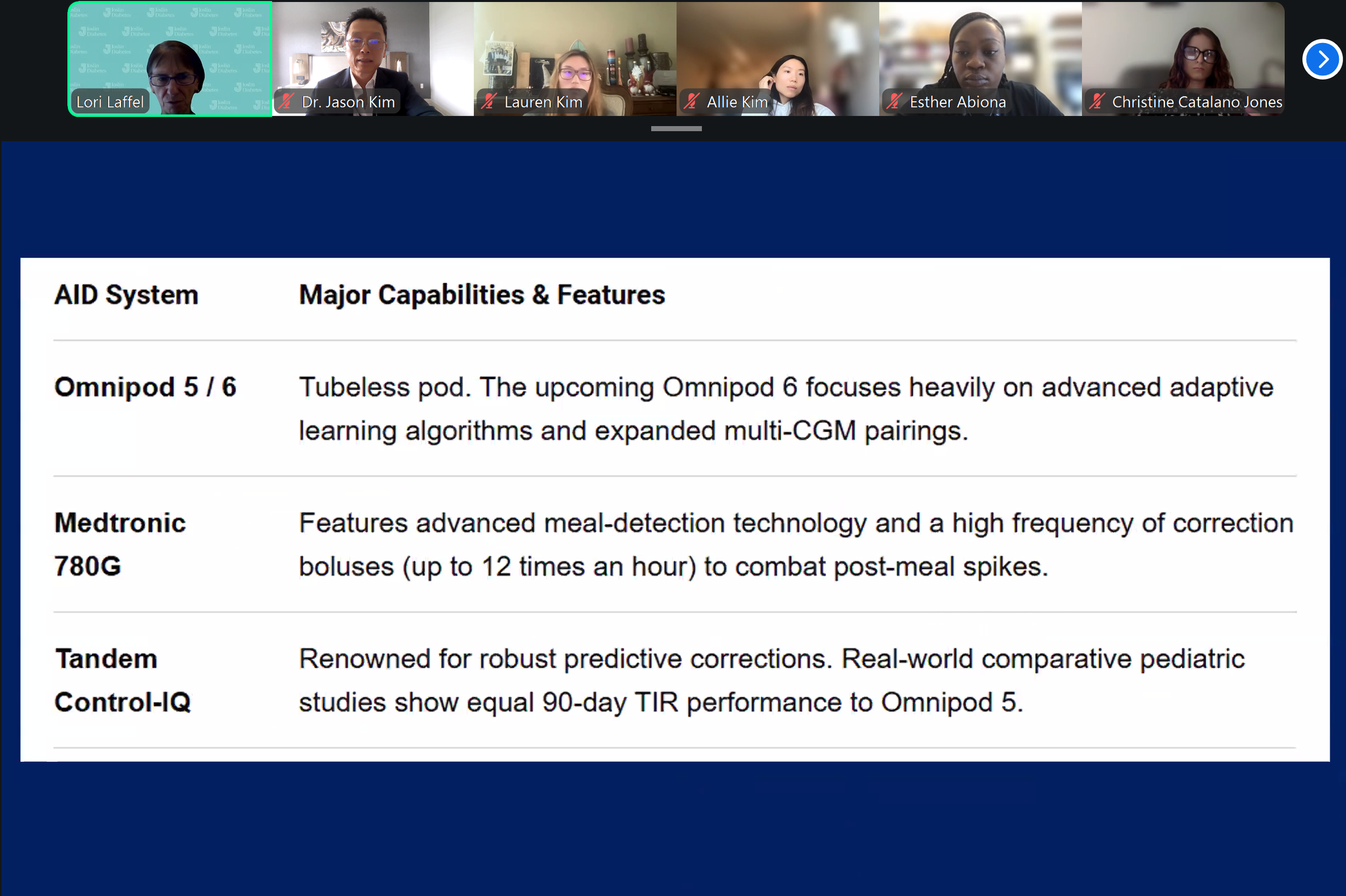
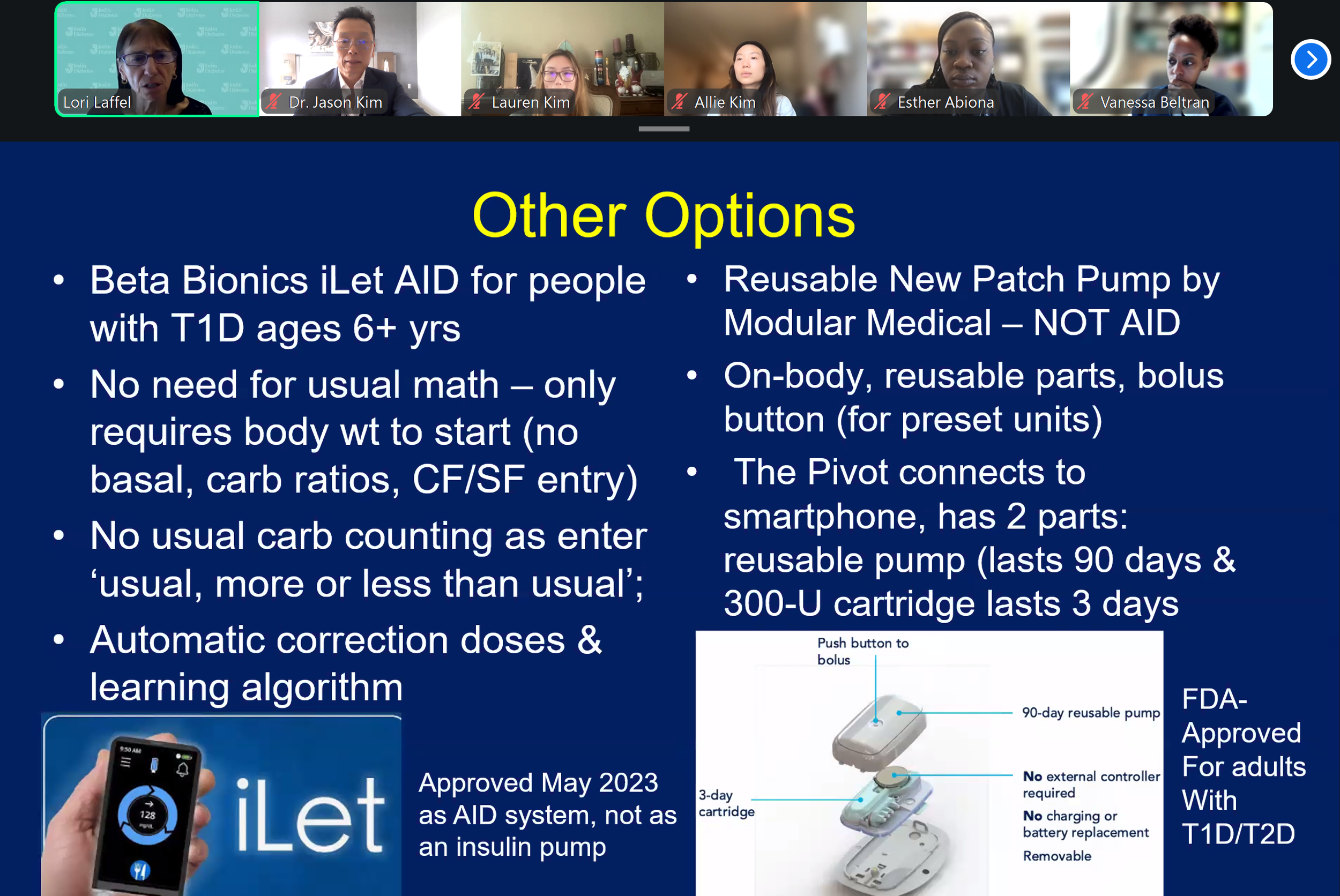
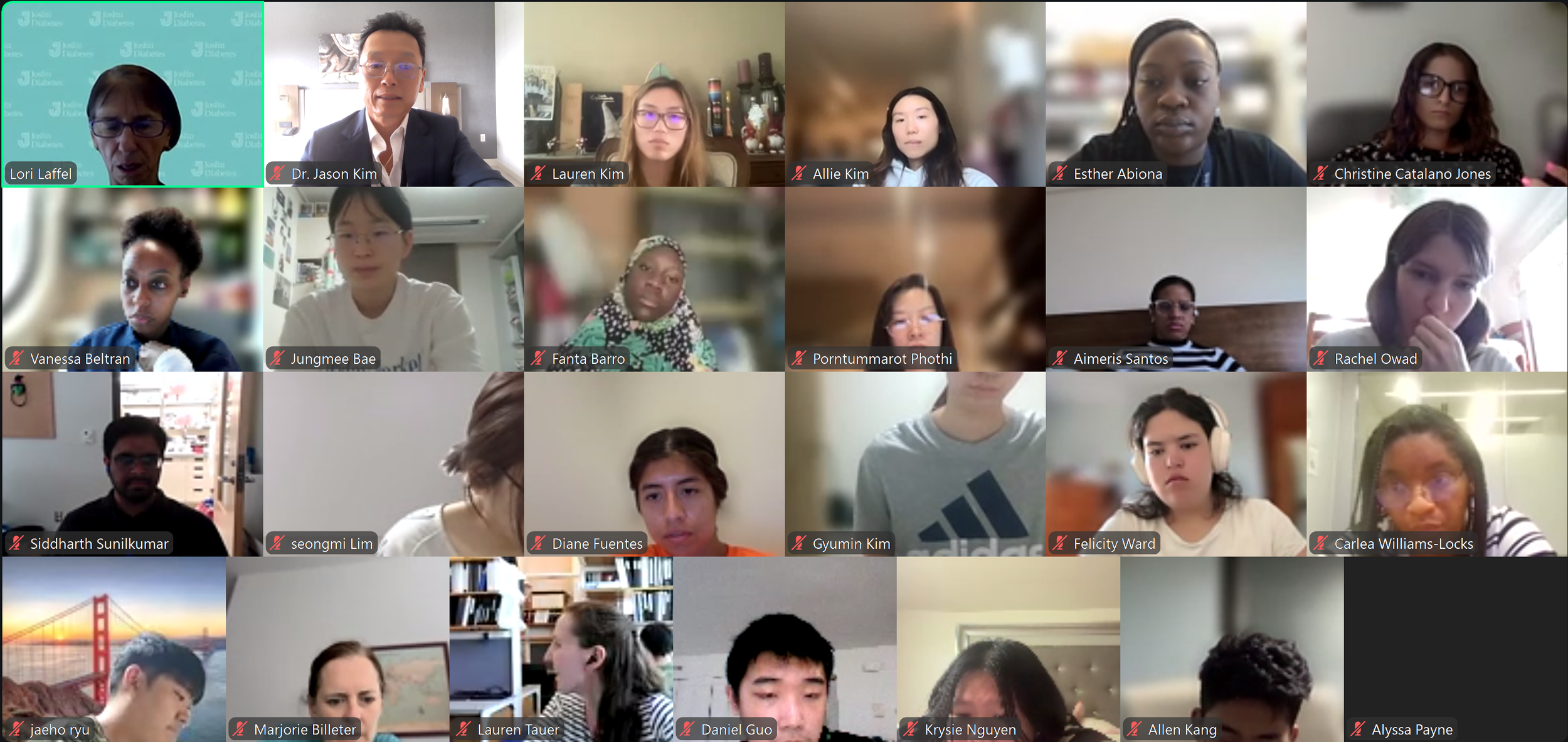
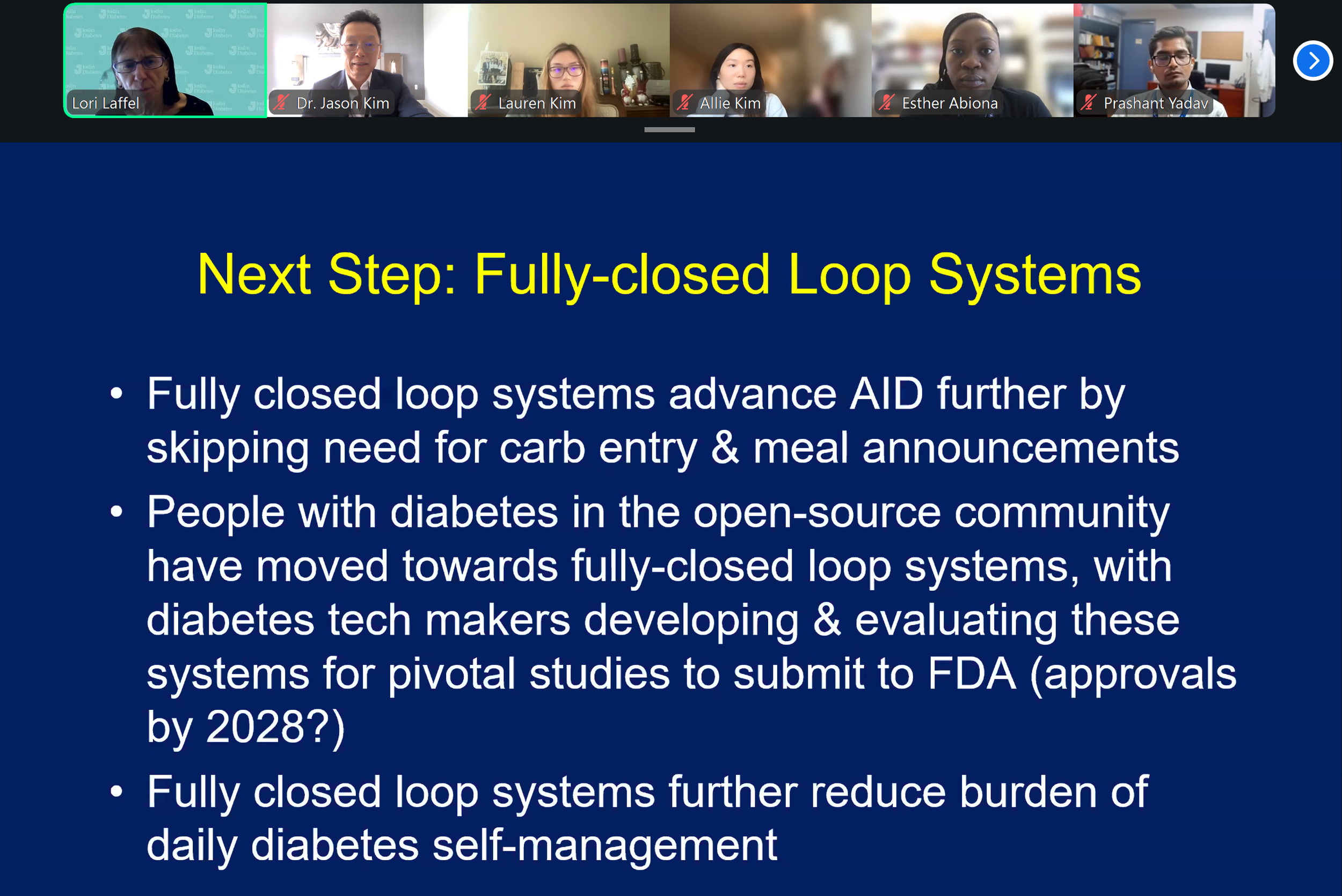
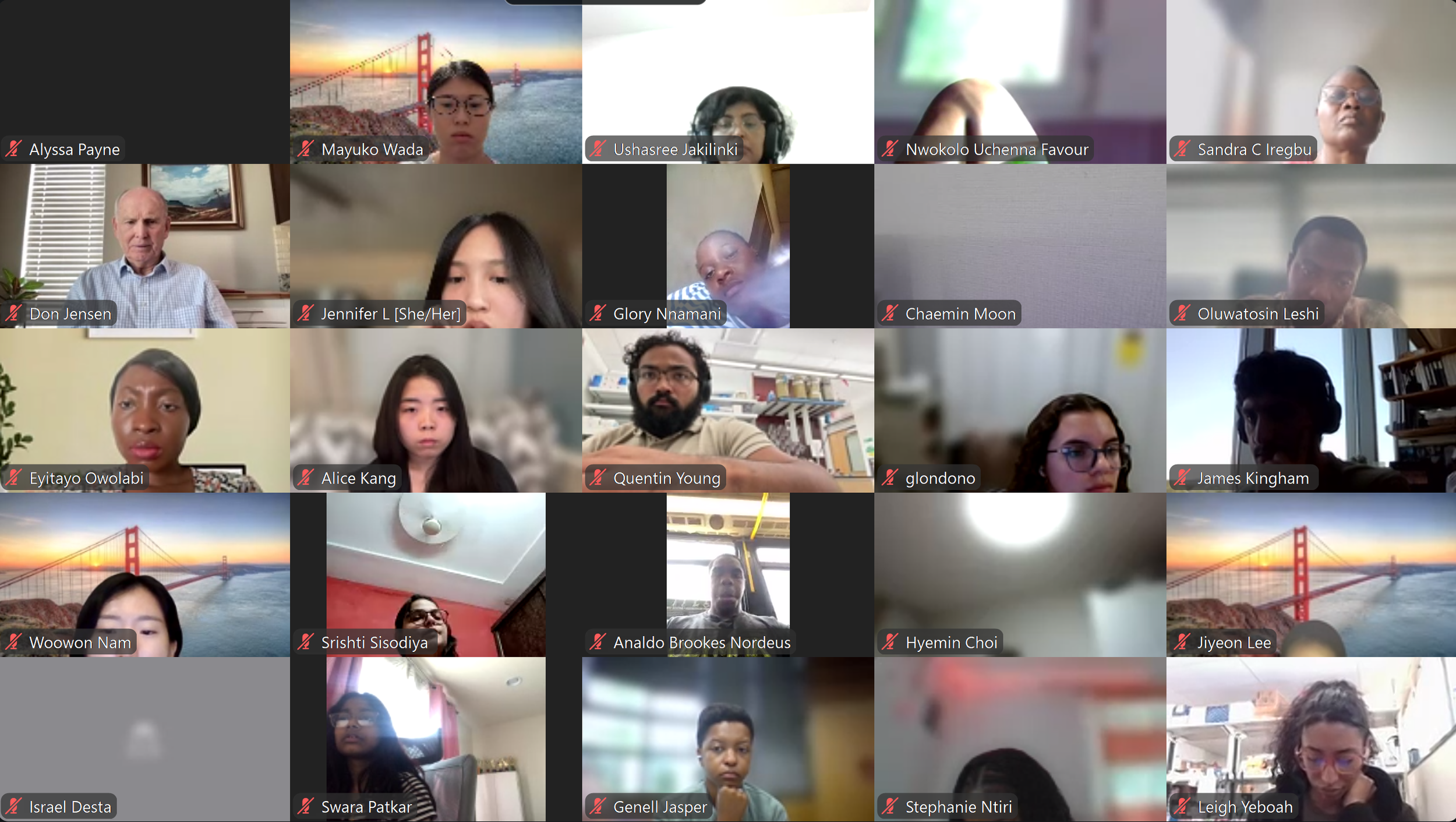
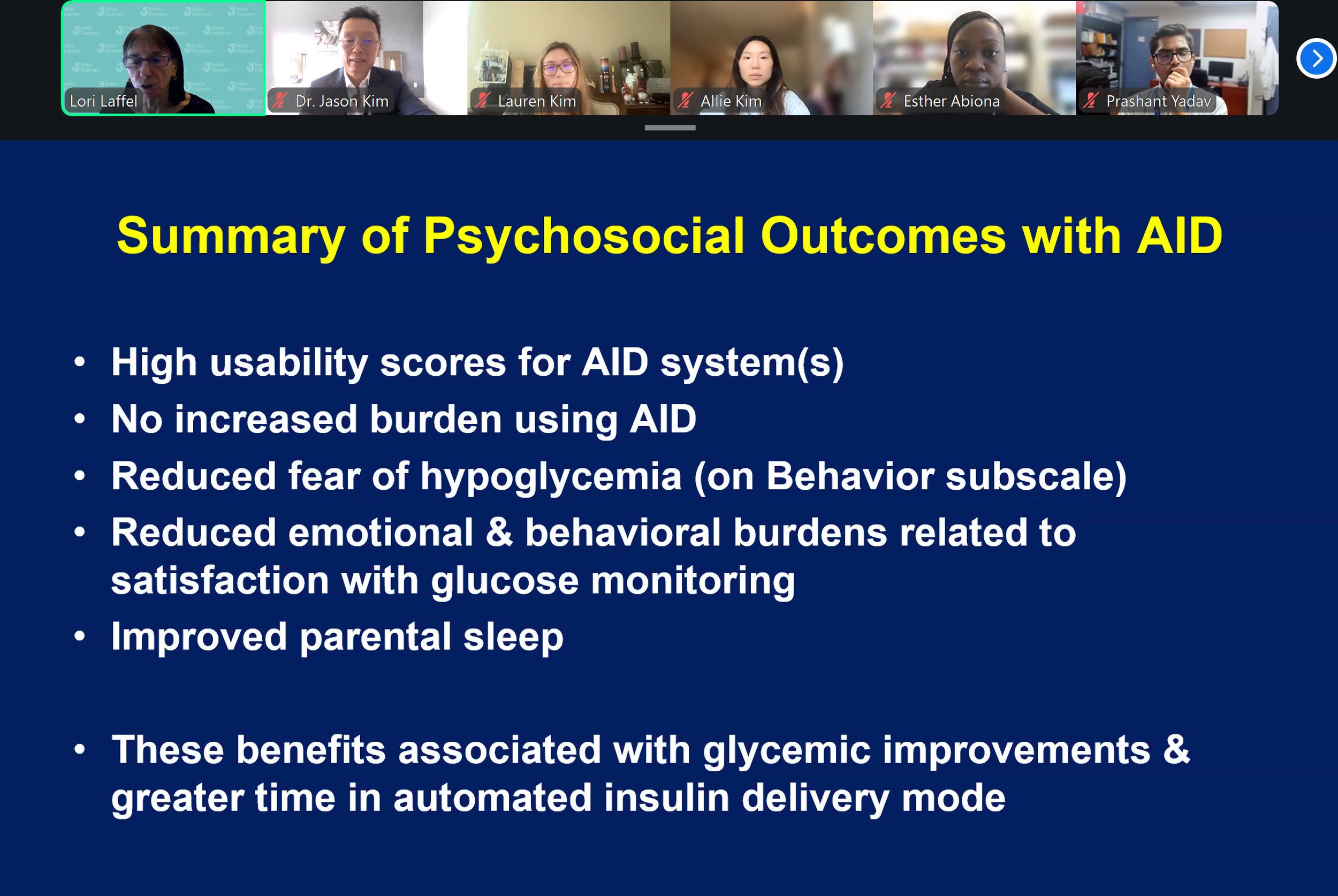
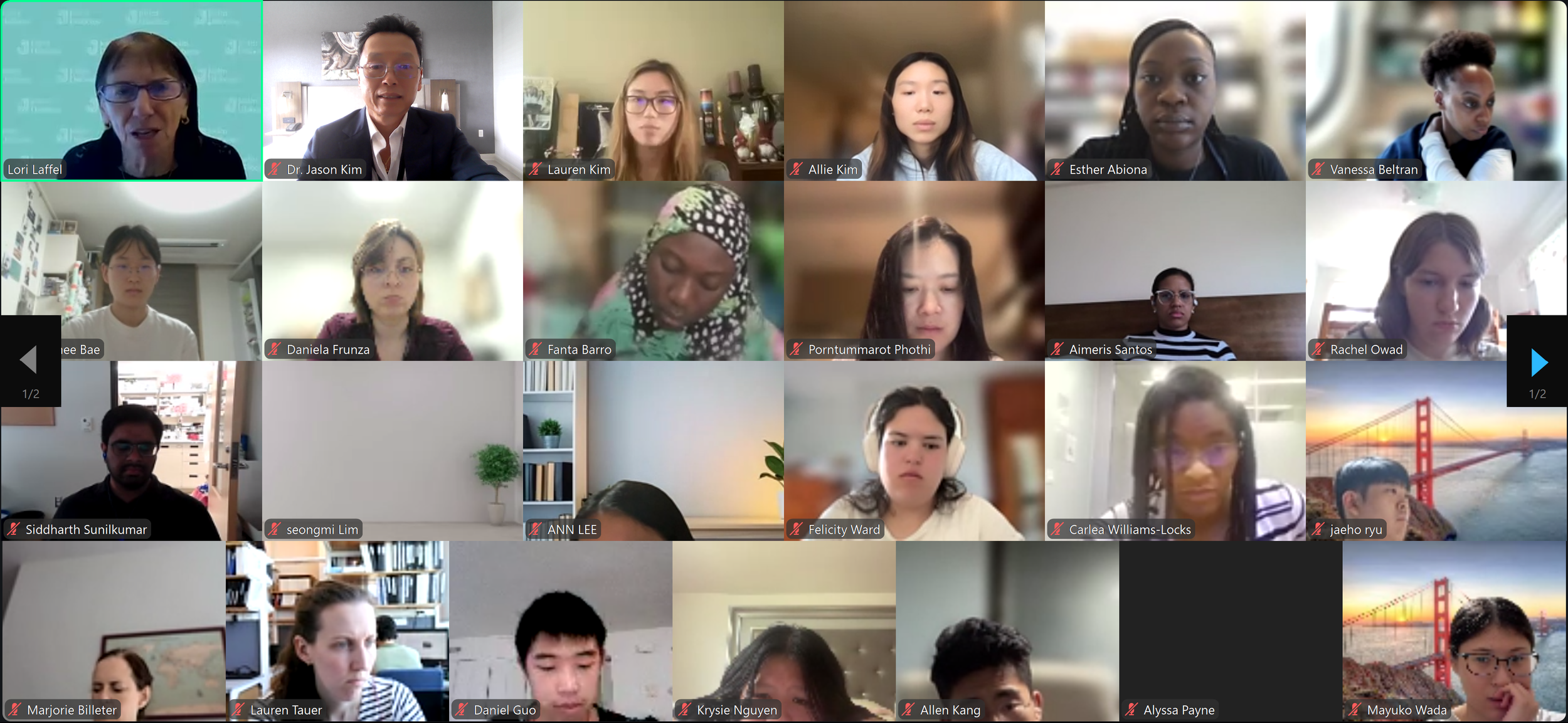
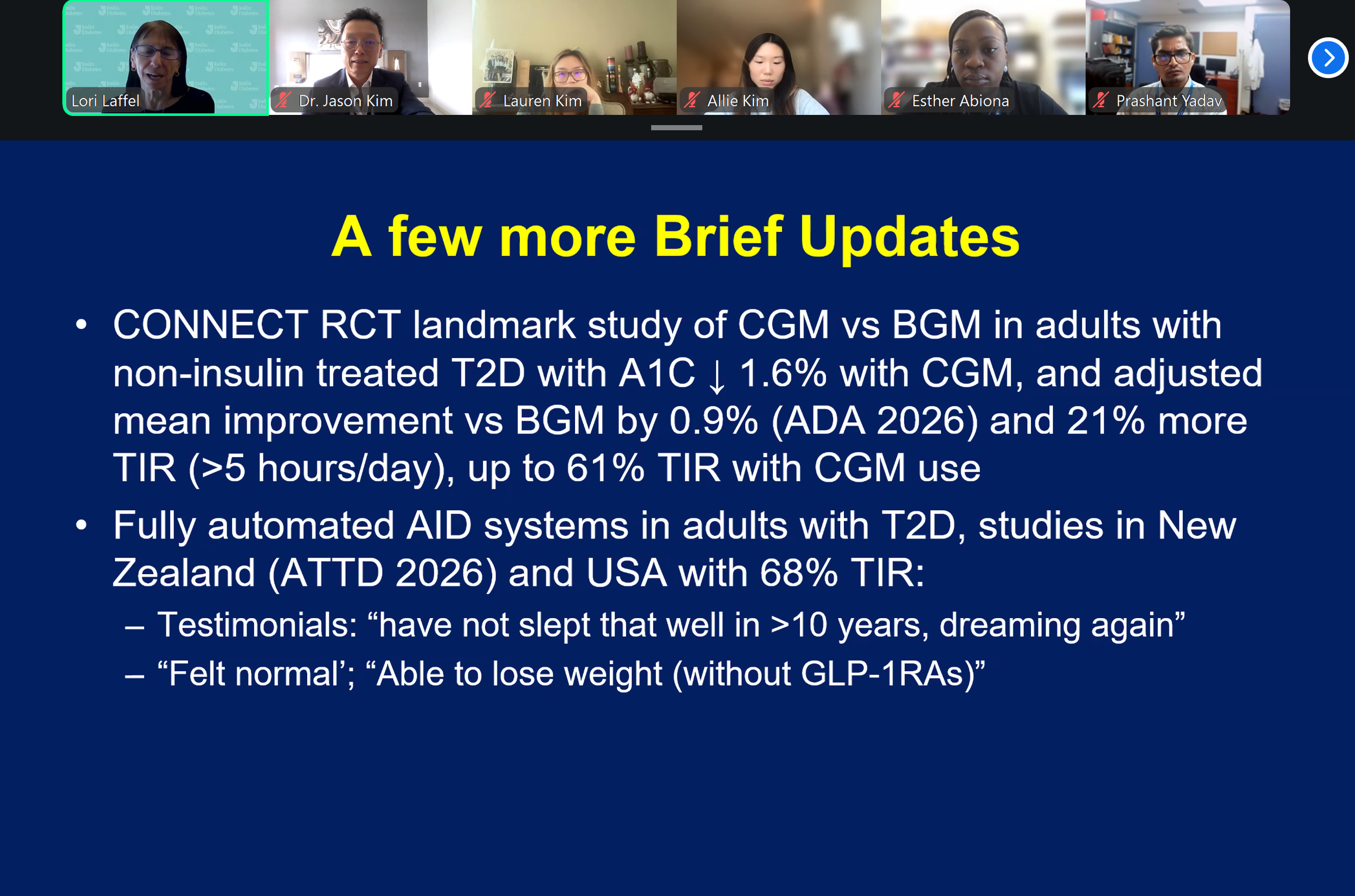
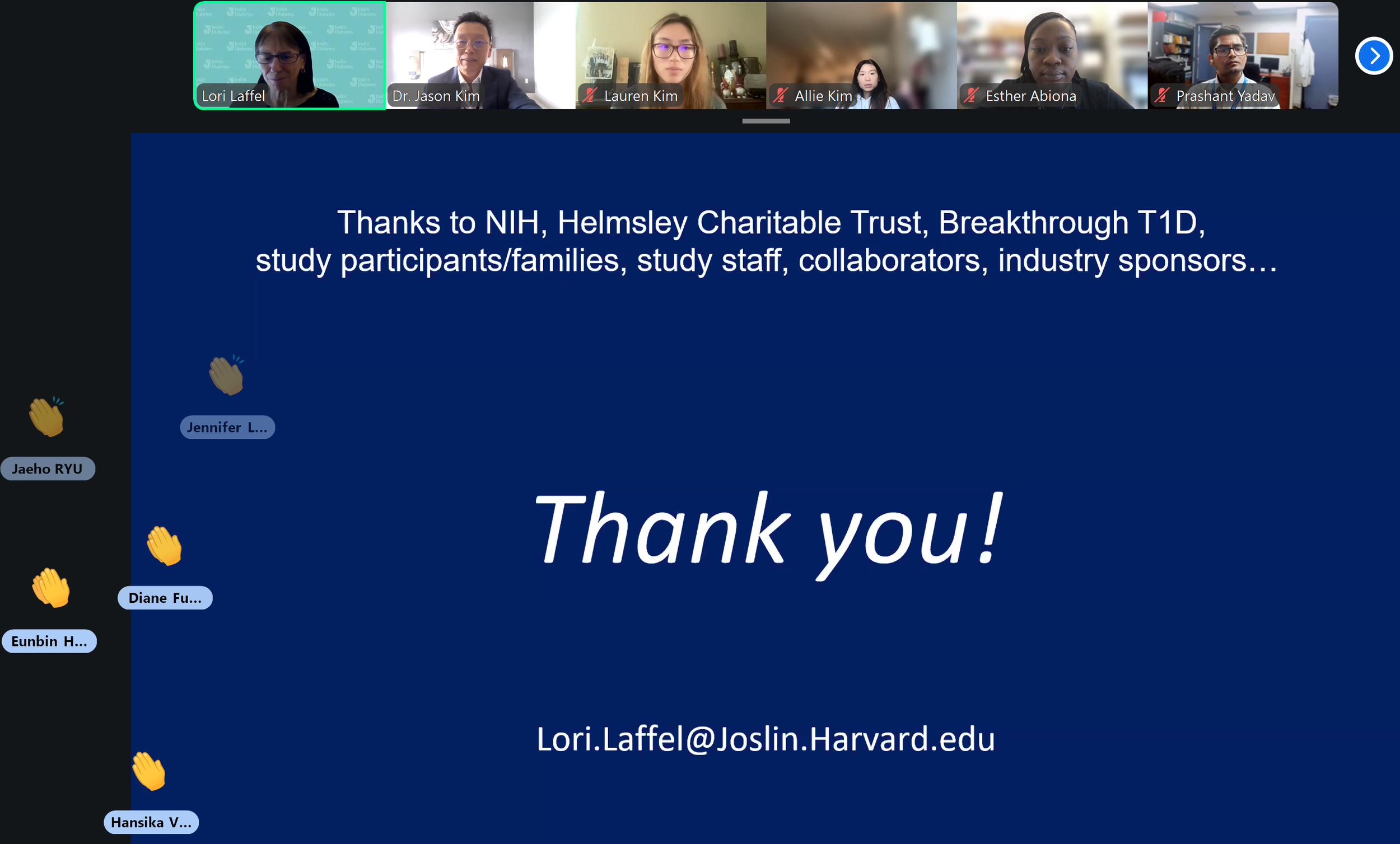
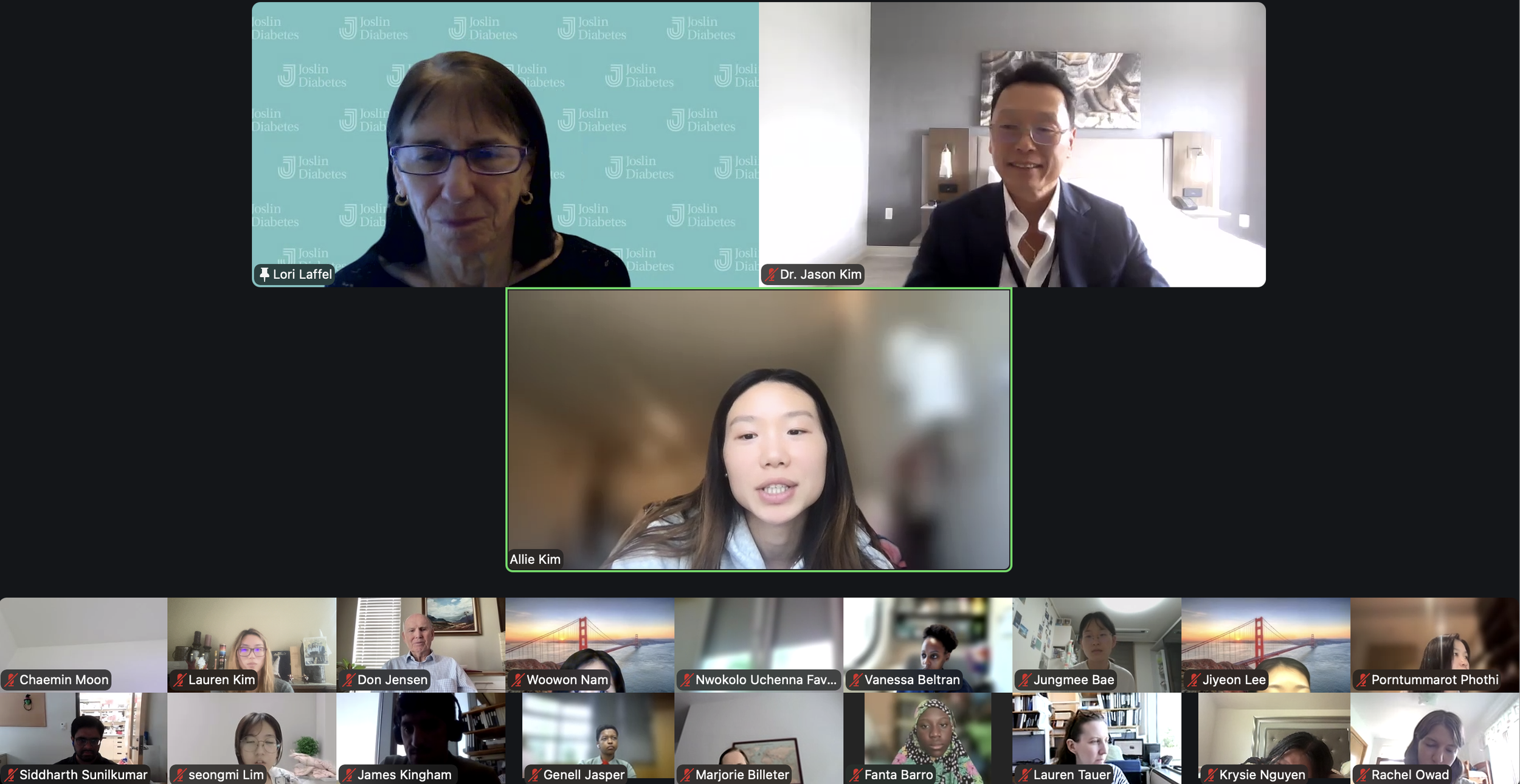
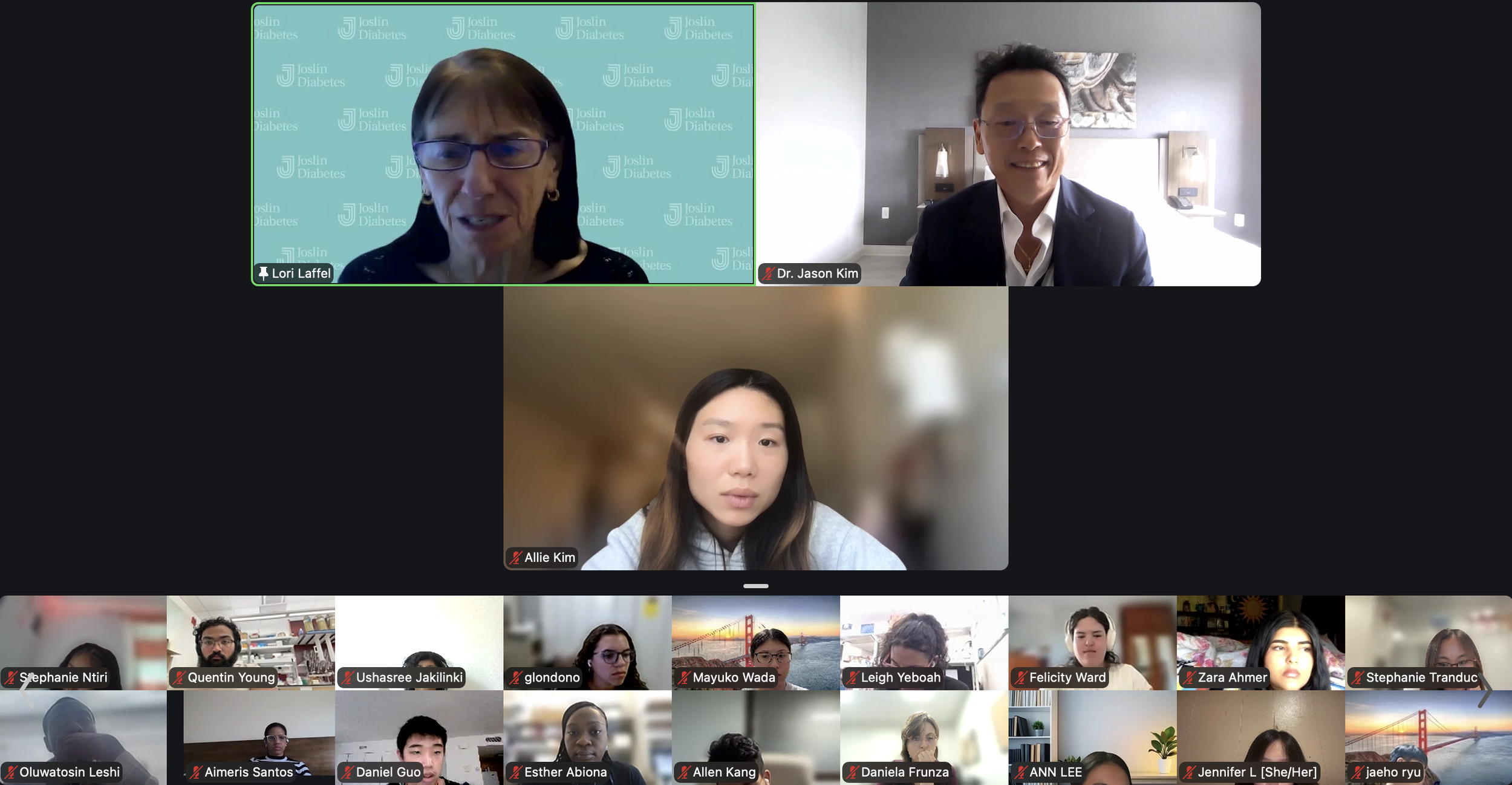
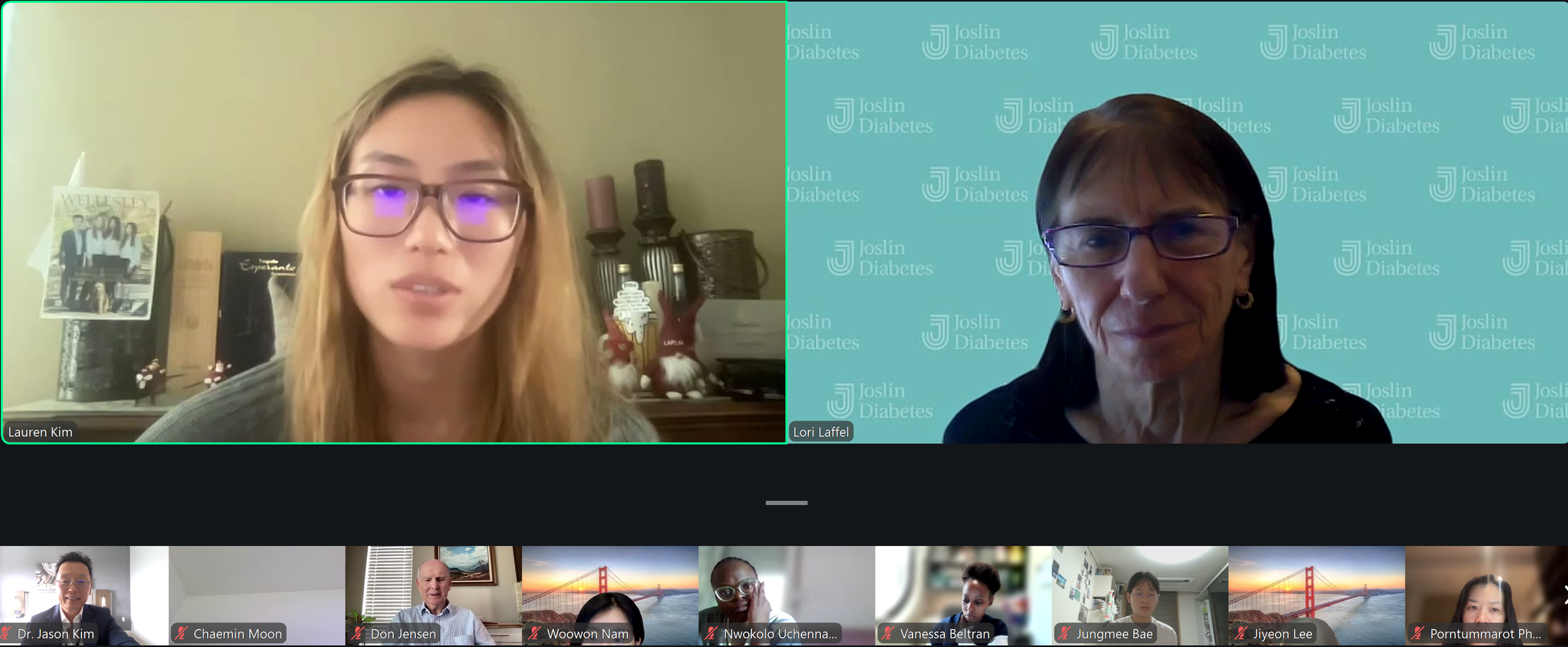
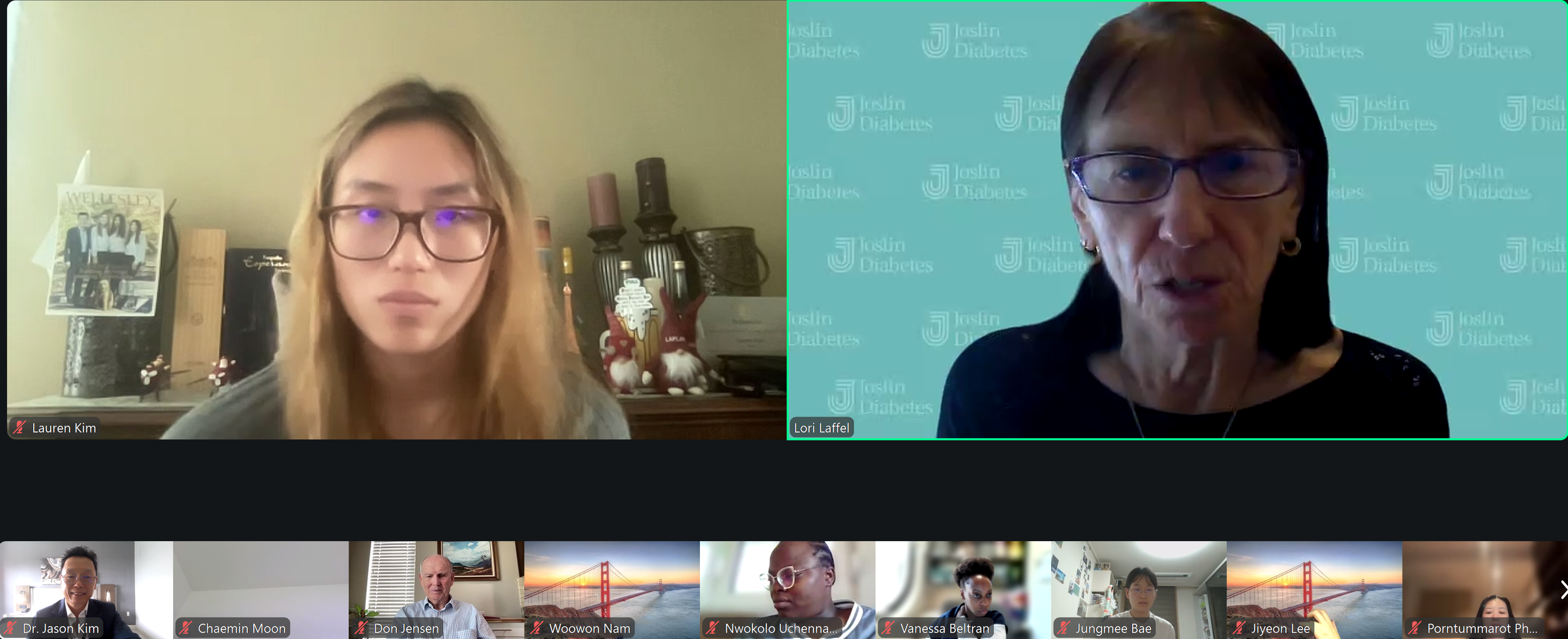
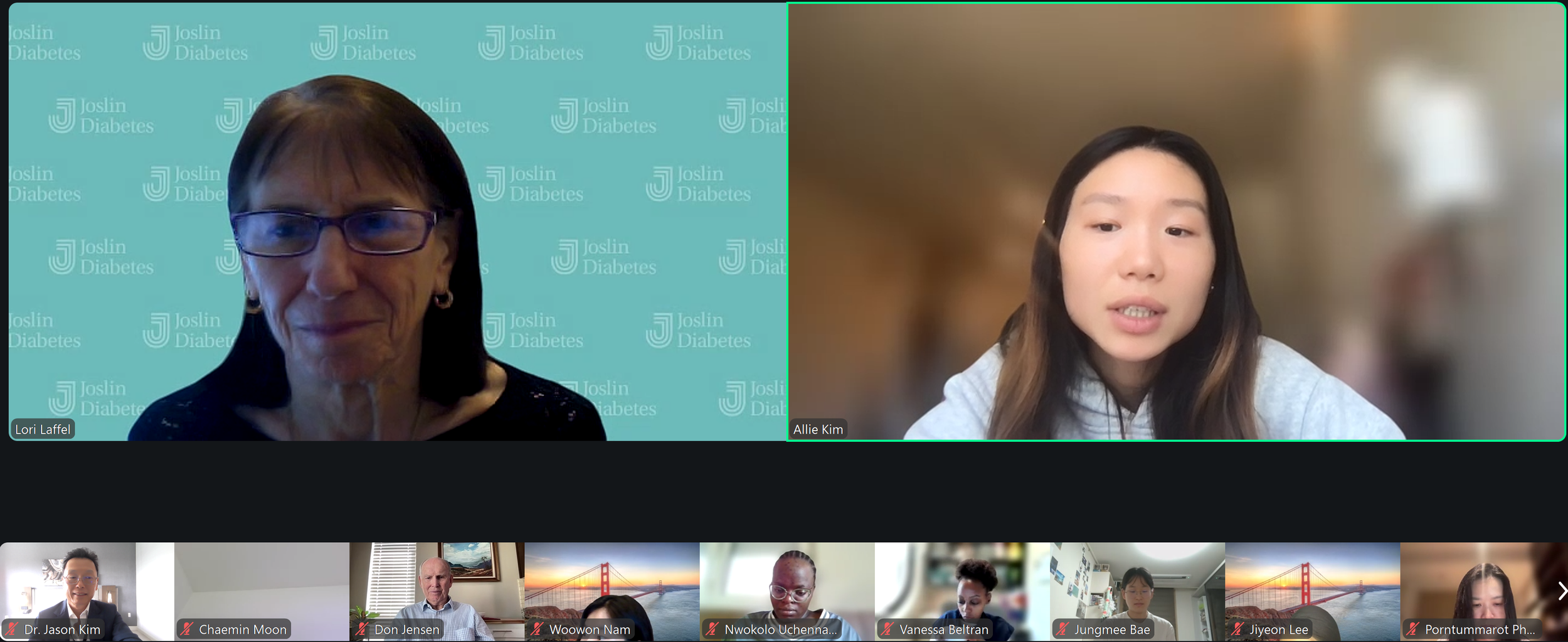
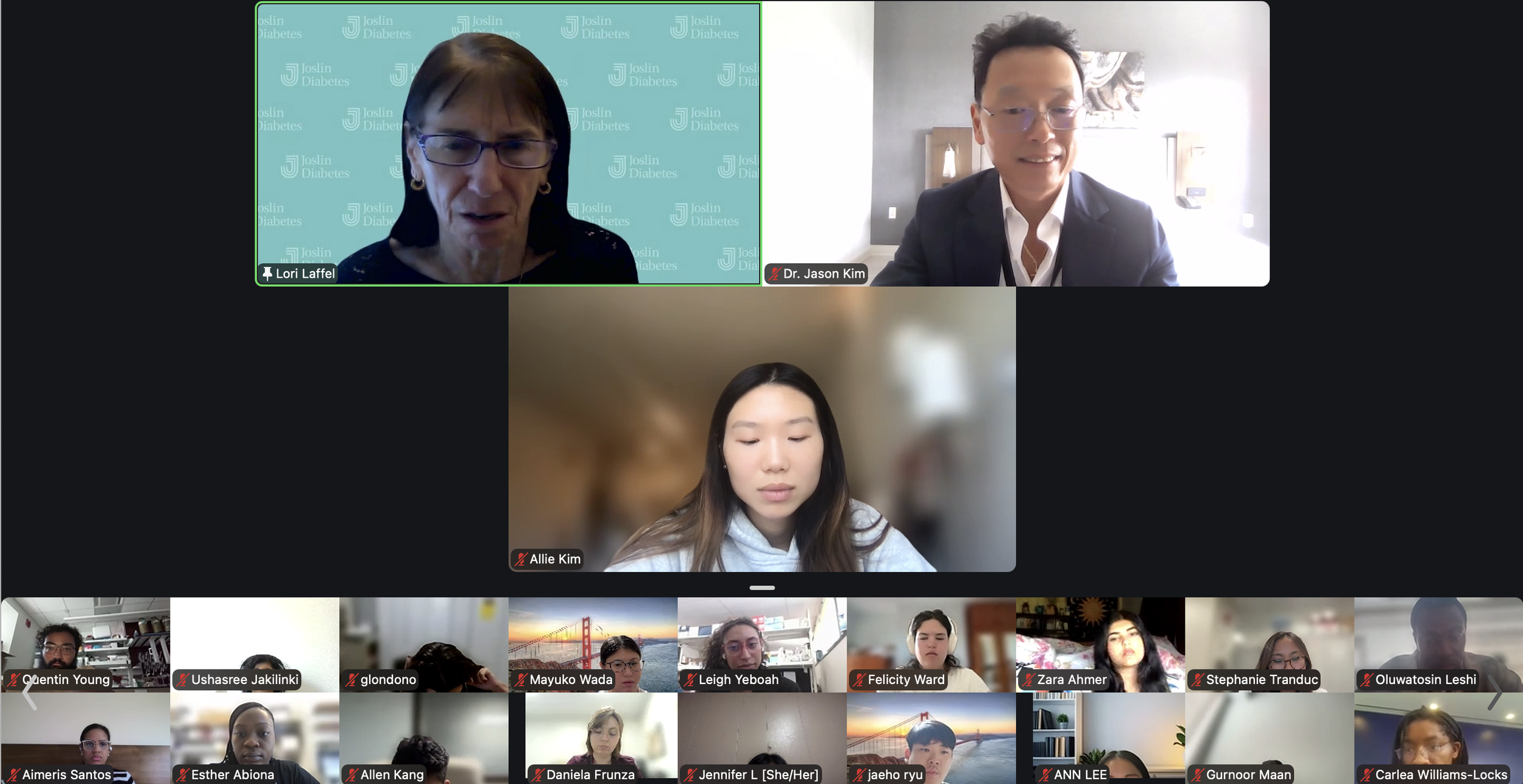
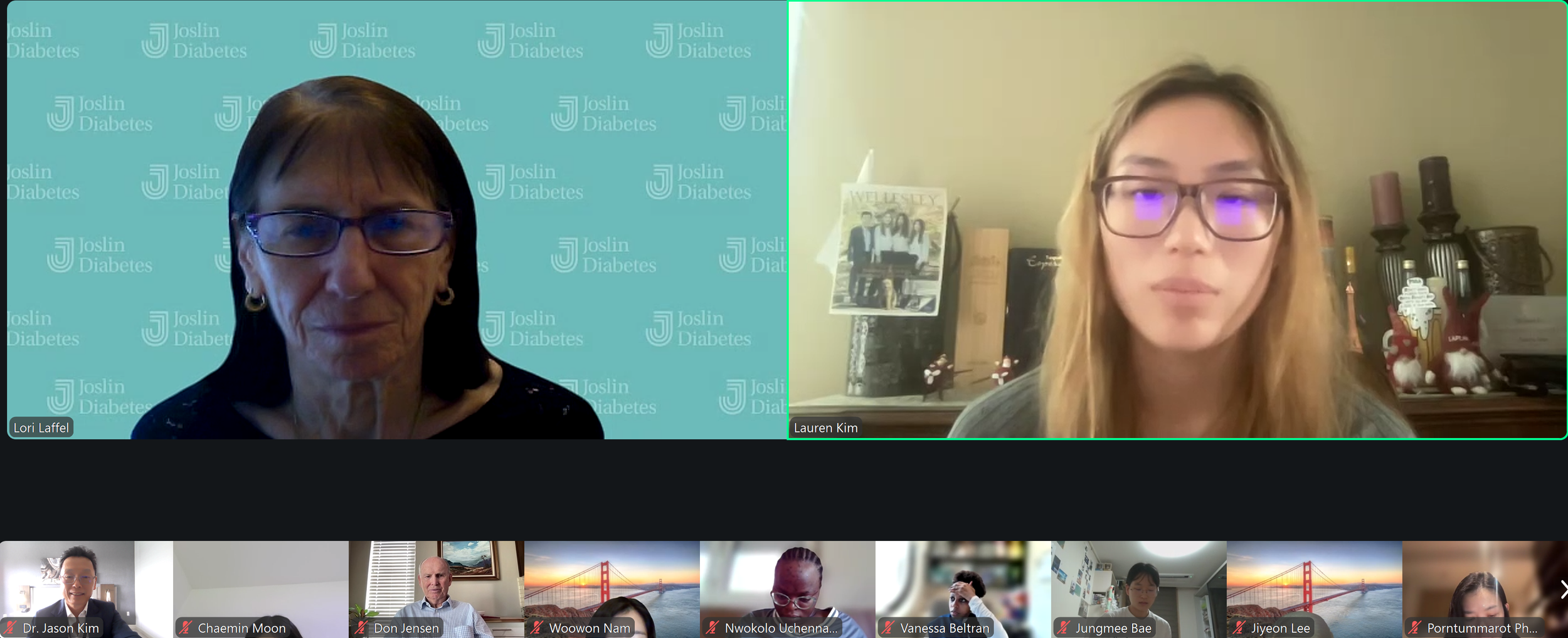
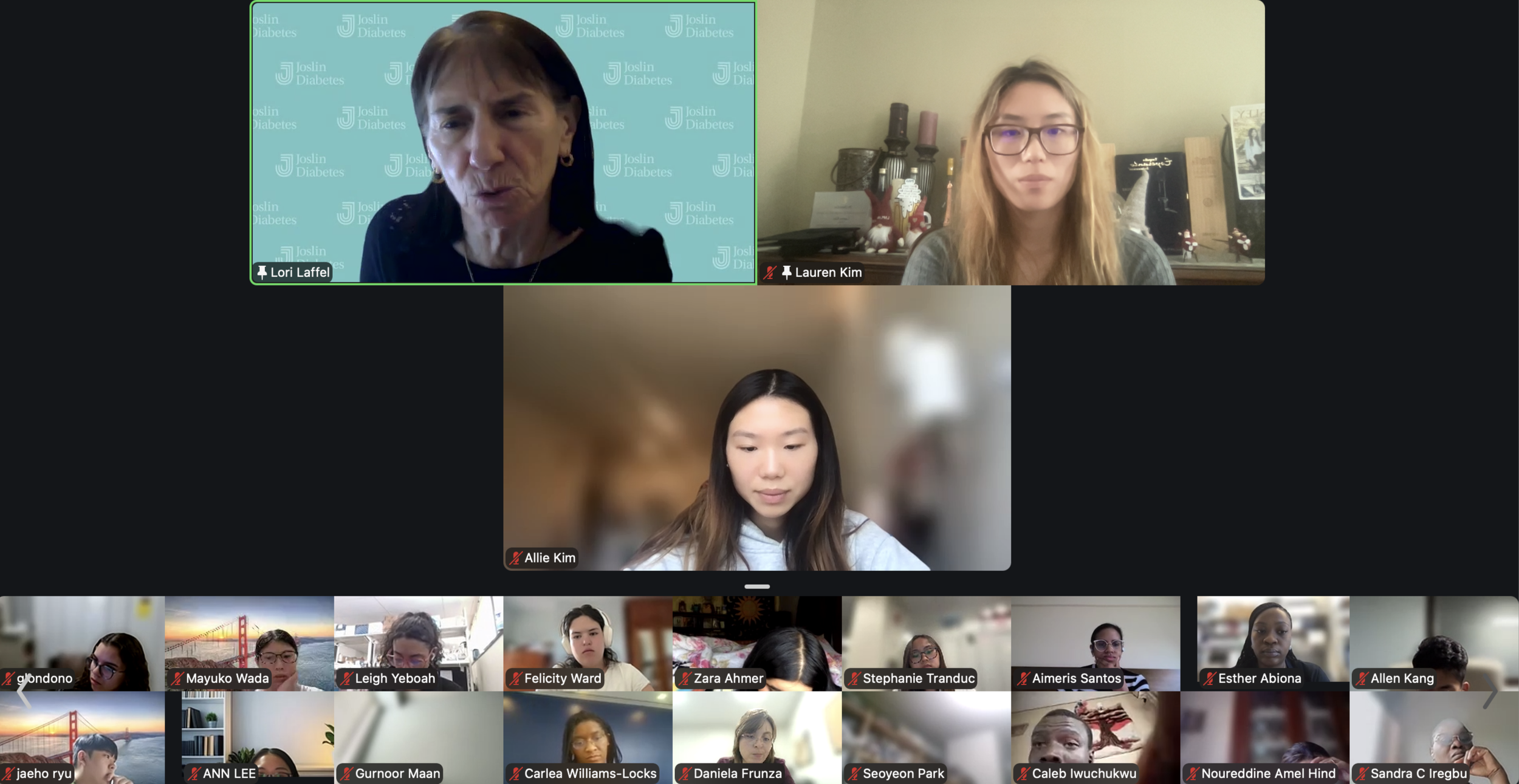
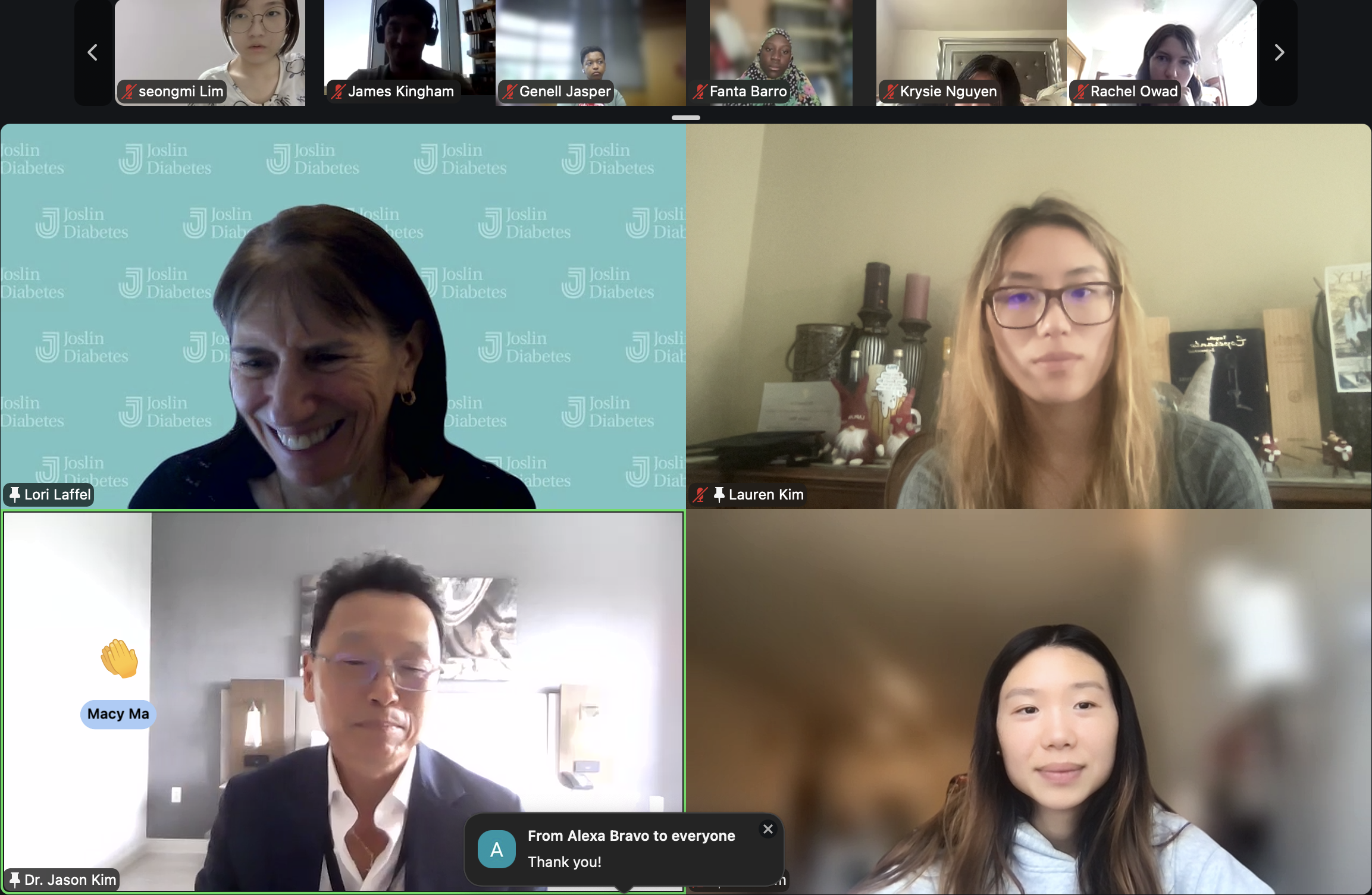

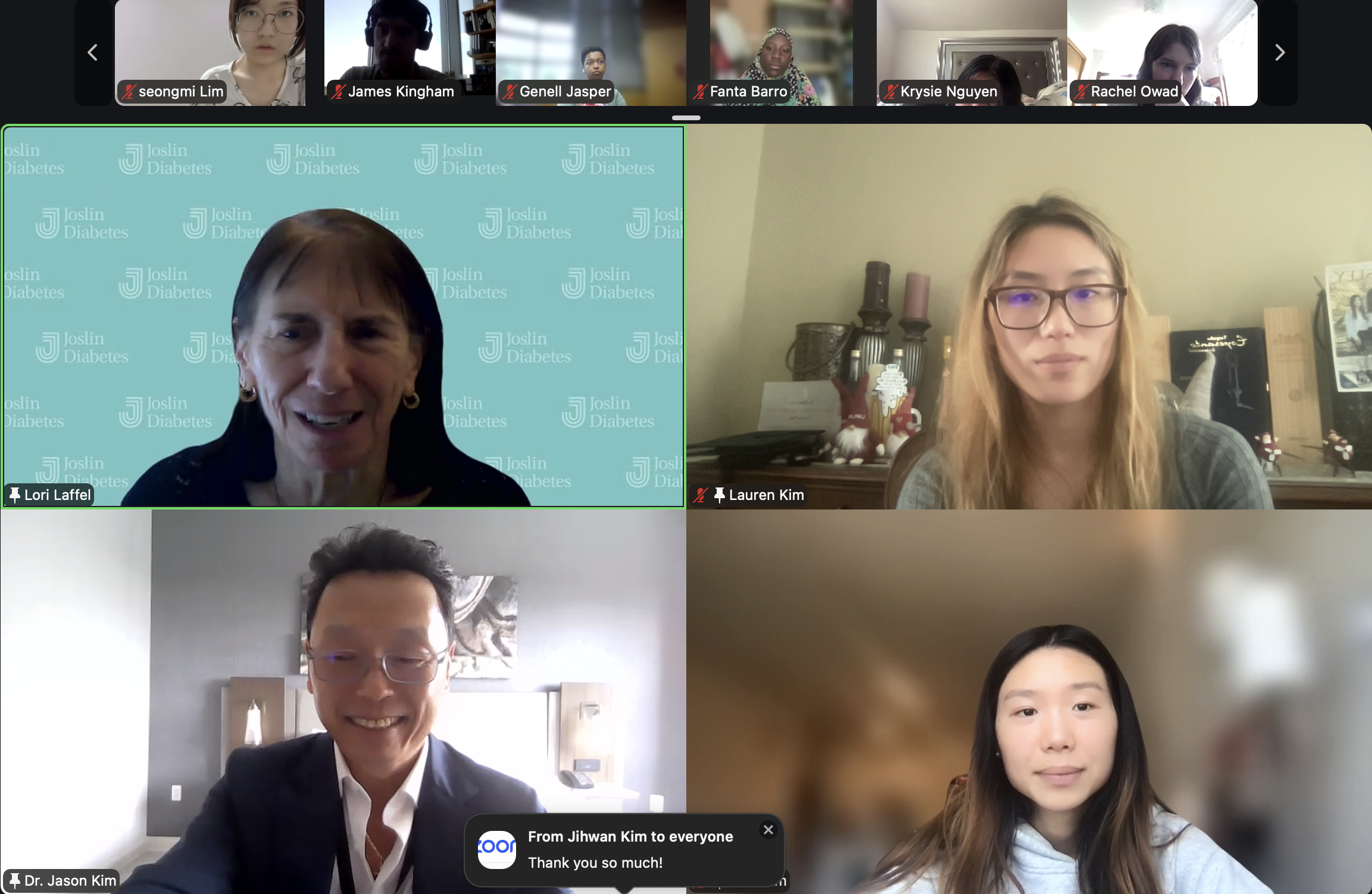
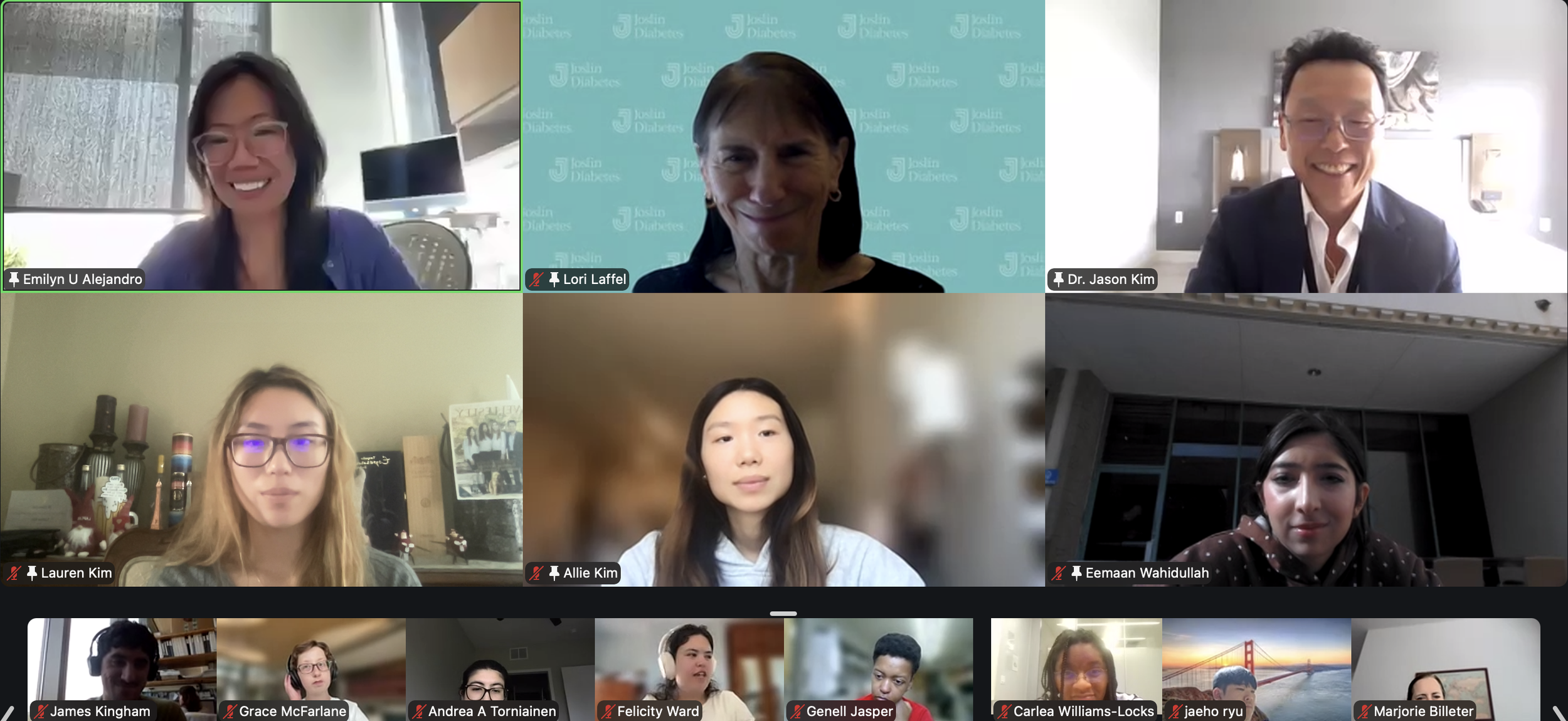
August 12, 2026
Open Mic Forum by Dr. Jason Kim (University of Massachusetts Chan Medical School)
Today’s DVSC26 program ends with an Open Mic Forum where our participants are invited to ask questions and engage in a lively discussion with video on and audio unmuted.
-
![Session 2: Opening Session & Introduction to Diabetes by Lauren, Allison, and Dr. Jason Kim (University of Massachusetts Medical School)]()
August 12, 2026 (Open Mic Forum - Part 1)
Session 9: “Early-Life Origins of Type 2 Diabetes” by Dr. Emilyn Alejandro (University of Minnesota Medical School)
Session 10: “Update on Advanced Diabetes Technologies Use in Type 1 and Type 2 Diabetes” by Dr. Lori Laffel (Harvard Medical School)During the Open Mic Forum, the DVC team answers questions from the audience and engages in an interactive discussion with video on and audio unmuted.
-
![]()
August 12, 2026 (Open Mic Forum - Part 2)
Session 9: “Early-Life Origins of Type 2 Diabetes” by Dr. Emilyn Alejandro (University of Minnesota Medical School)
Session 10: “Update on Advanced Diabetes Technologies Use in Type 1 and Type 2 Diabetes” by Dr. Lori Laffel (Harvard Medical School)During the Open Mic Forum, the DVC team answers questions from the audience and engages in an interactive discussion with video on and audio unmuted.
-
![]()
August 12, 2026 (Open Mic Forum - Part 3)
Session 9: “Early-Life Origins of Type 2 Diabetes” by Dr. Emilyn Alejandro (University of Minnesota Medical School)
Session 10: “Update on Advanced Diabetes Technologies Use in Type 1 and Type 2 Diabetes” by Dr. Lori Laffel (Harvard Medical School)During the Open Mic Forum, the DVC team answers questions from the audience and engages in an interactive discussion with video on and audio unmuted.
-
![]()
August 12, 2026 (Open Mic Forum - Part 4)
Session 9: “Early-Life Origins of Type 2 Diabetes” by Dr. Emilyn Alejandro (University of Minnesota Medical School)
Session 10: “Update on Advanced Diabetes Technologies Use in Type 1 and Type 2 Diabetes” by Dr. Lori Laffel (Harvard Medical School)During the Open Mic Forum, the DVC team answers questions from the audience and engages in an interactive discussion with video on and audio unmuted.
-
![]()
August 12, 2026 (Open Mic Forum - Part 5)
Session 9: “Early-Life Origins of Type 2 Diabetes” by Dr. Emilyn Alejandro (University of Minnesota Medical School)
Session 10: “Update on Advanced Diabetes Technologies Use in Type 1 and Type 2 Diabetes” by Dr. Lori Laffel (Harvard Medical School)During the Open Mic Forum, the DVC team answers questions from the audience and engages in an interactive discussion with video on and audio unmuted.
-
![]()
August 12, 2026 (Open Mic Forum - Part 6)
Session 9: “Early-Life Origins of Type 2 Diabetes” by Dr. Emilyn Alejandro (University of Minnesota Medical School)
Session 10: “Update on Advanced Diabetes Technologies Use in Type 1 and Type 2 Diabetes” by Dr. Lori Laffel (Harvard Medical School)During the Open Mic Forum, the DVC team answers questions from the audience and engages in an interactive discussion with video on and audio unmuted.
-
![]()
August 12, 2026 (Open Mic Forum - Part 7)
Session 9: “Early-Life Origins of Type 2 Diabetes” by Dr. Emilyn Alejandro (University of Minnesota Medical School)
Session 10: “Update on Advanced Diabetes Technologies Use in Type 1 and Type 2 Diabetes” by Dr. Lori Laffel (Harvard Medical School)During the Open Mic Forum, the DVC team answers questions from the audience and engages in an interactive discussion with video on and audio unmuted.
-
![]()
August 12, 2026 (Open Mic Forum - Part 8)
Session 9: “Early-Life Origins of Type 2 Diabetes” by Dr. Emilyn Alejandro (University of Minnesota Medical School)
Session 10: “Update on Advanced Diabetes Technologies Use in Type 1 and Type 2 Diabetes” by Dr. Lori Laffel (Harvard Medical School)During the Open Mic Forum, the DVC team answers questions from the audience and engages in an interactive discussion with video on and audio unmuted.
-
![]()
August 12, 2026 (Open Mic Forum - Part 9)
Session 9: “Early-Life Origins of Type 2 Diabetes” by Dr. Emilyn Alejandro (University of Minnesota Medical School)
Session 10: “Update on Advanced Diabetes Technologies Use in Type 1 and Type 2 Diabetes” by Dr. Lori Laffel (Harvard Medical School)During the Open Mic Forum, the DVC team answers questions from the audience and engages in an interactive discussion with video on and audio unmuted.
-
![]()
August 12, 2026 (Open Mic Forum - Part 10)
Session 9: “Early-Life Origins of Type 2 Diabetes” by Dr. Emilyn Alejandro (University of Minnesota Medical School)
Session 10: “Update on Advanced Diabetes Technologies Use in Type 1 and Type 2 Diabetes” by Dr. Lori Laffel (Harvard Medical School)During the Open Mic Forum, the DVC team answers questions from the audience and engages in an interactive discussion with video on and audio unmuted.
-
![]()
August 12, 2026 (Open Mic Forum - Part 11)
Session 9: “Early-Life Origins of Type 2 Diabetes” by Dr. Emilyn Alejandro (University of Minnesota Medical School)
Session 10: “Update on Advanced Diabetes Technologies Use in Type 1 and Type 2 Diabetes” by Dr. Lori Laffel (Harvard Medical School)During the Open Mic Forum, the DVC team answers questions from the audience and engages in an interactive discussion with video on and audio unmuted.
-
![]()
August 12, 2026 (Open Mic Forum - Part 12)
Session 9: “Early-Life Origins of Type 2 Diabetes” by Dr. Emilyn Alejandro (University of Minnesota Medical School)
Session 10: “Update on Advanced Diabetes Technologies Use in Type 1 and Type 2 Diabetes” by Dr. Lori Laffel (Harvard Medical School)During the Open Mic Forum, the DVC team answers questions from the audience and engages in an interactive discussion with video on and audio unmuted.
-
![]()
August 12, 2026 (Open Mic Forum - Part 13)
Session 9: “Early-Life Origins of Type 2 Diabetes” by Dr. Emilyn Alejandro (University of Minnesota Medical School)
Session 10: “Update on Advanced Diabetes Technologies Use in Type 1 and Type 2 Diabetes” by Dr. Lori Laffel (Harvard Medical School)During the Open Mic Forum, the DVC team answers questions from the audience and engages in an interactive discussion with video on and audio unmuted.
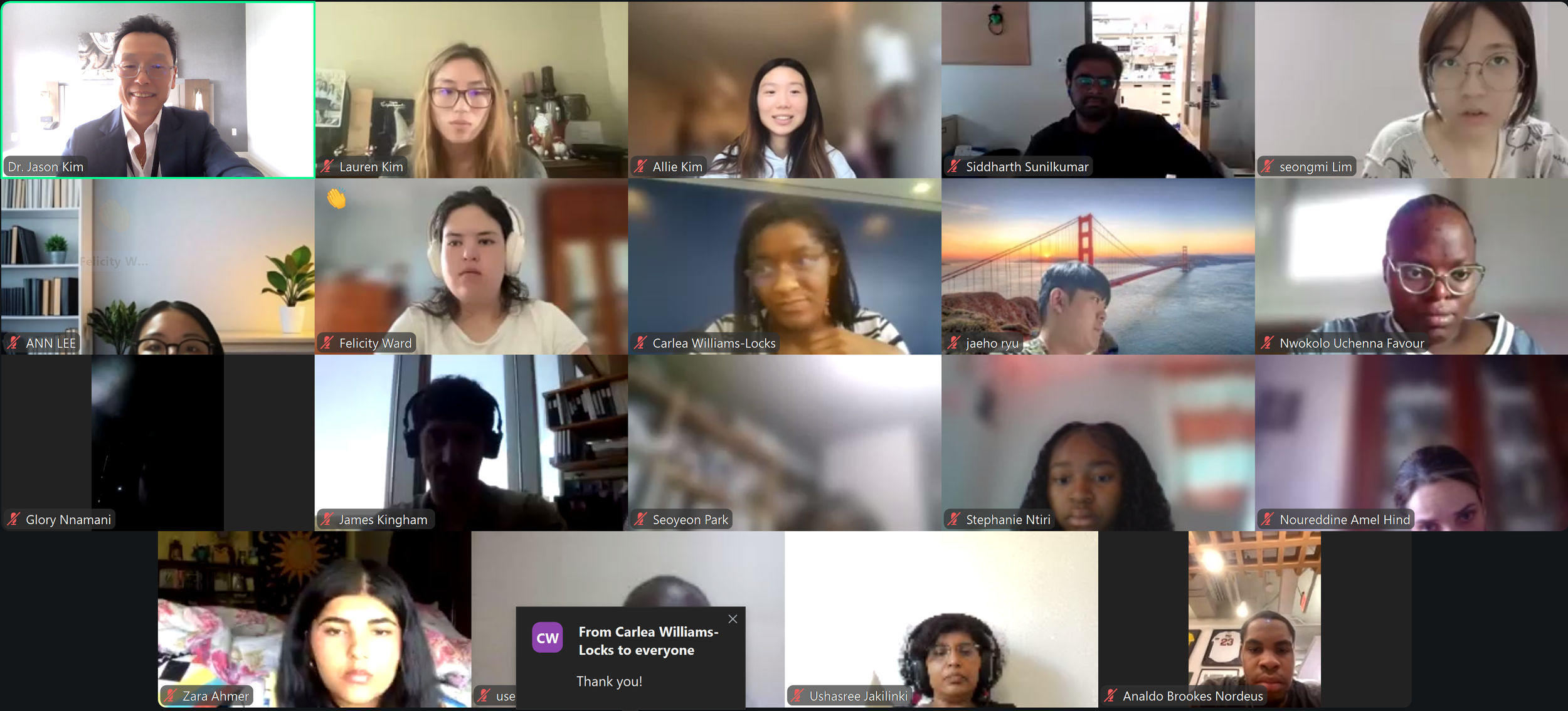
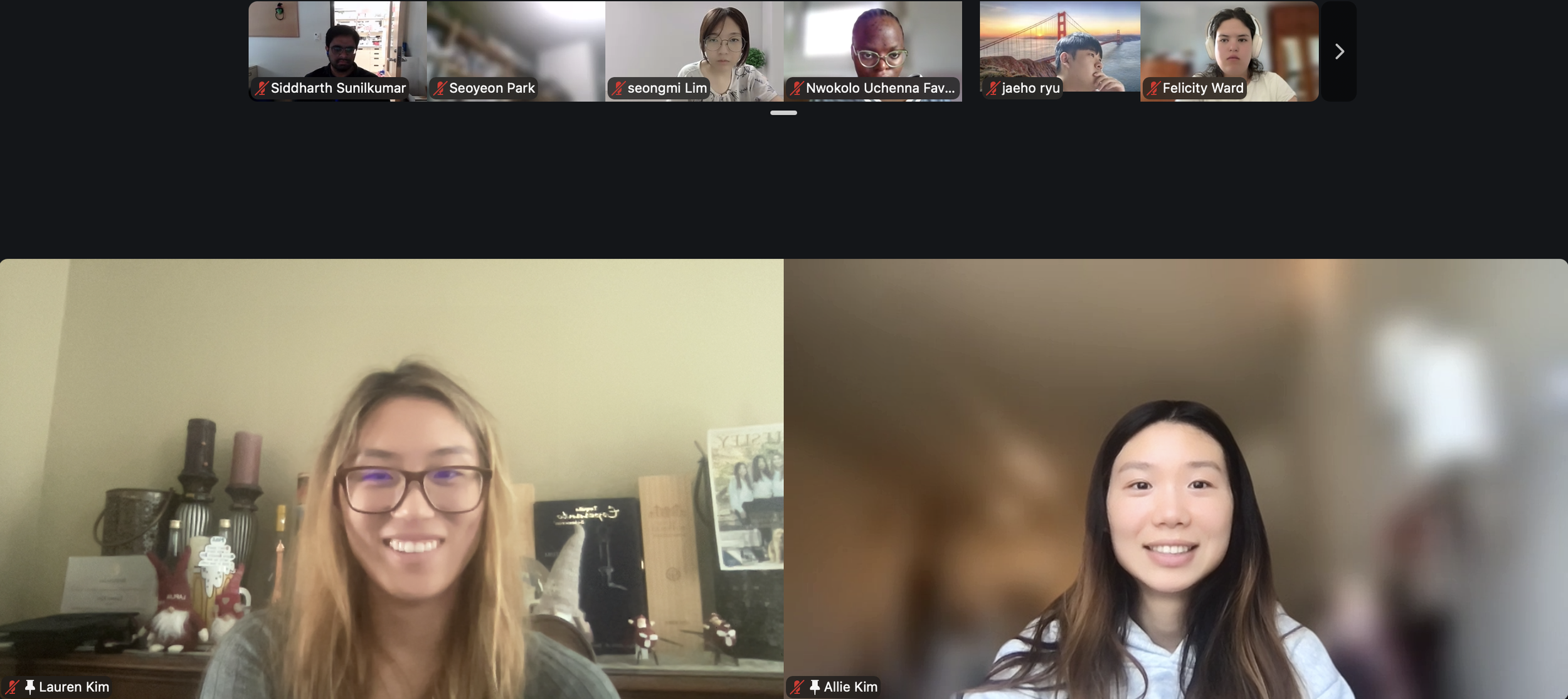
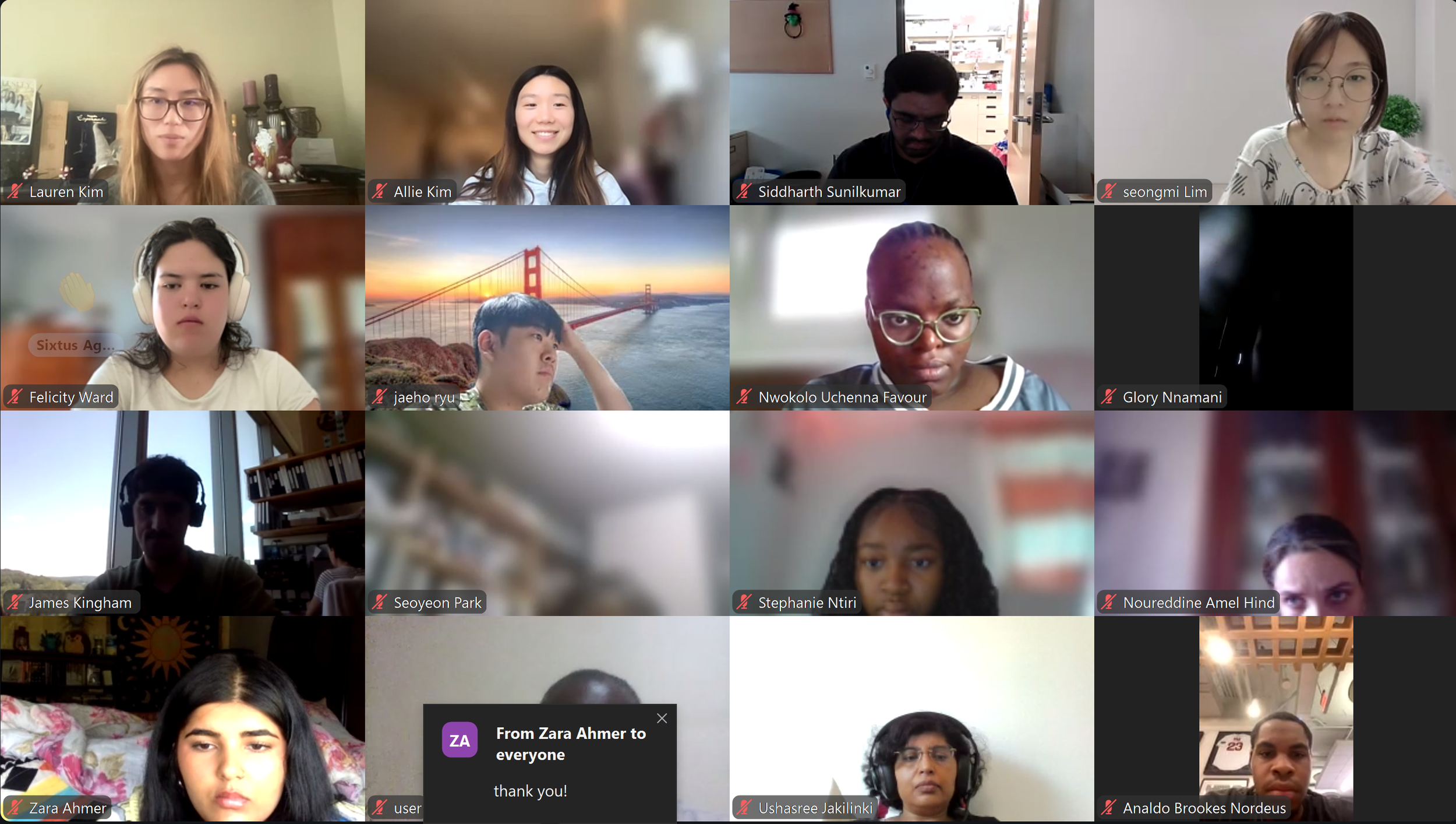



August 14, 2026
Session 11. Role of Inflammation in Type 2 Diabetes and Fatty Liver Disease by Dr. Jason Kim (University of Massachusetts Chan Medical School)
The Closing Sessions began with an exciting presentation by Dr. Jason Kim on inflammation as a molecular link between obesity and type 2 diabetes and one of its major comorbidities, fatty liver disease. Dr. Kim began by highlighting that type 2 diabetes is a chronic inflammatory and progressive metabolic disease led by obesity and insulin resistance. Dr. Kim introduced key discoveries made in the early 2000’s when a pro-inflammatory cytokine, interleukin (IL)-6, was shown to cause insulin resistance in skeletal muscle and the liver, and macrophages were shown to infiltrate adipose tissue in obesity, thus shaping an exciting new paradigm on the role of inflammation in type 2 diabetes. Dr. Kim has found that macrophage-associated inflammation was also observed in skeletal muscle, liver, and heart, reshaping the paradigm that obesity is a chronic state of low-grade systemic inflammation. Dr. Kim discussed how IL-10 is a major anti-inflammatory cytokine in our body, and muscle-selective overexpression of IL-10 rescued mice from insulin resistance associated with obesity and aging. This was due to IL-10’s effects to attenuate obesity- and aging-mediated inflammation in skeletal muscle. Dr. Kim introduced how excess weight gain is a common issue in pregnancy, and offspring mice from high-fat diet-fed females (dams) developed insulin resistance with inflammation in the liver, supporting the important notion that excess weight gain during pregnancy may contribute to gestational diabetes and intergenerational risk for diabetes. Dr. Kim discussed the role of inflammation in metabolic dysfunction-associated steatotic liver disease (MASLD) and how IFNgamma signaling in macrophages regulates obesity-mediated inflammation and insulin resistance in the liver. Mice with a conditional loss of IFNgamma signaling in macrophages were protected from diet-induced insulin resistance in the liver and fatty liver progression to inflammation and fibrosis, implicating macrophage IFNgamma signaling as a critical checkpoint in the development of metabolic dysfunction-associated steatohepatitis (MASH). Dr. Kim ended by briefly sharing preliminary data from a recent NIH-funded project focusing on the biological connection between Alzheimer’s disease and type 2 diabetes and further discussed an important role of gut microbiome in metabolic health.
-
![Session 2: Opening Session & Introduction to Diabetes by Lauren, Allison, and Dr. Jason Kim (University of Massachusetts Medical School)]()
August 14, 2026 (Session 11 - Part 1)
Session 11: “Role of Inflammation in Type 2 Diabetes and Fatty Liver Disease” by Dr. Jason Kim (University of Massachusetts Chan Medical School)
Session 12: “Preparing for a Career in Science and Medicine” by Dr. Jason Kim (University of Massachusetts Chan Medical School)
Session 13: “Closing Session” by DVC Team (Lauren Kim, Allison Kim, and Dr. Jason Kim)Dr. Kim welcomes our DVSC26 participants from all around the world and congratulates them on completing the Diabetes Virtual Summer Camp 2026.
-
![]()
August 14, 2026 (Session 11 - Part 2)
Session 11: “Role of Inflammation in Type 2 Diabetes and Fatty Liver Disease” by Dr. Jason Kim (University of Massachusetts Chan Medical School)
Session 12: “Preparing for a Career in Science and Medicine” by Dr. Jason Kim (University of Massachusetts Chan Medical School)
Session 13: “Closing Session” by DVC Team (Lauren Kim, Allison Kim, and Dr. Jason Kim)Dr. Kim welcomes our DVSC26 participants from all around the world and congratulates them on completing the Diabetes Virtual Summer Camp 2026.
-
![]()
August 14, 2026 (Session 11 - Part 3)
Session 11: “Role of Inflammation in Type 2 Diabetes and Fatty Liver Disease” by Dr. Jason Kim (University of Massachusetts Chan Medical School)
This session introduces the topic of obesity, multifactorial causes for the rising obesity rates, and the danger of excess weight gain during pregnancy. The session presents inflammation in obesity and the molecular link between inflammation, insulin resistance, and type 2 diabetes. The session further discusses fatty liver disease as a major comorbidity of diabetes and how inflammation is also involved in the progression of fatty liver to metabolic dysfunction-associated steatohepatitis (MASH). Our recent work published in Nature Communications will be highlighted. The session ends with our latest NIH-funded research studying an important connection between Alzheimer’s disease and diabetes.
-
![]()
August 14, 2026 (Session 11 - Part 4)
Session 11: “Role of Inflammation in Type 2 Diabetes and Fatty Liver Disease” by Dr. Jason Kim (Professor of Molecular Medicine, Professor of Medicine, Division of Endocrinology, Metabolism, and Diabetes, Director, UMass Metabolic Disease Research Center, MD/PhD Admissions Committee, University of Massachusetts Chan Medical School)
-
![]()
August 14, 2026 (Session 11 - Part 5)
Session 11: “Role of Inflammation in Type 2 Diabetes and Fatty Liver Disease” by Dr. Jason Kim (University of Massachusetts Chan Medical School)
Dr. Kim began by highlighting that type 2 diabetes is a chronic inflammatory and progressive metabolic disease led by obesity and insulin resistance.
-
![]()
August 14, 2026 (Session 11 - Part 6)
Session 11: “Role of Inflammation in Type 2 Diabetes and Fatty Liver Disease” by Dr. Jason Kim (University of Massachusetts Chan Medical School)
Dr. Kim began by highlighting that type 2 diabetes is a chronic inflammatory and progressive metabolic disease led by obesity and insulin resistance.
-
![]()
August 14, 2026 (Session 11 - Part 7)
Session 11: “Role of Inflammation in Type 2 Diabetes and Fatty Liver Disease” by Dr. Jason Kim (University of Massachusetts Chan Medical School)
Dr. Kim introduced key discoveries made in the early 2000’s when a pro-inflammatory cytokine, interleukin (IL)-6, was shown to cause insulin resistance in skeletal muscle and the liver, and macrophages were shown to infiltrate adipose tissue in obesity, thus shaping an exciting new paradigm on the role of inflammation in type 2 diabetes.
-
![]()
August 14, 2026 (Session 11 - Part 8)
Session 11: “Role of Inflammation in Type 2 Diabetes and Fatty Liver Disease” by Dr. Jason Kim (University of Massachusetts Chan Medical School)
Dr. Kim introduced key discoveries made in the early 2000’s when a pro-inflammatory cytokine, interleukin (IL)-6, was shown to cause insulin resistance in skeletal muscle and the liver, and macrophages were shown to infiltrate adipose tissue in obesity, thus shaping an exciting new paradigm on the role of inflammation in type 2 diabetes.
-
![]()
August 14, 2026 (Session 11 - Part 9)
Session 11: “Role of Inflammation in Type 2 Diabetes and Fatty Liver Disease” by Dr. Jason Kim (University of Massachusetts Chan Medical School)
Dr. Kim introduced key discoveries made in the early 2000’s when a pro-inflammatory cytokine, interleukin (IL)-6, was shown to cause insulin resistance in skeletal muscle and the liver, and macrophages were shown to infiltrate adipose tissue in obesity, thus shaping an exciting new paradigm on the role of inflammation in type 2 diabetes.
-
![]()
August 14, 2026 (Session 11 - Part 10)
Session 11: “Role of Inflammation in Type 2 Diabetes and Fatty Liver Disease” by Dr. Jason Kim (University of Massachusetts Chan Medical School)
Dr. Kim introduced key discoveries made in the early 2000’s when a pro-inflammatory cytokine, interleukin (IL)-6, was shown to cause insulin resistance in skeletal muscle and the liver, and macrophages were shown to infiltrate adipose tissue in obesity, thus shaping an exciting new paradigm on the role of inflammation in type 2 diabetes.
-
![]()
August 14, 2026 (Session 11 - Part 11)
Session 11: “Role of Inflammation in Type 2 Diabetes and Fatty Liver Disease” by Dr. Jason Kim (University of Massachusetts Chan Medical School)
Dr. Kim introduced key discoveries made in the early 2000’s when a pro-inflammatory cytokine, interleukin (IL)-6, was shown to cause insulin resistance in skeletal muscle and the liver, and macrophages were shown to infiltrate adipose tissue in obesity, thus shaping an exciting new paradigm on the role of inflammation in type 2 diabetes.
-
![]()
August 14, 2026 (Session 11 - Part 12)
Session 11: “Role of Inflammation in Type 2 Diabetes and Fatty Liver Disease” by Dr. Jason Kim (University of Massachusetts Chan Medical School)
Dr. Kim introduced key discoveries made in the early 2000’s when a pro-inflammatory cytokine, interleukin (IL)-6, was shown to cause insulin resistance in skeletal muscle and the liver, and macrophages were shown to infiltrate adipose tissue in obesity, thus shaping an exciting new paradigm on the role of inflammation in type 2 diabetes.
-
![]()
August 14, 2026 (Session 11 - Part 13)
Session 11: “Role of Inflammation in Type 2 Diabetes and Fatty Liver Disease” by Dr. Jason Kim (University of Massachusetts Chan Medical School)
Dr. Kim has found that macrophage-associated inflammation was also observed in skeletal muscle, liver, and heart, reshaping the paradigm that obesity is a chronic state of low-grade systemic inflammation.
-
![]()
August 14, 2026 (Session 11 - Part 14)
Session 11: “Role of Inflammation in Type 2 Diabetes and Fatty Liver Disease” by Dr. Jason Kim (University of Massachusetts Chan Medical School)
Dr. Kim has found that macrophage-associated inflammation was also observed in skeletal muscle, liver, and heart, reshaping the paradigm that obesity is a chronic state of low-grade systemic inflammation.
-
![]()
August 14, 2026 (Session 11 - Part 15)
Session 11: “Role of Inflammation in Type 2 Diabetes and Fatty Liver Disease” by Dr. Jason Kim (University of Massachusetts Chan Medical School)
Dr. Kim has found that macrophage-associated inflammation was also observed in skeletal muscle, liver, and heart, reshaping the paradigm that obesity is a chronic state of low-grade systemic inflammation.
-
![]()
August 14, 2026 (Session 11 - Part 16)
Session 11: “Role of Inflammation in Type 2 Diabetes and Fatty Liver Disease” by Dr. Jason Kim (University of Massachusetts Chan Medical School)
Dr. Kim has found that macrophage-associated inflammation was also observed in skeletal muscle, liver, and heart, reshaping the paradigm that obesity is a chronic state of low-grade systemic inflammation.
-
![]()
August 14, 2026 (Session 11 - Part 17)
Session 11: “Role of Inflammation in Type 2 Diabetes and Fatty Liver Disease” by Dr. Jason Kim (University of Massachusetts Chan Medical School)
Dr. Kim discussed how IL-10 is a major anti-inflammatory cytokine in our body, and muscle-selective overexpression of IL-10 rescued mice from insulin resistance associated with obesity and aging. This was due to IL-10’s effects to attenuate obesity- and aging-mediated inflammation in skeletal muscle.
-
![]()
August 14, 2026 (Session 11 - Part 18)
Session 11: “Role of Inflammation in Type 2 Diabetes and Fatty Liver Disease” by Dr. Jason Kim (University of Massachusetts Chan Medical School)
Dr. Kim discussed how IL-10 is a major anti-inflammatory cytokine in our body, and muscle-selective overexpression of IL-10 rescued mice from insulin resistance associated with obesity and aging. This was due to IL-10’s effects to attenuate obesity- and aging-mediated inflammation in skeletal muscle.
-
![]()
August 14, 2026 (Session 11 - Part 18)
Session 11: “Role of Inflammation in Type 2 Diabetes and Fatty Liver Disease” by Dr. Jason Kim (University of Massachusetts Chan Medical School)
Dr. Kim discussed how IL-10 is a major anti-inflammatory cytokine in our body, and muscle-selective overexpression of IL-10 rescued mice from insulin resistance associated with obesity and aging. This was due to IL-10’s effects to attenuate obesity- and aging-mediated inflammation in skeletal muscle.
-
![]()
August 14, 2026 (Session 11 - Part 19)
Session 11: “Role of Inflammation in Type 2 Diabetes and Fatty Liver Disease” by Dr. Jason Kim (University of Massachusetts Chan Medical School)
Dr. Kim discussed how IL-10 is a major anti-inflammatory cytokine in our body, and muscle-selective overexpression of IL-10 rescued mice from insulin resistance associated with obesity and aging. This was due to IL-10’s effects to attenuate obesity- and aging-mediated inflammation in skeletal muscle.
-
![]()
August 14, 2026 (Session 11 - Part 20)
Session 11: “Role of Inflammation in Type 2 Diabetes and Fatty Liver Disease” by Dr. Jason Kim (University of Massachusetts Chan Medical School)
Dr. Kim discussed how IL-10 is a major anti-inflammatory cytokine in our body, and muscle-selective overexpression of IL-10 rescued mice from insulin resistance associated with obesity and aging. This was due to IL-10’s effects to attenuate obesity- and aging-mediated inflammation in skeletal muscle.
-
![]()
August 14, 2026 (Session 11 - Part 21)
Session 11: “Role of Inflammation in Type 2 Diabetes and Fatty Liver Disease” by Dr. Jason Kim (University of Massachusetts Chan Medical School)
Dr. Kim discussed how IL-10 is a major anti-inflammatory cytokine in our body, and muscle-selective overexpression of IL-10 rescued mice from insulin resistance associated with obesity and aging. This was due to IL-10’s effects to attenuate obesity- and aging-mediated inflammation in skeletal muscle.
-
![]()
August 14, 2026 (Session 11 - Part 22)
Session 11: “Role of Inflammation in Type 2 Diabetes and Fatty Liver Disease” by Dr. Jason Kim (University of Massachusetts Chan Medical School)
Dr. Kim introduced how excess weight gain is a common issue in pregnancy, and offspring mice from high-fat diet-fed females (dams) developed insulin resistance with inflammation in the liver, supporting the important notion that excess weight gain during pregnancy may contribute to gestational diabetes and intergenerational risk for diabetes.
-
![]()
August 14, 2026 (Session 11 - Part 23)
Session 11: “Role of Inflammation in Type 2 Diabetes and Fatty Liver Disease” by Dr. Jason Kim (University of Massachusetts Chan Medical School)
Dr. Kim introduced how excess weight gain is a common issue in pregnancy, and offspring mice from high-fat diet-fed females (dams) developed insulin resistance with inflammation in the liver, supporting the important notion that excess weight gain during pregnancy may contribute to gestational diabetes and intergenerational risk for diabetes.
-
![]()
August 14, 2026 (Session 11 - Part 24)
Session 11: “Role of Inflammation in Type 2 Diabetes and Fatty Liver Disease” by Dr. Jason Kim (University of Massachusetts Chan Medical School)
Dr. Kim introduced how excess weight gain is a common issue in pregnancy, and offspring mice from high-fat diet-fed females (dams) developed insulin resistance with inflammation in the liver, supporting the important notion that excess weight gain during pregnancy may contribute to gestational diabetes and intergenerational risk for diabetes.
-
![]()
August 14, 2026 (Session 11 - Part 25)
Session 11: “Role of Inflammation in Type 2 Diabetes and Fatty Liver Disease” by Dr. Jason Kim (University of Massachusetts Chan Medical School)
Dr. Kim introduced how excess weight gain is a common issue in pregnancy, and offspring mice from high-fat diet-fed females (dams) developed insulin resistance with inflammation in the liver, supporting the important notion that excess weight gain during pregnancy may contribute to gestational diabetes and intergenerational risk for diabetes.
-
![]()
August 14, 2026 (Session 11 - Part 26)
Session 11: “Role of Inflammation in Type 2 Diabetes and Fatty Liver Disease” by Dr. Jason Kim (University of Massachusetts Chan Medical School)
Dr. Kim discussed the role of inflammation in metabolic dysfunction-associated steatotic liver disease (MASLD) and how IFNgamma signaling in macrophages regulates obesity-mediated inflammation and insulin resistance in the liver. Mice with a conditional loss of IFNgamma signaling in macrophages were protected from diet-induced insulin resistance in the liver and fatty liver progression to inflammation and fibrosis, implicating macrophage IFNgamma signaling as a critical checkpoint in the development of metabolic dysfunction-associated steatohepatitis (MASH).
-
![]()
August 14, 2026 (Session 11 - Part 27)
Session 11: “Role of Inflammation in Type 2 Diabetes and Fatty Liver Disease” by Dr. Jason Kim (University of Massachusetts Chan Medical School)
Dr. Kim discussed the role of inflammation in metabolic dysfunction-associated steatotic liver disease (MASLD) and how IFNgamma signaling in macrophages regulates obesity-mediated inflammation and insulin resistance in the liver. Mice with a conditional loss of IFNgamma signaling in macrophages were protected from diet-induced insulin resistance in the liver and fatty liver progression to inflammation and fibrosis, implicating macrophage IFNgamma signaling as a critical checkpoint in the development of metabolic dysfunction-associated steatohepatitis (MASH).
-
![]()
August 14, 2026 (Session 11 - Part 28)
Session 11: “Role of Inflammation in Type 2 Diabetes and Fatty Liver Disease” by Dr. Jason Kim (University of Massachusetts Chan Medical School)
Dr. Kim discussed the role of inflammation in metabolic dysfunction-associated steatotic liver disease (MASLD) and how IFNgamma signaling in macrophages regulates obesity-mediated inflammation and insulin resistance in the liver. Mice with a conditional loss of IFNgamma signaling in macrophages were protected from diet-induced insulin resistance in the liver and fatty liver progression to inflammation and fibrosis, implicating macrophage IFNgamma signaling as a critical checkpoint in the development of metabolic dysfunction-associated steatohepatitis (MASH).
-
![]()
August 14, 2026 (Session 11 - Part 29)
Session 11: “Role of Inflammation in Type 2 Diabetes and Fatty Liver Disease” by Dr. Jason Kim (University of Massachusetts Chan Medical School)
Dr. Kim discussed the role of inflammation in metabolic dysfunction-associated steatotic liver disease (MASLD) and how IFNgamma signaling in macrophages regulates obesity-mediated inflammation and insulin resistance in the liver. Mice with a conditional loss of IFNgamma signaling in macrophages were protected from diet-induced insulin resistance in the liver and fatty liver progression to inflammation and fibrosis, implicating macrophage IFNgamma signaling as a critical checkpoint in the development of metabolic dysfunction-associated steatohepatitis (MASH).
-
![]()
August 14, 2026 (Session 11 - Part 30)
Session 11: “Role of Inflammation in Type 2 Diabetes and Fatty Liver Disease” by Dr. Jason Kim (University of Massachusetts Chan Medical School)
Dr. Kim discussed the role of inflammation in metabolic dysfunction-associated steatotic liver disease (MASLD) and how IFNgamma signaling in macrophages regulates obesity-mediated inflammation and insulin resistance in the liver. Mice with a conditional loss of IFNgamma signaling in macrophages were protected from diet-induced insulin resistance in the liver and fatty liver progression to inflammation and fibrosis, implicating macrophage IFNgamma signaling as a critical checkpoint in the development of metabolic dysfunction-associated steatohepatitis (MASH).
-
![]()
August 14, 2026 (Session 11 - Part 31)
Session 11: “Role of Inflammation in Type 2 Diabetes and Fatty Liver Disease” by Dr. Jason Kim (University of Massachusetts Chan Medical School)
Dr. Kim discussed the role of inflammation in metabolic dysfunction-associated steatotic liver disease (MASLD) and how IFNgamma signaling in macrophages regulates obesity-mediated inflammation and insulin resistance in the liver. Mice with a conditional loss of IFNgamma signaling in macrophages were protected from diet-induced insulin resistance in the liver and fatty liver progression to inflammation and fibrosis, implicating macrophage IFNgamma signaling as a critical checkpoint in the development of metabolic dysfunction-associated steatohepatitis (MASH).
-
![]()
August 14, 2026 (Session 11 - Part 32)
Session 11: “Role of Inflammation in Type 2 Diabetes and Fatty Liver Disease” by Dr. Jason Kim (University of Massachusetts Chan Medical School)
Dr. Kim discussed the role of inflammation in metabolic dysfunction-associated steatotic liver disease (MASLD) and how IFNgamma signaling in macrophages regulates obesity-mediated inflammation and insulin resistance in the liver. Mice with a conditional loss of IFNgamma signaling in macrophages were protected from diet-induced insulin resistance in the liver and fatty liver progression to inflammation and fibrosis, implicating macrophage IFNgamma signaling as a critical checkpoint in the development of metabolic dysfunction-associated steatohepatitis (MASH).
-
![]()
August 14, 2026 (Session 11 - Part 33)
Session 11: “Role of Inflammation in Type 2 Diabetes and Fatty Liver Disease” by Dr. Jason Kim (University of Massachusetts Chan Medical School)
Dr. Kim discussed the role of inflammation in metabolic dysfunction-associated steatotic liver disease (MASLD) and how IFNgamma signaling in macrophages regulates obesity-mediated inflammation and insulin resistance in the liver. Mice with a conditional loss of IFNgamma signaling in macrophages were protected from diet-induced insulin resistance in the liver and fatty liver progression to inflammation and fibrosis, implicating macrophage IFNgamma signaling as a critical checkpoint in the development of metabolic dysfunction-associated steatohepatitis (MASH).
-
![]()
August 14, 2026 (Session 11 - Part 34)
Session 11: “Role of Inflammation in Type 2 Diabetes and Fatty Liver Disease” by Dr. Jason Kim (University of Massachusetts Chan Medical School)
Dr. Kim discussed the role of inflammation in metabolic dysfunction-associated steatotic liver disease (MASLD) and how IFNgamma signaling in macrophages regulates obesity-mediated inflammation and insulin resistance in the liver. Mice with a conditional loss of IFNgamma signaling in macrophages were protected from diet-induced insulin resistance in the liver and fatty liver progression to inflammation and fibrosis, implicating macrophage IFNgamma signaling as a critical checkpoint in the development of metabolic dysfunction-associated steatohepatitis (MASH).
-
![]()
August 14, 2026 (Session 11 - Part 35)
Session 11: “Role of Inflammation in Type 2 Diabetes and Fatty Liver Disease” by Dr. Jason Kim (University of Massachusetts Chan Medical School)
Dr. Kim discussed the role of inflammation in metabolic dysfunction-associated steatotic liver disease (MASLD) and how IFNgamma signaling in macrophages regulates obesity-mediated inflammation and insulin resistance in the liver. Mice with a conditional loss of IFNgamma signaling in macrophages were protected from diet-induced insulin resistance in the liver and fatty liver progression to inflammation and fibrosis, implicating macrophage IFNgamma signaling as a critical checkpoint in the development of metabolic dysfunction-associated steatohepatitis (MASH).
-
![]()
August 14, 2026 (Session 11 - Part 36)
Session 11: “Role of Inflammation in Type 2 Diabetes and Fatty Liver Disease” by Dr. Jason Kim (University of Massachusetts Chan Medical School)
Dr. Kim discussed the role of inflammation in metabolic dysfunction-associated steatotic liver disease (MASLD) and how IFNgamma signaling in macrophages regulates obesity-mediated inflammation and insulin resistance in the liver. Mice with a conditional loss of IFNgamma signaling in macrophages were protected from diet-induced insulin resistance in the liver and fatty liver progression to inflammation and fibrosis, implicating macrophage IFNgamma signaling as a critical checkpoint in the development of metabolic dysfunction-associated steatohepatitis (MASH).
-
![]()
August 14, 2026 (Session 11 - Part 37)
Session 11: “Role of Inflammation in Type 2 Diabetes and Fatty Liver Disease” by Dr. Jason Kim (University of Massachusetts Chan Medical School)
Dr. Kim discussed the role of inflammation in metabolic dysfunction-associated steatotic liver disease (MASLD) and how IFNgamma signaling in macrophages regulates obesity-mediated inflammation and insulin resistance in the liver. Mice with a conditional loss of IFNgamma signaling in macrophages were protected from diet-induced insulin resistance in the liver and fatty liver progression to inflammation and fibrosis, implicating macrophage IFNgamma signaling as a critical checkpoint in the development of metabolic dysfunction-associated steatohepatitis (MASH).
-
![]()
August 14, 2026 (Session 11 - Part 38)
Session 11: “Role of Inflammation in Type 2 Diabetes and Fatty Liver Disease” by Dr. Jason Kim (University of Massachusetts Chan Medical School)
Dr. Kim discussed the role of inflammation in metabolic dysfunction-associated steatotic liver disease (MASLD) and how IFNgamma signaling in macrophages regulates obesity-mediated inflammation and insulin resistance in the liver. Mice with a conditional loss of IFNgamma signaling in macrophages were protected from diet-induced insulin resistance in the liver and fatty liver progression to inflammation and fibrosis, implicating macrophage IFNgamma signaling as a critical checkpoint in the development of metabolic dysfunction-associated steatohepatitis (MASH).
-
![]()
August 14, 2026 (Session 11 - Part 39)
Session 11: “Role of Inflammation in Type 2 Diabetes and Fatty Liver Disease” by Dr. Jason Kim (University of Massachusetts Chan Medical School)
Dr. Kim discussed the role of inflammation in metabolic dysfunction-associated steatotic liver disease (MASLD) and how IFNgamma signaling in macrophages regulates obesity-mediated inflammation and insulin resistance in the liver. Mice with a conditional loss of IFNgamma signaling in macrophages were protected from diet-induced insulin resistance in the liver and fatty liver progression to inflammation and fibrosis, implicating macrophage IFNgamma signaling as a critical checkpoint in the development of metabolic dysfunction-associated steatohepatitis (MASH).
-
![]()
August 14, 2026 (Session 11 - Part 40)
Session 11: “Role of Inflammation in Type 2 Diabetes and Fatty Liver Disease” by Dr. Jason Kim (University of Massachusetts Chan Medical School)
Dr. Kim ended by briefly sharing preliminary data from a recent NIH-funded project focusing on the biological connection between Alzheimer’s disease and type 2 diabetes and further discussed an important role of gut microbiome in metabolic health.
-
![]()
August 14, 2026 (Session 11 - Part 41)
Session 11: “Role of Inflammation in Type 2 Diabetes and Fatty Liver Disease” by Dr. Jason Kim (University of Massachusetts Chan Medical School)
Dr. Kim discussed the role of inflammation in metabolic dysfunction-associated steatotic liver disease (MASLD) and how IFNgamma signaling in macrophages regulates obesity-mediated inflammation and insulin resistance in the liver. Mice with a conditional loss of IFNgamma signaling in macrophages were protected from diet-induced insulin resistance in the liver and fatty liver progression to inflammation and fibrosis, implicating macrophage IFNgamma signaling as a critical checkpoint in the development of metabolic dysfunction-associated steatohepatitis (MASH).
-
![]()
August 14, 2026 (Session 11 - Part 42)
Session 11: “Role of Inflammation in Type 2 Diabetes and Fatty Liver Disease” by Dr. Jason Kim (University of Massachusetts Chan Medical School)
Dr. Kim ended by briefly sharing preliminary data from a recent NIH-funded project focusing on the biological connection between Alzheimer’s disease and type 2 diabetes and further discussed an important role of gut microbiome in metabolic health.
-
![]()
August 14, 2026 (Session 11 - Part 43)
Session 11: “Role of Inflammation in Type 2 Diabetes and Fatty Liver Disease” by Dr. Jason Kim (University of Massachusetts Chan Medical School)
The Closing Sessions began with an exciting presentation by Dr. Jason Kim on inflammation as a molecular link between obesity and type 2 diabetes and one of its major comorbidities, fatty liver disease. Dr. Kim began by highlighting that type 2 diabetes is a chronic inflammatory and progressive metabolic disease led by obesity and insulin resistance. Dr. Kim introduced key discoveries made in the early 2000’s when a pro-inflammatory cytokine, interleukin (IL)-6, was shown to cause insulin resistance in skeletal muscle and the liver, and macrophages were shown to infiltrate adipose tissue in obesity, thus shaping an exciting new paradigm on the role of inflammation in type 2 diabetes. Dr. Kim has found that macrophage-associated inflammation was also observed in skeletal muscle, liver, and heart, reshaping the paradigm that obesity is a chronic state of low-grade systemic inflammation. Dr. Kim discussed how IL-10 is a major anti-inflammatory cytokine in our body, and muscle-selective overexpression of IL-10 rescued mice from insulin resistance associated with obesity and aging. This was due to IL-10’s effects to attenuate obesity- and aging-mediated inflammation in skeletal muscle. Dr. Kim introduced how excess weight gain is a common issue in pregnancy, and offspring mice from high-fat diet-fed females (dams) developed insulin resistance with inflammation in the liver, supporting the important notion that excess weight gain during pregnancy may contribute to gestational diabetes and intergenerational risk for diabetes. Dr. Kim discussed the role of inflammation in metabolic dysfunction-associated steatotic liver disease (MASLD) and how IFNgamma signaling in macrophages regulates obesity-mediated inflammation and insulin resistance in the liver. Mice with a conditional loss of IFNgamma signaling in macrophages were protected from diet-induced insulin resistance in the liver and fatty liver progression to inflammation and fibrosis, implicating macrophage IFNgamma signaling as a critical checkpoint in the development of metabolic dysfunction-associated steatohepatitis (MASH). Dr. Kim ended by briefly sharing preliminary data from a recent NIH-funded project focusing on the biological connection between Alzheimer’s disease and type 2 diabetes and further discussed an important role of gut microbiome in metabolic health.
-
![]()
August 14, 2026 (Session 11 - Part 44)
Session 11: “Role of Inflammation in Type 2 Diabetes and Fatty Liver Disease” by Dr. Jason Kim (University of Massachusetts Chan Medical School)
The Closing Sessions began with an exciting presentation by Dr. Jason Kim on inflammation as a molecular link between obesity and type 2 diabetes and one of its major comorbidities, fatty liver disease. Dr. Kim began by highlighting that type 2 diabetes is a chronic inflammatory and progressive metabolic disease led by obesity and insulin resistance. Dr. Kim introduced key discoveries made in the early 2000’s when a pro-inflammatory cytokine, interleukin (IL)-6, was shown to cause insulin resistance in skeletal muscle and the liver, and macrophages were shown to infiltrate adipose tissue in obesity, thus shaping an exciting new paradigm on the role of inflammation in type 2 diabetes. Dr. Kim has found that macrophage-associated inflammation was also observed in skeletal muscle, liver, and heart, reshaping the paradigm that obesity is a chronic state of low-grade systemic inflammation. Dr. Kim discussed how IL-10 is a major anti-inflammatory cytokine in our body, and muscle-selective overexpression of IL-10 rescued mice from insulin resistance associated with obesity and aging. This was due to IL-10’s effects to attenuate obesity- and aging-mediated inflammation in skeletal muscle. Dr. Kim introduced how excess weight gain is a common issue in pregnancy, and offspring mice from high-fat diet-fed females (dams) developed insulin resistance with inflammation in the liver, supporting the important notion that excess weight gain during pregnancy may contribute to gestational diabetes and intergenerational risk for diabetes. Dr. Kim discussed the role of inflammation in metabolic dysfunction-associated steatotic liver disease (MASLD) and how IFNgamma signaling in macrophages regulates obesity-mediated inflammation and insulin resistance in the liver. Mice with a conditional loss of IFNgamma signaling in macrophages were protected from diet-induced insulin resistance in the liver and fatty liver progression to inflammation and fibrosis, implicating macrophage IFNgamma signaling as a critical checkpoint in the development of metabolic dysfunction-associated steatohepatitis (MASH). Dr. Kim ended by briefly sharing preliminary data from a recent NIH-funded project focusing on the biological connection between Alzheimer’s disease and type 2 diabetes and further discussed an important role of gut microbiome in metabolic health.
-
![]()
August 14, 2026 (Session 11 - Part 45)
Session 11: “Role of Inflammation in Type 2 Diabetes and Fatty Liver Disease” by Dr. Jason Kim (University of Massachusetts Chan Medical School)
The Closing Sessions began with an exciting presentation by Dr. Jason Kim on inflammation as a molecular link between obesity and type 2 diabetes and one of its major comorbidities, fatty liver disease. Dr. Kim began by highlighting that type 2 diabetes is a chronic inflammatory and progressive metabolic disease led by obesity and insulin resistance. Dr. Kim introduced key discoveries made in the early 2000’s when a pro-inflammatory cytokine, interleukin (IL)-6, was shown to cause insulin resistance in skeletal muscle and the liver, and macrophages were shown to infiltrate adipose tissue in obesity, thus shaping an exciting new paradigm on the role of inflammation in type 2 diabetes. Dr. Kim has found that macrophage-associated inflammation was also observed in skeletal muscle, liver, and heart, reshaping the paradigm that obesity is a chronic state of low-grade systemic inflammation. Dr. Kim discussed how IL-10 is a major anti-inflammatory cytokine in our body, and muscle-selective overexpression of IL-10 rescued mice from insulin resistance associated with obesity and aging. This was due to IL-10’s effects to attenuate obesity- and aging-mediated inflammation in skeletal muscle. Dr. Kim introduced how excess weight gain is a common issue in pregnancy, and offspring mice from high-fat diet-fed females (dams) developed insulin resistance with inflammation in the liver, supporting the important notion that excess weight gain during pregnancy may contribute to gestational diabetes and intergenerational risk for diabetes. Dr. Kim discussed the role of inflammation in metabolic dysfunction-associated steatotic liver disease (MASLD) and how IFNgamma signaling in macrophages regulates obesity-mediated inflammation and insulin resistance in the liver. Mice with a conditional loss of IFNgamma signaling in macrophages were protected from diet-induced insulin resistance in the liver and fatty liver progression to inflammation and fibrosis, implicating macrophage IFNgamma signaling as a critical checkpoint in the development of metabolic dysfunction-associated steatohepatitis (MASH). Dr. Kim ended by briefly sharing preliminary data from a recent NIH-funded project focusing on the biological connection between Alzheimer’s disease and type 2 diabetes and further discussed an important role of gut microbiome in metabolic health.
-
![]()
August 14, 2026 (Session 11 - Part 46)
Session 11: “Role of Inflammation in Type 2 Diabetes and Fatty Liver Disease” by Dr. Jason Kim (University of Massachusetts Chan Medical School)
Diabetes Virtual Camp is grateful for the support of the American Diabetes Association.
-
![]()
August 14, 2026 (Session 11 - Part 47)
Session 11: “Role of Inflammation in Type 2 Diabetes and Fatty Liver Disease” by Dr. Jason Kim (University of Massachusetts Chan Medical School)
Dr. Kim thanks our audience and wishes our DVSC26 participants all the best in their journeys.
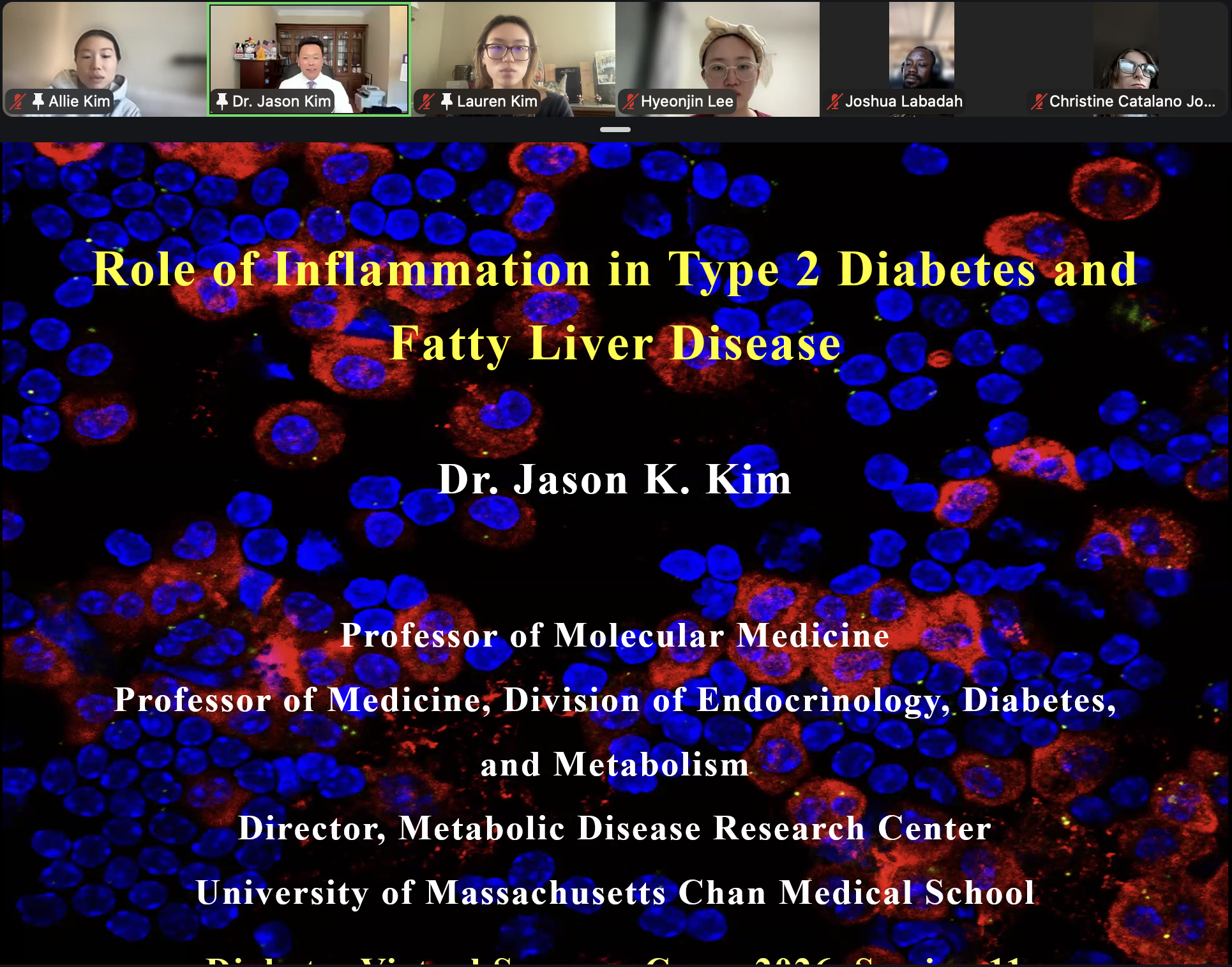
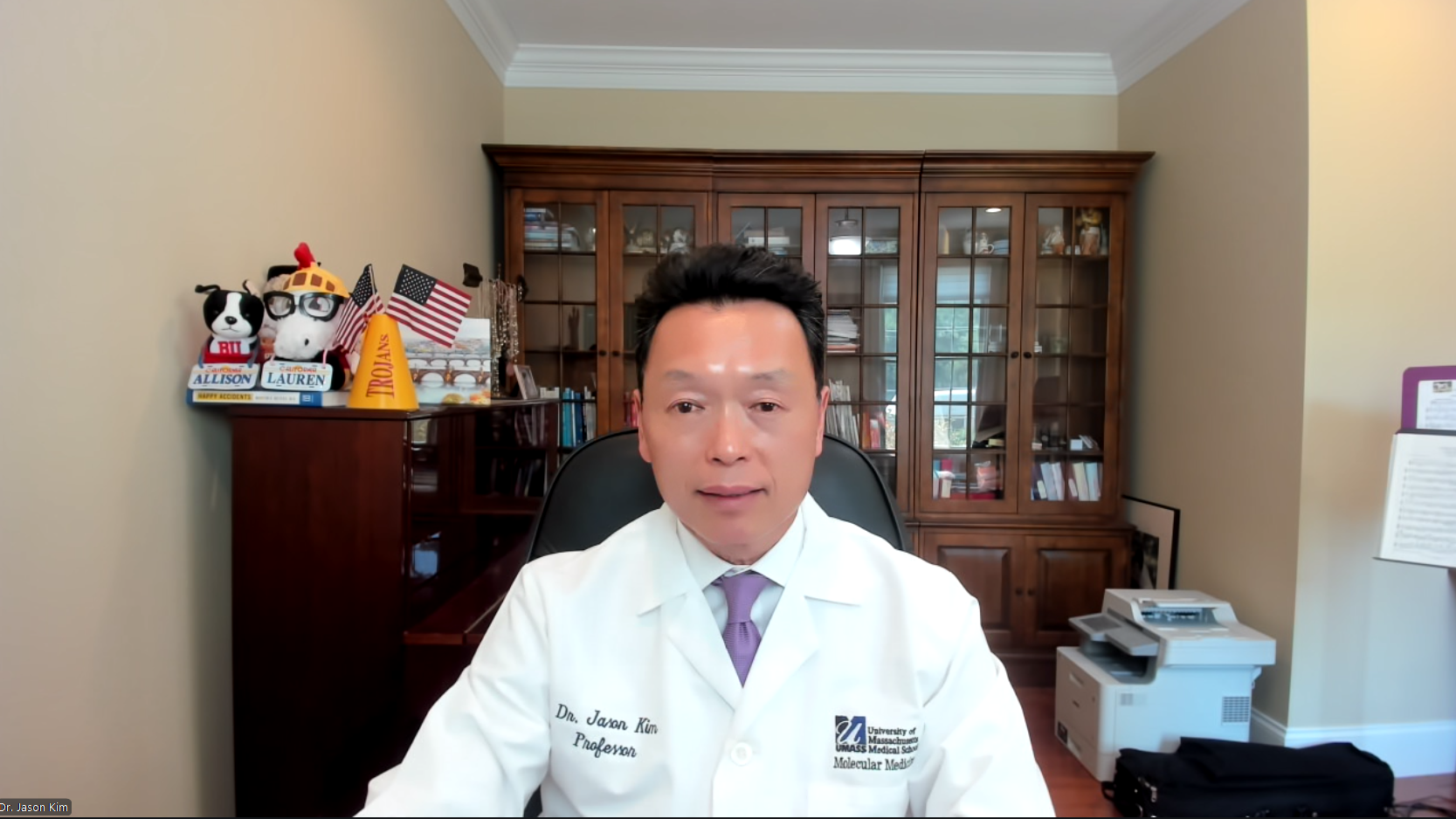
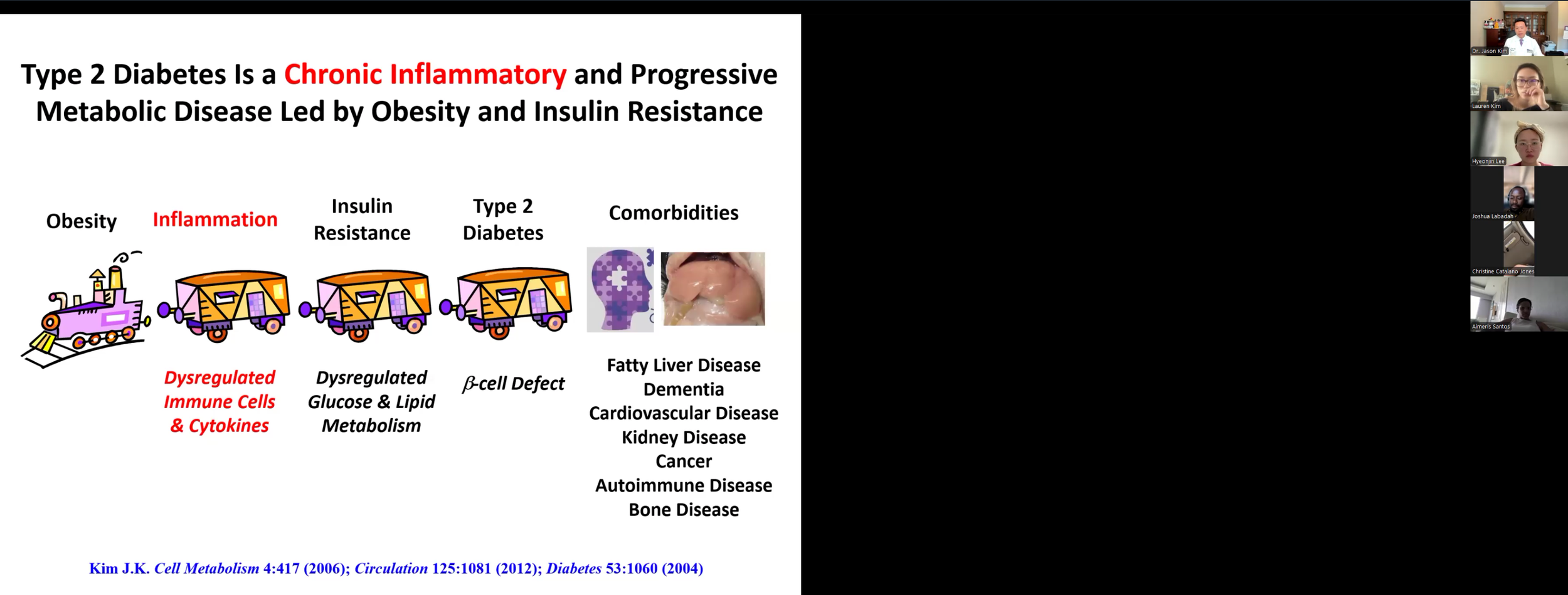
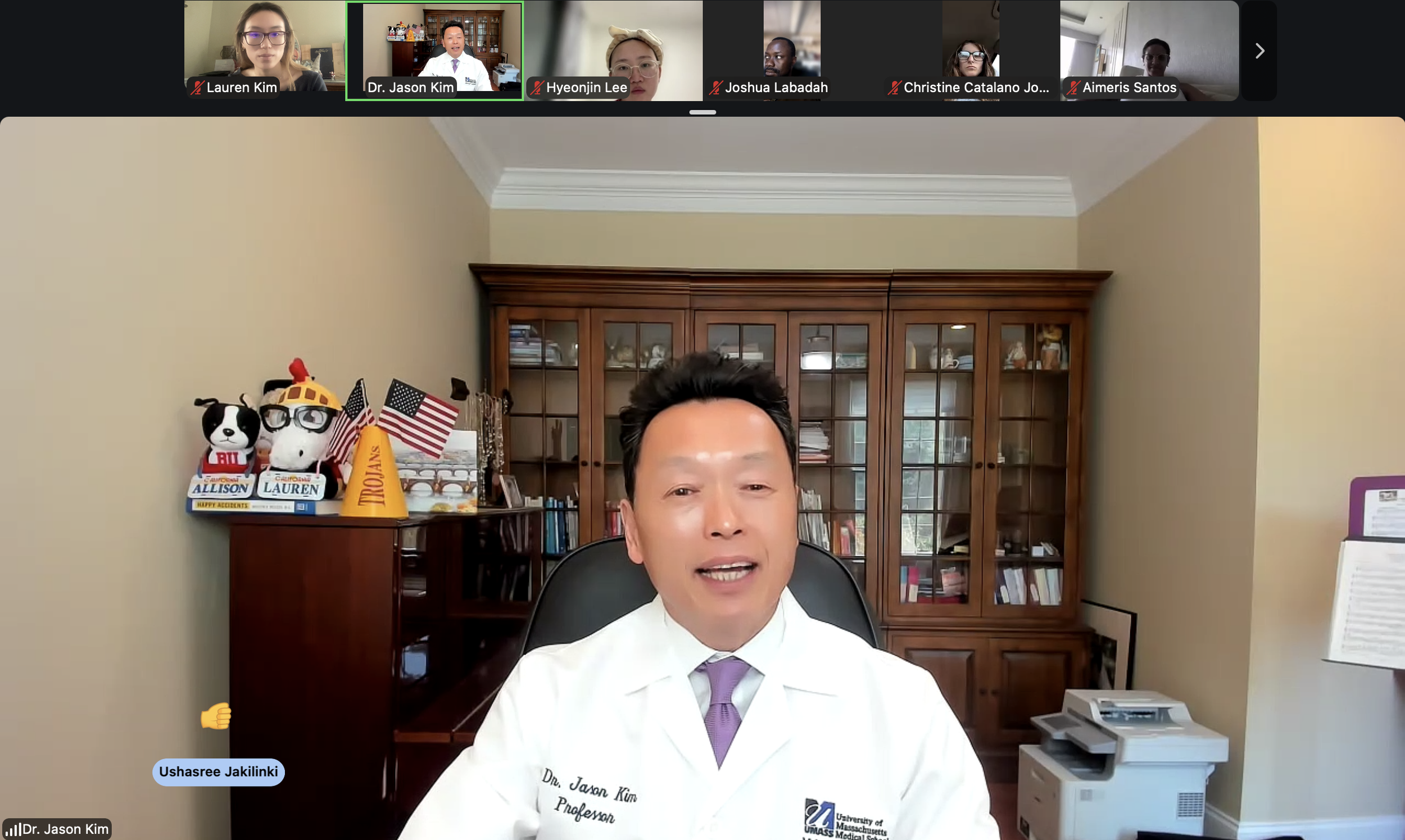
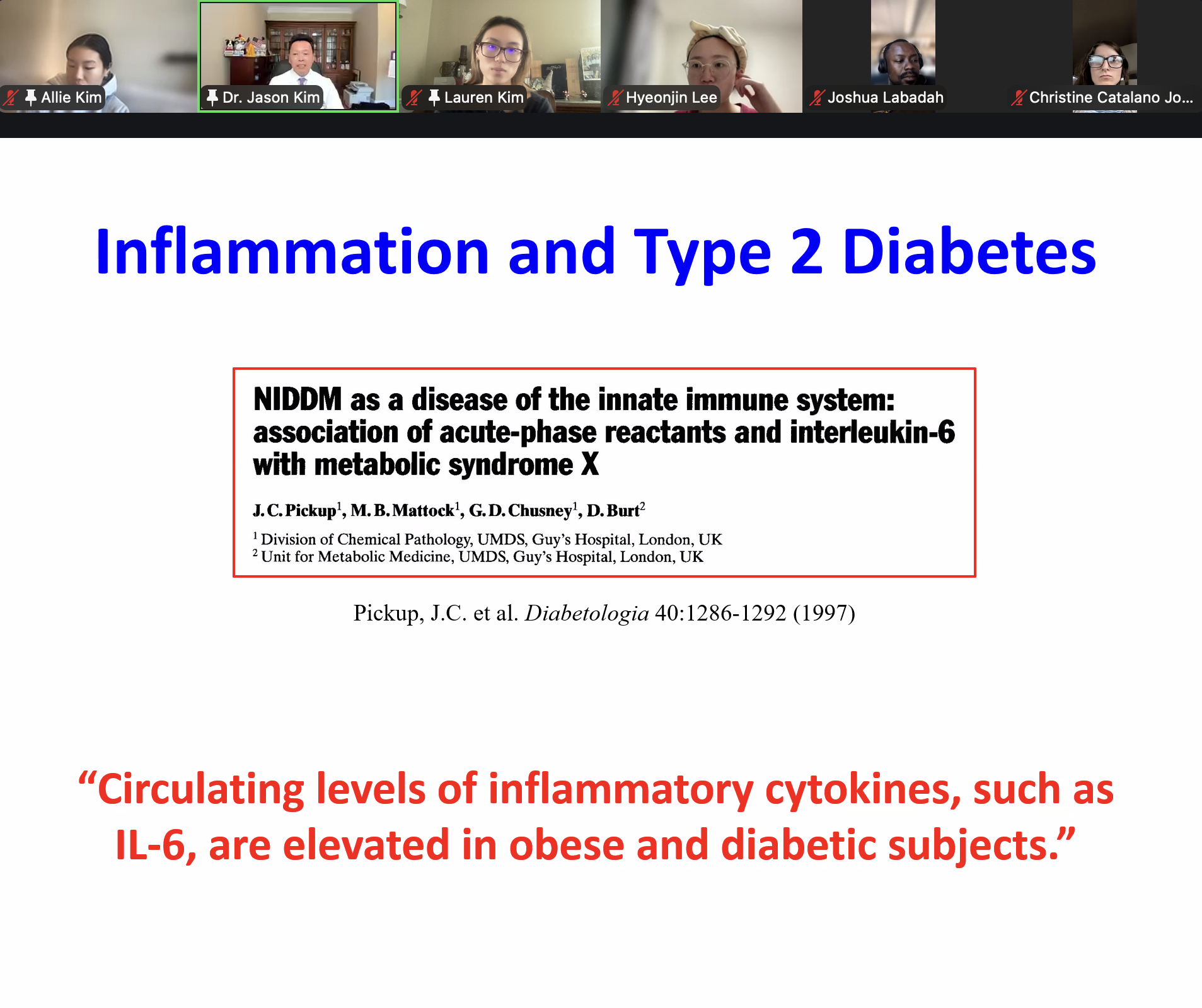
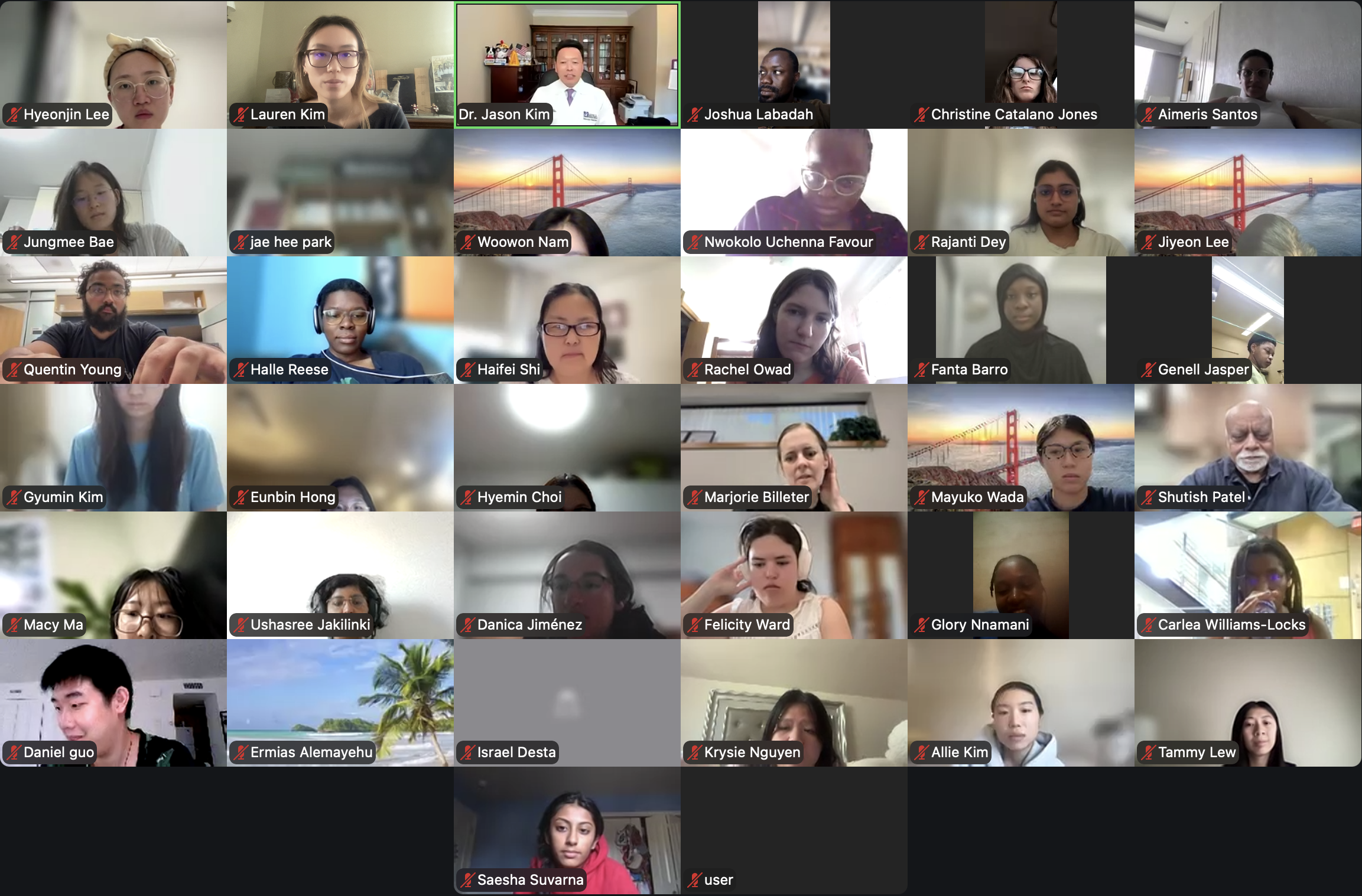
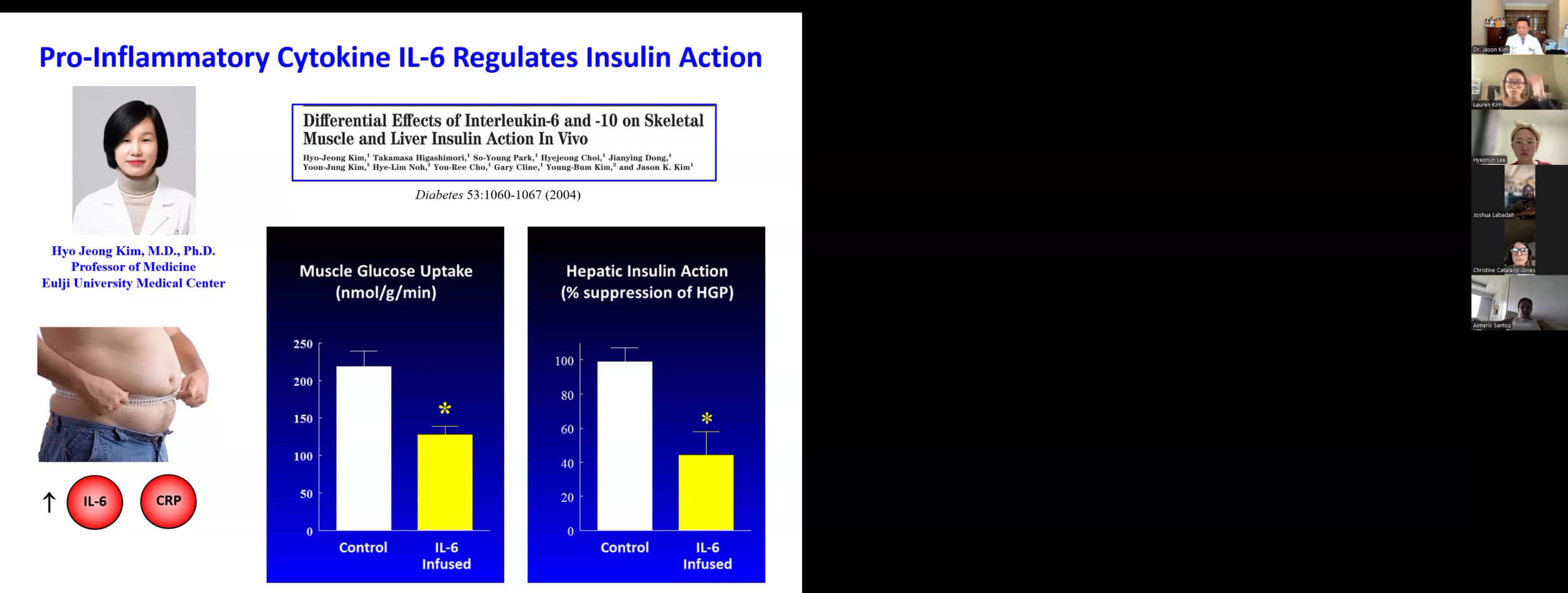
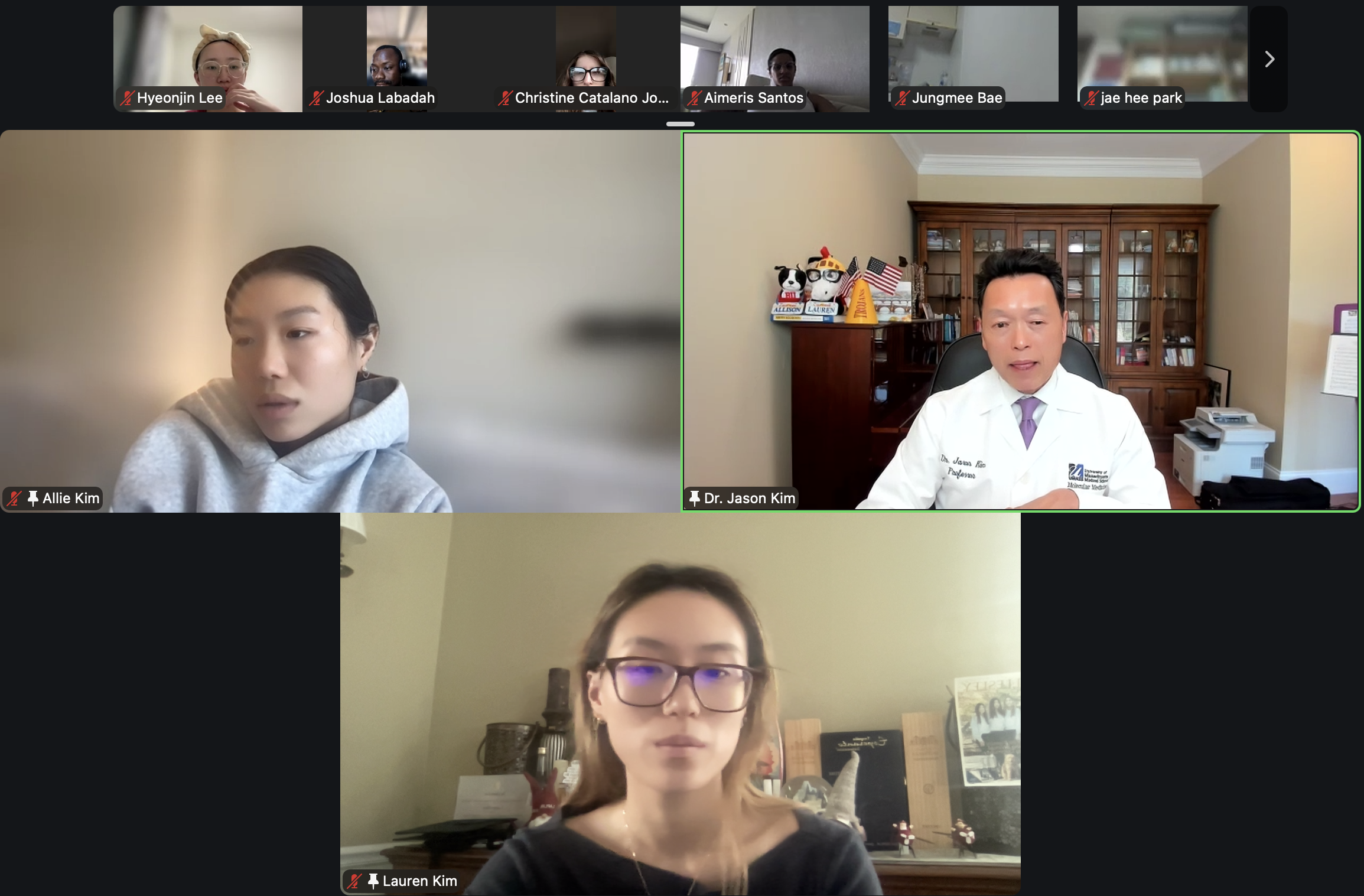
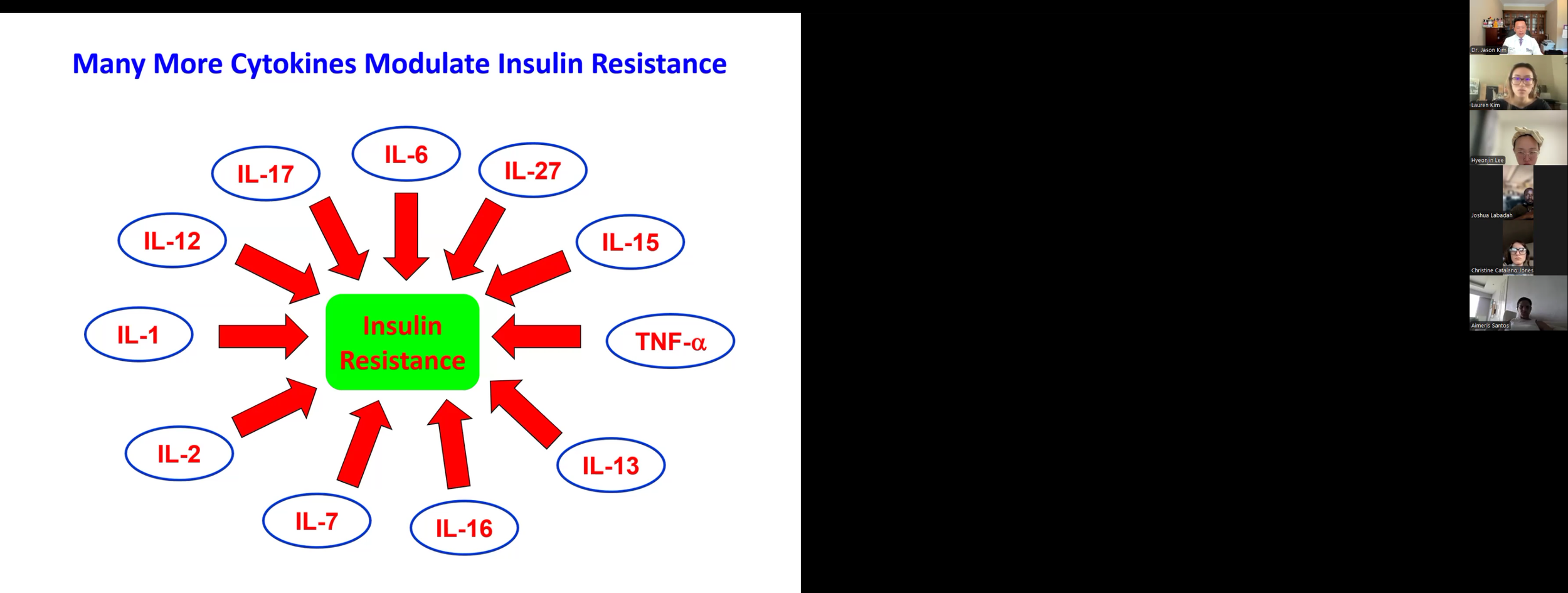
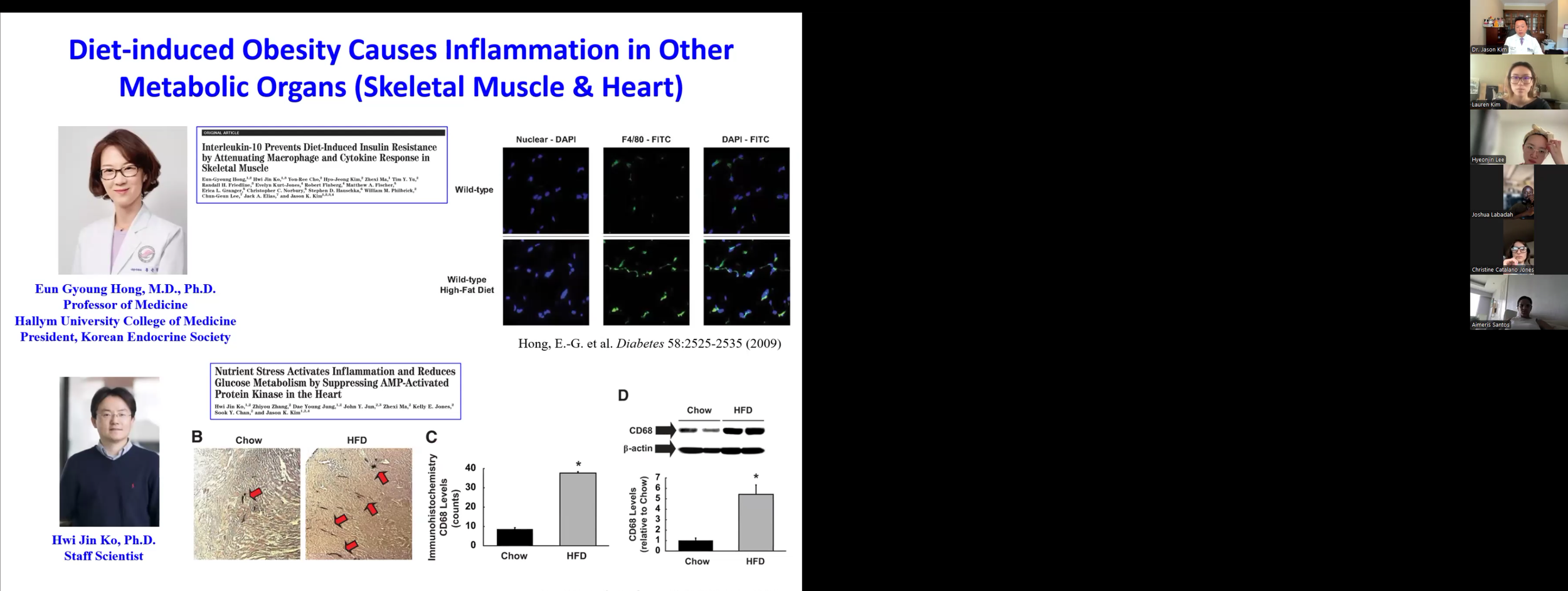
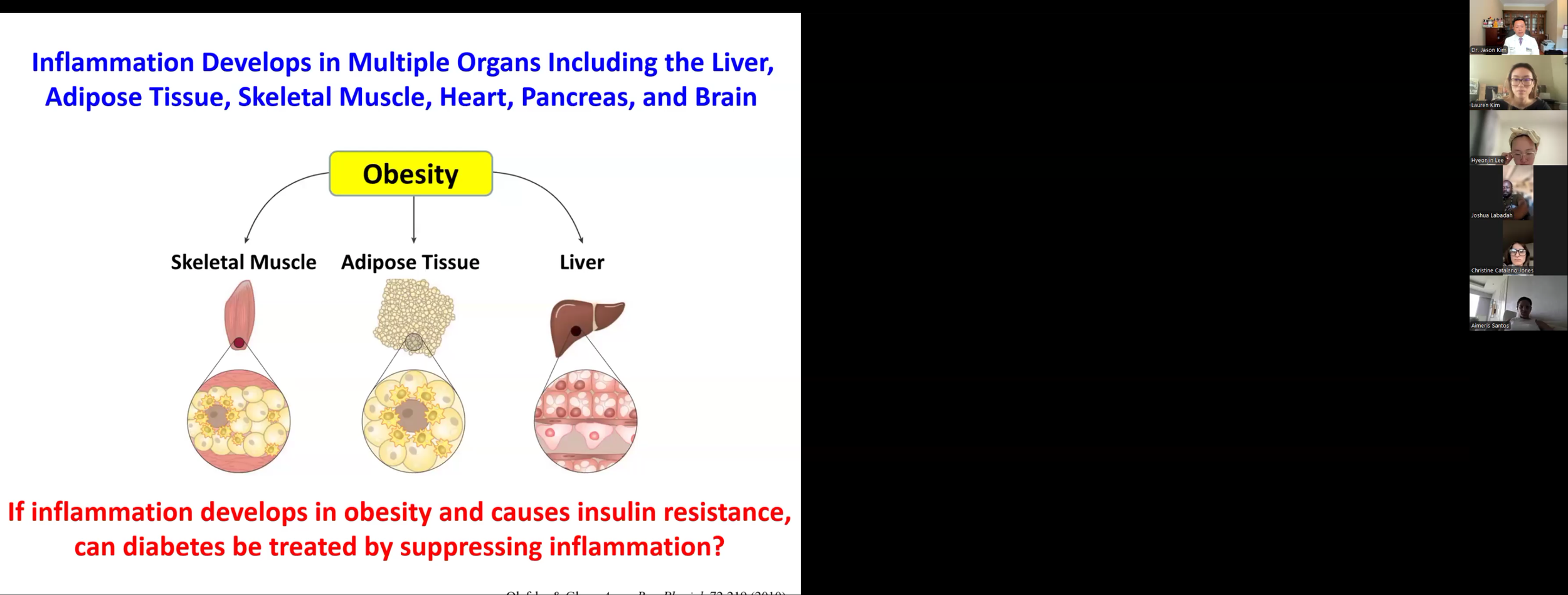
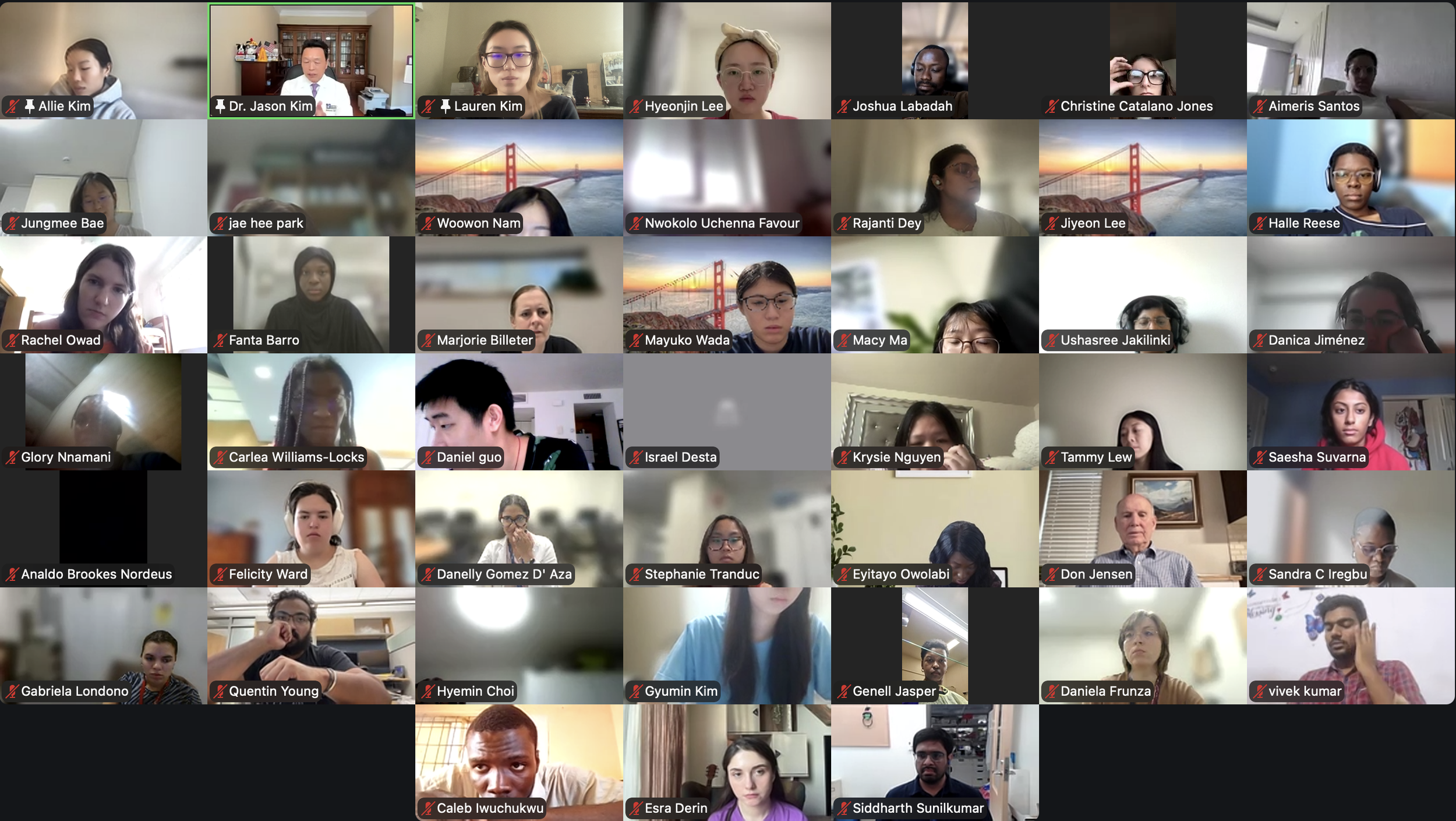
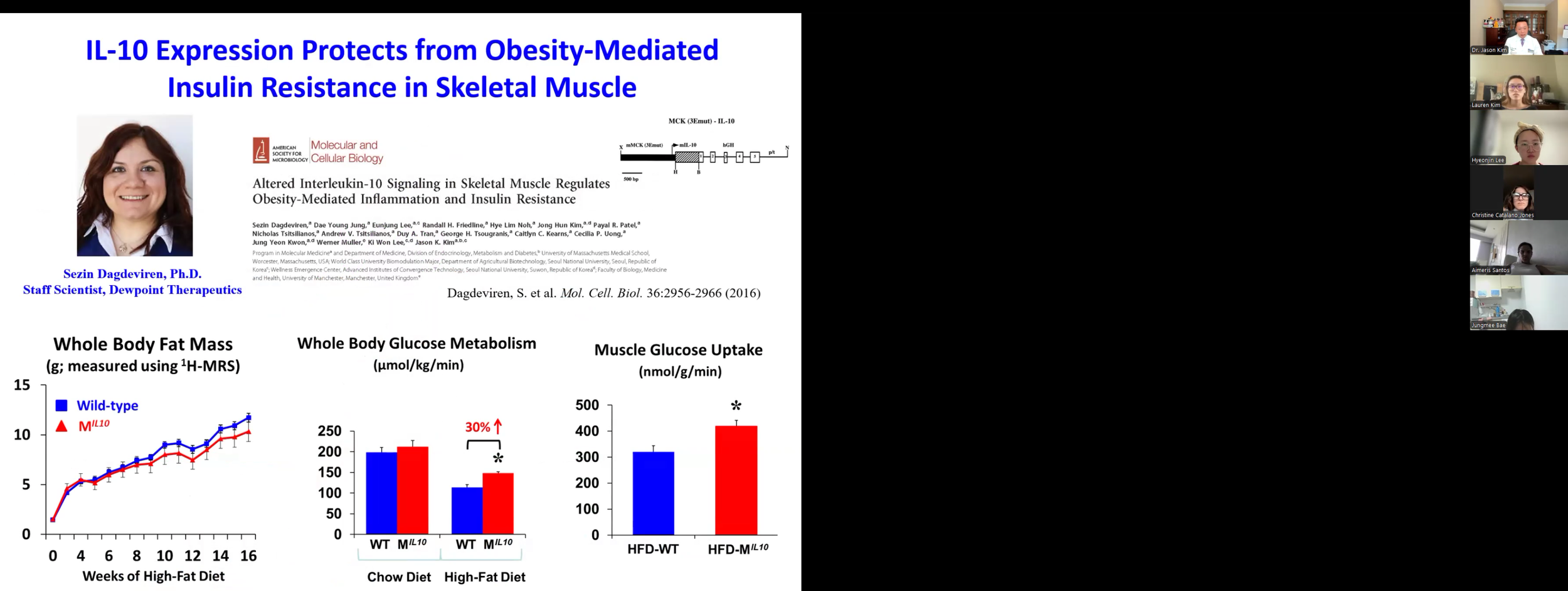
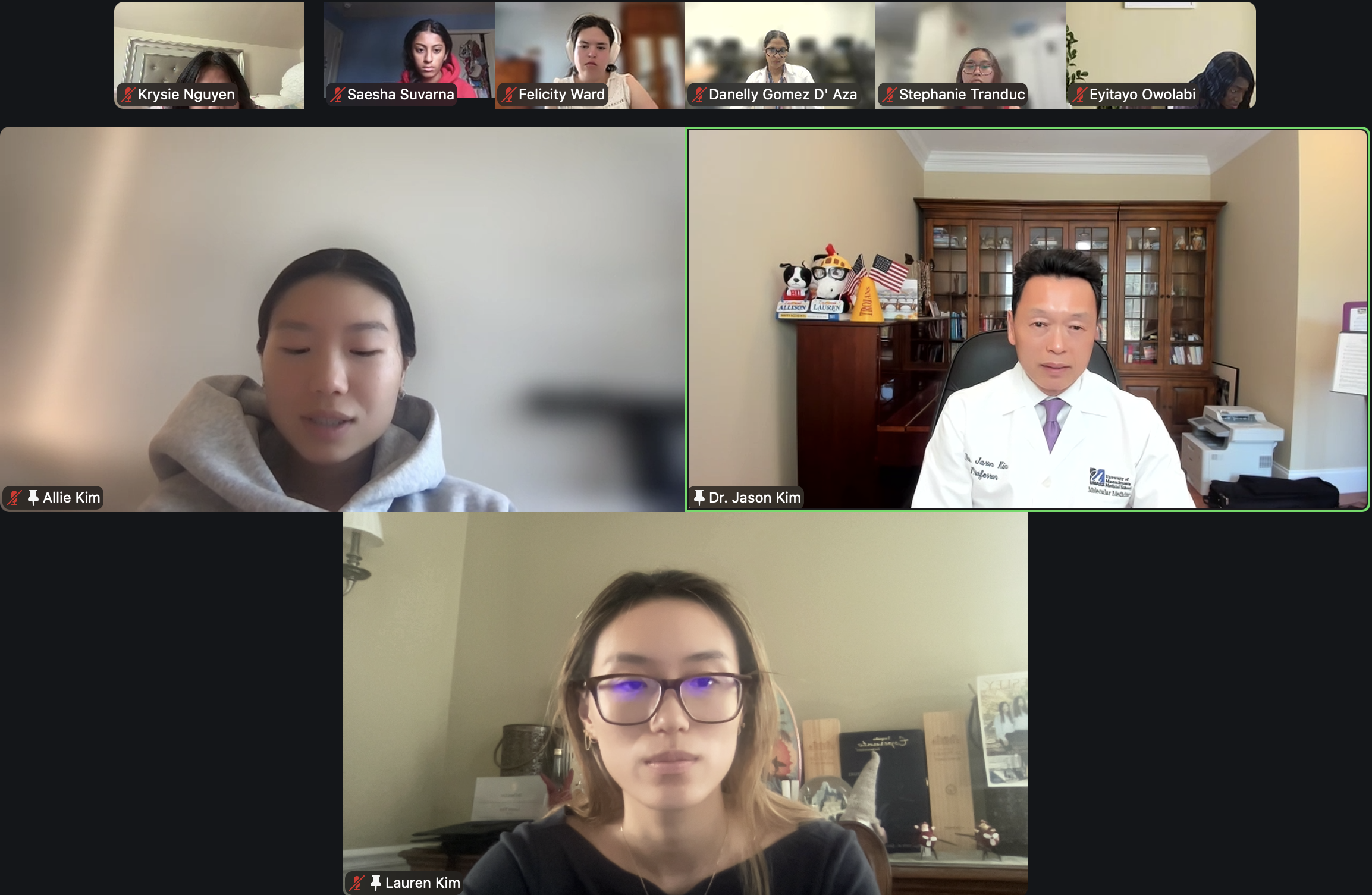
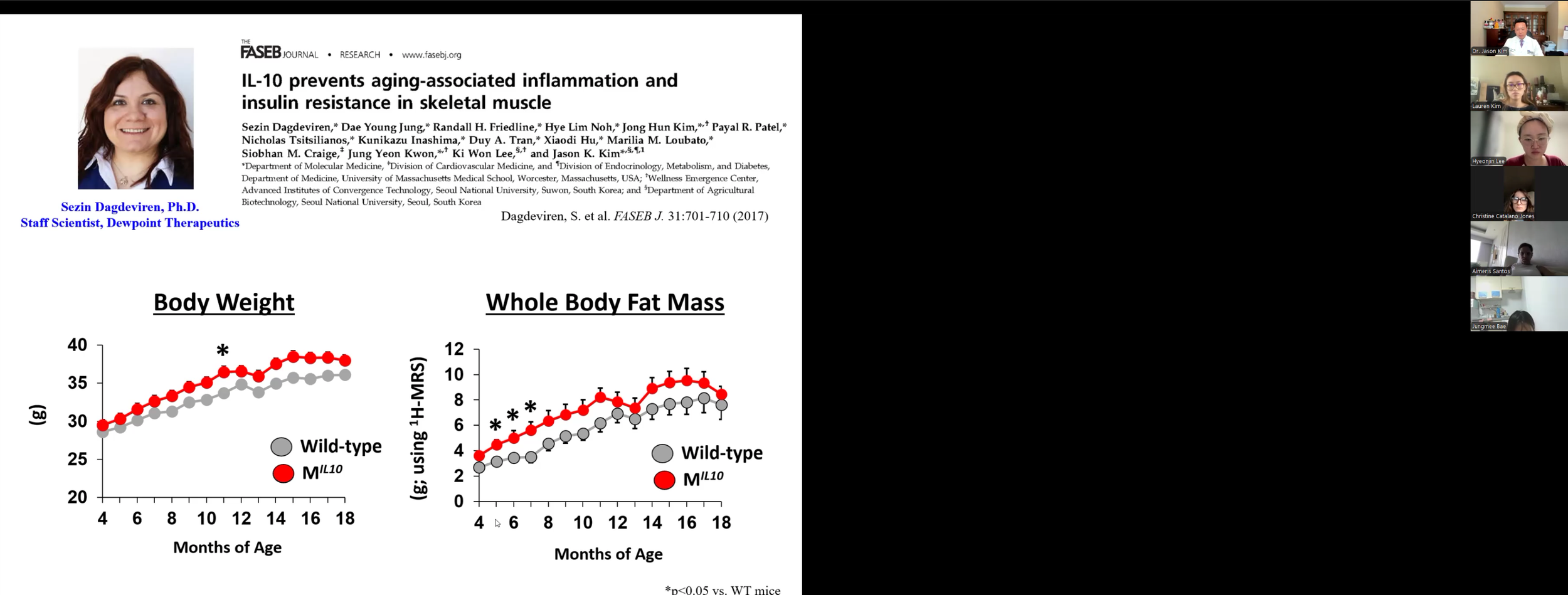
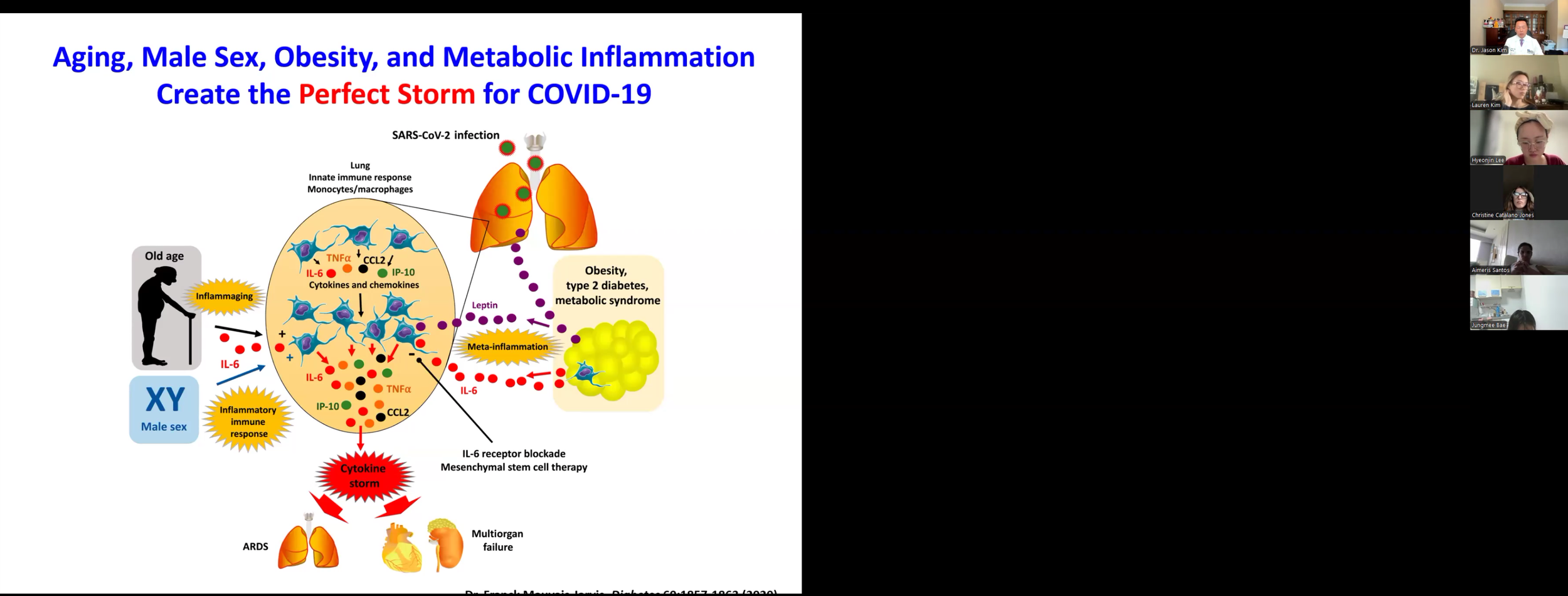
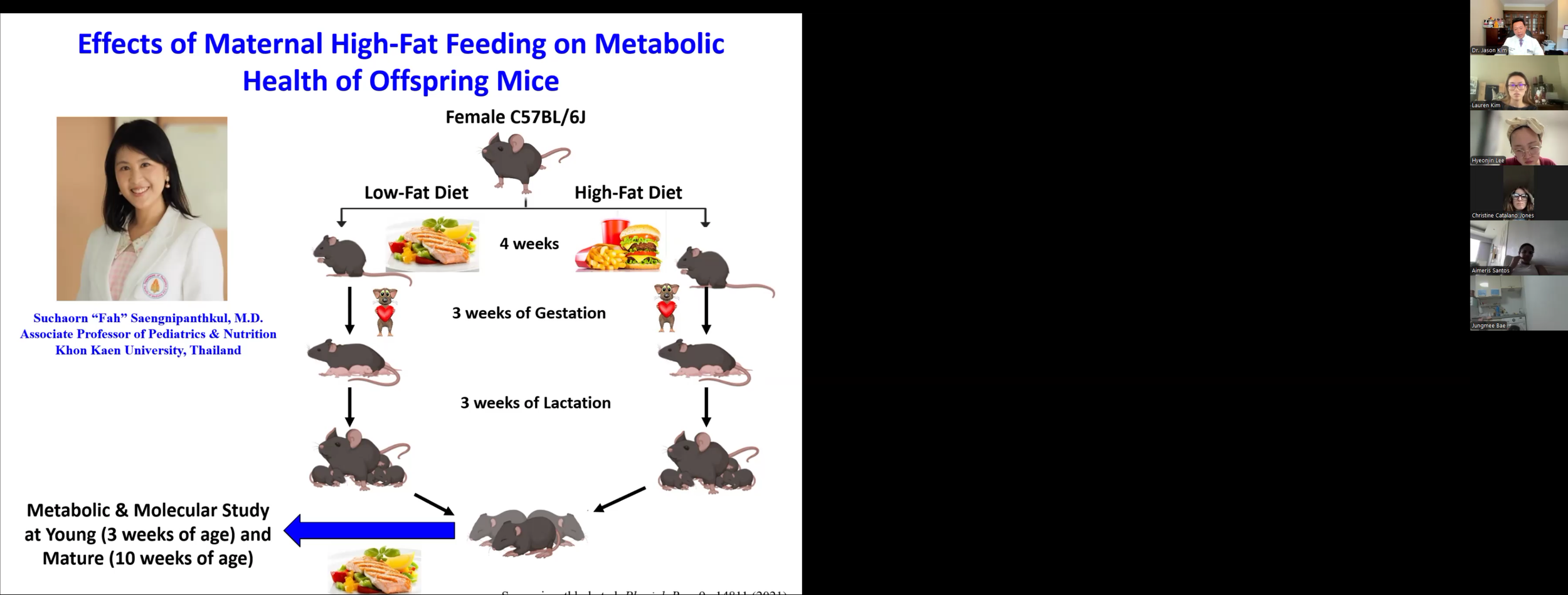
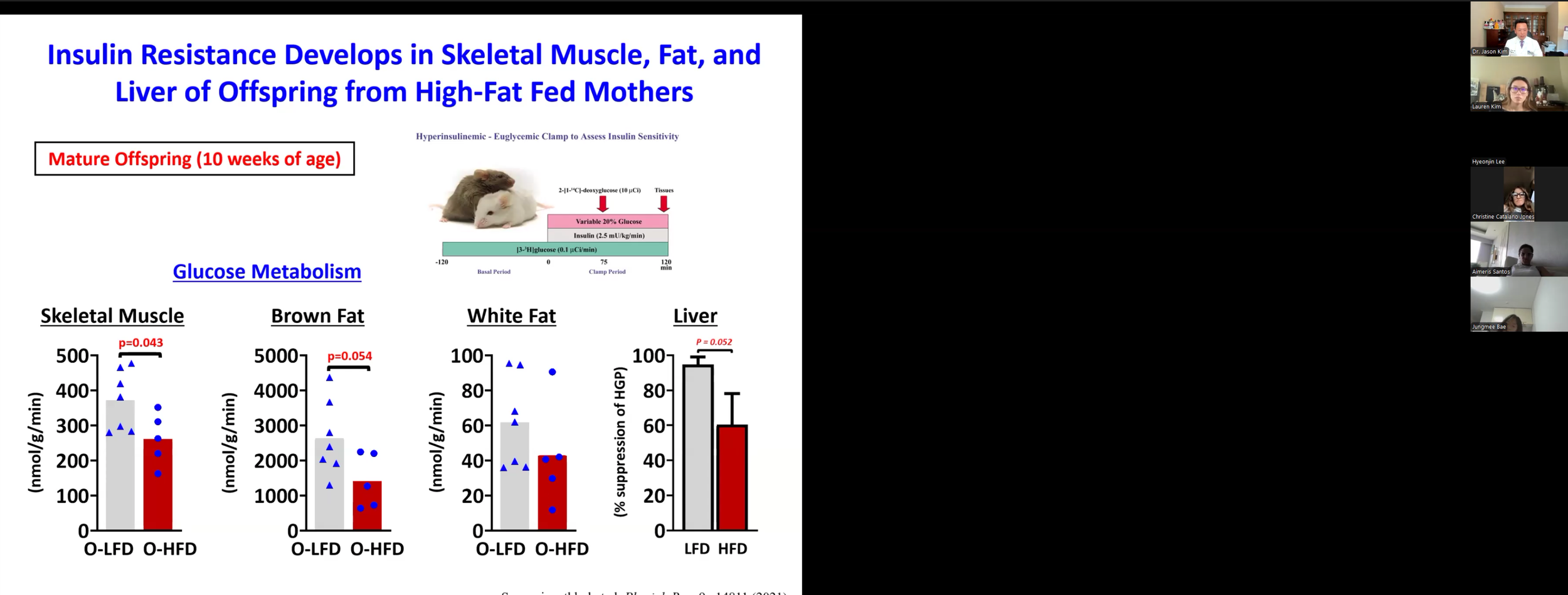
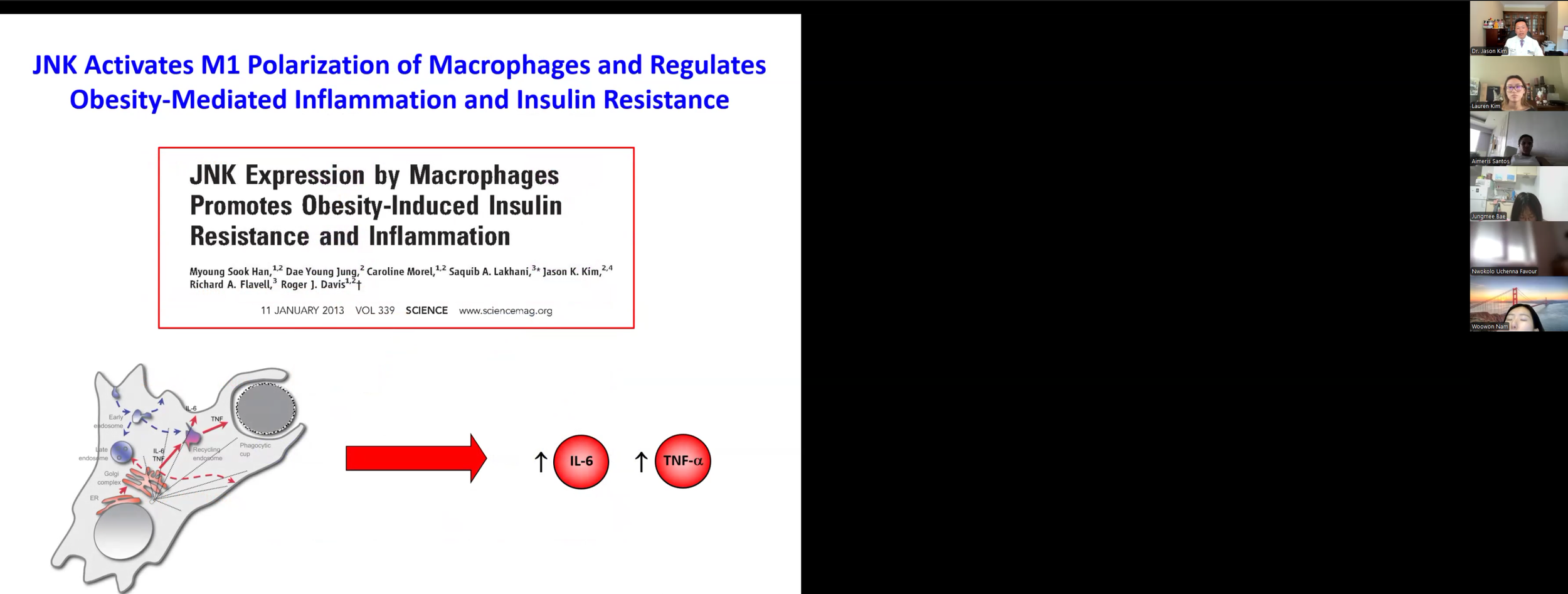
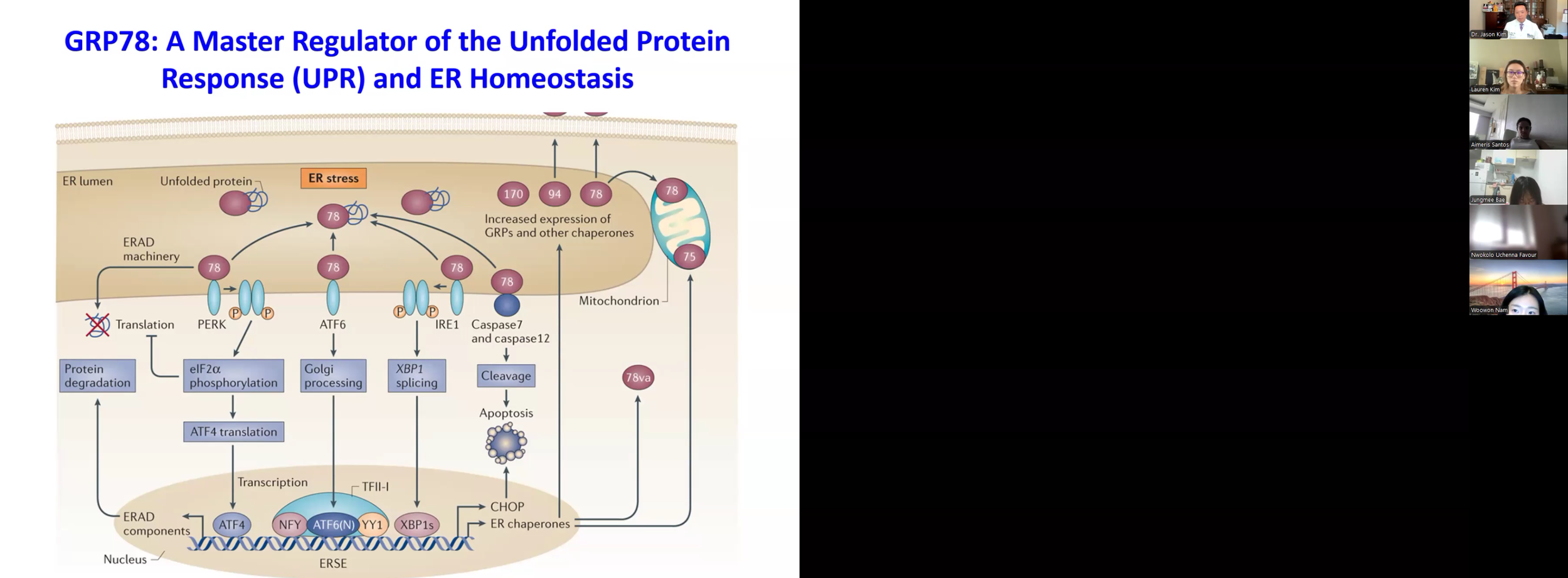
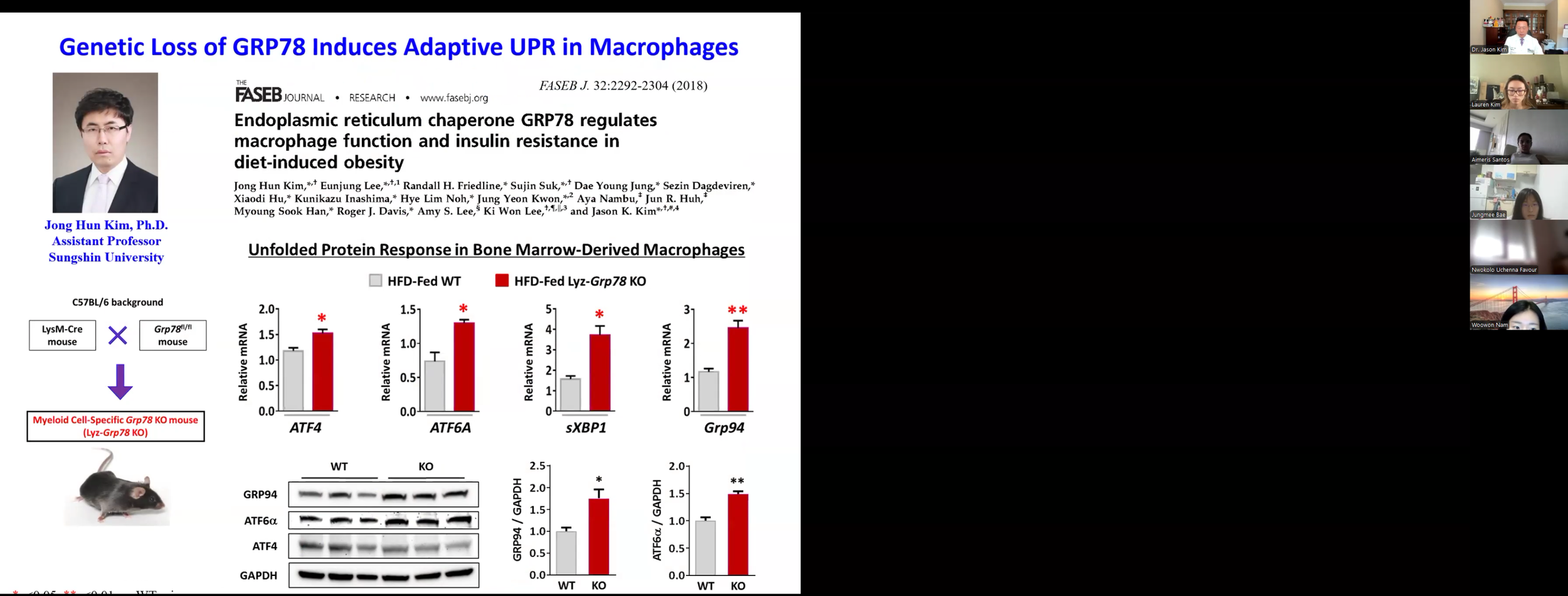
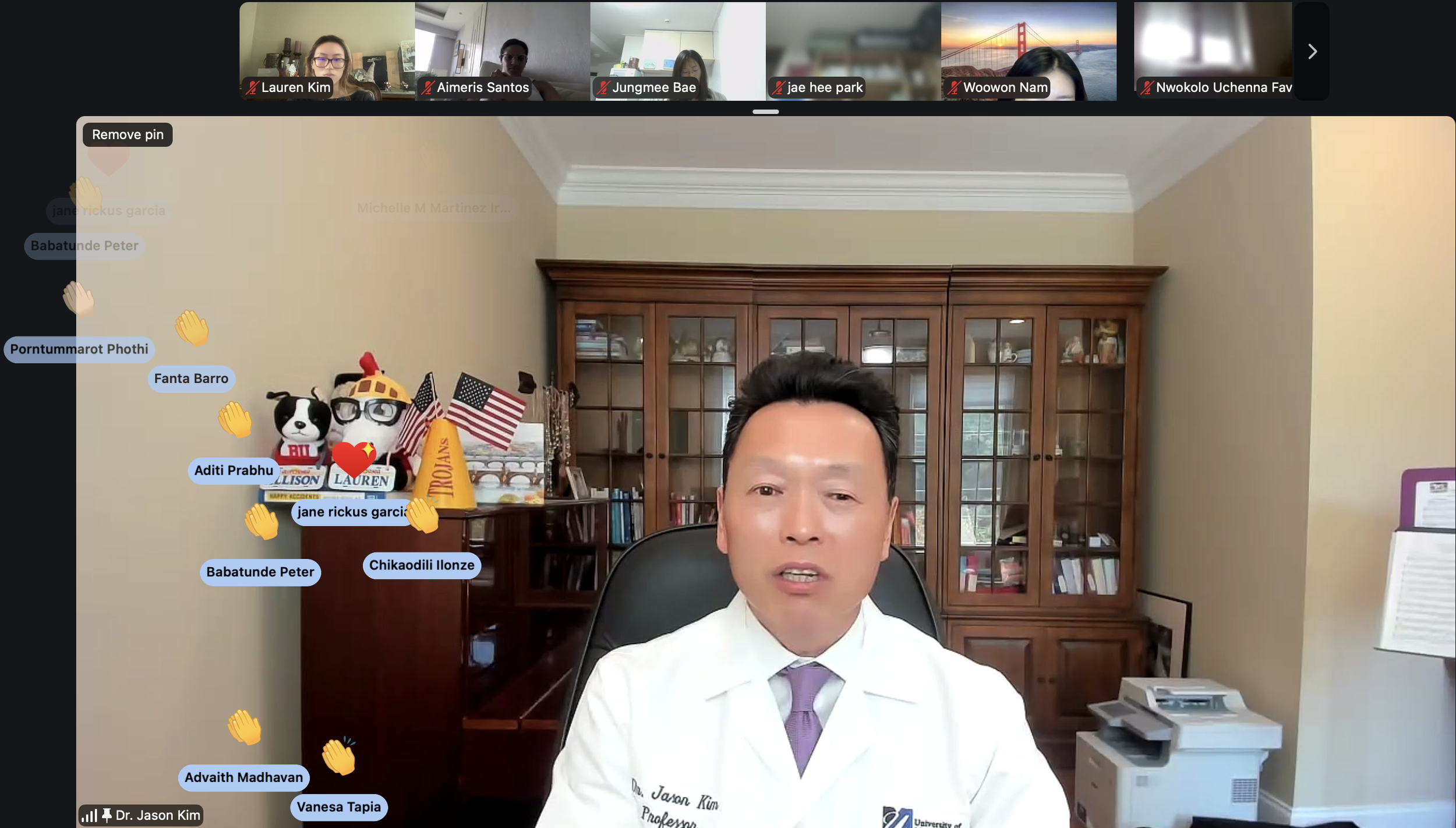
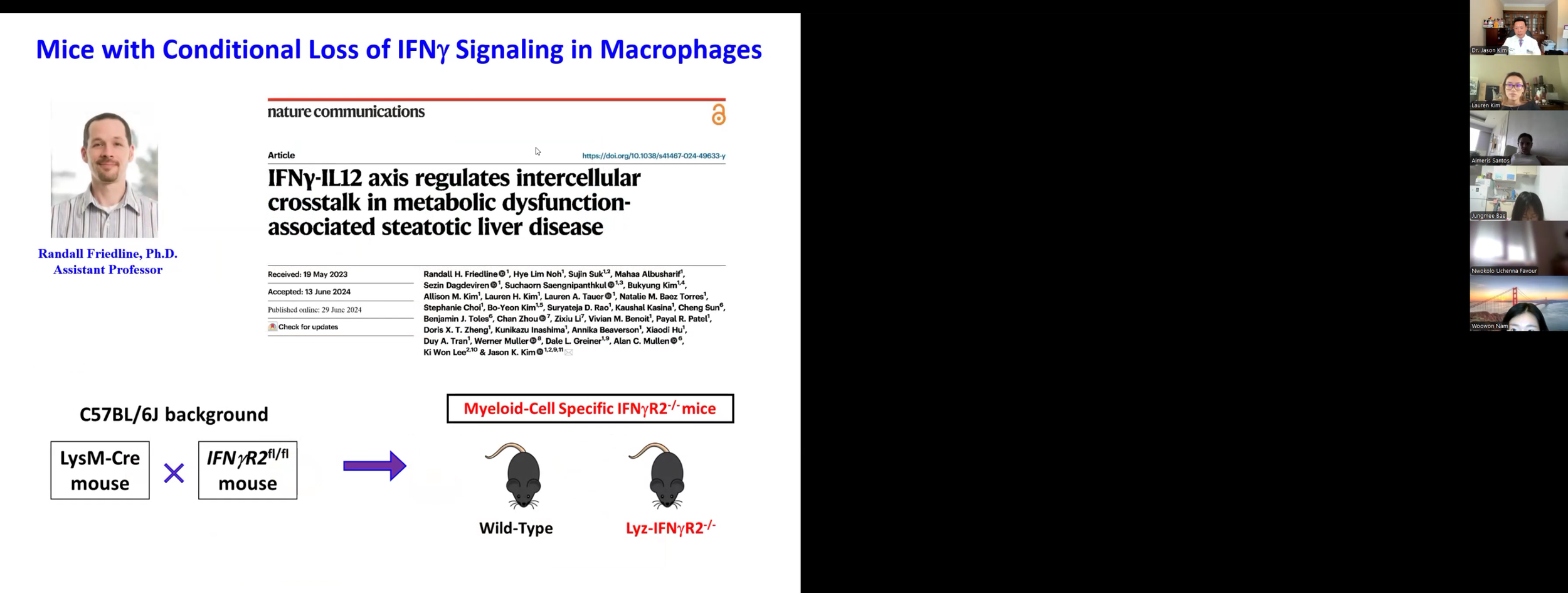
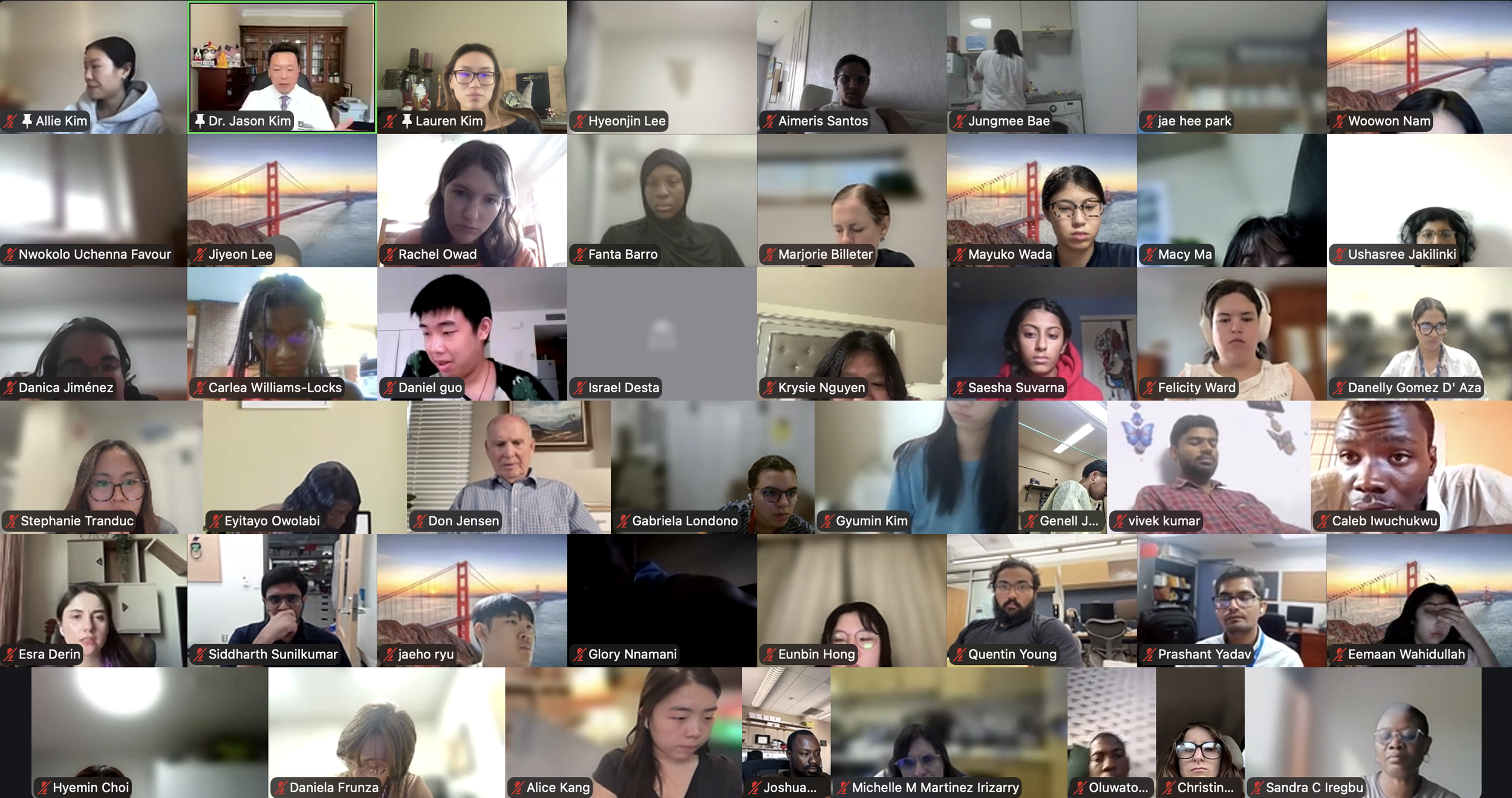
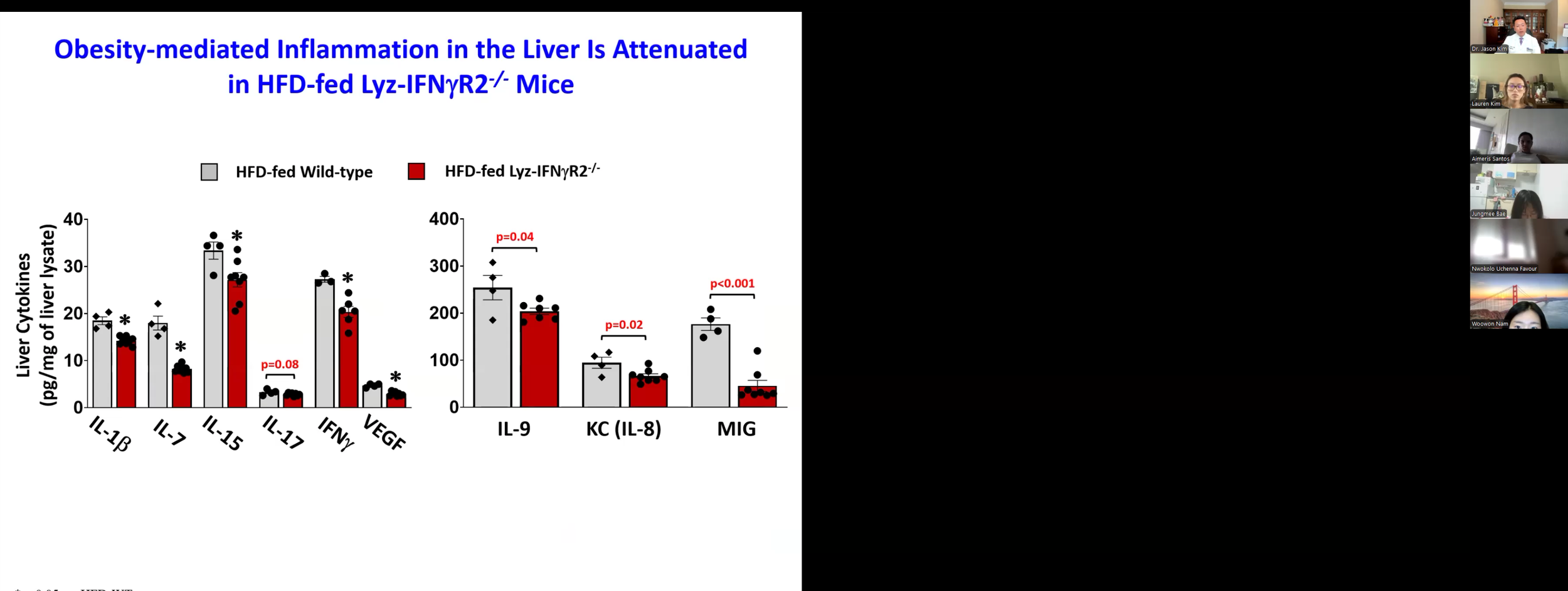
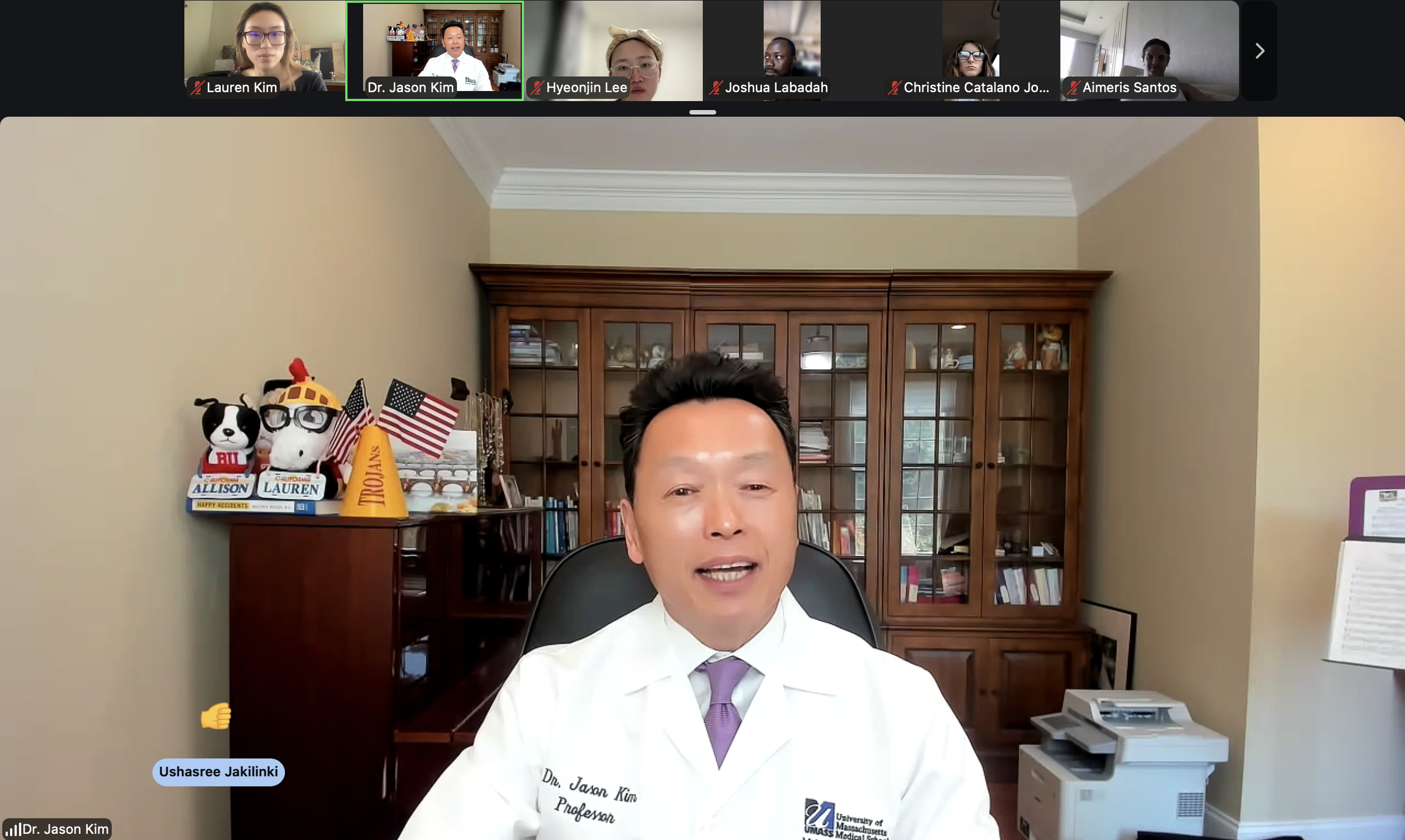
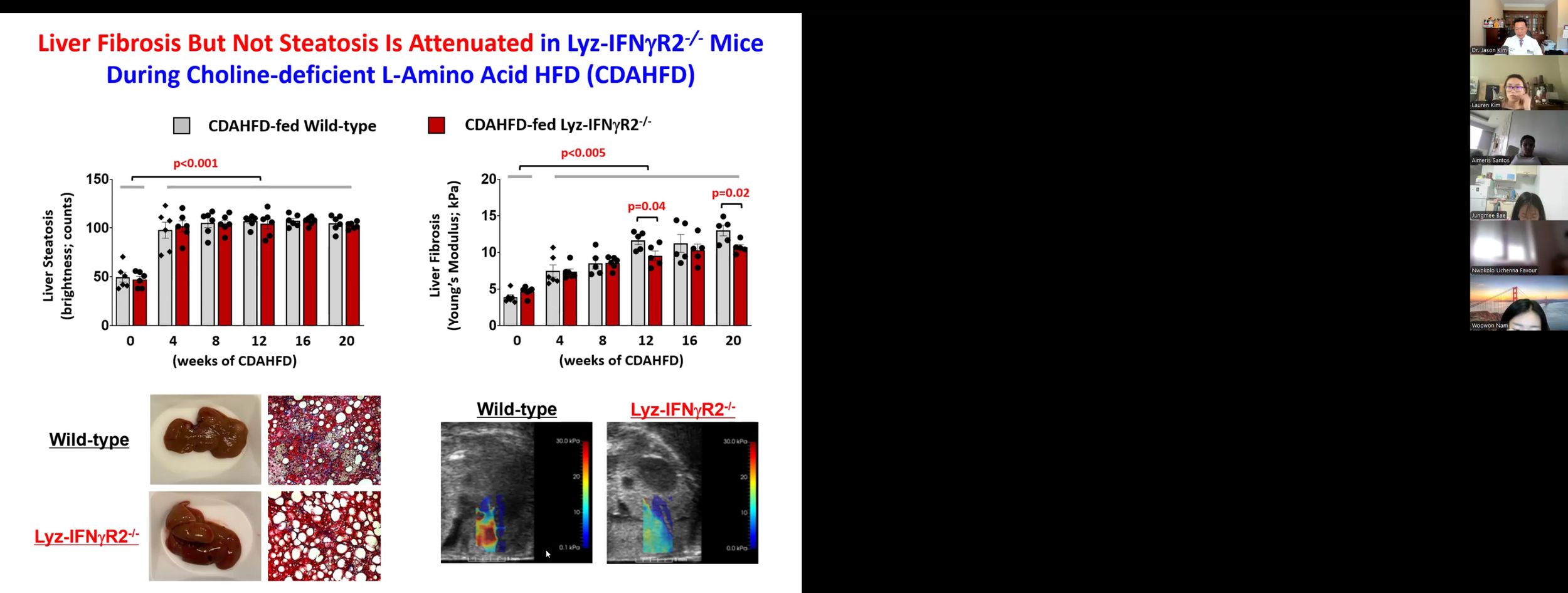
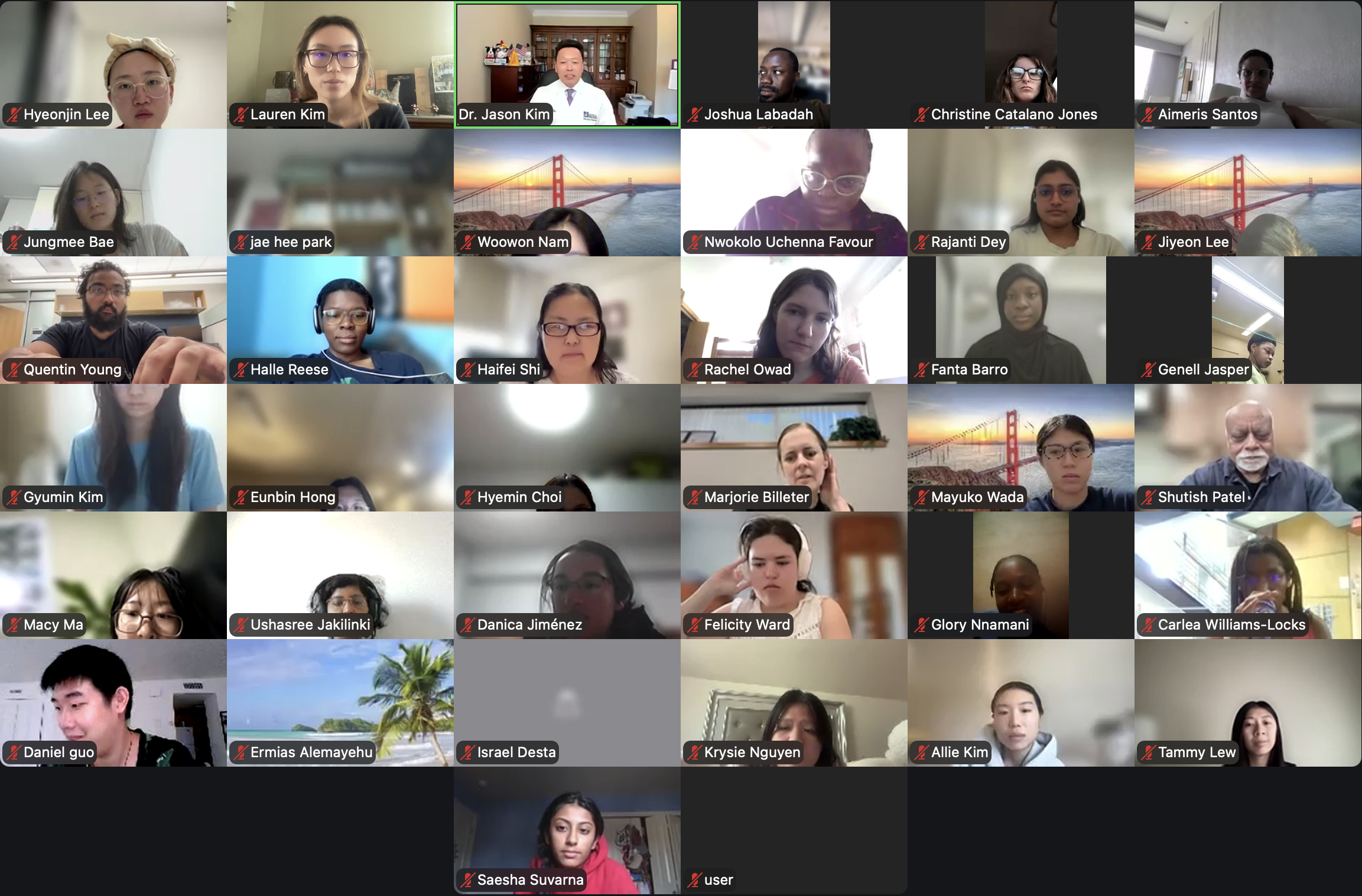
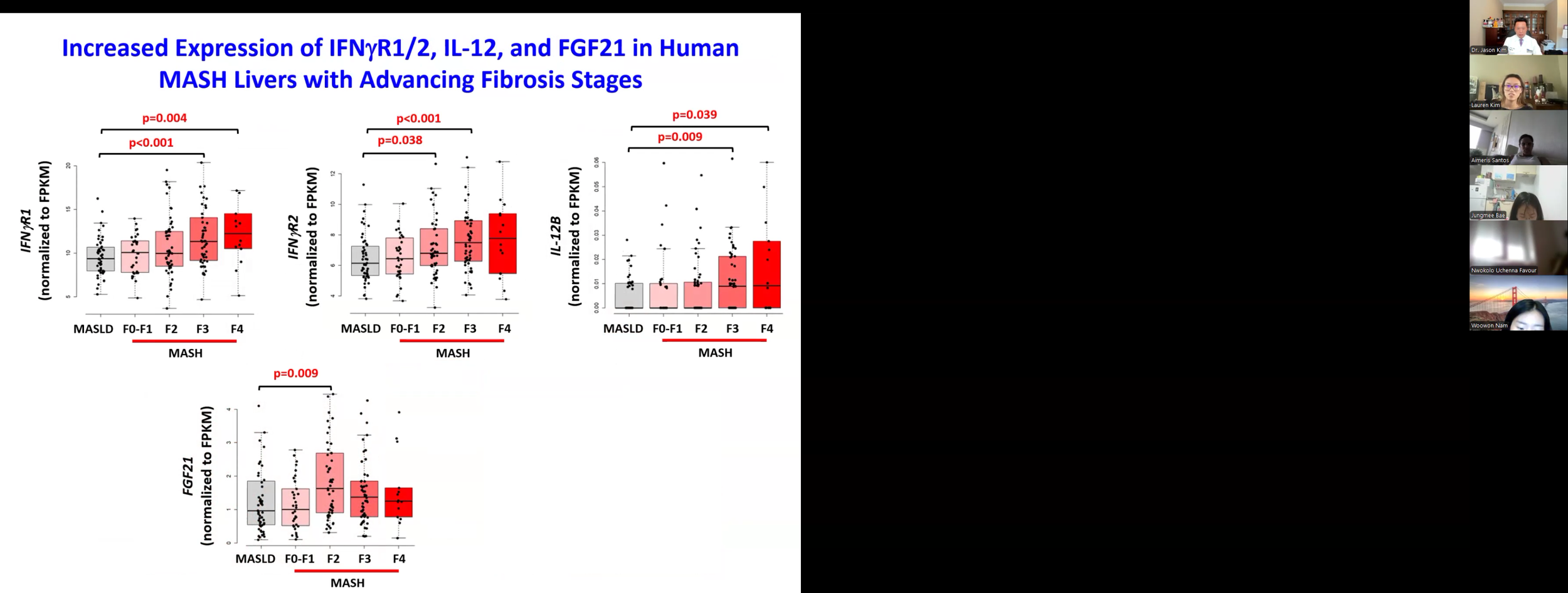
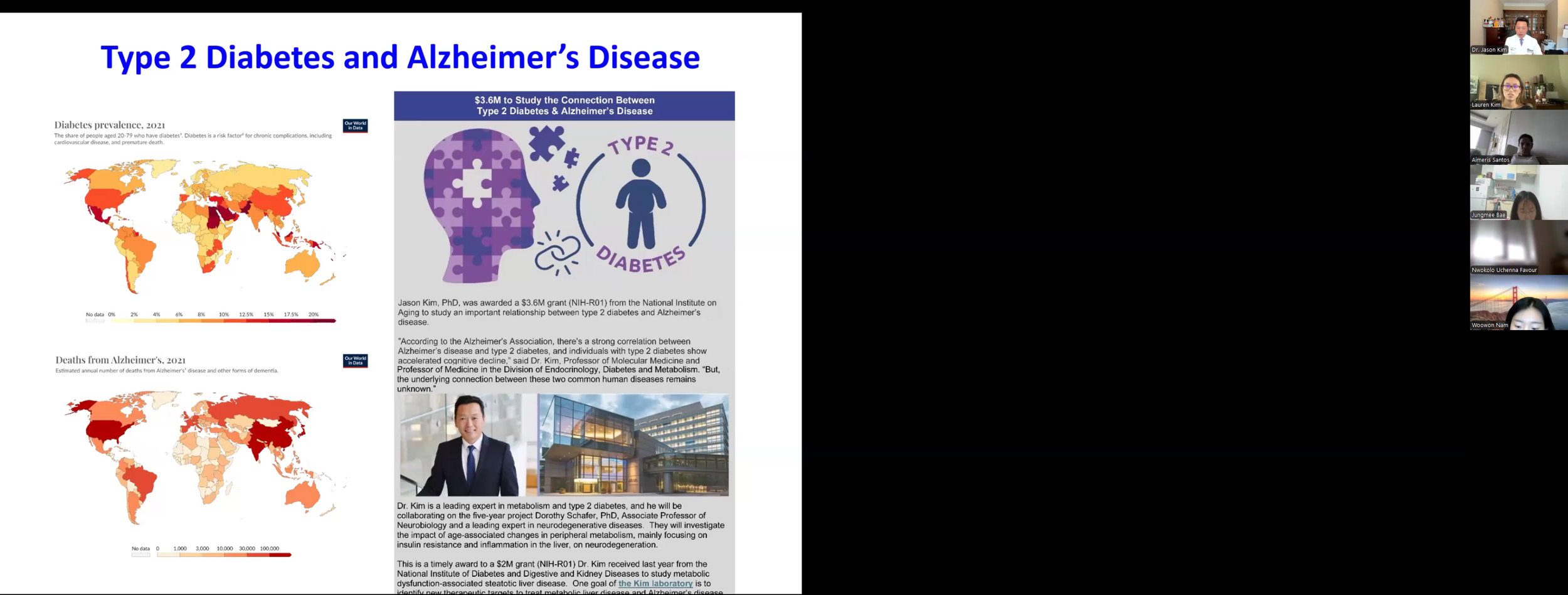
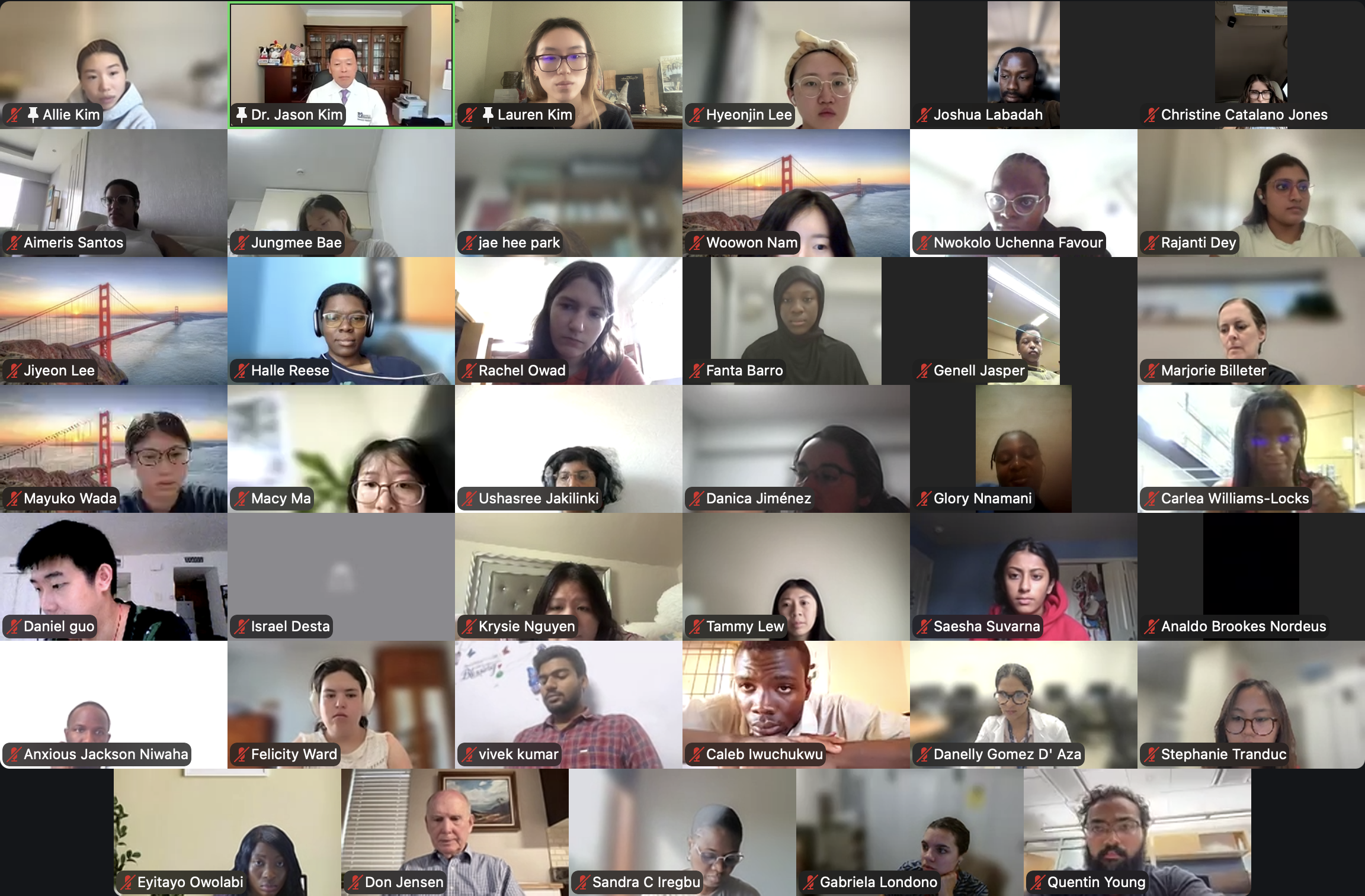
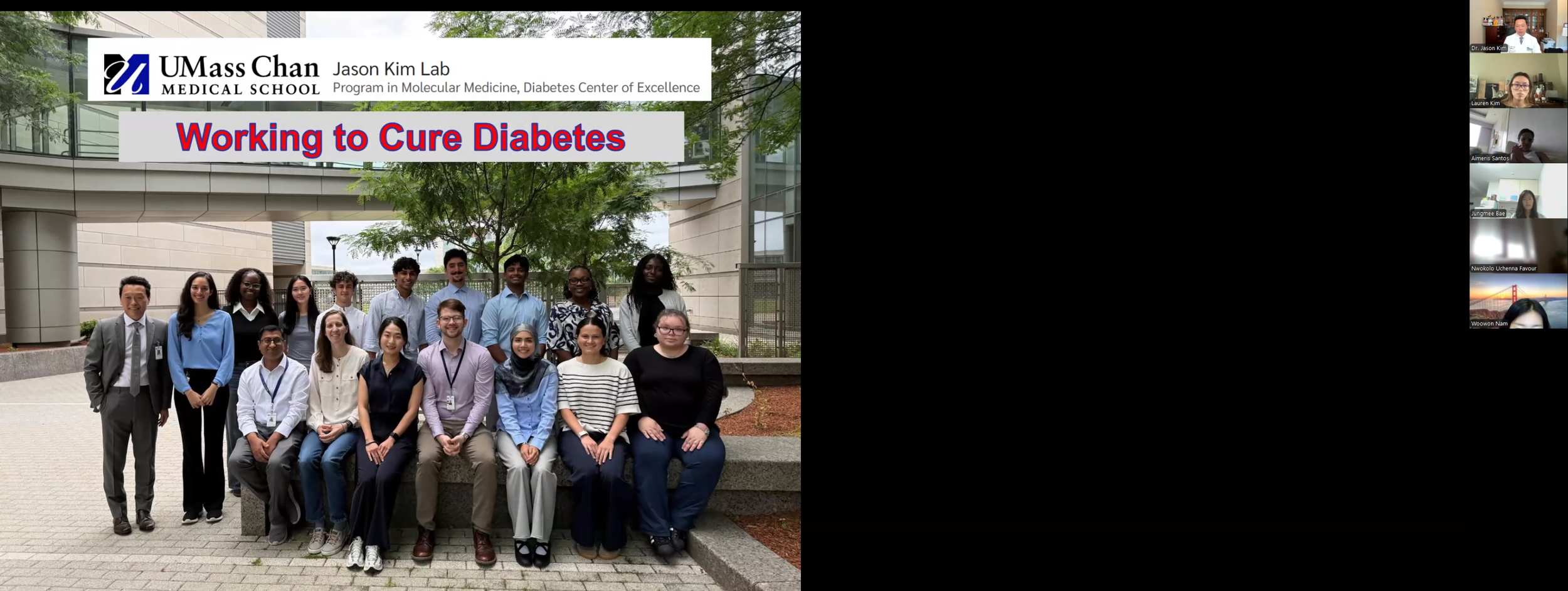

August 14, 2026
Session 12. Preparing for a Career in Science and Medicine by Dr. Jason Kim (University of Massachusetts Chan Medical School)
Today’s Closing Sessions continued with a career-guidance presentation from Dr. Kim, focusing on a career in science and academic medicine. Dr. Kim began by illustrating how medical education is not for everyone due to its high cost, and should be pursued by one’s passion and strong interest. He noted how graduation from a medical school offers many different career paths. For high school and college students aspiring to be physicians, he discussed what they can do to prepare for medical school. He discussed the medical school application process and gave insightful advice on college activities/experiences and interviews. He also described the differences between the MD and MD/PhD dual programs. For medical students and residents, Dr. Kim shared a curriculum for the gastroenterology and hepatology fellowship training program at the University of Massachusetts Chan Medical School. He then discussed the importance of research in clinical training and elaborated on the investigative approach to science and medicine, including helpful tips on how to critically assess peer-reviewed research articles when searching for scientific information. For clinical fellows and early-career scientists and clinicians, Dr. Kim discussed what institutions look for in hiring new faculty, the tenure process, and professorship in academic medicine. He gave an example of what a day in the life of a professor would look like with respect to the administrative, teaching, clinical, and research roles for the institution and outside the institution at the national and international levels. Dr. Kim discussed what an early-career investigator should do to establish a productive research program and further shared insightful tips on writing an NIH grant (Grant Writing 101!). Dr. Kim ended his presentation by highlighting the University of Massachusetts Chan Medical School as a leading medical institution with outstanding patient care, education, and research.
-
![Session 2: Opening Session & Introduction to Diabetes by Lauren, Allison, and Dr. Jason Kim (University of Massachusetts Medical School)]()
August 14, 2026 (Session 12 - Part 1)
Session 12: “Preparing for a Career in Science and Medicine” by Dr. Jason Kim (University of Massachusetts Chan Medical School)
This session introduces how high school and college students can explore their interests in science and medicine, and how college activities can be organized to prepare for medical school and graduate school. The session presents the admissions process for medical school and graduate school and their curriculum, clinical residency and fellowship programs, and academic tenure process. The session further discusses how to develop a research idea into a fundable project, write an NIH grant, and succeed at different stages of an academic career. The session ends with challenges that lie ahead in academic medicine and research, and the passion and service that define this lifelong profession. This session supports people at all stages of their educational and professional careers.
-
![]()
August 14, 2026 (Session 12 - Part 2)
Session 12: “Preparing for a Career in Science and Medicine” by Dr. Jason Kim (Professor of Molecular Medicine, Professor of Medicine, Division of Endocrinology, Metabolism, and Diabetes, Director, UMass Metabolic Disease Research Center, MD/PhD Admissions Committee, University of Massachusetts Chan Medical School)
-
![]()
August 14, 2026 (Session 12 - Part 3)
Session 12: “Preparing for a Career in Science and Medicine” by Dr. Jason Kim (University of Massachusetts Chan Medical School)
Dr. Kim began by illustrating how medical education is not for everyone due to its high cost, and should be pursued by one’s passion and strong interest. He noted how graduation from a medical school offers many different career paths.
-
![]()
August 14, 2026 (Session 12 - Part 4)
Session 12: “Preparing for a Career in Science and Medicine” by Dr. Jason Kim (University of Massachusetts Chan Medical School)
Dr. Kim began by illustrating how medical education is not for everyone due to its high cost, and should be pursued by one’s passion and strong interest. He noted how graduation from a medical school offers many different career paths.
-
![]()
August 14, 2026 (Session 12 - Part 5)
Session 12: “Preparing for a Career in Science and Medicine” by Dr. Jason Kim (University of Massachusetts Chan Medical School)
Dr. Kim began by illustrating how medical education is not for everyone due to its high cost, and should be pursued by one’s passion and strong interest. He noted how graduation from a medical school offers many different career paths.
-
![]()
August 14, 2026 (Session 12 - Part 6)
Session 12: “Preparing for a Career in Science and Medicine” by Dr. Jason Kim (University of Massachusetts Chan Medical School)
Dr. Kim began by illustrating how medical education is not for everyone due to its high cost, and should be pursued by one’s passion and strong interest. He noted how graduation from a medical school offers many different career paths.
-
![]()
August 14, 2026 (Session 12 - Part 7)
Session 12: “Preparing for a Career in Science and Medicine” by Dr. Jason Kim (University of Massachusetts Chan Medical School)
For high school and college students aspiring to be physicians, Dr. Kim discussed what they can do to prepare for medical school.
-
![]()
August 14, 2026 (Session 12 - Part 8)
Session 12: “Preparing for a Career in Science and Medicine” by Dr. Jason Kim (University of Massachusetts Chan Medical School)
For high school and college students aspiring to be physicians, Dr. Kim discussed what they can do to prepare for medical school.
-
![]()
August 14, 2026 (Session 12 - Part 9)
Session 12: “Preparing for a Career in Science and Medicine” by Dr. Jason Kim (University of Massachusetts Chan Medical School)
For high school and college students aspiring to be physicians, Dr. Kim discussed what they can do to prepare for medical school.
-
![]()
August 14, 2026 (Session 12 - Part 10)
Session 12: “Preparing for a Career in Science and Medicine” by Dr. Jason Kim (University of Massachusetts Chan Medical School)
For high school and college students aspiring to be physicians, Dr. Kim discussed what they can do to prepare for medical school.
-
![]()
August 14, 2026 (Session 12 - Part 11)
Session 12: “Preparing for a Career in Science and Medicine” by Dr. Jason Kim (University of Massachusetts Chan Medical School)
Dr. Kim discussed the medical school application process and gave insightful advice on college activities/experiences and interviews.
-
![]()
August 14, 2026 (Session 12 - Part 12)
Session 12: “Preparing for a Career in Science and Medicine” by Dr. Jason Kim (University of Massachusetts Chan Medical School)
Dr. Kim discussed the medical school application process and gave insightful advice on college activities/experiences and interviews.
-
![]()
August 14, 2026 (Session 12 - Part 13)
Session 12: “Preparing for a Career in Science and Medicine” by Dr. Jason Kim (University of Massachusetts Chan Medical School)
Dr. Kim discussed the medical school application process and gave insightful advice on college activities/experiences and interviews.
-
![]()
August 14, 2026 (Session 12 - Part 14)
Session 12: “Preparing for a Career in Science and Medicine” by Dr. Jason Kim (University of Massachusetts Chan Medical School)
Dr. Kim discussed the medical school application process and gave insightful advice on college activities/experiences and interviews.
-
![]()
August 14, 2026 (Session 12 - Part 15)
Session 12: “Preparing for a Career in Science and Medicine” by Dr. Jason Kim (University of Massachusetts Chan Medical School)
Dr. Kim described the differences between MD and MD/PhD dual programs.
-
![]()
August 14, 2026 (Session 12 - Part 16)
Session 12: “Preparing for a Career in Science and Medicine” by Dr. Jason Kim (University of Massachusetts Chan Medical School)
Dr. Kim described the differences between MD and MD/PhD dual programs.
-
![]()
August 14, 2026 (Session 12 - Part 17)
Session 12: “Preparing for a Career in Science and Medicine” by Dr. Jason Kim (University of Massachusetts Chan Medical School)
For medical students and residents, Dr. Kim shared a curriculum for the gastroenterology and hepatology fellowship training program at the University of Massachusetts Chan Medical School. He then discussed the importance of research in clinical training and elaborated on the investigative approach to science and medicine, including helpful tips on how to critically assess peer-reviewed research articles when searching for scientific information.
-
![]()
August 14, 2026 (Session 12 - Part 18)
Session 12: “Preparing for a Career in Science and Medicine” by Dr. Jason Kim (University of Massachusetts Chan Medical School)
For medical students and residents, Dr. Kim shared a curriculum for the gastroenterology and hepatology fellowship training program at the University of Massachusetts Chan Medical School. He then discussed the importance of research in clinical training and elaborated on the investigative approach to science and medicine, including helpful tips on how to critically assess peer-reviewed research articles when searching for scientific information.
-
![]()
August 14, 2026 (Session 12 - Part 19)
Session 12: “Preparing for a Career in Science and Medicine” by Dr. Jason Kim (University of Massachusetts Chan Medical School)
For clinical fellows and early-career scientists and clinicians, Dr. Kim discussed what institutions look for in hiring new faculty, the tenure process, and professorship in academic medicine. He gave an example of what a day in the life of a professor would look like with respect to the administrative, teaching, clinical, and research roles for the institution and outside the institution at the national and international levels.
-
![]()
August 14, 2026 (Session 12 - Part 20)
Session 12: “Preparing for a Career in Science and Medicine” by Dr. Jason Kim (University of Massachusetts Chan Medical School)
For clinical fellows and early-career scientists and clinicians, Dr. Kim discussed what institutions look for in hiring new faculty, the tenure process, and professorship in academic medicine. He gave an example of what a day in the life of a professor would look like with respect to the administrative, teaching, clinical, and research roles for the institution and outside the institution at the national and international levels.
-
![]()
August 14, 2026 (Session 12 - Part 21)
Session 12: “Preparing for a Career in Science and Medicine” by Dr. Jason Kim (University of Massachusetts Chan Medical School)
Dr. Kim discussed what an early-career investigator should do to establish a productive research program and further shared insightful tips on writing an NIH grant (Grant Writing 101!).
-
![]()
August 14, 2026 (Session 12 - Part 22)
Session 12: “Preparing for a Career in Science and Medicine” by Dr. Jason Kim (University of Massachusetts Chan Medical School)
Dr. Kim discussed what an early-career investigator should do to establish a productive research program and further shared insightful tips on writing an NIH grant (Grant Writing 101!).
-
![]()
August 14, 2026 (Session 12 - Part 23)
Session 12: “Preparing for a Career in Science and Medicine” by Dr. Jason Kim (University of Massachusetts Chan Medical School)
Dr. Kim discussed what an early-career investigator should do to establish a productive research program and further shared insightful tips on writing an NIH grant (Grant Writing 101!).
-
![]()
August 14, 2026 (Session 12 - Part 24)
Session 12: “Preparing for a Career in Science and Medicine” by Dr. Jason Kim (University of Massachusetts Chan Medical School)
Dr. Kim discussed what an early-career investigator should do to establish a productive research program and further shared insightful tips on writing an NIH grant (Grant Writing 101!).
-
![]()
August 14, 2026 (Session 12 - Part 25)
Session 12: “Preparing for a Career in Science and Medicine” by Dr. Jason Kim (University of Massachusetts Chan Medical School)
Dr. Kim ended his presentation by highlighting the University of Massachusetts Chan Medical School as a leading medical institution with outstanding patient care, education, and research.
-
![]()
August 14, 2026 (Session 12 - Part 26)
Session 12: “Preparing for a Career in Science and Medicine” by Dr. Jason Kim (University of Massachusetts Chan Medical School)
Dr. Kim ended his presentation by highlighting the University of Massachusetts Chan Medical School as a leading medical institution with outstanding patient care, education, and research.
-
![]()
August 14, 2026 (Session 12 - Part 27)
Session 12: “Preparing for a Career in Science and Medicine” by Dr. Jason Kim (University of Massachusetts Chan Medical School)
Today’s Closing Sessions continued with a career-guidance presentation from Dr. Kim, focusing on a career in science and academic medicine. Dr. Kim began by illustrating how medical education is not for everyone due to its high cost, and should be pursued by one’s passion and strong interest. He noted how graduation from a medical school offers many different career paths. For high school and college students aspiring to be physicians, Dr. Kim discussed what they can do to prepare for medical school. Dr. Kim discussed the medical school application process and gave insightful advice on college activities/experiences and interviews. Dr. Kim described the differences between the MD and MD/PhD dual programs. For medical students and residents, Dr. Kim shared a curriculum for the gastroenterology and hepatology fellowship training program at the University of Massachusetts Chan Medical School. He then discussed the importance of research in clinical training and elaborated on the investigative approach to science and medicine, including helpful tips on how to critically assess peer-reviewed research articles when searching for scientific information. For clinical fellows and early-career scientists and clinicians, Dr. Kim discussed what institutions look for in hiring new faculty, the tenure process, and professorship in academic medicine. He gave an example of what a day in the life of a professor would look like with respect to the administrative, teaching, clinical, and research roles for the institution and outside the institution at the national and international levels. Dr. Kim discussed what an early-career investigator should do to establish a productive research program and further shared insightful tips on writing an NIH grant (Grant Writing 101!). Dr. Kim ended his presentation by highlighting the University of Massachusetts Chan Medical School as a leading medical institution with outstanding patient care, education, and research.
-
![]()
August 14, 2026 (Session 12 - Part 28)
Session 12: “Preparing for a Career in Science and Medicine” by Dr. Jason Kim (University of Massachusetts Chan Medical School)
Today’s Closing Sessions continued with a career-guidance presentation from Dr. Kim, focusing on a career in science and academic medicine. Dr. Kim began by illustrating how medical education is not for everyone due to its high cost, and should be pursued by one’s passion and strong interest. He noted how graduation from a medical school offers many different career paths. For high school and college students aspiring to be physicians, Dr. Kim discussed what they can do to prepare for medical school. Dr. Kim discussed the medical school application process and gave insightful advice on college activities/experiences and interviews. Dr. Kim described the differences between the MD and MD/PhD dual programs. For medical students and residents, Dr. Kim shared a curriculum for the gastroenterology and hepatology fellowship training program at the University of Massachusetts Chan Medical School. He then discussed the importance of research in clinical training and elaborated on the investigative approach to science and medicine, including helpful tips on how to critically assess peer-reviewed research articles when searching for scientific information. For clinical fellows and early-career scientists and clinicians, Dr. Kim discussed what institutions look for in hiring new faculty, the tenure process, and professorship in academic medicine. He gave an example of what a day in the life of a professor would look like with respect to the administrative, teaching, clinical, and research roles for the institution and outside the institution at the national and international levels. Dr. Kim discussed what an early-career investigator should do to establish a productive research program and further shared insightful tips on writing an NIH grant (Grant Writing 101!). Dr. Kim ended his presentation by highlighting the University of Massachusetts Chan Medical School as a leading medical institution with outstanding patient care, education, and research.
-
![]()
August 14, 2026 (Session 12 - Part 29)
Session 12: “Preparing for a Career in Science and Medicine” by Dr. Jason Kim (University of Massachusetts Chan Medical School)
Today’s Closing Sessions continued with a career-guidance presentation from Dr. Kim, focusing on a career in science and academic medicine. Dr. Kim began by illustrating how medical education is not for everyone due to its high cost, and should be pursued by one’s passion and strong interest. He noted how graduation from a medical school offers many different career paths. For high school and college students aspiring to be physicians, Dr. Kim discussed what they can do to prepare for medical school. Dr. Kim discussed the medical school application process and gave insightful advice on college activities/experiences and interviews. Dr. Kim described the differences between the MD and MD/PhD dual programs. For medical students and residents, Dr. Kim shared a curriculum for the gastroenterology and hepatology fellowship training program at the University of Massachusetts Chan Medical School. He then discussed the importance of research in clinical training and elaborated on the investigative approach to science and medicine, including helpful tips on how to critically assess peer-reviewed research articles when searching for scientific information. For clinical fellows and early-career scientists and clinicians, Dr. Kim discussed what institutions look for in hiring new faculty, the tenure process, and professorship in academic medicine. He gave an example of what a day in the life of a professor would look like with respect to the administrative, teaching, clinical, and research roles for the institution and outside the institution at the national and international levels. Dr. Kim discussed what an early-career investigator should do to establish a productive research program and further shared insightful tips on writing an NIH grant (Grant Writing 101!). Dr. Kim ended his presentation by highlighting the University of Massachusetts Chan Medical School as a leading medical institution with outstanding patient care, education, and research.
-
![]()
August 14, 2026 (Session 12 - Part 30)
Session 12: “Preparing for a Career in Science and Medicine” by Dr. Jason Kim (University of Massachusetts Chan Medical School)
Diabetes Virtual Camp is grateful for the support of the American Diabetes Association.
-
![]()
August 14, 2026 (Session 12 - Part 31)
Session 12: “Preparing for a Career in Science and Medicine” by Dr. Jason Kim (University of Massachusetts Chan Medical School)
Dr. Kim thanks our audience and wishes our DVSC26 participants all the best in their journeys.
-
![]()
August 14, 2026 (Session 12 - Part 32)
Session 12: “Preparing for a Career in Science and Medicine” by Dr. Jason Kim (University of Massachusetts Chan Medical School)
Dr. Kim thanks our audience and wishes our DVSC26 participants all the best in their journeys.
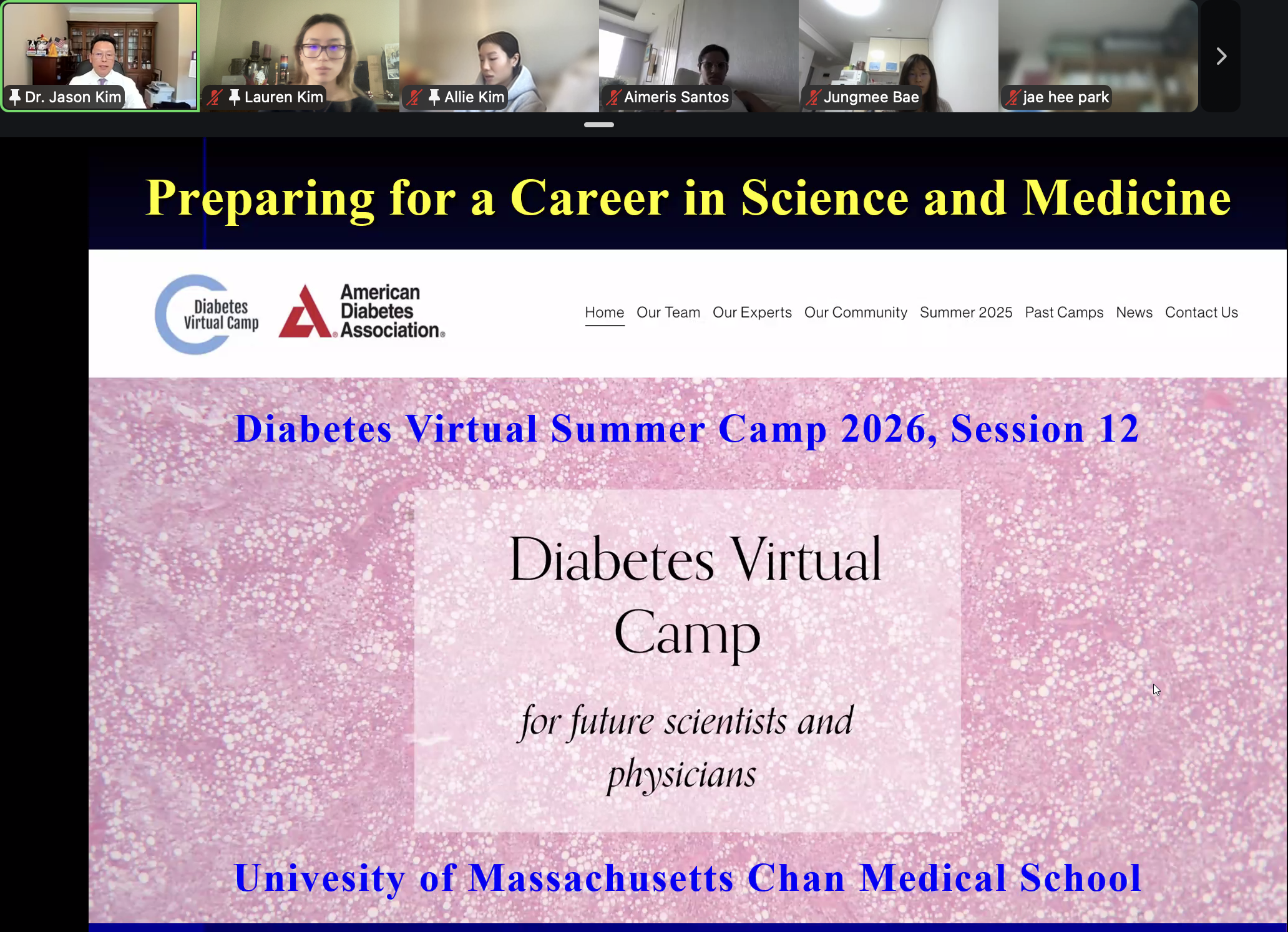
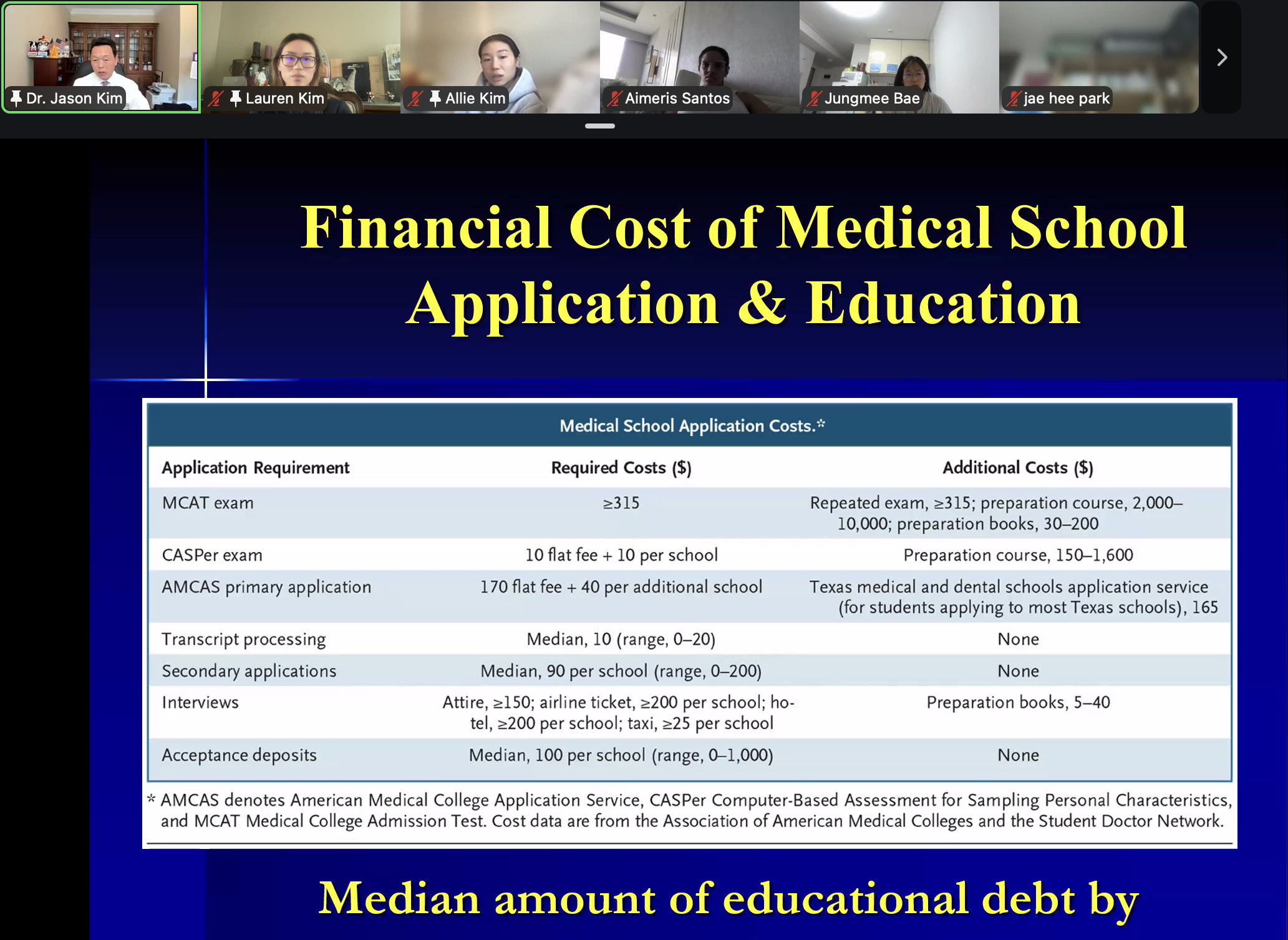
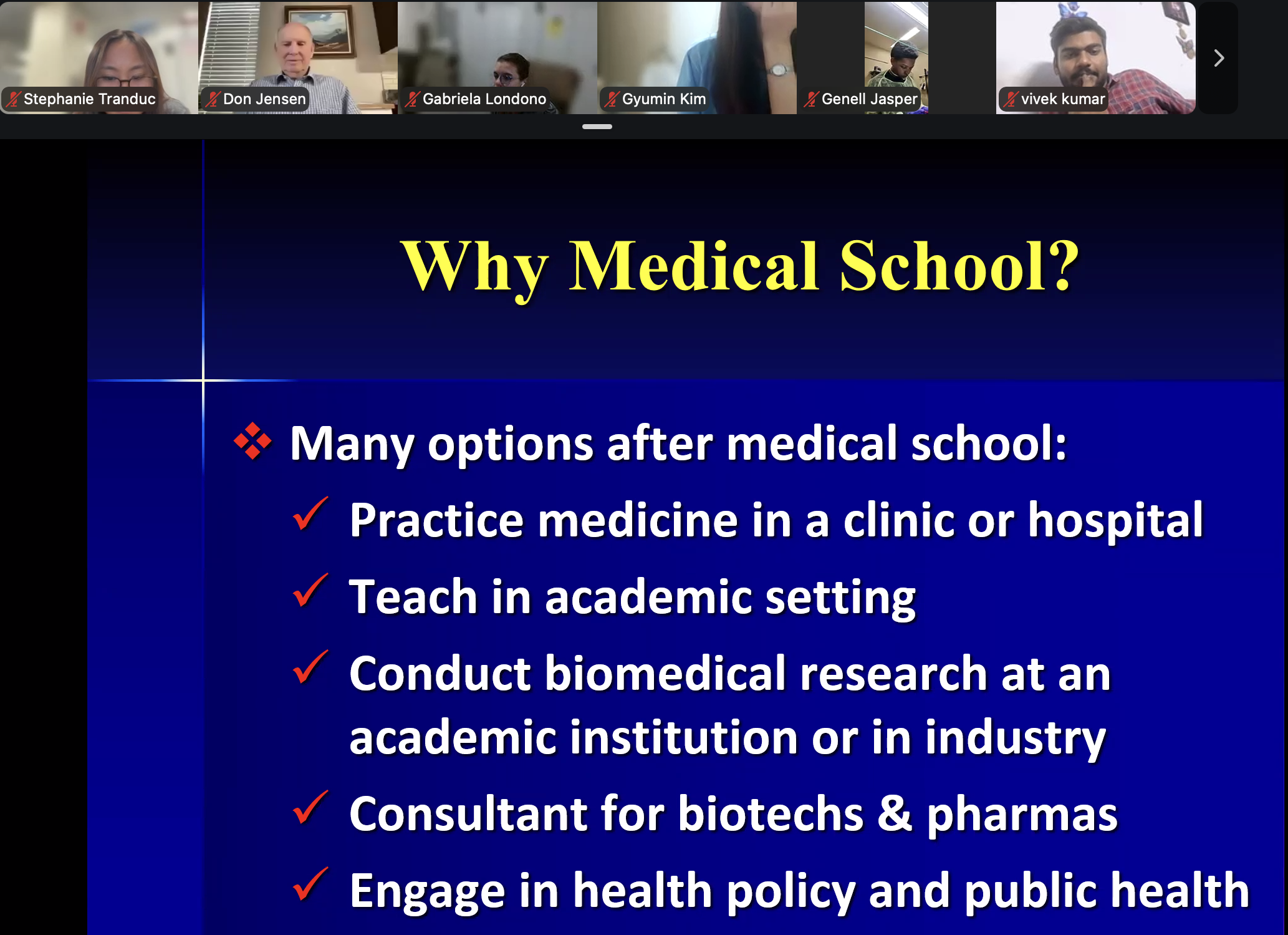
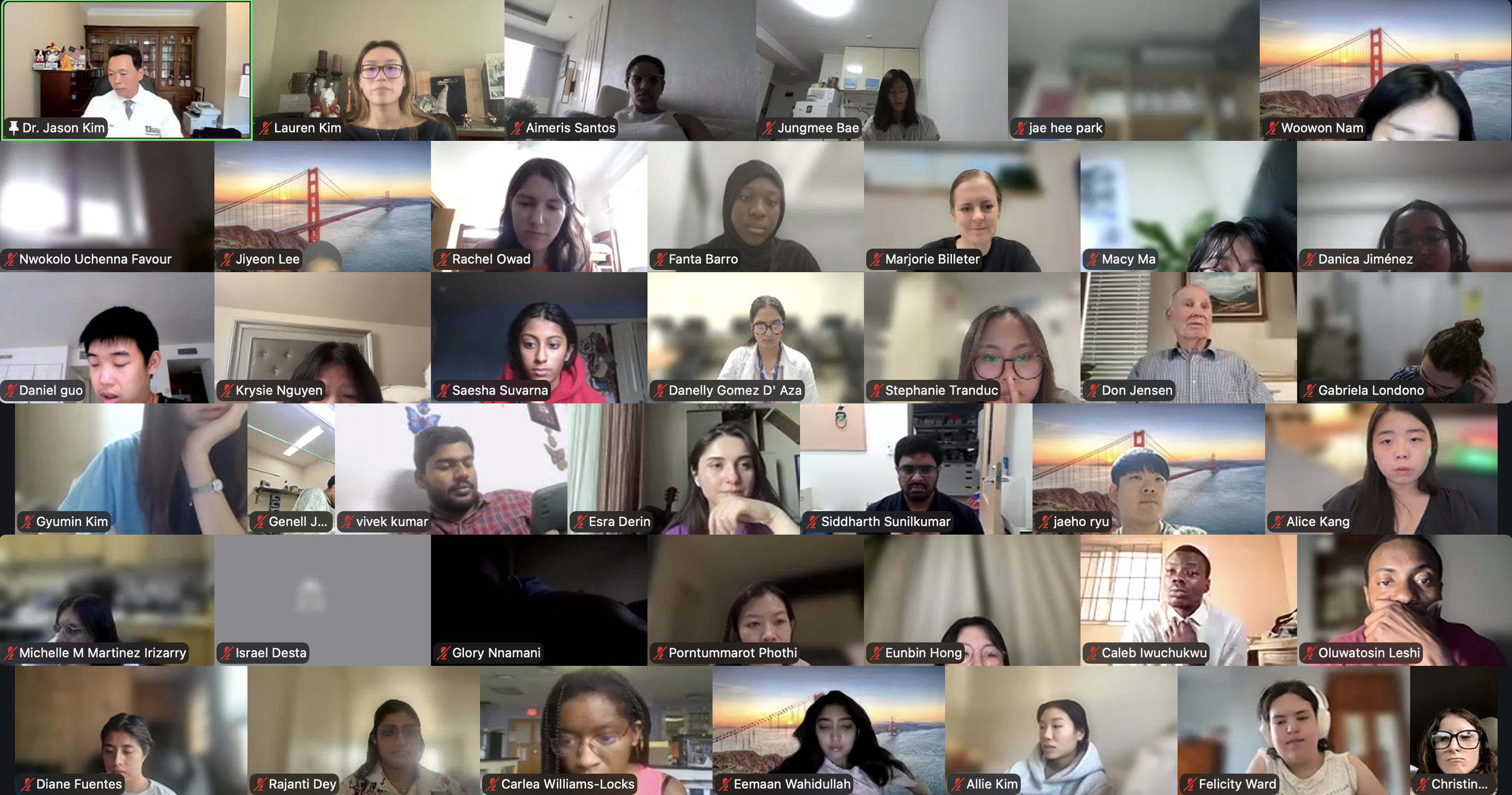
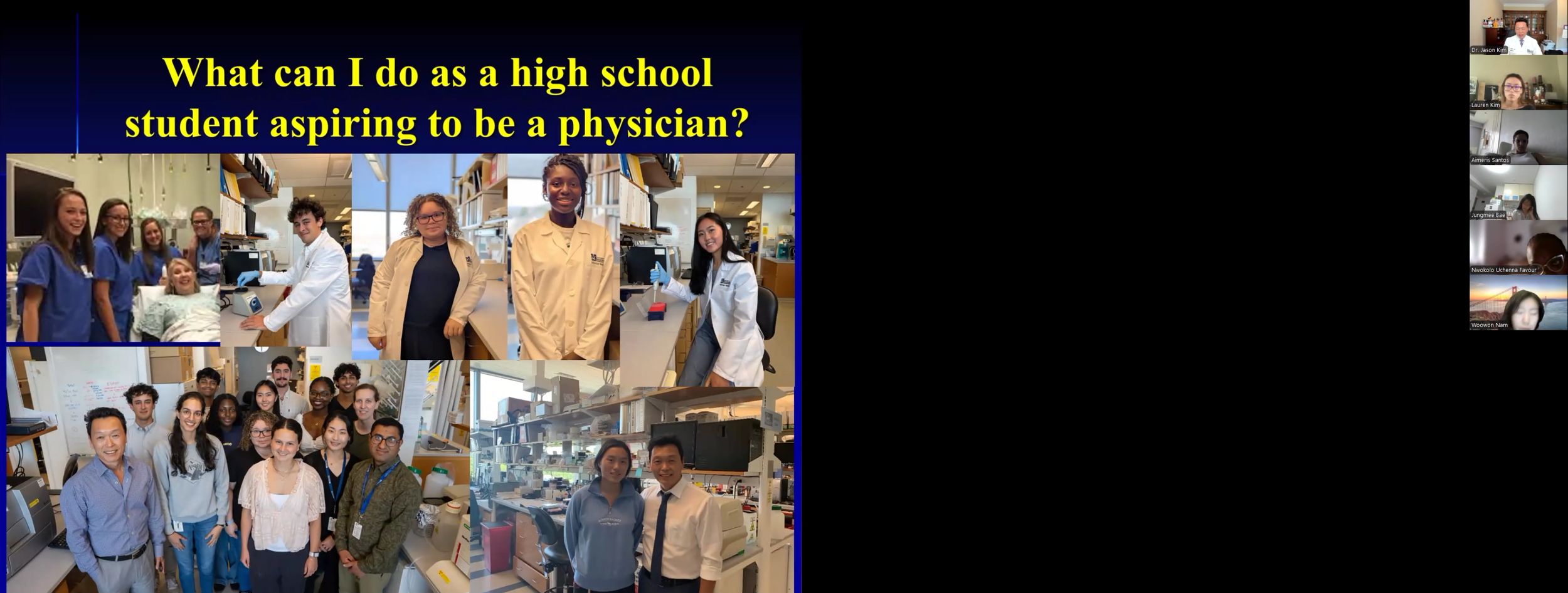
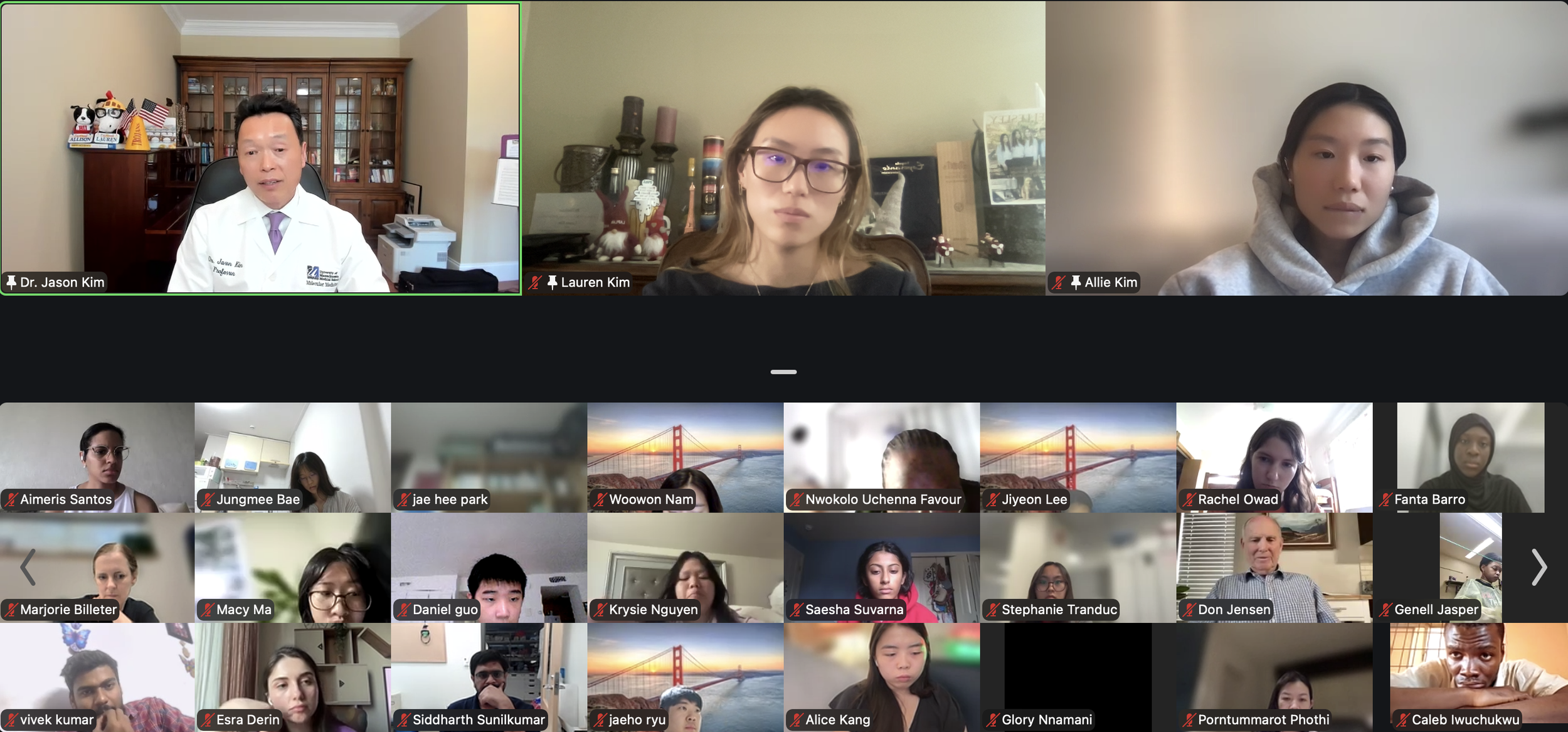

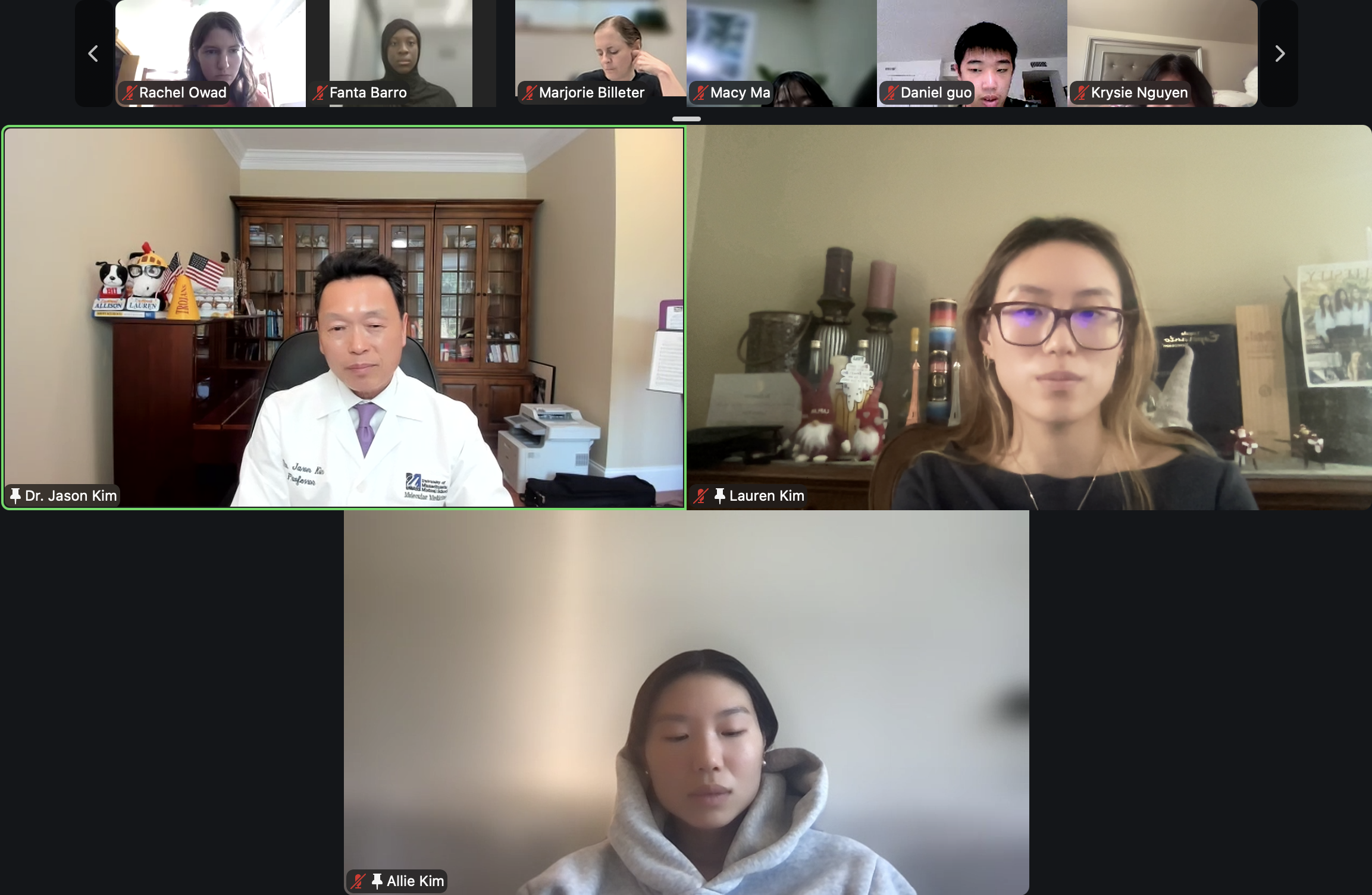

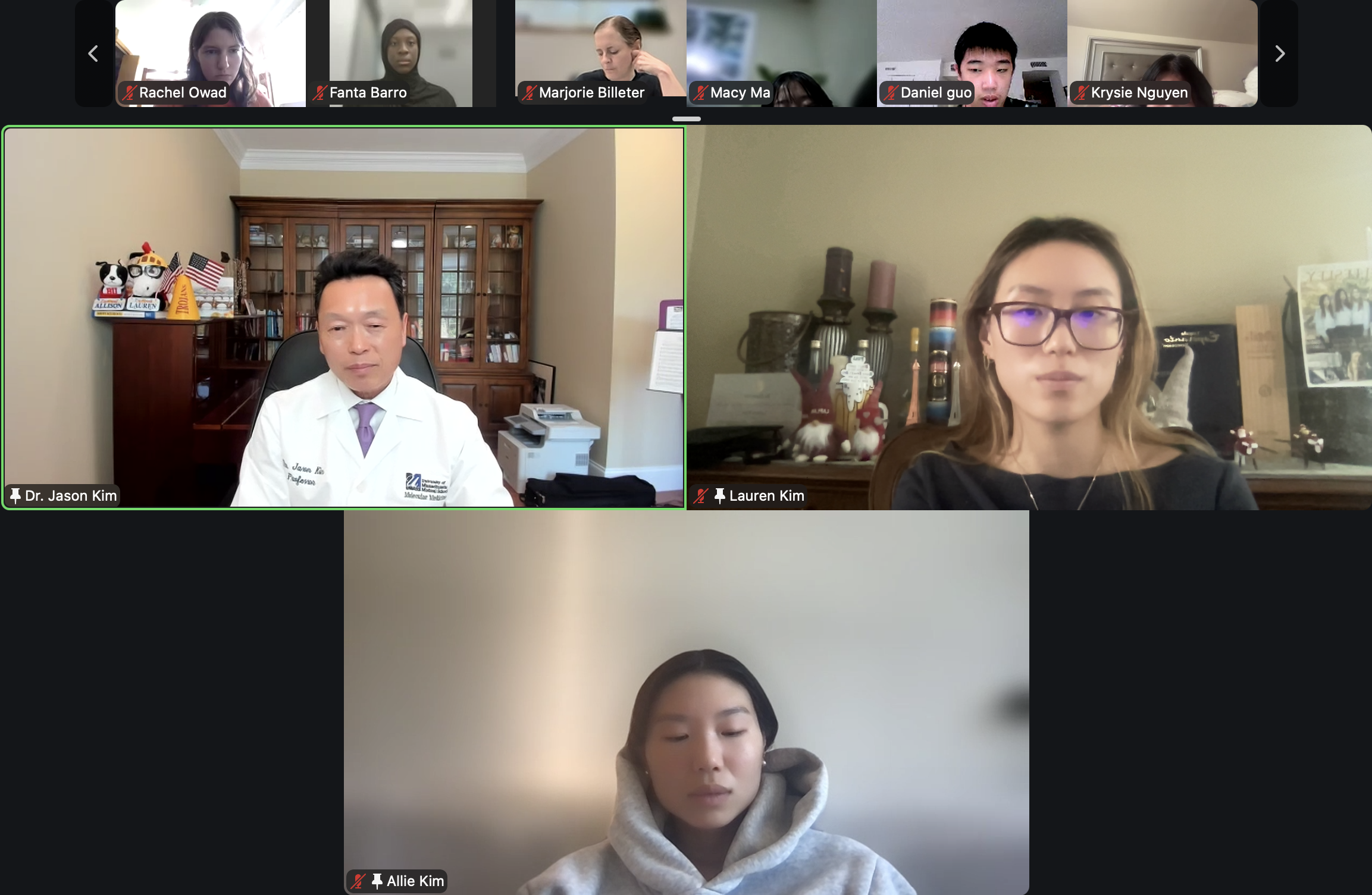
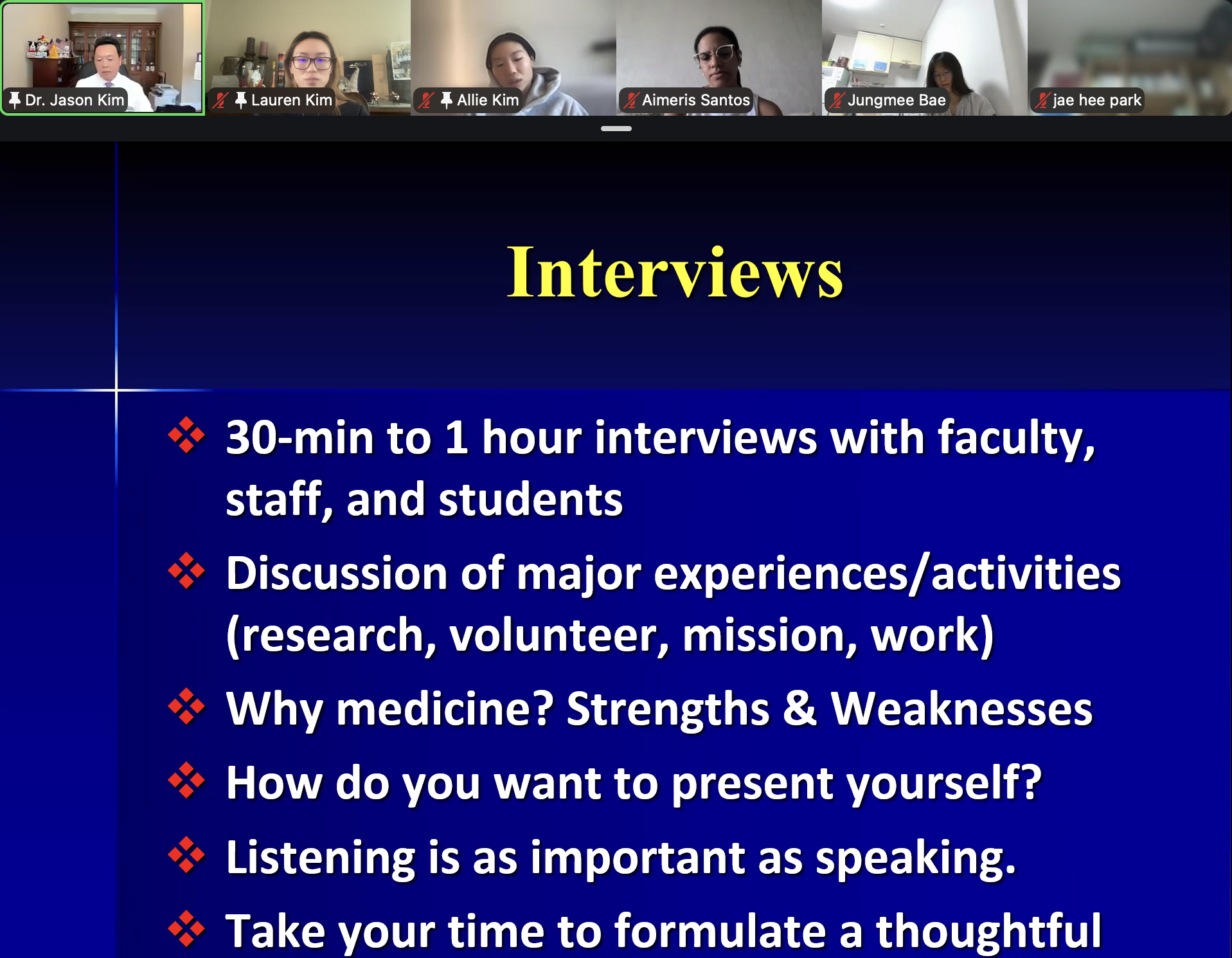
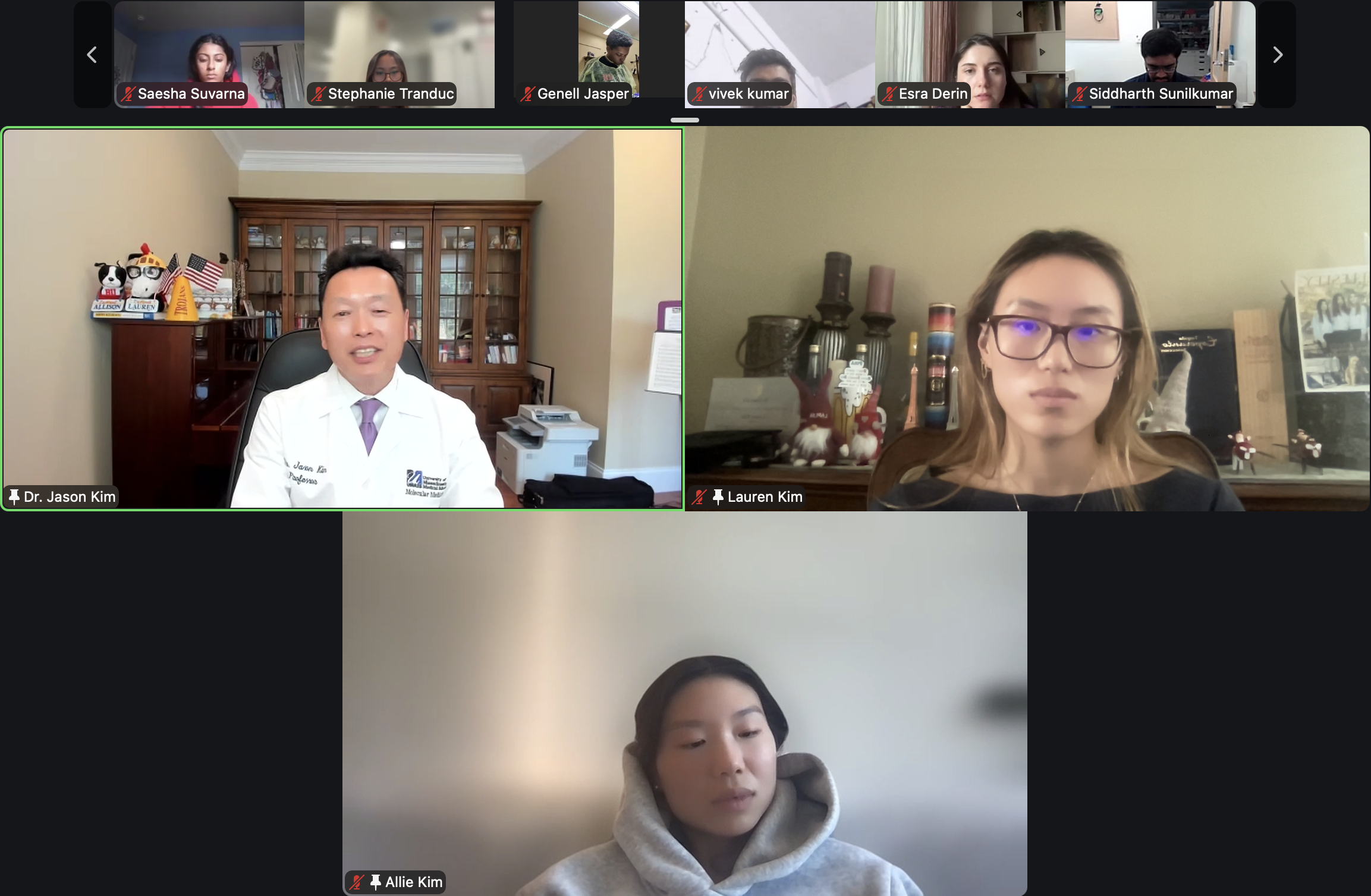
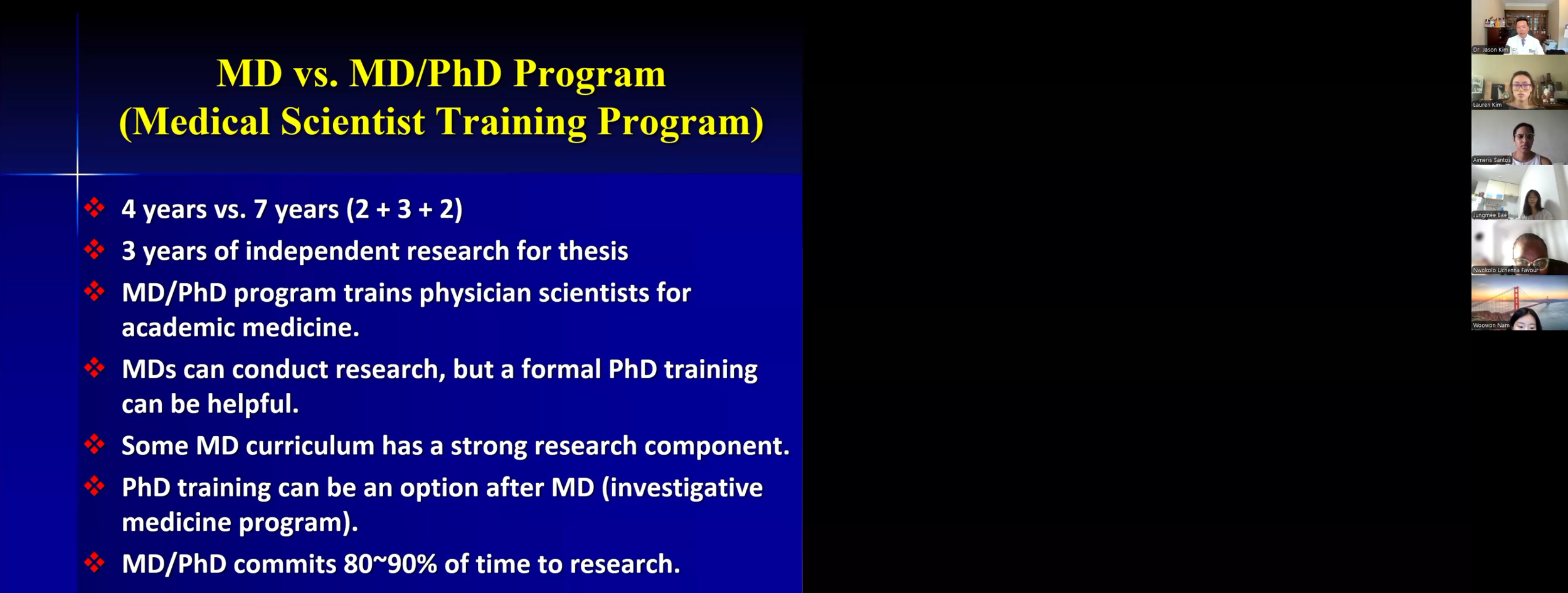
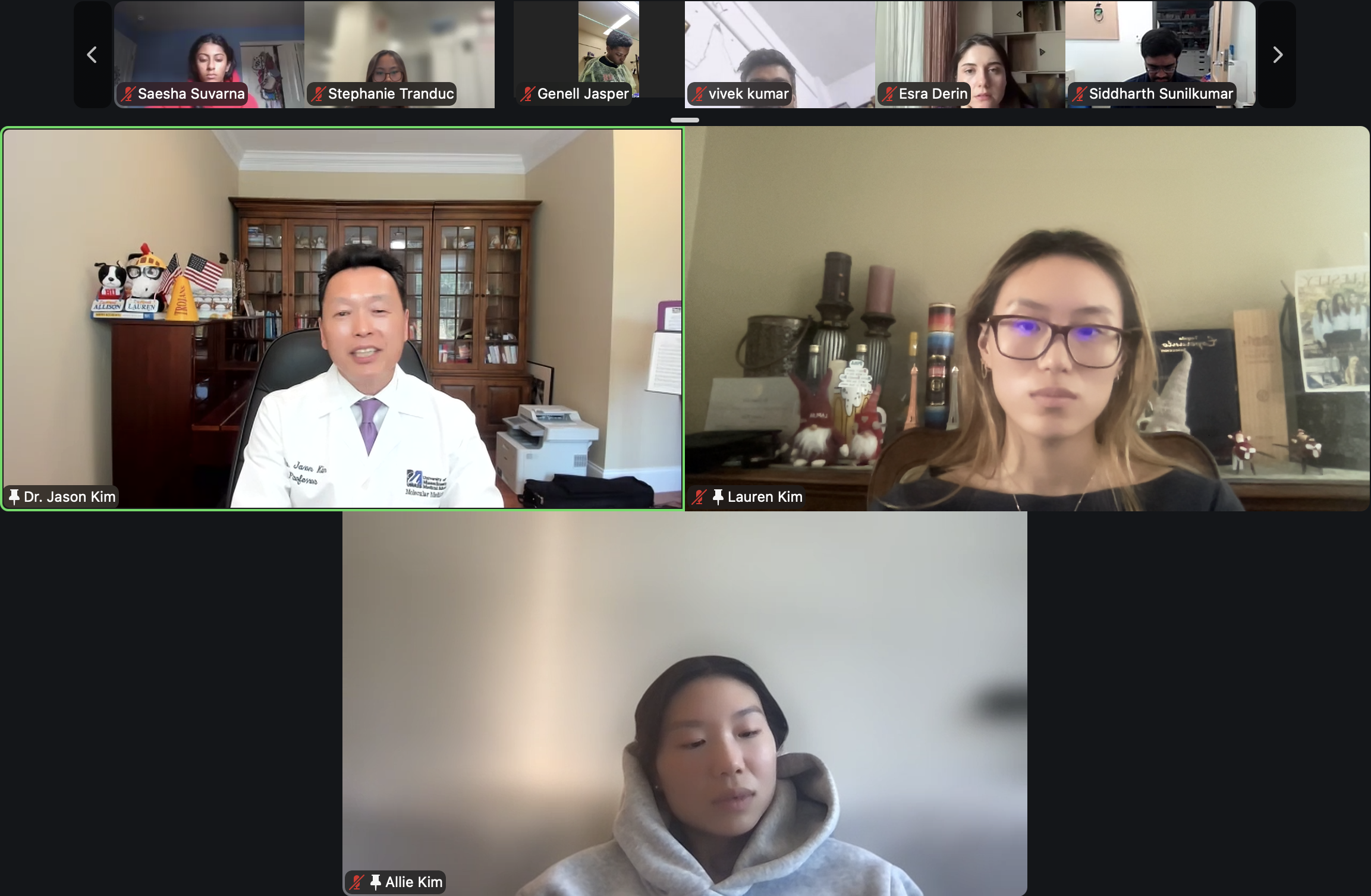
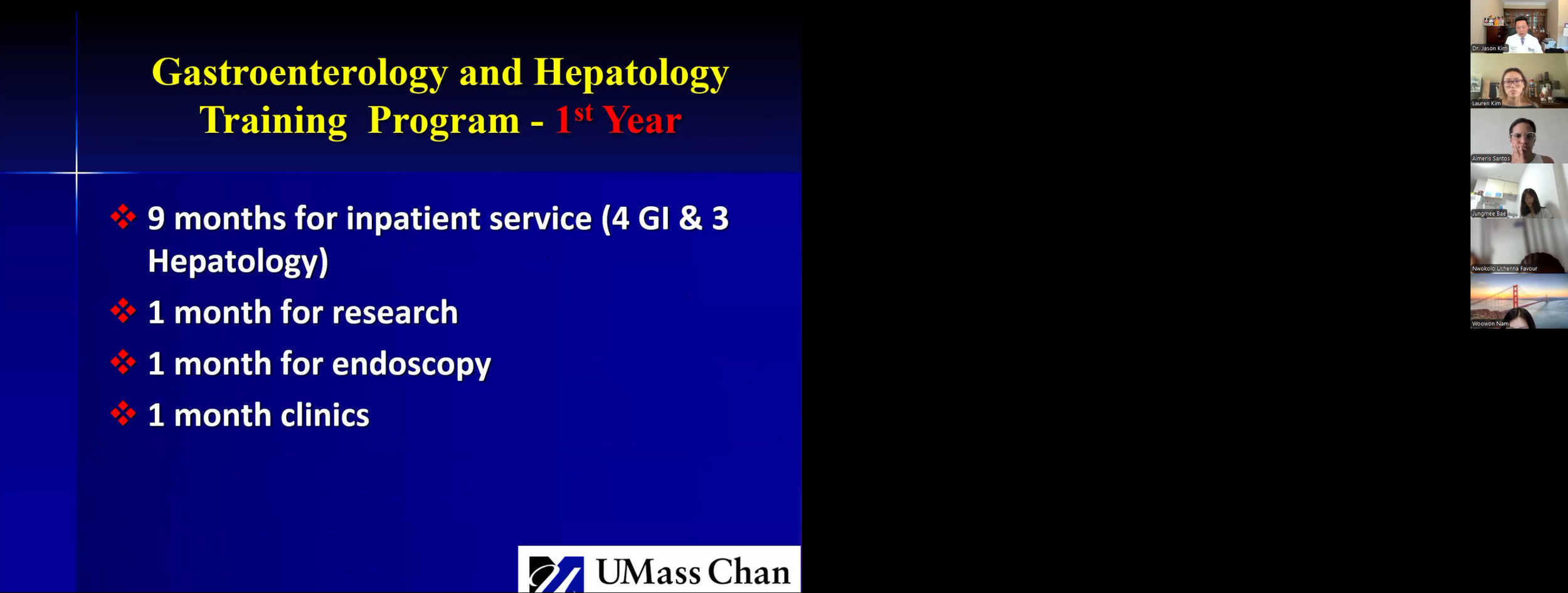
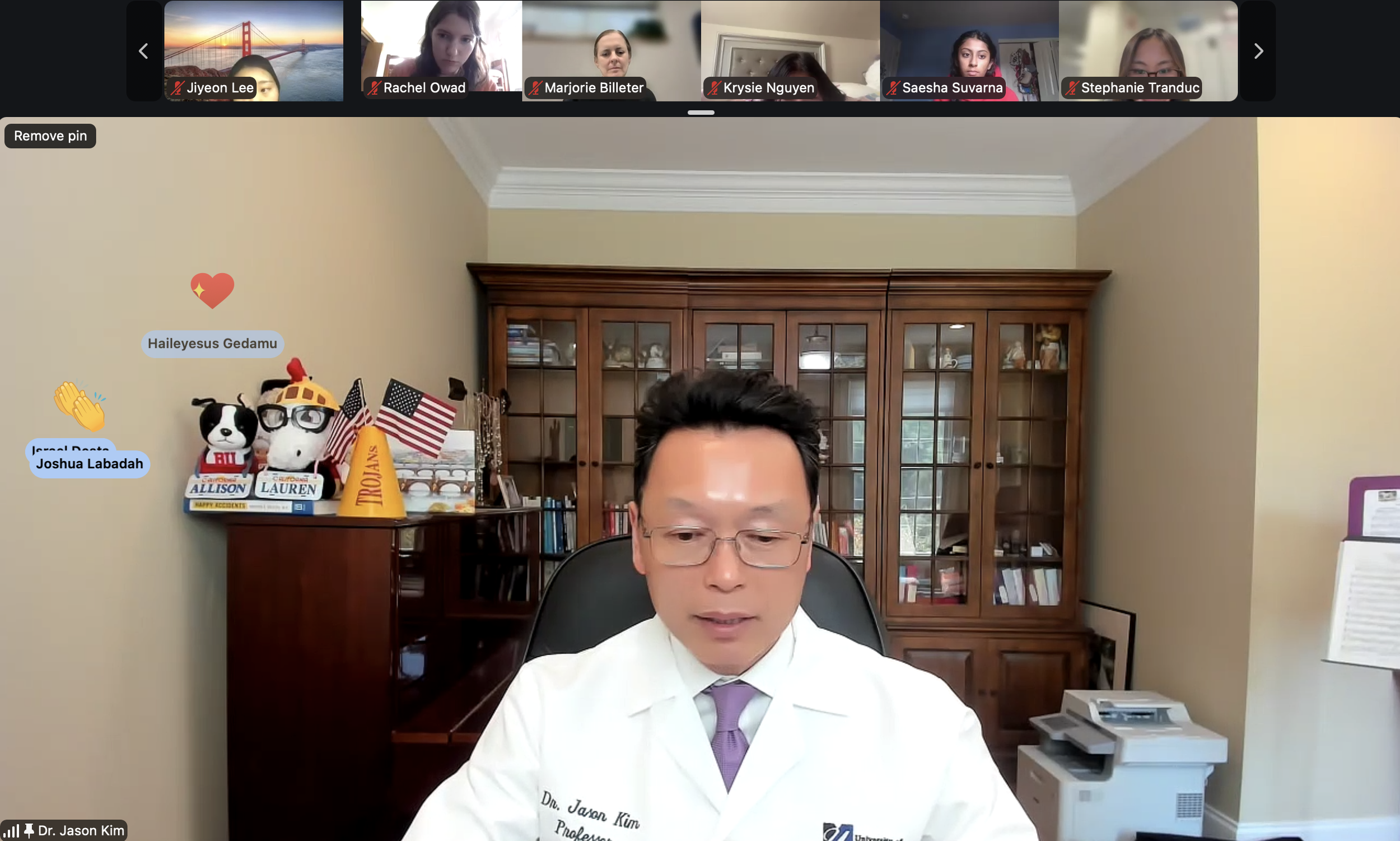
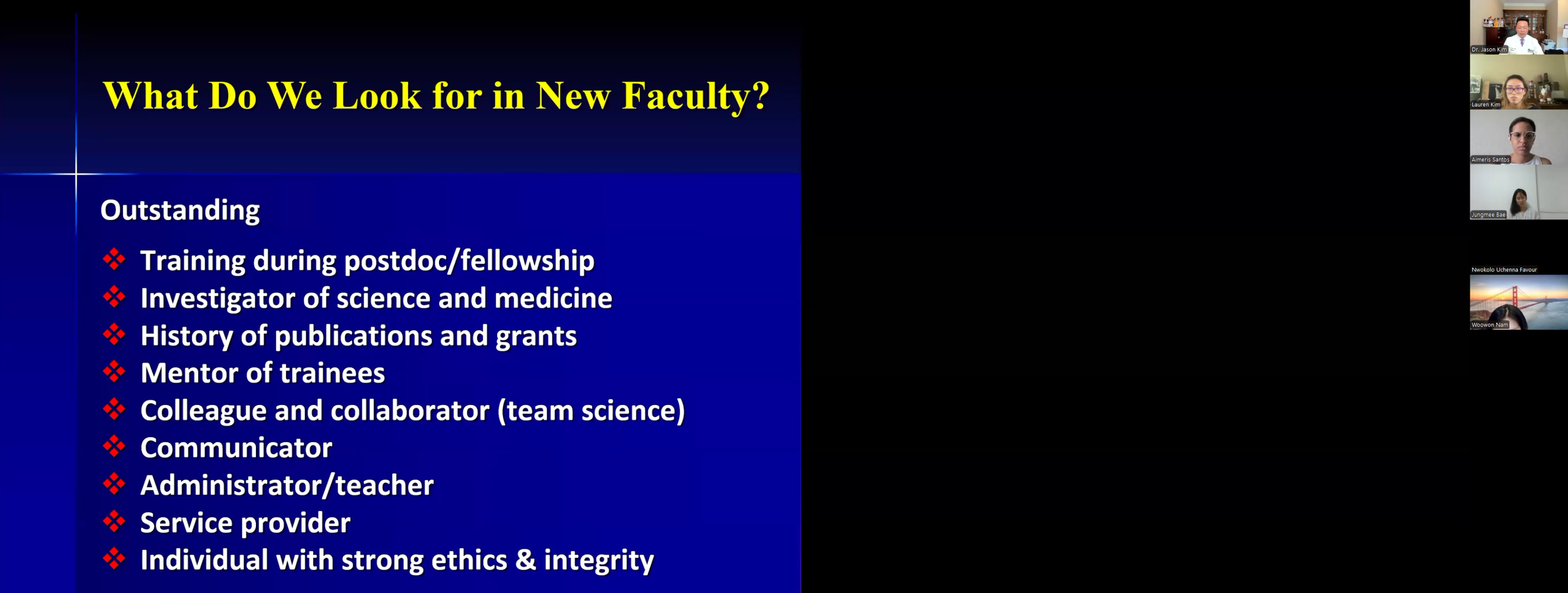
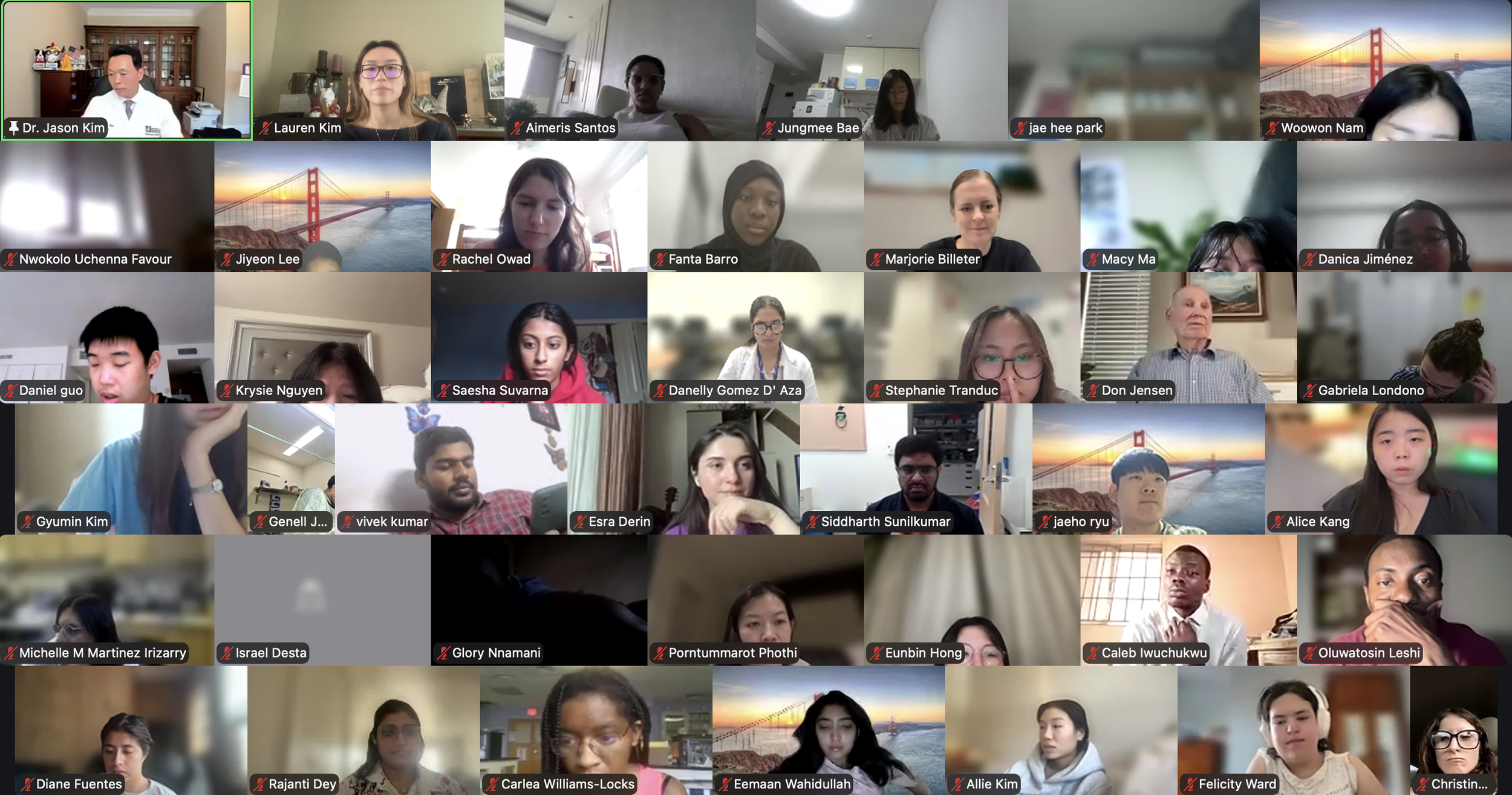
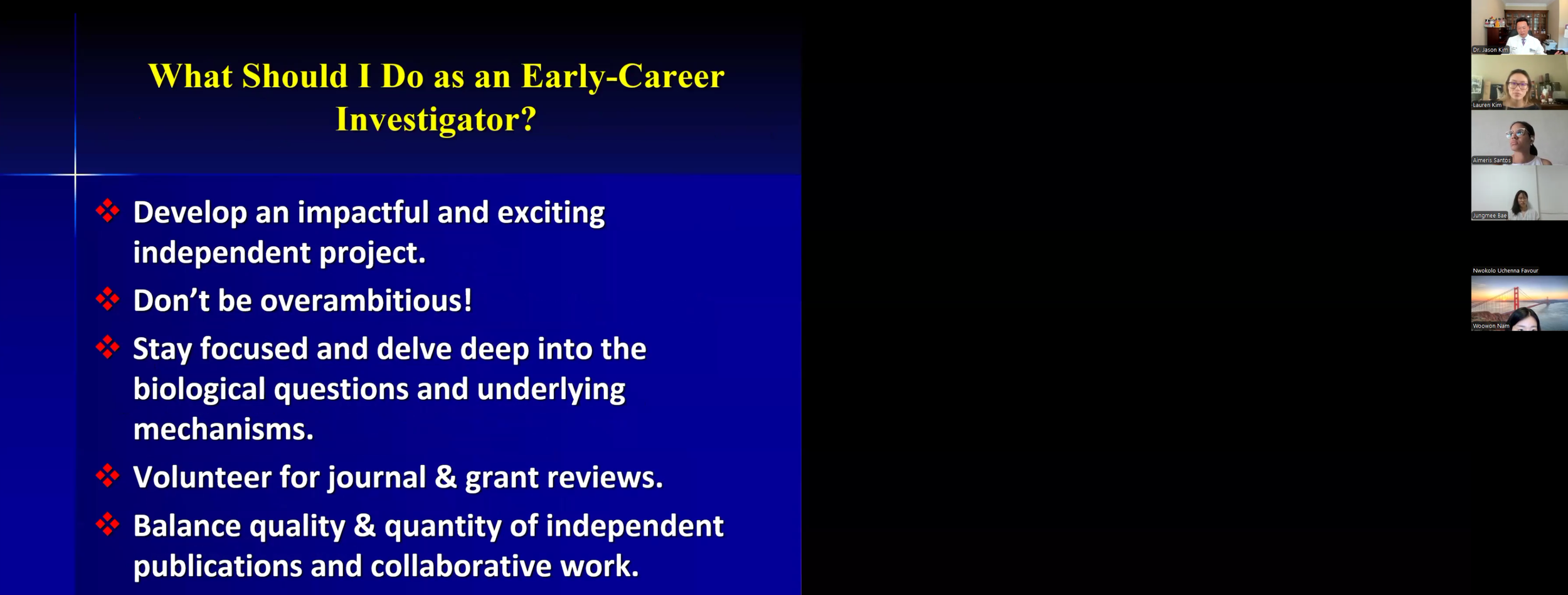

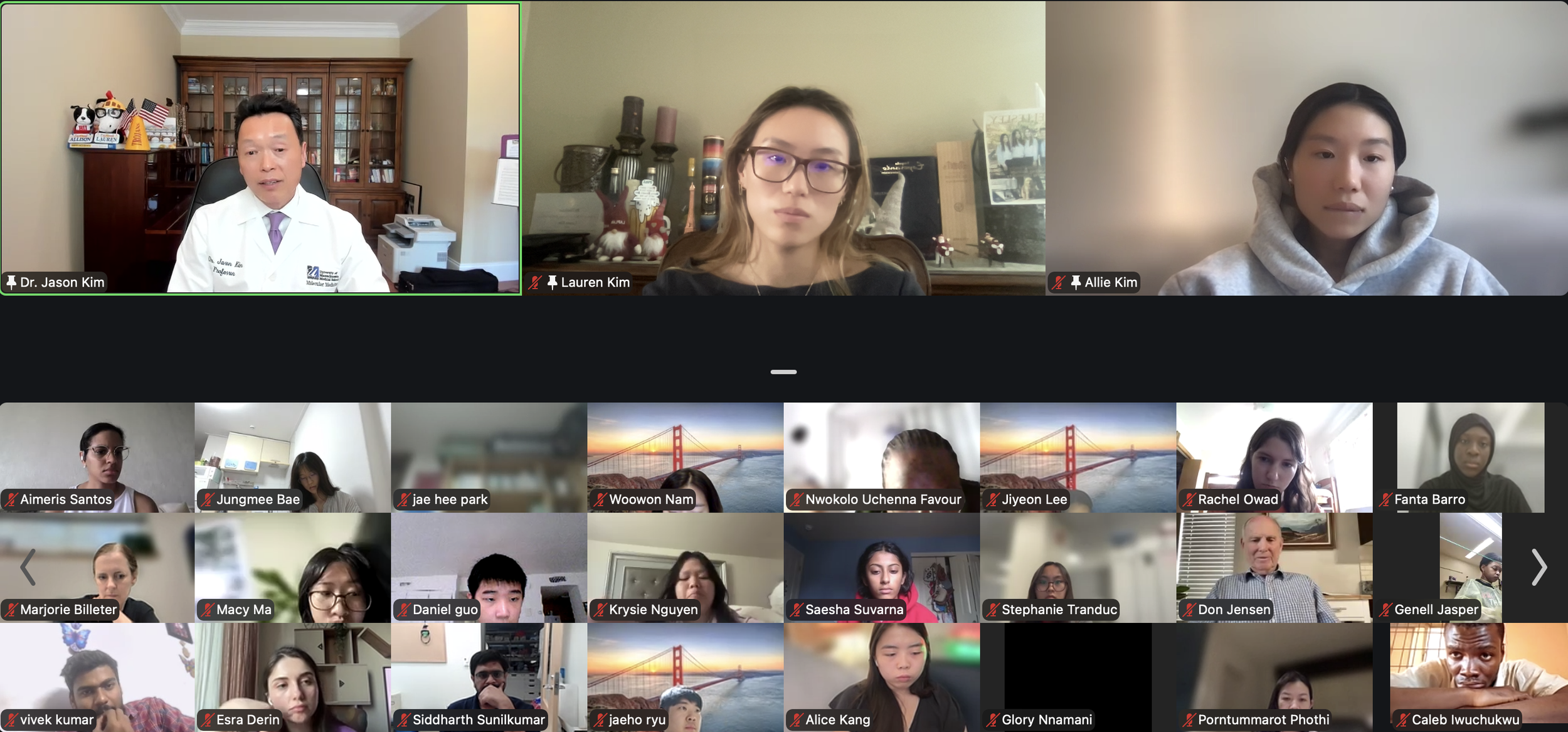
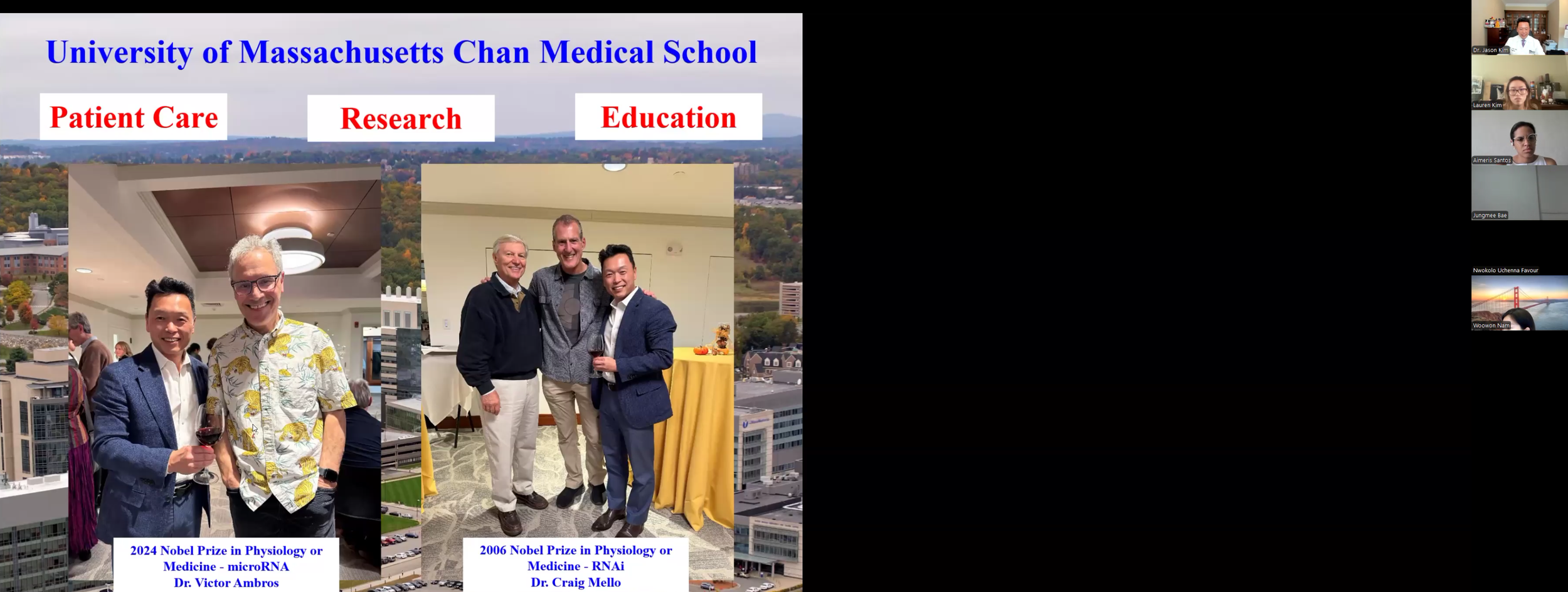
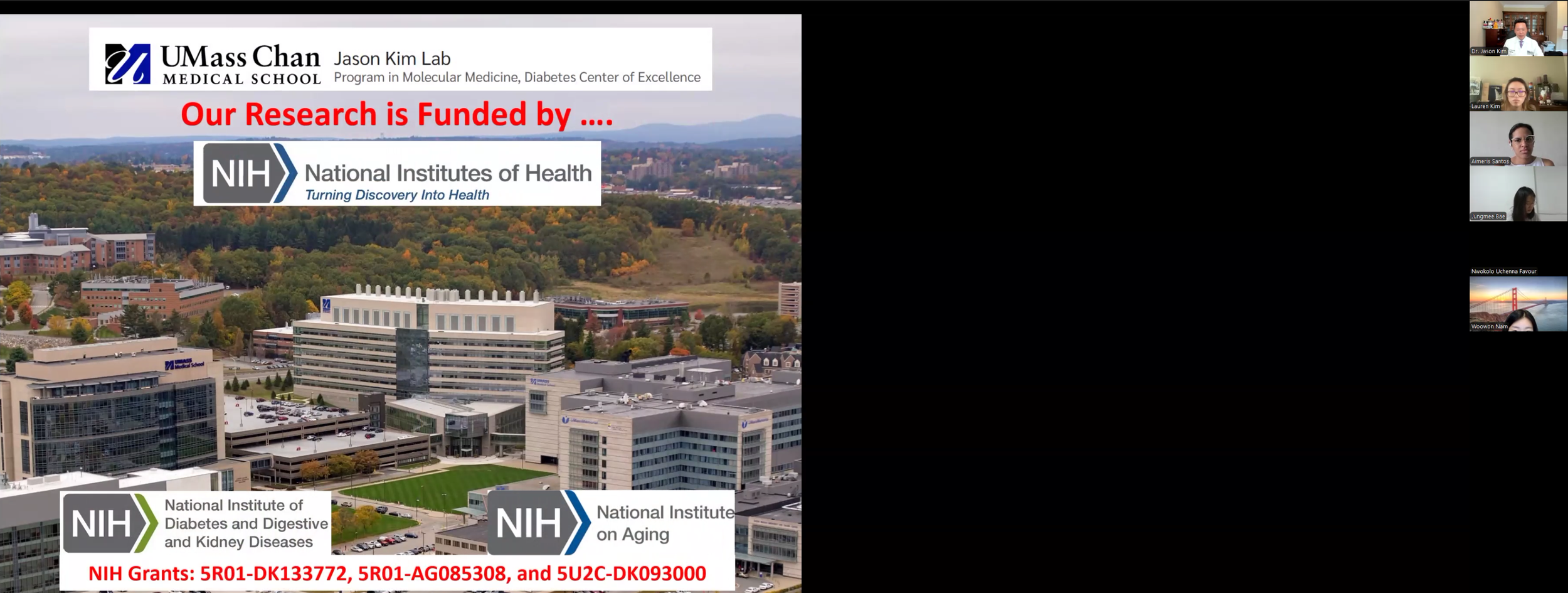
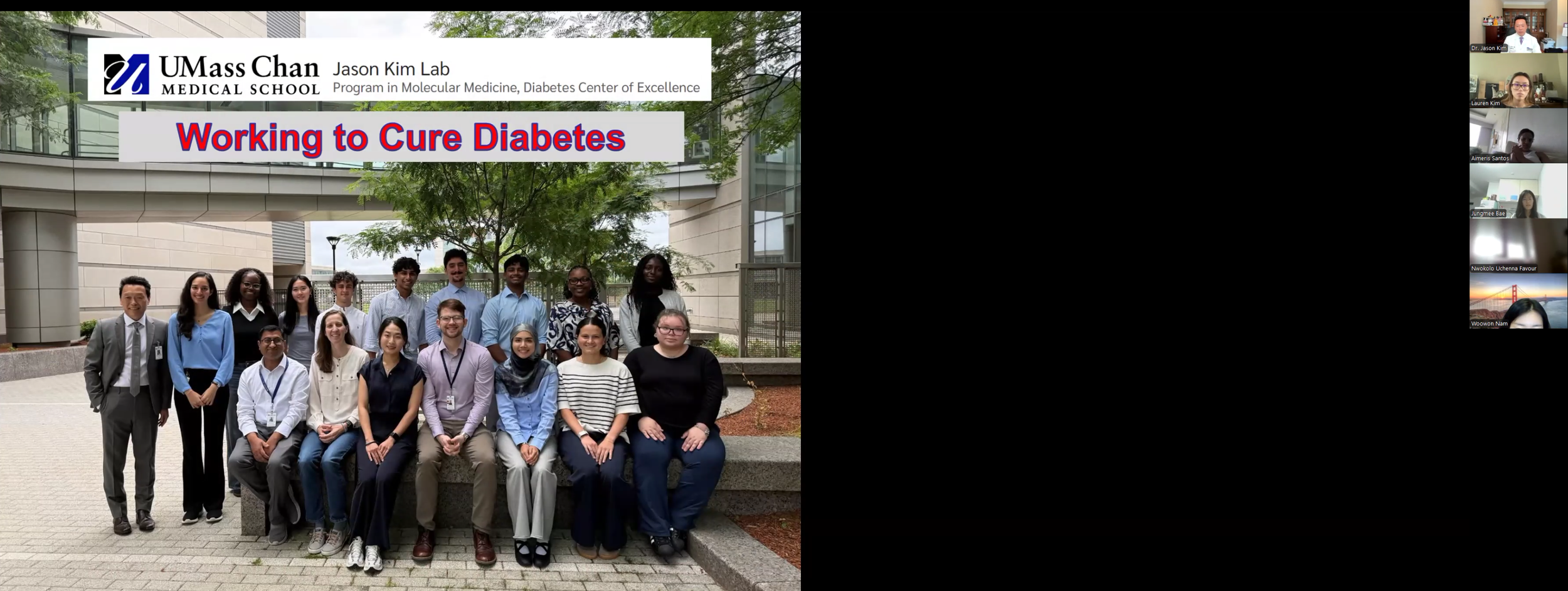
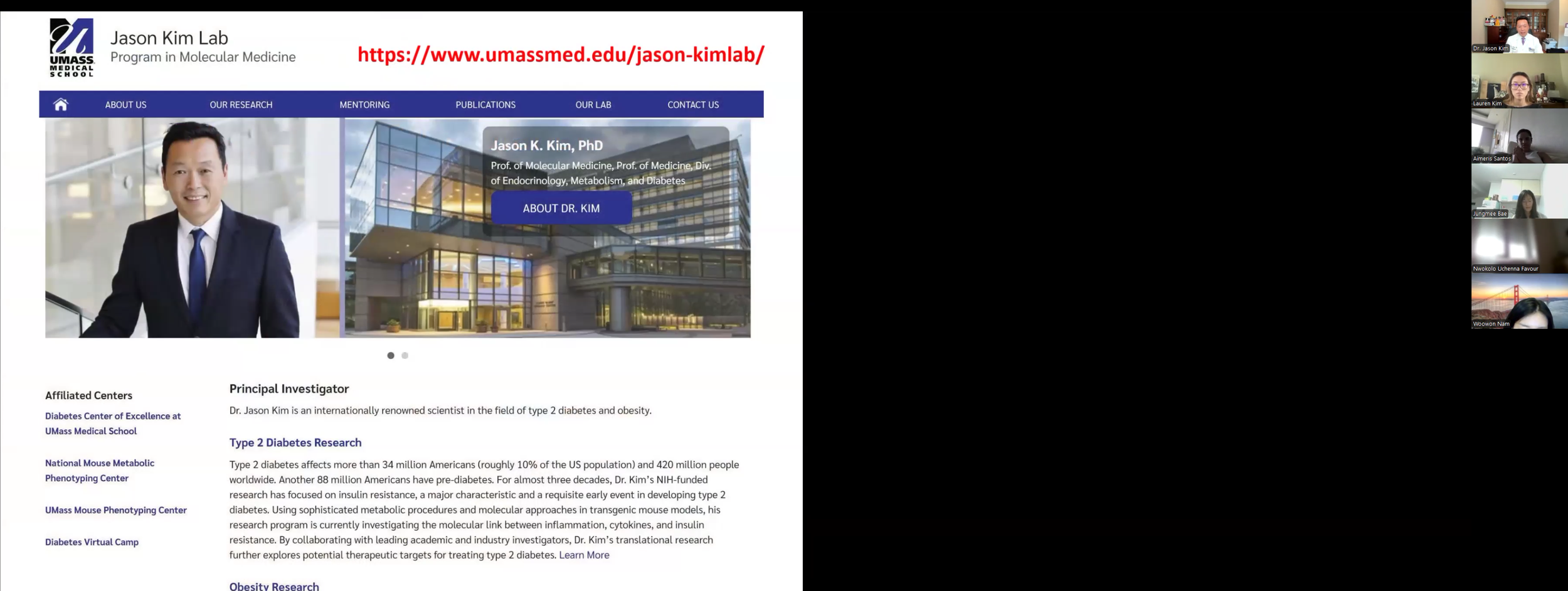


-
![Session 2: Opening Session & Introduction to Diabetes by Lauren, Allison, and Dr. Jason Kim (University of Massachusetts Medical School)]()
August 14, 2026 (Session 13 - Part 1)
Session 13: “Closing Session” by DVC Team (Lauren Kim, Allison Kim, and Dr. Jason Kim)
-
![]()
August 14, 2026 (Session 13 - Part 2)
Session 13: “Closing Session” by DVC Team (Lauren Kim, Allison Kim, and Dr. Jason Kim)
-
![]()
August 14, 2026 (Session 13 - Part 3)
Session 13: “Closing Session” by DVC Team (Lauren Kim, Allison Kim, and Dr. Jason Kim)
Lauren Kim congratulates our DVSC26 participants for a successful completion of the Diabetes Virtual Summer Camp 2026.
-
![]()
August 14, 2026 (Session 13 - Part 4)
Session 13: “Closing Session” by DVC Team (Lauren Kim, Allison Kim, and Dr. Jason Kim)
Lauren Kim congratulates our DVSC26 participants for a successful completion of the Diabetes Virtual Summer Camp 2026.
-
![]()
August 14, 2026 (Session 13 - Part 5)
Session 13: “Closing Session” by DVC Team (Lauren Kim, Allison Kim, and Dr. Jason Kim)
Lauren Kim congratulates our DVSC26 participants for a successful completion of the Diabetes Virtual Summer Camp 2026.
-
![]()
August 14, 2026 (Session 13 - Part 6)
Session 13: “Closing Session” by DVC Team (Lauren Kim, Allison Kim, and Dr. Jason Kim)
Allison Kim congratulates our DVSC26 participants for a successful completion of the Diabetes Virtual Summer Camp 2026.
-
![]()
August 14, 2026 (Session 13 - Part 7)
Session 13: “Closing Session” by DVC Team (Lauren Kim, Allison Kim, and Dr. Jason Kim)
Allison Kim congratulates our DVSC26 participants for a successful completion of the Diabetes Virtual Summer Camp 2026.
-
![]()
August 14, 2026 (Session 13 - Part 8)
Session 13: “Closing Session” by DVC Team (Lauren Kim, Allison Kim, and Dr. Jason Kim)
Allison Kim congratulates our DVSC26 participants for a successful completion of the Diabetes Virtual Summer Camp 2026.
-
![]()
August 14, 2026 (Session 13 - Part 9)
Session 13: “Closing Session” by DVC Team (Lauren Kim, Allison Kim, and Dr. Jason Kim)
Allison Kim congratulates our DVSC26 participants for a successful completion of the Diabetes Virtual Summer Camp 2026.
-
![]()
August 14, 2026 (Session 13 - Part 10)
Session 13: “Closing Session” by DVC Team (Lauren Kim, Allison Kim, and Dr. Jason Kim)
Allison Kim congratulates our DVSC26 participants for a successful completion of the Diabetes Virtual Summer Camp 2026.
-
![]()
August 14, 2026 (Session 13 - Part 11)
Session 13: “Closing Session” by DVC Team (Lauren Kim, Allison Kim, and Dr. Jason Kim)
Dr. Kim congratulates our DVSC26 participants for a successful completion of the Diabetes Virtual Summer Camp 2026.
-
![]()
August 14, 2026 (Session 13 - Part 12)
Session 13: “Closing Session” by DVC Team (Lauren Kim, Allison Kim, and Dr. Jason Kim)
Dr. Kim congratulates our DVSC26 participants for a successful completion of the Diabetes Virtual Summer Camp 2026.
-
![]()
August 14, 2026 (Session 13 - Part 13)
Session 13: “Closing Session” by DVC Team (Lauren Kim, Allison Kim, and Dr. Jason Kim)
Dr. Kim congratulates our DVSC26 participants for a successful completion of the Diabetes Virtual Summer Camp 2026.
-
![]()
August 14, 2026 (Session 13 - Part 14)
Session 13: “Closing Session” by DVC Team (Lauren Kim, Allison Kim, and Dr. Jason Kim)
Dr. Kim congratulates our DVSC26 participants for a successful completion of the Diabetes Virtual Summer Camp 2026.
-
![]()
August 14, 2026 (Session 13 - Part 15)
Session 13: “Closing Session” by DVC Team (Lauren Kim, Allison Kim, and Dr. Jason Kim)
The DVC team conducts polls and surveys to gather important feedback on our program from the participants.
-
![]()
August 14, 2026 (Session 13 - Part 16)
Session 13: “Closing Session” by DVC Team (Lauren Kim, Allison Kim, and Dr. Jason Kim)
The DVC team conducts polls and surveys to gather important feedback on our program from the participants.
-
![]()
August 14, 2026 (Session 13 - Part 17)
Session 13: “Closing Session” by DVC Team (Lauren Kim, Allison Kim, and Dr. Jason Kim)
The DVC team conducts polls and surveys to gather important feedback on our program from the participants.
-
![]()
August 14, 2026 (Session 13 - Part 18)
Session 13: “Closing Session” by DVC Team (Lauren Kim, Allison Kim, and Dr. Jason Kim)
The DVC team conducts polls and surveys to gather important feedback on our program from the participants.
-
![]()
August 14, 2026 (Session 13 - Part 19)
Session 13: “Closing Session” by DVC Team (Lauren Kim, Allison Kim, and Dr. Jason Kim)
The DVC team conducts polls and surveys to gather important feedback on our program from the participants.
-
![]()
August 14, 2026 (Session 13 - Part 20)
Session 13: “Closing Session” by DVC Team (Lauren Kim, Allison Kim, and Dr. Jason Kim)
The DVC team thanks our DVSC26 participants and wishes all the best in their journeys.
-
![]()
August 14, 2026 (Session 13 - Part 21)
Session 13: “Closing Session” by DVC Team (Lauren Kim, Allison Kim, and Dr. Jason Kim)
The DVC team thanks our DVSC26 participants and wishes all the best in their journeys.
-
![]()
August 14, 2026 (Session 13 - Part 22)
Session 13: “Closing Session” by DVC Team (Lauren Kim, Allison Kim, and Dr. Jason Kim)
The DVC team thanks our DVSC26 participants and wishes all the best in their journeys.
-
![]()
August 14, 2026 (Session 13 - Part 23)
Session 13: “Closing Session” by DVC Team (Lauren Kim, Allison Kim, and Dr. Jason Kim)
The DVC team thanks our DVSC26 participants and wishes all the best in their journeys.
-
![]()
August 14, 2026 (Session 13 - Part 24)
Session 13: “Closing Session” by DVC Team (Lauren Kim, Allison Kim, and Dr. Jason Kim)
The DVC team thanks our DVSC26 participants and wishes all the best in their journeys.